Skip to content
Claim this template

Free course template · Global

IT governance, enterprise architecture and IT audit frameworks: COBIT and TOGAF

A ready-made course, live deck and two surveys for IT managers. 45 minutes, 6 lessons. Last reviewed 21 October 2026; not legal advice.

Claim the templatePreview the courseDownload SCORM for your LMS

Free. No credit card. Edit everything.

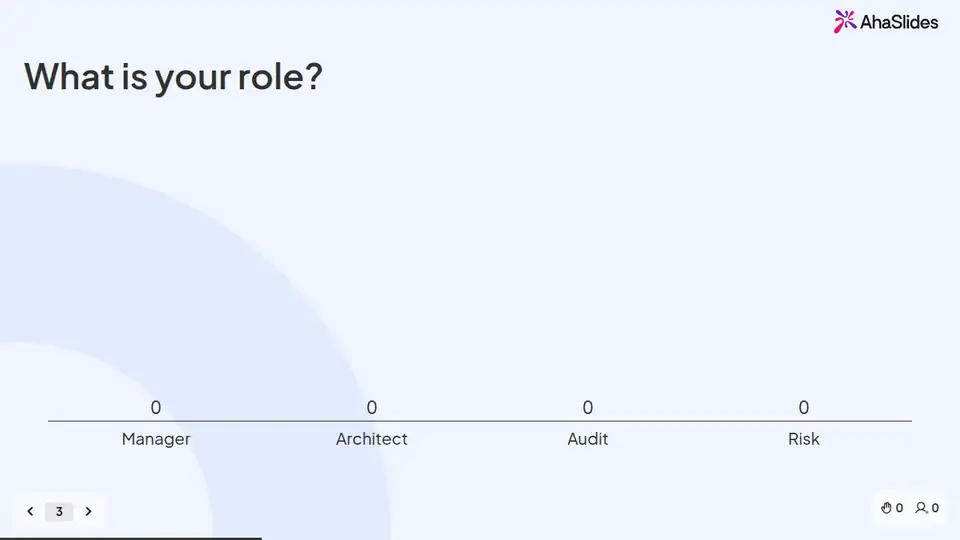
Play a game from the course

IT governance, enterprise architecture and IT audit frameworks: COBIT and TOGAF: try 3 questions

Three questions from this course. Pick an answer, then see why.

Play the game

Game not loading? Open it in a new tab (opens in a new tab)

Three pieces that work together

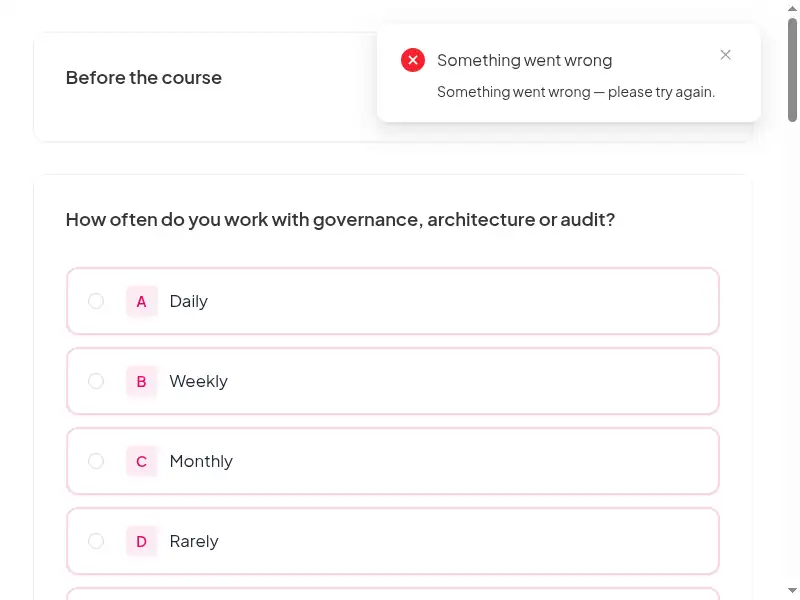
Learners sign in, so every finish and score is recorded. 6 fields to fill in with your details.
Claim the template
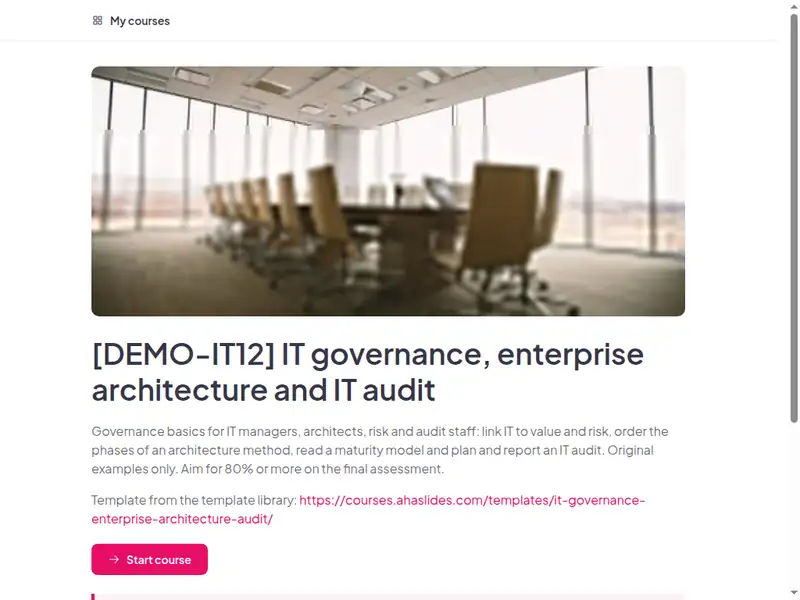
The IT governance, enterprise architecture and IT audit frameworks: COBIT and TOGAF course as a learner first sees it

6 lessons, about 45 minutes

Minutes are an estimate.

  • Lesson 1: A system nobody was accountable for · 8 min

    Before you begin · The gap · What went wrong

  • Lesson 2: Why IT governance: value, risk and resources · 8 min

    Three aims · Match · Check

  • Lesson 3: Governance and management objectives · 8 min

    Governance vs management · Which is which? · Check

  • Lesson 4: The architecture development method · 7 min

    Phases · Order it · The mismatch

  • Lesson 5: Maturity models and capability assessment · 7 min

    Levels · Rate it · Check

  • Lesson 6: Planning an IT audit and reporting to leadership · 7 min

    Audit plan · Report · Practice

Claim the template

Inside this course

Taken from the course itself.

By the end, learners can

  • Explain why IT governance matters: value, risk and resources
  • Describe governance and management objectives
  • Order the phases of an architecture development method
  • Read a maturity model and assess capability
  • Plan and evidence an IT audit, and report findings to leadership

Sample questions, with answers

  1. What is the root cause of the problem?

    • Unclear accountability
    • A slow network
    • The wrong colour theme
    • Too many users

    Answer: Unclear accountability. A system without a named owner has nobody to decide, fund or report on it.

    Lesson 1: A system nobody was accountable for

  2. Who usually sets the direction that IT managers then follow?

    • Governance: the board and senior leaders
    • The newest employee
    • A supplier
    • The service desk

    Answer: Governance: the board and senior leaders. Governance sets direction. Management turns it into work.

    Lesson 3: Governance and management objectives

  3. Why start from the business need rather than the tool?

    • Tools should serve the need
    • Tools are always free
    • The need never changes
    • It saves a meeting

    Answer: Tools should serve the need. A tool chosen without a need may solve nothing.

    Lesson 4: The architecture development method

A scenario from "The architecture development method"

A team picks tools before the business need is agreed.

Best response: Start from the vision and business architecture.

Weaker responses: Pick the newest tool; Copy a rival; Delay forever.

Related articles

2 articles from the AhaSlides blog that use this course, newest first.

Common questions

Yes. Claiming the template and editing it are free.

Yes. The course is self-paced and online, and the live deck lets you add a live session in the room or online.

At onboarding of governance and audit staff, and before a framework certification exam.

IT managers, enterprise architects, risk and audit staff and the CIO office; run by IT governance, risk and audit teams.

Record completion in your own LMS or record system, so you can show who finished the course and when.

Your own details, each highlighted inside the course:
  • Link to the IT governance and audit policy
  • Where completion is recorded
  • Who to ask for help or to report a concern
  • Link to the self-paced course
Then edit anything else you like: wording, scenarios, your logo.
Visit the help centre (opens in a new tab)