Have you ever found a job you wanted, with the right credentials, but hesitated to apply because you were unsure you would fit in? Often the gap is not knowledge. It is the ability to work with others, share ideas politely and stay calm under pressure.
Education is not only about learning topics by heart or scoring high marks. Whatever age group you teach, teaching soft skills to students can be tricky, especially in a class with a wide mix of abilities. This guide gives you 10 practical ways to do it, with activities you can run in a classroom or online.
What are soft skills and why do they matter?
Soft skills are the interpersonal and personal qualities that shape how someone works with other people. Hard skills are specific, teachable abilities such as coding, maths or lab technique, and they are usually backed by grades or certificates. Soft skills sit alongside them. They are harder to test with a single exam, but they can be taught, practised and assessed with rubrics, observation and peer feedback.
Employers and educators agree on the list. The US National Association of Colleges and Employers names eight career readiness competencies, and communication, teamwork, critical thinking, leadership and professionalism are on it. In schools, the Quadro CASEL groups social and emotional learning into five areas: self-awareness, self-management, social awareness, relationship skills and responsible decision-making.
Competenze tecniche vs competenze trasversali
Abilità difficili are specific proficiencies built through practice and repetition, and they are usually backed by certificates, degrees and transcripts. Soft skills describe how a person behaves and interacts in a professional space: how they communicate, take feedback and solve problems with others.
Commonly valued soft skills include:
- Communication
- Lavoro etico
- Leadership
- Umiltà
- Responsabilità
- Problem-solving
- Adattabilità
- Trattativa
Why teach soft skills to students?
- Workplaces and schools both run on interpersonal skills.
- Soft skills complement hard skills and help students stand out when they apply for jobs.
- They help students manage stress and keep a healthy balance between study and life.
- They help students adapt as work and study methods change.
- Good listening builds empathy and a better grasp of other people and situations.
10 ways for teaching soft skills to students
1. Group projects and teamwork
A group project is one of the best ways to build several soft skills at once. Students practise discussion, problem-solving and goal-setting, and each team member sees the problem differently, which sharpens how they analyse a situation.
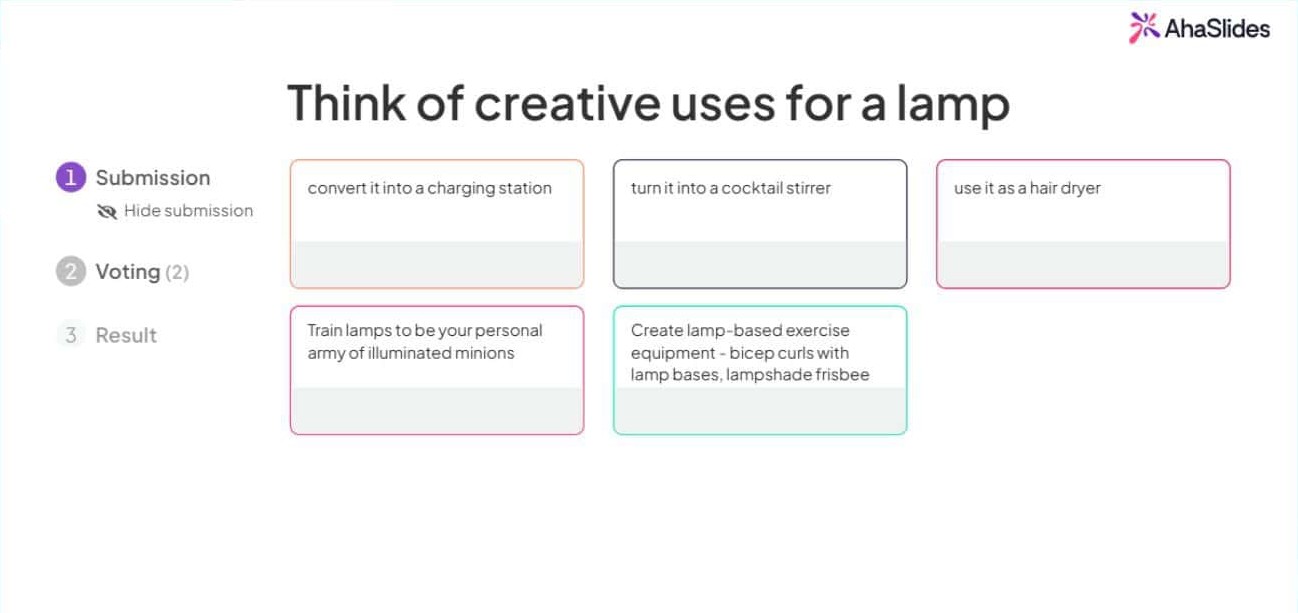
Whether you teach online or in person, brainstorming is a good starting point for teamwork. With the brainstorm slide in AhaSlides, students submit ideas, vote for their favourites and discuss the top ones together. To set it up:
- Crea un file AhaSlides conto.
- Choose a template from the library, or start from a blank presentation.
- Add a brainstorm slide.
- Type your question.
- Adjust the settings, such as how many votes each student gets.
Sfoglia la libreria dei modelli for ready-made classroom activities.
2. Set clear learning and assessment expectations
Students do not automatically know how you assess work or how to behave in class. Teach it directly:
- Set daily goals so students know what to achieve each day.
- Explain how to ask a question or share information politely.
- Model respectful ways to talk to classmates and visitors.
- Agree on dress and conduct rules, and practise active listening together.
3. Experiential learning
Every student learns at a different pace. Project-based activities let students combine hard and soft skills. Here is one to try with younger classes:
- Give every student a sapling to look after.
- Ask them to record its progress until it grows or blooms.
- Students research the plant and the factors that affect its growth.
- Termina con un quiz online on what they learned.
4. Help students find their voice
Lessons where the teacher talks and students only listen build few soft skills. Encourage a steady flow of communication, including small talk, and use games that make students speak and connect:
- Replace a surprise test with an interactive quiz.
- Utilizzare ruota girevole to pick the student who answers or speaks next.
- End the lesson with a Q&A so students practise asking questions.
5. Gestione della crisi
A crisis can be small, such as missing the school bus on the morning of a test, or large, such as setting a yearly budget for a sports team. Giving students a problem to solve builds real-world skills in any subject.
Try a simple game: give students a situation and a time limit to propose a solution. Make the scenarios local. If your region has frequent flooding or power cuts, base the crisis on that.
- Split the crisis into parts that match students’ knowledge levels.
- Ask questions and set a time limit for each answer.
- Use an open-ended slide so students can write detailed answers without a tight word limit.
6. Active listening and introductions
Active listening is one of the most useful soft skills. Students need to hear what a speaker says, understand it and respond well. Introductions are a natural place to practise, because meeting classmates and making friends matters to every student.
Students can each present a short slide deck about themselves, add a quiz for classmates and finish with a Q&A. They get to know each other and practise listening to their peers.
7. Teach critical thinking through feedback
When you teach soft skills to college students, critical thinking is one of the most important. Many students find it hard to analyse facts, form a judgement and give feedback, especially to an authority figure.
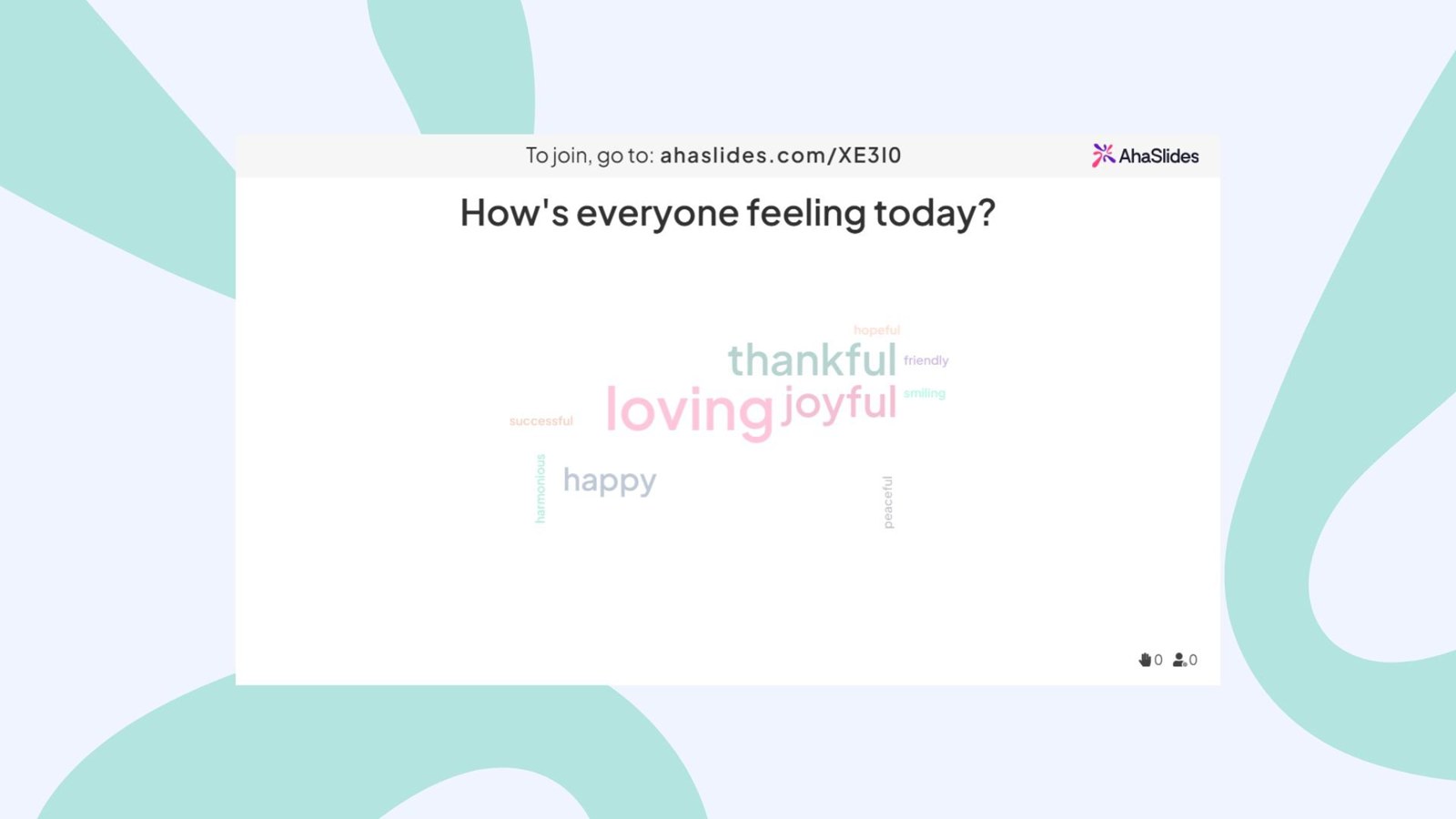
Asking for feedback is a good way to practise. Ask students how the class and the teaching methods are going. A nuvola di parole dal vivo works well: the most common answers appear largest, so you see the group’s view at a glance.
- Ask students how they feel about the class and the learning methods.
- Split the activity into sections with several questions.
- Set a time limit for submissions.
- Use the most popular ideas to improve future lessons.
8. Build confidence with mock interviews
Many students find it hard to speak in front of others, and stage fright is common among high school and college students. Mock interviews are a good way to practise. You can run them yourself or invite an industry professional to make them more realistic.
Prepare questions that match students’ subjects or career interests. Before the interview, explain what to expect, how to present themselves and how you will assess them. Students get time to prepare, and you can use the same criteria for evaluation.
9. Note-taking and self-reflection
Most people have left a meeting with a long list of instructions and remembered half of it. Note-taking is a soft skill worth teaching directly, because the ideas you capture in the moment often help you finish the task. Use these techniques in class:
- Minutes of meeting: pick one student each lesson to take notes, then share them with the class at the end.
- Annotazione: each student writes a short entry on what they learned that day, on paper or on a device.
- Thought diary: students note any questions or confusing points during the lesson, and you answer them in a Q&A at the end.
10. Peer review and the three Ps: polite, positive and professional
When students enter a professional setting for the first time, staying positive is hard. They meet people with different backgrounds, temperaments and attitudes. Peer review gives them a safe place to practise the three Ps:
- Educato: give feedback in a respectful tone.
- Positivo: start with what worked, then suggest one improvement.
- Saloni professionali: keep comments about the work, not the person.
You can add a simple reward system. Give extra points when a student admits a mistake, handles a problem professionally or takes feedback well. Add the points to a class total, or give a small prize at the end of each week.
Conclusioni
Soft skills should be part of every student’s learning. As an educator, create regular chances for students to communicate, collaborate and take responsibility for their work. Interactive activities make that practice engaging, whether you teach in person or online. Iscriviti gratis to try these activities with your class, or browse the libreria di modelli per idee.
For more ideas, read our guides to idee di presentazione interattiva per gli studenti, idee per mappe mentali per gli studenti and what critical thinking is.