

Nel nostro ultimo webinar, il Dott. Karl Kapp ha affrontato una delle abitudini più comuni nell'insegnamento e nella formazione: chiedere "Avete domande?" senza ricevere alcuna risposta. Ecco cosa abbiamo imparato.
Se vi è mai capitato di chiedere a una platea "Avete domande?" e di non ricevere risposta, sapete di cosa parlo. È proprio per questo che abbiamo organizzato questa sessione.
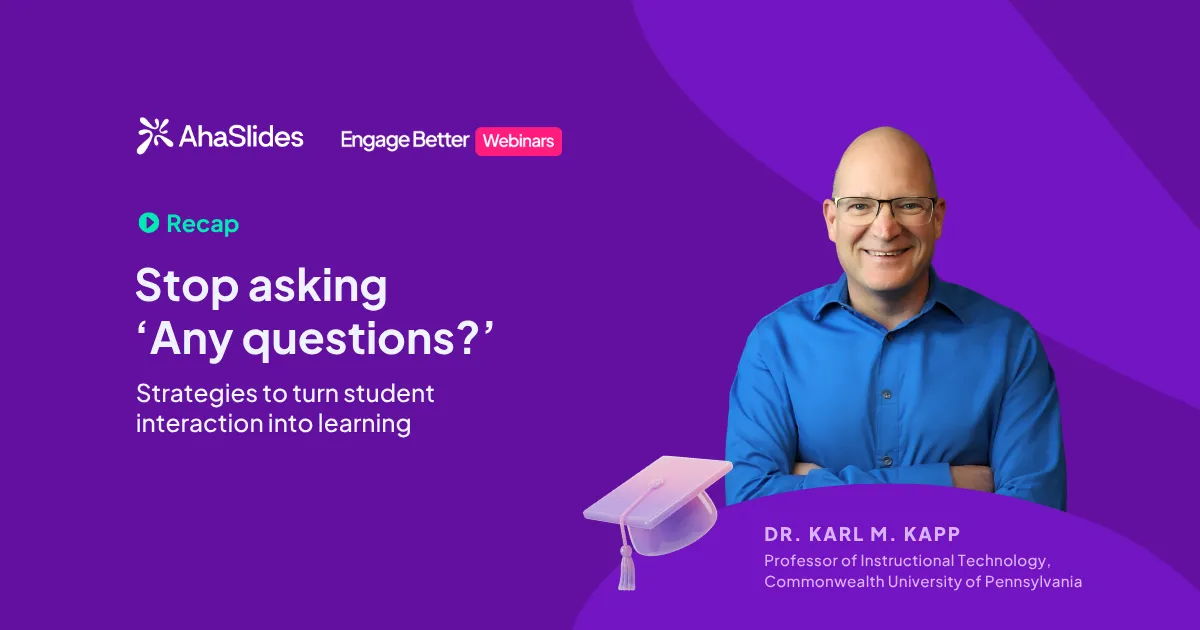
Il dottor Karl Kapp, professore di tecnologia didattica presso la Commonwealth University of Pennsylvania, ha moderato la sessione a cui hanno partecipato persone da tutto il mondo. Ha illustrato i motivi per cui studenti e tirocinanti tendono a rimanere in silenzio e ha presentato tre modi pratici per sostituire la domanda "Avete domande?" con qualcosa che stimoli la riflessione.
Incontra il relatore
Karl vanta un'esperienza di oltre vent'anni nella progettazione didattica e nella gamification. È autore di diversi libri, tra cui "The Gamification of Learning and Instruction", è membro di The Learning Guild (The Learning Guild) e ha ricevuto il premio "Distinguished Contribution to Talent Development Award" di ATD (American Training Director).
La sessione ha messo in pratica ciò che predicava: Karl ha condotto sondaggi in diretta, un quiz, un'attività con spille e una sessione di brainstorming aperta a tutti.
Il suono del silenzio
Karl ha iniziato con un sondaggio in diretta sulla frequenza con cui i colleghi chiedono agli studenti "avete domande?", per poi suddividere i tipi di domande in tre categorie:
- Domanda a risposta chiusa: un semplice sì o no.
- Domande aperte – “Quali domande avete?”
- Le domande che richiedono riflessione necessitano di analisi, valutazione o previsione.
Da lì, Karl ha analizzato i motivi per cui gli studenti rimangono in silenzio: la formulazione stessa della domanda, il sovraccarico cognitivo dovuto a troppe informazioni contemporaneamente, la necessità di tempo per elaborare le informazioni, la paura di apparire impreparati di fronte ai compagni, una semplice mancanza di fiducia in se stessi e, spesso, il non avere ancora le conoscenze sufficienti per sapere cosa chiedere.
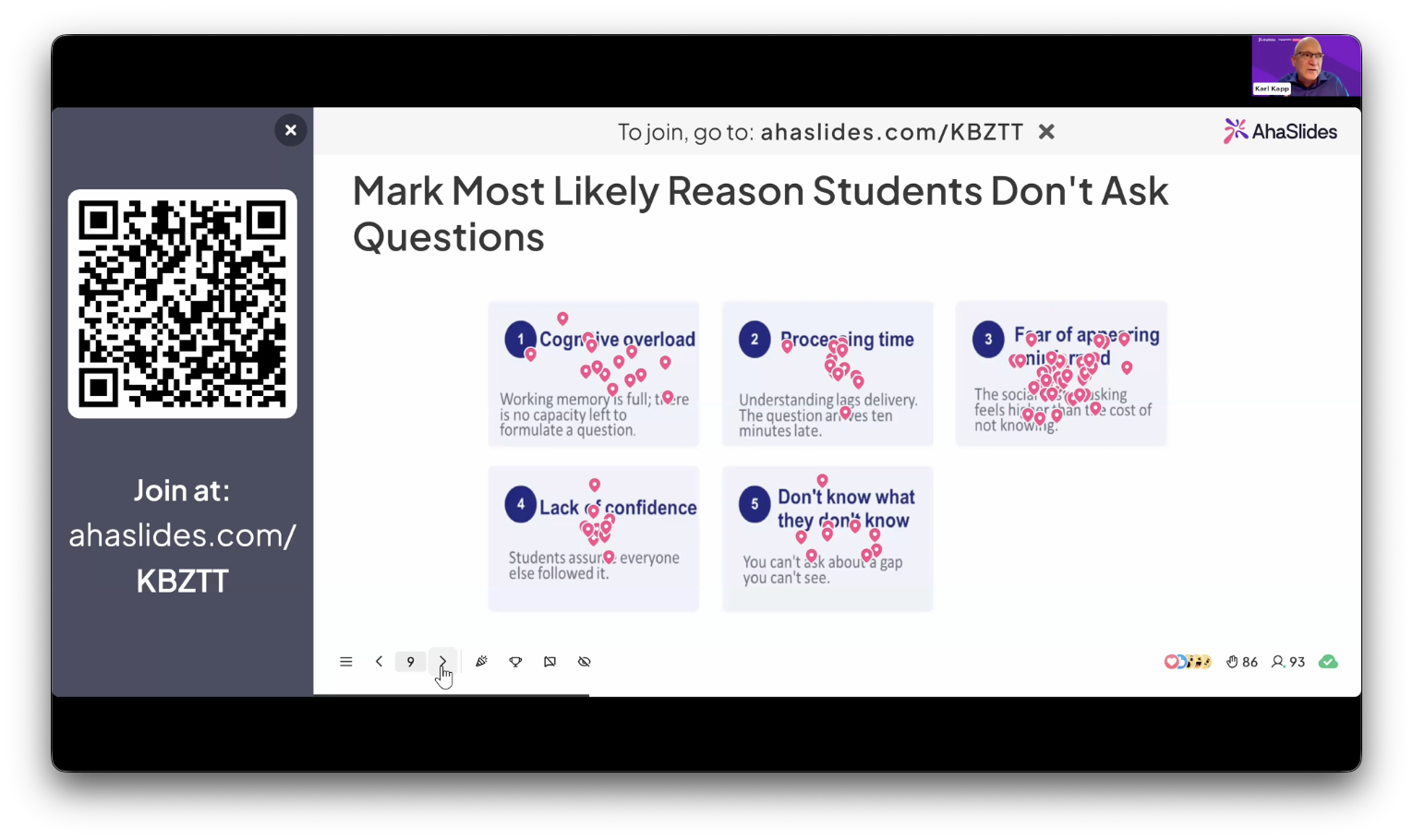
I partecipanti appuntano le loro risposte sulla diapositiva che mostra i motivi per cui gli studenti non fanno domande.
È stato schietto riguardo a un consiglio comune: "c'è un detto, non fare domande di cui non conosci la risposta... Penso che sia un detto orribile". Dal suo punto di vista, è La curiosità, non la certezza, è ciò che guida l'apprendimento..
Strategia 1: narrazione interattiva
Invece di presentare un concetto direttamente, Karl crea uno scenario e immerge chi apprende al suo interno. Lo ha dimostrato dal vivo con "Dragonmon Go", uno scenario di game design in cui i partecipanti dovevano scegliere tra due approcci di onboarding per i giocatori. La struttura è la seguente:
- Presenta uno scenario
- Fermati in un punto decisionale
- Chiedi agli studenti di scegliere
- Rivela il risultato
- Discuti il perché
Questa tecnica impone un impegno. Come ha spiegato Karl, una volta scelta una risposta, "se si sbaglia, si crea una dissonanza cognitiva. Se si indovina, si riceve un rinforzo positivo". In entrambi i casi, chi apprende è motivato a capire il perché.
Strategia 2: sondaggi per stimolare la riflessione
La seconda strategia di Karl ha ridefinito lo scopo di un sondaggio. All'inizio della sua carriera, ha affermato, l'aspetto principale dei software per sondaggi era il monitoraggio delle presenze, "quello che, a suo parere, era l'elemento meno attraente". Ciò che contava, invece, era far interagire le persone e stimolare la loro riflessione in modo immediato.
Quattro tipologie di sondaggio che raccomanda:
- Previsione: cosa succederà dopo?
- Decisione: quale opzione sceglieresti?
- Fiducia: quanto sei sicuro della tua risposta?
- Applicazione: dove si inserisce questo nel tuo lavoro?
Il filo conduttore, come ha affermato lui stesso, è che "non tutti i sondaggi sono uguali": un sondaggio che si limita a verificare la comprensione è molto meno utile di uno che chiede a qualcuno di prendere posizione e di difenderla.
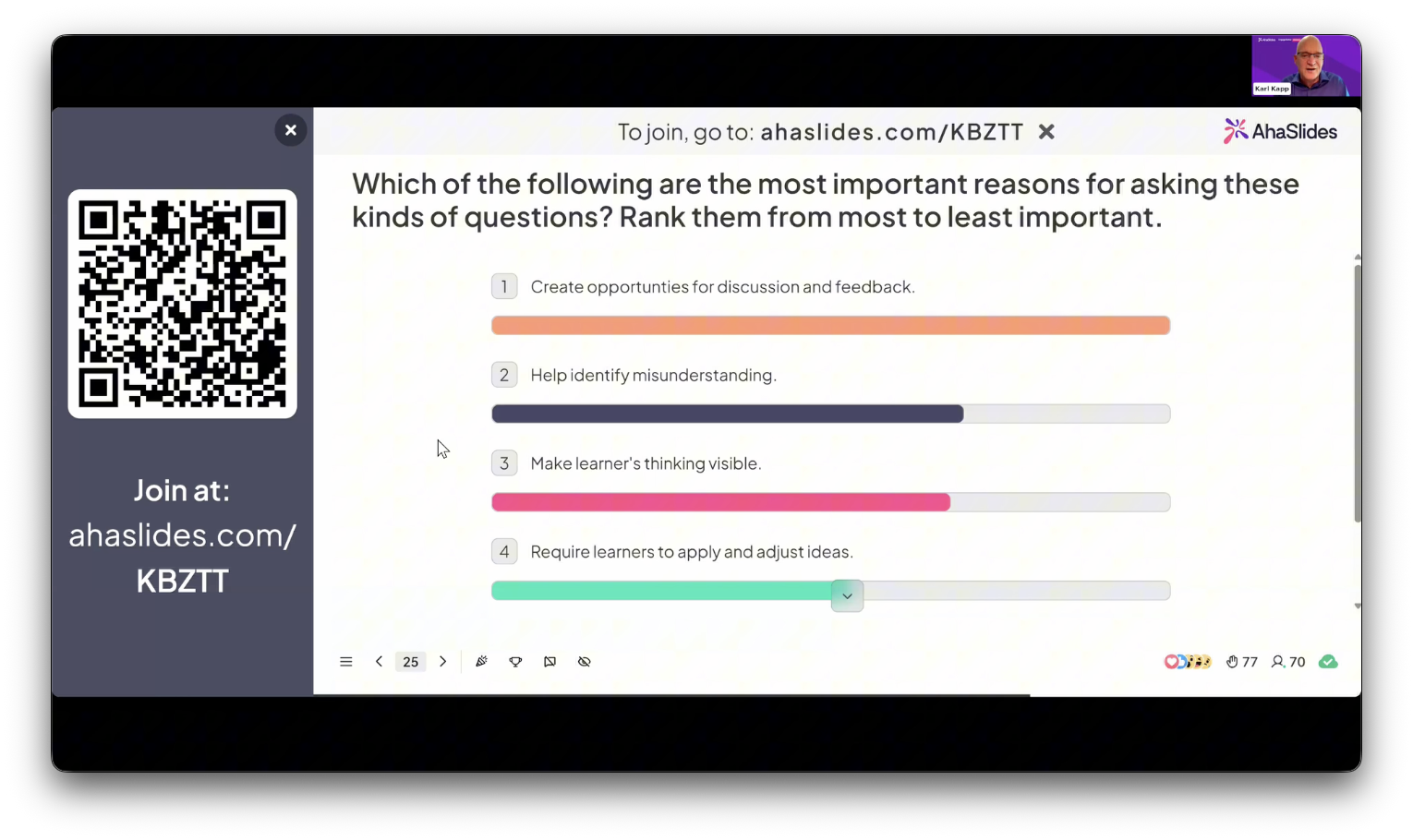
Risultati in tempo reale del sondaggio sulle ragioni più importanti per porre domande basate su previsioni, decisioni e livelli di fiducia.
Il debriefing è importante quanto il sondaggio stesso. Ecco le domande di approfondimento preferite da Karl:
- Perché hai scelto quella risposta?
- Quali prove supportano la tua scelta?
Strategia 3: brainstorming e generazione di idee
Per generare idee, Karl ha indicato tre tecniche:
- Pensa alla condivisione
- post-it digitali o fisici
- Idee improvvise che durano un minuto, senza autocensura.
Tutti e tre incoraggiano gli studenti a partecipare attivamente, anziché limitarsi ad assistere passivamente a una lezione.
Ha inoltre sollevato un monito sull'intelligenza artificiale, facendo riferimento a un suo articolo sull'argomento: l'IA sta eliminando l'"attrito" del ragionamento. Il suo consiglio non era di evitare l'IA, ma di utilizzarla in modo deliberato, prima con un brainstorming, poi usando l'IA per ottenere una prospettiva diversa, invece di lasciare che salti completamente la fase di riflessione.
Strategie chiave, in pratica
Se volete provare a sostituire la domanda "Avete domande?" nella vostra prossima sessione, i tre spunti di Karl, già pronti all'uso, sono un ottimo punto di partenza:
- Qual è un'idea che potresti mettere in pratica domani?
- Quale parte di questo concetto ti sembra più utile?
- Spiega questo con parole tue alla persona accanto a te.
Ciascuna di queste richieste è specifica e di basso profilo, piuttosto che un invito generico che nessuno saprebbe come interpretare.
L'asporto
Karl ha concluso con una sfida, ed è una nota appropriata anche per chiudere questo riepilogo: "iniziate in piccolo... prendete uno o due elementi su cui vi ponete sempre la domanda 'ci sono domande?', e applicate semplicemente una di queste tecniche."
Non si tratta di una revisione completa del metodo di insegnamento o di allenamento, ma semplicemente di sostituire una singola abitudine con qualcosa che produca effettivamente una risposta.
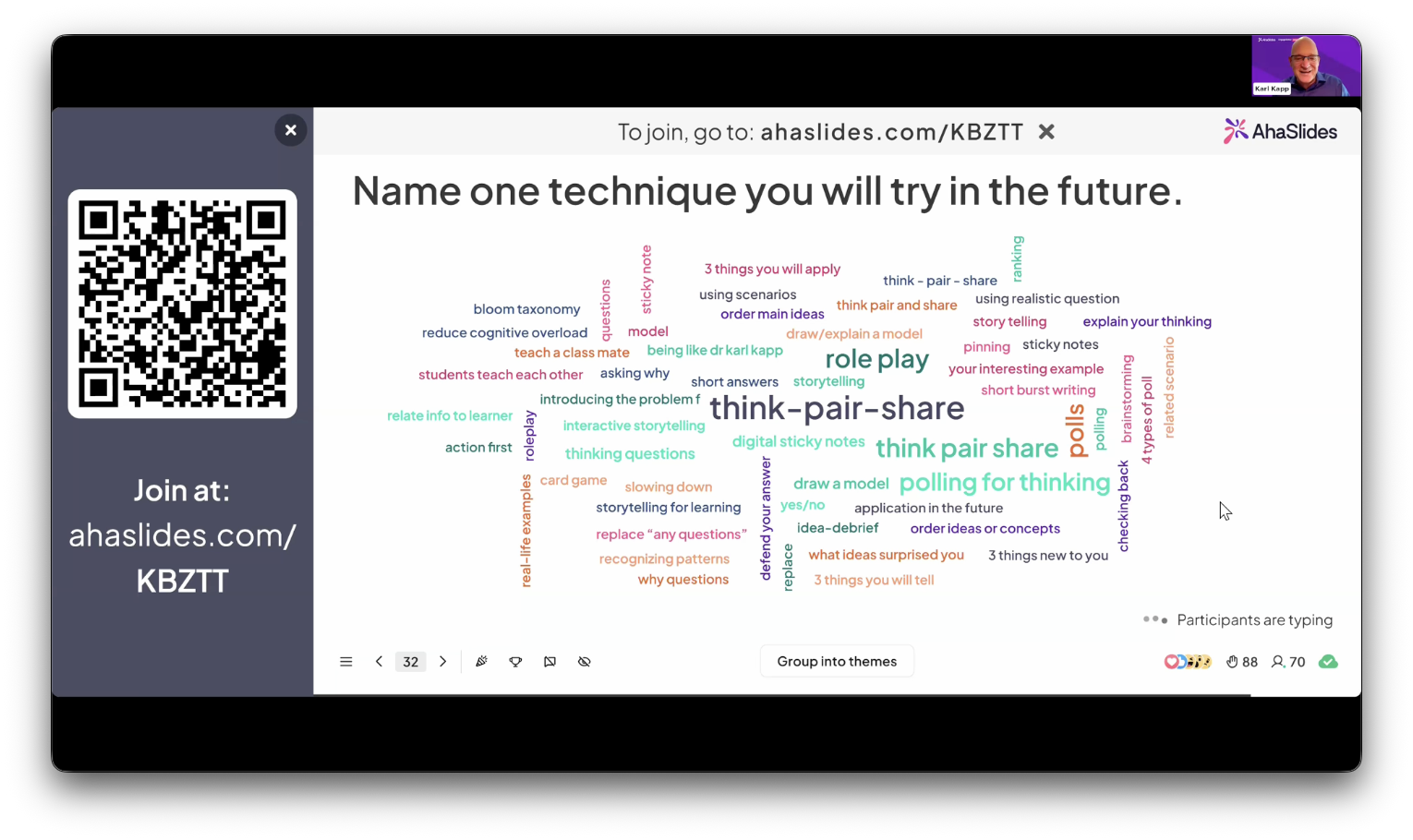
Nuvola di parole con le risposte dei partecipanti
Guarda la registrazione completa per le dimostrazioni dal vivo di Karl, la sessione di domande e risposte con il pubblico e altri esempi tratti dalla sua esperienza in classe.