



Команда құрудың көпшілігі іс-әрекеттің дұрыс еместігінен емес, бір рет болғандықтан сәтсіздікке ұшырайды. Толық күндік жұмыстан тыс жұмыс, кәсіби фасилитатор, тамақтандырылған түскі ас, содан кейін дүйсенбіде қалыпты жағдайға оралу. Қызметкерлердің қатысуын зерттеу уақыт өте келе таралатын шағын, қайталанатын әлеуметтік өзара әрекеттесулер бір жылдық іс-шараға қарағанда командалық бірлікті нығайтуға көбірек әсер ететінін үнемі көрсетеді [1].
Төмендегі он іс-әрекеттің әрқайсысы бес минут немесе одан аз уақытты алады. Әңгіме басталса, кейбіреулері онға дейін созылады, бұл іс-шараның нәтижелі болып жатқанының белгісі. Әрқайсысында орнатуға болатын нақты қадамдар бар. AhaSlides сондықтан кездесу басталғанға дейін ешқандай дайындық жұмыстары жүргізілмейді.
Мұзжарғыштың әрекеттері
1. Викторина жарысы
Жұмыс істейді: қашықтан, гибридті
Жылдам командалық викторина - кездесудің басында адамдарды сөйлетудің ең оңай жолдарының бірі. Жеке адамдар емес, командалар бәсекелеседі, бұл мүшелердің бірден бір-біріне (немесе ...) сүйенетінін білдіреді. Slack (жапсырма) жауап бойынша консенсусқа жету үшін. Сіз кез келген нәрсе бойынша викторина жасай аласыз: компания туралы викторина, жалпы білім немесе команданың жеке басына сәйкес келетін поп-мәдениет тақырыбы.
Жеңімпаз командаға берілетін шағын сыйлық көп нәрсені қажет етпей, күш-жігерді арттырады. Нағыз құндылық - сыйлықтың өзі емес, ортақ сәт.
Орнату AhaSlides (5 минуттан аз)
- ашық AhaSlides және жасанды интеллект викторина генераторын пайдаланыңыз немесе кітапханадан дайын үлгіні таңдаңыз.
- Бағалау ережелерін және әр сұраққа таймерді орнатыңыз.
- «Ұсыныс» түймесін басыңыз, QR кодын көрсетіңіз және команданы телефондарына қосылуға шақырыңыз.
- Викторинаны іске қосып, әр сұрақтан кейін көшбасшылар тақтасын көрсетіңіз.
2. Жылнамалық марапаттар
Жұмыс істейді: қашықтан, гибридті
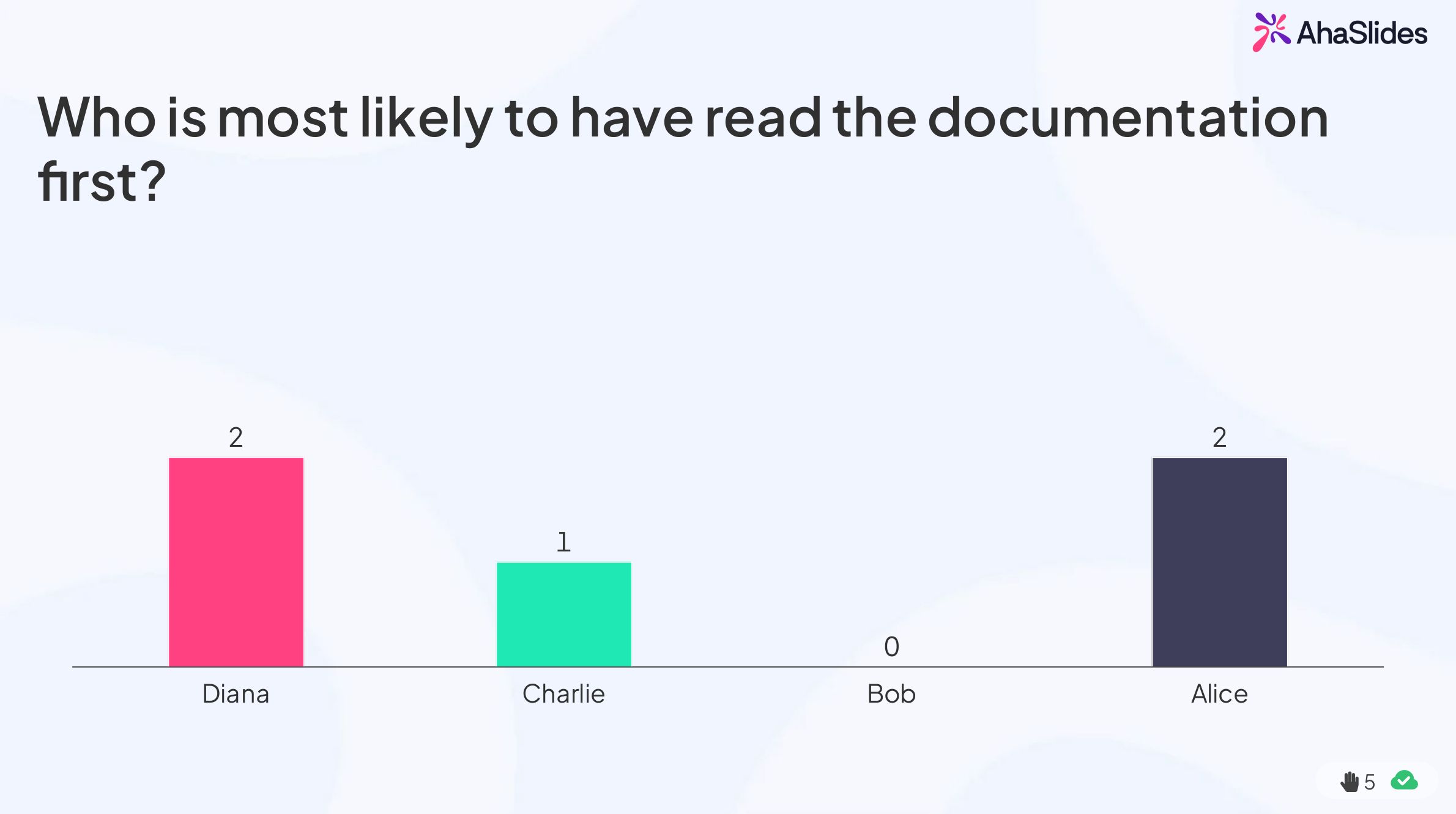
Орта мектеп жылнамаларында әрбір оқушыға ең жоғары баға берілетін: табысқа жету ықтималдығы жоғары, шынымен де табысқа жететін топ құру ықтималдығы жоғары. Дәл осы формат жұмыс орнына бейімделген санаттармен командалық контекстке де жақсы әсер етеді.
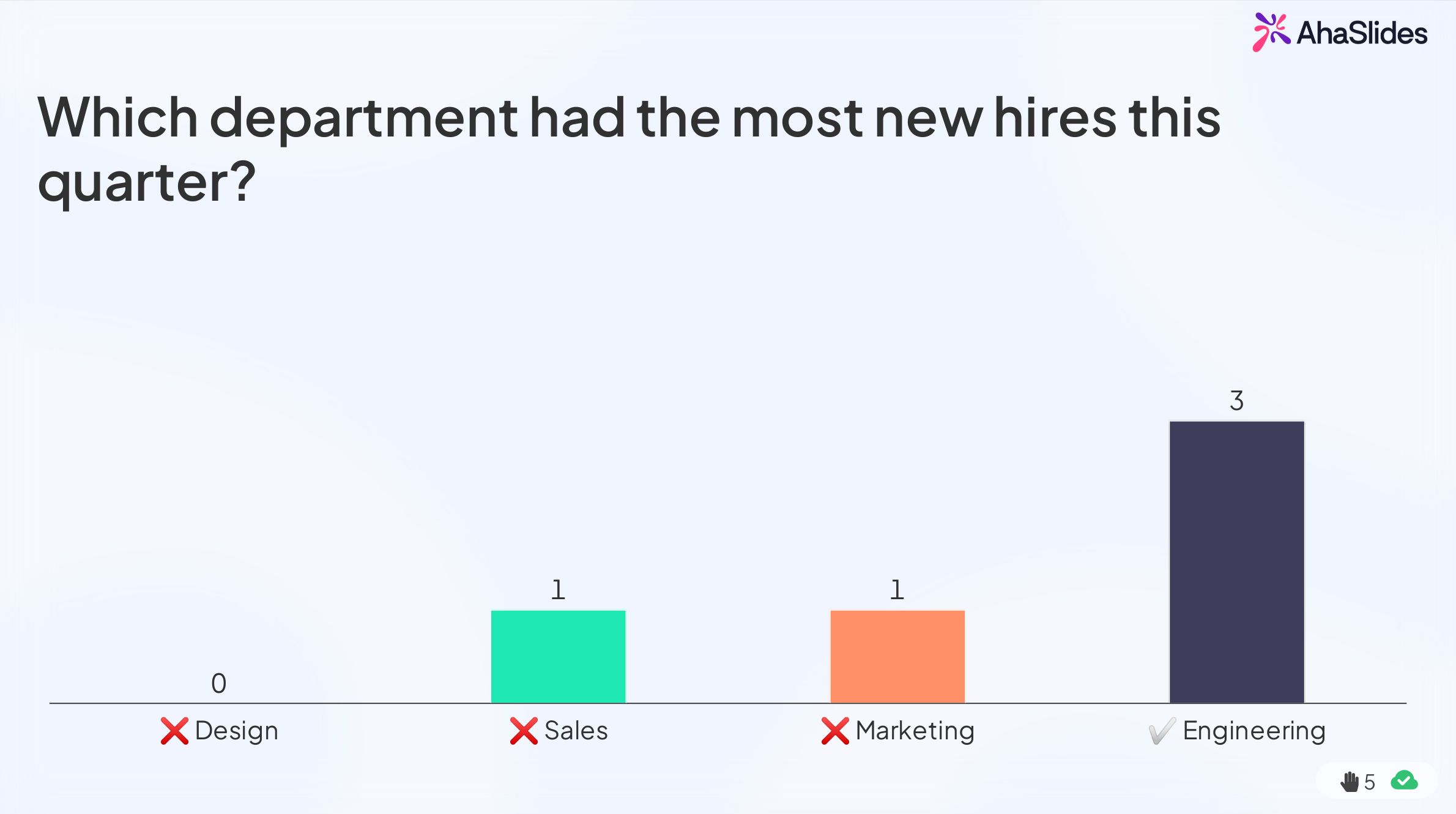
40 адамнан тұратын технологиялық компаниядағы бір фасилитатор мұны әрбір тоқсан сайынғы жалпы жиналыстың басында жүргізеді. «Құжаттаманы алдымен оқып шығуы мүмкін» немесе «қатені сағат 23:00-де түзетуі мүмкін» сияқты санаттарды басшылық емес, әріптестері ұсынады, бұл өнімділік емес, ынтымақтастық рухын сақтайды. Нәтижелер тікелей сауалнама ретінде көрсетіледі, сондықтан барлығы бір уақытта дауыс береді және ешкім өзін орынды сезінбейді.
Орнату AhaSlides (5 минуттан аз)
- Жаңа презентация жасап, «+ Слайд қосу» түймесін басып, содан кейін «Сауалнама» таңдаңыз.
- Әр марапатты сауалнама сұрағы ретінде жазыңыз, ал команда мүшелерінің аты-жөнін жауап ретінде жазыңыз.
- «Ұсыну» түймесін басып, QR кодын бөлісіңіз.
- Дауыс берулер келіп түскен кезде нәтижелерді тікелей эфирде көрсету.
3. Шелек тізімінің сәйкестігі
Жұмыс істейді: қашықтан, жеке кездесу
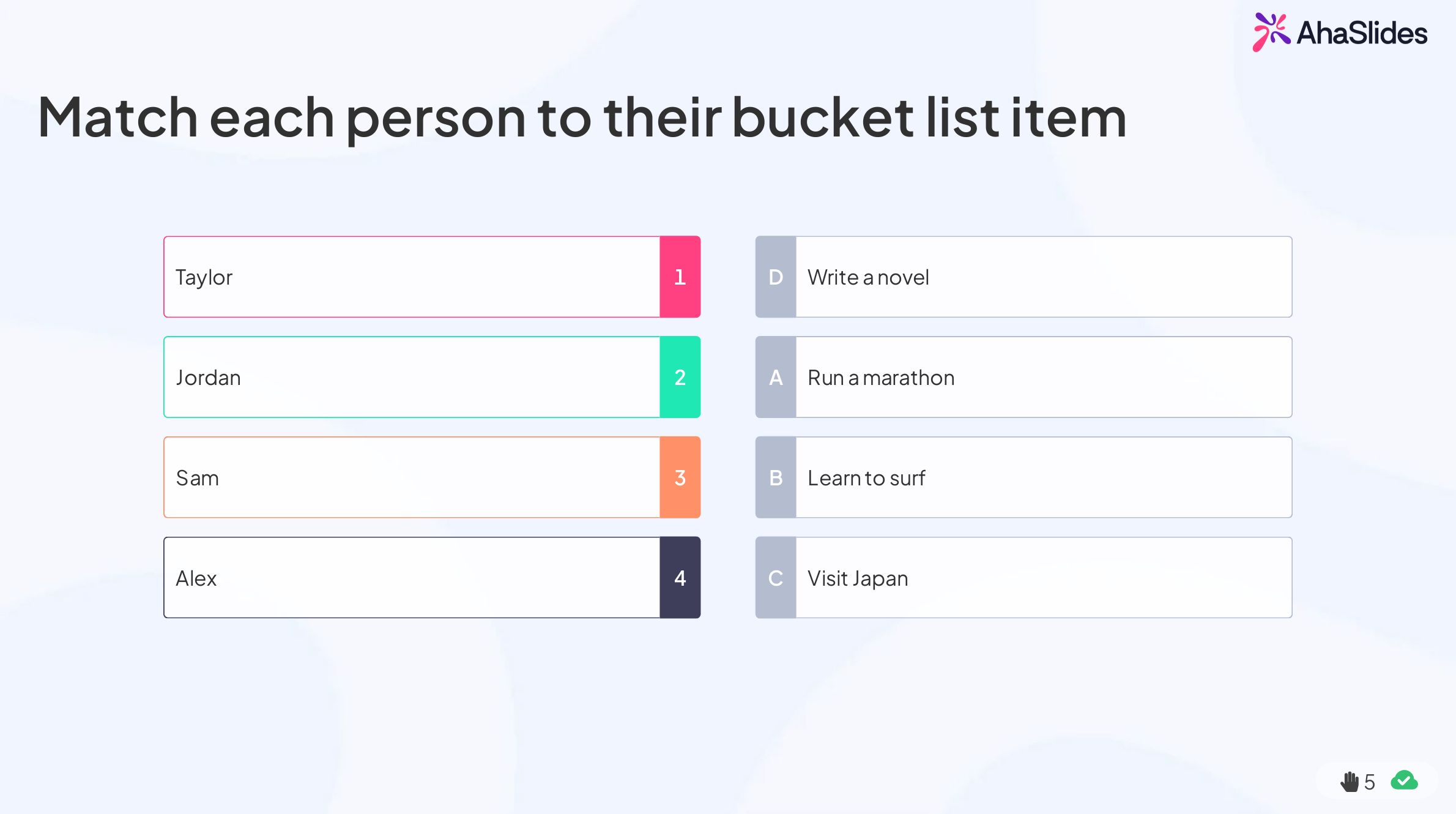
Әрбір команда мүшесі өз мақсаттар тізімінен бір элементті жасырын түрде ұсынады. Содан кейін топ әрбір элементті оны жазған адаммен сәйкестендіруге тырысады. Дұрыс болжау үшін әріптестеріңіз туралы біраз білім қажет, ал қателесу сіздің шын мәнінде қаншалықты аз білетініңізді көрсетеді, бұл әңгімені бастайды.
Бұл әсіресе жаңа командалармен немесе бөлім тез өсіп, адамдар жұмыс міндеттерінен тыс бір-бірін танып-білуге уақыттары болмаған кезде жақсы жұмыс істейді.
Орнату AhaSlides (5 минуттан аз)
- Кездесу алдында команда мүшелерінен қысқаша хабарлама немесе форма арқылы тапсырмалар тізімін жинаңыз.
- ашық AhaSlides, «Жаңа слайд» түймесін басып, «Жұпты сәйкестендіру» таңдаңыз.
- Бір жағына атауларды, ал екінші жағына себет тізімінің элементтерін араластырылған ретпен енгізіңіз.
- Тапсырманы орындап, соңында дұрыс жұптарды көрсетіңіз.
4. Үлкейтілген сүйіктілер
Жұмыс істейді: қашықтан
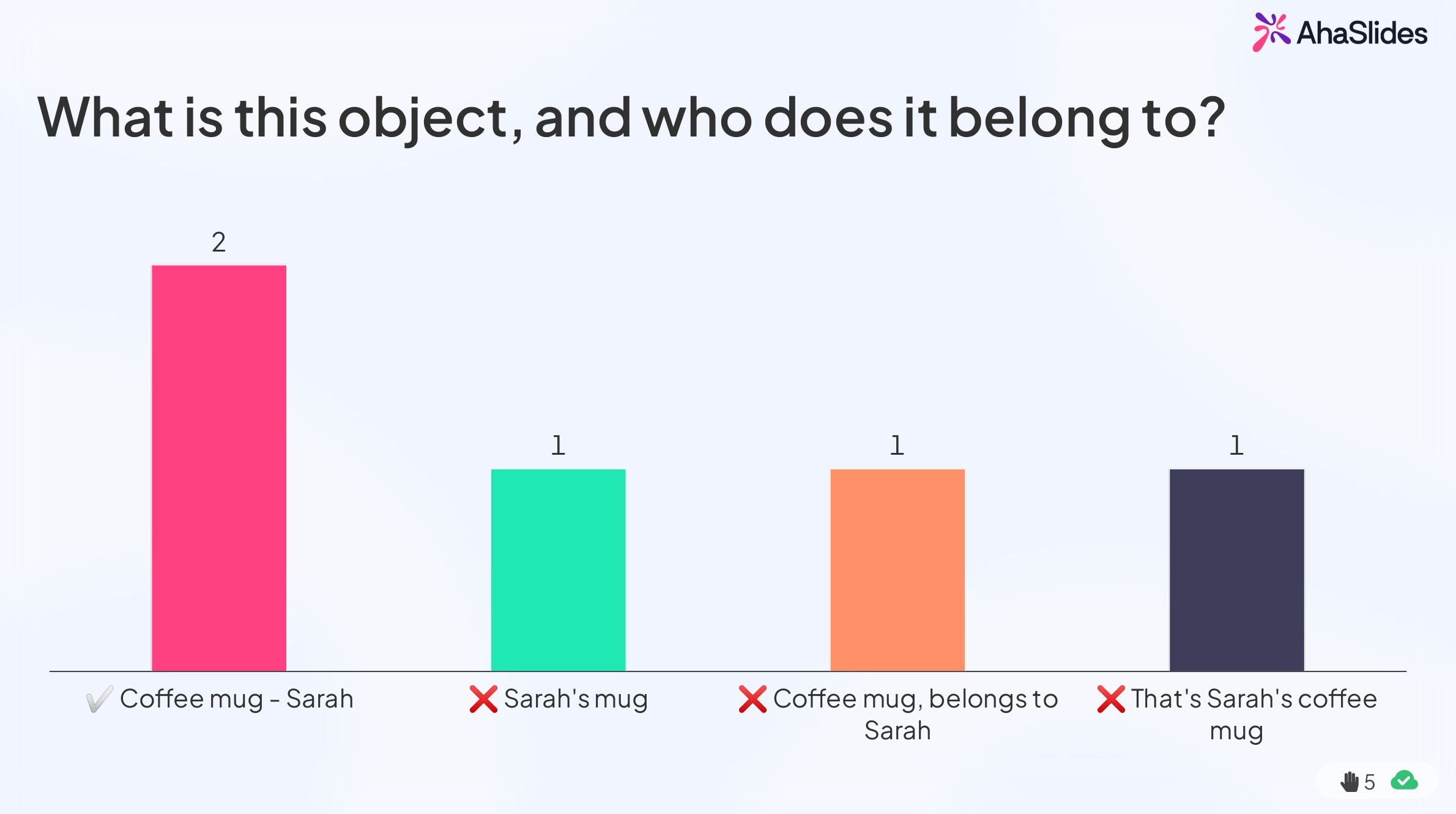
Сабақ алдында әр топ мүшесінен үстелінде немесе жұмыс орнында сақтайтын жеке затының жақыннан түсірілген суретін жіберуін сұраңыз. Тапсырма кезінде әрбір үлкейтілген суретті көрсетіп, топтан затты да, оның иесін де анықтауды сұраңыз.
Ашылғаннан кейінгі әңгіме осы әрекеттің өз орнын табатын жері туралы. Адамдар сол заттың олар үшін неліктен маңызды екенін түсіндіреді, бұл қысқа, бірақ шынайы жеке ашылуды тудырады, дәл уақыт өте келе таныстықты қалыптастыратын сәт.
Орнату AhaSlides (5 минуттан аз)
- Кездесу алдында команда мүшелерінің үлкейтілген фотосуреттерін жинаңыз.
- ашық AhaSlides және «Қысқа жауап» слайд түрін пайдаланыңыз.
- Слайдқа суретті қосып, «Бұл не және ол кімге тиесілі?» деп сұраңыз.
- Толық суретті көрсетіңіз және иесіне оқиғаны түсіндіруге мүмкіндік беріңіз.
Сенім құру қызметі
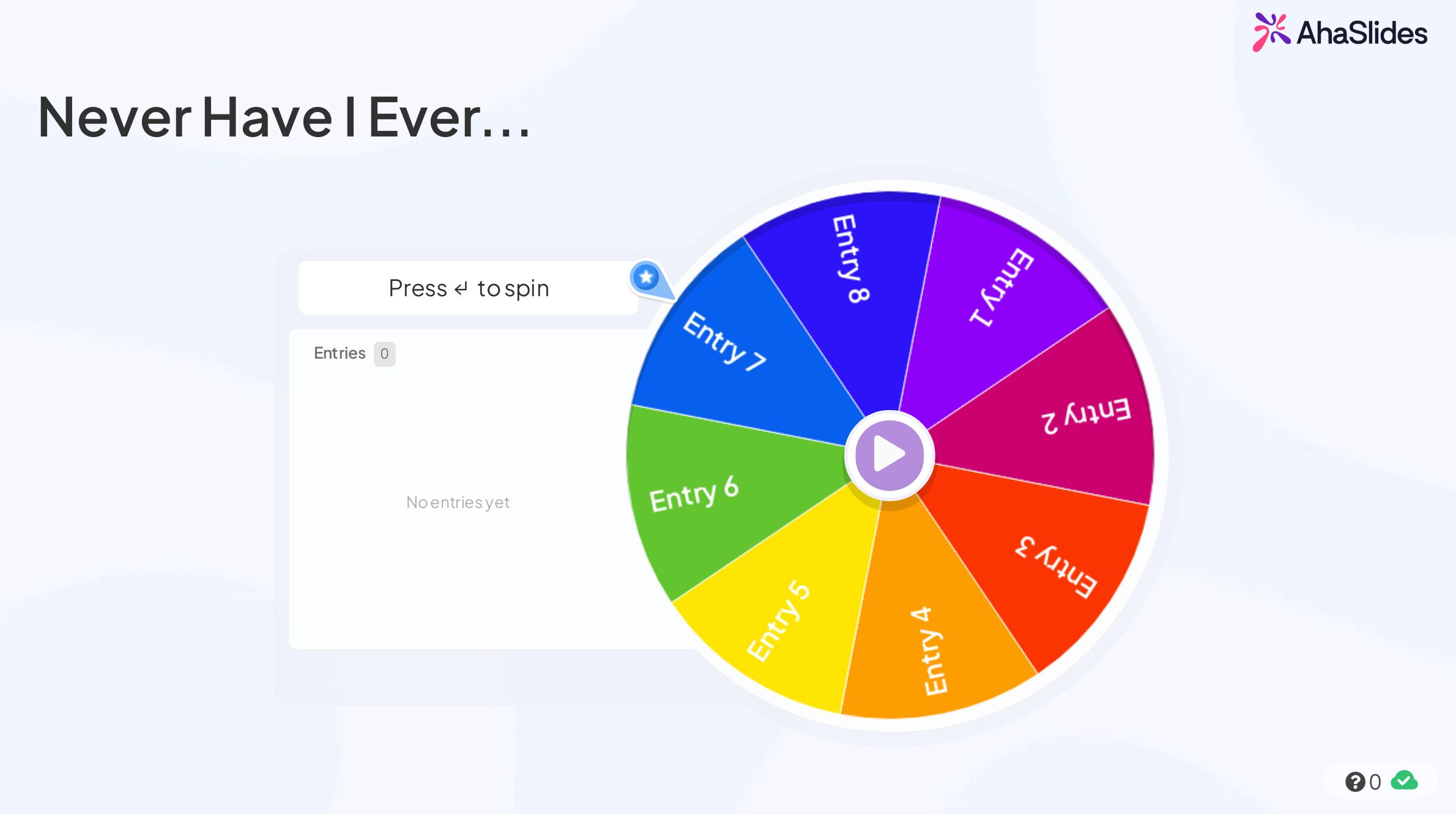
5. Мен ешқашан болған емеспін
Жұмыс істейді: қашықтан, жеке кездесу
Ойыншылар ешқашан жасамаған нәрселерін кезектесіп бөліседі, «Мен ешқашан жасамағанмын...» деп бастайды. Сол нәрсені жасаған кез келген адам қолын көтереді (жеке) немесе эмодзимен (қашықтан басқару құралы) жауап береді. Бұл колледж кеші ойынына ұқсайды, әуені жеңіл, бірақ мәні шынайы ашықтық.
Сенімділіктің қалыптасуының себебі - ақпаратты ашу кез келген жерде сенімді қалыптастыратын себеппен бірдей: біреу ешқашан ұшақта болмағанын немесе бір кездері ит тамағының жарнамасын көріп жылағанын мойындағанда, олар әріптестеріне адамгершілікпен қарайды. Бұл өзекті.
Орнату AhaSlides (5 минуттан аз)
- ашық AhaSlides және «Айналмалы дөңгелек» мүмкіндігін пайдаланыңыз.
- Саяхат, хобби және жұмыс жағдайларын қамтитын 10-нан 15-ке дейінгі «Мен ешқашан ешқашан болған емеспін» деген тұжырымдарды енгізіңіз.
- Дөңгелекті айналдырып, тұжырымды таңдаңыз, содан кейін команданың жауап беруіне мүмкіндік беріңіз.
- Бұл істі бастан кешірген кез келген адам қысқаша оқиғамен бөліседі.
6. Екі шындық, бір өтірік
Жұмыс істейді: қашықтан, жеке кездесу
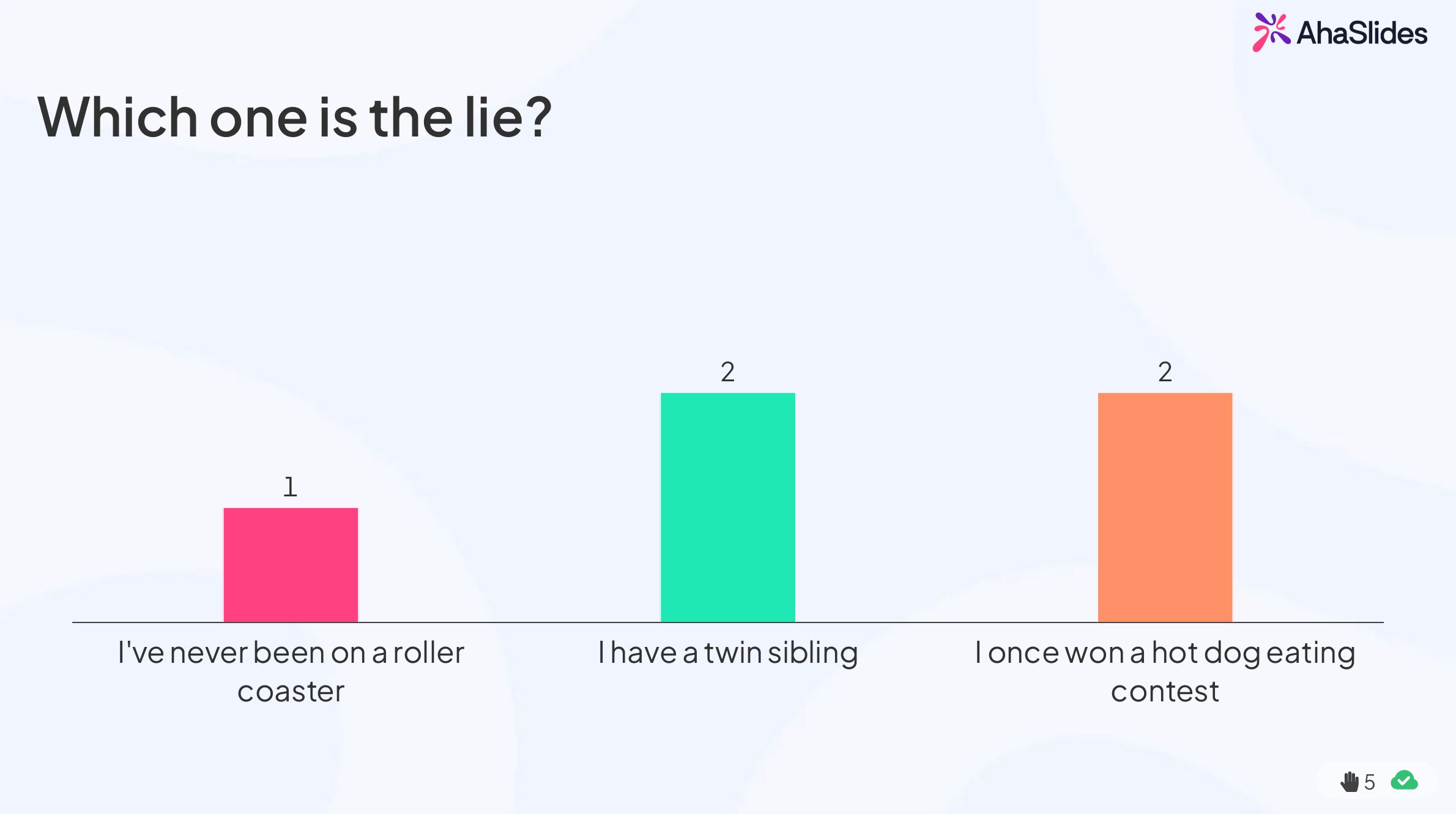
Бір адам өзі туралы үш тұжырыммен бөліседі: екеуі шын, біреуі жалған. Команданың қалған мүшелері өтірік деп санайтын пікірлеріне дауыс береді, содан кейін ашпас бұрын қосымша сұрақтар қояды. Бұл формат адамдарды қызықты шындықтарды ойлап табуға шақырады, бұл көбінесе әріптестерін өтірікке қарағанда көбірек таң қалдырады.
Бұл жұмысқа қабылдау апталарына өте қолайлы. Жаңа қызметкер жұмысқа орналасқан кезде, қолданыстағы команда олар туралы бірден біледі, ал жаңа қызметкер команданың жұмысқа орналасуға дайын екенін біледі.
Орнату AhaSlides (5 минуттан аз)
- ашық AhaSlides және «Сауалнама» слайдын жасаңыз.
- Сауалнама нұсқалары ретінде үш мәлімдемені белгілеп, «Қайсысы өтірік?» деп сұраңыз.
- Дауыс бермес бұрын командаға сұрақтар қою үшін 60-90 секунд беріңіз.
- Жауапты ашып, әрбір тұжырымның артындағы шынайы оқиғамен бөлісуге мүмкіндік беріңіз.
7. Анонимді ұят әңгімелер
Жұмыс істейді: қашықтан, жеке кездесу
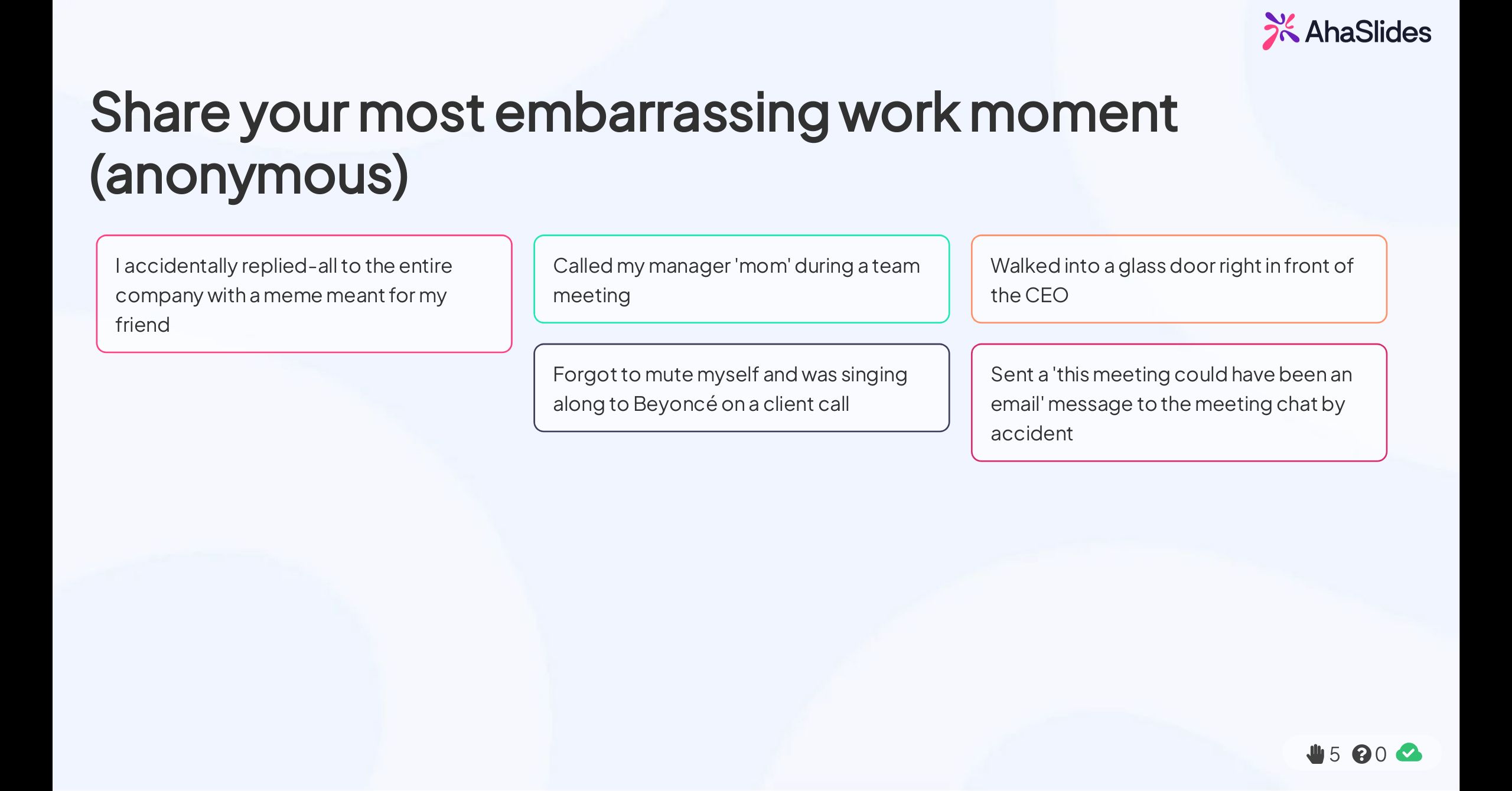
Әркім ұят сәттерді жазбаша түрде, жасырын түрде ұсынады. Топ кімнің әңгімесі екенін дауысқа салған кезде, жетекші әрқайсысын дауыстап оқиды. Дауыс беруден кейін нағыз автор анықталады.
Анонимділік мұнда маңызды. Адамдар есімдері көрсетілмеген кезде еркін бөліседі, ал пайда болатын әңгімелер көбінесе көпшілік алдында өз еркімен сөйлейтін кез келген әңгімеден әлдеқайда қызықты болады. Бұл сондай-ақ ойын алаңын теңестіреді: ешкім кімнің не жазғанын алдын ала білмейді, сондықтан ешкім көрермендер үшін өнер көрсетпейді.
Орнату AhaSlides (5 минуттан аз)
- «Ашық» слайд жасаңыз AhaSlides және QR кодын көрсетіңіз.
- Командаға анонимді түрде әңгіме жіберу үшін екі минут уақыт беріңіз.
- Әрбір жұмысты дауыстап оқып, авторды табу үшін жылдам сауалнама жүргізіңіз.
- Шынайы атауын көрсету үшін әрбір оқиғаның үстіне меңзерді апарыңыз.
8. Нәресте суреттері
Жұмыс істейді: қашықтан, гибридті
Кездесу алдында әр топ мүшесінен бір нәресте немесе балалық шақтағы суретті жинаңыз. Оларды бір-бірлеп көрсетіп, топтан әр фотосуретте кім бейнеленгенін анықтауды сұраңыз. Нақты кім екені анықталғаннан кейін, адам сол кезден қысқаша естеліктермен бөліседі.
Әсері сенімді түрде жылы. Адамдар әріптестерінің бала кезіндегі келбетіне шынымен қызығушылық танытады, ал фотосуреттер кездесу аяқталғаннан кейін де ұзақ уақыт бойы әңгімеде қалады.
Орнату AhaSlides (5 минуттан аз)
- Сабаққа дейін әр топ мүшесі балалық шағының бір суретін жинаңыз.
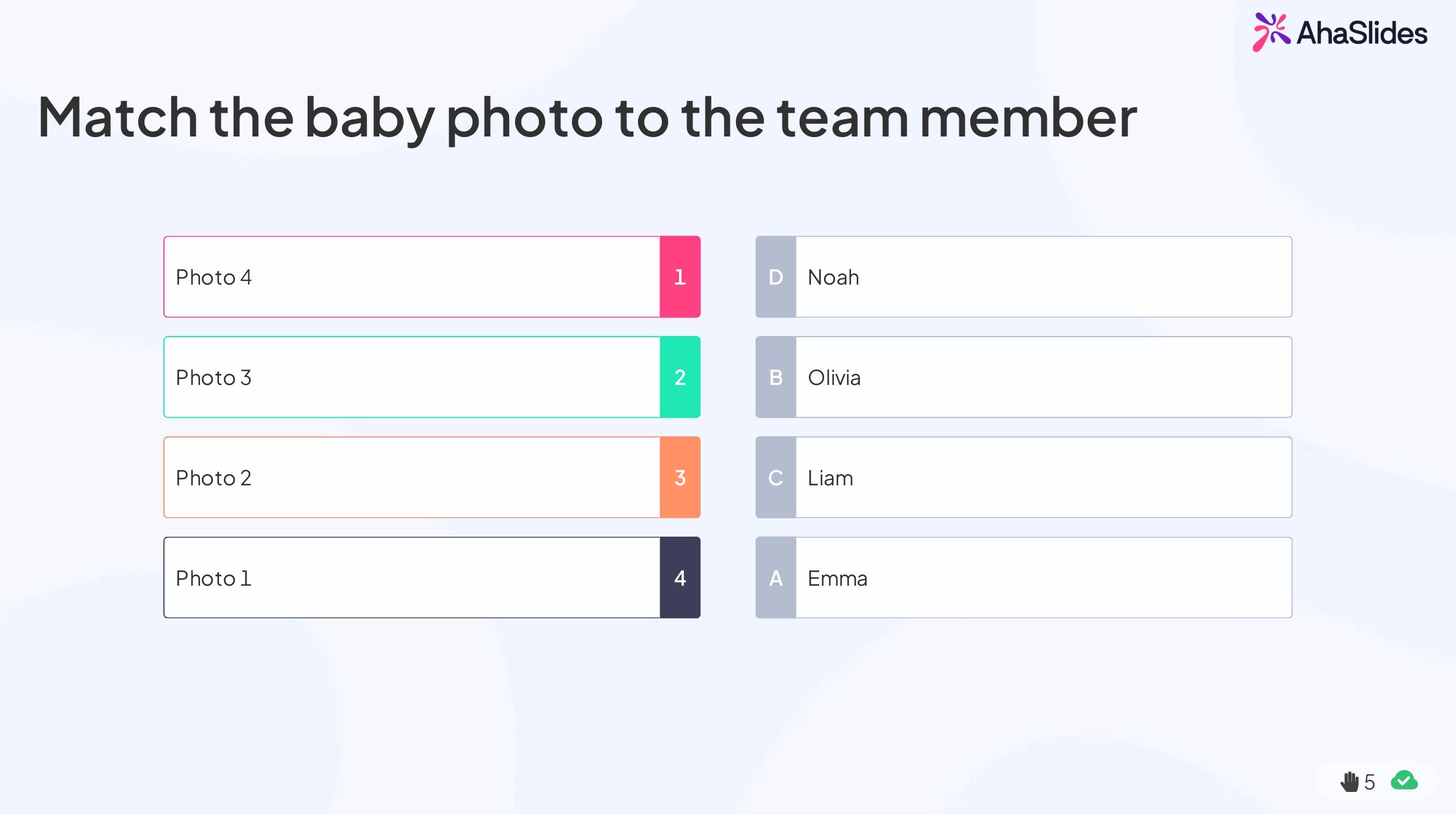
- ашық AhaSlides, «Сәйкес жұп» слайдын жасап, бір жағына аттарды енгізіңіз.
- Фотосуреттерді қарама-қарсы жаққа араластырылған ретпен қосыңыз.
- Барлығынан фотосуреттермен аттарды сәйкестендіріп, жауаптарын бірге ашыңыз.
Мәселелерді шешуге арналған іс-шаралар
9. Шөлді арал апаты
Жұмыс істейді: қашықтан, жеке кездесу
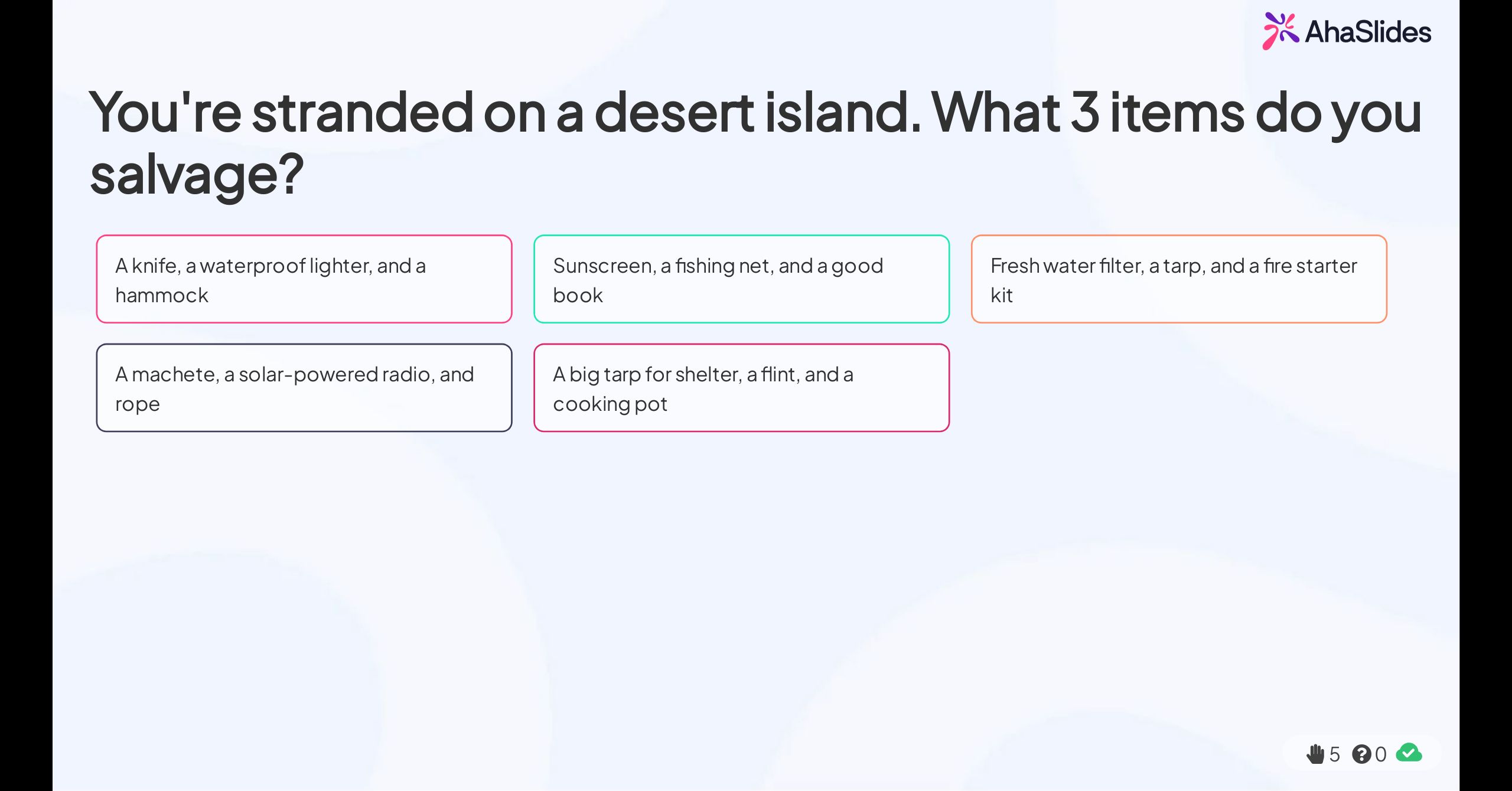
Сіздің командаңыз адам тұрмайтын аралға апатты жағдайда қонды. Әр адам қираған жерден үш затты құтқара алады. Мәселе мынада: әріптестеріңіз жауаптарын айтпас бұрын не таңдайтынын болжауыңыз керек.
Болжамдардың дұрыс болуы біреудің басымдықтары мен құндылықтарын қаншалықты жақсы білуіңізге байланысты. Қысқаша болғанымен, қорытынды көбінесе адамдардың тәуекел, практикалық және шын мәнінде не нәрсеге мән беретіні туралы ойлауындағы нақты айырмашылықтарды көрсетеді, бұл кез келген бірлескен жұмыс ортасында пайдалы контекст болып табылады.
Орнату AhaSlides (5 минуттан аз)
- ашық AhaSlides және «Ашық» слайд жасаңыз.
- Уақыт біткенше, барлығынан үш элементін бір уақытта теруді сұраңыз, бөліспей.
- Тақырып ретінде бір ойыншыны таңдап, әркімнің оларға болжағандарын көрсетіңіз.
- Дұрыс болжамдар үшін ұпайлар беріңіз және нақты жауаптарды көрсетіңіз.
10. Бес минуттық ми шабуылы
Жұмыс істейді: қашықтан, жеке кездесу
Нақты, төмен тәуекелді мәселеге бағытталған құрылымдалған ми шабуылы командаларға жоғары тәуекелді жобаның қысымынсыз идеяларды қалыптастыруға тәжірибе береді. Зерттеулер құрылымдалған топтық ми шабуылы, әсіресе идеялар бір уақытта дауыстап айтылудың орнына жазбаша түрде ұсынылған кезде, әлеуметтік тежелу мен бірінші ұсынысқа сүйену үрдісін азайту арқылы кең ауқымды идеяларды тудыратынын көрсетеді [2].
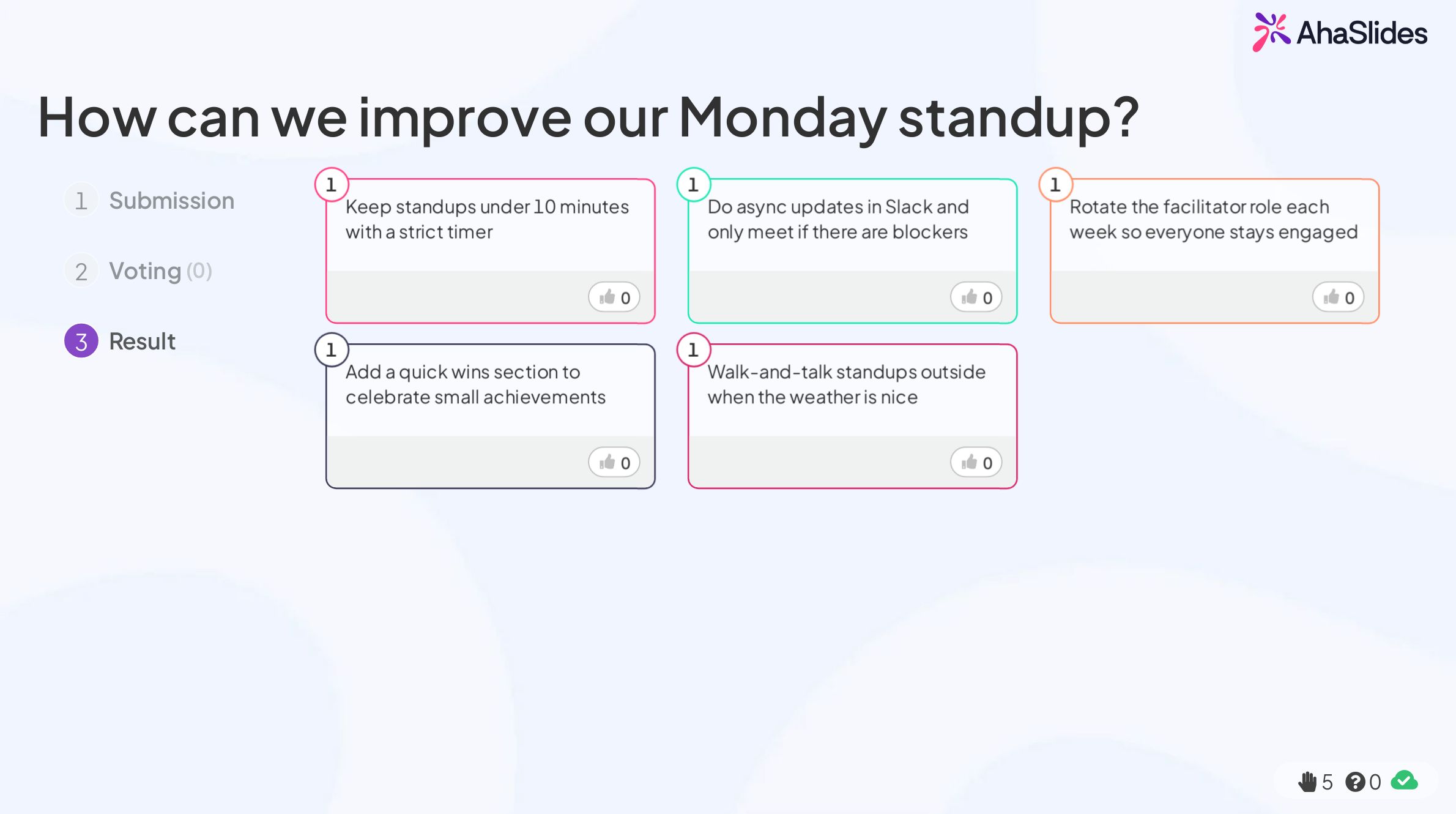
Нақты, бірақ шұғыл емес мәселені таңдаңыз: дүйсенбідегі стендапты қалай жақсартуға болады, келесі командалық мереке үшін не істеу керек немесе қандай процесті жеңілдетуге болады. Барлығына идеялар ұсынуға екі минут уақыт беріңіз, содан кейін ең жақсыларын дауыс беріңіз.
Нәтиже әдеттен маңызды емес. Төмен тәуекелді жағдайларда бірлескен идеяларды қолданатын топтар тәуекелдер артқан кезде бұл үлгілерді оңайырақ қолданады.
Орнату AhaSlides (5 минуттан аз)
- ашық AhaSlides және «Миға шабуыл» слайдын жасаңыз.
- Мәселені сұрақ ретінде теріп, QR кодын көрсетіңіз.
- Екі минуттық таймер орнатыңыз және барлығына бір уақытта идеялар ұсынуға мүмкіндік беріңіз.
- Барлық материалдарды көрсетіп, топтан сүйіктілеріне дауыс беруін сұраңыз.
Қысқа әрекеттерді сақтау
Бес минуттық кез келген іс-шараның құндылығы бірден емес, жинақталады. Осы іс-шаралардың бірін бір рет өткізу күлкі мен жақсы көңіл-күй сыйлайды. Әр апта сайынғы кездесудің басында әртүрлі форматтарда кезектесіп өткізу бірнеше ай бойы бір командалық күн қайталай алмайтындай таныстық қалыптастырады.
Айналдыруға болатын форматтар көп болған кезде әртүрлі форматтарды айналдыру оңайырақ. Жоғарыдағы форматтардан басқа, AhaSlides 30-дан астам интерактивті слайд түрлерін жібереді және шамамен ай сайын жаңаларын қосады — «Жауапты таңдау» (бірнеше жауап нұсқасы бар викторина), «Жіктеу», «Жұптарды сәйкестендіру», «Дұрыс рет», «Жауапты түрлендіру», «Сөз бұлты», «Ашық», «Сұрақ-жауап», «Бағалау шкаласы», «Айналдыратын дөңгелек», «Миға шабуыл» және «Идея тақтасы» сияқты стандартты түрлерін, сондай-ақ «Шын немесе жалған», «Бұл немесе ол», «Бос орындарды толтыру», «Жауапты салу», «2x2 матрицасы», «Ұпайларды бөлу», «Үйрек жарысы» және YouTube-тен викторинаға арналған құрал сияқты жаңа түрлерін қамтиды.
Жаңа форматтардың бірнешеуі команда құруға жақсы сәйкес келеді:
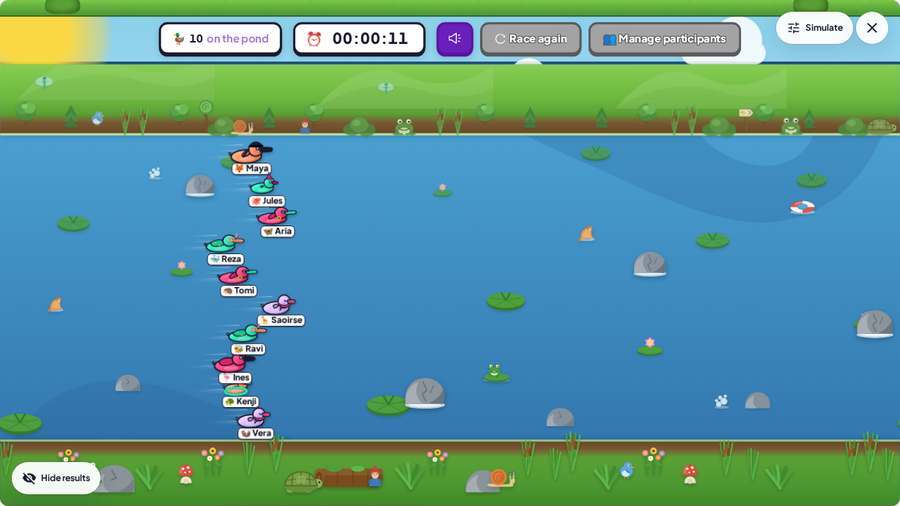
- Үйрек жарысы ойнақы кездейсоқ таңдаушы: мультфильм үйректерінің тізбегі экран арқылы жүгіреді және біреуі кездейсоқ жеңімпаз атанады. Бұл мұзды бұзудың, тапсырма берудің, сыйақы берудің немесе жай ғана жеңімпазды табудың көңілді, аз ставкалы тәсілі және ол тікелей эфирде көрсетіледі. AhaSlides қазір. Қай команда бірінші болатынын шешу немесе топтық жарыстың жеңімпазын анықтау үшін, әділ және бөлменің көрінетін жерінде пайдаланыңыз; шығармашылық тұрғыдан алғанда, жарыстың өзі ойын-сауыққа айналуы үшін жүлде немесе жеңіл жеңілдік беру үшін оны алаңнан тыс жерде өткізіңіз.
- Шын немесе жалған ойыншылар әрбір тұжырым бойынша шын немесе жалған жанайтын жылдам викторина. Оны компанияңыз немесе салаңыз туралы мифтерді жылдам ашу үшін пайдаланыңыз; шығармашылық тұрғыдан алғанда, адамдар алдын ала ұсынған фактілерден құрылған "командаластарыңызды қаншалықты жақсы білесіз" туры ретінде.
- Бұл немесе сол топ екі нұсқа арасында ауысып отыратын жылдам екілік сауалнама. Оны жеңіл сұрақтарға (кофе немесе шай, жағажай немесе таулар) қыздырыну жаттығуы ретінде пайдаланыңыз; келесі сыртқы орын немесе кездесу форматы сияқты нақты таңдаулар бойынша командалық қалауларды анықтау үшін шығармашылық тұрғыдан пайдаланыңыз.
- Бос орындарды толтырыңыз Ойыншылар еркін теретін немесе ашылмалы тізімнен таңдайтын жетіспейтін сөздері бар сөйлемді ұсынады. Оны командаластар негізгі компания сөз тіркестерін аяқтайтын құндылықтар мен бейімделуді қайталау үшін пайдаланыңыз; шығармашылық тұрғыдан ішкі әзілдің немесе ортақ командалық естеліктің негізгі ойын қайта құру үшін.
- Жауапты салу ойыншыларға жауаптарын телефондарына жазып, әрбір суретті үлкен экранда тікелей эфирде көрсетуге мүмкіндік береді. Оны қашықтағы топтарға арналған виртуалды Pictionary туры ретінде пайдаланыңыз; шығармашылық тұрғыдан алғанда, барлығынан «осы апта қалай өтті» деп сурет салуды сұрап, көңіл-күйді тез және оңай тексеріп көріңіз.
- YouTube викторинасы әлі де әзірлену үстіндегі жаңа формат: YouTube URL мекенжайын қойыңыз және бейнеден жасанды интеллект викторина сұрақтарын дайындаңыз. Оны командалық мәдениеттің қысқаша нұсқасын немесе жаттығу бейнежазбасын лезде сынаққа айналдыру үшін пайдаланыңыз; шығармашылық тұрғыдан алғанда, команда өскен музыкалық бейнежазбадан ностальгия раундын жасаңыз.
Gallup компаниясының жұмыс орнындағы жұмысқа орналасу бойынша зерттеуі белсенділігі жоғары командалардың белсенділігі төмен командаларға қарағанда 21%-ға жоғары табыстылық және 17%-ға жоғары өнімділік көрсететінін көрсетті [1]. Әлеуметтік байланыс - бұл жұмысқа орналасудың ең күшті қозғаушы күштерінің бірі, сондықтан кездесудің басындағы бес минут уақыт өте келе нақты нәрсеге айналады. Механизм жұмбақ емес: адамдар өздері білетін және сенетін әріптестері үшін көбірек жұмыс істейді.
Жоғарыда аталған іс-шаралар бюджетті, сыртқы жеткізушіні және арнайы білімді қажет етпейді. Олар небәрі бес минутты және бастау туралы шешімді қажет етеді.
Дереккөздер
[1] Гэллап. Американдық жұмыс орнының жағдайы. https://www.gallup.com/workplace/285674/improve-employee-engagement-workplace.aspx. Топтың жұмыс нәтижелері және өзара әрекеттесу туралы деректер.
[2] Зерттеу қақпасы. Командалық ми шабуылының тиімділігіне әсер ететін факторларды зерттеу (2009/2010). Ми шабуылының тиімділігіндегі команда құрамы, әлеуметтік ақпаратты өңдеу және интерактивті режимдерді зерттеу.