Traditional education runs on one pace, one syllabus and one set of materials for everyone. Self-directed learning flips that. You decide what to learn, how to learn it, and how fast to go. This guide covers what self-directed learning is, how it differs from self-paced learning, when it suits you, and how to build a plan you will finish.
What is self-directed learning?
Self-directed learning is an approach where the learner takes charge of the whole process: what to study, which materials to use, when and where to learn, and how to check their own progress. Instead of following a course someone else designed, the learner designs the course.

In practice, a self-directed learner is responsible for five things:
- Setting their own learning goals
- Choosing their own materials and resources
- Deciding how they will learn
- Assessing their own progress
- Setting their own pace
The traits that hold it together are autonomy, initiative and steady engagement. Self-directed learning can happen anywhere: in formal education, in workplace training, or in personal projects. Digital tools have widened it enormously, giving independent learners access to online courses, tutorials and communities that once needed a campus.
Why self-directed learning matters
The case for it is partly about motivation and partly about the world of work.
Research by Beardsley and colleagues in 2020 found that around a third of students in a university course were not motivated to learn how to learn. That gap matters, because the ability to direct your own learning does not switch off at graduation. It shapes how well people keep up throughout their careers, which is why building the skill early is worth the effort.
The workplace has made that skill non-negotiable. In a 2023 study by TalentLMS, 68 per cent of employees said they had improved their work skills outside any training their employer provided, up from 57 per cent the year before, and the figure rose to 72 per cent among workers aged 18 to 24. People are already teaching themselves; the question is whether they do it well. Recent work on adult learning, such as Katherine Peno's 2024 review of self-directed learning “then and now”, points the same way: as roles change faster, the learners who can steer their own development are the ones who keep pace.
Beyond the numbers, self-directed learning does a few things a fixed syllabus cannot:
- It fits you. You shape the material around your goals, interests and the way you learn best.
- It builds a lifelong habit. Taking ownership once makes it easier to keep doing it as fields change.
- It runs on intrinsic motivation. When the goal is yours, the commitment tends to be deeper.
- Tas veido pārliecību. Being accountable for your own progress is how self-reliance grows.
- It travels. The skill works the same in a degree, a new job or a personal project.
When to choose self-directed learning
Self-directed learning is not always the right tool. It suits some situations far better than others. Consider it when:
- A subject genuinely interests you and goes beyond what a standard course offers.
- Your schedule needs flexibility and you cannot commit to fixed class times.
- You need a specific skill soon for work or a project.
- You prefer your own pace, faster or slower than a typical classroom.
- There are plenty of resources available for the topic.
- You work well independently and do not need constant structure to stay on track.
- Your field demands continuous development lai paliktu aktuāls.
If you need external accountability to keep going, or the topic has no good self-study resources, a structured course may serve you better.
Self-directed learning versus self-paced learning
These two get confused often, but they are not the same thing. Self-paced learning lets you control the speed within a course someone else built. Self-directed learning lets you control the course itself. Here is how they compare, first in education and then at work.
Izglītībā
| iezīme | Pašmācības | Pašmācība |
|---|---|---|
| Izglītojamā autonomija | High. Learner chooses goals, materials and methods. | Moderate. Learner chooses pace within a set curriculum. |
| Mācību programmas kontrole | Learner-driven. Can deviate from the set curriculum. | Instructor-driven. Follows a set curriculum. |
| Resursu atlase | Independent. Chooses from diverse resources beyond the prescribed ones. | Limited. Restricted to provided or approved materials. |
| Novērtējums | Self-driven or peer-driven. May design their own checks. | Instructor-driven. Evaluated on set assessments. |
| Piemēri | Research projects, independent study, personalised learning plans. | Online courses with flexible deadlines, blended learning. |
Darba vietā
| iezīme | Pašmācības | Pašmācība |
|---|---|---|
| Apmācības kontrole | Employee-driven. Chooses topics, resources and schedules. | Organisation-driven. Works through pre-selected modules at their own pace. |
| Prasmju attīstība | Goal-oriented. Targets specific skills for performance. | Broader. Covers general knowledge or policies. |
| Atsauksmes un atbalsts | Informal. Seeks feedback from peers or mentors. | Formal. Trainers and resources are provided. |
| Novērtējums | Self-assessment or on-the-job evaluation. | Formal tests against set criteria. |
| Piemēri | E-learning platforms with personalised paths, career projects. | Company training modules or self-study packs. |
The short version: self-directed learning gives you more autonomy across the whole journey but demands more self-discipline; self-paced learning gives you flexibility inside a structure someone else maintains. Both work. Which fits depends on your goals, your discipline and the context.
Examples of self-directed learning
Self-directed learning looks ordinary in practice. A few common examples:
- Improving public speaking by joining a Toastmasters club, recording your own talks and reviewing them, and seeking chances to present.
- Valodas apgūšana through apps, exchange partners and self-made immersion, such as switching your phone to the target language.
- Tiešsaistes klātbūtnes veidošana by teaching yourself content and marketing skills through courses and trial and error.
- Reading widely across genres to think critically and stretch beyond a formal syllabus.
- Practising mindfulness through self-guided routines that build self-awareness over time.
How to design a self-directed learning plan
A plan is what separates self-directed learning from good intentions. Six steps.

1. Start with self-discovery
Work out what you want and how you learn.
- Name your goal. What are you curious about? What skill do you need? The honest answer is what will keep you going when motivation dips.
- Know your style. Do you learn best by reading, listening, watching or doing? Pick resources that match.
- Be realistic about time and money. Look at your schedule, budget and access to materials before you commit.
2. Define your learning goals
Set clear, measurable goals. “Get better at Spanish” is a wish; “hold a ten-minute conversation with a native speaker in three months” is a goal you can track. Specific targets tell you what to do next and when you have arrived.
3. Identify your resources
Gather a mix of materials: books, online courses, videos, articles and workshops. Variety helps, because a hard concept often becomes clear only when a second source explains it differently. Choose resources that fit your goal and your learning style rather than hoarding everything you find.
4. Build a timeline
Break the goal into milestones and give each a realistic deadline. A timeline that is flexible but structured turns a vague ambition into a sequence of finishable steps, and each completed milestone is proof you are moving.
5. Plan how you will evaluate progress
Decide up front how you will check yourself. Regular self-assessment, quizzes and a reflective journal all work. Reviewing progress on a schedule lets you adjust the plan before a small gap becomes a stalled project.
6. Build in collaboration
Solo does not mean alone. Connect with peers, mentors or online communities. Discussion, feedback and shared insight make the process richer and easier to sustain when your own drive flags.
Izmantojot AhaSlides to structure a self-directed course
Two of the six steps, identifying resources and building a timeline, are where most self-directed plans fall apart. It is easy to collect links and hard to turn them into a course you move through in order. This is where the AhaSlides Tiešsaistes kursu veidotājs helps. You can lay out your own material as a sequence of lessons, set the order, and work through it at your own pace, which gives a self-directed plan the backbone it usually lacks.
It also covers step five, evaluation. Because you can build quizzes and knowledge checks straight into each lesson, you get to test yourself as you go rather than assuming a topic has stuck. For anyone designing a self-directed programme for others, a team lead building an onboarding path, say, or a tutor structuring independent study, the same tool becomes the way to deliver a structured, self-directed course to a whole group. You keep the autonomy that makes self-directed learning work, and add just enough structure to finish.
Turning your plan into a self-paced online course
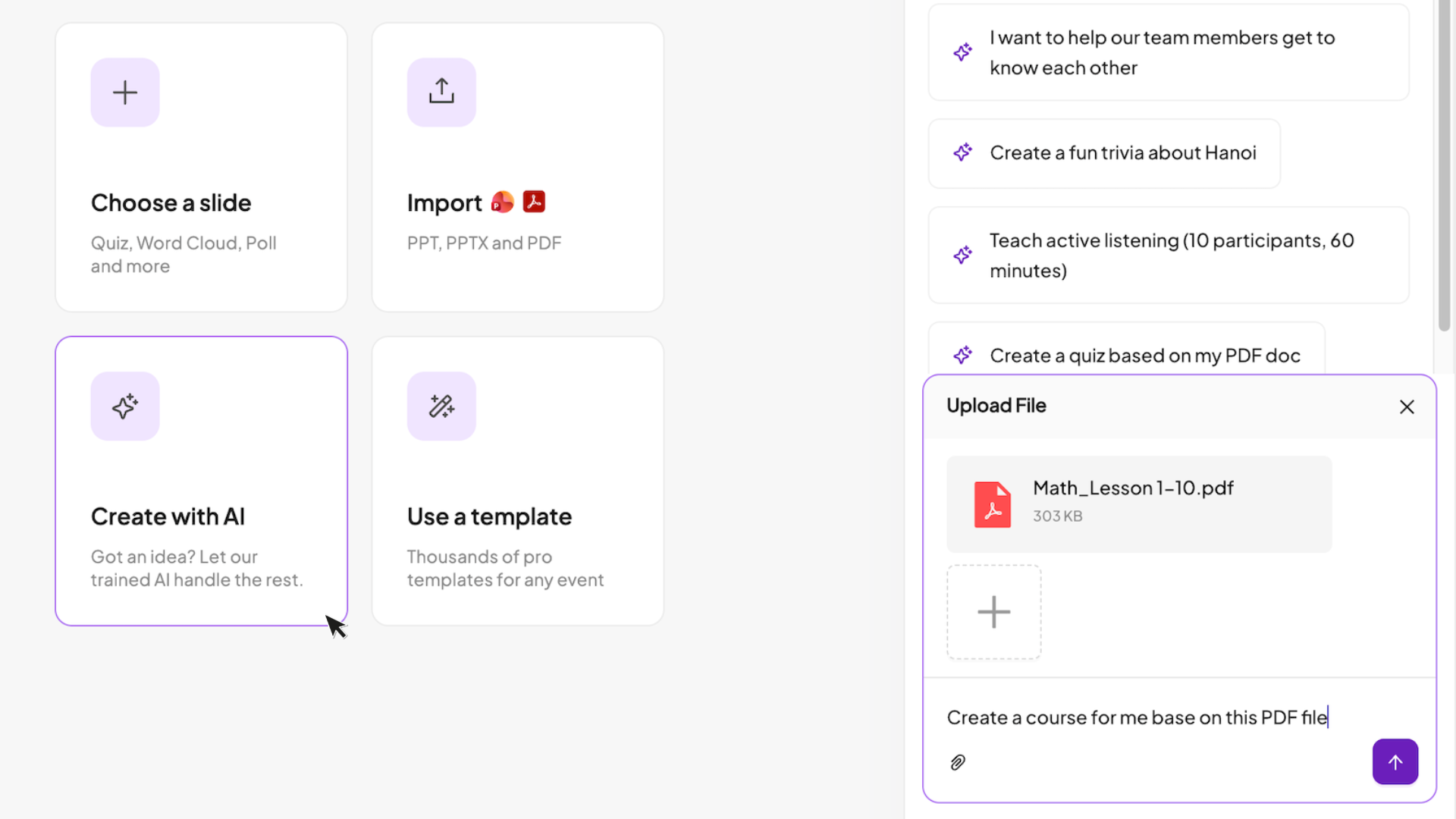
Steps three to five, gathering resources, building a timeline and evaluating progress, are exactly what a course platform is built to hold. The AhaSlides Online Course creator turns a loose reading list into a sequenced, self-paced course you actually move through in order. Its AI can draft the structure for you from a PDF, a presentation or a document you upload, organising the material into lessons so you are not staring at a blank page. You then work through it at your own speed, with auto-graded quizzes and knowledge checks in each lesson to test yourself as you go rather than assuming a topic has stuck. The progress and completion dashboard lets you self-monitor how far you have come and where a concept is still weak, the accountability solo learners usually lack. No app install is needed and it is free to deliver, so the same tool works whether you are learning alone or building a self-directed path for a group.
Nobeiguma domas
Self-directed learning is not a single method. It is a shift in who holds the wheel. You choose the destination, the route and the speed, and in return you build a skill that keeps paying off long after any one course ends. Start small: pick one goal, gather a few good resources, set a timeline you can keep, and check yourself as you go. The autonomy is the point, and the tools now exist to give it structure.
Biežāk uzdotie jautājumi
What are the steps of self-directed learning?
Six steps: self-discovery, defining goals, identifying resources, building a timeline, planning evaluation, and building in collaboration.
Is self-directed learning better than traditional learning?
For many people, yes, because it promotes autonomy, tailored learning and lifelong skills. It works best for motivated learners with access to good resources; those who need external structure may prefer a taught course.
What is the difference between self-directed and self-paced learning?
Self-paced learning lets you control the speed within a course someone else designed. Self-directed learning lets you control the course itself, from goals to materials to assessment.