Ostatnia aktualizacja: 12 listopada 2026 r. w oparciu o źródła podane w tym poście.
Construction site safety training has to cover what hurts people on site. The US Bureau of Labor Statistics counted 1,032 deaths among construction and extraction workers in 2024, and 370 of them were falls, slips and trips.
This is a list of 11 ready-made courses for site managers, safety coordinators and subcontractor leads. They are free, toolbox-style courses that sit beside any card or certificate you already ask for, such as OSHA 10 or 30, and do not replace one. The list runs from falls and ladders to health hazards, then induction and emergencies. Each group ends with an Nasz wybór.
Wszystkie 11 kursów w skrócie
| Kurs | Co obejmuje | Długość | Przepisy lub wytyczne USA dotyczące tego tematu |
|---|---|---|---|
| Praca na wysokości, drabiny, rusztowania oraz poślizgnięcia, potknięcia i upadki | Avoiding falls, ladders, scaffold tags, harnesses and rescue | 40 min | 29 CFR 1926.503 i 1926.454 |
| Bezpieczeństwo drabiny | Choosing, inspecting, setting up and climbing a ladder | 25 min | 29 CFR 1926.1060 |
| Toolbox talks and safety huddles | Running a ten-minute talk, with twelve talks for a year | 30 min | Nie cytowano tutaj |
| Respirable crystalline silica awareness (construction) | Silica hazards, controls, respirators and medical surveillance | 30 min | 29 CFR 1926.1153(i) |
| Zapobieganie chorobom spowodowanym upałem | Heat illness signs, water, rest, shade and acclimatisation | 30 min | OSH Act General Duty Clause |
| Środki ochrony indywidualnej (PPE) | Picking, wearing and caring for PPE | 35 min | 29 CFR 1926.95 |
| Komunikacja zagrożeń i GHS | Czytanie etykiet i kart charakterystyki | 40 min | 29 CFR 1910.1200 |
| Wprowadzenie do zasad bezpieczeństwa i coroczne odświeżenie wiedzy | Site rules, hazards and reporting for new starters, contractors and visitors | 40 min | Nie cytowano tutaj |
| Plany działań awaryjnych i zapobiegania pożarom | Raising the alarm, getting out and preventing fires | 30 min | 29 CFR 1926.35 |
| Bezpieczeństwo przeciwpożarowe, straż pożarna i ewakuacja awaryjna | Gaśnice, drogi ewakuacyjne i obowiązki strażnika | 40 min | Nie cytowano tutaj |
| Prawo bezpieczeństwa, komitety, systemy zarządzania i audyty | Obowiązki, komisje bezpieczeństwa, inspekcje i audyty | 40 min | Nie cytowano tutaj |
Falls, ladders and heights
Three courses for the work that happens above the ground.
Praca na wysokości, drabiny, rusztowania oraz poślizgnięcia, potknięcia i upadki
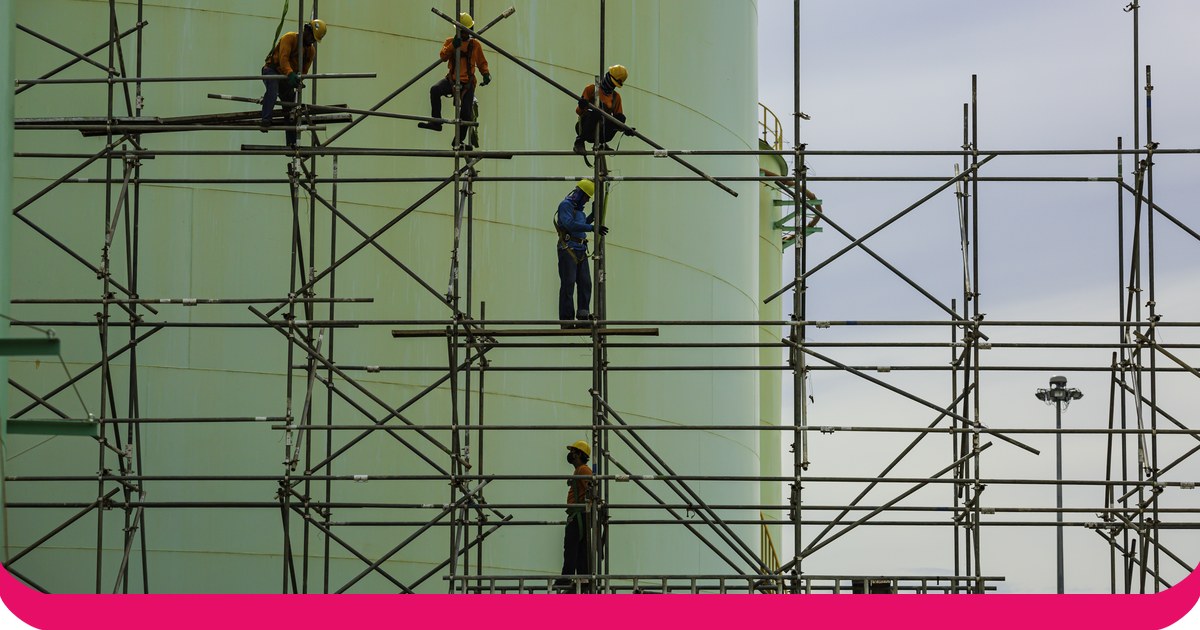
OSHA's construction rule says the employer must provide a training program for each employee who might be exposed to fall hazards, and a separate rule requires training for anyone who works on a scaffold. This 40-minute course has six lessons, from why falls kill to planning the job (avoid, prevent, then arrest the fall), ladders, scaffolds, harnesses and anchors, and slips and trips on the same level. Learners rank the options for a job and read a scaffold inspection tag. It suits scaffolders and labourers who work at height every day. Check which rule covers your site.
Bezpieczeństwo drabiny
For construction, OSHA's ladder rule says the employer must provide a training program for each employee using ladders and stairways. This 25-minute course has seven lessons and a 10-question final check with an 80 percent pass mark. It covers choosing the right ladder, inspecting it before every use, setting it up and climbing it, then fixed ladders and what to do when things go wrong. Note that the course itself is built on OSHA's general industry ladder rules, so add your own site rules.
Toolbox talks and safety huddles
Crews change from one week to the next, and a hazard that was fresh in March is forgotten by June. This 30-minute course teaches a four-step way to run a ten-minute talk (pick, brief, ask, record), then gives twelve ready talks for a year. It also covers capturing attendance and actions, rotating presenters and checking whether talks change behaviour. It has an activity on fixing a flat talk, which suits any supervisor whose crew has stopped listening.
Nasz wybór: Praca na wysokości, drabiny, rusztowania, poślizgnięcia, potknięcia i upadki. It puts the whole fall sequence in one course, from avoiding the job to rescue, and it tackles the hazard behind the 370 deaths above.
Health hazards on site
Four courses for harm that does not show up as a single accident.
Respirable crystalline silica awareness (construction)
Cutting, grinding, drilling and demolishing concrete, masonry, stone or tile makes silica dust. OSHA's rule says employees must be able to demonstrate knowledge of the health hazards, the tasks that could expose them and the measures the employer has put in place, including respirators. This 30-minute course has seven lessons covering the hierarchy of controls, Table 1, respirators, medical surveillance and your site's competent person. It ends with a 10-question final check. It fits concrete crews, masons, tile setters and demolition teams.
Zapobieganie chorobom spowodowanym upałem
Summer work in the sun and in hot buildings is risky, and new and returning workers are at higher risk. This 30-minute course has six lessons: who is at higher risk, the signs of heat rash, cramps, exhaustion and heat stroke, controls such as water, rest, shade and acclimatisation, and what to do in a heat emergency. The course is based on the OSH Act General Duty Clause, which says employers must furnish a place of employment free from recognised hazards that are causing or are likely to cause death or serious physical harm, plus OSHA and NIOSH heat guidance. It ends with a 10-question final check.
Środki ochrony indywidualnej (PPE)
Hard hats, eye, hand and foot protection only work when they are the right kit and worn the right way. OSHA's construction rule says protective equipment must be provided, used and maintained in a sanitary and reliable condition wherever it is necessary. This 35-minute course has seven lessons on why PPE is the last line of defence, how to pick it for each hazard, how to put it on and take it off, and how to care for it and replace it. It ends with a 10-question final check and a demonstration. The course itself is built on OSHA's general industry PPE rule, so add your site rules.
Komunikacja zagrożeń i GHS
Paints, solvents, adhesives and fuels are on most sites. OSHA's rule says employers must give employees skuteczne informacje i szkolenia dotyczące niebezpiecznych substancji chemicznych w miejscu pracy w momencie pierwszego przydzielenia, so check how it applies to your site. This 40-minute course has eight lessons: your right to know, reading a GHS label with its six elements and pictograms, finding key facts in a 16-section safety data sheet, and the 2024 update. Hand out a real label from the site store and ask what each pictogram means.
Our pick: Respirable crystalline silica awareness (construction). The course names the health effects (cancer, lung, immune system and kidney effects) and ties them to the tasks on your site, so it speaks directly to what a worker does at the saw.
Indukcja i sytuacje awaryjne
Cztery dania pierwszego dnia na miejscu i najgorszy dzień na miejscu.
Wprowadzenie do zasad bezpieczeństwa i coroczne odświeżenie wiedzy
New subcontractors and visitors have to learn the site before they walk it. This 40-minute course has six lessons: rights and duties, site rules on access, permits and restricted areas, the hazards you will meet, emergency arrangements, reporting hazards and near misses, and rules for contractors and visitors. It opens with a first morning at a depot, so swap in your own gate. Use it as the yearly refresher as well.
Plany działań awaryjnych i zapobiegania pożarom
Sites change every week, and exits and assembly points change with them. OSHA's construction rule says an emergency action plan must cover escape procedures and escape routes, how to account for everyone after an evacuation, and the preferred way to report a fire or other emergency, where a standard requires a plan. This 30-minute course has seven lessons on raising the alarm, getting out, staying or sheltering, and preventing fires. It is built on OSHA's general industry rules, so add your site plan.
Bezpieczeństwo przeciwpożarowe, straż pożarna i ewakuacja awaryjna
This 40-minute course covers the fire triangle and common causes, prevention rules for housekeeping, hot work and storage, choosing and using an extinguisher, evacuation routes and the warden role. It trains site fire wardens to run sweeps and head counts. Its scenario about a colleague still in the toilet when the alarm sounds is a good one to talk through when the site is busy.
Prawo bezpieczeństwa, komitety, systemy zarządzania i audyty
This 40-minute course explains why the law requires a safety system, who owes what (employer, manager and worker), how a joint safety committee runs, a management system in five steps, and inspections and audits. It ends with how to work with the regulator when they call. Give it to committee members and safety representatives, and add your own law, because the course is global.
Nasz wybór: szkolenie wprowadzające w zakresie bezpieczeństwa i coroczne przypomnienie zasad bezpieczeństwa. Every new starter, contractor and visitor passes through it, so it reaches every new person on site.
Jak wdrożyć plan
Start with the courses tied to a duty and with induction: fall and scaffold training, ladders, silica where your crews cut or grind, PPE, hazard communication and the emergency plan. Put the induction before anyone's first shift. Then schedule annual refreshers, run a toolbox talk each week, and add depth by role, such as the heat course before summer. Add any state or country rule for your location. For more talk ideas, see our wskazówki dotyczące bezpieczeństwa drabin, slips, trips and falls safety talk oraz tematy związane z bezpieczeństwem w miejscu pracy.
Anchor every session to the same fact: 370 construction and extraction workers died in falls, slips and trips in 2024.
Sposoby prowadzenia tych kursów AhaSlides
AhaSlides to kompleksowa platforma angażująca zespoły i klasy, na której możesz oferować wszystkie 11 kursów w trzech formatach:
- Kursy we własnym tempie. Użyj AhaSlides course creator to send each new starter a course before their first shift.
- A live session deck. Each course comes with a deck to run after it. Collect questions before the session, then answer them at the morning briefing or online. For running it well, see our 9 wskazówek, jak przeprowadzić udaną sesję pytań i odpowiedzi.
- Ankiety. Skorzystaj z ankiety po kursie i 30-dniowego odprawy dołączonej do każdego szablonu i dowiedz się, jak śledzenie ukończenia szkoleń pracowników.
Największą część pracy wykonują cztery typy slajdów:
- Wybierz odpowiedź. Ask: "Which of these is the most common way to fall on this site?" Show the split before you reveal the answer.
- Chmura słów. Ask: "What makes it hard to wear your PPE all shift?" The biggest words show where the crew needs practice.
- Skala ocen. Ask, before and after: "How confident are you in checking a scaffold tag?" Rate from 1 to 5 and compare the averages.
- Otwarte zakończenie. Ask: "What is the biggest hazard on this site right now?" Answers can be anonymous, so people say what they think.
FAQ
What safety training is required for construction workers?
Hazard awareness for the work they do, with fall protection, ladders and scaffolds, PPE, hazard communication and, where it applies, silica. OSHA's rule says the employer must poinstruować każdego pracownika w zakresie rozpoznawania i unikania niebezpiecznych warunków, and some US employers or clients also ask for an OSHA 10 or 30 card.
Is scaffolding training required?
Yes, where OSHA's scaffold rule applies. It says each employee who works on a scaffold must be trained by a person qualified in the subject matter to recognise the hazards of the type of scaffold in use. The kurs pracy na wysokości covers scaffolds, and does not replace training by a qualified person.
What is OSHA 10 for construction?
It is a 10-hour class delivered by an OSHA-authorised trainer, meant to give workers awareness of common job-related safety and health hazards, and it ends with a completion card. These courses do not issue a card. They give your crew free, repeatable training between cards.
How often should site staff retrain on safety?
Induct new starters before work, run a toolbox talk each week and refresh formal training on a set cycle, and a yearly refresher is a sensible default. OSHA's ladder rule says retraining must be provided as necessary so the employee keeps the understanding and knowledge they gained.
Ten post zawiera ogólne informacje, a nie porady prawne. Aby podjąć decyzję dotyczącą własnego miejsca pracy, skonsultuj się z wykwalifikowanym prawnikiem lub organem regulacyjnym.