
Lesson 1: Scene safety and the primary survey · 8 min
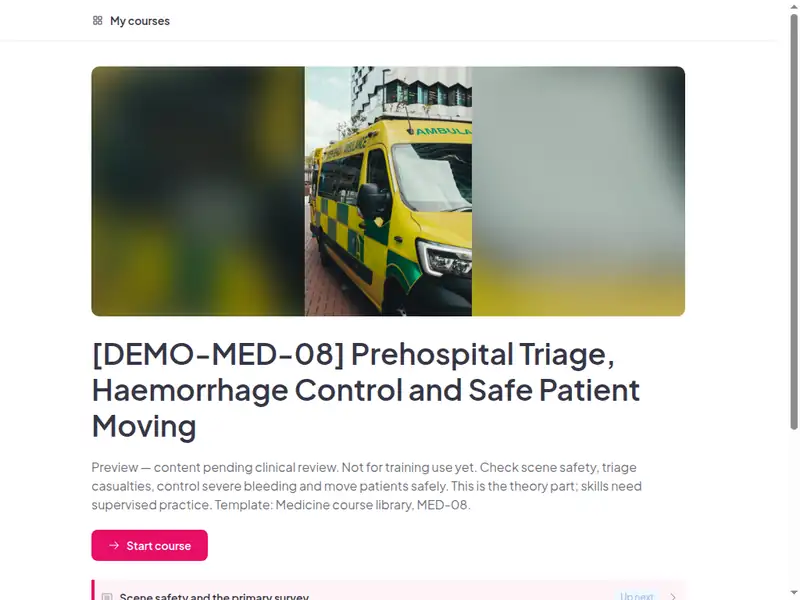
Check scene safety, send an early scene report and run a structured primary survey that deals with life-threatening bleeding first.
Learners sign in, so every finish and score is recorded. 18 fields to fill in with your details.
Minutes are an estimate.
Check scene safety, send an early scene report and run a structured primary survey that deals with life-threatening bleeding first.
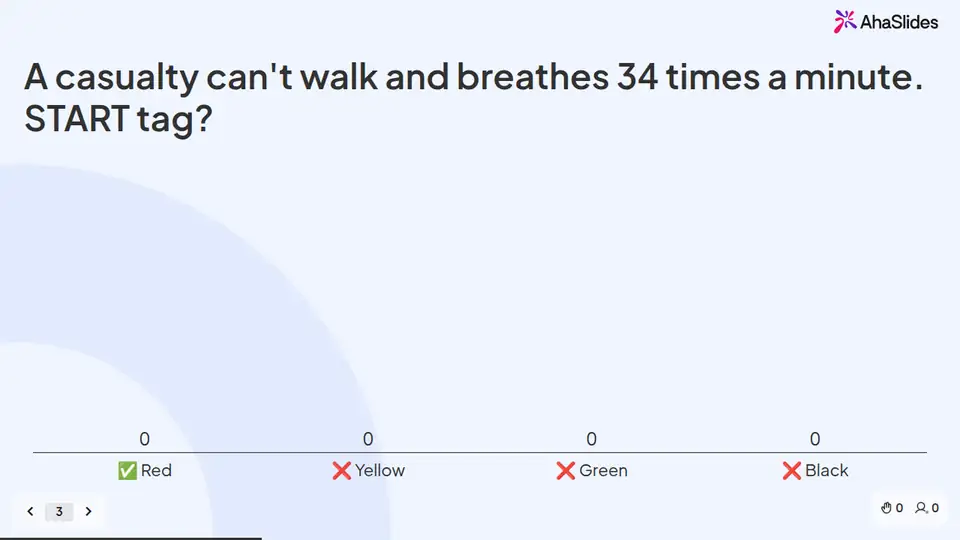
Sort casualties at a mass casualty incident into four triage categories using START or your service's tool.
Control life-threatening limb bleeding with an escalating approach: direct pressure, dressing and packing, then a tourniquet.
Apply avoid, assess, reduce to lifting and moving patients, and protect the neck when spinal injury is suspected.
Recognise opioid overdose, heat stroke, hypothermia risk and drowning, and give the first actions.
Final assessment · Completion
Taken from the course itself.
You arrive first at a crash. What should your first scene report include?
Answer: Location, type of incident, hazards, roughly how many casualties and the help you need. A short, calm first report sets up the whole response: where, what, hazards, how many and what help. Details on each patient come later.
Lesson 1: Scene safety and the primary survey
In START, which colour tag goes on the "walking wounded"?
Answer: Green. People who can walk are sent to a safe area and tagged Minor, which is green. Their injuries are unlikely to get worse over days.
Lesson 2: Triage at a mass casualty incident (START)
What is the first step for a heavily bleeding wound?
Answer: Firm, direct pressure on the bleeding site. Bleeding control escalates: direct pressure first, then a haemostatic dressing and, for a limb that keeps bleeding, a tourniquet.
Lesson 3: Haemorrhage control and tourniquets
Courses teams often run alongside this one.
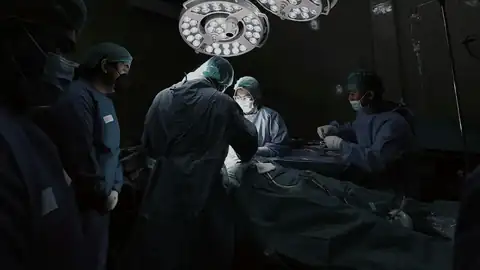
Clinical Skills Training for Nurses

Clinical Skills Training for Nurses
Clinical Skills Training for Nurses
Comments from trainers
No comments yet. Tell other trainers how the course went.
Your comment
Comments are public. We remove spam and personal details.