Skip to content
Claim this template

Free course template · Global

Ethical leadership and building trust

A ready-made course, live deck and two surveys for managers and leaders. 35 minutes, 6 lessons. Last reviewed 21 October 2026; not legal advice.

Claim the templatePreview the courseDownload SCORM for your LMS

Free. No credit card. Edit everything.

Play a game from the course

Ethical leadership and building trust: try 3 questions

Three questions from this course. Pick an answer, then see why.

Play the game

Game not loading? Open it in a new tab (opens in a new tab)

Three pieces that work together

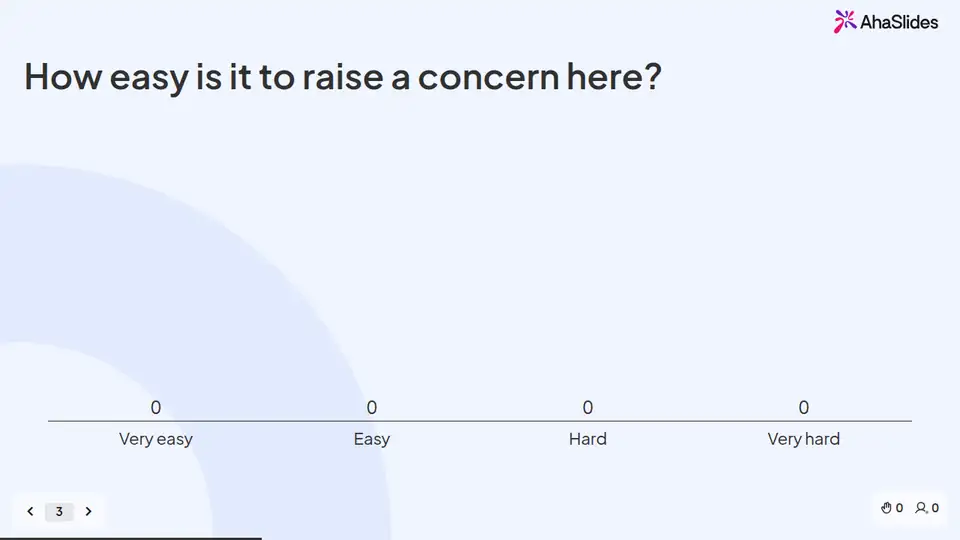
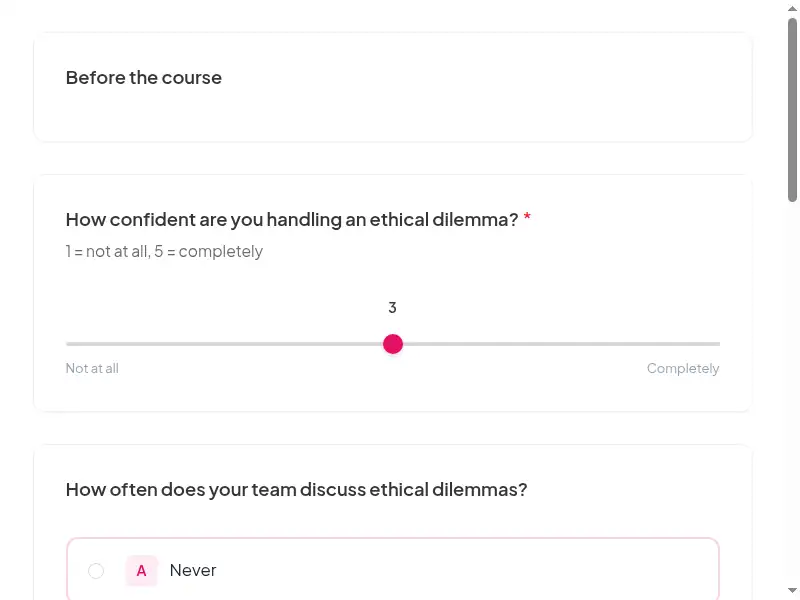
Learners sign in, so every finish and score is recorded. 8 fields to fill in with your details.
Claim the template
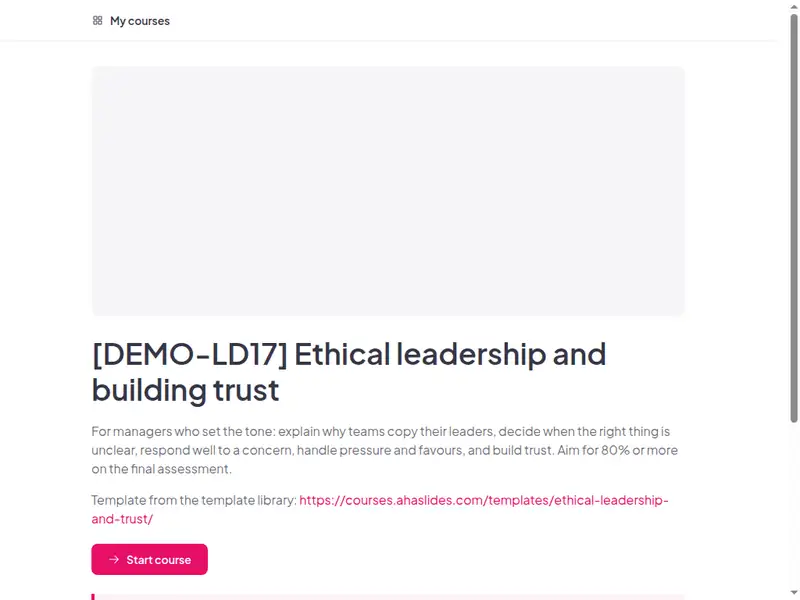
The Ethical leadership and building trust course as a learner first sees it

6 lessons, about 35 minutes

Minutes are an estimate.

  • Lesson 1: Why leaders set the tone · 7 min

    Before you begin · The rounding-down habit · What message does silence send?

  • Lesson 2: A way to decide · 6 min

    Five questions · Test it · Check

  • Lesson 3: When someone raises a concern · 6 min

    First response · Protect the person · Try it

  • Lesson 4: Grey areas: pressure, favours and loyalty · 6 min

    Pressure · What would you do? · Check

  • Lesson 5: Building trust through consistency · 6 min

    Habits · Speak up culture · Try it

  • Lesson 6: Your commitments and the final assessment · 4 min

    Next steps · Practice

Claim the template

Inside this course

Taken from the course itself.

By the end, learners can

  • Describe what ethical leadership looks like day to day and why teams copy their leaders
  • Use a simple method to decide when the right thing is unclear
  • Respond well when someone raises a concern
  • Avoid pressure to cut corners and handle conflicts of interest
  • Build trust through honesty, fairness and consistency

Sample questions, with answers

  1. Rhys says nothing about the rounded figures. What does his team learn?

    • That the figures are accurate
    • That the target was too high
    • Nothing, because he said nothing
    • That this behaviour is tolerated

    Answer: That this behaviour is tolerated. Silence is a message. Teams read what a leader tolerates as what is acceptable.

    Lesson 1: Why leaders set the tone

  2. Which test asks, "Would I be comfortable if it were made public?"

    • The newspaper test
    • The rules test
    • The trust test
    • The person you respect test

    Answer: The newspaper test. The newspaper test checks a choice against public view.

    Lesson 2: A way to decide

  3. What should you avoid when someone raises a concern in good faith?

    • Recording the facts
    • Any punishment of the person
    • Thanking them
    • Using the speak-up route

    Answer: Any punishment of the person. Retaliation, even subtle, stops people from raising concerns again.

    Lesson 3: When someone raises a concern

A scenario from "When someone raises a concern"

A team member says a colleague is changing figures.

Best response: Listen, record facts and use the speak-up route.

Weaker responses: Investigate alone; Tell the colleague; Ignore it.

Related articles

An article from the AhaSlides blog that uses this course.

Common questions

Yes. Claiming the template and editing it are free.

Yes. The course is self-paced and online, and the live deck lets you add a live session in the room or online.

In an annual ethics programme and at promotion.

Managers and leaders who set the tone for conduct; run by L&D with compliance and ethics leads.

Record completion in your own LMS or record system, so you can show who finished the course and when.

Your own details, each highlighted inside the course:
  • Who managers ask about people questions
  • Link to your people policies
  • The confidential route for raising a conduct or safety concern
  • Link to the next course in your leadership path
  • Where course completions are recorded
  • Link to the self-paced course
Then edit anything else you like: wording, scenarios, your logo.
Visit the help centre (opens in a new tab)