Skip to content
Claim this template

Free course template · Global

Prehospital triage, haemorrhage control and safe patient moving

A ready-made course, live deck and two surveys for emts. 40 minutes, 6 lessons. Last reviewed 21 October 2026; not legal advice.

Claim the templatePreview the courseDownload SCORM for your LMS

Free. No credit card. Edit everything.

Play a game from the course

Prehospital triage, haemorrhage control and safe patient moving: try 3 questions

Three questions from this course. Pick an answer, then see why.

Play the game

Game not loading? Open it in a new tab (opens in a new tab)

Three pieces that work together

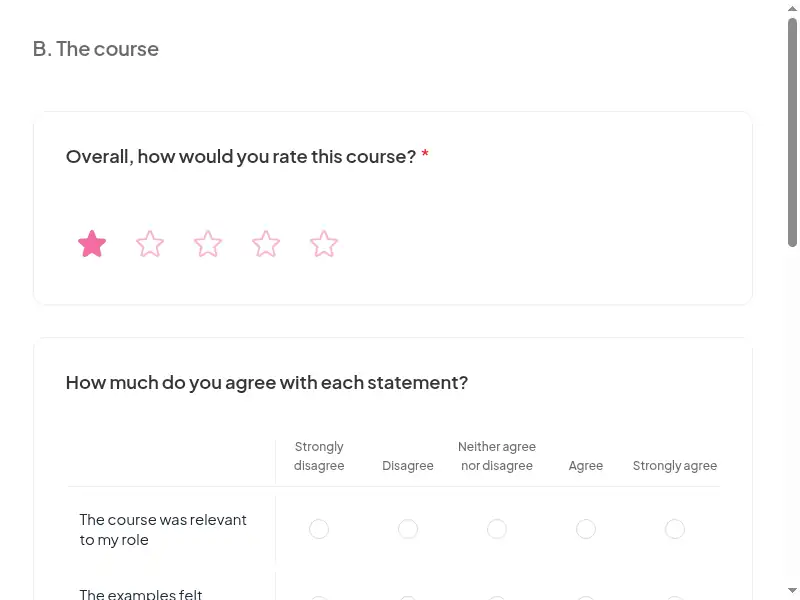
Learners sign in, so every finish and score is recorded. 18 fields to fill in with your details.
Claim the template
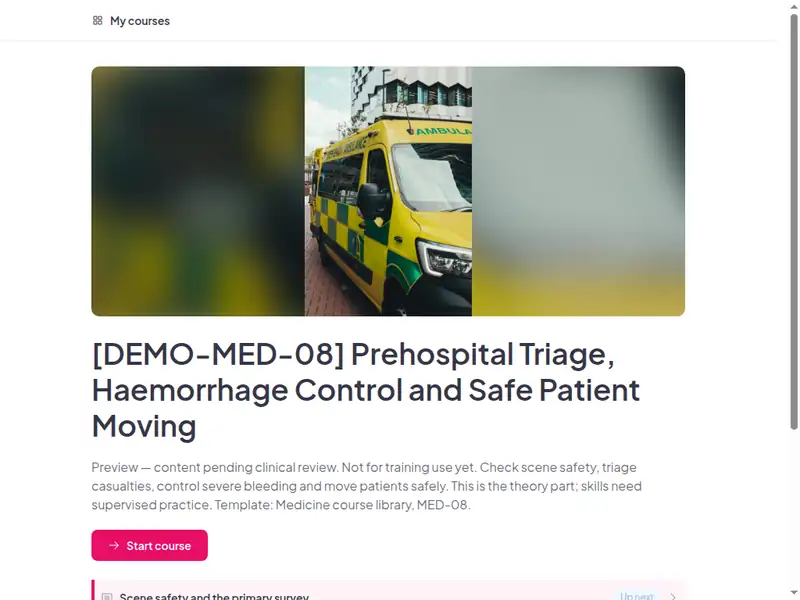
The Prehospital triage, haemorrhage control and safe patient moving course as a learner first sees it

6 lessons, about 40 minutes

Minutes are an estimate.

  • Lesson 1: Scene safety and the primary survey · 8 min

    Check scene safety, send an early scene report and run a structured primary survey that deals with life-threatening bleeding first.

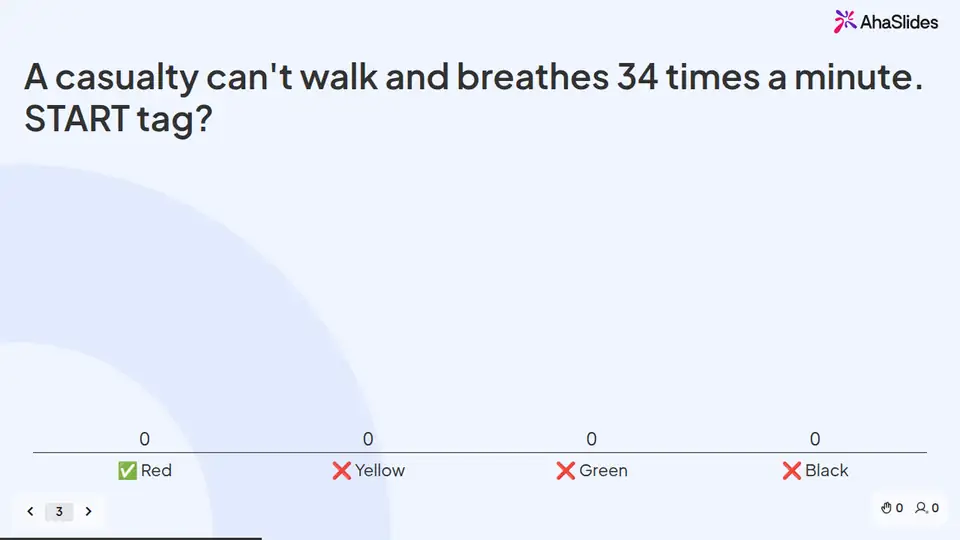
  • Lesson 2: Triage at a mass casualty incident (START) · 8 min

    Sort casualties at a mass casualty incident into four triage categories using START or your service's tool.

  • Lesson 3: Haemorrhage control and tourniquets · 6 min

    Control life-threatening limb bleeding with an escalating approach: direct pressure, dressing and packing, then a tourniquet.

  • Lesson 4: Lifting, moving and transport · 6 min

    Apply avoid, assess, reduce to lifting and moving patients, and protect the neck when spinal injury is suspected.

  • Lesson 5: Naloxone and environmental emergencies · 6 min

    Recognise opioid overdose, heat stroke, hypothermia risk and drowning, and give the first actions.

  • Lesson 6: Final assessment · 6 min

    Final assessment · Completion

Claim the template

Inside this course

Taken from the course itself.

Sample questions, with answers

  1. You arrive first at a crash. What should your first scene report include?

    • Only the name and age of each casualty
    • Location, type of incident, hazards, roughly how many casualties and the help you need
    • A full diagnosis for each casualty
    • Nothing until every casualty has been treated

    Answer: Location, type of incident, hazards, roughly how many casualties and the help you need. A short, calm first report sets up the whole response: where, what, hazards, how many and what help. Details on each patient come later.

    Lesson 1: Scene safety and the primary survey

  2. In START, which colour tag goes on the "walking wounded"?

    • Red
    • Yellow
    • Green
    • Black

    Answer: Green. People who can walk are sent to a safe area and tagged Minor, which is green. Their injuries are unlikely to get worse over days.

    Lesson 2: Triage at a mass casualty incident (START)

  3. What is the first step for a heavily bleeding wound?

    • Apply a tourniquet straight away to any wound
    • Firm, direct pressure on the bleeding site
    • Wait to see if it stops on its own
    • Give the patient a drink

    Answer: Firm, direct pressure on the bleeding site. Bleeding control escalates: direct pressure first, then a haemostatic dressing and, for a limb that keeps bleeding, a tourniquet.

    Lesson 3: Haemorrhage control and tourniquets

Common questions

Yes. Claiming the template and editing it are free.

Yes. The course is self-paced and online, and the live deck lets you add a live session in the room or online.

At induction + annual update, or as your service's training plan sets (organisation policy).

EMTs, paramedics, emergency care assistants, ambulance and patient-transport crews, event medics and first responders.

Record completion in your own LMS or record system, so you can show who finished the course and when.

Your own details, each highlighted inside the course:
  • Your service's scene safety and road safety procedure
  • The first-report format your control room expects
  • The primary survey model your service teaches
  • The mass casualty triage tool your service uses, if not START
  • How the tourniquet time is recorded
  • Who may apply, check and release tourniquets in your service
  • The manual handling law or standard that applies where you work
  • Moving equipment carried on your vehicles or at your events
  • How to request extra crew or specialist lifting help
  • Your spinal motion restriction protocol
  • Naloxone product, route, dose, repeat timing and who may give it
  • Where and when to book the supervised practical session
  • Staff wellbeing and debrief support after major incidents
  • Where completion is recorded
  • Live companion session link
  • Self-paced course link
  • Clinical educator contact
Then edit anything else you like: wording, scenarios, your logo.
Visit the help centre (opens in a new tab)