Skip to content
Claim this template

Free course template · Global

PR crisis communications: Planning, media readiness and ethical practice

A ready-made course, live deck and two surveys for PR and communications professionals. 40 minutes, 6 lessons. Last reviewed 21 October 2026; not legal advice.

Claim the templatePreview the courseDownload SCORM for your LMS

Free. No credit card. Edit everything.

Play a game from the course

PR crisis communications: Planning, media readiness and ethical practice: try 3 questions

Three questions from this course. Pick an answer, then see why.

Play the game

Game not loading? Open it in a new tab (opens in a new tab)

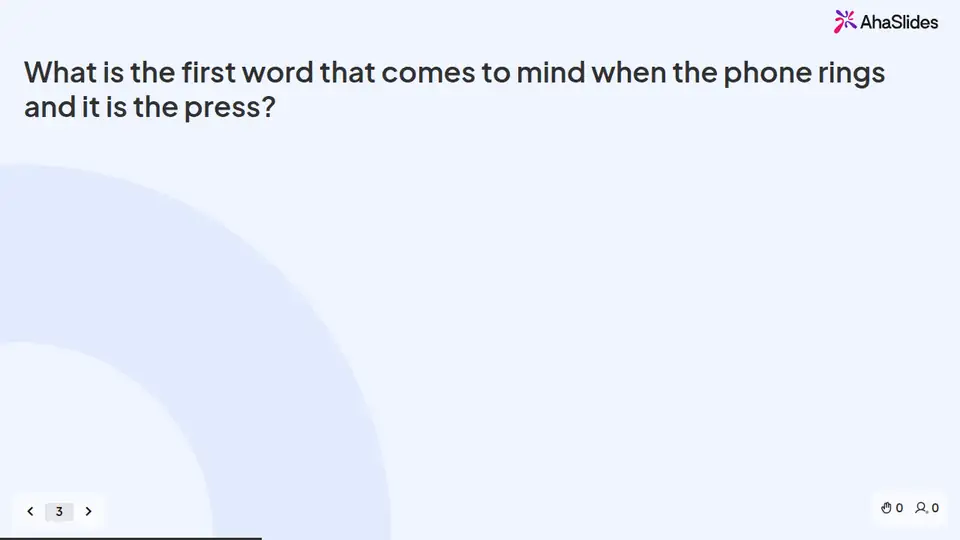
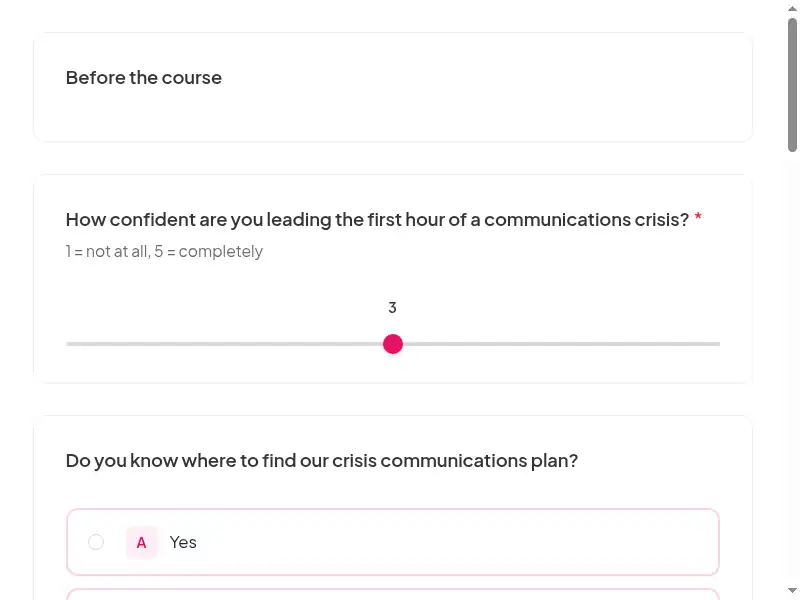
Three pieces that work together

Learners sign in, so every finish and score is recorded. 10 fields to fill in with your details.
Claim the template
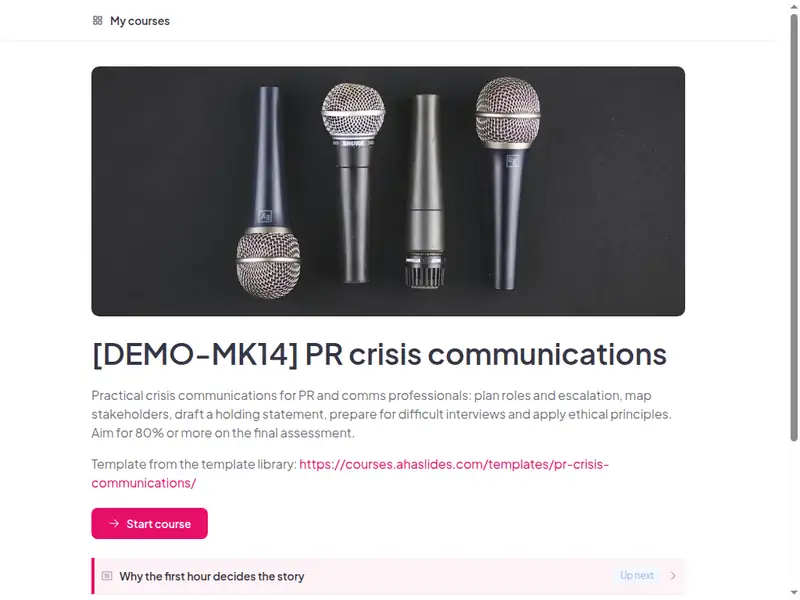
The PR crisis communications: Planning, media readiness and ethical practice course as a learner first sees it

6 lessons, about 40 minutes

Minutes are an estimate.

  • Lesson 1: Why the first hour decides the story · 7 min

    Before you begin · A Friday afternoon · What would you do first?

  • Lesson 2: Planning: risks, roles and escalation · 7 min

    What a plan holds · Incident, issue or crisis · Check

  • Lesson 3: Stakeholders and messages under pressure · 7 min

    Who needs to know · First-hour order · The three-part message

  • Lesson 4: Media relations and interview readiness · 7 min

    The basics · The difficult question · Practice

  • Lesson 5: Ethics and the grey areas · 7 min

    Principles from the codes · Where would you draw the line? · Check

  • Lesson 6: Simulate, measure and learn · 5 min

    Your next steps · Practice

Claim the template

Inside this course

Taken from the course itself.

By the end, learners can

  • Describe the parts of a crisis communications plan: risks, roles, escalation and approval
  • Map stakeholders and rank who to inform first in the opening hour
  • Draft a holding statement that is honest, brief and does not speculate
  • Prepare a spokesperson for a difficult interview, including a request for information that may be misleading
  • Apply honesty, transparency and conflict-of-interest principles from professional codes of ethics, and measure communications outcomes sensibly

Sample questions, with answers

  1. What comes first in the opening hour?

    • Post a denial
    • Wait until Monday
    • Ignore the call

    Answer: . Facts and the right people first. A denial before the facts is speculation.

    Lesson 1: Why the first hour decides the story

  2. Which is part of the three-part message?

    • A guess at the cause
    • Who to blame
    • A denial

    Answer: . Say what you know. Do not speculate.

    Lesson 3: Stakeholders and messages under pressure

  3. A holding statement should…

    • assign blame early
    • give a full explanation of cause
    • deny the problem until proven

    Answer: . Short, factual and with a promised update.

    Lesson 6: Simulate, measure and learn

A scenario from "Stakeholders and messages under pressure"

The oat bar labelling error.

Best response: People who may be harmed first, then regulators and the crisis team, staff, customers, and media.

Weaker responses: Tell the media first because they called; Wait until every fact is known; Tell only investors.

Common questions

Yes. Claiming the template and editing it are free.

Yes. The course is self-paced and online, and the live deck lets you add a live session in the room or online.

At onboarding for comms staff, annually before the crisis plan is reviewed, and after any incident or near miss.

PR and communications professionals, including in-house comms managers and agency account teams.

Record completion in your own LMS or record system, so you can show who finished the course and when.

Your own details, each highlighted inside the course:
  • Help contact
  • Policy link
  • Escalation route
  • The organisation's crisis communications plan
  • Next course link
  • LMS or record system
  • Course URL
  • Live session URL
Then edit anything else you like: wording, scenarios, your logo.
Visit the help centre (opens in a new tab)