
You have gathered a group for a workshop. People settle in, look at their phones and wait. Nobody knows anybody, and the silence gets thicker by the minute.
A good get to know you game fixes that in a few minutes. It gives people a reason to talk, a structure that takes the pressure off, and a few stories to remember each other by. This guide covers 12 games that work for new teams, onboarding, training sessions and remote meetings, with an example round for each so you can run it straight away. If you only need a quick prompt to open a meeting, our list of ερωτήσεις παγοθραυστών is the faster option.
Quick pick: which game suits your group?
| Παιχνίδι | Μέγεθος ομάδας | Χρόνος | Λειτουργεί καλύτερα |
|---|---|---|---|
| Δύο αλήθειες και ένα ψέμα | από 5 έως 30 | 10 λεπτά | In person or virtual |
| Θα προτιμούσες | Οποιοδήποτε μέγεθος | 5 λεπτά | In person or virtual |
| One-word check-in | από 5 έως 50 | 5 λεπτά | Τακτικές συναντήσεις |
| Γυρίστε τον τροχό | από 5 έως 30 | 5 σε 10 λεπτά | In person or virtual |
| Human bingo | 20 ή περισσότερα | 15 σε 20 λεπτά | In person events |
| Τραβήγματα της ομάδας | 10 ή περισσότερα | 15 σε 20 λεπτά | Established teams |
| Δείξτε και πείτε | από 5 έως 15 | 15 σε 30 λεπτά | Μικρές ομάδες |
| Κοινά σημεία | Groups of 3 to 5 | 10 λεπτά | New teams, training |
| Question ladder | Ζεύγη | 15 σε 20 λεπτά | Offsites, mentoring |
| Ιστορία υποβάθρου | από 5 έως 15 | 10 λεπτά | Οι κλήσεις βίντεο |
| Virtual scavenger hunt | από 10 έως 50 | 10 σε 15 λεπτά | Οι κλήσεις βίντεο |
| Ask the new starter anything | Οποιοδήποτε μέγεθος | 10 λεπτά | Επί του σκάφους |
Why get to know you games work
A game hands people a question they did not have to think up, and asking and answering questions is how relationships start. Harvard Business School researchers Alison Wood Brooks and Leslie K. John write in the Harvard Business Review that asking questions goes far beyond exchanging information: it builds rapport and trust among team members. Games also level the room: the quiet analyst and the loud salesperson follow the same rules, and a job title does not help anyone guess a lie.
The other reason is pacing. People open up gradually, and they open up more when the other person does too. The 36 Questions exercise developed by psychologist Arthur Aron and colleagues is built on exactly that: pairs take turns answering questions that become more personal, and 45 minutes of this can make strangers feel much closer. The games below follow the same idea at a work-friendly level, starting light and only going deeper when the group is ready.
Quick games (5 to 10 minutes)
1. Δύο αλήθειες και ένα ψέμα
Each person shares three statements about themselves: two true, one false. The group guesses the lie, then the person reveals it and tells the story behind the truths.
Example round: go first so people see the level of detail you expect. In a work setting, something like "I have worked on three continents, I once got stuck in a lift for three hours, and I can solve a Rubik's cube" sets a light, professional tone. Give everyone two minutes to write theirs, then take three or four people at a time so the game does not drag.
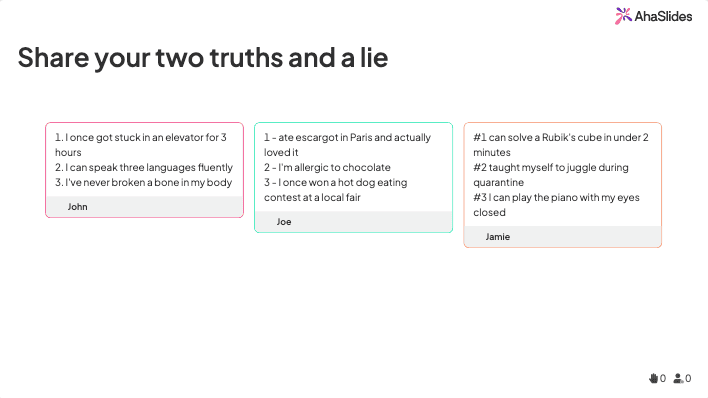
With a bigger group, collect everyone's statements on an open-ended slide so they appear on screen, then read a few out. For more statement ideas, see our guide to δύο αλήθειες και ένα ψέμα.
2. Θα προτιμούσατε
Pose a dilemma, such as "Would you rather work from home forever or never work from home again?", and ask people to pick a side and explain why.
Example round: ask three dilemmas in a row, each a little more interesting than the last. After each vote, invite one person from the smaller side to defend their choice. The minority view is usually where the best stories come from.
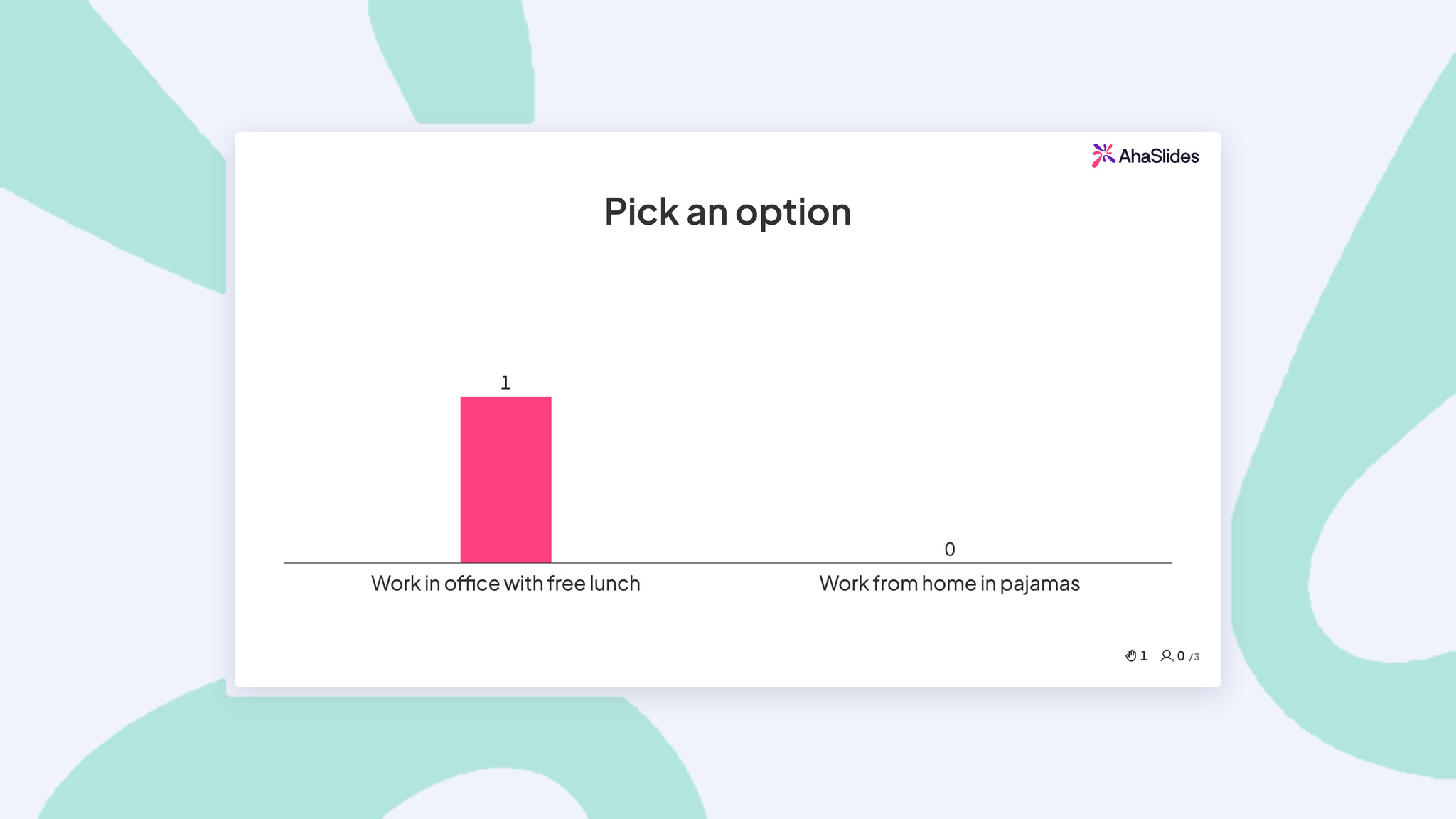
A ζωντανή δημοσκόπηση makes this work for any group size, including remote ones. For two-option prompts, borrow from our αυτές ή οι ερωτήσεις.
3. Άφιξη σε μία λέξη
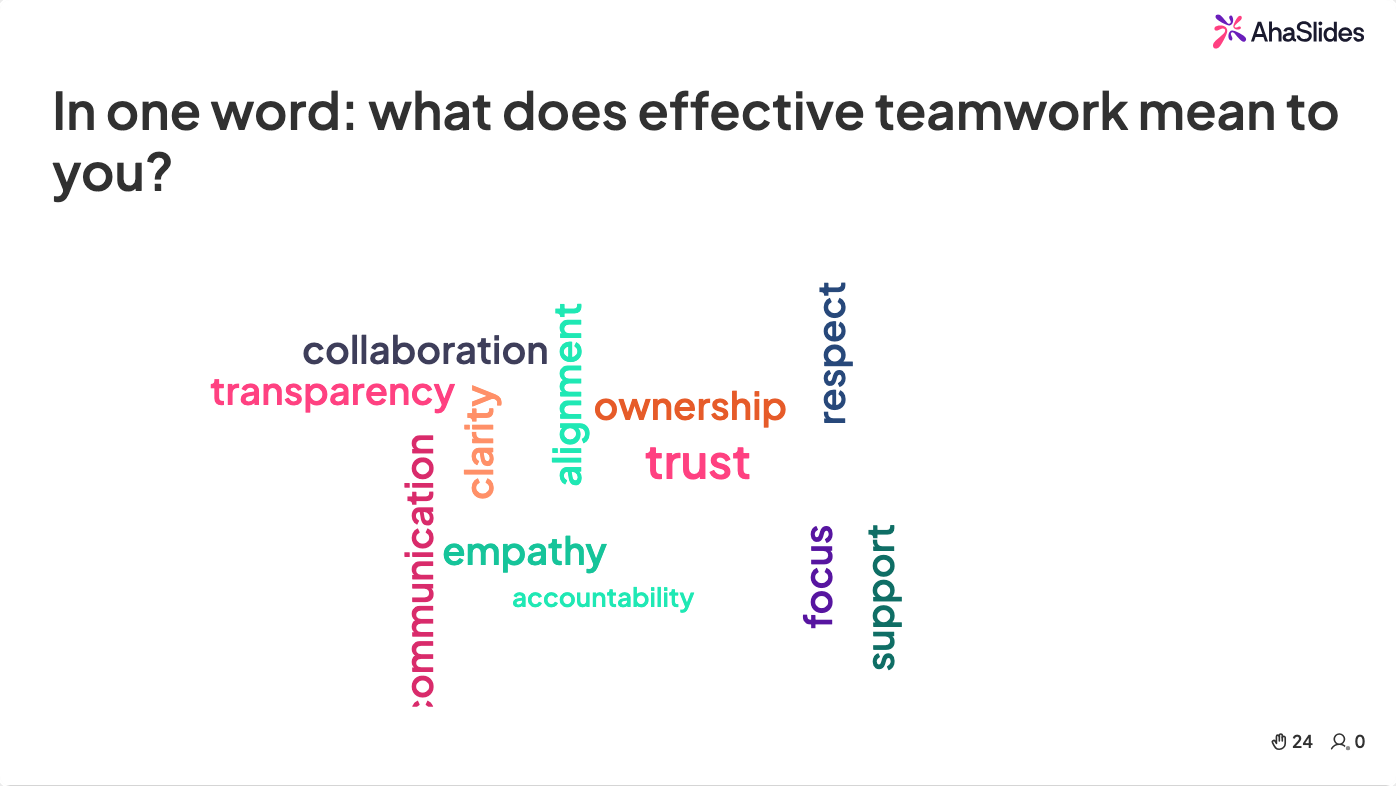
Everyone shares one word for how they are feeling or what they bring to the session today.
Example round: go first and be honest. If you say "scattered" rather than "fine", others feel they can be real too. With more than ten people, collect the words on a σύννεφο λέξης instead of going round the room. The words that repeat tell you the mood of the group at a glance.
4. Γυρίστε τον τροχό
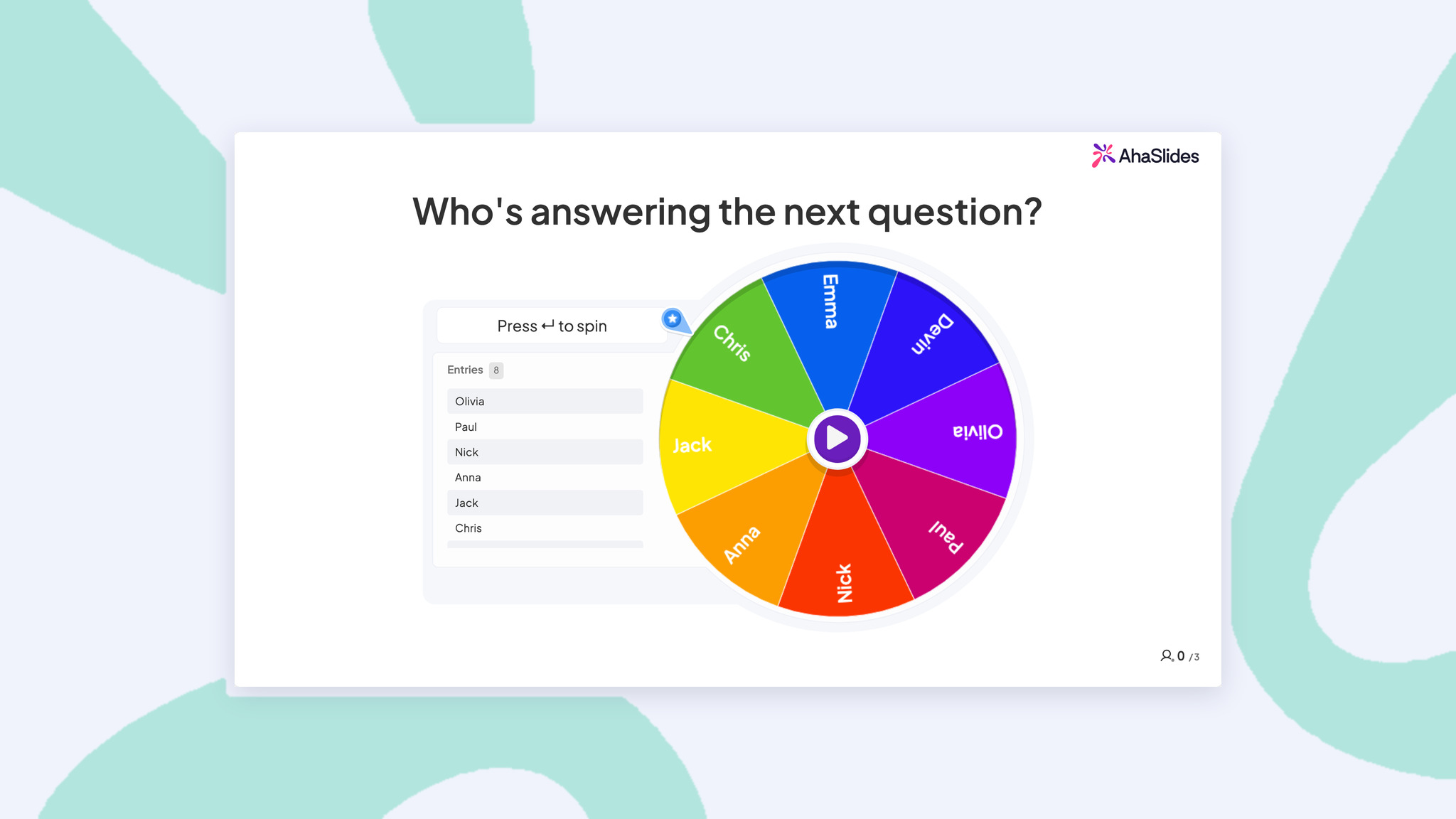
Put everyone's name on a wheel and a list of questions on screen. Spin, and whoever it lands on answers the next question.
Example round: use five or six light questions from the list at the end of this guide, and let the person who just answered press spin for the next one. Chance takes the pressure off, because nobody is choosing who goes next. An online περιστρεφόμενο τροχό works on a shared screen in the room or on a video call.
Longer team-building games (10 to 30 minutes)
5. Ανθρώπινο μπίνγκο
Give everyone a bingo card with a trait or experience in each square, such as "has lived in another country", "speaks three languages" or "plays an instrument". People mingle to find someone who matches each square. The first to complete a line wins.
Example round: tailor the squares to the group. For a tech team, add "has contributed to an open-source project"; for a global team, add language and travel squares. Set a 15-minute limit and a rule that each person can only sign one square on your card, so people have to talk to more colleagues.
6. Ομαδικά ερωτήματα
Build a quiz from facts about the team: "Who has run a marathon?", "Who worked in retail before this job?", "What did Ben do last Sunday?". Teams compete to guess correctly.
Example round: send a short survey a few days before and ask each person for two facts they are happy to share. Pick one fact per person so nobody is left out, and reveal the answer with a short story from the person it belongs to.
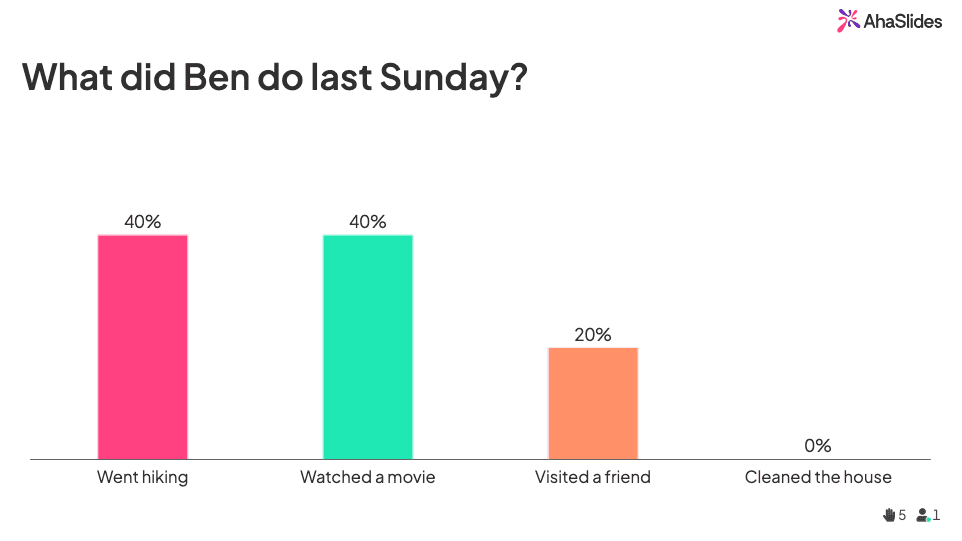
Run it as a ζωντανό κουίζ and a leaderboard keeps score for you.
7. Δείξτε και πείτε
Each person shows an object that matters to them, such as a photo, a book or a souvenir, and tells the story behind it in two minutes.
Example round: for a remote version, ask people to grab something within arm's reach and explain why it is on their desk. The unplanned version often gets more honest answers than a prepared one.
8. Common ground
Split the group into threes or fours and give them five minutes to find three things they all have in common that are not visible or work-related. "We all have two arms" does not count; "we have all been to a music festival" does.
Example round: after five minutes, each group shares its most surprising common thread. It works well at the start of a training course, because the small groups often become the discussion groups for the rest of the day.
9. Question ladder
A work-friendly version of the 36 Questions idea. Pairs take turns answering three rounds of questions that get a little more personal each time.
Example round: give each round five minutes. Round one: "What did you want to be when you were ten?" Round two: "What is a skill you are proud of that is not on your CV?" Round three: "What is something you are working towards this year?" Keep every question optional, and use this game for offsites, mentoring pairs and teams that already get on, not for a room of strangers.
Virtual and onboarding games
10. Ιστορικό
On a video call, ask each person to explain something visible behind them: a painting, a plant, a shelf of books or why they work from that room.
Example round: ask the group to pick the object they are most curious about in someone else's background, and let that person tell the story. It turns the video call into an advantage.
11. Εικονικό κυνήγι θησαυρού
Call out items for people to find at home within 60 seconds: "something blue", "something from another country", "something that makes you laugh". The first person back on camera with the item scores a point.
Example round: end with a personal item, such as "something that reminds you of a goal", and ask two or three people to explain what they brought. Getting people out of their chairs wakes up a long call. For more item ideas, see our ιδέες για κυνήγι θησαυρού.
12. Ask the new starter anything
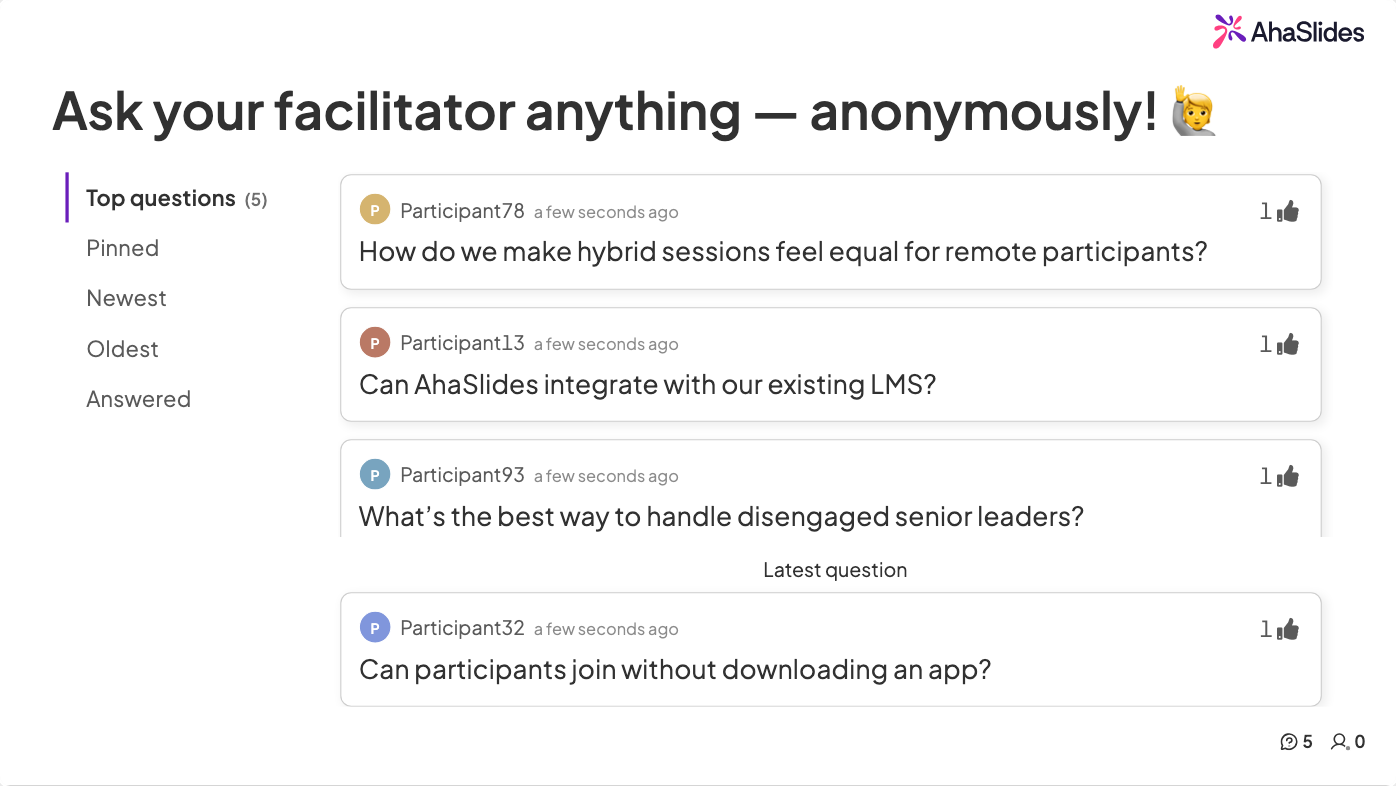
In a new starter's first team meeting, in the room or on a call, let the team send them questions, and let the new starter send questions back.
Example round: ανοίξτε ένα ανώνυμα Q&A for five minutes, then let the new starter pick the questions they want to answer. Anonymous submissions mean people ask what they are curious about, not what sounds polite. It fits neatly into onboarding alongside our ερωτήσεις ενσωμάτωσης.
20 get to know you questions to pair with the games
Use these with Spin the wheel, Background story or the first round of the Question ladder. For a longer list, sorted by how much they ask people to share, see our ερωτήσεις παγοθραυστών.
For work teams
- Ποια είναι η καλύτερη συμβουλή καριέρας που έχετε λάβει ποτέ;
- If you were not in your current field, what would you be doing?
- What is a skill you are trying to develop right now?
- Describe your ideal working day in three words.
- Who has had the biggest influence on your career?
For training sessions
- What is one thing you hope to take away from today?
- What is your favourite way to learn something new?
- What is something you have changed your mind about in your career?
- What makes someone a good colleague?
- What is the hardest thing you have ever learned to do?
For lighter moments
- Ποιο είναι το αγαπημένο σου τραγούδι καραόκε;
- Coffee or tea, and how do you take it?
- What food combination do you love that others find strange?
- What would the title of your autobiography be?
- What is the worst fashion trend you took part in?
Για απομακρυσμένες ομάδες
- What is your favourite thing about working from home?
- Πώς σας φαίνεται η πρωινή σας ρουτίνα;
- What is the best tip you have for virtual meetings?
- What is one item that makes your workspace yours?
- How do you switch off at the end of the day?
Tips for running get to know you games
- Match the game to the setting. A one-word check-in suits a weekly meeting; a question ladder belongs at an offsite.
- Πήγαινε πρώτος. How much you share sets the level for everyone else.
- Make passing easy. "You are welcome to pass" removes pressure, and most people still take part.
- Keep time kindly but firmly. "Great story, let's hear from someone else" keeps things moving.
- Bridge to the work. Link the game to the session's purpose before you move on, for example: "Now that we know each other a little better, let's bring that openness to today's problem."
- Think about culture. What feels like harmless fun in one culture can feel intrusive in another. With mixed groups, stay with work and light personal topics.
Συχνές ερωτήσεις
How long should get to know you games take?
Five to ten minutes at the start of a regular meeting, 10 to 20 minutes in a training session, and 30 to 60 minutes at a team-building event.
What if people seem uncomfortable?
Start with low-pressure games such as Would you rather or a one-word check-in, where everyone answers at once and nobody is on the spot. Build up to games that involve personal stories as trust grows, and always keep participation optional.
Do get to know you games work for remote teams?
Yes. Remote teams often need them more, because the chats that happen in an office kitchen do not happen on a video call. Live polls, word clouds, breakout rooms and the chat box let you run most of the games in this guide online. For more options, see our παιχνίδια παγοθραυστικών.