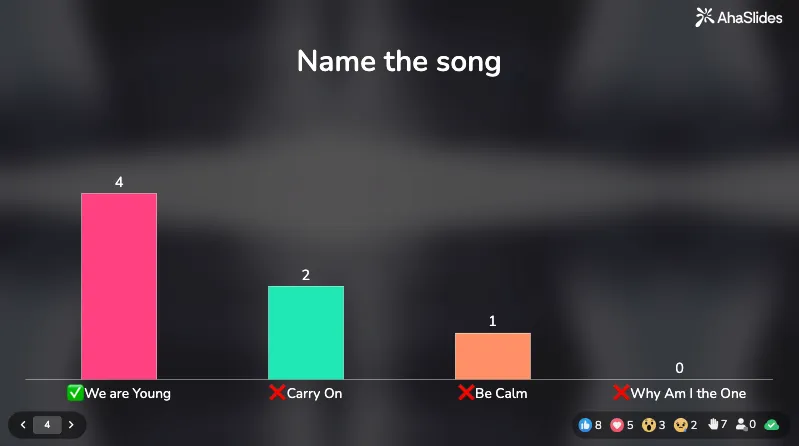
🎵 Pika-aloitus: Helppoja pop-kysymyksiä (täydellinen lämmittely)
Aloita tietokilpailuiltasi näillä yleisöä miellyttävillä kappaleilla, jotka saavat kaikki laulamaan mukana:
🏆 Kuka artisti pitää hallussaan ennätystä useimmista Grammy-palkinnoista minkään artistin aikana? Vastaus: Beyoncé (32 grammaa)
🎤 Mitä "P!nk" kirjoitetaan ääneen sanottuna? Vastaus: Vaaleanpunainen
🌟 Kuka poptähti tunnetaan "popin kuningattarena"? Vastaus: Madonna
💃 "Shake It Off" oli valtava hitti kenelle vaaleahiuksiselle pop-supertähdelle? Vastaus: Taylor Swift
🎯 Minkä kuuluisan poikabändin jäsen Justin Timberlake oli? Vastaus: *NSYNC
🏅 Mikä artisti lauloi kappaleen "Rolling in the Deep"? Vastaus: Adele
🎊 "Uptown Funk" oli Bruno Marsin ja minkä tuottajan yhteistyö? Vastaus: Mark Ronson
🎸 Mistä maasta Ed Sheeran on kotoisin? Vastaus: Englanti (Yhdistynyt kuningaskunta)
👑 Kenen poptähden oikea nimi on Stefani Joanne Angelina Germanotta? Vastaus: Lady Gaga
🌈 Miltä Katy Perryn albumilta hittisingle oli "Firework"? Vastaus: Teini-iän unelma
Lämmittelyssä? Hienoa! Nämä seuraavat kysymykset erottavat popmusiikin fanit todellisista superfaneista...
80-luvun popmusiikkivisäkysymykset ja vastaukset
- Minkä 80-luvun tähden Guinness World Records on tunnustanut kaikkien aikojen myydyimmäksi naissoittolistaksi? Madonna
- Kuka rohkaisi maailmaa "Get Down on It" vuonna 1981? Kool ja jengi
- Millä kappaleella Depeche Mode julkaisi ensimmäisen merkittävän hittinsä Yhdysvalloissa vuonna 1981? Ei vain voi saada tarpeeksi
- Kuka väitti, että "I'm Still Standing" vuonna 1983? Elton John
- David Bowie esiintyi missä kulttielokuvassa vuonna 1986? Labyrintti
- Minkä yhtyeen hittikappale 'Walk Like an Egyptian' oli vuonna 1986? Rannerenkaat
- Millä instrumentilla soitti Huey, Huey Lewis and News -sivustolta? Huuliharppu
- Mistä maasta ikoninen pop-trio A-ha on kotoisin? Norja
- Minkä 80-luvun aikana kuningatar ilmoitti kaikille, että toinen oli purenut pölyä? 1980
- Minkä kappaleen aikana Michael Jackson esitteli tavaramerkkinsä moonwalk vuonna 1983? Billie jean
- Annie Lennox on tunnetuin Eurythmics-duosta. Kuka oli toinen jäsen? Dave Stewart
- Millä laululla Human liigalla oli joulun numero vuonna 1981? Etkö rakasta minua
- Millä The Cure -albumilla on kappale "Fascination Street"? Disintegration
- Missä 80-luvun vuonna hulluus jakautui, lopulta uudistumalla nimellä Madness? 1988
- Kuka naislaulaja voitti Grammyn parhaasta uudesta artistista vuonna 1985? Cyndi Lauper
- Kuka U2:n jäsenistä perusti bändin Dublinissa ollessaan vain 14-vuotias? Larry Mullen Jr.
- Kuka erosi duosta soolona vuonna 1987 ja saavutti välittömän menestyksen kappaleillaan Faith? George Michael
- Vuodesta 1981 lähtien Duran Duran on julkaissut kuinka monta albumia tähän mennessä? 14
- Kaikkien aikojen palkituin naisnäyttelijä menee... mikä 80-luvun sensaatio? Whitney Houston
- Tervetuloa Pleasuredomeen oli minkä bändin debyytti studioalbumi? Frankie menee Hollywoodiin
- Minkä luvun saat, jos Princen viidennen studioalbumin nimestä vähennät Nenan luftballonien määrän? 1900
- Mikä hedelmäaiheinen bändi sijoittui Billboardin ykköseksi vuonna 1 "Venuksella"? Bananarama
- Vuosina 1982-1984 Robert Smith oli kahden yhtyeen kitaristi: The Cure ja kuka muu? Siouxsie ja Banshees
- Mitkä ovat 80-luvun Spandau Ballet -yhtyeen Kempin veljesten etunimet? Gary ja Martin
- Missä elektropop-yhtyeessä Alison Moyet ja Depeche Moden Vince Clark olivat yhdessä vuonna 1981? Yazoo
90-luvun popmusiikkivisäkysymykset ja vastaukset
- Kuinka vanha Britney Spears oli, kun hänen hittikappaleensa "Baby One More Time" julkaistiin vuonna 1998? 17
- R Kelly "en näe mitään väärää pienessä..." mitä? Bump 'n' Grind
- Millä kielellä Celine Dion lauloi säännöllisesti 90-luvulla? Ranskan
- Mikä työkaluteemainen MC voitti parhaan rap-videon ja parhaan tanssivideon vuoden 1990 MTV Video Music Awards -palkinnoissa? MC Hammer
- Kuka häiritsi Michael Jacksonin Earth Songin esityksen Brit Awardsissa vuonna 1996 nousemalla lavalle? Jarvis Cocker
- Mikä 90-luvun tyttöbändi on historian toiseksi myydyin Spice Girlsin jälkeen? TLC
- Kuka Destiny's Childin jäsenistä oli yhtyeen manageri? Beyoncé
- Mihin musiikkiliikkeeseen 90-luvun lopulla vaikuttivat Jennifer Lopez, Ricky Martin ja muut? Latinalainen räjähdys
- Kaikki tietävät "Kiss from a Rose", mutta mikä oli Sealin toiseksi suurin hitti 90-luvulla? Tappaja
- Minkä 90-luvun poikabändin nimi oli yhdistelmä kunkin 5 jäsenen sukunimen viimeisistä kirjaimista? Sync
- Vuodesta 1997 alkaen, kenellä oli ennennäkemättömän 71 viikon mittainen juoksu Billboardin R&B-listalla kappaleella "U Make me Wanna"? Vahtimestari
- Kuka oli ainoa Spice Girls -jäsen, jonka nimi oli todella mauste? Inkivääri mauste / Geri Halliwell
- Missä huonosti arvioidussa Hollywood-elokuvassa Jamiroquain vuoden 1998 hitti Deeper Underground esiintyi? Godzilla
- Mille vuoden 1992 kappaleelle vuoden 1975 komediahitti Wayne's World oli herätys? Bohemian Rhapsody
- Kuka voitti Grammyn parhaasta reggae-albumista vuonna 1995 albumillaan Boombastic? Takkuinen
- Mikä oli Lighthouse Familyn vuonna 1995 julkaistun kuusinkertaisen platinaa myyneen albumin nimi? Ocean Drive
- Mikä Sean John Clothing oli vuonna 90 lanseerattu 1998-luvun ikoni? P Diddy / Puff Daddy
- Robbie Williams aloitti kuuluisan soolouran jätettyään yhtyeen vuonna 1995? Ota se
- Mikä on ainoa maa, joka on voittanut 3 Eurovision laulukilpailua peräkkäin (1992, 1993 ja 1994)? Irlanti
- Zac Hanson, Hansonin nuorin veli, oli kuinka vanha, kun trion klassikko Mmmbop julkaistiin vuonna 1997? 11
- Mariah Carey kesti 15 minuuttia kirjoittaa mikä lomahitti vuonna 1994? Kaikki mitä haluan jouluna on sinä
- Mikä oli genren nimi, jonka indie-bändit keksivät Britanniassa 90-luvun puolivälissä? Brittipop
- Mikä oli huomattavan marginaalin myydyin single 90-luvulta? Kynttilä tuulessa (Elton John)
- Vuoden 1997 kilpailu joulun numeroon 1 oli Spice Girlsin ja kenen välillä? Teletupit
- Mikä oli Lauryn Hillin vuoden 1998 hitin todellinen nimi, joka tunnetaan usein nimellä "That Thing"? doo-italiaano
2000-luku: Pop siirtyy digitaaliseen muotoon
- Me laulamme. Me tanssimme. Varastamme asioita. oliko artistin eniten myyty albumi vuoden 2008 kappaleen "I'm Yours" takia? Jason Mraz
- Minkä artistin "Man Eater" ja "Promiscuous" olivat vuoden 2006 hittejä? Nelly Furtado
- Mikä artisti saavutti vuosikymmenen ajan espanjalaisten kappaleiden kirjoittamisen kansainvälisestä maineesta vuodesta 2001 lähtien englanninkielisten kappaleiden kanssa? Shakira
- Mikä artisti julkaisi 3 vankila-aiheista albumia nimeltä Häiriö, Tuomittu ja Vapaus koko 00-luvun? Akon
- Minä vuonna Black Eyed Peas -fameen Fergie teki ensimmäisen soololevynsä Hollantilainen? 2006
- Eminem julkaisi saman nimisen albuminsa (nimetty itsensä mukaan) vuonna 2000, mitä sitä kutsuttiin? Marshall Mathers LP
- Paramount Pictures osti vuoden 2003 Avril Lavigne -laulun oikeudet elokuvan tekemiseksi, joka ei koskaan toteutunut? Sk8r Boi
- James Blunt omistaa 00-luvun myydyin albumi. Miksi sitä kutsutaan? Takaisin Bedlamiin
- Mihin 3-kappaleiseen bändiin kuuluu 15 00-luvun 4 suosituimmista albumista? Coldplay
- Mikä taiteilija voitti X-tekijän vuonna 2006 ja pysyy näyttelyn myydyimpänä näytelmänä? Leona Lewis
- Mikä bändi kieltäytyi vuoden 2001 Mercury Prize -ehdokkuudesta sanoen, että palkinto on "kuin kantaisi kuollutta albatrossia kaulassasi ikuisesti"? Gorillaz
- Minkä nimen takia taiteilija, jonka nimeä ei voida nimetä, nimettiin Puffy, Puff Daddy, P Diddy, Diddy ja P Diddy (jälleen) vuonna 2008? sean john
- Maroon 5 julkaisi soololevynsä vuonna 2002 nimellä Kappaleita aiheesta...Kuka? Jane
- Brittiläiset autotallilegendat So Solid Crew'lla oli kuinka monta jäsentä julkaistessaan ensimmäisen levynsä vuonna 2001? 19
- Kuka julkaisi ensimmäisen debyyttialbuminsa Rakkaus. Enkeli. Musiikki. Vauva in 2004? Gwen Stefani
- Minkä 00-luvun ikonin oikea nimi on Florian Cloud de Bounevialle O'Malley Armstrong? Dido
- Mikä Snow Patrolin levy voitti Ivor Novello -palkinnon vuonna 2007? Lopullinen olki
- Mikä duo julkaisi vuoden 2003 albumin Speakerboxxxx / Rakkaus alla? outkast
- Mistä 2001 kappaleesta Vanessa Carltonista tuli yksi osuma? Tuhat mailia
- Minä vuonna julkaistiin Katy Perryn ensimmäinen iso hitti "I Kissed a Girl"? 2008
- Alicia Keysin vuoden 2001 debyyttialbumi kutsuttiin Kappaleet...mitä? Vähäinen
- Mikä artisti sai nimensä tuottajaltaan väittäen, että hän "näkee musiikin kuin se olisi Matrix"? Ne-Yo
- Kymmenen vuoden menestyneiden 90-luvun hittien jälkeen Mary J Blige aloitti hallituskautensa 00-luvulla, millä 2001 levyllä? Ei enää draamaa
- Justin Timberlake kirjoitti, mikä vuosi 2002 saavutti hajoamisen Britney Spearsin kanssa? Itke minulle joki
- Rolling Stone Magazinen 1-luvun ykköshitti oli "Crazy", kenen tekemä? Gnarls Barkley
- Mikä on kuvitteellisen lukion nimi tv-sarjassa "Glee"? William McKinley lukio
- Kuka näytteli Katniss Everdeeniä "Nälkäpeli"-elokuvasovituksessa? Vastaus: Jennifer Lawrence
- Mikä on Beyoncén hittisinglessään "Single Ladies (Put a Ring on It)" tunnetuksi tekemän ikonisen tanssiliikkeen nimi? Vastaus: "Single Ladies" -tanssi tai "Beyoncén tanssi"
- Millä artisteella oli eniten striimattu kappale Spotifyssa 2010-luvulla? Vastaus: Ed Sheeran ("Sinun muotosi")
- Mistä sovelluksesta tuli synonyymi 15 sekunnin musiikkipätkille ja viraalitansseille? Vastaus: TikTok (Musical.ly alunperin)
- Minkä voimalaulajan "Someone Like You" vietti viisi viikkoa Britannian listaykkösenä? Vastaus: Adele
- Kuka entinen Disney-tähti julkaisi "Wrecking Ballin" vuonna 2013? Vastaus: Miley Cyrus
- Kuinka monta viikkoa The Weekndin "Blinding Lights" oli ykkösenä? Vastaus: 4 viikkoa (mutta 88 viikkoa listalla!)
- Mikä artisti julkaisi folklore- ja evermor-albumeita yllätysalbumeina? Vastaus: Taylor Swift
- Minkä klassisen rock-yhtyeen Olivia Rodrigon kappale "Good 4 U" on maistiainen? Vastaus: Paramore (erityisesti "Kurjuusliiketoiminta")
Nimeä se kappale -visakysymykset
- "Onko tämä totta, onko tämä vain fantasiaa..." Vastaus: "Joutui maanvyörymään, ei paeta todellisuudesta" (Queen - "Bohemian Rhapsody")
- "Pärjään kyllä pienellä avustuksella..." Vastaus: "ystäväni"(The Beatles)
- "Älä lopeta uskomista, pidä kiinni..." Vastaus: "tuo tunne"" (Matka)
- "Vain pikkukaupungin tyttö, asun..." Vastaus: "yksinäinen maailma" (Matka - "Älä lopeta uskomista")
- "Koska pelaajat pelaavat, pelaavat, pelaavat, pelaavat, pelaavat..." Vastaus: "Ja vihaajat vihaavat, vihaavat, vihaavat, vihaavat, vihaavat"(Taylor Swift - "Ravista se pois")
- "Sain persikkani esiin Georgiassa, sain..." Vastaus: "rikkaruoho Kaliforniasta" (Justin Bieber - "Peaches")
- "Kulta, olet ilotulitusraketti, tule jo..." Vastaus: "anna väriesi räjähtää" (Katy Perry - "Ilotulitus")
20 K-Pop-tietokilpailukysymystä
- Mikä K-pop-poikabändi debytoi vuonna 2025 HYBE-kampanjan alaisuudessa? Vastaus: Cortis
- Mikä on korealaisen poikabändin, "Kings of K-popin" nimi? Vastaus: ALKURÄJÄHDYS
- Mikä on sen korealaisen tyttöbändin nimi, joka esitti hittikappaleen "Gee"? Vastaus: Tyttöjen sukupolvi
- Mikä on sen suositun K-pop-yhtyeen nimi, johon kuuluvat J-Hope, Suga ja Jungkook? Vastaus: BTS (Bangtan Sonyeondan)
- Mikä on sen K-pop-yhtyeen nimi, joka debytoi kappaleella "Firetruck"? Vastaus: NCT 127
- Missä K-pop-ryhmässä ovat jäsenet TOP, Taeyang, G-Dragon, Daesung ja Seungri? Vastaus: ALKURÄJÄHDYS
- Mikä K-pop-yhtye debytoi kappaleella "La Vie En Rose" vuonna 2018? Vastaus: IZ * ONE
- Kuka on K-pop-yhtye Blackpinkin nuorin jäsen? Vastaus: Lisa
- Mikä on sen K-pop-ryhmän nimi, jonka jäsenet ovat Hongjoong, Mingi ja Wooyoung? Vastaus: ATEEZ
- Mikä on sen K-pop-ryhmän nimi, joka debytoi kappaleella "Adore U" vuonna 2015? Vastaus: Seitsemäntoista
- Mikä on sen K-pop-ryhmän nimi, joka debytoi vuonna 2020 kappaleella "Black Mamba"? Vastaus: aespa
- Mikä K-pop-yhtye debytoi vuonna 2018 kappaleella "I Am"? Vastaus: (G) I-DLE
- Mikä K-pop-yhtye debytoi vuonna 2019 kappaleella "Bon Bon Chocolat"? Vastaus: IKIKULTAINEN
- Mihin K-pop-ryhmään kuuluvat jäsenet Hwasa, Solar, Moonbyul ja Wheein? Vastaus: mamamoo
- Mikä K-pop-yhtye debytoi vuonna 2019 kappaleella "Crown"? Vastaus: TXT (Huomenna X Yhdessä)
- Mikä K-pop-yhtye debytoi vuonna 2020 kappaleella "Pantomime"? Vastaus: PURPLE KISS
- Mikä on sen K-pop-ryhmän nimi, jonka jäsenet ovat Yeonjun, Soobin, Beomgyu, Taehyun ja Huening Kai? Vastaus: TXT (Huomenna X Yhdessä)
- Mikä K-pop-yhtye debytoi vuonna 2020 kappaleella "DUMDi DUMDi"? Vastaus: (G) I-DLE
- Mikä K-pop-yhtye debytoi vuonna 2020 kappaleella "WANNABE"? Vastaus: ITZY
- Mihin K-pop-ryhmään kuuluvat Lee Know, Hyunjin, Felix ja Changbin? Vastaus: Stray Kids