សំណួរដែលបិទ បាទ/ចាស ផ្តល់ឱ្យអ្នកនូវការងក់ក្បាលប្រកបដោយសុជីវធម៌ មិនមែនជាការយល់ដឹងពិតប្រាកដនោះទេ។ ម្យ៉ាងវិញទៀត សំណួរបើកចំហ បង្ហាញពីអ្វីដែលកំពុងកើតឡើងនៅក្នុងគំនិតរបស់ទស្សនិកជនរបស់អ្នក។
ការស្រាវជ្រាវពីចិត្តវិទ្យានៃការយល់ដឹងបង្ហាញថា នៅពេលដែលមនុស្សបញ្ចេញគំនិតរបស់ពួកគេនៅក្នុងពាក្យរបស់ពួកគេ ការរក្សាព័ត៌មាននឹងប្រសើរឡើងរហូតដល់ 50% ។ នោះហើយជាមូលហេតុដែលអ្នកសម្របសម្រួល គ្រូបណ្តុះបណ្តាល និងអ្នកធ្វើបទបង្ហាញដែលស្ទាត់ជំនាញការសួរសំណួរបើកចំហជាប់លាប់មើលឃើញការចូលរួមកាន់តែខ្ពស់ លទ្ធផលសិក្សាកាន់តែប្រសើរ និងការពិភាក្សាប្រកបដោយផលិតភាពកាន់តែច្រើន។
ការណែនាំនេះ បំបែកអ្វីគ្រប់យ៉ាងដែលអ្នកត្រូវដឹងអំពីសំណួរបើកចំហរ—តើវាជាអ្វី ពេលណាត្រូវប្រើវា និងឧទាហរណ៍ 80+ អ្នកអាចសម្របខ្លួនសម្រាប់វគ្គបណ្តុះបណ្តាលបន្ទាប់របស់អ្នក ការប្រជុំក្រុម ឬសិក្ខាសាលា។
មាតិកា
តើសំណួរចុងចំហមានអ្វីខ្លះ?
សំណួរដែលបើកចំហគឺជាសំណួរដែលមិនអាចឆ្លើយដោយពាក្យសាមញ្ញ "បាទ" "ទេ" ឬដោយការជ្រើសរើសពីជម្រើសដែលបានកំណត់ជាមុន។ ពួកគេតម្រូវឱ្យអ្នកឆ្លើយត្រូវគិត ត្រិះរិះពិចារណា និងបញ្ចេញគំនិតរបស់ពួកគេតាមពាក្យសម្ដីរបស់ពួកគេ។
លក្ខណៈសំខាន់ៗ៖
💬 ទាមទារការឆ្លើយតបប្រកបដោយការគិត - អ្នកចូលរួមត្រូវតែបង្កើតចម្លើយដោយខ្លួនឯង ជាជាងជ្រើសរើសពីជម្រើសដែលបានផ្តល់
💬 ជាធម្មតាចាប់ផ្តើមជាមួយ៖ អ្វី, ហេតុអ្វី, របៀប, ប្រាប់ខ្ញុំអំពី, ពិពណ៌នា, ពន្យល់
💬 បង្កើតការយល់ដឹងអំពីគុណភាព - ការឆ្លើយតបបង្ហាញពីការលើកទឹកចិត្ត អារម្មណ៍ ដំណើរការគិត និងទស្សនៈតែមួយគត់
💬 បើកដំណើរការមតិកែលម្អលម្អិត - ចម្លើយជាញឹកញាប់រួមមានបរិបទ ការវែកញែក និងមតិមិនច្បាស់លាស់
ហេតុអ្វីបានជាពួកគេសំខាន់នៅក្នុងការកំណត់វិជ្ជាជីវៈ៖
នៅពេលអ្នកកំពុងដំណើរការវគ្គបណ្តុះបណ្តាល ដឹកនាំការប្រជុំក្រុម ឬសម្របសម្រួលសិក្ខាសាលា សំណួរបើកចំហបម្រើមុខងារសំខាន់មួយ៖ ពួកគេជួយអ្នកកាន់កញ្ចក់រហូតដល់បន្ទប់។ ជំនួសឱ្យការសន្មត់ថាអ្នកគ្រប់គ្នានៅលើទំព័រតែមួយ អ្នកទទួលបានភាពមើលឃើញក្នុងពេលវេលាជាក់ស្តែងចំពោះចន្លោះប្រហោងនៃការយល់ដឹង ក្តីបារម្ភ និងការយល់ដឹងអំពីរបកគំហើញដែលអ្នកប្រហែលជាខកខាន។
ការចាប់ផ្តើមធ្វើបទបង្ហាញ ឬវគ្គបណ្តុះបណ្តាលជាមួយនឹងសំណួរបើកចំហ បង្កើតសុវត្ថិភាពផ្លូវចិត្តឱ្យបានឆាប់។ អ្នកផ្តល់សញ្ញាថាមតិទាំងអស់ត្រូវបានផ្តល់តម្លៃមិនមែនត្រឹមតែចម្លើយ "ត្រឹមត្រូវ" ទេ។ នេះផ្លាស់ប្តូរអ្នកចូលរួមពីអ្នកស្តាប់អកម្មទៅអ្នករួមចំណែកសកម្ម ដោយកំណត់សម្លេងសម្រាប់ការចូលរួមពិតប្រាកដជាជាងការចូលរួមប្រកបដោយប្រសិទ្ធភាព។
Open-Ended vs Closed-ended Questions
ការយល់ដឹងអំពីពេលណាត្រូវប្រើសំណួរនីមួយៗគឺចាំបាច់សម្រាប់ការសម្របសម្រួលប្រកបដោយប្រសិទ្ធភាព និងការរចនាការស្ទង់មតិ។
សំណួរបញ្ចប់ កំណត់ការឆ្លើយតបចំពោះជម្រើសជាក់លាក់៖ បាទ/ទេ ជម្រើសច្រើន មាត្រដ្ឋានវាយតម្លៃ ឬពិត/មិនពិត។ ពួកវាល្អណាស់សម្រាប់ការប្រមូលទិន្នន័យបរិមាណ តាមដាននិន្នាការ និងការត្រួតពិនិត្យការយល់ឃើញយ៉ាងរហ័ស។
| សំណួរបញ្ចប់ | សំណួរបើកចំហ |
|---|---|
| តើយើងនឹងអនុវត្តដំណើរការថ្មីនេះទេ? | តើអ្នកគិតថាដំណើរការថ្មីនេះនឹងប៉ះពាល់ដល់ដំណើរការការងារប្រចាំថ្ងៃរបស់អ្នកយ៉ាងដូចម្តេច? |
| តើអ្នកពេញចិត្តនឹងការបណ្តុះបណ្តាលទេ? | តើទិដ្ឋភាពអ្វីខ្លះនៃការបណ្តុះបណ្តាលមានតម្លៃបំផុតសម្រាប់អ្នក? |
| តើអ្នកចូលចិត្តជម្រើស A ឬជម្រើស B? | តើលក្ខណៈពិសេសអ្វីខ្លះដែលនឹងធ្វើឱ្យដំណោះស្រាយនេះដំណើរការកាន់តែប្រសើរឡើងសម្រាប់ក្រុមរបស់អ្នក? |
| វាយតម្លៃកម្រិតទំនុកចិត្តរបស់អ្នកពី 1-5 | ពិពណ៌នាអំពីស្ថានភាពដែលអ្នកនឹងអនុវត្តជំនាញនេះ។ |
| តើអ្នកបានចូលរួមសិក្ខាសាលាទេ? | ប្រាប់ខ្ញុំអំពីគន្លឹះសំខាន់ៗរបស់អ្នកពីសិក្ខាសាលា |
អ្វីដែលត្រូវធ្វើ និងមិនត្រូវធ្វើនៅពេលសួរសំណួរបើកចំហ
DOs
✅ ប្រើការចាប់ផ្តើមសំណួរដែលអញ្ជើញការពន្យល់លម្អិត៖ ចាប់ផ្តើមដោយ "អ្វី" "របៀប" "ហេតុអ្វី" "ប្រាប់ខ្ញុំអំពី" "ពិពណ៌នា" ឬ "ពន្យល់" ។ ធម្មជាតិទាំងនេះជំរុញឱ្យការឆ្លើយតបលម្អិត។
✅ ចាប់ផ្តើមជាមួយនឹងសំណួរបិទដើម្បីធ្វើឱ្យការបម្លែងកាន់តែងាយស្រួល៖ ប្រសិនបើអ្នកជាមនុស្សថ្មីចំពោះសំណួរបើកចំហ សូមសរសេរសំណួរបាទ/ចាសជាមុនសិន បន្ទាប់មកធ្វើវាឡើងវិញ។ "តើអ្នកបានរកឃើញតម្លៃនៅក្នុងវគ្គនេះទេ?" ក្លាយជា "ទិដ្ឋភាពអ្វីខ្លះនៃវគ្គនេះនឹងមានប្រយោជន៍បំផុតក្នុងការងាររបស់អ្នក?"
✅ ដាក់ពង្រាយពួកវាជាយុទ្ធសាស្ត្រដូចការតាមដាន៖ បន្ទាប់ពីសំណួរបិទបើកបង្ហាញអ្វីដែលគួរឱ្យចាប់អារម្មណ៍ សូមជីកកកាយឱ្យកាន់តែជ្រៅ។ "75% នៃអ្នកបាននិយាយថាដំណើរការនេះគឺមានការលំបាក - តើអ្នកកំពុងជួបប្រទះឧបសគ្គជាក់លាក់អ្វី?"
✅ ត្រូវជាក់លាក់ដើម្បីណែនាំការឆ្លើយតបដែលផ្តោតអារម្មណ៍៖ ជំនួសឱ្យ "តើអ្នកគិតយ៉ាងណាចំពោះការបណ្តុះបណ្តាល?" សាកល្បង "តើជំនាញមួយណាពីវគ្គថ្ងៃនេះ អ្នកនឹងប្រើនៅសប្តាហ៍នេះ ហើយដោយរបៀបណា?" ភាពជាក់លាក់រារាំងការប៉ះទង្គិច និងផ្តល់ឱ្យអ្នកនូវការយល់ដឹងដែលអាចធ្វើសកម្មភាពបាន។
✅ ផ្តល់បរិបទនៅពេលវាសំខាន់៖ នៅក្នុងស្ថានភាពរសើប (មតិកែលម្អរបស់និយោជិត ការផ្លាស់ប្តូរស្ថាប័ន) សូមពន្យល់ពីមូលហេតុដែលអ្នកកំពុងសួរ។ "យើងកំពុងប្រមូលធាតុចូលដើម្បីធ្វើឱ្យប្រសើរឡើងនូវដំណើរការចូលរួមរបស់យើង" បង្កើនការចូលរួមដោយស្មោះត្រង់។
✅ បង្កើតកន្លែងសម្រាប់ការឆ្លើយតបជាលាយលក្ខណ៍អក្សរនៅក្នុងការកំណត់និម្មិត៖ មិនមែនគ្រប់គ្នាដំណើរការពាក្យសំដីក្នុងល្បឿនដូចគ្នានោះទេ។ ឧបករណ៍អន្តរកម្មដែលអនុញ្ញាតឱ្យអ្នកចូលរួមវាយបញ្ចូលការឆ្លើយតបក្នុងពេលដំណាលគ្នាផ្តល់ឱ្យអ្នកគ្រប់គ្នានូវឱកាសស្មើគ្នាក្នុងការរួមចំណែក ជាពិសេសនៅក្នុងក្រុមកូនកាត់ ឬក្រុមអន្តរជាតិ។

មិនត្រូវ
❌ ជៀសវាងសំណួរផ្ទាល់ខ្លួនច្រើនពេកនៅក្នុងបរិបទវិជ្ជាជីវៈ៖ សំណួរដូចជា "ប្រាប់ខ្ញុំអំពីពេលវេលាដែលអ្នកមានអារម្មណ៍ថាមិនគ្រប់គ្រាន់នៅកន្លែងធ្វើការ" ឆ្លងកាត់ព្រំដែន។ រក្សាសំណួរផ្តោតលើបទពិសោធន៍វិជ្ជាជីវៈ បញ្ហាប្រឈម និងការរៀនសូត្រ ជាជាងអារម្មណ៍ផ្ទាល់ខ្លួន ឬស្ថានភាពរសើប។
❌ កុំសួរសំណួរដែលមិនច្បាស់លាស់មិនអាចទៅរួច៖ "ពិពណ៌នាអំពីគោលដៅអាជីពរបស់អ្នក" ឬ "តើវិធីសាស្រ្តរបស់អ្នកចំពោះភាពជាអ្នកដឹកនាំគឺជាអ្វី?" គឺធំពេកសម្រាប់វគ្គបណ្តុះបណ្តាល។ អ្នកនឹងទទួលបានការឆ្លើយតបដោយមិនផ្តោតអារម្មណ៍ ឬស្ងាត់។ បង្រួមវិសាលភាព៖ "តើជំនាញភាពជាអ្នកដឹកនាំមួយណាដែលអ្នកចង់អភិវឌ្ឍត្រីមាសនេះ?"
❌ កុំសួរសំណួរនាំមុខ៖ "តើសិក្ខាសាលាថ្ងៃនេះអស្ចារ្យប៉ុណ្ណា?" សន្មតថាជាបទពិសោធន៍វិជ្ជមាន និងបិទមតិកែលម្អដោយស្មោះត្រង់។ សួរថា "តើការវាយតម្លៃរបស់អ្នកអំពីសិក្ខាសាលាថ្ងៃនេះជាអ្វី?" ផ្ទុយទៅវិញ ទុកកន្លែងសម្រាប់គ្រប់ទិដ្ឋភាព។
❌ ជៀសវាងសំណួរពីរធុង៖ "តើអ្នកនឹងធ្វើឱ្យទំនាក់ទំនងរបស់យើងប្រសើរឡើងដោយរបៀបណា ហើយតើអ្នកនឹងធ្វើការផ្លាស់ប្តូរអ្វីខ្លះចំពោះរចនាសម្ព័ន្ធក្រុម?" បង្ខំឱ្យអ្នកចូលរួមដោះស្រាយប្រធានបទពីរផ្សេងគ្នាក្នុងពេលដំណាលគ្នា។ បំបែកវាជាសំណួរដាច់ដោយឡែក។
❌ កុំផ្ទុកវគ្គរបស់អ្នកជាមួយនឹងសំណួរបើកចំហច្រើនពេក៖ សំណួរបើកចំហនីមួយៗទាមទារពេលវេលាគិត និងពេលវេលាឆ្លើយតប។ នៅក្នុងវគ្គបណ្តុះបណ្តាលរយៈពេល 60 នាទី សំណួរចំហរ 3-5 ដែលត្រូវបានដាក់ជាយុទ្ធសាស្ត្រដំណើរការប្រសើរជាង 15 ដែលបង្កើតឱ្យមានការអស់កម្លាំង និងការឆ្លើយតបដ៏កម្រ។
❌ កុំព្រងើយកន្តើយនឹងការពិចារណាអំពីវប្បធម៌ និងភាសា៖ នៅក្នុងក្រុមអន្តរជាតិ ឬពហុវប្បធម៌ អ្នកចូលរួមមួយចំនួនអាចត្រូវការពេលវេលាដំណើរការបន្ថែមទៀតសម្រាប់សំណួរបើកចំហស្មុគស្មាញ ជាពិសេសនៅក្នុងភាសាដែលមិនមែនជាភាសាកំណើត។ បង្កើតនៅក្នុងការផ្អាក ផ្តល់ជម្រើសឆ្លើយតបជាលាយលក្ខណ៍អក្សរ និងចងចាំអំពីរចនាប័ទ្មទំនាក់ទំនងទូទាំងវប្បធម៌។
ឧទាហរណ៍ 80 សំណួរបើកចំហ
វគ្គបណ្តុះបណ្តាល និងការអភិវឌ្ឍន៍ការរៀនសូត្រ
សម្រាប់គ្រូបណ្តុះបណ្តាលសាជីវកម្ម និងអ្នកជំនាញផ្នែក L&D សំណួរទាំងនេះជួយវាយតម្លៃការយល់ដឹង លើកទឹកចិត្តការគិតកម្មវិធី និងកំណត់ឧបសគ្គចំពោះការអនុវត្ត។
- តើអ្នករំពឹងទុកនូវបញ្ហាប្រឈមអ្វីខ្លះនៅពេលអនុវត្តបច្ចេកទេសនេះក្នុងការងារប្រចាំថ្ងៃរបស់អ្នក?
- តើក្របខ័ណ្ឌនេះភ្ជាប់ទៅនឹងគម្រោងដែលអ្នកកំពុងធ្វើបច្ចុប្បន្នដោយរបៀបណា?
- ពិពណ៌នាអំពីសេណារីយ៉ូដែលអ្នកនឹងប្រើជំនាញនេះក្នុងតួនាទីរបស់អ្នក។
- តើសកម្មភាពមួយណាដែលអ្នកនឹងធ្វើនៅសប្តាហ៍នេះ ដោយផ្អែកលើអ្វីដែលអ្នកបានរៀនថ្ងៃនេះ?
- ប្រាប់ខ្ញុំអំពីពេលដែលអ្នកជួបប្រទះបញ្ហាស្រដៀងនឹងអ្វីដែលយើងបានពិភាក្សា — តើអ្នកដោះស្រាយវាដោយរបៀបណា?
- តើជំនួយ ឬធនធានអ្វីបន្ថែមដែលនឹងជួយអ្នកឱ្យអនុវត្តយុទ្ធសាស្រ្តទាំងនេះ?
- តើអ្នកអាចសម្របវិធីសាស្រ្តនេះសម្រាប់ក្រុម ឬនាយកដ្ឋានជាក់លាក់របស់អ្នកដោយរបៀបណា?
- តើអ្វីជាឧបសគ្គដ៏ធំបំផុតដែលរារាំងអ្នកពីការប្រើប្រាស់ជំនាញនេះ ហើយតើយើងអាចដោះស្រាយវាដោយរបៀបណា?
- ផ្អែកលើបទពិសោធន៍របស់អ្នក តើអ្វីនឹងធ្វើឱ្យការបណ្តុះបណ្តាលនេះកាន់តែពាក់ព័ន្ធទៅនឹងការងាររបស់អ្នក?
- តើអ្នកនឹងពន្យល់ពីគោលគំនិតនេះដល់មិត្តរួមការងារដែលមិនបាននៅថ្ងៃនេះដោយរបៀបណា?
ការប្រើប្រាស់ AhaSlides សម្រាប់ការវាយតម្លៃការបណ្តុះបណ្តាល៖ បង្កើតស្លាយបើកចំហ ឬស្លាយស្ទង់មតិ ដើម្បីប្រមូលការឆ្លើយតបក្នុងអំឡុងពេលសំខាន់ៗក្នុងការបណ្តុះបណ្តាលរបស់អ្នក។ អ្នកចូលរួមបញ្ជូនចម្លើយពីទូរស័ព្ទរបស់ពួកគេ ហើយអ្នកអាចបង្ហាញការឆ្លើយតបជាអនាមិក ដើម្បីជំរុញការពិភាក្សាដោយមិនដាក់នរណាម្នាក់នៅនឹងកន្លែង។ វាដំណើរការបានយ៉ាងល្អជាពិសេសសម្រាប់សំណួរអំពីបញ្ហាប្រឈមដែលរំពឹងទុក ឬឧបសគ្គក្នុងការអនុវត្ត—មនុស្សចែករំលែកកាន់តែបើកចំហនៅពេលដែលពួកគេដឹងថាការឆ្លើយតបរបស់ពួកគេគឺអនាមិក។

ការប្រជុំក្រុម និងសិក្ខាសាលា
សំណួរទាំងនេះជំរុញឱ្យមានការពិភាក្សាប្រកបដោយផលិតភាព ទស្សនវិស័យចម្រុះលើផ្ទៃ ហើយបង្វែរការប្រជុំទៅជាវគ្គដោះស្រាយបញ្ហារួមគ្នាជាជាងការចោលព័ត៌មានតែមួយផ្លូវ។
- តើអ្នកចង់ដោះស្រាយបញ្ហាអ្វីក្នុងកិច្ចប្រជុំថ្ងៃនេះ?
- តើអ្នកត្រូវការលទ្ធផលអ្វីពីការពិភាក្សានេះ?
- តើយើងអាចកែលម្អវិធីដែលយើងសហការលើគម្រោងនេះដោយរបៀបណា?
- តើអ្វីជាការរារាំងវឌ្ឍនភាពលើគំនិតផ្តួចផ្តើមនេះ ហើយតើអ្នកមានគំនិតអ្វីខ្លះសម្រាប់ឆ្ពោះទៅមុខ?
- ប្រាប់ខ្ញុំអំពីជោគជ័យថ្មីៗក្នុងក្រុមរបស់អ្នក តើអ្វីបានធ្វើឱ្យវាដំណើរការ?
- តើអ្វីជារឿងមួយដែលយើងគួរបន្តធ្វើ ហើយរឿងមួយដែលយើងគួរផ្លាស់ប្តូរ?
- តើបញ្ហាប្រឈមនេះប៉ះពាល់ដល់សមត្ថភាពក្រុមរបស់អ្នកក្នុងការផ្តល់លទ្ធផលយ៉ាងដូចម្តេច?
- តើទស្សនៈ ឬព័ត៌មានអ្វីដែលយើងអាចនឹងបាត់នៅក្នុងការពិភាក្សានេះ?
- តើធនធាន ឬជំនួយអ្វីខ្លះដែលអាចជួយក្រុមរបស់អ្នកឱ្យជោគជ័យជាមួយនឹងគោលដៅនេះ?
- ប្រសិនបើអ្នកកំពុងដឹកនាំគម្រោងនេះ តើអ្នកនឹងផ្តល់អាទិភាពអ្វីមុនគេ?
- តើកង្វល់អ្វីខ្លះដែលមិនទាន់បានលើកឡើងនៅក្នុងកិច្ចប្រជុំនេះ?
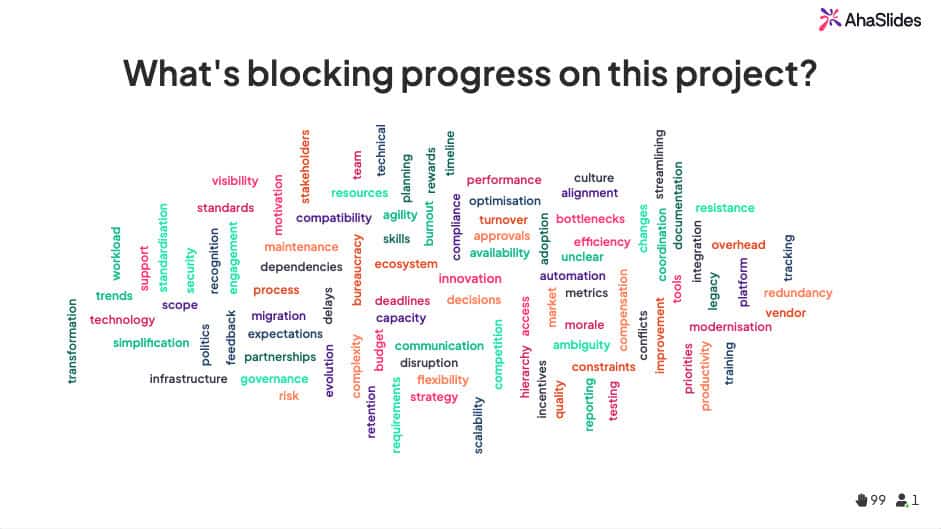
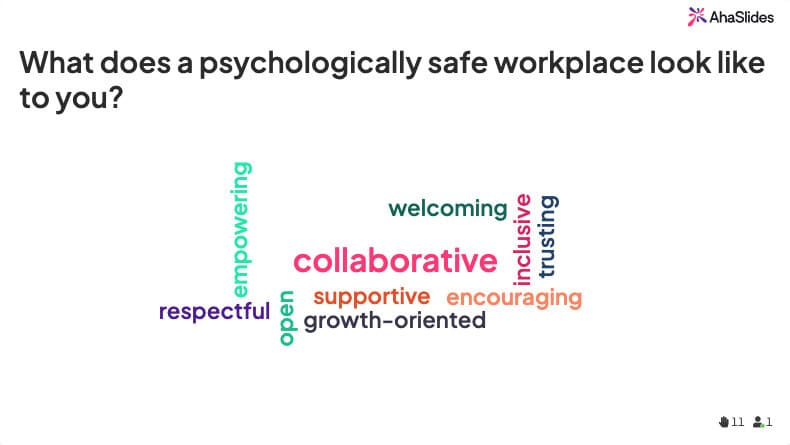
ការសម្របសម្រួលការប្រជុំកាន់តែប្រសើរឡើងជាមួយនឹងមតិកែលម្អផ្ទាល់៖ ប្រើមុខងារ Word Cloud របស់ AhaSlides ដើម្បីប្រមូលការឆ្លើយតបទៅនឹងសំណួរដូចជា "តើអ្វីទៅដែលរារាំងដំណើរការលើគម្រោងនេះ?" រូបរាងដដែលៗលេចចេញជារូបរាង ដែលជួយក្រុមកំណត់បញ្ហាប្រឈមដែលបានចែករំលែកយ៉ាងឆាប់រហ័ស។ វាមានប្រសិទ្ធភាពជាពិសេសនៅក្នុងការប្រជុំកូនកាត់ ដែលអ្នកចូលរួមពីចម្ងាយអាចស្ទាក់ស្ទើរក្នុងការនិយាយ - ការបញ្ចូលរបស់អ្នកគ្រប់គ្នាលេចឡើងក្នុងពេលដំណាលគ្នា បង្កើតភាពមើលឃើញស្មើគ្នា។
ការស្ទង់មតិ និងមតិរបស់បុគ្គលិក
អ្នកជំនាញ និងអ្នកគ្រប់គ្រងធនធានមនុស្សអាចប្រើប្រាស់សំណួរទាំងនេះ ដើម្បីប្រមូលនូវការយល់ដឹងពិតប្រាកដអំពីបទពិសោធន៍បុគ្គលិក ការចូលរួម និងវប្បធម៌របស់អង្គការ។
- តើអ្វីជាការផ្លាស់ប្តូរមួយដែលអង្គភាពរបស់យើងអាចធ្វើ ដែលនឹងធ្វើឱ្យបទពិសោធន៍ប្រចាំថ្ងៃរបស់អ្នកប្រសើរឡើង?
- គិតអំពីពេលវេលាមួយដែលអ្នកមានអារម្មណ៍ថាមានតម្លៃជាពិសេសនៅទីនេះ តើមានអ្វីកើតឡើងជាពិសេស?
- តើជំនាញ ឬសមត្ថភាពអ្វី ដែលអ្នកប្រាថ្នាចង់ឱ្យក្រុមរបស់យើងកាន់តែរីកចម្រើន?
- ប្រសិនបើអ្នកមានធនធានគ្មានដែនកំណត់ដើម្បីដោះស្រាយបញ្ហាប្រឈមមួយដែលយើងកំពុងជួបប្រទះ តើអ្នកនឹងដោះស្រាយអ្វី និងដោយរបៀបណា?
- តើអ្វីទៅជាអ្វីដែលយើងមិនទាន់វាស់វែងដែលអ្នកជឿថាយើងគួរយកចិត្តទុកដាក់?
- ពិពណ៌នាអំពីអន្តរកម្មថ្មីៗនេះដែលលើសពីការរំពឹងទុករបស់អ្នក តើអ្វីដែលធ្វើឱ្យវាលេចធ្លោ?
- នៅពេលអ្នកគិតអំពីវប្បធម៌របស់យើង តើរឿងមួយដែលអ្នកសង្ឃឹមមិនផ្លាស់ប្តូរ ហើយរឿងមួយដែលអ្នកសង្ឃឹមថានឹងវិវត្ត?
- តើយើងគួរសួរសំណួរអ្វីនៅក្នុងការស្ទង់មតិនេះ ប៉ុន្តែមិនបាន?
- តើអ្វីនឹងធ្វើឱ្យអ្នកមានអារម្មណ៍ថាមានការគាំទ្របន្ថែមទៀតនៅក្នុងតួនាទីរបស់អ្នក?
- តើភាពជាអ្នកដឹកនាំអាចទំនាក់ទំនងកាន់តែមានប្រសិទ្ធភាពជាមួយក្រុមរបស់អ្នកដោយរបៀបណា?
បទបង្ហាញ & កំណត់ចំណាំ
សម្រាប់វាគ្មិន និងអ្នកធ្វើបទបង្ហាញដែលមានបំណងបង្កើតវគ្គដែលគួរឱ្យចាប់អារម្មណ៍ និងគួរឱ្យចងចាំ ដែលលើសពីការផ្តល់ព័ត៌មានអកម្ម។
- ផ្អែកលើអ្វីដែលអ្នកបានឮកន្លងមក តើមានសំណួរអ្វីខ្លះសម្រាប់អ្នក?
- តើវាទាក់ទងនឹងបញ្ហាប្រឈមនានាដែលអ្នកកំពុងឃើញក្នុងឧស្សាហកម្មរបស់អ្នកយ៉ាងដូចម្ដេច?
- តើជោគជ័យនឹងទៅជាយ៉ាងណា ប្រសិនបើអ្នកអនុវត្តវិធីសាស្រ្តនេះ?
- ប្រាប់ខ្ញុំអំពីបទពិសោធន៍របស់អ្នកជាមួយបញ្ហានេះ - តើអ្នកបានកត់សម្គាល់គំរូអ្វីខ្លះ?
- តើអ្វីជាកង្វល់ធំបំផុតរបស់អ្នកអំពីនិន្នាការដែលខ្ញុំទើបតែបានពិពណ៌នា?
- តើវាអាចខុសគ្នាយ៉ាងដូចម្តេចនៅក្នុងបរិបទ ឬតំបន់ជាក់លាក់របស់អ្នក?
- តើឧទាហរណ៍អ្វីខ្លះពីការងារផ្ទាល់ខ្លួនរបស់អ្នកបង្ហាញចំណុចនេះ?
- ប្រសិនបើអ្នកអាចសួរអ្នកជំនាញមួយសំណួរអំពីប្រធានបទនេះ តើវានឹងទៅជាយ៉ាងណា?
- តើអ្វីជាការសន្មត់មួយដែលខ្ញុំបានធ្វើនៅក្នុងបទបង្ហាញនេះដែលអ្នកនឹងជំទាស់?
- តើអ្នកនឹងធ្វើអ្វីប្លែកបន្ទាប់ពីសម័យប្រជុំថ្ងៃនេះ?
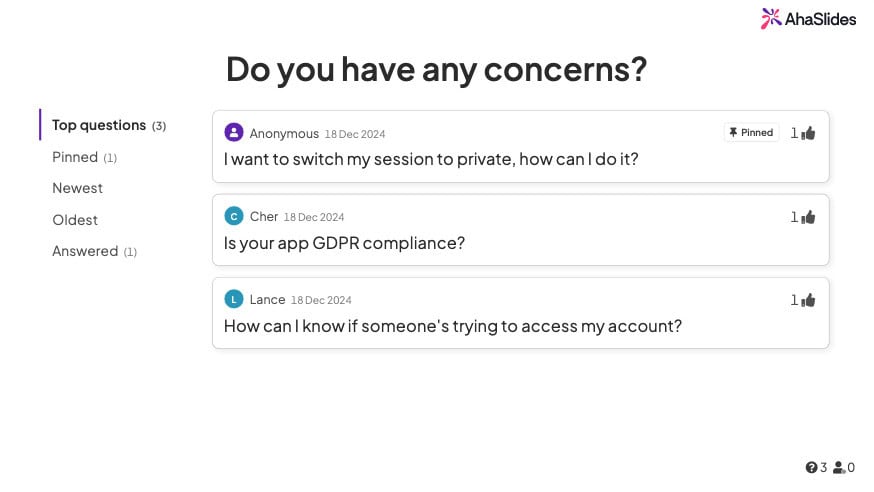
ការបង្កើតបទបង្ហាញអន្តរកម្ម៖ ផ្លាស់ប្តូរបទបង្ហាញស្តង់ដាររបស់អ្នកទៅជាការសន្ទនាដោយប្រើមុខងារ Q&A របស់ AhaSlides។ អញ្ជើញអ្នកចូលរួមឱ្យដាក់សំណួរពេញមួយសុន្ទរកថារបស់អ្នក បន្ទាប់មកនិយាយទៅកាន់អ្នកដែលពេញនិយមបំផុត។ នេះធ្វើឱ្យទស្សនិកជនចូលរួម ពីព្រោះពួកគេដឹងថាការព្រួយបារម្ភជាក់លាក់របស់ពួកគេនឹងត្រូវបានស្តាប់ ហើយវាផ្តល់ឱ្យអ្នកនូវការយល់ដឹងក្នុងពេលជាក់ស្តែងអំពីអ្វីដែលកំពុងកើតឡើង និងអ្វីដែលត្រូវការការបំភ្លឺ។
បរិបទអប់រំ (សម្រាប់គ្រូបង្រៀន និងអ្នកអប់រំ)
ជួយសិស្សឱ្យអភិវឌ្ឍការគិតប្រកបដោយការត្រិះរិះពិចារណា បញ្ជាក់ហេតុផលរបស់ពួកគេ និងចូលរួមឱ្យបានស៊ីជម្រៅជាមួយសម្ភារៈ។
- តើអ្នកឃើញទំនាក់ទំនងអ្វីរវាងគំនិតនេះ និងអ្វីដែលយើងបានរៀនកាលពីសប្តាហ៍មុន?
- តើអ្នកនឹងដោះស្រាយបញ្ហានេះដោយរបៀបណាដោយប្រើក្របខ័ណ្ឌដែលយើងបានពិភាក្សា?
- ហេតុអ្វីបានជាអ្នកគិតថាព្រឹត្តិការណ៍នេះកើតឡើង? តើភស្តុតាងអ្វីដែលគាំទ្រការគិតរបស់អ្នក?
- តើអ្នកនៅតែមានសំណួរអ្វីខ្លះអំពីប្រធានបទនេះ?
- ពិពណ៌នាអំពីស្ថានភាពនៅខាងក្រៅសាលា ដែលអ្នកអាចប្រើចំណេះដឹងនេះ។
- តើអ្វីជាបញ្ហាប្រឈមបំផុតអំពីកិច្ចការនេះ ហើយតើអ្នកបានឆ្លងកាត់កិច្ចការនេះដោយរបៀបណា?
- ប្រសិនបើអ្នកអាចបង្រៀនគំនិតនេះដល់អ្នកដទៃ តើអ្នកនឹងប្រើឧទាហរណ៍អ្វីខ្លះ?
- តើការពន្យល់ជំនួសអ្វីអាចមានសម្រាប់លទ្ធផលនេះ?
- តើការយល់ដឹងរបស់អ្នកអំពីប្រធានបទនេះបានផ្លាស់ប្តូរយ៉ាងណានៅថ្ងៃនេះ?
- តើអ្នកចង់ស្វែងយល់បន្ថែមអំពីប្រធានបទនេះអ្វីខ្លះ?
សំភាសន៍ការងារ
ស្វែងយល់ពីវិធីសាស្រ្តដោះស្រាយបញ្ហារបស់បេក្ខជន ភាពសមស្របតាមវប្បធម៌ និងការលើកទឹកចិត្តពិតប្រាកដ លើសពីការឆ្លើយតបដែលបានហាត់សម។
- ណែនាំខ្ញុំតាមវិធីសាស្រ្តរបស់អ្នក នៅពេលអ្នកជួបបញ្ហាដែលអ្នកមិនធ្លាប់ដោះស្រាយពីមុនមក។
- ប្រាប់ខ្ញុំអំពីគម្រោងមួយដែលអ្នកត្រូវមានឥទ្ធិពលលើមនុស្សដោយគ្មានសិទ្ធិអំណាចដោយផ្ទាល់ - តើអ្នកបានទាក់ទងវាដោយរបៀបណា?
- ពិពណ៌នាអំពីពេលវេលាដែលអ្នកបានទទួលមតិកែលម្អពិបាកៗ តើអ្នកបានធ្វើអ្វីជាមួយវា?
- តើអ្វីជំរុញចិត្តអ្នកឱ្យធ្វើការងារឱ្យអស់ពីសមត្ថភាព ហើយបរិយាកាសអ្វីដែលជួយអ្នកឱ្យមានភាពរីកចម្រើន?
- តើសហការីបច្ចុប្បន្នរបស់អ្នកពិពណ៌នាអំពីភាពខ្លាំង និងផ្នែករបស់អ្នកសម្រាប់ការអភិវឌ្ឍន៍យ៉ាងដូចម្តេច?
- ប្រាប់ខ្ញុំអំពីការធ្លាក់ចុះវិជ្ជាជីវៈ និងអ្វីដែលអ្នកបានរៀនពីវា។
- តើផ្នែកមួយណានៃតួនាទីនេះធ្វើឱ្យអ្នករំភើបបំផុត ហើយតើអ្នកមានកង្វល់អ្វីខ្លះ?
- ពិពណ៌នាអំពីភាពស្វាហាប់នៃក្រុមដ៏ល្អរបស់អ្នក — តើអ្វីធ្វើឱ្យកិច្ចសហការដំណើរការសម្រាប់អ្នក?
- តើជំនាញអ្វីដែលអ្នកបានអភិវឌ្ឍថ្មីៗនេះ ហើយតើអ្នកបានបង្កើតវាដោយរបៀបណា?
- តើអ្នកសម្រេចចិត្តយ៉ាងណាថាត្រូវកំណត់អាទិភាពអ្វីនៅពេលអ្វីៗមានអារម្មណ៍បន្ទាន់?
ស្រាវជ្រាវ និងសម្ភាសន៍អ្នកប្រើប្រាស់
សម្រាប់អ្នកស្រាវជ្រាវដែលធ្វើការសិក្សាគុណភាព ការស្រាវជ្រាវបទពិសោធន៍អ្នកប្រើប្រាស់ ឬការស្រាវជ្រាវទីផ្សារដែលទាមទារការយល់ដឹងស៊ីជម្រៅ។
- ប្រាប់ខ្ញុំពីរបៀបដែលអ្នកចូលទៅជិតកិច្ចការនេះ។
- តើអ្នកជួបប្រទះការខកចិត្តអ្វីខ្លះជាមួយនឹងដំណោះស្រាយបច្ចុប្បន្នរបស់អ្នក?
- ប្រាប់ខ្ញុំអំពីពេលវេលាចុងក្រោយដែលអ្នកត្រូវការដើម្បីសម្រេចវា—តើអ្នកបានចាត់វិធានការអ្វីខ្លះ?
- តើដំណោះស្រាយដ៏ល្អមួយនឹងមើលទៅបែបណាសម្រាប់អ្នក?
- តើបញ្ហាប្រឈមនេះប៉ះពាល់ដល់ទិដ្ឋភាពផ្សេងទៀតនៃការងារ ឬជីវិតរបស់អ្នកយ៉ាងដូចម្តេច?
- តើអ្នកបានព្យាយាមអ្វីខ្លះនាពេលកន្លងមក ដើម្បីដោះស្រាយបញ្ហានេះ?
- តើអ្វីសំខាន់បំផុតសម្រាប់អ្នកពេលធ្វើការសម្រេចចិត្តអំពីរឿងនេះ?
- ពិពណ៌នាអំពីពេលវេលាដែលដំណើរការនេះដំណើរការល្អ តើអ្វីបានធ្វើឱ្យវាទទួលបានជោគជ័យ?
- តើអ្វីនឹងរារាំងអ្នកមិនឱ្យប្រើដំណោះស្រាយបែបនេះ?
- ប្រសិនបើអ្នកអាចផ្លាស់ប្តូររឿងមួយអំពីរបៀបដែលអ្នកដោះស្រាយនាពេលបច្ចុប្បន្ននេះ តើវានឹងទៅជាយ៉ាងណា?
អ្នកបំបែកទឹកកក និងអគារក្រុម
ពន្លឺ សំណួរទាក់ទាញ ដែលបង្កើតទំនាក់ទំនង និងបង្កើតសុវត្ថិភាពផ្លូវចិត្តនៅពេលចាប់ផ្តើមវគ្គ។
- តើជំនាញអ្វីដែលអ្នកបានរៀនថ្មីៗនេះដែលធ្វើឱ្យអ្នកភ្ញាក់ផ្អើល?
- ប្រសិនបើអ្នកអាចមានមហាអំណាចមួយថ្ងៃ តើអ្នកនឹងជ្រើសរើសមួយណា ហើយហេតុអ្វី?
- តើដំបូន្មានដ៏ល្អបំផុតដែលអ្នកបានទទួលនៅឆ្នាំនេះគឺជាអ្វី?
- ប្រាប់ខ្ញុំអំពីអ្វីមួយដែលអ្នកទន្ទឹងរង់ចាំក្នុងខែនេះ។
- តើអ្វីទៅជារឿងតូចមួយដែលធ្វើឱ្យអ្នកញញឹមថ្មីៗនេះ?
- ប្រសិនបើអ្នកអាចស្ទាត់ជំនាញណាមួយភ្លាមៗ តើវានឹងទៅជាយ៉ាងណា ហើយតើអ្នកនឹងប្រើវាដោយរបៀបណា?
- តើអ្វីទៅជាការលួចចូលទៅរកផលិតភាពរបស់អ្នក ឬព័ត៌មានជំនួយការងារ?
- ពិពណ៌នាអំពីចុងសប្តាហ៍ដ៏ល្អរបស់អ្នកជាបីពាក្យ បន្ទាប់មកពន្យល់ពីមូលហេតុដែលអ្នកជ្រើសរើសវា។
- តើអ្វីទៅជាអ្វីដែលអ្នកមានមោទនភាពក្នុងការសម្រេចបានចុងក្រោយនេះ?
- ប្រសិនបើអ្នកអាចសួរនរណាម្នាក់ (ការរស់នៅ ឬប្រវត្តិសាស្រ្ត) សំណួរមួយអំពីកាហ្វេ តើអ្នកណា និងអ្វី?
ធ្វើឱ្យក្រុមនិយាយយ៉ាងឆាប់រហ័ស៖ ប្រើ AhaSlides' គំរូផ្ទាំងទឹកកក ជាមួយនឹងការជំរុញឱ្យបើកចំហ។ ការបង្ហាញការឆ្លើយតបជាអនាមិកនៅលើអេក្រង់ នៅពេលដែលពួកវាចូលមកបង្កើតថាមពល ហើយជារឿយៗបង្កឱ្យមានការសន្ទនាដោយឯកឯង នៅពេលដែលមនុស្សមានប្រតិកម្មចំពោះចម្លើយរបស់គ្នាទៅវិញទៅមក។ វាមានប្រសិទ្ធភាពជាពិសេសសម្រាប់ក្រុមកូនកាត់ ដែលអ្នកចូលរួមដោយផ្ទាល់អាចគ្រប់គ្រងបានបើមិនដូច្នេះទេ។
អ្នកចាប់ផ្តើមការសន្ទនា
សម្រាប់បណ្តាញទំនាក់ទំនង ការកសាងទំនាក់ទំនង ឬធ្វើឱ្យទំនាក់ទំនងកាន់តែស៊ីជម្រៅជាមួយសហសេវិក និងអតិថិជន។
- តើនិន្នាការអ្វីខ្លះដែលអ្នកកំពុងមើលយ៉ាងជិតស្និទ្ធនៅក្នុងតំបន់ការងាររបស់អ្នក?
- តើអ្វីទៅដែលធ្វើឱ្យអ្នករវល់ក្នុងពេលថ្មីៗនេះ—តើគម្រោងអ្វីដែលអ្នករំភើបចិត្ត?
- តើអ្នកបញ្ចប់ដោយរបៀបណាក្នុងវិស័យបច្ចុប្បន្នរបស់អ្នក?
- តើអ្វីជាអ្វីដែលគួរឱ្យចាប់អារម្មណ៍បំផុតដែលអ្នកបានរៀន ឬអានថ្មីៗនេះ?
- ប្រាប់ខ្ញុំអំពីបញ្ហាប្រឈមអាជីពដែលអ្នកកំពុងធ្វើការនៅពេលនេះ។
- តើអ្នកយល់យ៉ាងណាចំពោះការផ្លាស់ប្តូរថ្មីៗនៅក្នុងឧស្សាហកម្មរបស់យើង?
- តើដំបូន្មានអ្វីខ្លះដែលអ្នកនឹងផ្តល់ឱ្យខ្លួនឯងវ័យក្មេងអំពីការរុករកអាជីពរបស់អ្នក?
- តើថ្ងៃធម្មតាមើលទៅដូចអ្នក?
- តើការងាររបស់អ្នកមានការវិវត្តយ៉ាងណាក្នុងរយៈពេលប៉ុន្មានឆ្នាំកន្លងមកនេះ?
- តើអ្វីជាអ្វីដែលអ្នកចង់ឱ្យមនុស្សកាន់តែច្រើនយល់អំពីតួនាទីរបស់អ្នក?
3 ឧបករណ៍ Q&A ផ្ទាល់សម្រាប់ការបង្ហោះសំណួរបើកចំហ
ប្រមូលផ្តុំការឆ្លើយតបផ្ទាល់ពីមនុស្សរាប់ពាន់នាក់ ដោយមានជំនួយពីឧបករណ៍អនឡាញមួយចំនួន។ ពួកវាល្អបំផុតសម្រាប់ការប្រជុំ សិក្ខាសាលាលើបណ្តាញ មេរៀន ឬការជជែកគ្នា នៅពេលអ្នកចង់ផ្តល់ឱកាសឱ្យនាវិកទាំងមូលចូលរួម។
អេអេសស្លេស
AhaSlides បំប្លែងបទបង្ហាញស្តង់ដារទៅជាបទពិសោធន៍ដែលចូលរួមជាមួយលក្ខណៈពិសេសដែលភ្ជាប់មកជាមួយដែលត្រូវបានរចនាឡើងសម្រាប់អ្នកសម្របសម្រួលអាជីព គ្រូបណ្តុះបណ្តាល និងអ្នកធ្វើបទបង្ហាញ។
ល្អបំផុតសម្រាប់សំណួរបើកចំហ៖
ស្លាយចុងបើកចំហ៖ អ្នកចូលរួមវាយការឆ្លើយតបកថាខណ្ឌពីទូរស័ព្ទរបស់ពួកគេ។ ល្អឥតខ្ចោះសម្រាប់សំណួរដែលតម្រូវឱ្យមានចម្លើយលម្អិត: "ពិពណ៌នាអំពីសេណារីយ៉ូមួយដែលអ្នកនឹងអនុវត្តបច្ចេកទេសនេះ"។
ស្លាយខួរក្បាល៖ ដំណើរការស្រដៀងទៅនឹងស្លាយបើកចំហ ប៉ុន្តែអនុញ្ញាតឱ្យអ្នកចូលរួមបោះឆ្នោតសម្រាប់ចម្លើយដែលពួកគេចូលចិត្ត។
ពពកពាក្យ៖ ឧបករណ៍មតិកែលម្អដែលមើលឃើញដែលបង្ហាញការឆ្លើយតបជាពពកពាក្យ ជាមួយនឹងពាក្យដែលបានលើកឡើងជាញឹកញាប់លេចឡើងកាន់តែធំ។ Brilliant សម្រាប់៖ "មួយ ឬពីរពាក្យ តើអ្នកមានអារម្មណ៍យ៉ាងណាចំពោះការផ្លាស់ប្តូរនេះ?" ឬ "តើពាក្យដំបូងដែលចូលមកក្នុងគំនិតនៅពេលអ្នកគិតអំពីវប្បធម៌ក្រុមរបស់យើងគឺជាអ្វី?"
ហេតុអ្វីបានជាវាដំណើរការសម្រាប់អ្នកបណ្តុះបណ្តាល៖ អ្នកអាចបង្កើតបទបង្ហាញការបណ្តុះបណ្តាលដ៏ទូលំទូលាយជាមួយនឹងការស្ទង់មតិ កម្រងសំណួរ និងសំណួរបើកចំហទាំងអស់នៅកន្លែងតែមួយ - ដោយមិនមានការប្តូររវាងឧបករណ៍។ ការឆ្លើយតបត្រូវបានរក្សាទុកដោយស្វ័យប្រវត្តិ ដូច្នេះអ្នកអាចពិនិត្យមើលមតិកែលម្អនៅពេលក្រោយ និងតាមដានការចូលរួមក្នុងវគ្គជាច្រើន។ ជម្រើសអនាមិកលើកទឹកចិត្តឱ្យមានមតិកែលម្អដោយស្មោះត្រង់នៅក្នុងប្រធានបទរសើប (ការផ្លាស់ប្តូរអង្គការ ការព្រួយបារម្ភអំពីការអនុវត្ត។ល។)។
ការមើលឃើញតាមពេលវេលាជាក់ស្តែងក្នុងការគិតរបស់មនុស្សគ្រប់គ្នាជួយអ្នកកែសម្រួលការសម្របសម្រួលភ្លាមៗ។ ប្រសិនបើ 80% នៃការឆ្លើយតបបង្ហាញពីភាពច្របូកច្របល់លើគោលគំនិតមួយ អ្នកដឹងថាត្រូវបន្ថយល្បឿន និងផ្តល់ឧទាហរណ៍បន្ថែមទៀត មុនពេលឆ្ពោះទៅមុខ។
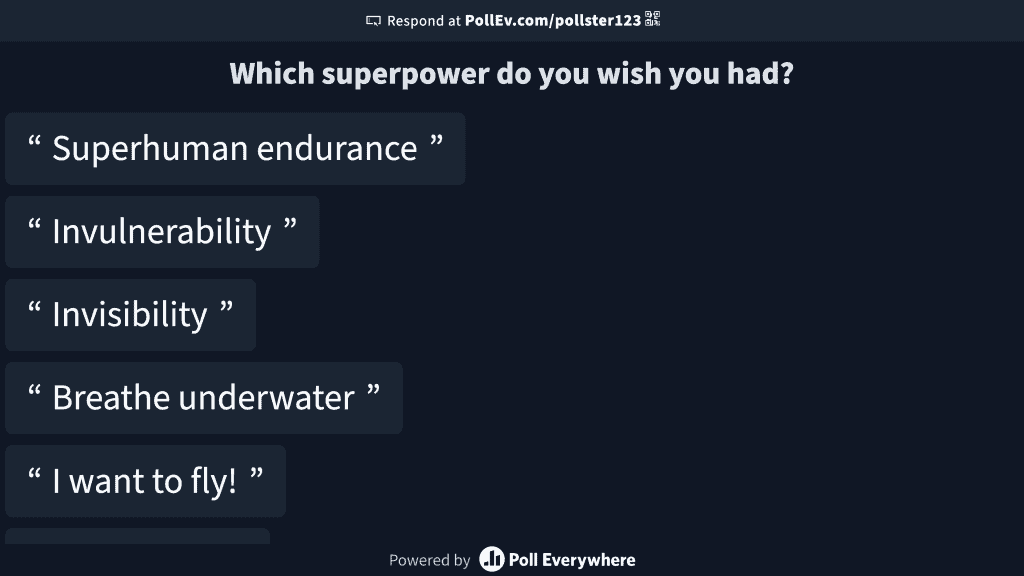
បោះឆ្នោតគ្រប់ទីកន្លែង
បោះឆ្នោតគ្រប់ទីកន្លែង គឺជាឧបករណ៍ចូលរួមជាមួយទស្សនិកជន ដែលប្រើការស្ទង់មតិអន្តរកម្ម ពពកពាក្យ ជញ្ជាំងអត្ថបទ និងអ្វីៗផ្សេងទៀត។
វារួមបញ្ចូលជាមួយកម្មវិធីប្រជុំវីដេអូ និងបទបង្ហាញជាច្រើន ដែលកាន់តែងាយស្រួល និងសន្សំសំចៃពេលវេលាក្នុងការប្តូររវាងវេទិកាផ្សេងៗ។ សំណួរ និងចម្លើយរបស់អ្នកអាចត្រូវបានបង្ហាញដោយផ្ទាល់នៅលើគេហទំព័រ កម្មវិធីទូរស័ព្ទ គន្លឹះ ឬ PowerPoint ។
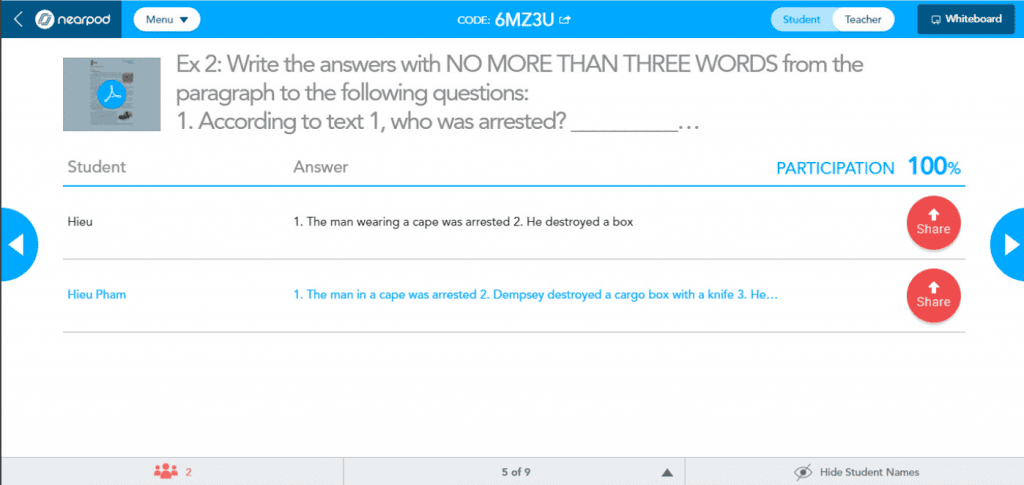
ជិតផដ
ជិតផដ គឺជាវេទិកាអប់រំសម្រាប់គ្រូបង្រៀនដើម្បីធ្វើមេរៀនអន្តរកម្ម បង្កើតបទពិសោធន៍សិក្សា និងរៀបចំសកម្មភាពក្នុងថ្នាក់។
លក្ខណៈពិសេសសំណួរចុងចំហរបស់វាអនុញ្ញាតឱ្យសិស្សឆ្លើយដោយការឆ្លើយតបជាលាយលក្ខណ៍អក្សរ ឬជាសំឡេងជំនួសឱ្យចម្លើយជាអត្ថបទប៉ុណ្ណោះ។
នៅក្នុងការសង្ខេប...
សំណួរបើកចំហគឺជាឧបករណ៍ដ៏មានឥទ្ធិពលបំផុតរបស់អ្នកសម្រាប់បំប្លែងទស្សនិកជនអកម្មទៅជាអ្នកចូលរួមដែលចូលរួម។ ពួកគេបង្ហាញពីការយល់ដឹងពិតប្រាកដ ការយល់ដឹងដែលមិនបានរំពឹងទុក និងបង្កើតសុវត្ថិភាពផ្លូវចិត្តដែលលើកទឹកចិត្តឱ្យមានការសន្ទនាដោយស្មោះត្រង់។
អ្នកចូលរួមរបស់អ្នកចង់ឮ។ សំណួរបើកចំហផ្តល់ឱ្យពួកគេនូវឱកាសនោះ ហើយក្នុងការធ្វើដូច្នេះ ពួកគេផ្តល់ឱ្យអ្នកនូវការយល់ដឹងដែលអ្នកត្រូវការដើម្បីផ្តល់ការបណ្តុះបណ្តាល ការប្រជុំ និងបទបង្ហាញដែលបង្កើតផលប៉ះពាល់យ៉ាងពិតប្រាកដ។