Araştırmalar, yapılandırılmış beyin fırtınası yöntemlerini kullanan ekiplerin daha başarılı olduğunu göstermektedir. %50'ye kadar daha fazla yaratıcı çözüm üretin Yapılandırılmamış yaklaşımlara kıyasla daha etkilidir. Bu kılavuz, onlarca yıllık inovasyon araştırmasını ve pratik deneyimi, ekibinizin etkili bir şekilde fikir üretmesine yardımcı olacak uygulanabilir bir kaynakta sentezliyor.
İçindekiler
Beyin fırtınası nedir?
Beyin fırtınası, belirli bir soruna birden fazla fikir veya çözüm üretmek için kullanılan yapılandırılmış bir yaratıcı süreçtir. İlk olarak 1948'de reklam yöneticisi Alex Osborn tarafından ortaya atılan beyin fırtınası, özgür düşünmeyi teşvik eder, fikir üretimi sırasında yargılamayı askıya alır ve alışılmadık fikirlerin ortaya çıkabileceği bir ortam yaratır.
Osborn, Amerika'nın en büyük reklam ajanslarından biri olan BBDO'yu (Batten, Barton, Durstine & Osborn) yönetirken, şirketin zor bir dönemden geçtiği sırada beyin fırtınası yöntemini geliştirdi. Geleneksel iş toplantılarının yaratıcılığı engellediğini, çalışanların anında eleştirilme korkusuyla fikirlerini geri planda tuttuğunu fark etti. Çözümü, başlangıçta "ortaya fikir çıkarmak" olarak adlandırılan ve bugün beyin fırtınası olarak bildiğimiz yöntem oldu.
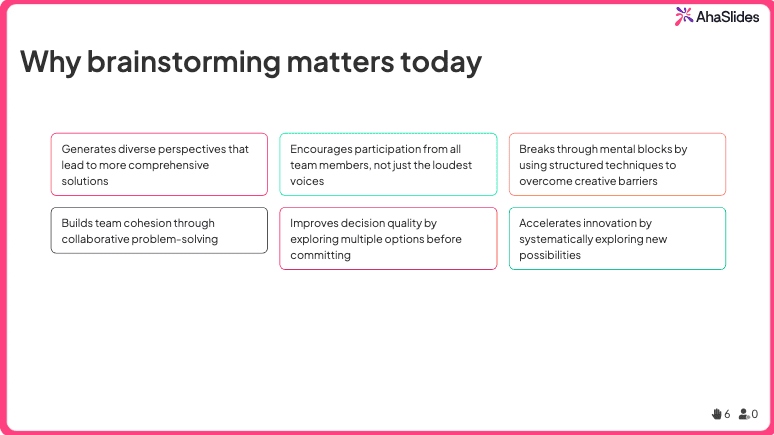
Beyin Fırtınası Ne Zaman Kullanılır?
Beyin fırtınası en iyi şu durumlarda işe yarar:
İş uygulamaları:
- Ürün geliştirme ve yenilik
- Pazarlama kampanyası fikir geliştirme
- Problem çözme atölyeleri
- Stratejik planlama oturumları
- Süreç iyileştirme girişimleri
- Müşteri deneyiminin iyileştirilmesi
Eğitim ortamları:
- Deneme yazıları için ön hazırlık ve Proje Tabanlı Öğrenmeye (PBL) başlama
- İşbirlikçi öğrenme etkinlikleri
- Yaratıcı yazma egzersizleri
- Bilim fuarı projeleri
- Grup sunumları
- Ders planı geliştirme
Kişisel projeler:
- Olay kurgulama
- Yaratıcı uğraşlar (sanat, yazarlık, müzik)
- Kariyer geliştirme kararları
- Kişisel hedef belirleme
Beyin Fırtınası Ne Zaman Kullanılmamalıdır?
Beyin fırtınası her zaman çözüm değildir. Şu durumlarda beyin fırtınasını atlayın:
- Kararlar, tek bir alandan derin teknik uzmanlık gerektirir.
- Zaman kısıtlamaları çok ciddi (< 15 dakika mevcut)
- Bu sorunun bilinen tek bir doğru cevabı vardır.
- Bireysel düşünme daha verimli olurdu.
- Takım dinamikleri ciddi anlamda işlevsiz.
Etkili Beyin Fırtınasının Bilimsel Temeli
Beyin fırtınasının ardındaki psikolojiyi ve araştırmaları anlamak, yaygın hatalardan kaçınmanıza ve daha etkili oturumlar yapılandırmanıza yardımcı olur.
Araştırma Bize Ne Söylüyor?
Üretim engelleme
Araştırma Michael Diehl ve Wolfgang Stroebe (1987) tarafından yapılan bir çalışma, grup beyin fırtınasında "üretim engellemesi"ni önemli bir zorluk olarak tanımlamıştır. Bir kişi konuştuğunda, diğerleri beklemek zorunda kalır ve bu da fikirlerini unutmalarına veya ivme kaybetmelerine neden olur. Bu araştırma, herkesin aynı anda katkıda bulunduğu beyin yazma gibi tekniklerin geliştirilmesine yol açmıştır.
Psikolojik güvenlik
Amy Edmondson'ın Harvard'daki araştırması şunu gösteriyor ki psikolojik güvenlik—fikrinizi dile getirdiğiniz için cezalandırılmayacağınız veya aşağılanmayacağınız inancı— takım etkinliğindeki en önemli faktördür. Psikolojik güvenliğe sahip takımlar daha yaratıcı fikirler üretir ve daha hesaplı riskler alır.
Harvard Business Review'da yayınlanan bir araştırmaya göre, beyin fırtınası öncesinde utanç verici hikayelerini paylaşan ekipler, kontrol gruplarına kıyasla %26 daha fazla fikir üretti ve %15 daha fazla kategoriye yayıldı. Bu kırılganlık ortamı, yargılamanın askıya alınmasına ve daha yüksek yaratıcı çıktıya yol açtı.
Bilişsel çeşitlilik
Araştırma MIT'nin Kolektif Zeka Merkezi'nden yapılan bir araştırma, farklı düşünme stillerine ve geçmişlere sahip ekiplerin, yaratıcı problem çözmede homojen gruplardan sürekli olarak daha iyi performans gösterdiğini ortaya koymuştur. Buradaki kilit nokta sadece demografik çeşitlilik değil, ekip üyelerinin problemlere yaklaşım biçimlerindeki bilişsel çeşitliliktir.
Sabitleme etkisi
Beyin fırtınası oturumlarındaki ilk fikirler, sonraki fikirleri sabitleyerek yaratıcı yelpazeyi sınırlama eğilimindedir. Zihin haritalama ve SCAMPER gibi teknikler, katılımcıları baştan itibaren birden fazla yöne doğru keşfetmeye zorlayarak bu durumu özellikle ortadan kaldırır.
Beyin Fırtınasında Sık Karşılaşılan Hatalar
grup düşünme
Grupların eleştirel değerlendirme pahasına uzlaşma arama eğilimi. Bunu önlemek için, karşıt görüşleri savunan kişileri teşvik edin ve farklı görüşleri açıkça memnuniyetle karşılayın.
Sosyal aylaklık
Bireyler gruplar halinde çalışırken tek başlarına olduklarından daha az katkıda bulunuyorlarsa, bu durum bireysel sorumluluk bilinciyle ele alınabilir; örneğin, grup tartışmasından önce herkesin fikirlerini sunması sağlanabilir.
Değerlendirme kaygısı
Olumsuz değerlendirme korkusu, insanların yaratıcı fikirlerini sansürlemelerine neden olur. AhaSlides gibi anonim gönderim araçları, fikir üretimi sırasında kaynak belirtmeyi kaldırarak bu sorunu çözüyor.
Beyin Fırtınası İçin 7 Temel Kural
Alex Osborn'un orijinal çerçevesinden geliştirilen ve IDEO, d.school ve dünya çapındaki önde gelen kuruluşlarda onlarca yıllık uygulama ile doğrulanan bu temel ilkeler, etkili beyin fırtınasının temelini oluşturmaktadır.
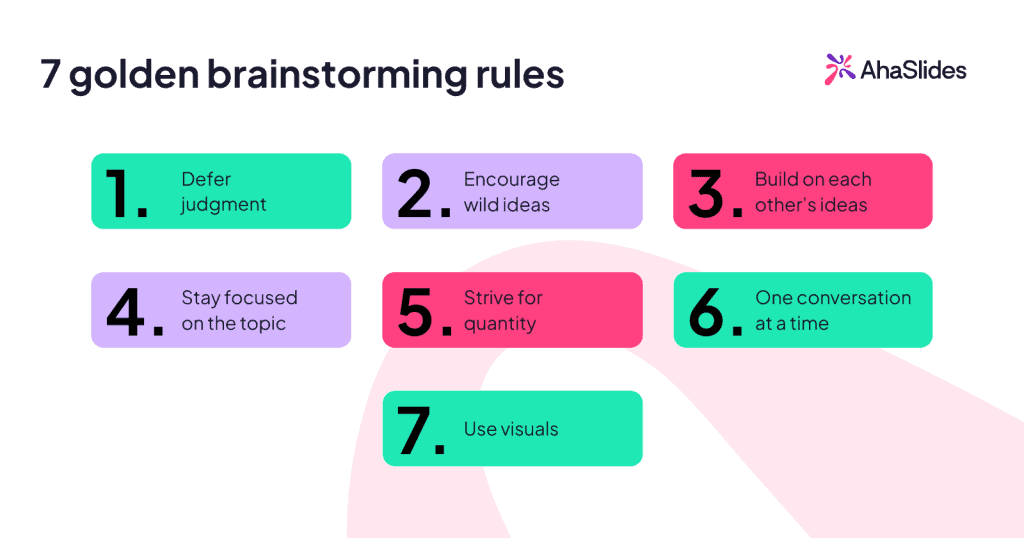
Kural 1: Hükmün Ertelenmesi
Ne demek: Fikir üretme sürecinde tüm eleştiri ve değerlendirmeleri erteleyin. Beyin fırtınası oturumu sona erene kadar hiçbir fikir reddedilmemeli, eleştirilmemeli veya değerlendirilmemelidir.
Neden önemlidir: Yargılama, yaratıcılığın yeşermeden önce ölümüne yol açar. Katılımcılar eleştiriden korktuklarında, kendilerini sansürler ve potansiyel olarak çığır açacak fikirleri saklarlar. En iyi yenilikler genellikle ilk başta saçma gelir.
Nasıl uygulanır:
- Bu kuralı oturumun başında açıkça belirtin.
- Değerlendirmeye yönelik yorumları nazikçe daha sonraki bir tartışmaya yönlendirin.
- Yargılamama modelini kolaylaştırıcı olarak benimseyin.
- "Bu işe yaramaz çünkü..." veya "Bunu daha önce denedik" gibi ifadelerin yasaklanmasını düşünün.
- Acil görüşülmesi gereken fikirler için bir "bekleme alanı" kullanın.
Kural 2: Çılgın Fikirleri Teşvik Edin
Ne demek: Uygulanabilirlik konusunda hemen bir kaygı duymadan, alışılmadık, görünüşte pratik olmayan veya "alışılmışın dışında" fikirleri aktif bir şekilde memnuniyetle karşılayın.
Neden önemlidir: Sıradışı fikirler genellikle çığır açan çözümlerin tohumlarını içerir. Uygulanması imkansız fikirler bile, geliştirildiğinde pratik yeniliklere ilham verebilir. Sıradışı düşünmeyi teşvik etmek, grubu bariz çözümlerin ötesine taşır.
Nasıl uygulanır:
- "İmkansız" veya "çılgın" fikirleri açıkça davet edin
- En alışılmadık önerileri kutlayın
- "Para sorun olmasaydı ne yapardık?" veya "Herhangi bir kuralı çiğneyebilseydik ne yapardık?" gibi yönlendirici sorular sorun.
- Beyin fırtınası sürecinizin bir bölümünü özellikle "sürpriz" fikirler için ayırın.
Kural 3: Birbirinizin Fikirlerinden Yararlanın
Ne demek: Başkalarının katkılarını dinleyin ve yeni olasılıklar yaratmak için bunları genişletin, birleştirin veya değiştirin.
Neden önemlidir: İş birliği yaratıcılığı kat kat artırır. Bir kişinin eksik düşüncesi, bir başkasının çığır açan çözümü haline gelir. Fikirler üzerine inşa etmek, bütünün parçaların toplamından daha büyük olduğu bir sinerji yaratır.
Nasıl uygulanır:
- Tüm fikirleri herkesin kolayca erişebileceği şekilde görünür bir biçimde sergileyin.
- "Bunun üzerine nasıl inşa edebiliriz?" sorusunu düzenli olarak sorun
- "Evet, ama..." yerine "Evet, ve..." kullanın.
- Katılımcıları birden fazla fikri birleştirmeye teşvik edin
- Hem orijinal katkıda bulunanlara hem de fikirleri geliştiren kişilere hakkını teslim edin.
Kural 4: Konuya Odaklanın
Ne demek: Fikirlerin, ele alınan belirli sorun veya zorlukla ilgili kalmasını sağlarken, bu sınırlar içinde yaratıcı keşfe de olanak tanıyın.
Neden önemlidir: Odaklanma, zaman kaybını önler ve verimli oturumlar sağlar. Yaratıcılık teşvik edilirken, konuyla ilgili kalmak, fikirlerin gerçekten ele alınan zorluğu çözebilmesini sağlar.
Nasıl uygulanır:
- Sorunu veya problemi herkesin görebileceği şekilde belirgin bir yere yazın.
- Fikirler konudan çok uzaklaştığında nazikçe yeniden yönlendirin
- İlginç ama konudan bağımsız fikirler için bir "park alanı" kullanın.
- Temel zorluğu periyodik olarak yeniden ifade edin.
- Odaklanmayı esneklikle dengeleyin.
Kural 5: Niceliğe Önem Verin
Ne demek: İlk aşamada kalite veya uygulanabilirlik konusunda endişelenmeden olabildiğince çok fikir üretin.
Neden önemlidir: Araştırmalar sürekli olarak niceliğin niteliğe yol açtığını göstermektedir. İlk fikirler genellikle barizdir. Çığır açan çözümler genellikle geleneksel düşünceyi tükettikten sonra ortaya çıkar. Daha fazla seçenek, olağanüstü çözümler bulma şansını artırır.
Nasıl uygulanır:
- Belirli miktar hedefleri belirleyin (örneğin, "20 dakikada 50 fikir").
- Aciliyet duygusu yaratmak için zamanlayıcılar kullanın.
- Hızlı fikir üretimini teşvik edin
- Katılımcılara her fikrin önemli olduğunu hatırlatın.
- Fikir sayısını görünür şekilde takip ederek ivme kazanın.
Kural 6: Bir Seferde Sadece Bir Konuşma
Ne demek: Her seferinde sadece bir kişinin konuşmasına izin vererek, herkesin her fikri duyup değerlendirebilmesini sağlayın ve böylece dikkati dağıtmayın.
Neden önemlidir: Yan konuşmalar, iyi fikirleri bastıran bir gürültü yaratır. İnsanlar dinleme ve konuşma arasında aynı anda birden fazla iş yaptıklarında, başkalarının katkılarından yararlanma fırsatlarını kaçırırlar.
Nasıl uygulanır:
- Açık ve net sıra alma protokolleri oluşturun.
- Sıra usulü veya el kaldırma sistemlerini kullanın.
- Sanal oturumlarda, yan notlar için sohbeti, ana fikirler için ise sözlü iletişimi kullanın.
- Yan konuşmaları molalara saklayın.
- Birden fazla konuşma ortaya çıktığında, konuyu nazikçe başka yöne çevirin.
Kural 7: Görseller Kullanın
Ne demek: Fikirleri yalnızca kelimelerle ifade etmekten daha etkili bir şekilde ifade etmek ve geliştirmek için görsel iletişim araçlarından, çizimlerden, diyagramlardan ve görsellerden yararlanın.
Neden önemlidir: Görsel düşünme, beynin farklı bölgelerini harekete geçirerek yeni bağlantılar ve fikirler tetikler. Basit görseller, karmaşık kavramları metinden daha hızlı iletir. Hatta çöp adam çizimleri bile görsel içermeyen ortamlardan daha iyidir.
Nasıl uygulanır:
- Keçeli kalemler, yapışkan notlar ve büyük kağıt veya beyaz tahtalar sağlayın.
- Çizim yapamayanları bile çizim yapmaya teşvik edin.
- Görsel çerçeveler kullanın (zihin haritaları, matrisler, diyagramlar).
- Fikirleri hem kelimelerle hem de görsellerle yakalayın.
- AhaSlides gibi dijital araçlardan yararlanın. canlı kelime bulutları oluşturucu ortaya çıkan temaları görselleştirmek
Beyin Fırtınası Oturumuna Nasıl Hazırlanılır?
Başarılı beyin fırtınası, katılımcılar odaya girmeden önce başlar. Doğru hazırlık, oturum kalitesini ve sonuçlarını önemli ölçüde iyileştirir.
Adım 1: Sorunu Açıkça Tanımlayın
Beyin fırtınası sonuçlarınızın kalitesi, sorunu ne kadar iyi tanımladığınıza büyük ölçüde bağlıdır. Net ve spesifik bir sorun ifadesi oluşturmak için zaman ayırın.
Sorun tanımlama için en iyi uygulamalar:
Belirsiz ifadeler yerine somut ayrıntılara yer verin:
- "Satışları nasıl artırabiliriz?" demek yerine...
- Şöyle bir soru deneyin: "İkinci çeyrekte kentsel alanlardaki Y kuşağına yönelik çevrimiçi satışlarımızı %20 nasıl artırabiliriz?"
Çözümlere değil, sonuçlara odaklanın:
- "Mobil uygulama geliştirmeli miyiz?" yerine...
- Şöyle deneyin: "Hizmetimizi hareket halindeki müşteriler için nasıl daha erişilebilir hale getirebiliriz?"
"Nasıl yapabiliriz?" sorularını kullanın: Bu tasarım odaklı düşünme çerçevesi, odaklanmayı korurken yeni olanaklar sunar.
- "Müşteri hizmetleri bekleme sürelerini nasıl azaltabiliriz?"
- "5. sınıf öğrencileri için öğrenmeyi nasıl daha ilgi çekici hale getirebiliriz?"
- "Yeni çalışanların şirket kültürüne bağlanmalarını nasıl sağlayabiliriz?"
Kullanıcı hikayelerini göz önünde bulundurun: Kullanıcının bakış açısından zorlukları ele alın:
- "Bir [kullanıcı türü] olarak, [hedef] istiyorum, çünkü [neden]"
- "Yoğun bir anne olarak, işten sonra kısıtlı zamanım olduğu için hızlı ve sağlıklı yemek seçenekleri istiyorum."
Adım 2: Doğru Katılımcıları Seçin
Optimal grup boyutu: 5-12 kişi
Çok az olması bakış açılarını sınırlar; çok fazla olması ise üretimi engeller ve koordinasyon sorunlarına yol açar.
Çeşitlilik önemlidir:
- Bilişsel çeşitlilik: Farklı düşünme stillerini ve problem çözme yaklaşımlarını dahil edin.
- Alan çeşitliliği: Konu uzmanlarını "dışarıdan" gelen bakış açılarıyla bir araya getirin.
- Hiyerarşik çeşitlilik: Organizasyonun çeşitli seviyelerini dahil edin (ancak güç dengelerini dikkatlice yönetin).
- Demografik çeşitlilik: Farklı geçmişler farklı bakış açıları getirir.
Kimleri dahil etmeli:
- Sorundan doğrudan etkilenen insanlar
- İlgili bilgiye sahip konu uzmanları
- Varsayımları sorgulayan yaratıcı düşünürler
- Çözümleri uygulayacak paydaşlar
- Yeni bakış açılarına sahip "dışarıdan kişiler"
Kimleri hariç tutmalı (veya seçici olarak davet etmeli):
- Fikirleri sürekli olarak reddeden aşırı şüpheciler
- Fikirleri daha erken bir aşamada engelleme gücüne sahip olanlar
- Sorunla ilgisi olmayan ve odak noktasını bozacak kişiler
3. Adım: Doğru Ortamı Seçin
Fiziksel ortam (şahsen):
- Hareketli mobilyalara sahip geniş açık alan.
- Fikirleri asmak için bolca duvar alanı.
- İyi aydınlatma ve konforlu sıcaklık
- Minimum dikkat dağıtıcı ve kesintili ortam.
- Malzemelere erişim (yapışkan notlar, kalemler, beyaz tahtalar)
Sanal ortam:
- Güvenilir video konferans platformu
- Dijital beyaz tahta veya iş birliği aracı (Miro, Mural, AhaSlides)
- Yedek iletişim yöntemi
- Seans öncesi teknik kontrol
- Net sanal temel kurallar
Zamanlamayla ilgili hususlar:
- Pazartesi sabahlarının erken saatlerinden veya Cuma öğleden sonralarının geç saatlerinden kaçının.
- Katılımcıların en enerjik oldukları zamanlara göre program düzenleyin.
- Yeterli zaman ayırın (karmaşık problemler için genellikle 60-90 dakika).
- Daha uzun oturumlar için molalar planlayın.
4. Adım: Gündemi Belirleyin
Net bir gündem, oturumların verimli ve odaklı geçmesini sağlar.
Örnek 90 dakikalık beyin fırtınası gündemi:
0:00-0:10 - Hoş geldiniz ve ısınma
- Gerekirse tanışma
- Temel kuralları gözden geçirin
- Hızlı buz kırıcı aktivite
0:10-0:20 - Sorun çerçeveleme
- Zorluğu açıkça ortaya koyun.
- Bağlam ve arka plan bilgisi sağlayın.
- Açıklayıcı soruları yanıtlayın
- İlgili verileri veya kısıtlamaları paylaşın.
0:20-0:50 - Farklı düşünme (fikir üretme)
- Seçilen beyin fırtınası tekniğini/tekniklerini kullanın.
- Miktarı teşvik edin
- Hükmü askıya al
- Tüm fikirleri yakalayın
0:50-1:00 - Ara
- Kısa sıfırlama
- gayri resmi işlem süresi
1:00-1:20 - Yakınsak düşünme (iyileştirme)
- Fikirleri temalar halinde düzenleyin.
- Benzer kavramları birleştirin
- Kriterlere göre ilk değerlendirme
1:20-1:30 - Sonraki adımlar
- Daha fazla geliştirme için en iyi fikirleri belirleyin.
- Takip sorumluluklarını atayın
- Gerekli ek seansları planlayın.
- Katılımcılara teşekkür ederiz.
Adım 5: Malzemeleri ve Aletleri Hazırlayın
Fiziksel malzemeler:
- Yapışkan not kağıtları (çok renkli)
- İşaretleyiciler ve kalemler
- Büyük kağıt veya flipchartlar
- Beyaz tahta
- Oy vermek için noktalar veya etiketler
- kronometre
- Sonuçları belgelemek için kamera
Dijital araçlar:
- AhaSlides, etkileşimli beyin fırtınası, kelime bulutları ve oylama için ideal bir araçtır.
- Dijital beyaz tahta (Miro, Mural, Conceptboard)
- Zihin haritalama yazılımı
- Fikirleri kaydetmek için kullanılan belge
- Ekran paylaşımı özelliği
Adım 6: Ön Çalışmayı Gönderin (İsteğe Bağlı)
Karmaşık zorluklar için katılımcıları şu şekilde göndermeyi düşünün:
- Sorunun arka planı
- İlgili veriler veya araştırmalar
- Önceden dikkate alınması gereken sorular
- Lütfen 3-5 adet ilk fikirle gelin.
- Gündem ve lojistik
Not: Hazırlık aşamasını, kendiliğinden gelişen fikirlerle dengeleyin. Bazen en taze fikirler, minimum hazırlıktan doğar.
20+ Kanıtlanmış Beyin Fırtınası Tekniği
Farklı teknikler farklı durumlara, grup büyüklüklerine ve hedeflere uygundur. Bu yöntemlerde ustalaştığınızda, her beyin fırtınası senaryosu için bir aracınız olacak.
Görsel Teknikler
Bu yöntemler, yaratıcılığı ortaya çıkarmak ve karmaşık fikirleri düzenlemek için görsel düşünmeyi kullanır.
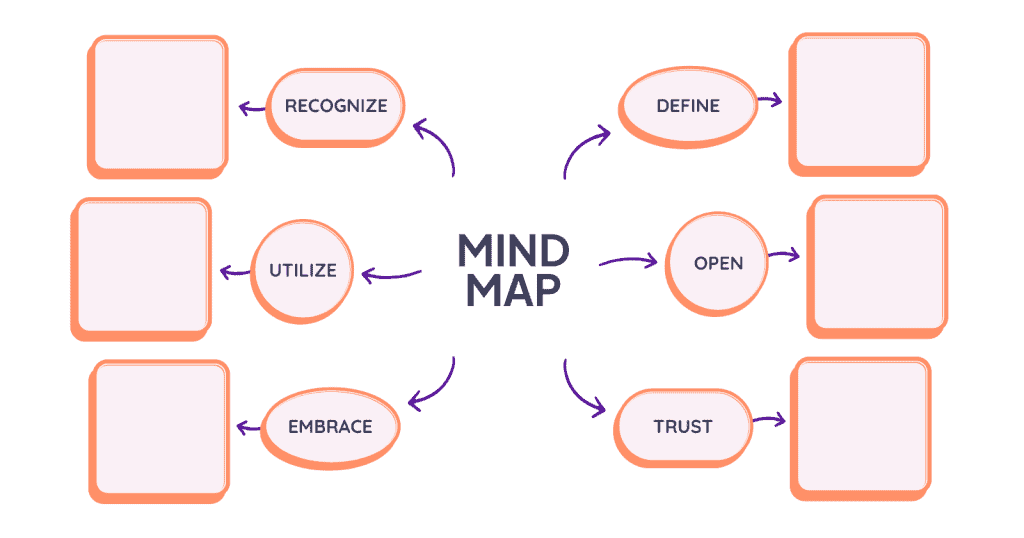
1. Zihin Haritalama
Ne olduğunu: Fikirleri merkezi bir kavram etrafında düzenleyen, ilişkileri ve bağlantıları göstermek için dallar kullanan görsel bir teknik.
Ne zaman kullanmalı:
- Çok boyutlu karmaşık konuları keşfetmek
- Proje veya içerik planlaması
- Doğal hiyerarşilere sahip bilgileri düzenlemek
- Görsel düşünürlerle çalışmak
Nasıl çalışır:
- Ana konuyu büyük bir sayfanın ortasına yazın.
- Ana temalar veya kategoriler için dallar çizin
- İlgili fikirler için alt dallar ekleyin
- Ayrıntıları keşfetmek için dallanmaya devam edin
- Anlamı güçlendirmek için renkler, görseller ve semboller kullanın.
- Farklı dallar arasında bağlantılar kurun.
Artıları:
- Doğal düşünme süreçlerini yansıtır.
- Fikirler arasındaki ilişkileri gösterir
- Doğrusal olmayan düşünmeyi teşvik eder
- Aşamalı olarak detay eklemek kolaydır.
Eksileri:
- Karmaşık ve bunaltıcı hale gelebilir.
- Basit, doğrusal problemler için daha az etkilidir.
- Alan ve görsel materyal gerektirir.
Örnek: Bir pazarlama ekibi, ürün lansmanı için zihin haritası oluştururken hedef kitleler, kanallar, mesajlaşma, zamanlama ve bütçe için dallar oluşturabilir ve her dal belirli taktiklere ve hususlara doğru genişleyebilir.
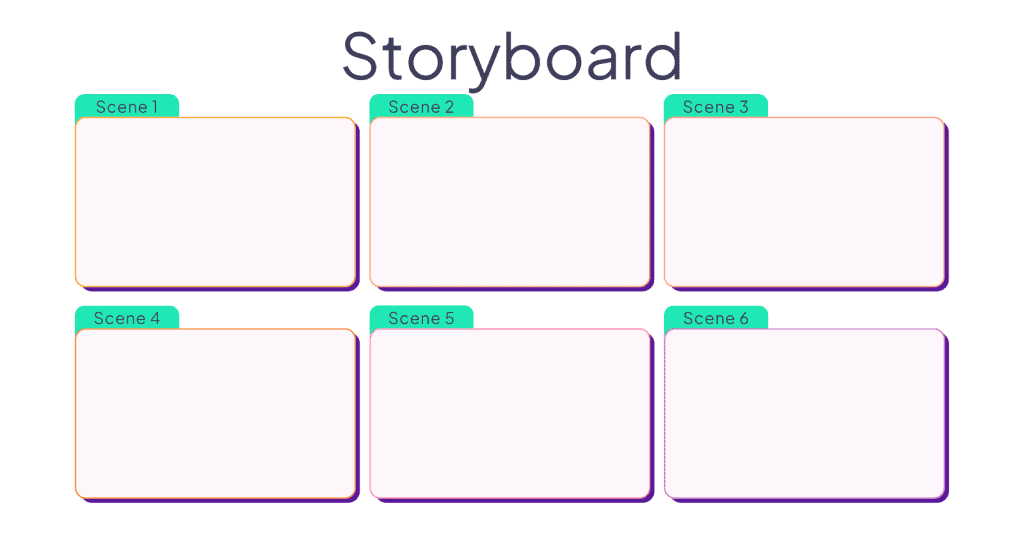
2. Öykü Taslağı
Ne olduğunu: Çizimler veya açıklamalar kullanarak bir süreci, deneyimi veya yolculuğu haritalandıran, ardışık bir görsel anlatı.
Ne zaman kullanmalı:
- Kullanıcı deneyimleri veya müşteri yolculukları tasarlamak
- Etkinliklerin veya süreçlerin planlanması
- Eğitim materyalleri geliştirme
- Anlatı odaklı içerik oluşturma
Nasıl çalışır:
- Başlangıç noktasını ve istenen son durumu belirleyin.
- Yolculuğu önemli aşamalara veya anlara bölün.
- Her aşama için bir çerçeve oluşturun.
- Her karede neler olduğunu çizin veya açıklayın.
- Kareler arasındaki bağlantıları ve geçişleri gösterin.
- Duygular, sıkıntı noktaları veya fırsatlar hakkında notlar ekleyin.
Artıları:
- Süreçleri ve deneyimleri görselleştirir.
- Eksiklikleri ve sorunlu noktaları belirler.
- Dizilerin ortak bir şekilde anlaşılmasını sağlar.
- Hem fiziksel hem de dijital deneyimler için geçerlidir.
Eksileri:
- Detaylı storyboard'lar oluşturmak zaman alıcıdır.
- Görsel ifade konusunda bir miktar rahatlık gerektirir.
- Doğrusal ilerlemeyi aşırı vurgulayabilir.
Örnek: Yeni bir çalışanın ilk haftasını anlatan bir oryantasyon ekibi çalışması; çalışma öncesi hazırlık, işe başlama, ekip tanıtımları, ilk eğitim, ilk proje ataması ve hafta sonu değerlendirmesini gösteren kareler içeriyor.
3. Taslak Oluşturma
Ne olduğunu: Katılımcıların sınırlı çizim becerileriyle bile kavramları hızla çizebildikleri, görsel fikirlerin hızlı bir şekilde üretildiği bir aktivite.
Ne zaman kullanmalı:
- Ürün tasarımı ve geliştirme
- Kullanıcı arayüzü fikir geliştirme
- Görsel marka oluşturma çalışmaları
- Görsel keşiften fayda sağlayan her proje
Nasıl çalışır:
- Bir zaman sınırı belirleyin (genellikle 5-10 dakika)
- Her katılımcı fikirlerini çiziyor.
- Sanatsal yeteneğe gerek yok; çöp adam figürleri ve basit şekiller yeterli.
- Birbirinizin çizimlerini paylaşın ve geliştirin.
- En güçlü görsel unsurları bir araya getirin
Artıları:
- Metin tabanlı düşünme biçiminden kurtuluyor.
- Herkesin erişebileceği bir program (sanatsal yetenek gerekmez).
- Karmaşık fikirleri hızlı bir şekilde iletiyor.
- Farklı bilişsel süreçleri harekete geçirir.
Eksileri:
- Bazı insanlar çizim kaygısı nedeniyle buna karşı çıkıyor.
- İşlevden çok biçime önem verilebilir.
- Görme engelliler için dezavantajlı olabilir.
4. Çılgın Sekizler
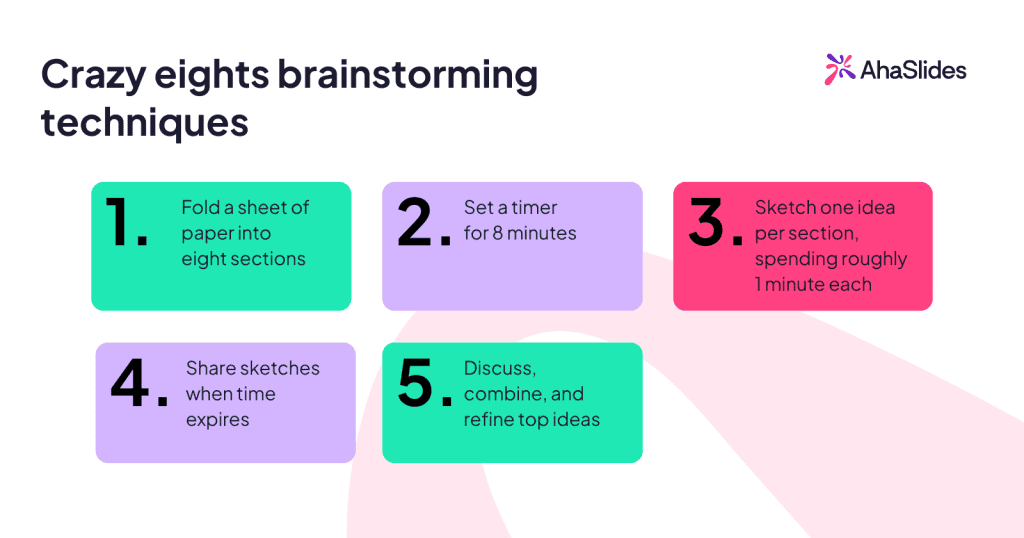
Ne olduğunu: Katılımcıların sekiz dakika içinde sekiz farklı fikir ürettiği ve her çizim için bir dakika harcadığı hızlı çizim tekniği.
Ne zaman kullanmalı:
- İlk akla gelen fikirlerin ötesine geçmek
- Zaman kısıtlamalı fikir üretimi
- Görsel çeşitliliği hızlı bir şekilde oluşturmak
- Bireysel veya küçük grup seansları
Nasıl çalışır:
- Bir kağıdı sekiz bölüme katlayın.
- 8 dakika için bir zamanlayıcı ayarlama
- Her bölüm için yaklaşık 1 dakika ayırarak bir fikir taslağı çizin.
- Süre dolduğunda çizimleri paylaşın.
- En iyi fikirleri tartışın, birleştirin ve geliştirin.
Artıları:
- Hızlı düşünmeyi teşvik eder ve aşırı düşünmeyi önler.
- Hacmi hızla artırır.
- Eşit katılım (herkes 8 fikir üretir)
- Çeşitli yaklaşımları ortaya çıkarıyor.
Eksileri:
- Kendinizi aceleci ve stresli hissedebilirsiniz.
- Zaman baskısı nedeniyle kalite düşebilir.
- Derinlemesine düşünmeyi gerektiren karmaşık problemler için uygun değildir.
Sessiz Teknikler
Bu yaklaşımlar, içe dönük ve düşünceli kişilere anlamlı katkıda bulunma alanı tanıyarak, dışa dönük seslerin baskınlığını azaltır.
5. Beyin Yazımı
Ne olduğunu: Katılımcıların fikirlerini yazıp daha sonra grupla paylaştığı, sessiz ve bireysel fikir üretme süreci.
Ne zaman kullanmalı:
- Baskın kişiliklere sahip gruplar
- İçe dönük ekip üyeleri
- Sosyal baskıyı ve grup düşüncesini azaltmak
- Eşit katkının sağlanması
- Sanal veya eşzamansız beyin fırtınası
Nasıl çalışır:
- Her katılımcıya basılı veya dijital belge verin.
- Sorunu açıkça ortaya koyun.
- Süre sınırı belirleyin (5-10 dakika)
- Katılımcılar fikirlerini sessizce yazıyorlar.
- Fikirleri toplayın ve paylaşın (istenirse anonim olarak).
- Grup olarak fikirleri tartışın ve geliştirin.
Artıları:
- Kişilikten bağımsız olarak eşit katılım
- Sosyal kaygıyı ve yargılanmayı azaltır.
- Baskın seslerin kontrolü ele geçirmesini engeller.
- Daha derinlemesine düşünmek için zaman tanır.
- Uzaktan iyi çalışıyor
Eksileri:
- Sözel beyin fırtınasına göre daha az enerji gerektirir.
- Fikirlerin kendiliğinden gelişme potansiyelinin bir kısmını kaybediyor.
- Kendini kopuk veya yalnız hissedebilir.
Örnek: Yeni özellik fikirlerini araştıran bir ürün ekibi. Her kişi 10 dakika boyunca özellikleri listeliyor, ardından tüm fikirler AhaSlides aracılığıyla anonim olarak paylaşılıyor. Ekip en iyi konseptler üzerinde oylama yapıyor, ardından uygulama konusunda görüşüyor.
6. 6-3-5 Beyin Yazımı
Ne olduğunu: Yapılandırılmış bir beyin fırtınası yöntemi olup, 6 kişi 5 dakika içinde 3 fikir yazar, ardından kağıtlarını bir sonraki kişiye verir ve o kişi de bu fikirleri geliştirir veya değiştirir.
Ne zaman kullanmalı:
- Birbirlerinin fikirlerinden sistematik bir şekilde faydalanarak
- Hızlı bir şekilde yüksek miktarda fikir üretme (30 dakikada 108 fikir)
- Herkesin eşit şekilde katkıda bulunmasını sağlamak
- Sessiz tefekkürü işbirliğiyle birleştirmek
Nasıl çalışır:
- 6 katılımcı toplayın (diğer sayılara da uyarlanabilir)
- Herkes 5 dakika içinde 3 fikir yazıyor.
- Belgeleri sağa doğru uzatın.
- Mevcut fikirleri okuyun ve 3 tane daha ekleyin (mevcut fikirleri geliştirerek, değiştirerek veya yeni fikirler ekleyerek).
- 5 tur daha tekrarlayın (toplam 6 tur).
- Tüm fikirleri gözden geçirin ve tartışın.
Artıları:
- Sistematik olarak yüksek hacimli fikir üretir (6 kişi × 3 fikir × 6 tur = 108 fikir)
- Fikirleri aşamalı olarak geliştirir.
- Eşit katılım garantisi
- Bireysel ve grup düşüncesini birleştirir
Eksileri:
- Katı yapı kısıtlayıcı hissettirebilir.
- Belirli bir grup büyüklüğü gerektirir.
- Fikirler sonraki turlarda tekrarlayıcı hale gelebilir.
- Tüm süreç zaman alıcıdır.

7. Nominal Grup Tekniği (NGT)
Ne olduğunu: Fikirlerin önceliklendirilmesi için sessiz fikir üretimi, paylaşım, tartışma ve demokratik oylamayı birleştiren yapılandırılmış bir yöntem.
Ne zaman kullanmalı:
- Uzlaşma gerektiren önemli kararlar
- Güç dengesizliğine sahip gruplar
- Birçok seçenek arasından önceliklendirme
- Adil katılımın sağlanması
- Tartışmalı veya hassas konular
Nasıl çalışır:
- Sessiz nesil: Katılımcılar fikirlerini bireysel olarak yazarlar (5-10 dakika).
- Sırayla paylaşım: Herkes bir fikir paylaşır; moderatör tüm fikirleri tartışma yapmadan kaydeder.
- Açıklama: Grup, anlama yönelik fikirleri tartışıyor (değerlendirme amaçlı değil).
- Bireysel sıralama: Herkes fikirleri kendi içinde sıralar veya oylar.
- Grup önceliklendirmesi: Öncelikleri belirlemek için bireysel sıralamaları birleştirin.
- Tartışma: En yüksek puan alan fikirleri tartışın ve kararlar alın.
Artıları:
- Bireysel ve grup girdilerini dengeler.
- Baskın kişiliklerin etkisini azaltır
- Katılım yoluyla katılım yaratır
- Demokratik ve şeffaf süreç
- Tartışmalı konular için iyi sonuç veriyor.
Eksileri:
- Basit beyin fırtınasından daha fazla zaman gerektirir.
- Resmi yapı katı gelebilir.
- Kendiliğinden gelişen tartışmaları bastırabilir.
- Oy verme işlemi karmaşık sorunları aşırı basitleştirebilir.
Analitik teknikler
Bu yöntemler, sistematik analiz için bir yapı sağlayarak ekiplerin fikirleri birden fazla açıdan değerlendirmesine yardımcı olur.
8. SWOT analizi
Ne olduğunu: Fikirlerin, stratejilerin veya kararların güçlü yönlerini, zayıf yönlerini, fırsatlarını ve tehditlerini değerlendiren bir çerçeve.
Ne zaman kullanmalı:
- Stratejik planlama ve karar verme
- Birden fazla seçeneği değerlendirmek
- Uygulamaya geçmeden önce fizibilitenin değerlendirilmesi
- Risk tanımlaması
- İş planlaması
Nasıl çalışır:
- Analiz edilecek fikri, projeyi veya stratejiyi tanımlayın.
- Dört çeyrek oluşturun: Güçlü Yönler, Zayıf Yönler, Fırsatlar, Tehditler
- Her kadran için beyin fırtınası yapın:
- Güçlü yönler: İçsel olumlu faktörler ve avantajlar
- Zayıf yönleri: İçsel olumsuz faktörler ve sınırlamalar
- Olanakları: Dışsal olumlu faktörler ve olasılıklar
- Tehditler: Dışsal olumsuz faktörler ve riskler
- Her bir çeyrekteki maddeleri tartışın ve önceliklendirin.
- Analize dayalı stratejiler geliştirin
Artıları:
- Durumun kapsamlı bir değerlendirmesi
- Hem iç hem de dış faktörleri dikkate alır.
- Riskleri erken belirler
- Paylaşılan anlayışı yaratır
- Veriye dayalı kararları destekler.
Eksileri:
- Acele edilirse yüzeysel olabilir.
- Karmaşık durumları aşırı basitleştirebilir
- Dürüst bir değerlendirme gerektirir.
- Statik anlık görüntü (evrimi göstermez)
9. Altı Düşünme Şapkası
Ne olduğunu: Edward de Bono'nun, sorunları altı farklı bakış açısından, renkli "şapkalar" ile temsil edilen bir şekilde inceleyen tekniği.
Ne zaman kullanmalı:
- Detaylı analiz gerektiren karmaşık kararlar
- Tartışma ve çatışmayı azaltmak
- Birden fazla bakış açısının dikkate alınmasını sağlamak
- Alışkanlık haline gelmiş düşünme kalıplarından kurtulmak
Altı Şapka:
- Beyaz şapka: Gerçekler ve veriler (nesnel bilgiler)
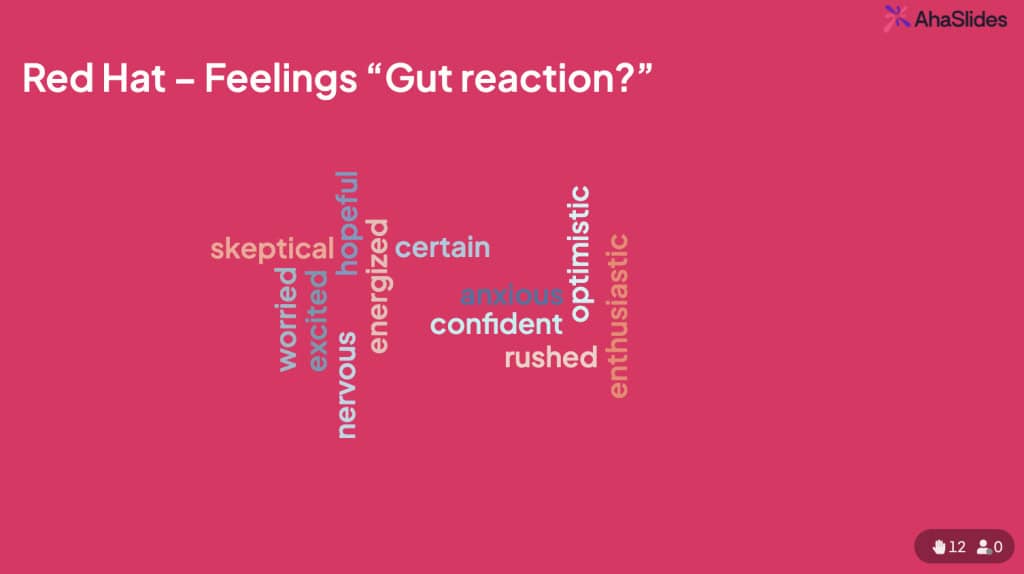
- Kırmızı şapka: Duygular ve hisler (sezgisel tepkiler)
- Siyah şapka: Eleştirel düşünme (riskler, sorunlar, neden işe yaramayabileceği)
- Sarı şapka: İyimserlik ve faydalar (neden işe yarayacak, avantajları)
- Yeşil Şapka: Yaratıcılık (yeni fikirler, alternatifler, olasılıklar)
- Mavi Şapka: Süreç kontrolü (kolaylaştırma, organizasyon, sonraki adımlar)
Nasıl çalışır:
- Altı düşünme perspektifini tanıtın.
- Herkes aynı anda aynı şapkayı "takıyor"
- Sorunu bu perspektiften inceleyin.
- Şapkaları sistematik olarak değiştirin (genellikle her şapka için 5-10 dakika).
- Blue Hat, sıralamayı kolaylaştırır ve belirler.
- Tüm bakış açılarından elde edilen bilgileri sentezleyin.
Artıları:
- Farklı düşünce tiplerini ayırır
- Tartışmaları azaltır (herkes aynı bakış açısını birlikte inceler).
- Kapsamlı analiz sağlar.
- Duygusal ve yaratıcı düşünmeyi meşrulaştırır.
- Kişisel görüşlerden psikolojik bir ayrım yaratır.
Eksileri:
- Eğitim ve pratik gerektirir.
- İlk başta yapay gelebilir.
- Tüm süreç zaman alıcıdır.
- Karmaşık duygusal tepkileri aşırı basitleştirebilir.
10. Yıldız Patlaması
Ne olduğunu: Bir fikri değerlendirmek için kullanılan ve "kim, ne, ne zaman, nerede, neden ve nasıl" çerçevesini kullanan bir yöntem.
Ne zaman kullanmalı:
- Uygulamaya geçmeden önce fikirleri iyice değerlendirmek.
- Eksiklikleri ve varsayımları belirleme
- Planlama ve hazırlık
- Potansiyel zorlukların ortaya çıkarılması
Nasıl çalışır:
- Fikrinizi merkezine yerleştirerek altı köşeli bir yıldız çizin.
- Her bir noktayı şu şekilde etiketleyin: Kim, Ne, Ne zaman, Nerede, Neden, Nasıl
- Her bir madde için sorular oluşturun:
- Kim: Kimler faydalanacak? Kimler uygulayacak? Kimler direnebilir?
- Ne: Hangi kaynaklara ihtiyaç var? Adımlar neler? Neler ters gidebilir?
- Ne zaman: Bu lansman ne zaman yapılmalı? Sonuçları ne zaman göreceğiz?
- Nerede: Bu olay nerede gerçekleşecek? Hangi konularda zorluklar ortaya çıkabilir?
- Neden: Bu neden önemli? Başarısız olma ihtimali neden var?
- Nasıl: Uygulamayı nasıl gerçekleştireceğiz? Başarıyı nasıl ölçeceğiz?
- Yanıtları ve sonuçlarını tartışın.
- Daha fazla bilgi veya planlama gerektiren alanları belirleyin.
Artıları:
- Sistematik ve kapsamlı
- Varsayımları ve eksiklikleri ortaya çıkarır.
- Uygulamaya yönelik bilgiler üretir.
- Anlaması ve kullanması kolay
- Herhangi bir fikir veya proje için geçerlidir.
Eksileri:
- Esas olarak analitik (fikir üretimi değil)
- Çok fazla soru üretebilir.
- Analiz felcine yol açabilir.
- Diğer tekniklere göre daha az yaratıcı
11. Tersine Beyin Fırtınası
Ne olduğunu: Bir soruna nasıl yol açılabileceği veya sorunun nasıl kötüleşebileceği konusunda fikirler üretmek, ardından bu fikirleri tersine çevirerek çözümler bulmak.
Ne zaman kullanmalı:
- Zor bir problemde takılı kaldım.
- Geleneksel düşünceyi kırmak
- Kök nedenlerin belirlenmesi
- Zorlu varsayımlar
- Problem çözmeyi eğlenceli ve ilgi çekici hale getirmek
Nasıl çalışır:
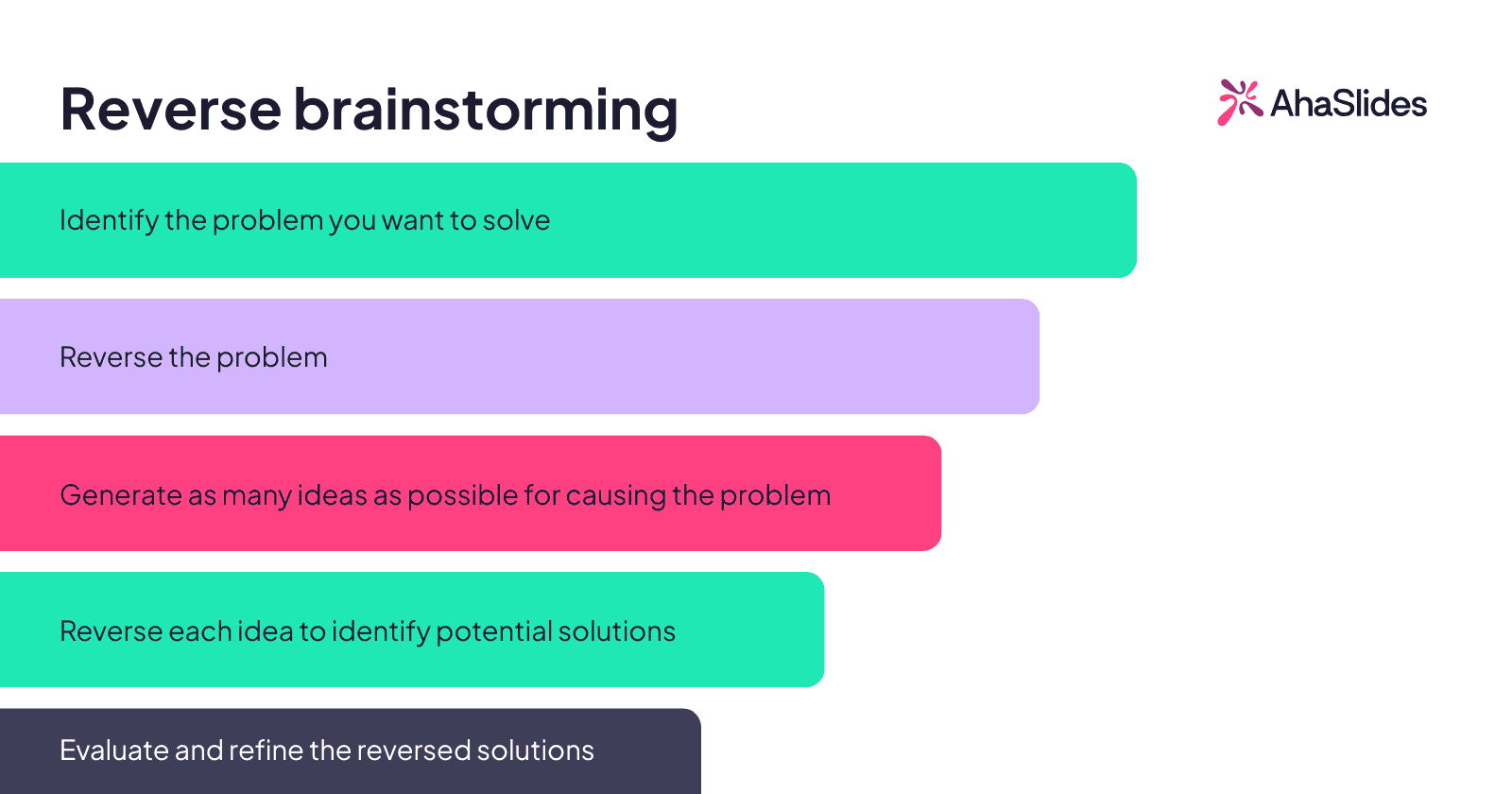
- Çözmek istediğiniz sorunu açıkça belirtin.
- Tersine çevirin: "Bu sorunu nasıl daha da kötüleştirebiliriz?" veya "Başarısızlığı nasıl garanti edebiliriz?"
- Soruna neden olabilecek mümkün olduğunca çok fikir üretin.
- Olası çözümleri belirlemek için her fikri tersine çevirin.
- Tersine çevrilmiş çözümleri değerlendirin ve iyileştirin
- Umut vadeden fikirler için uygulama planları geliştirin.
Örnek:
- Asıl sorun: Müşteri memnuniyetini nasıl artırabiliriz?
- Tersi: Müşterileri nasıl kızdırır ve hayal kırıklığına uğratırız?
- Tersine çevrilmiş fikirler: Çağrılarını görmezden gelin, kaba davranın, yanlış ürün gönderin, bilgi vermeyin.
- Çözümler: Yanıt sürelerini iyileştirin, personeli müşteri hizmetleri konusunda eğitin, kalite kontrolü uygulayın, kapsamlı SSS'ler oluşturun.
Artıları:
- Problem çözmeyi eğlenceli ve enerji verici hale getiriyor.
- Gizli varsayımları ortaya çıkarıyor
- Eleştirmek, yaratmaktan daha kolaydır (bu enerjiyi harekete geçirir).
- Kök nedenleri belirler
- Şüpheci katılımcıları cezbediyor.
Eksileri:
- Çözümlere dolaylı yoldan ulaşım
- Gerçekçi olmayan "ters" fikirler üretebilir.
- Çeviri adımı gerektirir (çözümün tersi).
- İyi yönetilmezse olumsuz sonuçlar doğurabilir.
12. Beş Neden
Ne olduğunu: Yüzeydeki belirtilerin ötesine geçip altta yatan sorunları bulmak için "neden" sorusunu tekrar tekrar (genellikle beş kez) soran bir kök neden analizi tekniği.
Ne zaman kullanmalı:
- Sorun teşhisi ve temel neden analizi
- Arızaları veya sorunları anlamak
- Belirtilerin ötesine, nedenlere doğru ilerlemek
- Sebep-sonuç zinciri açık olan basit problemler
Nasıl çalışır:
- Sorunu açıkça belirtin.
- "Bu neden oluyor?" diye sorun.
- Gerçeklere dayalı cevap
- Bu cevaba ilişkin "Neden?" diye sorun.
- "Neden?" diye sormaya devam edin (genellikle 5 kez, ancak daha fazla veya daha az da olabilir).
- Sorunun temel nedenine ulaştığınızda (neden sorusunu tekrar anlamlı bir şekilde soramadığınızda), o nedeni hedefleyen çözümler geliştirin.
Örnek:
- Sorun: Proje teslim tarihini kaçırdık.
- Neden? Nihai rapor henüz hazır değildi.
- Neden? Önemli veriler mevcut değildi.
- Neden? Anket müşterilere gönderilmedi.
- Neden? Güncel müşteri listemiz yoktu.
- Neden? Müşteri verilerini saklamak için bir sürecimiz yok.
- Ana neden: Müşteri veri yönetimi sürecinin eksikliği
- Çözüm: Veri bakım protokolleriyle birlikte CRM sistemini uygulayın.
Artıları:
- Basit ve erişilebilir
- Yüzeydeki belirtilerin altına iniyor.
- Eyleme geçirilebilir temel nedenleri belirler.
- Birçok farklı problem türü için işe yarar.
- Eleştirel düşünmeyi teşvik eder
Eksileri:
- Birden fazla nedeni olan karmaşık sorunları aşırı basitleştiriyor.
- Doğrusal neden-sonuç ilişkilerini varsayar.
- Araştırmacı önyargısı, önceden belirlenmiş "temel nedenlere" yol açabilir.
- Sistematik veya kültürel faktörleri gözden kaçırabilir.
İşbirlikçi Teknikler
Bu yöntemler grup dinamiklerinden yararlanır ve kolektif zekâ üzerine kuruludur.
13. Sıra Tabanlı Beyin Fırtınası
Ne olduğunu: Katılımcıların sırayla birer fikir paylaştığı, herkesin eşit şekilde katkıda bulunmasını sağlayan yapılandırılmış bir yaklaşım.
Ne zaman kullanmalı:
- Eşit katılımın sağlanması
- Baskın kişiliklere sahip gruplar
- Kapsamlı listeler oluşturma
- Yüz yüze veya sanal toplantılar
Nasıl çalışır:
- (Fiziksel veya sanal) bir daire şeklinde oturun.
- Temel kuralları belirleyin (her turda bir fikir, gerekirse pas geçin).
- Bir kişinin bir fikir paylaşmasıyla başlayın.
- Saat yönünde ilerleyin, herkes bir fikir paylaşsın.
- Fikirler tükenene kadar turlara devam edin.
- Yeni bir fikri olmayanlara "geçme hakkı" tanınmasına izin verin.
- Tüm fikirleri görünür şekilde yakalayın.
Artıları:
- Herkesin konuşmasını garanti eder.
- Az sayıda sesin egemenliğini önler.
- Yapılandırılmış ve öngörülebilir
- Kolayca gerçekleştirilebilir
- Önceki fikirler üzerine inşa edilmiştir.
Eksileri:
- Yavaş veya sert hissedilebilir.
- Karşılığında katkıda bulunma baskısı
- Kendiliğinden oluşan bağlantıları kaybedebilir.
- İnsanlar dinlemek yerine düşünmekle vakit geçirebilirler.
14. Hızlı Fikir Üretme
Ne olduğunu: Aşırı düşünmeyi önlemek ve niceliği en üst düzeye çıkarmak için sıkı zaman sınırlarıyla hızlı tempolu, yüksek enerjili fikir üretimi.
Ne zaman kullanmalı:
- Analiz felcini aşmak
- Hızlı bir şekilde büyük hacimler üretmek
- Bir grubu harekete geçirmek
- Sıradan fikirlerin ötesine geçmek
Nasıl çalışır:
- Süre sınırını oldukça kısıtlı tutun (genellikle 5-15 dakika).
- Belirli bir miktar hedefine ulaşmayı amaçlayın.
- Mümkün olan en hızlı şekilde fikir üretin.
- Üretim sırasında herhangi bir tartışma veya değerlendirme yapılmadı.
- Ne kadar kaba olursa olsun, her şeyi kaydedin.
- Süre dolduktan sonra gözden geçirin ve iyileştirin.
Artıları:
- Yüksek enerjili ve ilgi çekici
- Aşırı düşünmeyi önler
- Hacmi hızla artırır.
- Mükemmeliyetçiliğin sınırlarını zorluyor.
- Momentum yaratır
Eksileri:
- Kalite düşebilir.
- Stresli olabilir
- Hızlı düşünenleri derin düşünenlere tercih edebilir.
- Fikirleri yeterince hızlı yakalamak zor.
15. Yakınlık Haritalaması
Ne olduğunu: Çok sayıda fikri birbiriyle ilişkili gruplar halinde düzenleyerek kalıpları, temaları ve öncelikleri belirlemek.
Ne zaman kullanmalı:
- Birçok fikir ürettikten sonra
- Karmaşık bilgilerin sentezlenmesi
- Temaları ve kalıpları belirleme
- Kategoriler etrafında fikir birliği oluşturmak
Nasıl çalışır:
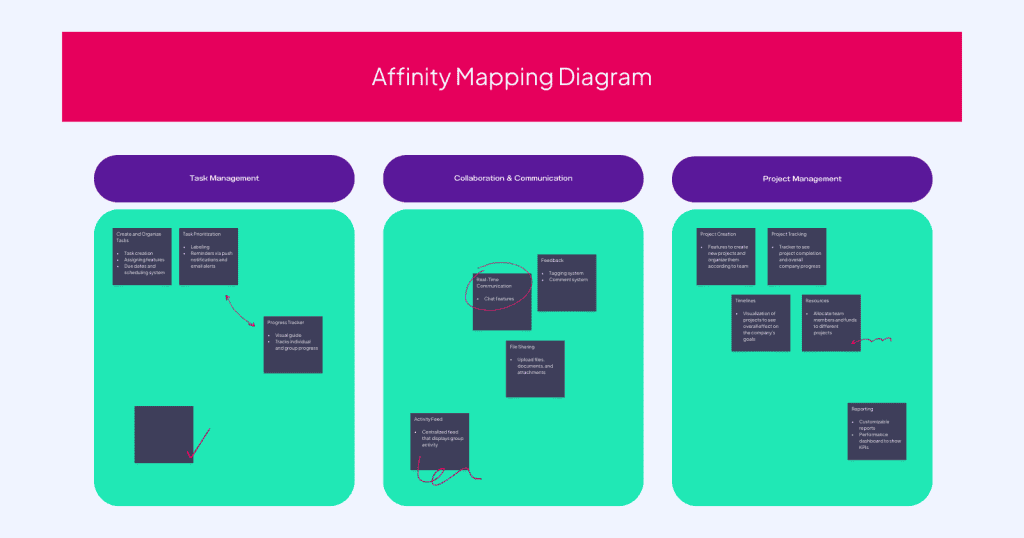
- Fikir üretin (herhangi bir teknik kullanarak)
- Her fikri ayrı bir yapışkan not kağıdına yazın.
- Tüm fikirleri görünür şekilde görüntüleyin
- Birbiriyle ilişkili fikirleri sessizce gruplandırın.
- Her grup için kategori etiketleri oluşturun
- Grupları tartışın ve iyileştirin
- Kategorileri veya kategoriler içindeki fikirleri önceliklendirin.
Artıları:
- Büyük fikir kümelerini anlamlandırır.
- Desenleri ve temaları ortaya çıkarır.
- İşbirlikçi ve demokratik
- Görsel ve somut
- Ortak anlayışı geliştirir.
Eksileri:
- Fikir üretme tekniği değil (sadece organizasyon amaçlı).
- Birçok fikir içerdiği için zaman alıcı olabilir.
- Sınıflandırma konusunda anlaşmazlık
- Bazı fikirler birden fazla kategoriye uyabilir.
Soru Bazlı Teknikler
Bu yaklaşımlar, yeni bakış açıları elde etmek için cevaplar yerine soruları kullanır.
16. Soru Patlamaları
Ne olduğunu: MIT profesörü tarafından geliştirilen bir teknik Hal Gregersen Burada takımlar, cevap üretmekten ziyade kısa sürede olabildiğince çok soru üretmeye çalışırlar.
Ne zaman kullanmalı:
- Sorunları yeniden çerçevelemek
- Zorlu varsayımlar
- Sıkışmak
- Sorunlara yeni açılardan bakmak
Nasıl çalışır:
- Sorunu 2 dakika içinde (genel hatlarıyla, minimum detayla) sunun.
- Zamanlayıcıyı 4 dakikaya ayarla
- Mümkün olduğunca çok soru oluşturun (15 veya daha fazla hedefleyin).
- Kurallar: Sadece sorular, giriş cümlesi yok, sorulara cevap yok.
- Soruları gözden geçirin ve en düşündürücü olanları belirleyin.
- Daha detaylı incelemek için en çok sorulan soruları seçin.
Artıları:
- Sorunları hızla yeniden çerçevelendiriyor.
- Çözüm üretmekten daha kolay
- Varsayımları ortaya çıkarıyor
- Yeni bakış açıları yaratır.
- İlgi çekici ve enerji verici
Eksileri:
- Doğrudan çözüm üretmez.
- Soruları yanıtlamak için takip gereklidir.
- Cevap bulamamak oldukça sinir bozucu olabilir.
- Çok fazla farklı yöne doğru ilerlemeyi gerektirebilir.
17. Nasıl Yapabiliriz (HMW) Soruları
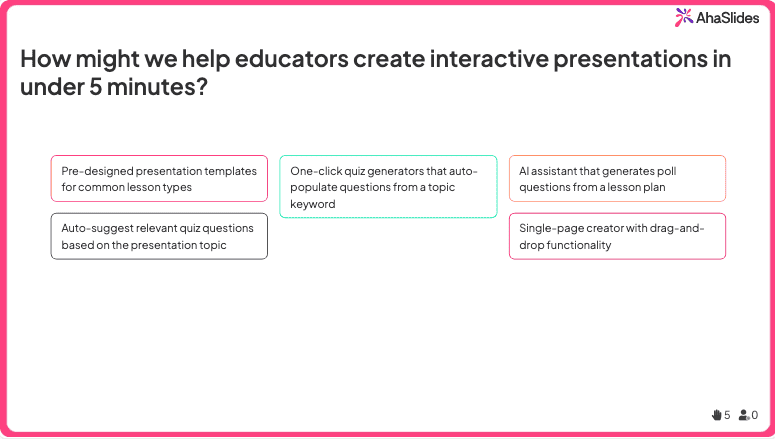
Ne olduğunu: "Nasıl yapabiliriz..." yapısını kullanarak problemleri fırsatlara dönüştüren bir tasarım odaklı düşünme yöntemi.
Ne zaman kullanmalı:
- Tasarım zorluklarını tanımlama
- Olumsuz sorunları olumlu fırsatlar olarak yeniden ele almak
- Fikir geliştirme oturumlarının başlangıcı
- İyimser ve uygulanabilir problem tanımları oluşturmak
Nasıl çalışır:
- Bir sorun veya bir fikirle başlayın.
- "Nasıl yapabiliriz..." sorusu olarak yeniden ifade edin.
- Yapın:
- Iyimser (Çözümlerin var olduğunu varsayar)
- Açılış (birden fazla çözüme izin verir)
- Eyleme dönüştürülebilir (açık bir yön öneriyor)
- Çok geniş değil or çok dar
- Birden fazla HMW varyasyonu oluşturun
- Çözüm üretmek için en umut vadeden HMW'yi seçin.
Artıları:
- İyimser ve fırsat odaklı bir çerçeve oluşturur.
- Birden fazla çözüm yolunu açar.
- Tasarım düşüncesinde yaygın olarak kullanılır.
- Öğrenmesi ve uygulaması kolay.
- Zihniyeti problemden olasılığa doğru kaydırır.
Eksileri:
- Çözüm üretmiyor (sadece sorular ortaya koyuyor)
- Bazen kalıplaşmış gibi gelebilir.
- Çok geniş veya belirsiz sorular sorma riski
- Karmaşık sorunları aşırı basitleştirebilir.
İleri Teknikler
18. Scamper
Ne olduğunu: Mevcut fikirleri sistematik olarak değiştirerek yaratıcı düşünmeyi teşvik eden, kısaltmalara dayalı bir kontrol listesi.
SCAMPER İpuçları:
- Vekil: Neler değiştirilebilir veya takas edilebilir?
- birleştirin: Neler birleştirilebilir veya entegre edilebilir?
- Adapte olmak: Farklı kullanım amaçlarına göre neler ayarlanabilir?
- Düzenle/Büyüt/Küçült: Ölçek veya özelliklerde neler değiştirilebilir?
- Başka bir amaçla kullanmak gerekirse: Bu başka nasıl kullanılabilir?
- Elemek: Neler kaldırılabilir veya basitleştirilebilir?
- Tersine Çevir/Yeniden Düzenle: Neler tersten veya farklı bir sırayla yapılabilir?
Ne zaman kullanmalı:
- Ürün geliştirme ve yenilik
- Mevcut çözümlerin iyileştirilmesi
- Bir sorunda takılıp kaldığınızda
- Sistematik yaratıcılık egzersizleri
Nasıl çalışır:
- Mevcut bir ürün, süreç veya fikir seçin.
- SCAMPER talimatlarının her birini sistematik olarak uygulayın.
- Her kategori için fikirler üretin.
- Umut vadeden değişiklikleri birleştirin
- Uygulanabilirliği ve etkiyi değerlendirin.
Artıları:
- Sistematik ve kapsamlı
- Mevcut herhangi bir fikir veya ürün için geçerlidir.
- Hatırlaması kolay (kısaltma)
- Kuvvetlerin çok yönlü keşfi
- İnovasyon atölyeleri için uygundur.
Eksileri:
- Mevcut fikirler üzerine kuruludur (tamamen yeni kavramlar için değil).
- Mekanik bir his verebilir.
- Pek çok vasat fikir üretir.
- Başlamak için güçlü bir mevcut fikre ihtiyaç duyar.
Doğru Tekniği Seçmek
20'den fazla teknik arasından hangisini seçeceksiniz? Şunları göz önünde bulundurun:
Grup boyutu:
- Küçük gruplar (2-5): Soru patlamaları, hızlı fikir üretimi, SCAMPER
- Orta gruplar (6-12): Beyin fırtınası, sırayla soru-cevap, Altı Düşünme Şapkası
- Büyük gruplar (13+): Affinite haritalama, nominal grup tekniği
Oturum hedefleri:
- Maksimum miktar: Hızlı fikir üretme, çılgın sekizler, tur usulü
- Derinlemesine araştırma: SWOT, Altı Düşünme Şapkası, Beş Neden
- Eşit katılım: Beyin yazımı, nominal grup tekniği
- Görsel düşünme: Zihin haritalama, hikaye panosu oluşturma, eskiz fırtınası
- Sorun teşhisi: Beş Neden, ters beyin fırtınası
Takım dinamikleri:
- Baskın kişilikler: Beyin yazımı, nominal grup tekniği
- İçedönük ekip: Sessiz teknikler
- Şüpheci ekip: Ters beyin fırtınası, Altı Düşünme Şapkası
- Yeni bakış açılarına ihtiyaç var: Sorular ardı ardına geliyor, SCAMPER
Adım Adım Beyin Fırtınası Süreci
Beyin fırtınası oturumlarını baştan sona etkili bir şekilde yürütmek için bu kanıtlanmış çerçeveyi izleyin.
Aşama 1: Isınma (5-10 dakika)
Sıfırdan başlamak, garip bir sessizliğe ve yüzeysel fikirlere yol açar. Yaratıcı kaslarınızı hızlı bir aktiviteyle ısıtın.
Etkili buz kırıcılar:
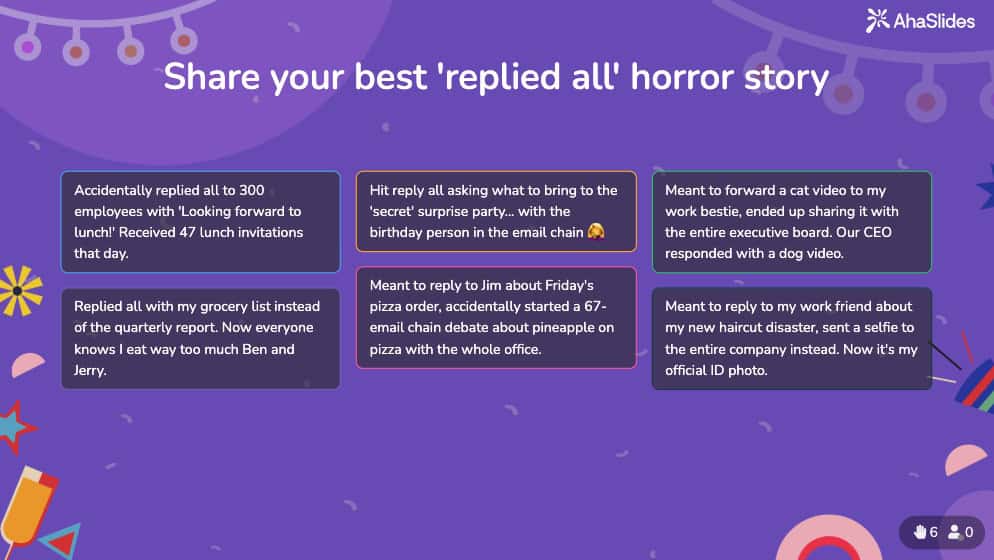
Utanç verici hikaye paylaşımı
Herkesten işleriyle ilgili utanç verici bir anılarını paylaşmalarını isteyebilirsiniz, örneğin 'En iyi "tümüne yanıtla" korku hikayenizi paylaşın.' Bu, katılımcılar arasında ortak noktalar oluşturur ve herkesin daha kısa sürede birbirine alışmasını sağlar.
Çöl ada
Herkese, bir yıl boyunca ıssız bir adada mahsur kalsalar yanlarında hangi 3 eşyayı isteyeceklerini sorun.
İki Gerçek ve Bir Yalan
Her katılımcı kendisiyle ilgili üç ifade paylaşır; ikisi doğru, biri yanlış. Diğerleri yalanı tahmin etmeye çalışır.
Hızlı test
AhaSlides kullanarak eğlenceli bir konuda 5 dakikalık kısa bir bilgi yarışması düzenleyin.
2. Aşama: Sorunun Tanımlanması (5-15 dakika)
Karşılaşılan zorluğu açıkça ortaya koyun:
- Sorunu basit ve somut bir şekilde ifade edin.
- İlgili bağlam ve arka plan bilgilerini sağlayın.
- Başlıca kısıtlamaları (bütçe, zaman, kaynaklar) paylaşın.
- Bu sorunun çözülmesinin neden önemli olduğunu açıklayın.
- Başarının neye benzediğini açıklığa kavuşturun
- Açıklayıcı soruları yanıtlayın
3. Aşama: Farklı Düşünme - Fikir Üretimi (20-40 dakika)
Bu, temel beyin fırtınası aşamasıdır. Önceki bölümdeki tekniklerden birini veya birkaçını kullanın.
Temel ilkeler:
- Beyin fırtınasının 7 kuralını kesinlikle uygulayın.
- Kaliteden ziyade niceliği teşvik edin.
- Her fikri görünür şekilde yakalayın.
- Enerjinizi yüksek tutun.
- Değerlendirme veya eleştiriyi önleyin
- Net zaman sınırları belirleyin.
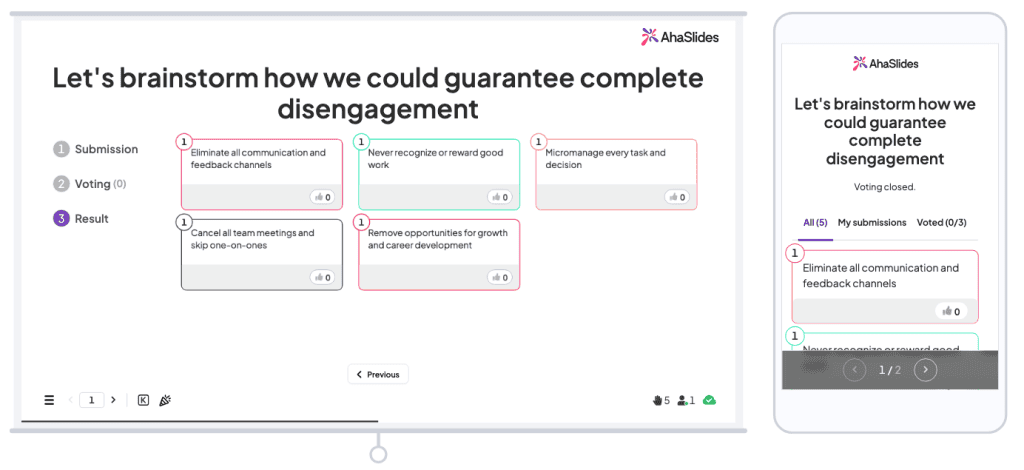
AhaSlides'ı fikir üretmek için kullanmak:
- Sorun bildiriminizle ilgili bir beyin fırtınası slaydı oluşturun.
- Katılımcılar fikirlerini telefonlarından gönderiyorlar.
- Fikirler ekranda canlı olarak beliriyor.
- Herkes koleksiyonun tamamını görebilir ve bir sonraki aşama için en iyi fikirlere oy verebilir.
4. Aşama: Mola (5-10 dakika)
Mola vermeyi atlamayın! Fikirlerin olgunlaşmasına, enerjinin yenilenmesine ve zihinsel olarak üretim modundan değerlendirme moduna geçilmesine olanak tanır.
Aşama 5: Yakınsak Düşünme - Organizasyon ve İyileştirme (15-30 dakika)
Adım 1: Fikirleri organize edin - Benzer fikirleri yakınlık haritalama yöntemiyle gruplandırın:
- Fikirleri sessizce ilgili temalar halinde sınıflandırın.
- Kategori etiketleri oluşturun
- Gruplandırmaları tartışın ve iyileştirin.
- Kalıpları tanımlayın
Adım 2: Fikirleri netleştirin
- Belirsiz fikirleri gözden geçirin
- Teklif sahiplerinden açıklama yapmalarını isteyin.
- Benzer veya birbirine çok benzeyen fikirleri birleştirin.
- Sadece kelimeleri değil, niyeti de yakalayın.
3. Adım: İlk değerlendirme - Hızlı filtreleri uygulayın:
- Sorunu çözüyor mu?
- (Zorlu olsa bile) mümkün mü?
- Yeni/farklı olduğu için peşinden gidilmeye değer mi?
4. Adım: En iyi fikirler için oylama - Seçenekleri daraltmak için çoklu oylama kullanın:
- Herkese 3-5 oy hakkı verin.
- Bir fikri çok beğeniyorsanız, o fikir için birden fazla oy kullanabilirsiniz.
- Oy sayımı
- En iyi 5-10 fikri tartışın
AhaSlides'ı oylama için kullanma:
- Anket slaytına en iyi fikirleri ekle
- Katılımcılar telefonlarından oy kullanıyor.
- Sonuçlar canlı olarak görüntüleniyor.
- En önemli öncelikleri anında görün
Aşama 6: Sonraki Adımlar (5-10 dakika)
Net eylem maddeleri olmadan bitirmeyin:
Sahipliği atayın:
- En iyi fikirlerin her birini kim daha da geliştirecek?
- Ne zaman geri dönüş yapacaklar?
- Onların hangi kaynaklara ihtiyacı var?
Takip randevusu planlayın:
- Bir sonraki görüşme için tarih belirleyin.
- Hangi analizin gerekli olduğunu belirleyin.
- Kararlar için bir zaman çizelgesi oluşturun.
Her şeyi belgeleyin:
- Tüm fikirleri yakalayın
- Kategorileri ve temaları kaydet
- Kayıtlara geçen kararlar
- Özet bilgileri tüm katılımcılarla paylaşın.
Katılımcılara teşekkür ederiz.
Farklı Bağlamlar İçin Beyin Fırtınası
İş ve Çalışma Ortamı Beyin Fırtınası
Yaygın uygulamalar:
- Ürün geliştirme ve özellik fikir üretimi
- Pazarlama kampanyaları ve içerik stratejileri
- Süreç iyileştirme girişimleri
- Stratejik planlama
- Problem çözme atölyeleri
İşletmeye özgü hususlar:
- Güç dinamikleri: Üst düzey yöneticiler dürüst fikir üretimini engelleyebilir.
- Yatırım getirisi baskısı: Yaratıcı özgürlüğü ticari kısıtlamalarla dengeleyin.
- Çeşitli departmanlar arası ihtiyaçlar: Çeşitli departmanları dahil edin.
- Uygulama odak noktası: Somut eylem planlarıyla sonlandırın.
İş geliştirme fikirleri için örnek sorular:
- "Gelir artışını en üst düzeye çıkarmak için hangi kanallara odaklanmalıyız?"
- "Yoğun rekabetin olduğu bir pazarda ürünümüzü nasıl farklılaştırabiliriz?"
- "Yeni hizmetimiz için ideal müşteri profili kimdir?"
- "Müşteri edinme maliyetini %30 oranında nasıl azaltabiliriz?"
- "Sırada hangi pozisyonlar için personel alımı yapmalıyız ve neden?"

Eğitimsel Beyin Fırtınası
Yaygın uygulamalar:
- Deneme ve proje planlaması
- Grup ödevleri ve sunumlar
- Yaratıcı yazma egzersizleri
- STEM problem çözme
- Sınıf tartışmaları
Eğitime özgü hususlar:
- Beceri geliştirme: Beyin fırtınası yöntemini eleştirel düşünmeyi öğretmek için kullanın.
- Farklı yaş grupları: Gelişim düzeylerine uygun teknikler uyarlayın.
- Değerlendirme: Katılımı adil bir şekilde nasıl değerlendireceğinizi düşünün.
- Nişan: Eğlenceli ve etkileşimli hale getirin.
- Sessiz öğrenciler: Herkesin katkıda bulunmasını sağlayan teknikler kullanın.
Eğitim amaçlı beyin fırtınası için örnek sorular:
İlköğretim (Anaokulu-5. Sınıf):
- "Okula gitmenin en iyi yolu nedir ve neden?"
- "Herhangi bir şey icat edebilseydiniz, ne icat ederdiniz?"
- "Sınıfımızı nasıl daha eğlenceli hale getirebiliriz?"
Orta okul:
- "Kafeteryamızda israfı nasıl azaltabiliriz?"
- "Bu tarihi olaya ilişkin farklı bakış açıları nelerdir?"
- "Daha iyi bir okul programı nasıl tasarlayabiliriz?"
Lise:
- "Bir ülkenin başarısını ölçmenin en iyi yolu nedir?"
- "Toplumumuzda iklim değişikliğiyle nasıl mücadele etmeliyiz?"
- "Sosyal medyanın eğitimde ne gibi bir rolü olmalı?"
Üniversite/yüksekokul:
- "21. yüzyıl için yükseköğretimi nasıl yeniden tasarlayabiliriz?"
- "Alanımızda en çok önem taşıyan araştırma soruları nelerdir?"
- "Akademik araştırmaları nasıl daha erişilebilir hale getirebiliriz?"

Uzaktan ve Hibrit Beyin Fırtınası
Özel zorluklar:
- Teknoloji engelleri ve bağlantı sorunları
- Sözsüz iletişimde azalma
- "Zoom yorgunluğu" ve kısalan dikkat süreleri
- Enerji ve ivme oluşturmada zorluk
- Saat dilimi koordinasyonu
En iyi uygulamalar:
Teknoloji kurulumu:
- Tüm aletleri önceden test edin.
- Yedek iletişim yöntemlerine sahip olun.
- Dijital beyaz tahtalar kullanın (Miro, Mural)
- Etkileşimli katılım için AhaSlides'tan yararlanın.
- Canlı olarak katılamayanlar için oturumların kaydı.
Kolaylaştırma uyarlamaları:
- Daha kısa seanslar (en fazla 45-60 dakika)
- Daha sık molalar (her 20-30 dakikada bir)
- Açıkça belirtilen sıra alma
- Düşüncelerinizi paylaşmak için sohbeti kullanın.
- Daha yapılandırılmış teknikler
Katılım stratejileri:
- Mümkün olduğunca kameraları açık tutun.
- Hızlı geri bildirim için tepkileri ve emojileri kullanın.
- Kaldıraç anket ve oylama özellikleri
- Küçük grup çalışmaları için ayrı odalar
- Küresel ekipler için eşzamansız bileşenler
Tek Başına Beyin Fırtınası
Tek başına beyin fırtınası yapmanın en uygun olduğu zamanlar:
- Kişisel projeler ve kararlar
- Grup oturumlarından önce yapılacak ön hazırlıklar
- Yazma ve yaratıcı projeler
- Derin odaklanmaya ihtiyaç duyduğunuzda
Etkili solo teknikler:
- Zihin haritalama
- Serbest Yazı
- KAÇIRICI
- Beş Neden
- Soru patlamaları
- Yürüyerek beyin fırtınası
Tek başına beyin fırtınası ipuçları:
- Belirli zaman sınırları belirleyin
- Düşünce biçimini değiştirmek için ortamı değiştirin.
- Molalar verin ve fikirlerin olgunlaşmasına izin verin.
- Kendi kendine yüksek sesle konuş.
- Başlangıçta kendinizi sansürlemeyin.
- Ayrı bir oturumda gözden geçirin ve iyileştirin.
Sık Karşılaşılan Beyin Fırtınası Sorunlarının Giderilmesi
Sorun: Baskın Sesler
İşaretler:
- Fikirlerin çoğunu aynı 2-3 kişi ortaya atıyor.
- Diğerleri ise sessiz kalır veya ilgisiz davranır.
- Fikirler yalnızca tek yönde gelişir.
Çözümler:
- Eşit sıra sağlamak için sırayla oynama yöntemini kullanın.
- Beyin fırtınası veya nominal grup tekniğini uygulayın.
- "Kesintiye uğratma" kuralını açıkça belirleyin.
- AhaSlides gibi anonim gönderim araçlarını kullanın.
- Moderatörden daha sessiz olan katılımcılara söz vermesini isteyin.
- Daha küçük gruplara ayrılın
Sorun: Sessizlik ve Düşük Katılım
İşaretler:
- Uzun, garip sessizlikler
- İnsanlar rahatsız görünüyor.
- Çok az fikir paylaşılıyor veya hiç fikir paylaşılmıyor.
- Odada enerji eksikliği.
Çözümler:
- Daha ilgi çekici bir ısınmayla başlayın.
- Önce bireysel fikir alışverişi yapın, sonra paylaşın.
- Gönderiyi anonim hale getirin
- Grup boyutunu küçültün
- Sorunun iyi anlaşılıp anlaşılmadığını kontrol edin.
- Harekete geçmek için örnek fikirler paylaşın.
- Daha yapılandırılmış teknikler kullanın.
Sorun: Erken Yargılama ve Eleştiri
İşaretler:
- "Bu işe yaramaz" veya "Bunu denedik" diyen insanlar
- Fikirler anında reddediliyor.
- Fikir paylaşanlardan gelen savunmacı yanıtlar
- Dönem ilerledikçe inovasyon azalıyor.
Çözümler:
- "Hüküm erteleme" kuralını yeniden ifade edin.
- Eleştirel yorumları nazikçe başka yöne yönlendirin.
- "Evet, ama..." gibi ifadelerin yasaklanmasını düşünün.
- Yargılayıcı olmayan bir dil kullanımı modelini kolaylaştırıcı olarak benimseyin.
- Üretim ve değerlendirmeyi birbirinden ayıran teknikler kullanın.
- İnsanları fikirlerden ayırın (anonim gönderi)
Sorun: Tıkanmak veya Fikirlerin Tükenmesi
İşaretler:
- Fikirler giderek azalıyor.
- Benzer kavramların tekrarı
- Katılımcılar zihinsel olarak bitkin görünüyordu.
- Uzun sessizlikler ve yeni katkı olmaması
Çözümler:
- Farklı bir tekniğe geçin
- Mola verin ve yenilenmiş olarak geri dönün.
- Yönlendirici sorular sorun:
- "Rakip/uzman ne yapardı?"
- "Sınırsız bütçemiz olsaydı ne olurdu?"
- "Deneyebileceğimiz en çılgın fikir ne olabilir?"
- Sorun ifadesini yeniden gözden geçirin (yeniden formüle edin).
- SCAMPER veya başka bir sistematik teknik kullanın.
- Yeni bakış açıları getirin.
Sorun: Zaman Yönetimi Sorunları
İşaretler:
- Zamanı önemli ölçüde aşıyor
- Önemli aşamaları aceleye getirmek
- İyileştirme veya karar aşamasına ulaşılmamış
- Katılımcılar saatlerini veya telefonlarını kontrol ediyor.
Çözümler:
- Önceden net zaman sınırları belirleyin.
- Görünür zamanlayıcı kullanın
- Zaman tutucu görevlendirin
- Gündeme bağlı kalın
- Verimli olduğu takdirde biraz daha fazla zaman ayırmaya istekli olun.
- Gerekirse takip seansı planlayın.
- Daha zaman verimli teknikler kullanın.
Sorun: Çatışma ve Anlaşmazlıklar
İşaretler:
- Katılımcılar arasında gerilim
- Savunmacı veya saldırgan vücut dili
- Fikirler üzerine tartışmalar
- Kişisel saldırılar (hatta ince saldırılar)
Çözümler:
- Duraklayın ve temel kuralları yeniden belirtin.
- Bu aşamada tüm fikirlerin geçerli olduğunu herkese hatırlatın.
- İnsanları fikirlerden ayırın.
- Yeniden odaklanmak için Mavi Şapka'yı (Altı Düşünme Şapkası) kullanın.
- Serinlemek için mola verin.
- Çatışan taraflarla yapılan özel görüşme
- Ortak hedeflere ve değerlere odaklanın.
Sorun: Sanal Oturum Teknik Sorunları
İşaretler:
- Bağlantı sorunları
- Ses/video kalitesi sorunları
- Alet erişim sorunları
- Katılımcıların ayrılması
Çözümler:
- Yedek iletişim yöntemine sahip olun.
- Teknolojiyi önceden test edin.
- Önceden net talimatlar verin.
- Sorun yaşayanlar için oturum kaydı
- Çevrimdışı katılım seçeneği mevcuttur.
- Oturumları daha kısa tutun.
- Basit ve güvenilir araçlar kullanın.
- Teknik destek personeli hazır bulunsun.