
I primi giorni sono snervanti. Entri in quella sala conferenze e all'improvviso tutti gli occhi sono puntati su di te. La tua mente si svuota. Cosa dici? Come fai a sembrare sicuro di te senza sembrare preparato?
Ci siamo passati tutti. La buona notizia? Un'introduzione efficace non richiede perfezione, ma solo preparazione e autenticità.
In questa guida ti guideremo esattamente attraverso come presentarsi a un nuovo team, Che tu stia incontrando i colleghi di persona o virtualmente, troverai modelli comprovati, esempi concreti e consigli pratici per aiutarti a fare un'ottima prima impressione senza imbarazzo.
Perché la tua presentazione è più importante di quanto pensi
La prima impressione non riguarda solo la cortesia: determina anche il modo in cui i colleghi percepiscono la tua competenza, la tua accessibilità e la tua integrazione nel team.
Una ricerca della Princeton University dimostra che le persone formulano giudizi sulla tua affidabilità e competenza entro pochi millisecondi dal primo incontro. Anche se non puoi controllare tutto, puoi controllare il tuo livello di preparazione.
Un'introduzione ponderata ti aiuta a:
- Costruisci credibilità e affermati come professionista
- Crea connessioni che semplificano la collaborazione
- Stabilire il tono per i futuri rapporti di lavoro
- Riduci l'ansia del primo giorno avendo un piano
Immagina la tua presentazione come una stretta di mano professionale: breve, sicura e memorabile.

Il framework in 3 parti per presentarti
Le introduzioni migliori seguono una struttura semplice, adatta a qualsiasi contesto. Ecco cosa includere:
Parte 1: Chi sei e cosa fai
Inizia con il tuo nome e il tuo ruolo. Questa è la base: semplice e chiara.
Esempio: "Ciao a tutti, sono Maria Chen e sono appena entrata a far parte del nostro team come responsabile del marketing dei prodotti."
Parte 2: Background o competenza pertinente
Condividi una o due esperienze rilevanti che dimostrino la tua qualifica, senza dare l'impressione di leggere il tuo curriculum.
Esempio: "Ho trascorso gli ultimi quattro anni in una startup SaaS, dove ho contribuito al lancio di tre prodotti e ho fatto crescere la nostra base di utenti del 200%".
Parte 3: Cosa ti entusiasma di essere qui?
Concludere con una nota positiva che dimostri entusiasmo e apertura alla collaborazione.
Esempio: "Sono entusiasta di portare qui la mia esperienza e di imparare da tutti voi mentre lavoriamo al lancio della nuova campagna".
Questa formula richiede circa 30 secondi per essere pronunciata, il tempo necessario per fare colpo senza dominare la conversazione.
Esempio 1: Presentarsi al proprio team immediato (di persona)
Lo scenario: Incontrerai per la prima volta il tuo team diretto durante una riunione di squadra.
L'introduzione:
Buongiorno a tutti! Sono Alex Rodriguez, il vostro nuovo account manager. Lavoro nel servizio clienti da circa sei anni, più recentemente in un'agenzia digitale dove gestivo account per clienti del settore tecnologico. So che le transizioni possono essere difficili, quindi sono qui per supportarvi e assicurarmi che i nostri clienti siano soddisfatti durante questo cambiamento. Non vedo l'ora di imparare come lavorate e di trovare modi per migliorare ulteriormente i nostri processi. Non esitate a contattarmi in qualsiasi momento: sono qui per aiutarvi.
Perché questo funziona:
- Riconosce le relazioni e i flussi di lavoro esistenti del team
- Dimostra consapevolezza che l'arrivo di una nuova persona può creare incertezza
- Posiziona Alex come un collaboratore, non come un disruptor
- Invita alla connessione senza essere eccessivamente formale
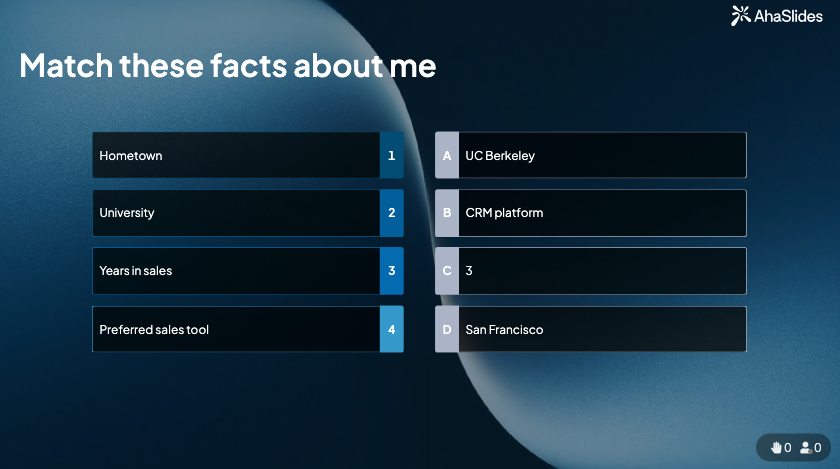
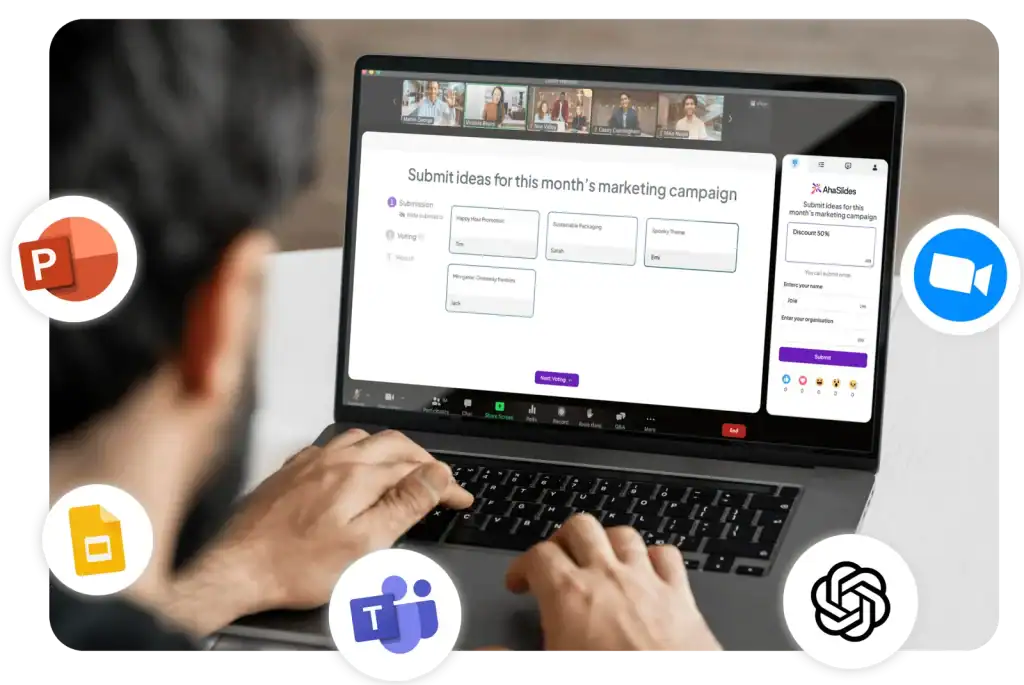
Punta Pro: Se ti unisci a un team più piccolo (5-10 persone), crea un quiz divertente su di te e un'attività di word cloud per imparare i nomi del tuo team utilizzando una piattaforma interattiva come Ah diapositiveIn questo modo si crea una conversazione bidirezionale e si inizia subito a imparare nomi e ruoli.
Esempio 2: Presentarsi via e-mail a un team numeroso
Lo scenario: Stai entrando a far parte di un'azienda con più di 50 dipendenti nel tuo reparto e un incontro di persona non è pratico.
Linea tematica: Presentazione del nuovo membro del team: [Il tuo nome]
L'email:
Ciao squadra,
Vorrei presentarmi perché inizio la mia prima settimana presso [Nome dell'azienda]. Mi chiamo Jordan Kim e entrerò a far parte del team operativo in qualità di coordinatore operativo senior.
Un po' di me: ho trascorso gli ultimi cinque anni nella logistica e nella gestione della supply chain, dove mi sono concentrato sull'ottimizzazione dei processi e sul miglioramento dei tempi di consegna. Sono entusiasta di portare questa esperienza qui e contribuire a rendere le nostre operazioni il più fluide possibile.
Fuori dal lavoro, sono un grande appassionato di caffè (i consigli sono ben accetti!) e adoro fare escursioni nei fine settimana.
Non vedo l'ora di incontrare tutti e scoprire di più su ciò a cui state lavorando. Se volete entrare in contatto, non esitate a contattarmi: mi piacerebbe molto prendere un caffè o fare una breve chiacchierata.
Grazie per il caloroso benvenuto finora!
Migliore,
Giordania
Perché questo funziona:
- La riga dell'oggetto chiara semplifica l'archiviazione e la consultazione
- Bilancia professionalità e personalità
- Mostra vulnerabilità e apertura (chiede consigli)
- Specificare il ruolo e il background senza condividere troppo
- Include un chiaro invito all'azione per il follow-up
Punta Pro: Invia questa email il secondo o il terzo giorno, non il primo. Questo ti darà il tempo di incontrare di persona alcune persone e renderà la tua email più autentica e meno simile a una lettera standard.
Esempio 3: Presentarsi a un team virtuale
Lo scenario: Stai entrando a far parte di un team che lavora completamente da remoto e per la prima volta incontri tutti tramite videochiamata.
L'introduzione:
Ciao a tutti! È un piacere incontrarvi finalmente: sono Sam Patel, il nuovo UX designer che si unisce al team di prodotto. Progetto esperienze digitali da circa sette anni, principalmente per prodotti e-commerce e fintech. Ciò che amo di più dell'UX è trovare il punto di incontro ideale tra le esigenze degli utenti e gli obiettivi aziendali.
Vivo ad Austin, in Texas, quindi lavorerò secondo il fuso orario centrale. Fuori dal lavoro, di solito mi dedico a progetti paralleli o esploro nuove caffetterie in città.
So che la collaborazione a distanza può richiedere un po' di tempo per abituarsi, quindi non vedo l'ora di scoprire come vi piace lavorare insieme. Non esitate a contattarmi se avete domande o semplicemente volete chiacchierare. Non vedo l'ora di collaborare con tutti voi!
Perché questo funziona:
- Menziona il fuso orario (fondamentale per i team remoti)
- Condivide la posizione per creare un terreno comune
- Riconosce la dinamica del lavoro a distanza
- I dettagli personali rendono Sam più identificabile
- Chiaro invito a connettersi
Punta Pro: Accendi la telecamera e posizionala all'altezza degli occhi. Una buona illuminazione e il contatto visivo (guardare la telecamera, non la propria immagine) fanno un'enorme differenza nel tuo coinvolgimento. Sorridi in modo naturale: ti aiuta a sembrare più entusiasta, anche nei video.
I segreti del linguaggio del corpo che amplificano la tua presentazione
Le tue parole sono importanti, ma il tuo linguaggio del corpo è fondamentale. Gli studi dimostrano che il 55% della comunicazione è non verbale, quindi fai attenzione a come ti presenti fisicamente.
Suggerimenti di persona:
- Stai dritto con le spalle indietro: una postura sicura ti fa apparire più competente
- Mantenere il contatto visivo per 3-5 secondi con ogni persona
- Sorridi sinceramente quando stabilisci il primo contatto visivo
- Offrire una stretta di mano decisa (non stretta, non molle)
- Tieni le braccia non incrociate per apparire aperto e accessibile
Suggerimenti per le riunioni virtuali:
- Posiziona la fotocamera all'altezza degli occhi
- Siediti dritto e piegati leggermente in avanti per mostrare coinvolgimento
- Quando parli, guarda la telecamera, non i volti sullo schermo
- Usa i gesti delle mani in modo naturale: trasmettono entusiasmo
- Evita di giocherellare con gli oggetti che hai in mano
Pensa al tuo linguaggio del corpo come alla cornice della tua presentazione. La cornice giusta rende tutto ciò che contiene più bello.
Cosa fare dopo la tua presentazione
La tua presentazione è solo l'inizio. Il vero lavoro di costruzione delle relazioni avviene nelle ore e nei giorni successivi.
Poni domande ponderate
Dopo esserti presentato, mostra un sincero interesse per gli altri. Fai domande come:
- "Qual è il progetto più interessante a cui stai lavorando in questo momento?"
- "Da quanto tempo lavori per l'azienda?"
- "Cosa ti piace di più del tuo lavoro qui?"
Le persone amano parlare di sé e ascoltare attentamente aiuta a creare rapidamente un rapporto.
Seguire individualmente
Invia un messaggio veloce o un'e-mail alle persone con cui hai parlato:
"Ciao [Nome], è stato un piacere conoscerti prima! Mi piacerebbe saperne di più su [progetto specifico che ha menzionato]. Hai 15 minuti questa settimana per una chiacchierata veloce davanti a un caffè?"
Ciò dimostra iniziativa e genuino interesse e ti offre un modo naturale per approfondire il legame.
Osserva prima di contribuire
Nella prima o seconda settimana, concentrati sull'ascolto e sull'apprendimento. Fai attenzione a:
- Come comunicano le persone (e-mail formali vs. messaggi Slack informali)
- Dinamiche delle riunioni e chi tende a guidare le discussioni
- Regole non scritte su orari di lavoro, reattività e collaborazione
Comprendere la cultura aziendale ti aiuta ad adattare il tuo stile di lavoro al team.
Gli errori più comuni da evitare
Anche con le migliori intenzioni, alcuni approcci introduttivi possono rivelarsi controproducenti. Ecco cosa evitare:
1. Condivisione eccessiva di informazioni personali
Evitate le storie personali più profonde. Il vostro divorzio, i vostri problemi di salute o i vostri drammi familiari non sono argomenti adatti al primo giorno. Mantenete un tono professionale, con un tocco personale e leggero.
2. Suonare come un copione o come un robot
Memorizzare l'introduzione parola per parola può farti sembrare rigido. Invece, ricorda i punti chiave e lascia che le parole scorrano naturalmente.
3. Parlare troppo a lungo
Se la tua presentazione dura più di 60 secondi, hai perso l'attenzione dei tuoi interlocutori. Sii conciso: avrai tempo di condividere di più man mano che conoscerai i colleghi.
4. Fare nomi o vantarsi
Menzionare risultati notevoli va bene, ma presentarli come un modo per aiutare il team (non per impressionarlo) fa tutta la differenza.
Sbagliato: "Ho vinto tre premi del settore nella mia ultima azienda."
A destra: "Ho lanciato campagne che hanno ottenuto riconoscimenti nel settore e sono entusiasta di portare qui queste strategie".
5. Dimenticare immediatamente i nomi
Quando qualcuno si presenta, ripeti il suo nome: "Piacere di conoscerti, Rachel". Questo ti aiuterà a fissarlo nella memoria e dimostrerà che stai prestando attenzione.
Rendere le presentazioni virtuali meno imbarazzanti
Il lavoro da remoto aggiunge sfide uniche alle presentazioni. Non è possibile interpretare la situazione con la stessa facilità e problemi tecnici possono compromettere lo slancio. Ecco come rendere le presentazioni virtuali più fluide:
Pianifica delle chiacchierate individuali per un caffè
Richiedi una chiacchierata virtuale di 15 minuti con i membri chiave del team. Queste conversazioni informali ti aiutano a costruire relazioni più velocemente rispetto alle riunioni di gruppo più numerose.
Utilizzare il video quando possibile
Le telecamere spente sembrano impersonali. Vedere i volti aiuta a creare fiducia e rende le conversazioni più umane.
Invia una presentazione personale su Slack o Teams
Pubblica una presentazione amichevole sul canale di comunicazione del tuo team, corredata da una foto. Includi:
- Il tuo nome e ruolo
- Una frase sul tuo background
- Un fatto divertente o un hobby
- Il tuo fuso orario (per i team remoti)
Esempio:
"Ciao team! 👋 Sono Julia Santos, la vostra nuova content strategist. Ho trascorso gli ultimi sei anni a creare contenuti per marchi del settore sanitario. Quando non scrivo, di solito sono a un corso di yoga o a provare nuove ricette (con risultati alterni 😄). Sono del fuso orario del Pacifico, ma sono felice di partecipare a chiamate che attraversano i fusi orari. Sono entusiasta di lavorare con voi tutti!"
Partecipare attivamente ai canali del team
Non limitarti a restare in agguato. Fai domande, condividi spunti e reagisci ai messaggi. Un coinvolgimento costante ti aiuterà a diventare più velocemente un "vero" membro del team.
La linea di fondo
Presentarsi a un nuovo team non deve essere per forza stressante. Con la giusta preparazione – una struttura chiara, entusiasmo genuino e attenzione al linguaggio del corpo – puoi fare una prima impressione positiva, che getta le basi per ottimi rapporti di lavoro.
Ricorda:
- Mantieni la tua introduzione sotto i 60 secondi
- Condividi un background pertinente senza sembrare un curriculum
- Mostra entusiasmo per la collaborazione
- Proseguire con conversazioni individuali
- Ascolta più di quanto parli nella tua prima settimana
Il tuo primo giorno è solo l'inizio. Le relazioni che costruisci in queste prime settimane influenzeranno la tua esperienza nei mesi a venire, quindi impegnati a creare un legame autentico con i tuoi colleghi.
Ora vai là fuori e metti a punto quella presentazione!