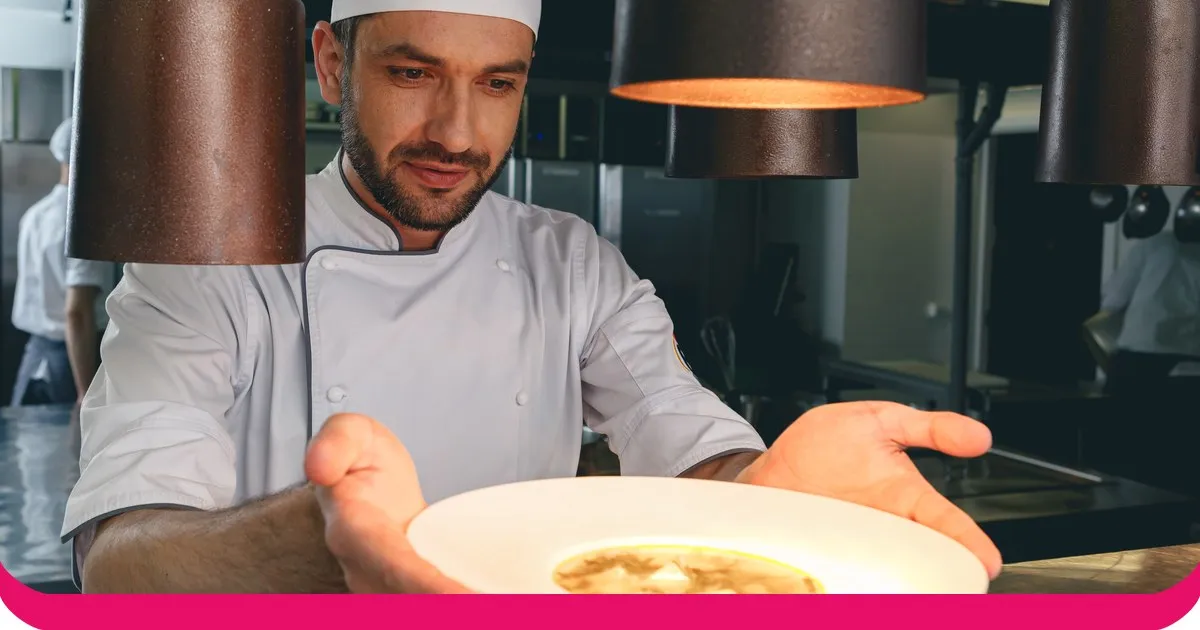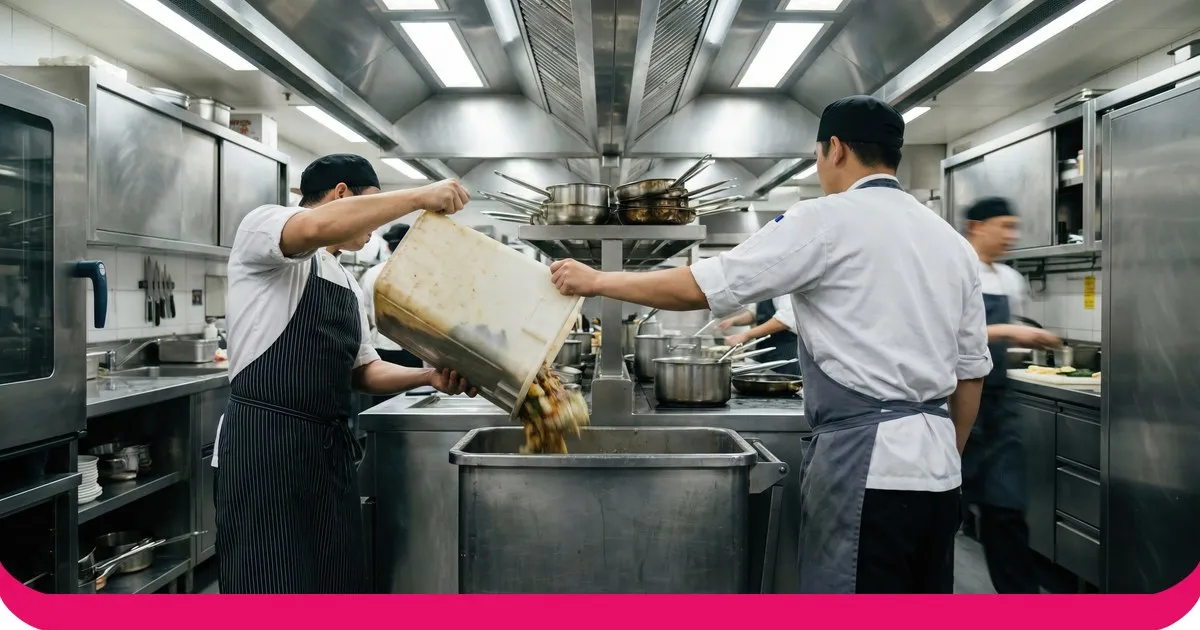
A server fires a table's order at 7:42 pm. "No nuts, she's allergic" is said out loud to the person at the pass (the counter where finished plates are handed from kitchen to floor), but the ticket does not show it. The cook plates the dish with a garnish that contains nuts. A runner spots it and stops it just in time. Nobody was careless. The information lived in one person's head and never made it across the pass.
This is an illustrative scenario, not a documented incident. It is the kind of gap that a well-run cross-training swap exposes, because when a server stands on the line for a shift, or a cook runs the floor, the lost information becomes visible. This guide is for hospitality training directors and restaurant or hotel operations leads. It covers how to design hospitality cross training between kitchen and floor staff so people understand each other's dependencies, and how to check that they do.
One boundary up front. Swaps can improve how well the two sides understand each other's work. They do not, on their own, fix staffing levels, pay or scheduling, and this guide does not claim they reduce turnover by themselves. Trade articles on cross-training mostly offer anecdotes, not controlled studies, so treat any effect as a hypothesis to test in your own operation.
Scurte
| Întrebare | Răspuns scurt |
|---|---|
| What are you training? | The ability to explain and act on the dependencies between kitchen and floor work. |
| What is a swap? | A supervised shift or part-shift where staff do or shadow the other side's tasks, with a debrief. |
| What does it expose? | Information lost at handoffs, such as allergens, timing, modifiers and 86'd items (dishes the kitchen has run out of). |
| What can it not fix? | Short staffing, unclear procedures, broken tools or pay. |
| De unde știi că a funcționat? | Handoff quality and role understanding improve on a new, unseen case. |
| Who validates the case and rubric? | A restaurant or hotel operations lead and the relevant head of department. |
1. Descrieți problema de performanță
Start with the observable task, not "better teamwork". For example: when an order moves from floor to kitchen and back, the person handing it over states what the next person must know, and the next person checks it before acting.
Then say what failure looks like in your operation. Lost modifiers, late allergen notices, tables served out of sequence and runners who do not know what is 86'd are all handoff failures. Pick two or three that you can count over a month. You will want that baseline later.
Check the cognitive demand as well. Reciting the allergen list is recall. Plating a dish from a ticket is Apply. Working out why a ticket reached the pass without a modifier, and what to change, is Analyse. Weighing two ways to fix it is Evaluate. The Bloom framing helps you match the practice to the demand, as in this guide to potrivirea activităților de învățare cu taxonomia lui Bloom.
2. Diagnose before you prescribe
Not every handoff problem is a training problem. Before you plan swaps, check the context.
- Proceduri. Is there one agreed way to write and relay a modifier or allergen note, or does each shift improvise?
- Instrumente. Does the point-of-sale ticket show the modifier clearly? Does the kitchen display show it where the cook looks?
- De personal. Are people too stretched at peak to do the relay properly, however well trained?
- Autoritate. Does a server know who to ask when the kitchen says an item is unavailable?
If the ticket template hides the allergen note, a swap will teach everyone to be frustrated by it. Fix the template first. If the cause is a gap in understanding, such as servers who do not know why a station cannot take a late change, then a swap is a sensible response.
3. Pregătirea și practica designului
Good swaps are structured, not just "go and spend a shift in the kitchen". A workable pattern has four parts.
- A pregati. Give each participant a short, self-paced primer on the other side's work: how the pass runs, what a ticket needs, what each station can and cannot change, and the safety rules that apply. A brief recall check confirms they have the basics. It confirms prerequisites only, not capability.
- Choose safe tasks. A server on the line does tasks suited to their food safety training and the licence rules in your area, such as running the pass, expediting or plating cold items, and not unsupervised hot work. A cook on the floor shadows service, takes ticket notes and runs food. Confirm local food hygiene and licensing requirements with your operations lead and compliance contact before assigning tasks.
- Observe against a rubric. A supervisor watches the handoffs, not just the outcome, and notes what was said and what was missed.
- Debrief the same day. Ask each participant what they now know that they did not know, what they would change in the handoff, and what information or support they still lack. Feedback is tied to specific decisions, not general impressions.
Live input adds the most where judgement is involved: the debrief, an ambiguous call, a conflict at the pass. Asynchronous review is enough for the primer, the rules and the recall check.
4. Lucrează printr-un exemplu realist
Use a short case to practise before anyone does it live. Here is an illustrative one built from the opening scenario.
Cazul. A server takes an order for a guest with a nut allergy. The kitchen display shows the dish but not the allergy. Ask each learner to decide what the server should have done, what the cook should have checked, and what they need before the next order.
Learner choices, with reasons.
- The server repeats the allergy to the cook verbally at the pass. Defensible, because it reaches the cook, but incomplete: it relies on memory and noise. It should be paired with a written note on the ticket.
- The server adds the allergy to the ticket and tells the expediter (the person who coordinates tickets and plates at the pass). Stronger, because it is recorded and relayed. It still needs a read-back from the cook.
- The cook checks the ticket against the dish before it leaves. Defensible as a safety net, but it is not a substitute for the front-of-house note. If the note is missing, the check has nothing to catch.
- The runner stops the dish and escalates. A good last defence, which also shows the system failed earlier.
Give feedback against agreed criteria, then ask the learner to try again with a changed ticket: the guest now has a shellfish allergy and a late table change. The retry is where you see whether the reasoning transferred, not just the answer.
Have a restaurant or hotel operations lead and the head chef validate the case and the model answers before use.
5. Evaluarea capacității și planificarea transferului
Score the handoff, not the person's confidence. Here is an illustrative rubric: score each criterion 0 to 2 using the anchors, and adapt it with the people who run the operation. It is not a validated readiness standard.
| Criteriu | 0: absent | 1: partial | 2: complete |
|---|---|---|---|
| Handoff content | Key information (allergen, timing, modifier) missing | Most information passed, one gap | All key information passed in the agreed format |
| Read-back and check | No check by the receiver | Check made when prompted | Receiver confirms unprompted before acting |
| Înțelegerea rolului | Cannot explain the other side's constraints | Explains some constraints, misses others | Explains the constraints and adapts the handoff to them |
| Limite | Acts outside approved procedures | Asks for help late | Uses approved procedures and escalates when information or authority is lacking |
Define critical errors separately. A missed allergen is a critical error whatever the total. An overall score must never hide a critical failure.
For a wider view of scoring work that depends on judgement, see this guide to evaluarea judecății și a rezolvării problemelor în timpul instruirii. If your concern is scoring kitchen skills consistently, the guide to assessing line cook skills across franchise locations covers calibration in more depth.
Check transfer. Run a new, unseen case after a few weeks of normal work, not straight after the swap. Compare the same measures against your baseline: handoff errors you counted, and rubric scores. Define the population, the denominator and the timing in advance, for example handoff errors per hundred covers (guests served), per shift type, per month. Look at concurrent changes, such as a new menu, a new point-of-sale system or a staffing change, before crediting the swaps.
What cross-training will not fix
- Short staffing. If there are too few people at peak, a better handoff still has to happen in less time.
- Unclear or poorly designed tools. Fix the ticket first.
- Rota pressure. Swaps take people off their usual station. Plan them for quieter shifts and cover the gap, or they become a burden.
- Pay and progression. Training people on another role can raise expectations. Decide beforehand how the new skill is recognised.
- Limitele dovezilor. A good debrief shows what people understood that day. It does not prove why a later improvement happened.
Name these constraints before the programme starts and agree who owns each one. For related operations topics, see this guide to training kitchen staff for food safety evaluation.
Întrebări frecvente
What is hospitality cross training?
It is training staff to understand, and in some cases perform, tasks in another part of the operation. In a restaurant, that usually means kitchen and floor staff learning each other's work and handoffs.
How often should kitchen and floor staff swap?
There is no proven number. Start with one short, supervised swap per person, review what it exposes, and add more only where the debrief shows a gap that practice can close.
Do cross-training swaps reduce staff turnover?
They might help where poor understanding between the two sides causes friction, but nothing here shows swaps alone reduce turnover. Track turnover alongside other changes, such as pay and scheduling, before drawing a conclusion.
Can a server work in the kitchen?
Often only in limited, supervised tasks. Check local food hygiene, licensing and safety rules and your own procedures before assigning any task, and keep unsupervised hot or specialist work for trained staff.
Unde să încep
Pick one handoff that fails in your operation, such as allergen notes. Count the failures for a month. Draft a short case and a four-criterion rubric, then ask your operations lead to correct them. Run one supervised swap, debrief the same day, and test a new case a few weeks later.
To see how a primer, a case discussion and a live debrief could run in one session, and be reused self-paced afterwards, explore AhaSlides.