
Lesson 1: Valid consent and capacity · 12 min
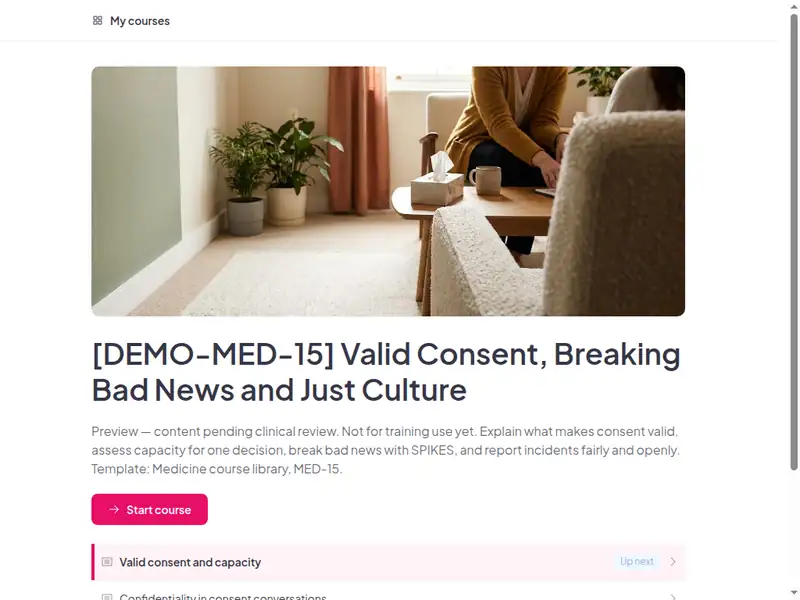
Explain what makes consent valid, discuss material risks and assess capacity for a specific decision.
Learners sign in, so every finish and score is recorded. 15 fields to fill in with your details.
Minutes are an estimate.
Explain what makes consent valid, discuss material risks and assess capacity for a specific decision.
Share the information needed for care while respecting what the patient wants shared.
Plan and deliver bad news using the six SPIKES steps.
Report incidents, support fair treatment of colleagues and meet the duty of candour.
Final assessment, part 1 · Final assessment, part 2 · Completion
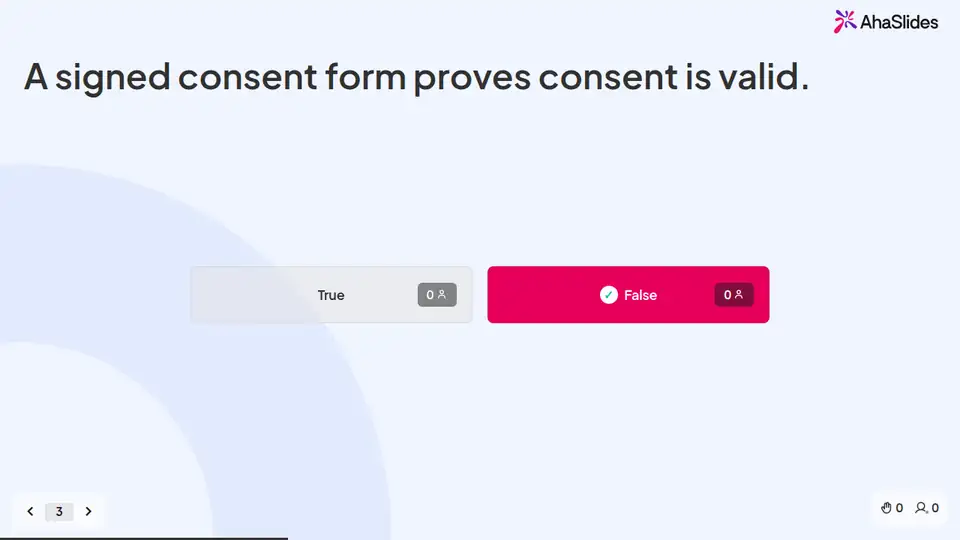
Taken from the course itself.
Which three things make consent valid?
Answer: Voluntary, informed, and given by a person with capacity. Consent must be voluntary and informed, and the person must have capacity to make the decision. It can be verbal, written or non-verbal.
Lesson 1: Valid consent and capacity
A patient's relative phones asking for test results. What should you do first?
Answer: Check what the patient wants shared, then follow their wishes and local policy. Follow the patient's wishes about who is told. Your confidentiality course and local policy cover the detail.
Lesson 2: Confidentiality in consent conversations
What does "before you tell, ask" mean in SPIKES?
Answer: Find out what the patient already understands before giving the news. In the Perception step you ask open questions to learn what the patient already understands or suspects.
Lesson 3: Breaking bad news
Courses teams often run alongside this one.

Nursing Professional Development

Nursing Professional Development

Nursing Professional Development
An article from the AhaSlides blog that uses this course.

Comments from trainers
No comments yet. Tell other trainers how the course went.
Your comment
Comments are public. We remove spam and personal details.