
Lesson 1: What counts as an adverse event · 9 min
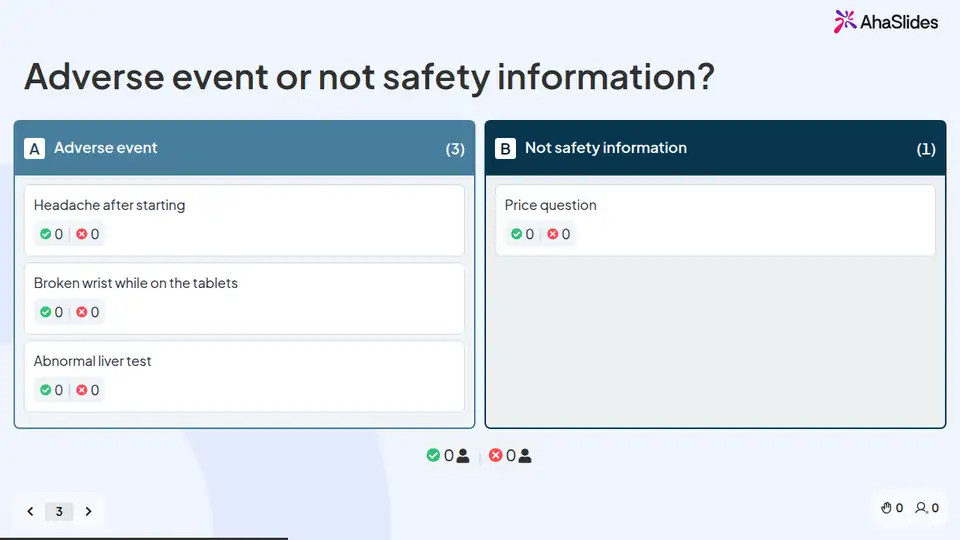
Recognise an adverse event, a serious adverse event and the other safety observations that must be passed on.
Learners sign in, so every finish and score is recorded. 17 fields to fill in with your details.
Minutes are an estimate.
Recognise an adverse event, a serious adverse event and the other safety observations that must be passed on.
Pass safety information on with the minimum information, within your company's deadline, knowing that the regulatory clock has started.
Explain why agreements with partners and vendors must cover safety reporting.
Describe what causality assessment is, and why reporting doesn't wait for it.
Handle safety information from social media, conversations and events correctly.
Final assessment (part 1) · Final assessment (part 2) · Completion
Taken from the course itself.
A customer-service colleague takes a call about a side effect from a contractor's phone line on a Saturday. When does the regulatory clock start?
Answer: On Saturday, when the information was received by someone working for the company. Day zero is when any personnel of the company, including contractors, has the minimum information. Weekends and public holidays count.
Lesson 1: What counts as an adverse event
You heard about an adverse event but only know the product and the event. What should you do?
Answer: Forward what you have now, and the safety team will follow up. Incomplete cases are still recorded, and the company must follow up to collect the missing details.
Lesson 2: Reporting routes and timelines
Your distributor receives a serious adverse event report. Who is ultimately responsible for meeting the regulatory deadline?
Answer: The licence (marketing authorisation) holder. Whatever the agreement, the licence holder is ultimately responsible, so partners should pass reports on quickly.
Lesson 3: Safety data agreements
Your team is about to launch a patient-support programme with an external nurse agency. The draft contract covers fees and data protection, but says nothing about adverse events.
Best response: Ask the safety team to review it and add adverse event reporting terms before launch.
Weaker responses: Launch now and add the safety clause later; The nurses are healthcare professionals, so they will report to the regulator themselves.
Courses teams often run alongside this one.

HIPAA & Healthcare Compliance Training

HIPAA & Healthcare Compliance Training

HIPAA & Healthcare Compliance Training
2 articles from the AhaSlides blog that use this course, newest first.


Comments from trainers
No comments yet. Tell other trainers how the course went.
Your comment
Comments are public. We remove spam and personal details.