
Comprendere gli stili di leadership non è solo un esercizio accademico. È la base per diventare un leader più efficace, costruire team più forti e creare ambienti in cui le persone prosperano. Che tu sia un nuovo manager in cerca di orientamento o un dirigente esperto che desidera affinare il proprio approccio, conoscere i diversi tipi di stili di leadership e quando utilizzarli può trasformare la tua efficacia.
In questa guida completa, esploreremo 12 stili di leadership distinti, ne esamineremo i punti di forza e di debolezza e ti aiuteremo a scoprire quali approcci si adattano meglio alla tua personalità, al tuo team e al contesto organizzativo. Ancora più importante, imparerai che i leader di maggior successo non si affidano a un unico stile, ma si adattano in modo flessibile in base alla situazione specifica.
Cosa sono gli stili di leadership?
Gli stili di leadership sono i metodi e i comportamenti caratteristici che i leader utilizzano per dirigere, motivare, gestire e ispirare i propri team. Considerateli come gli strumenti a cui i leader attingono per influenzare le prestazioni del proprio team, plasmare la cultura organizzativa e raggiungere obiettivi strategici.
Il tuo stile di leadership influenza tutto, dalla comunicazione al processo decisionale, dalla delega dei compiti alla risoluzione dei conflitti. Ha un impatto significativo sul morale, sulla produttività, sull'innovazione e sulla fidelizzazione del team. Secondo una ricerca Gallup, i manager sono responsabili di almeno il 70% della varianza nei punteggi di coinvolgimento dei dipendenti, in gran parte a causa del loro approccio alla leadership.

L'evoluzione della teoria della leadership
La nostra comprensione degli stili di leadership si è evoluta notevolmente nel corso dell'ultimo secolo. Nel 1939, lo psicologo Kurt Lewin condusse una ricerca pionieristica che identificò tre stili di leadership fondamentali: autocratico, democratico e laissez-faire. Questo quadro ha gettato le basi per decenni di ricerche successive.
Nel 1978, James McGregor Burns Introdussero il concetto di leadership trasformazionale nel suo fondamentale lavoro sulla leadership politica, poi ampliato da Bernard Bass nel 1985 ai contesti organizzativi. La loro ricerca dimostrò che i leader che ispirano e trasformano i propri collaboratori ottengono risultati di performance superiori rispetto a coloro che si limitano a gestire attraverso transazioni e ricompense.
L'articolo del 2000 di Daniel Goleman sulla Harvard Business Review intitolato "Leadership That Gets Results" ha ulteriormente affinato la nostra comprensione, identificando sei stili di leadership basati sull'intelligenza emotiva e dimostrando come i leader efficaci sappiano passare da uno all'altro in base alle circostanze.
Gli studiosi della leadership di oggi riconoscono che una leadership efficace non consiste nel trovare uno stile perfetto, ma nello sviluppare la consapevolezza e la capacità di adattarsi in modo autentico a molteplici approcci. Questa flessibilità situazionale, fondata sulla conoscenza di sé, rappresenta l'apice della maturità della leadership.
I 12 stili di leadership fondamentali spiegati
Esploriamo in dettaglio i 12 stili di leadership più riconosciuti, analizzando quando ciascuno funziona meglio e le potenziali insidie da evitare.
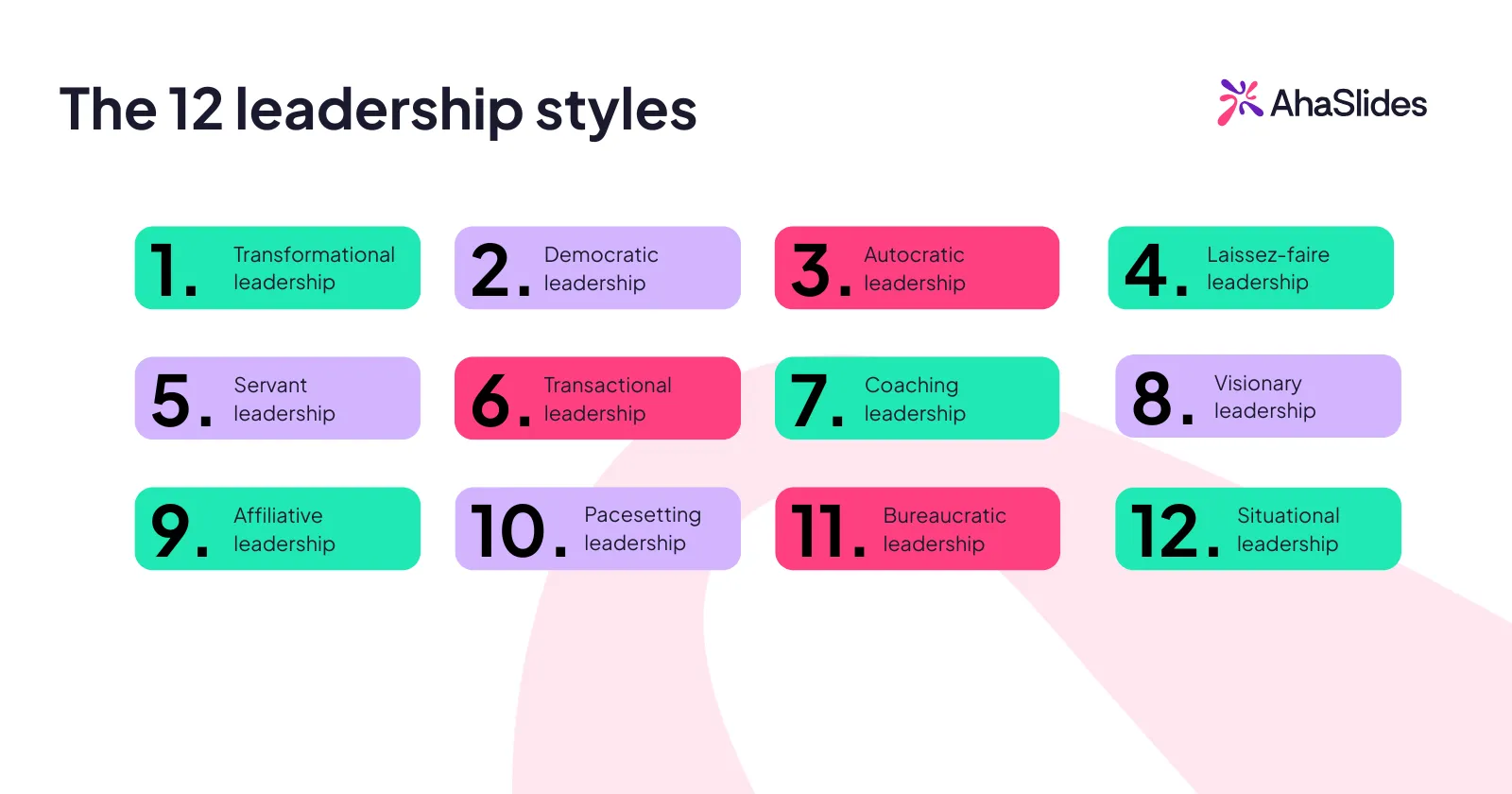
1. Leadership trasformativa
La leadership trasformazionale ispira e motiva i collaboratori a raggiungere risultati straordinari, sviluppando al contempo le proprie capacità di leadership. Questi leader non si limitano a dirigere: trasformano le loro organizzazioni e le persone che le compongono attraverso visione, ispirazione e attenzione personale.
Caratteristiche principali:
- Approccio alla comunicazione altamente ispiratore e visionario
- Forte attenzione al cambiamento organizzativo e all'innovazione
- Profondo impegno per la crescita personale e lo sviluppo dei membri del team
- Presenza di leadership carismatica ed emotivamente intelligente
- Incoraggia la creatività, mettendo in discussione le ipotesi e trovando modi migliori
- Guida con l'esempio, dimostrando i valori e i comportamenti attesi
Punti di forza:
I leader trasformazionali ispirano livelli eccezionali di motivazione e impegno nei loro team. Quando le persone credono in una visione convincente e si sentono personalmente apprezzate dal loro leader, sono disposte ad andare oltre le normali aspettative.
Questo stile stimola l'innovazione e la risoluzione creativa dei problemi, perché i membri del team si sentono autorizzati a sfidare lo status quo e proporre nuove idee. La connessione emotiva che i leader trasformazionali costruiscono crea resilienza nei periodi difficili.
Forse la cosa più importante è che questo approccio forma i futuri leader. Investendo nella crescita dei membri del team e offrendo loro l'opportunità di guidare iniziative, i leader trasformazionali creano un bacino di leader capaci in tutta l'organizzazione.
Punti di debolezza:
La costante spinta alla trasformazione e al raggiungimento di risultati elevati può portare al burnout dei dipendenti. Non tutti prosperano in un ambiente di continuo cambiamento e aspettative elevate.
I leader trasformazionali possono trascurare i dettagli operativi quotidiani a favore di una visione d'insieme. Questo può creare lacune esecutive, dove idee stimolanti non riescono a tradursi in risultati concreti.
Questo stile richiede al leader un impegno costante e intenso, che può risultare estenuante nel lungo periodo. C'è anche il rischio di creare un'eccessiva dipendenza dalla visione del leader, con conseguente difficoltà dei membri del team a operare in modo indipendente.
In ambienti routinari e stabili, la leadership trasformativa può sembrare un'inutile interruzione. A volte, invece, una gestione stabile e coerente è esattamente ciò di cui si ha bisogno.
Quando utilizzare la leadership trasformazionale:
Durante importanti iniziative di cambiamento organizzativo, fusioni, cambiamenti o trasformazioni culturali, la leadership trasformazionale fornisce l'ispirazione e la direzione necessarie per affrontare l'incertezza.
Nella creazione di un nuovo team o reparto, questo approccio crea una cultura aziendale solida e un forte coinvolgimento fin dall'inizio. Nei settori creativi o nei ruoli incentrati sull'innovazione, libera il potenziale creativo dei membri del team.
Per le iniziative strategiche a lungo termine che richiedono impegno e adattamento costanti, la leadership trasformazionale mantiene la motivazione per periodi di tempo prolungati.
Esempi famosi:
Nelson Mandela ha dato prova di una leadership trasformativa nel suo impegno per porre fine all'apartheid e costruire una nuova società sudafricana, ispirando milioni di persone attraverso la sua visione e la sua autorità morale.
Steve Jobs ha trasformato numerosi settori grazie alla sua leadership visionaria in Apple, sebbene il suo approccio abbia anche evidenziato alcune tendenze autocratiche che esploreremo più avanti.
2. Leadership transazionale
La leadership transazionale opera attraverso strutture chiare di ricompense e conseguenze, stabilendo aspettative esplicite e fornendo incentivi per il loro raggiungimento. Questo stile si concentra su operazioni efficienti, procedure standard e raggiungimento di obiettivi concordati attraverso un sistema di scambi tra leader e team.
Caratteristiche principali:
- Stabilisce aspettative e standard di prestazione chiari
- Fornisce ricompense per il raggiungimento degli obiettivi e conseguenze per chi non li raggiunge
- Si concentra sul mantenimento efficiente dei sistemi e dei processi esistenti
- Monitora attentamente le prestazioni rispetto a parametri stabiliti
- Utilizza ricompense contingenti per motivare i comportamenti desiderati
- Sottolinea il rispetto delle regole e delle procedure operative standard
Punti di forza:
La leadership transazionale fornisce aspettative e responsabilità chiare, eliminando l'ambiguità su cosa significhi successo e cosa accada se gli standard non vengono rispettati.
Questo approccio funziona molto efficacemente per attività di routine e misurabili, in cui coerenza ed efficienza sono fondamentali. Produzione, quote di vendita ed eccellenza operativa traggono vantaggio dalle strutture transazionali.
I sistemi di ricompensa possono motivare le prestazioni nel breve termine, in particolare per le persone che rispondono bene agli incentivi esterni e a parametri chiari.
Per i nuovi dipendenti che stanno imparando le basi, la leadership transazionale fornisce una struttura e un feedback chiaro sul fatto che stiano soddisfacendo le aspettative man mano che sviluppano le competenze.
Questo stile eccelle nel mantenere la stabilità e l'efficienza operativa nei sistemi consolidati, rendendolo prezioso per sostenere ciò che già funziona bene.
Punti di debolezza:
La leadership transazionale soffoca la creatività e l'innovazione perché le persone si concentrano esclusivamente sul raggiungimento di parametri definiti anziché mettere in discussione le ipotesi o migliorare i processi.
L'approccio basato sulla motivazione estrinseca può minare la motivazione intrinseca nel tempo. La ricerca dimostra che un'eccessiva attenzione alle ricompense esterne può ridurre il genuino interesse delle persone per il proprio lavoro.
Questo stile non sviluppa le capacità di livello superiore dei dipendenti né li prepara a ruoli di leadership. Crea abili esecutori di compiti, non pensatori strategici o leader.
I membri del team potrebbero concentrarsi sull'"insegnamento finalizzato al test" tramite parametri di gioco anziché sul miglioramento effettivo della qualità o dei risultati per i clienti.
In ambienti in rapido cambiamento che richiedono adattamento, l'attenzione della leadership transazionale alle procedure consolidate diventa uno svantaggio anziché un punto di forza.
Quando utilizzare la leadership transazionale:
Per le attività operative di routine con procedure chiare e risultati misurabili, la leadership transazionale garantisce coerenza ed efficienza.
Negli ambienti di vendita con obiettivi numerici e strutture di commissioni, gli elementi transazionali allineano gli incentivi individuali con gli obiettivi organizzativi.
Durante i periodi di stabilità incentrati sull'eccellenza operativa piuttosto che sulla trasformazione, la gestione transazionale mantiene e ottimizza i sistemi esistenti.
Per i lavoratori temporanei o stagionali che necessitano di una direzione chiara senza dover investire molto nelle relazioni, gli approcci transazionali forniscono in modo efficiente la struttura necessaria.
Esempi famosi di leadership transazionale:
McDonald's: la catena di fast food McDonald's è spesso citata come esempio di leadership transazionale in ambito aziendale. L'azienda utilizza un sistema altamente strutturato di premi e punizioni per motivare i propri dipendenti a raggiungere obiettivi specifici, come l'aumento delle vendite e la riduzione degli sprechi.
Durante gli anni di crescita di Microsoft, Bill Gates ha unito elementi visionari a una forte leadership transazionale, stabilendo chiare aspettative di performance e strutture di incentivi spietatamente competitive.
Vince Lombardi, leggendario allenatore di football, ha utilizzato la leadership transazionale in modo efficace attraverso una disciplina rigorosa, aspettative chiare e tempo di gioco basato sulle prestazioni.
3. Leadership autocratica
La leadership autocratica, a volte definita leadership autoritaria, concentra l'autorità decisionale nel leader, con un contributo minimo da parte dei membri del team. Il leader fornisce indicazioni chiare, si aspetta rispetto e mantiene uno stretto controllo sui processi di lavoro.
Caratteristiche principali:
- Autorità decisionale centralizzata con delega limitata
- Stabilisce una chiara catena di comando e strutture di reporting
- Fornisce supervisione diretta e monitoraggio ravvicinato del lavoro
- Si aspetta obbedienza e conformità alle decisioni e alle indicazioni
- Approccio orientato alle regole con procedure e protocolli stabiliti
- Autonomia limitata del team o processo decisionale discrezionale
Punti di forza:
La leadership autocratica consente di prendere decisioni rapide in situazioni critiche in cui i ritardi potrebbero avere gravi conseguenze. Quando i secondi contano, il dibattito non è utile.
Questo stile fornisce indicazioni e aspettative chiare, eliminando ambiguità su cosa deve essere fatto e chi è responsabile. Per alcuni membri del team, soprattutto quelli che ricoprono ruoli nuovi, questa chiarezza riduce stress e confusione.
Durante le crisi più vere che richiedono un intervento immediato, la leadership autocratica elimina l'incertezza e fornisce ai team l'azione decisiva di cui hanno bisogno. La chiara gerarchia riduce la confusione su chi è al comando.
Con team inesperti che necessitano di una struttura e di una guida esplicita, la leadership autocratica fornisce loro la struttura necessaria per apprendere in modo efficace. Non tutti sono pronti per un'elevata autonomia immediata.
Punti di debolezza:
La leadership autocratica soffoca la creatività e l'innovazione perché i membri del team imparano che le loro idee non vengono apprezzate. Col tempo, le persone smettono di offrire suggerimenti o di identificare i problemi, aspettando invece che la leadership se ne accorga e li indirizzi.
Questo approccio spesso porta a un basso morale del team e a una bassa soddisfazione lavorativa. Gli adulti in genere desiderano una certa autonomia e voce in capitolo nel proprio lavoro; sentirsi controllati e inascoltati compromette il coinvolgimento.
Le organizzazioni guidate in modo autocratico spesso registrano un maggiore turnover dei dipendenti, poiché le persone di talento cercano ambienti in cui avere maggiore influenza e rispetto.
La leadership autocratica crea dipendenza dal leader per tutte le decisioni, impedendo ai membri del team di sviluppare il proprio giudizio e le proprie capacità di risoluzione dei problemi.
Questo approccio trascura inoltre il prezioso contributo dei membri del team, che spesso hanno intuizioni e informazioni che i leader non hanno dalla loro posizione.
Quando ricorrere alla leadership autocratica:
Le situazioni di crisi che richiedono decisioni immediate, senza tempo per la consultazione, giustificano approcci autocratici. Risposte di emergenza, incidenti di sicurezza e problemi urgenti rientrano in questa categoria.
Nei team realmente inesperti, privi delle conoscenze necessarie per contribuire in modo significativo alle decisioni, la leadership autocratica fornisce la struttura necessaria mentre sviluppano le competenze.
In settori altamente regolamentati come le operazioni militari, gli ambienti di produzione con rigidi protocolli di sicurezza o i contesti in cui la conformità è un fattore importante, gli elementi autocratici garantiscono il rispetto delle procedure critiche.
Per compiti di routine e ben definiti, in cui l'efficienza è più importante della creatività, la direzione autocratica può semplificarne l'esecuzione.
Quando evitare la leadership autocratica:
Nel lavoro creativo, nel lavoro cognitivo e nelle situazioni che richiedono innovazione, la leadership autocratica mina proprio ciò di cui si ha bisogno: il pensiero e le idee migliori delle persone.
Esempi famosi:
Martha Stewart ha costruito il suo impero di marchi attraverso un controllo meticoloso su ogni dettaglio, dimostrando sia l'efficacia che i limiti degli approcci autocratici.
Nei primi anni di Apple, Steve Jobs esemplificava la leadership autocratica attraverso il suo esigente perfezionismo e il controllo sulle decisioni relative ai prodotti, sebbene in seguito abbia adottato approcci più equilibrati.
Nota importante: usate la leadership autocratica con parsimonia e bilanciatela con la costruzione di relazioni per evitare risentimenti. Anche in situazioni che richiedono una leadership direttiva, trattare le persone con rispetto e spiegare le proprie ragioni aiuta a mantenere relazioni migliori a lungo termine.
4. Leadership laissez-faire
La leadership laissez-faire adotta un approccio non interventista, garantendo ai membri del team una sostanziale autonomia decisionale e di gestione del proprio lavoro, con una supervisione e un'interferenza minime. Il leader fornisce risorse e supporto, ma si fida del team per quanto riguarda il raggiungimento degli obiettivi.
Caratteristiche principali:
- Interferenza o direzione minime nel lavoro quotidiano
- Elevata fiducia nelle capacità e nel giudizio dei membri del team
- Delega ampiamente sia l'autorità che la responsabilità
- Fornisce le risorse necessarie ma una guida continua limitata
- Permette e incoraggia l'autogestione e il processo decisionale indipendente
- Interviene solo quando esplicitamente richiesto o quando sorgono problemi seri
Punti di forza:
La leadership laissez-faire incoraggia l'indipendenza e l'innovazione, dando alle persone lo spazio per sperimentare, correre rischi e trovare soluzioni creative senza una supervisione costante.
Questo approccio consente ai professionisti altamente qualificati di lavorare nel modo che ritengono più efficace, nel rispetto della loro competenza e del loro giudizio professionale.
La flessibilità e l'autonomia possono aumentare la soddisfazione lavorativa per le persone che apprezzano l'indipendenza. Molti lavoratori della conoscenza preferiscono una supervisione minima quando hanno la competenza per lavorare in modo indipendente.
Questo stile riduce lo stress e l'inefficienza della microgestione sia per i leader che per i team, consentendo ai leader di concentrarsi sulla strategia mentre i team agiscono in autonomia.
Per i team remoti e distribuiti, la leadership laissez-faire riconosce la realtà che una supervisione attenta non è pratica né auspicabile, creando invece la fiducia necessaria.
Punti di debolezza:
Senza aspettative chiare e una certa struttura, i team possono sperimentare confusione riguardo a ruoli, priorità e standard, con conseguente qualità del lavoro incoerente.
Gli approcci laissez-faire possono portare a uno scarso coordinamento tra i membri del team se nessuno facilita l'allineamento e la collaborazione.
Le scadenze e gli standard qualitativi potrebbero slittare senza adeguati meccanismi di supervisione e responsabilità.
Questo stile è completamente inefficace per i team inesperti che necessitano di guida, struttura e sviluppo delle competenze. Gettare i principianti in acqua senza supporto è dannoso, non motivante.
Senza strutture di responsabilità, la produttività può diminuire perché alcuni membri del team si lasciano trasportare dalla mancanza di direzione o motivazione.
Alcuni membri del team potrebbero percepire la leadership laissez-faire come disimpegno o abbandono anziché come fiducia, danneggiando il morale e le relazioni.
Quando utilizzare la leadership laissez-faire:
Grazie a team di esperti altamente qualificati e motivati, la leadership laissez-faire rispetta le loro capacità, lasciando loro al contempo la libertà di eccellere.
Nei lavori creativi e incentrati sull'innovazione che richiedono sperimentazione e approcci innovativi, troppa struttura e supervisione possono soffocare proprio la creatività di cui hai bisogno.
Per i team di ricerca e sviluppo che lavorano su problemi complessi senza soluzioni chiare, è essenziale avere l'autonomia necessaria per esplorare approcci diversi.
Quando si gestiscono altri leader o professionisti senior che giustamente si aspettano autonomia per guidare i propri settori, la leadership laissez-faire dimostra la giusta fiducia.
Esempi famosi:
Warren Buffett è noto per il suo approccio laissez-faire con i dirigenti delle società controllate da Berkshire Hathaway, che gli conferisce un'autonomia pressoché totale per gestire le proprie attività come meglio credono.
La regina Elisabetta II, in quanto monarca costituzionale, adottò un modello di leadership basato sul laissez-faire, garantendo stabilità e continuità e consentendo al contempo ai funzionari eletti l'autonomia di governo.
5. Leadership di servizio
La servant leadership ribalta le gerarchie tradizionali, dando priorità ai bisogni, allo sviluppo e al benessere dei membri del team rispetto agli interessi personali del leader. Questi leader considerano il loro ruolo primario quello di servire i propri team, rimuovendo gli ostacoli e consentendo agli altri di dare il massimo.
Caratteristiche principali:
- Dà priorità genuina alle esigenze e allo sviluppo dei membri del team
- Si concentra sul dare potere agli altri piuttosto che esercitare potere su di loro
- Dimostra umiltà e impegno nel servire gli altri
- Costruisce relazioni solide basate sulla fiducia e sul rispetto reciproco
- Ascolta attivamente per comprendere le prospettive e le preoccupazioni dei membri del team
- Lavora per rimuovere gli ostacoli e fornire le risorse di cui i team hanno bisogno per avere successo
Punti di forza:
La leadership di servizio crea fiducia e lealtà eccezionalmente forti. Quando le persone sentono sinceramente che il loro leader ha a cuore il loro successo e il loro benessere, ricambiano con impegno e impegno discrezionale.
Questo approccio crea una cultura aziendale positiva, caratterizzata da collaborazione, supporto reciproco e sicurezza psicologica. I team guidati da servant leader dimostrano spesso una coesione notevole.
Solitamente la soddisfazione e il coinvolgimento dei dipendenti migliorano in modo significativo perché le persone si sentono valorizzate come esseri umani e non come semplici risorse produttive.
I leader servitori sviluppano intenzionalmente le competenze e le capacità dei membri del loro team, creando solidi percorsi di successione e una solida base organizzativa.
La salute e la sostenibilità organizzativa a lungo termine tendono a essere più forti perché i leader servitori creano sistemi e capacità anziché creare dipendenza da se stessi.
Punti di debolezza:
La leadership di servizio richiede un notevole investimento di tempo nella costruzione di relazioni, nel coaching e nel supporto, il che può rallentare l'esecuzione in ambienti frenetici.
Questo stile può essere percepito come debolezza o mancanza di autorità se non bilanciato da un'adeguata risolutezza. Alcune situazioni richiedono un'azione direttiva, non una consultazione.
C'è il rischio di essere sfruttati dai membri del team che interpretano la leadership di servizio come permissività o mancanza di standard.
In ambienti altamente competitivi o durante ristrutturazioni necessarie, l'orientamento premuroso della leadership di servizio può rendere emotivamente più arduo attuare decisioni difficili.
I leader servitori potrebbero trascurare il proprio sviluppo e benessere nel servizio agli altri, portando nel tempo al burnout.
Quando utilizzare la leadership di servizio:
Nelle organizzazioni orientate al servizio e nelle organizzazioni non profit, dove l'allineamento alla missione e l'impegno del team sono fondamentali, la leadership di servizio è in sintonia con i valori e rafforza la cultura.
Per uno sviluppo di squadra a lungo termine e per la creazione di capacità organizzative sostenibili, la servant leadership crea le condizioni affinché le persone possano crescere ed eccellere.
Negli ambienti di lavoro collaborativi in cui le relazioni e la fiducia determinano le prestazioni, la servant leadership rafforza il tessuto sociale che favorisce la collaborazione.
Quando si affrontano sfide legate alla fidelizzazione dei talenti, la servant leadership affronta i bisogni umani fondamentali di rispetto, sviluppo e lavoro significativo che guidano le decisioni delle persone di restare o andarsene.
Esempi famosi:
Herb Kelleher, co-fondatore di Southwest Airlines, ha esemplificato la servant leadership attraverso la sua genuina cura per i dipendenti, affermando con la celebre frase: "I tuoi dipendenti vengono prima di tutto. E se li tratti bene, indovina un po'? I tuoi clienti vengono dopo".
Madre Teresa ha dimostrato una leadership di servizio su scala globale, dedicando la sua vita al servizio dei più vulnerabili e ispirando milioni di persone a unirsi alla sua missione.
6. Leadership democratica
La leadership democratica, detta anche leadership partecipativa, coinvolge i membri del team nei processi decisionali, mentre il leader mantiene l'autorità e la responsabilità finale. Questo approccio collaborativo valorizza le diverse prospettive e costruisce le decisioni attraverso la consultazione e la costruzione del consenso.
Caratteristiche principali:
- Incoraggia attivamente la partecipazione del team e il contributo alle decisioni
- Valorizza le diverse prospettive e crea spazio per tutte le voci
- Mantiene una comunicazione trasparente sulle decisioni e sul ragionamento
- Facilita la risoluzione collaborativa dei problemi e il brainstorming
- Crea consenso ove possibile prima di prendere decisioni definitive
- Rafforza i membri del team dimostrando che le loro opinioni contano
Punti di forza:
La leadership democratica aumenta significativamente impegno di squadra e soddisfazione lavorativa. Quando le persone si sentono ascoltate e coinvolte nelle decisioni che riguardano il loro lavoro, sviluppano un maggiore senso di responsabilità e impegno verso i risultati.
Questo approccio promuove la creatività attraverso l'intelligenza collettiva di diverse prospettive. I problemi complessi traggono beneficio da molteplici punti di vista e i processi democratici fanno emergere soluzioni che nessun individuo avrebbe potuto prendere in considerazione.
Crea fiducia e rispetto all'interno dei team, perché le persone si sentono apprezzate per le loro competenze e intuizioni. Questa sicurezza psicologica incoraggia le persone a parlare apertamente dei problemi, a condividere idee e a collaborare in modo più efficace.
La qualità delle decisioni spesso migliora perché si attinge a conoscenze ed esperienze più ampie. I membri del team più vicini al lavoro spesso hanno intuizioni che i leader non hanno dalla loro posizione.
Punti di debolezza:
I processi democratici richiedono più tempo rispetto ai processi decisionali unilaterali. Quando la rapidità è fondamentale, consultazioni approfondite possono creare pericolosi ritardi.
C'è il rischio di esiti "progettati da un comitato", in cui il desiderio di consenso produce compromessi mediocri che non soddisfano pienamente nessuno. Non tutte le decisioni traggono vantaggio da un ampio contributo.
Se il contributo del team viene spesso ignorato, la leadership democratica diventa performativa e, di fatto, danneggia la fiducia più di quanto farebbero gli approcci autocratici. I team riconoscono rapidamente quando la loro partecipazione è meramente simbolica.
Questo stile richiede una capacità di facilitazione qualificata per gestire i conflitti in modo produttivo e mantenere il focus sulle discussioni. Senza queste competenze, i processi democratici possono trasformarsi in discussioni improduttive.
Quando ricorrere alla leadership democratica:
Per problemi complessi che richiedono competenze diversificate, la leadership democratica si avvale dell'intelligenza collettiva del team. Quando sono necessarie competenze provenienti da diverse aree funzionali, la collaborazione diventa essenziale.
Quando l'adesione del team è fondamentale per un'implementazione di successo, coinvolgere le persone nella decisione rafforza l'impegno a eseguirla correttamente. Le sessioni di pianificazione strategica traggono enormi benefici dagli approcci democratici.
Negli ambienti creativi e nel lavoro incentrato sull'innovazione, la leadership democratica libera la creatività collaborativa necessaria per idee rivoluzionarie.
Questo stile funziona al meglio quando i membri del team sono sufficientemente esperti e competenti da poter contribuire in modo significativo. Una leadership democratica con team inesperti può creare confusione.
Esempi famosi:
Indra Nooyi, ex CEO di PepsiCo, era nota per il suo approccio di leadership inclusiva, che richiedeva regolarmente il contributo dei membri del team a tutti i livelli e incorporava genuinamente le loro intuizioni.
Barack Obama ha dimostrato di saper prendere decisioni in modo consultivo durante tutta la sua presidenza, riunendo notoriamente diversi consiglieri e confrontandosi sinceramente con prospettive contrastanti prima di prendere decisioni.
7. Leadership di coaching
Il coaching di leadership si concentra sullo sviluppo del potenziale a lungo termine dei membri del team, piuttosto che limitarsi a dirigere il loro lavoro attuale. Questi leader agiscono come mentori e sviluppatori, investendo tempo nella comprensione dei punti di forza e delle aree di crescita individuali, per poi creare opportunità di sviluppo delle capacità individuali.
Caratteristiche principali:
- Si concentra principalmente sullo sviluppo e la crescita individuale
- Fornisce regolarmente feedback costruttivi e indicazioni
- Pone domande potenti piuttosto che dare tutte le risposte
- Crea opportunità di apprendimento e sfide di sviluppo
- Dimostra pazienza con gli errori come esperienze di apprendimento
- Mantiene una prospettiva a lungo termine sullo sviluppo delle capacità
Punti di forza:
Il coaching della leadership sviluppa sistematicamente le competenze e le capacità dei dipendenti, creando nel tempo team più forti e organizzazioni più capaci.
Questo approccio migliora le prestazioni a lungo termine poiché le persone sviluppano competenze che vanno oltre i loro ruoli attuali, preparandole a maggiori responsabilità.
Il coinvolgimento dei dipendenti e la soddisfazione lavorativa in genere migliorano perché le persone si sentono coinvolte e supportate nella loro crescita professionale.
Il coaching dei leader crea solidi percorsi di successione formando intenzionalmente i futuri leader in grado di assumere maggiori responsabilità.
L'attenzione personalizzata aiuta i membri del team a scoprire e sfruttare i propri punti di forza unici, rispondendo al contempo alle esigenze di sviluppo in modo collaborativo.
Punti di debolezza:
Il coaching della leadership richiede un notevole investimento di tempo, che può entrare in conflitto con le urgenti esigenze operative. Non è possibile fare coaching in modo efficace se si ha fretta.
Questo stile è inefficace quando i membri del team non sono ricettivi al feedback o non sono impegnati nel proprio sviluppo. Il coaching richiede partecipanti disponibili.
Nelle situazioni di forte pressione che richiedono risultati immediati, l'attenzione allo sviluppo del coaching può rallentare l'esecuzione quando invece è necessaria un'azione rapida.
Non tutti i leader possiedono le capacità di coaching, la pazienza e l'intelligenza emotiva che questo approccio richiede. Il coaching efficace è davvero difficile.
Questo stile potrebbe frustrare i professionisti più performanti che hanno bisogno di meno indicazioni e vogliono semplicemente risorse e autonomia per agire.
Quando utilizzare la leadership del coaching:
Per sviluppare dipendenti ad alto potenziale che si stanno preparando per ruoli di leadership, l'investimento nel coaching dà enormi frutti in termini di preparazione e capacità.
Quando i membri del team ricoprono nuovi ruoli o si trovano ad affrontare lacune nelle competenze, il coaching li aiuta a sviluppare le competenze in modo più efficace rispetto agli approcci basati sul "nuotare o affondare".
Negli ambienti di lavoro basati sulla conoscenza, in cui l'apprendimento continuo è essenziale per rimanere aggiornati, il coaching di leadership integra lo sviluppo nel lavoro quotidiano.
Per migliorare specifici problemi di performance, il coaching affronta le cause profonde e sviluppa capacità sostenibili, anziché limitarsi a richiedere risultati migliori.
Esempi famosi:
John Wooden, leggendario allenatore di basket della UCLA, ha dato un esempio di leadership allenatrice sviluppando il carattere e le capacità di vita dei giocatori insieme alle loro capacità atletiche, creando un'eccellenza duratura.
Satya Nadella ha trasformato la cultura di Microsoft attraverso il coaching dei principi di leadership, concentrandosi sulla mentalità di crescita e sullo sviluppo dei dipendenti piuttosto che sulla concorrenza spietata.
8. Leadership visionaria
La leadership visionaria, detta anche leadership autorevole, fornisce una direzione convincente attraverso una visione chiara e stimolante del futuro, lasciando al contempo ai membri del team l'autonomia di decidere come realizzarla. Questi leader tracciano un quadro della direzione intrapresa dall'organizzazione, ma consentono ai singoli di tracciare autonomamente il proprio percorso verso tale destinazione.
Caratteristiche principali:
- Esprime una visione chiara e convincente del futuro
- Fornisce una direzione strategica consentendo al contempo autonomia tattica
- Ispira l'impegno attraverso uno scopo significativo
- Mantiene ferme convinzioni sulla destinazione
- Flessibile sui metodi e sui percorsi per arrivarci
- Comunica il "perché" in modo potente per creare significato
Punti di forza:
Una leadership visionaria fornisce una chiara direzione strategica che allinea gli sforzi del team verso obiettivi comuni, evitando al contempo la microgestione dell'esecuzione.
Questo approccio ispira impegno e motivazione collegando il lavoro a risultati significativi e scopi convincenti che vanno oltre il semplice guadagno di uno stipendio.
La combinazione di una direzione chiara con l'autonomia nell'implementazione bilancia struttura e flessibilità, prevenendo sia il caos che la rigidità.
La leadership visionaria è molto efficace durante i cambiamenti, quando le persone hanno bisogno di capire dove stanno andando e perché è importante, anche se i dettagli restano poco chiari.
Questo stile sviluppa il pensiero strategico nei membri del team, coinvolgendoli nella determinazione di come realizzare la visione, anziché limitarsi a seguire le istruzioni.
Punti di debolezza:
Una leadership visionaria richiede eccezionali capacità comunicative per articolare e ispirare la visione. Non tutti i leader possiedono questa capacità in modo naturale.
Concentrarsi sulla visione a lungo termine può talvolta trascurare le realtà operative a breve termine o le sfide attuali che richiedono un'attenzione immediata.
Se la visione si rivela irrealistica o non allineata alla realtà, una leadership visionaria può portare l'organizzazione fuori strada anziché verso il successo.
Questo stile dipende in larga misura dal giudizio strategico del leader. Se tale giudizio è errato, le conseguenze possono essere significative.
Alcuni membri del team preferiscono una direzione più concreta e potrebbero trovare l'attenzione generale della leadership visionaria troppo astratta senza una guida tattica.
Quando ricorrere alla leadership visionaria:
Durante importanti cambiamenti strategici o trasformazioni organizzative, la leadership visionaria fornisce alle persone la direzione convincente di cui hanno bisogno per affrontare l'incertezza.
Quando si lanciano nuove iniziative o si entra in nuovi mercati, una visione chiara della destinazione aiuta i team a tracciare la rotta attraverso l'ambiguità.
Nei momenti di crisi o di sfide importanti, la leadership visionaria ricorda alle persone per cosa stanno lottando e perché è importante.
Per un lavoro incentrato sull'innovazione, la leadership visionaria stabilisce l'obiettivo, lasciando al contempo ai team creativi la libertà di determinare il percorso migliore da seguire.
Esempi famosi:
Martin Luther King Jr. ha dato esempio di leadership visionaria attraverso il suo discorso "I Have a Dream" e il suo impegno per i diritti civili, offrendo una visione convincente e consentendo a molti leader di promuovere la causa.
Elon Musk dimostra una leadership visionaria in tutte le sue iniziative, formulando visioni audaci per i veicoli elettrici, l'esplorazione spaziale e l'energia sostenibile, lasciando al contempo ai team una notevole autonomia per innovare.
9. Leadership affiliativa
La leadership affiliativa dà priorità alle persone, alle emozioni e all'armonia, costruendo relazioni solide e coesione di squadra attraverso l'empatia, il supporto emotivo e la risoluzione dei conflitti. Questi leader creano ambienti emotivamente positivi in cui le persone si sentono connesse, apprezzate e supportate.
Caratteristiche principali:
- Dà priorità al benessere emotivo e alle relazioni positive
- Dimostra empatia e genuina cura per i membri del team
- Si concentra sulla costruzione dell'armonia e sulla risoluzione dei conflitti
- Offre generosamente elogi e feedback positivi
- Crea ambienti di squadra inclusivi e di supporto
- Dà più valore alle persone che ai processi o ai risultati a breve termine
Punti di forza:
La leadership affiliativa crea forti legami emotivi e coesione di squadra, creando team resilienti che si sostengono a vicenda nelle sfide.
Questo approccio sana le divisioni e riduce i conflitti concentrandosi su un terreno comune e sulla comprensione reciproca, anziché forzare il confronto.
Durante periodi di stress o in seguito a traumi organizzativi, la leadership affiliativa fornisce stabilità emotiva e il supporto di cui i team hanno bisogno per riprendersi.
Il morale dei dipendenti e la soddisfazione lavorativa solitamente migliorano in modo significativo negli ambienti affiliati in cui le persone si sentono veramente prese in considerazione.
Questo stile aumenta la sicurezza psicologica, rendendo i membri del team più disposti a correre rischi, ad ammettere gli errori e a chiedere aiuto quando necessario.
Punti di debolezza:
L'enfasi sull'armonia può evitare conflitti necessari o conversazioni difficili che devono avvenire per l'efficacia del team.
La leadership affiliativa può trascurare i problemi di performance a favore del mantenimento di relazioni positive, consentendo che le scarse performance continuino senza controllo.
Senza equilibrio, questo stile può creare ambienti privi di responsabilità, in cui la gentilezza ha la priorità sui risultati.
In alcune culture organizzative che privilegiano l'attenzione sui compiti rispetto agli elementi relazionali, l'attenzione sulle emozioni e sulle relazioni può essere percepita come poco professionale.
I leader affiliativi potrebbero avere difficoltà a gestire ristrutturazioni, licenziamenti o decisioni difficili che danneggiano le relazioni, anche quando sono necessarie a livello organizzativo.
Quando utilizzare la leadership affiliativa:
Durante i conflitti all'interno del team o quando le relazioni sono tese, la leadership affiliativa può riparare le divisioni e ripristinare una collaborazione produttiva.
In seguito a traumi organizzativi come licenziamenti, fusioni o scandali, le persone hanno bisogno di supporto emotivo e rassicurazioni che i leader affiliativi possono fornire in modo efficace.
Quando si creano nuovi team, gli approcci affiliativi aiutano a stabilire rapidamente fiducia e connessione, creando le basi per le prestazioni future.
In ambienti ad alto stress, la leadership affiliativa fornisce un sostegno emotivo che previene il burnout e mantiene il benessere del team.
Esempi famosi:
La leadership di Joe Torre nei New York Yankees ha dimostrato principi di affiliazione, costruendo solidi rapporti con i giocatori e gestendo al contempo ego e conflitti in un ambiente ad alta pressione.
La leadership di Jacinda Ardern come Primo Ministro della Nuova Zelanda è stata un esempio di approccio affiliativo, in particolare durante le crisi, dove la sua empatia e la sua intelligenza emotiva hanno creato fiducia e unità.
10. Leadership pionieristica
Una leadership pionieristica implica che il leader stabilisca standard di performance elevati e li esegua personalmente, aspettandosi che i membri del team seguano il suo esempio e raggiungano gli stessi standard eccezionali. Questi leader guidano in prima linea, dimostrando esattamente cosa significhi l'eccellenza attraverso il proprio lavoro.
Caratteristiche principali:
- Stabilisce standard di prestazioni eccezionalmente elevati
- Guida con l'esempio personale, modellando l'eccellenza
- Si aspetta che i membri del team siano all'altezza del ritmo e della qualità del leader
- Bassa tolleranza per prestazioni scadenti o standard non rispettati
- Sottolinea la velocità e l'eccellenza nell'esecuzione
- Interviene rapidamente quando gli standard non vengono rispettati
Punti di forza:
Una leadership pionieristica può favorire le prestazioni elevate di team capaci, che si elevano per eguagliare gli standard e l'esempio del leader.
Questo stile dimostra credibilità attraverso l'azione. I leader che esemplificano gli standard che si aspettano guadagnano rispetto e legittimità.
Per i team ambiziosi e motivati, una leadership pionieristica crea ambienti stimolanti in cui i migliori talenti prosperano e si stimolano a vicenda.
In ambienti competitivi e frenetici, il ritmo può mobilitare i team per un'esecuzione rapida e risultati di alta qualità.
L'impegno visibile e l'etica del lavoro del leader possono ispirare gli altri a migliorare le proprie prestazioni e la propria dedizione.
Punti di debolezza:
Una leadership che detta il passo porta spesso al burnout del team, perché il ritmo incessante e le aspettative elevate diventano insostenibili nel tempo.
Questo stile può demoralizzare i membri del team che non riescono a tenere il passo o gli standard del leader, soprattutto se quest'ultimo possiede talenti naturali eccezionali.
Spesso dettare il passo distrugge la collaborazione perché le persone si concentrano esclusivamente sulle prestazioni individuali anziché aiutarsi a vicenda o coordinare gli sforzi.
Questo approccio prevede poco coaching o sviluppo. I leader si aspettano semplicemente che le persone imparino a soddisfare gli standard senza guida o supporto.
L'innovazione e la creatività diminuiscono perché le persone si concentrano sull'esecuzione degli standard anziché mettere in discussione i presupposti o esplorare nuovi approcci.
Quando utilizzare una leadership pionieristica:
Per progetti urgenti e a breve termine che richiedono una rapida esecuzione da parte di team competenti, il ritmo di esecuzione mobilita in modo efficace sforzi intensi.
Con team qualificati e motivati che rispondono positivamente alle sfide, il ruolo di apripista può consentire di ottenere prestazioni eccezionali senza conseguenze negative.
In ambienti competitivi in cui la velocità è essenziale e si hanno team capaci, stabilire il passo aiuta a superare i concorrenti.
Per risultati critici con scadenze ravvicinate, il ritmo impostato concentra tutta l'energia sull'esecuzione.
Quando evitare una leadership pionieristica:
Per la maggior parte dei lavori di routine o delle iniziative a lungo termine, l'intensità del ritmo di lavoro non può essere sostenuta senza comportare costi significativi per il benessere e il morale.
Esempi famosi:
La leadership di Michael Jordan con i Chicago Bulls è stata un esempio di capacità di dettare il passo, esigendo l'eccellenza dai compagni di squadra e dimostrandola lui stesso, anche se questo approccio ha occasionalmente creato attriti.
Jeff Bezos ha costruito Amazon attraverso una leadership pionieristica, stabilendo standard implacabili per la velocità e il servizio clienti, dando al contempo un esempio personale di estrema intensità lavorativa, con risultati positivi e critiche significative.
11. Leadership burocratica
La leadership burocratica rispetta rigorosamente regole, procedure e gerarchie, enfatizzando il rispetto dei sistemi e dei protocolli stabiliti. Questi leader garantiscono che il lavoro segua i canali appropriati, conservi la documentazione e soddisfi tutti i requisiti normativi e procedurali.
Caratteristiche principali:
- Rigorosa aderenza alle regole, alle procedure e alle politiche
- Enfasi sulla documentazione adeguata e sui processi formali
- Strutture gerarchiche e catene di comando chiare
- Valorizza la stabilità, la prevedibilità e l'evitamento del rischio
- Garantisce la conformità normativa e le procedure operative standard
- Approccio metodico e sistematico al lavoro
Punti di forza:
La leadership burocratica garantisce la conformità in settori altamente regolamentati, in cui seguire le procedure corrette non è facoltativo, ma essenziale dal punto di vista legale ed etico.
Questo stile riduce i rischi e gli errori attraverso processi e controlli sistematici, prevenendo errori costosi in ambienti sensibili.
Le procedure chiare garantiscono coerenza e prevedibilità, garantendo che il lavoro venga svolto allo stesso modo, indipendentemente da chi lo esegue.
Gli approcci burocratici proteggono le organizzazioni attraverso una documentazione e piste di controllo adeguate, essenziali per la responsabilità e la tutela legale.
Per le attività di routine e ripetitive in cui la coerenza è più importante dell'innovazione, la leadership burocratica garantisce un'esecuzione affidabile.
Punti di debolezza:
La leadership burocratica soffoca l'innovazione e la creatività, dando priorità al rispetto delle regole rispetto alla risoluzione dei problemi o al miglioramento.
Questo stile può essere lento e inflessibile, e ha difficoltà ad adattarsi a circostanze mutevoli o a situazioni particolari che richiedono giudizio piuttosto che procedure.
L'eccessiva burocrazia frustra i dipendenti talentuosi, che si sentono limitati da inutili formalità burocratiche anziché autorizzati a usare il proprio giudizio.
Concentrarsi sul processo anziché sui risultati può creare situazioni in cui le persone seguono le procedure alla perfezione, perdendo però di vista il punto o non riuscendo a ottenere risultati.
Gli ambienti burocratici spesso hanno difficoltà a coinvolgere i dipendenti, poiché questi ultimi si sentono più come ingranaggi di una macchina che come collaboratori stimati.
Quando ricorrere alla leadership burocratica:
Nei settori altamente regolamentati come la sanità, la finanza o la pubblica amministrazione, dove la conformità non è facoltativa ma obbligatoria per legge, gli elementi burocratici garantiscono il rispetto degli obblighi.
Nelle operazioni critiche per la sicurezza, in cui le deviazioni dalle procedure potrebbero causare lesioni o decessi, il rispetto burocratico dei protocolli protegge le persone.
Quando si gestiscono processi che richiedono verifiche e documentazione per scopi legali o normativi, la dirigenza burocratica garantisce l'esistenza di registrazioni adeguate.
Negli ambienti con un elevato turnover, dove la coerenza è importante, le procedure burocratiche garantiscono che il lavoro prosegua correttamente, indipendentemente da chi lo esegue.
Esempi famosi:
Harold Geneen trasformò ITT in un conglomerato attraverso una leadership burocratica incentrata su rigorosi controlli finanziari, documentazione e processi di gestione sistematici.
I dirigenti della pubblica amministrazione spesso esemplificano la leadership burocratica assicurandosi che le agenzie seguano le procedure corrette e mantengano la responsabilità nei confronti dei cittadini e dei funzionari eletti.
12. Leadership situazionale
La leadership situazionale riconosce che non esiste un unico stile valido per tutte le persone e tutte le situazioni, adattando l'approccio di leadership in base alle competenze e al livello di impegno dei membri del team per compiti specifici. Questo modello flessibile alterna comportamenti direttivi e di supporto in base alle esigenze di ogni persona in ogni situazione.
Caratteristiche principali:
- Adatta in modo flessibile lo stile in base alla situazione e alle esigenze individuali
- Valuta la competenza e l'impegno dei membri del team per compiti specifici
- Varia tra comportamenti di leadership direttivi e di supporto
- Riconosce che la stessa persona ha bisogno di approcci diversi per compiti diversi
- Si concentra sullo sviluppo delle persone verso una maggiore autonomia nel tempo
- Equilibrio tra il raggiungimento dei risultati e lo sviluppo delle capacità
Punti di forza:
La leadership situazionale massimizza l'efficacia adattando l'approccio alle esigenze reali anziché applicare una leadership standardizzata.
Questo stile sviluppa sistematicamente i membri del team, fornendo supporto e sfide adeguati in ogni fase del loro percorso di crescita.
La flessibilità impedisce sia di supervisionare eccessivamente le persone capaci sia di supportare in modo insufficiente coloro che necessitano di guida, ottimizzando così l'energia della leadership.
La leadership situazionale dimostra rispetto per gli individui riconoscendo le loro diverse capacità e adattandosi di conseguenza, anziché trattare tutti allo stesso modo.
Questo approccio crea fiducia perché le persone ricevono il supporto di cui hanno realmente bisogno, non quello che fa comodo al leader.
Punti di debolezza:
La leadership situazionale richiede un giudizio sofisticato per valutare accuratamente i livelli di competenza e impegno, cosa che molti leader fanno fatica a fare in modo coerente.
L'adattamento continuo può essere estenuante per i leader e, se non spiegato chiaramente, può apparire incoerente ai membri del team.
Questo stile richiede relazioni e comunicazioni solide, affinché i membri del team comprendano perché gli approcci variano, anziché percepire favoritismi.
I leader meno esperti potrebbero avere difficoltà ad adattarsi continuamente, anziché adattarsi a schemi confortevoli.
Il modello richiede tempo per valutare correttamente le situazioni, tempo che potrebbe non essere disponibile in ambienti in rapida evoluzione.
Quando utilizzare la leadership situazionale:
La leadership situazionale è ampiamente applicabile nella maggior parte dei contesti perché consiste fondamentalmente nell'adattare il proprio approccio alle esigenze reali, anziché seguire formule rigide.
Questo stile eccelle in particolare nella gestione di team eterogenei con diversi livelli di esperienza, in cui persone diverse necessitano simultaneamente di approcci diversi.
Per lo sviluppo dei membri del team nel tempo, la leadership situazionale fornisce la tabella di marcia per la transizione da una supervisione attenta a una maggiore autonomia man mano che le capacità crescono.
Esempi famosi:
Negli anni '1960, Paul Hersey e Ken Blanchard svilupparono il modello di leadership situazionale basandosi sulla loro osservazione che i leader efficaci si adattano costantemente anziché mantenere stili fissi.
I dirigenti moderni come Mary Barra della General Motors dimostrano una leadership situazionale adattando il loro approccio a seconda che si rivolgano a ingegneri esperti, nuovi assunti o membri del consiglio di amministrazione.
Confronto tra stili di leadership: trovare quello giusto
Comprendere i singoli stili di leadership è prezioso, ma riconoscere come si confrontano e si relazionano tra loro offre spunti ancora più approfonditi. Esaminiamo questi stili in diverse dimensioni chiave per aiutarvi a identificare quali approcci potrebbero funzionare meglio in diversi contesti.
Lo spettro dell'autorità
Gli stili di leadership si estendono lungo un continuum che va da un livello altamente direttivo a uno altamente autonomo. Da un lato, la leadership autocratica e burocratica mantiene uno stretto controllo e un processo decisionale centralizzato. Al centro, gli stili democratici e di coaching bilanciano struttura e partecipazione. All'estremità autonoma, la leadership laissez-faire garantisce la massima libertà ai team.
Nessuna delle due estremità di questo spettro è intrinsecamente superiore. Il livello di autorità appropriato dipende dalle capacità del team, dall'urgenza della situazione e dalla natura del compito. I nuovi team spesso necessitano di maggiore direzione; i team esperti ne richiedono meno. Le situazioni di crisi giustificano approcci direttivi; i periodi di stabilità consentono la partecipazione.
I leader più efficaci si muovono fluidamente lungo questo spettro in base al contesto, anziché rimanere fermi in una posizione. La leadership situazionale formalizza questa adattabilità, ma tutti gli stili di leadership possono essere applicati con gradi di controllo più o meno elevati.
Il focus sulla relazione
Un'altra dimensione cruciale è l'enfasi che ogni stile pone sulle relazioni rispetto ai compiti. La leadership affiliativa e quella di servizio danno priorità alle connessioni emotive e al benessere del team. La leadership trasformazionale e quella di coaching bilanciano gli elementi relazionali e quelli relativi ai compiti. La leadership autocratica, transazionale e orientata al cambiamento si concentrano principalmente sul raggiungimento degli obiettivi.
Ancora una volta, il contesto determina ciò di cui si ha bisogno. Durante traumi organizzativi o forti stress, la focalizzazione sulle relazioni aiuta le persone a rimanere coinvolte e resilienti. Quando si affrontano minacce esistenziali o scadenze critiche, la focalizzazione sul compito diventa essenziale per la sopravvivenza.
Il pericolo sta nel diventare così sbilanciati da perseguire esclusivamente una dimensione. I leader che ignorano le relazioni creano culture tossiche con un elevato turnover. I leader che ignorano i risultati falliscono nelle loro organizzazioni e, in ultima analisi, nei loro team quando l'organizzazione è in difficoltà.
Orientamento al cambiamento contro la stabilità
Alcuni stili di leadership eccellono nel guidare il cambiamento, mentre altri mantengono la stabilità. La leadership trasformativa e visionaria crea e gestisce il cambiamento in modo efficace. La leadership transazionale e burocratica preserva ciò che funziona e garantisce un'esecuzione coerente.
Le organizzazioni necessitano di entrambi gli orientamenti in momenti diversi e in aree diverse. Il team di innovazione potrebbe aver bisogno di una leadership trasformativa, mentre il team operativo trae vantaggio da approcci transazionali. Durante i periodi di crescita, è opportuno adottare stili orientati al cambiamento. Durante l'integrazione o il consolidamento, gli approcci incentrati sulla stabilità contribuiscono a consolidare i guadagni.
Sviluppo versus focus sulle prestazioni
Il coaching e la servant leadership investono molto nello sviluppo delle capacità delle persone a lungo termine, a volte a scapito dei risultati a breve termine. La leadership autoritaria e orientata al cambiamento esige prestazioni immediate, potenzialmente a scapito dello sviluppo.
La tensione tra sviluppo e performance è reale, ma non insormontabile. I leader migliori riconoscono che lo sviluppo delle persone è il modo per raggiungere performance elevate e sostenibili, non un'alternativa. Concentrarsi sulle performance a breve termine può essere necessario durante le crisi, ma periodi prolungati senza sviluppo creano problemi di performance a lungo termine.
Requisiti di intelligenza emotiva
Gli stili di leadership variano notevolmente nelle richieste di intelligenza emotiva. La leadership di servizio, affiliativa e di coaching richiedono competenze emotive altamente sviluppate. La leadership burocratica e autocratica possono funzionare anche con un'intelligenza emotiva inferiore, sebbene ne traggano certamente beneficio.
Questa realtà ha implicazioni per lo sviluppo della leadership. Se la tua intelligenza emotiva naturale è limitata, gli stili che si basano fortemente sull'empatia e sulle capacità relazionali saranno più difficili da mettere in pratica in modo autentico. Tuttavia, l'intelligenza emotiva può essere sviluppata con una pratica consapevole, ampliando il tuo repertorio di leadership nel tempo.
Considerazioni culturali
Gli stili di leadership non esistono in un vuoto culturale. Alcune culture valorizzano l'autorità gerarchica e si aspettano una leadership direttiva. Altre apprezzano la partecipazione democratica e considerano offensivi gli approcci autocratici. Quando si guida in contesti culturali diversi, comprendere queste preferenze previene incomprensioni e aumenta l'efficacia.
Una ricerca di Geert Hofstede ha identificato dimensioni culturali chiave che influenzano l'efficacia della leadership, tra cui la distanza dal potere (accettazione dell'autorità gerarchica), l'individualismo rispetto al collettivismo e la tendenza a evitare l'incertezza. La leadership democratica trova forte riscontro in culture con bassa distanza dal potere come la Scandinavia, ma può apparire debole in contesti con elevata distanza dal potere. Gli approcci autocratici che funzionano in contesti asiatici gerarchici possono ritorcersi contro i team americani o australiani.
La soluzione non è abbandonare il proprio stile, ma sviluppare consapevolezza culturale e adattarsi in modo appropriato, mantenendo l'autenticità. Un leader democratico può adattare il proprio approccio a culture più gerarchiche senza diventare autocratico, magari affermando chiaramente la propria autorità prima di invitare alla partecipazione.
Come trovare il tuo stile di leadership
Scoprire il proprio stile di leadership non significa sottoporsi a un test e ricevere un'etichetta definitiva. È un processo continuo di auto-scoperta, sperimentazione e perfezionamento che si evolve nel corso della carriera. Ecco un modello per sviluppare un'autentica consapevolezza del proprio approccio alla leadership.
Quadro di autoriflessione
Inizia con un'analisi onesta delle tue tendenze e preferenze naturali. Considera queste domande:
Quando devi prendere decisioni importanti, raccogli istintivamente il contributo degli altri o preferisci analizzare e decidere in modo indipendente? La tua risposta rivela se sei più democratico o autocratico.
Quando i membri del team sono in difficoltà, fornisci immediatamente soluzioni o poni domande per aiutarli a sviluppare le proprie risposte? Questo indica se il coaching avviene in modo naturale o se si ricorre ad approcci direttivi.
La tua energia deriva dall'ispirare le persone verso grandi visioni o dall'assicurare un'eccellente esecuzione di processi consolidati? Questo suggerisce se la leadership trasformazionale o transazionale è in linea con i tuoi punti di forza.
Come reagisci quando i membri del team commettono errori? Se il tuo primo istinto è la frustrazione per il mancato raggiungimento degli standard, potresti essere propenso a dare il ritmo. Se pensi subito alle opportunità di apprendimento, il coaching potrebbe essere il tuo stile naturale.
Cosa ti toglie energia come leader? Costruire relazioni? Prendere decisioni rapide senza consultarti? Fornire una direzione costante? I tuoi schemi energetici rivelano dove il tuo stile si adatta naturalmente e dove dovrai impegnarti di più.
Raccogli feedback a 360 gradi
La percezione che hai del tuo stile di leadership può differire significativamente da come lo percepiscono gli altri. Raccogliere feedback strutturati dal tuo manager, dai tuoi colleghi e dai membri del team ti consente di verificare concretamente il tuo approccio di leadership.
Crea sicurezza psicologica per un feedback onesto spiegando che stai cercando sinceramente di capire e migliorare, non di ottenere complimenti. I sondaggi anonimi spesso suscitano risposte più sincere rispetto alle conversazioni faccia a faccia.
Poni domande specifiche sui comportamenti osservabili, piuttosto che su valutazioni generiche di soddisfazione. "Con quale frequenza chiedo suggerimenti prima di prendere decisioni?" fornisce informazioni più utili di "Ti piace il mio stile di leadership?". Richiedi esempi di situazioni in cui la tua leadership è stata particolarmente utile o inutile.
Presta particolare attenzione alle discrepanze tra il modo in cui intendi guidare e il modo in cui la tua leadership viene vissuta. Forse credi di essere democratico, ma il tuo team ti percepisce come autocratico perché spesso ignori il loro contributo. Questa discrepanza rappresenta la tua più importante opportunità di sviluppo.
Valuta il tuo contesto
Il tuo stile di leadership deve adattarsi non solo alla tua personalità, ma anche al contesto. Gli stessi approcci che funzionano brillantemente in un ambiente possono fallire catastroficamente in un altro.
Considerate il vostro settore e la cultura organizzativa. Le agenzie creative apprezzano stili democratici e trasformativi. Le organizzazioni militari richiedono elementi più autocratici. Gli ambienti manifatturieri traggono vantaggio da approcci transazionali e burocratici per la sicurezza e la qualità. Le startup tecnologiche necessitano di elementi visionari e laissez-faire per favorire l'innovazione.
Valuta le caratteristiche del tuo team. I professionisti esperti prosperano sotto una leadership laissez-faire o democratica. I nuovi membri del team necessitano di coaching e talvolta di una direzione autocratica. I team con esperienza mista richiedono flessibilità di leadership in base alle situazioni.
Esaminate le attuali sfide organizzative. Le iniziative di trasformazione richiedono una leadership trasformativa o visionaria. Gli sforzi per l'eccellenza operativa traggono vantaggio dagli approcci transazionali. I problemi culturali richiedono una leadership affiliativa o di servizio.
Identifica i tuoi obiettivi di sviluppo
Sulla base delle tue riflessioni, del feedback e dell'analisi del contesto, identifica uno o due stili di leadership che desideri sviluppare ulteriormente. Non cercare di padroneggiare tutto contemporaneamente. Lo sviluppo sostenibile avviene attraverso la pratica mirata in aree specifiche.
Se sei naturalmente direttivo ma ricevi feedback che non coinvolgi abbastanza il tuo team, la leadership democratica diventa il tuo obiettivo di sviluppo. Se eccelli nella visione ma hai difficoltà con le connessioni emotive, le capacità di affiliazione rafforzeranno il tuo impatto.
Inizia a esercitarti in situazioni a basso rischio. Se vuoi sviluppare capacità di coaching, inizia con progetti meno critici, in cui gli errori non creeranno problemi seri. Se stai sperimentando approcci democratici, inizia cercando suggerimenti su decisioni di media importanza, in cui hai tempo per partecipare.
Sviluppa il tuo stile distintivo
Invece di cercare di padroneggiare tutti e dodici gli stili di leadership allo stesso modo, sviluppa un approccio distintivo che combini in modo autentico i tuoi punti di forza, i tuoi valori e il tuo contesto. I leader più efficaci attingono principalmente da due a quattro stili che si completano a vicenda e si allineano con la loro identità.
Potresti unire una visione trasformativa alla partecipazione democratica, creando una direzione stimolante e incorporando al contempo il contributo del team. Oppure combinare la servant leadership con il coaching per creare un approccio fortemente evolutivo. Forse la struttura transazionale fornisce le tue basi, rafforzate dalla costruzione di relazioni di affiliazione.
Il tuo stile distintivo dovrebbe essere autentico, non forzato. Se l'attenzione emotiva affiliativa ti esaurisce, probabilmente non dovrebbe essere al centro del tuo approccio, a prescindere dai suoi benefici teorici. Se sei naturalmente visionario, sfrutta questa forza sviluppando stili complementari per affrontare i tuoi punti ciechi.
L'obiettivo non è diventare qualcuno che non sei, ma diventare la versione più efficace di ciò che sei già, potenziato con abilità mirate in ambiti in cui sei naturalmente più debole.
Mettere in pratica gli stili di leadership
Comprendere intellettualmente gli stili di leadership è una cosa. Applicarli efficacemente nella caotica realtà della vita organizzativa è tutt'altra cosa. Ecco come tradurre la conoscenza concettuale in eccellenza pratica nella leadership.
Riconoscere quando adattarsi
Una leadership efficace richiede di leggere attentamente le situazioni e di adattare il proprio approccio di conseguenza. Sviluppa la capacità di riconoscere i segnali che indicano che il tuo stile attuale non funziona.
Quando il coinvolgimento del team cala improvvisamente o i conflitti aumentano, il tuo approccio di leadership potrebbe non essere adeguato alle esigenze attuali. Forse stai mantenendo una collaborazione democratica quando il tuo team ha bisogno di una direzione chiara durante una crisi. O forse stai dando direttive quando i membri hanno sviluppato competenze e necessitano di maggiore autonomia.
Se lo stesso approccio produce costantemente risultati diversi con persone diverse, è necessaria flessibilità situazionale. Il coaching che sviluppa un membro del team potrebbe frustrare un altro che desidera una direzione chiara. L'autonomia che dà potere a un professionista senior potrebbe sopraffare un giovane.
Quando il contesto organizzativo cambia radicalmente, rivaluta il tuo approccio alla leadership. Fusioni, ristrutturazioni, sconvolgimenti del mercato o cambi di leadership alterano le tue esigenze. Il tuo stile precedentemente efficace potrebbe non essere più adatto.
Sviluppare la tua capacità di adattamento
Essere flessibili nella leadership non significa rinunciare all'autenticità o confondere le persone con comportamenti incostanti. Significa ampliare il proprio repertorio mantenendo la coerenza di base nei propri valori e nel proprio carattere.
Inizia comunicando chiaramente perché il tuo approccio cambia in diverse situazioni. Quando passi da un approccio democratico a uno autocratico durante una crisi, riconosci esplicitamente il cambiamento: "Normalmente vorrei discuterne insieme, ma dobbiamo agire immediatamente, quindi prendo la decisione ora".
Sviluppa piani di attivazione per scenari comuni. Definisci in anticipo quali approcci di leadership utilizzerai per specifiche situazioni ricorrenti. L'inserimento dei nuovi membri del team include sempre elementi di coaching. Le sessioni di pianificazione strategica includono sempre la partecipazione democratica. Le risposte alle emergenze comportano sempre un processo decisionale autocratico.
Praticate deliberatamente stili non familiari in ambienti sicuri. Se la leadership affiliativa vi sembra imbarazzante, iniziate a sviluppare queste competenze attraverso regolari colloqui individuali sul benessere, non attraverso conflitti importanti. Se gli approcci democratici vi risultano scomodi, iniziate a chiedere suggerimenti sulle decisioni a basso rischio.
Bilanciare coerenza e flessibilità
Il paradosso della leadership adattiva è che sono necessarie sia coerenza che flessibilità. Troppa coerenza si traduce in rigidità che limita l'efficacia. Troppa flessibilità appare incostante e danneggia la fiducia.
Mantieni la coerenza nei tuoi valori fondamentali, negli standard etici e nell'impegno verso il tuo team. Questi punti di riferimento non cambiano in base alla situazione. Le tue aspettative in termini di rispetto, integrità e impegno dovrebbero rimanere costanti.
Adatta i tuoi metodi, non i tuoi principi. Il modo in cui prendi decisioni, comunichi indicazioni o fornisci feedback può adattarsi, mantenendo inalterato il tuo impegno fondamentale per l'equità e l'eccellenza.
Siate coerenti nella vostra flessibilità. Se praticate la leadership situazionale, adattatevi costantemente in base alla prontezza dei membri del team, piuttosto che al vostro umore o alla vostra convenienza. I principi di adattamento prevedibili creano stabilità anche al variare di comportamenti specifici.
Creazione di cicli di feedback
Crea meccanismi di feedback sistematici per sapere se il tuo approccio alla leadership funziona. Senza feedback, stai andando alla cieca, incapace di adattarti in modo efficace.
Chiedi regolarmente direttamente ai membri del team cosa funziona e cosa necessita di essere migliorato nel modo in cui li stai guidando. "Cosa ti serve di più o di meno da me in questo momento?" è una domanda potente.
Monitora gli indicatori principali dello stato di salute del team: livelli di coinvolgimento, frequenza dei conflitti, suggerimenti innovativi, impegno volontario e fidelizzazione. Un calo dei parametri suggerisce che il tuo approccio alla leadership necessita di un adeguamento.
Chiedi consiglio a colleghi o mentori di cui ti fidi, che possano offrirti prospettive esterne sulla tua efficacia di leadership. Spesso notano schemi ricorrenti che ti sfuggono.
Creare canali sicuri per il feedback, in cui i membri del team possano condividere le proprie preoccupazioni senza timore di ritorsioni. Sondaggi anonimi, riunioni periodiche a più livelli o chiare politiche di apertura aiutano a far emergere tempestivamente i problemi.
Sfruttare la tecnologia per una leadership migliore
Strumenti moderni possono migliorare l'efficacia della leadership in diversi stili. Piattaforme di presentazione interattive come AhaSlides consentono una leadership democratica attraverso sondaggi in tempo reale durante le riunioni, una leadership trasformativa attraverso presentazioni di vision coinvolgenti e un coaching della leadership attraverso la valutazione delle competenze.
Quando si pratica la leadership democratica, è consigliabile utilizzare sondaggi in tempo reale per raccogliere il contributo del team sulle decisioni, nuvole di parole per il brainstorming collaborativo e funzionalità di domande e risposte per far emergere dubbi o domande in modo anonimo, se necessario. Questa tecnologia rende la partecipazione più semplice e inclusiva rispetto alla discussione tradizionale.
Per una leadership trasformativa, crea presentazioni accattivanti che comunichino la tua visione con elementi multimediali, componenti interattive che creano impegno e sessioni collaborative di definizione degli obiettivi in cui tutti contribuiscono a definirli.
I leader del coaching possono utilizzare le funzionalità dei quiz per la valutazione delle competenze, sondaggi anonimi per raccogliere feedback sull'efficacia del coaching e presentazioni di monitoraggio dei progressi che celebrano la crescita nel tempo.
Anche gli approcci autocratici traggono vantaggio dalla tecnologia che comunica le decisioni in modo chiaro e consente di valutare la comprensione attraverso rapidi controlli.
Errori comuni da evitare
Capire cosa non fare è importante quanto sapere cosa fare. Questi errori comuni compromettono l'efficacia della leadership, indipendentemente dallo stile preferito.
La rigidità di stile è in cima alla lista. Rifiutarsi di adattare il proprio approccio quando le situazioni richiedono chiaramente flessibilità dimostra immaturità nella leadership. Il leader che insiste sulla partecipazione democratica durante le vere emergenze o mantiene un controllo autocratico quando i principali esperti senior stanno deludendo il proprio team.
L'incoerenza senza spiegazioni confonde e destabilizza i team. Se il tuo approccio cambia in modo imprevedibile in base al tuo umore piuttosto che alla situazione, le persone non possono fidarsi o prevedere come lavorare con te in modo efficace.
Uno stile e un contesto non corrispondenti creano attriti e scarsi risultati. Adottare una leadership laissez-faire con team inesperti o approcci autocratici in ambienti creativi è controproducente.
Ignorare il feedback sul tuo impatto nella leadership suggerisce insicurezza o arroganza. Se più persone ti dicono costantemente che il tuo stile non funziona, ignorare il loro contributo è sciocco.
Copiare gli stili di leadership altrui senza un autentico adattamento crea una leadership inautentica. È possibile imparare dagli approcci altrui, ma è necessario tradurli attraverso la propria personalità e i propri valori, non imitarli superficialmente.
Trattare tutti allo stesso modo, indipendentemente dalle loro esigenze individuali, spreca il potenziale della leadership situazionale e frustra i membri del team che necessitano di approcci diversi.
Affidarsi eccessivamente al proprio stile naturale senza sviluppare flessibilità limita l'efficacia e crea punti ciechi in cui non è possibile guidare bene.
Domande frequenti sugli stili di leadership
Qual è il miglior stile di leadership?
Non esiste un unico stile di leadership "migliore", poiché l'efficacia dipende interamente dal contesto, dalla composizione del team, dal settore e dalle situazioni specifiche. La ricerca dimostra che gli stili democratici e trasformativi spesso producono risultati positivi negli ambienti di lavoro cognitivi, correlandosi a un maggiore coinvolgimento, innovazione e soddisfazione lavorativa. Tuttavia, una leadership autocratica può essere essenziale durante crisi concrete che richiedono decisioni immediate. Gli approcci laissez-faire funzionano in modo eccellente con i team esperti, ma falliscono catastroficamente con quelli inesperti. I leader migliori sviluppano la flessibilità per adattare il proprio approccio in base alle esigenze reali, piuttosto che seguire rigidamente uno stile indipendentemente dalle circostanze.
È possibile avere più di uno stile di leadership?
Assolutamente sì, e dovresti farlo. I leader più efficaci combinano più stili o si adattano in base alla situazione, una pratica formalizzata nella leadership situazionale. Potresti utilizzare approcci democratici per le sessioni di pianificazione strategica in cui diversi contributi migliorano le decisioni, una leadership autocratica per le risposte di emergenza che richiedono un'azione immediata e il coaching per le conversazioni di sviluppo individuale. La chiave è un adattamento autentico e intenzionale basato su reali esigenze situazionali, piuttosto che cambiamenti erratici dettati dall'umore o dalla convenienza. La combinazione di stili diventa la tua firma di leadership, riflettendo i tuoi punti di forza, i tuoi valori e il contesto, pur mantenendo una flessibilità sufficiente per soddisfare le diverse esigenze.
Come posso cambiare il mio stile di leadership?
Cambiare il proprio approccio alla leadership richiede consapevolezza di sé, pratica consapevole e pazienza. Inizia comprendendo il tuo stile attuale attraverso un'auto-riflessione onesta e un feedback a 360 gradi da parte di manager, colleghi e membri del team. Identifica uno o due stili specifici che desideri sviluppare piuttosto che cercare di cambiare tutto simultaneamente. Metti in pratica nuovi approcci in situazioni a basso rischio, in cui gli errori non avranno conseguenze gravi. Richiedi un feedback continuo su come viene vissuta la tua leadership, non solo su come la intendi. Valuta la possibilità di collaborare con un coach di leadership che possa fornirti una guida esperta e un senso di responsabilità. Ricorda che un vero cambiamento richiede mesi o anni di pratica costante, non settimane. Sii paziente con te stesso, pur rimanendo impegnato nella crescita.
Quale stile di leadership è più efficace per i team che lavorano da remoto?
Gli stili democratico, trasformativo e laissez-faire spesso funzionano particolarmente bene per i team remoti, sebbene il successo richieda in ultima analisi un'adattabilità situazionale basata sulla maturità del team e sulle esigenze del progetto. Gli ambienti remoti limitano naturalmente le opportunità di supervisione direttiva, rendendo più pratici gli approcci basati sulla fiducia. La leadership democratica crea coinvolgimento attraverso la partecipazione quando la presenza fisica non è sufficiente. La leadership trasformativa crea allineamento attraverso una visione condivisa piuttosto che attraverso la vicinanza fisica. Gli approcci laissez-faire riconoscono che una supervisione attenta non è possibile né auspicabile con team distribuiti. Tuttavia, il successo della leadership remota dipende più da una comunicazione chiara, da pratiche di coinvolgimento intenzionale, da aspettative esplicite e da solide relazioni individuali che da un singolo stile. Gli approcci autocratici diventano più impegnativi senza la presenza fisica, ma possono comunque essere necessari in determinate situazioni.
In che modo le differenze culturali influenzano gli stili di leadership?
Il contesto culturale influenza profondamente gli stili di leadership attesi, accettati ed efficaci. Le ricerche di Geert Hofstede e altri dimostrano che le culture variano lungo dimensioni come la distanza dal potere (agio con l'autorità gerarchica), l'individualismo rispetto al collettivismo e l'avversione all'incertezza, tutti fattori che plasmano le aspettative di leadership. Le culture con un'elevata distanza dal potere, come quelle di molti paesi asiatici, si aspettano e rispondono bene a una leadership più autocratica e gerarchica, mentre le culture con una bassa distanza dal potere, come quelle scandinave, valorizzano approcci democratici e partecipativi. Le culture occidentali individualiste rispondono a una leadership trasformativa che celebra i risultati individuali, mentre le culture collettiviste valorizzano approcci che enfatizzano l'armonia di gruppo e il successo condiviso. Quando si guida a livello globale o interculturale, è importante ricercare le norme culturali, chiedere il contributo di esperti culturali e adattare il proprio approccio in modo appropriato, mantenendo al contempo l'autenticità dei propri valori fondamentali.
Qual è la differenza tra leadership autocratica e autorevole?
Sebbene questi termini suonino simili, descrivono approcci piuttosto diversi. La leadership autocratica (detta anche autoritaria) prende decisioni unilateralmente, senza il contributo del team, e si aspetta obbedienza e conformità. Il leader autocratico dice "Fallo perché lo dico io" e mantiene il controllo sia sulla visione che sui metodi di esecuzione. La leadership autorevole (detta anche visionaria) fornisce una direzione chiara e una visione convincente, ma consente una significativa autonomia nel modo in cui tale visione viene realizzata. Il leader autorevole afferma: "Ecco dove stiamo andando e perché è importante; mi fido di te per determinare come arrivarci". La leadership autorevole ispira impegno attraverso uno scopo significativo, mentre la leadership autocratica impone conformità attraverso l'autorità gerarchica. La maggior parte dei dipendenti risponde molto più positivamente agli approcci autorevoli rispetto a quelli autocratici, sebbene entrambi abbiano la loro collocazione in contesti specifici.
Lo stile di leadership può influenzare il turnover dei dipendenti?
Sì, in modo significativo. La ricerca dimostra costantemente forti correlazioni tra approccio alla leadership e fidelizzazione. La leadership autocratica è spesso correlata a un turnover più elevato perché crea un morale basso, limita le opportunità di sviluppo e tratta gli adulti come bambini incapaci di pensare con la propria testa. Le persone lasciano i manager che non apprezzano il loro contributo o non si fidano del loro giudizio. Al contrario, la leadership democratica, trasformativa, di servizio e di coaching in genere migliora la fidelizzazione attraverso un maggiore coinvolgimento, investimenti nello sviluppo e un trattamento rispettoso. Le persone rimangono con leader che le sviluppano, apprezzano il loro contributo e creano ambienti di lavoro positivi. Tuttavia, il contesto è fondamentale. Alcuni settori o ruoli ad alto turnover potrebbero aver bisogno di elementi autocratici per garantire coerenza, nonostante le difficoltà di fidelizzazione. La chiave è adattare il proprio approccio a ciò che la situazione richiede realmente, riducendo al minimo il turnover non necessario attraverso una leadership rispettosa e incentrata sullo sviluppo, ove possibile.
Come faccio a sapere se il mio stile di leadership funziona?
Valuta l'efficacia della leadership attraverso più fonti di dati, anziché affidarti solo all'istinto. Monitora i parametri di performance del team, tra cui produttività, qualità, innovazione e raggiungimento degli obiettivi. Un calo delle performance suggerisce che il tuo approccio non sta abilitando il successo. Osserva gli indicatori di coinvolgimento del team, come la partecipazione alle riunioni, l'impegno volontario oltre i requisiti minimi, i suggerimenti innovativi e la risoluzione collaborativa dei problemi. I team poco coinvolti segnalano problemi di leadership. Monitora i tassi di turnover, in particolare le dimissioni volontarie di persone con ottime performance. La perdita di persone valide indica gravi problemi di leadership. Richiedi un feedback sistematico a 360 gradi al tuo manager, ai colleghi e ai membri del team sull'impatto della tua leadership. Le loro percezioni contano più delle tue intenzioni. Osserva le dinamiche di team, tra cui la frequenza dei conflitti, i livelli di fiducia e la sicurezza psicologica. I team sani si sentono al sicuro nel parlare apertamente, nel dissentire in modo costruttivo e nell'assumersi i rischi appropriati. Se i membri del team sono coinvolti, ottengono buoni risultati, sviluppano nuove capacità e rimangono nell'organizzazione, è probabile che il tuo stile di leadership sia efficace nel tuo contesto.
Supportare il tuo stile di leadership con AhaSlides
Una leadership efficace non si basa solo sui principi che si adottano, ma anche sugli strumenti pratici che si utilizzano per metterli in pratica. Piattaforme interattive di presentazione e coinvolgimento come AhaSlides possono migliorare significativamente l'efficacia della leadership in diversi stili, consentendo la partecipazione in tempo reale, raccogliendo feedback sinceri e creando interazioni di team più coinvolgenti.
Leadership democratica potenziata
La leadership democratica si basa sulla raccolta di contributi autentici dai membri del team, ma i formati di discussione tradizionali possono essere dominati da individui più eloquenti, mentre i membri più silenziosi rimangono in silenzio. Le funzionalità interattive di AhaSlides favoriscono una partecipazione più inclusiva.
Utilizza i sondaggi in tempo reale durante le riunioni decisionali per raccogliere contributi anonimi da tutti, non solo da chi si sente a suo agio a parlare. Quando devi scegliere tra opzioni strategiche, crea un sondaggio in cui tutti votano, assicurandoti che tutte le voci contino equamente, indipendentemente dall'anzianità o dalla personalità.
Le funzionalità di word cloud consentono un brainstorming collaborativo in cui ogni contributo appare sullo schermo, sviluppando visivamente le idee di ciascuno e creando una vera e propria intelligenza collettiva. I membri del team possono inviare idee in forma anonima se non si sentono a proprio agio a condividerle pubblicamente.
La funzione Q&A consente alle persone di inviare domande o dubbi in forma anonima, sollevando questioni che potrebbero non emergere mai nelle discussioni tradizionali, dove le persone temono giudizi o ritorsioni. Questo crea la sicurezza psicologica essenziale per una vera partecipazione democratica.
I sondaggi di classificazione aiutano a stabilire le priorità quando si hanno più opzioni e si ha bisogno del contributo del team su quale sia la più importante. Ognuno classifica le proprie preferenze e il sistema aggrega i risultati, combinando la partecipazione democratica con un processo decisionale efficiente.
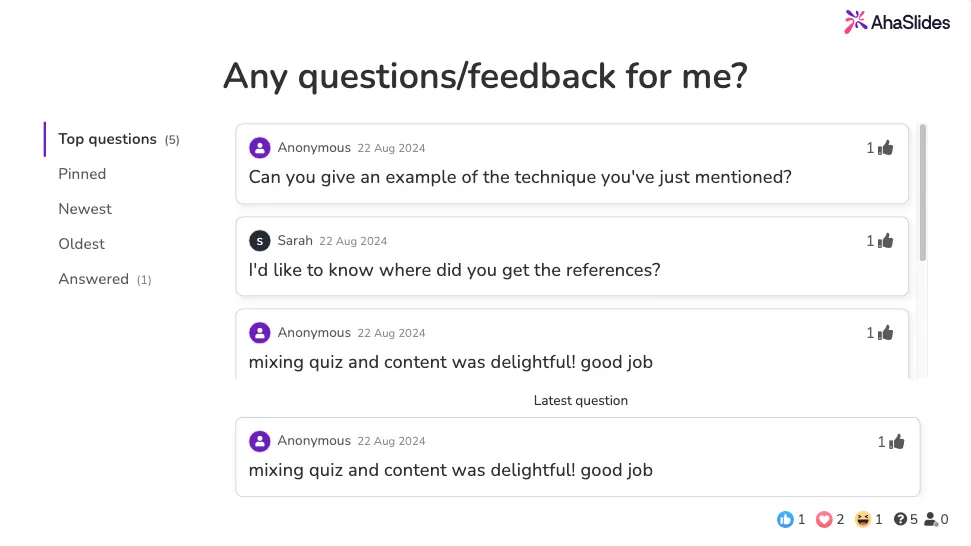
Leadership trasformazionale amplificata
La leadership trasformativa ha successo attraverso una comunicazione stimolante e la costruzione di un impegno emotivo verso visioni condivise. AhaSlides ti aiuta a creare presentazioni che coinvolgono cuori e menti, non solo trasmettono informazioni.
I modelli di presentazione della vision ti consentono di comunicare la tua direzione strategica con immagini accattivanti, elementi narrativi e componenti interattivi che stimolano l'impegno anziché l'ascolto passivo. Includi sondaggi per chiedere ai membri del team cosa li entusiasma di più della vision o quali preoccupazioni desiderano affrontare.
I workshop di definizione degli obiettivi diventano esperienze collaborative in cui tutti contribuiscono a definire obiettivi e parametri di successo attraverso attività interattive. Utilizzate scale per misurare i livelli di fiducia, nuvole di parole per catturare le sensazioni che si provano in caso di successo e sondaggi per creare consenso sulle priorità.
Le sessioni di allineamento del team traggono vantaggio da controlli regolari del polso utilizzando semplici reazioni emoji o scale di valutazione per valutare quanto le persone si sentano allineate con la direzione strategica e dove siano necessari ulteriori chiarimenti.
Crea contenuti stimolanti che non solo raccontino ma coinvolgano, utilizzando quiz interattivi per rafforzare i messaggi chiave o sfide per aiutare le persone ad applicare la tua visione ai loro ruoli specifici.
Strumenti di leadership per il coaching
Il coaching richiede feedback regolari, conversazioni sincere sullo sviluppo e il monitoraggio dei progressi nel tempo. Gli strumenti interattivi rendono queste conversazioni di coaching più produttive e meno intimidatorie.
I modelli di feedback individuali forniscono quadri strutturati per le discussioni sullo sviluppo, utilizzando scale di valutazione per valutare insieme le competenze, domande aperte per esplorare opportunità di crescita e strumenti interattivi di definizione degli obiettivi per definire piani di sviluppo in modo collaborativo.
Le sessioni di pianificazione dello sviluppo diventano più coinvolgenti quando si utilizzano strumenti visivi per mappare le capacità attuali, le competenze desiderate e il percorso da seguire per raggiungerle. Le attività interattive aiutano i coach a scoprire le proprie intuizioni, anziché vedersi imporre uno sviluppo.
I sondaggi di valutazione delle competenze forniscono una comprensione di base delle capacità attuali e possono essere ripetuti nel tempo per dimostrare la crescita. Constatare progressi tangibili rafforza il valore degli sforzi di sviluppo.
Le presentazioni che monitorano i progressi celebrano visibilmente la crescita, mostrando come competenze o prestazioni siano migliorate nel corso di settimane o mesi. I progressi visivi rafforzano la motivazione e dimostrano che il tuo investimento nel coaching sta dando i suoi frutti.
Supporto alla leadership situazionale
La leadership situazionale richiede di valutare la preparazione dei membri del team per compiti specifici e di adattare di conseguenza il proprio approccio. Strumenti interattivi aiutano a raccogliere le informazioni necessarie per queste valutazioni in modo efficiente.
Le valutazioni della preparazione del team utilizzano sondaggi rapidi o questionari per valutare i livelli di competenza e impegno prima di assegnare compiti o determinare il livello di supervisione da fornire. In questo modo, la valutazione si sposta dalle ipotesi ai dati.
Le valutazioni della matrice delle competenze creano mappe visive di chi può fare cosa e a quale livello di competenza, aiutandoti ad abbinare i compiti alle capacità e a identificare chiaramente le esigenze di sviluppo.
I controlli di adattabilità durante i progetti utilizzano semplici sondaggi a impulsi per valutare se l'attuale approccio alla leadership funziona o necessita di modifiche in base al modo in cui i membri del team lo stanno vivendo.
Applicazioni di leadership generale
Indipendentemente dal tuo stile di leadership principale, alcune funzionalità di AhaSlides supportano le attività di leadership fondamentali.
I quiz di autovalutazione dello stile di leadership aiutano te e i membri del tuo team a riflettere sulle tendenze naturali e sugli approcci preferiti, creando un linguaggio condiviso per discutere di leadership.
La raccolta di feedback a 360 gradi diventa meno minacciosa se condotta tramite sondaggi digitali anonimi che le persone compilano onestamente senza timore di ritorsioni.
I sondaggi sulla cultura del team valutano regolarmente il coinvolgimento, la sicurezza psicologica, la chiarezza e altri indicatori culturali, fornendo un segnale di allarme precoce quando il tuo approccio alla leadership non favorisce la salute del team.
I sondaggi sull'efficacia delle riunioni, da effettuare al termine delle riunioni di gruppo, raccolgono un feedback rapido sull'utilità delle riunioni, aiutandoti a migliorare costantemente la facilitazione.
Per cominciare
Esplora la libreria di modelli di AhaSlides per trovare formati predefiniti per molte di queste attività di leadership, personalizzali in base al tuo contesto specifico e alle esigenze del team e inizia a sperimentare approcci interattivi durante le tue normali attività di leadership.
Il bello di utilizzare strumenti interattivi è che creano una leadership basata sull'evidenza, anziché affidarsi esclusivamente all'intuizione. Raccoglierai dati su cosa funziona, cosa no e dove adattare il tuo approccio, diventando più efficace indipendentemente dallo stile di leadership che preferisci.
Conclusione: il tuo percorso di leadership continua
Gli stili di leadership non sono test di personalità che ti incasellano in categorie rigide, ma quadri di riferimento per comprendere i diversi approcci alla direzione, alla motivazione e allo sviluppo dei team. I dodici stili fondamentali che abbiamo esplorato offrono ciascuno punti di forza distinti, affrontano limiti specifici e si adattano a contesti particolari. Non esiste uno stile "migliore" universale, perché l'efficacia della leadership dipende interamente dall'adattamento del proprio approccio alle esigenze del team, al contesto organizzativo e alle sfide specifiche che si affrontano.
I leader di maggior successo non si affidano a un unico stile, ma sviluppano la flessibilità necessaria per adattarsi alle situazioni, pur rimanendo fedeli ai propri valori fondamentali e alla propria personalità. Che si tenda naturalmente all'ispirazione trasformativa, alla collaborazione democratica, al supporto altruistico o a un altro approccio, la chiave è una leadership intenzionale e consapevole, che sia al servizio del team e dell'organizzazione, piuttosto che del proprio ego.
Comprendere gli stili di leadership è solo l'inizio del tuo percorso di sviluppo. La vera arte della leadership sta nel conoscere profondamente se stessi, comprendere i membri del team come individui, interpretare le situazioni in modo accurato e avere la flessibilità di adattare il proprio approccio in base a esigenze reali piuttosto che ad abitudini o comodità. Questo richiede tempo, pratica consapevole, feedback onesti e un impegno autentico per l'apprendimento continuo.
Prenditi del tempo per riflettere onestamente sulle tue naturali tendenze alla leadership, utilizzando il modello di auto-riflessione che abbiamo esplorato. Raccogli feedback a 360 gradi dalle persone che guidi, dai tuoi colleghi e dal tuo manager per capire come viene effettivamente vissuta la tua leadership, non solo come la intendi. Impegnati a sviluppare uno o due stili di leadership specifici che rafforzino la tua efficacia complessiva e mettili in pratica deliberatamente in situazioni con rischi progressivamente più elevati.
I leader più efficaci non smettono mai di imparare, crescere e perfezionare il proprio approccio. Rimangono curiosi del loro impatto, umili riguardo ai propri limiti e impegnati a diventare collaboratori migliori per i loro team e le loro organizzazioni. Il tuo percorso di leadership è continuo, non una destinazione da raggiungere, ma un percorso da percorrere con intenzione, consapevolezza e dedizione verso coloro che hai il privilegio di guidare.
I tuoi prossimi passi
Inizia valutando onestamente il tuo attuale stile di leadership utilizzando i framework e le domande di riflessione presenti in questa guida. Non affidarti esclusivamente alla tua autopercezione, ma chiedi attivamente feedback a chi ha sperimentato direttamente la tua leadership.
Individua uno o due stili di leadership che desideri sviluppare ulteriormente, in base alle lacune tra il tuo approccio attuale e le esigenze del contesto. Concentra i tuoi sforzi di sviluppo piuttosto che cercare di padroneggiare tutto contemporaneamente.
Raccogli feedback costanti dal tuo team su come percepisce la tua leadership e su cosa si aspetta da te, in termini più o meno ampi. Crea canali sicuri per un contributo onesto, senza atteggiamenti difensivi o ritorsioni.
Esplora strumenti pratici come AhaSlides, che possono supportare il tuo approccio di leadership preferito attraverso un coinvolgimento interattivo, feedback in tempo reale e partecipazione inclusiva, indipendentemente dallo stile che stai sviluppando.
Valuta la possibilità di investire nello sviluppo formale della leadership attraverso corsi, coaching o programmi strutturati che offrano una guida esperta e responsabilità nel tuo percorso di crescita.
Soprattutto, guida con autenticità, flessibilità e un impegno genuino nel servire le persone e gli obiettivi che ti è stato affidato. La tua firma di leadership unica, sviluppata con attenzione e applicata con flessibilità, creerà l'impatto positivo che il tuo team e la tua organizzazione meritano.