
Teaching is rewarding work, but it is also demanding, and even the most committed teachers have weeks when their energy runs low. Teacher motivation matters as much as student motivation: a teacher who feels inspired, respected and supported brings that into every lesson. This guide covers five practical ways to keep teachers motivated, with ideas for individual teachers and for school leaders.
Why teacher motivation needs attention
The OECD's Teaching and Learning International Survey (TALIS 2024) found that almost nine in ten teachers are satisfied with their jobs overall, yet 19% say they experience stress "a lot" in their work. Only about 22% believe teachers are valued by society (OECD, Results from TALIS 2024). Teachers who do feel valued are less likely to think about leaving the profession within five years, so recognition is not a nice extra. It is part of keeping good teachers.
1. Get inspired: reconnect with your purpose
Intrinsic motivation, the drive that comes from within, is what carries teachers through difficult terms. When a poor teaching environment, heavy workload or a tough week leaves you drained, these habits help:
- Reflect on purpose and passion. Remind yourself why you chose teaching. Write down the moments you were proud of and keep them where you can see them.
- Focus on student growth. Shift attention from what you cannot control to the progress students make. A pupil finally grasping a hard idea is a powerful reward.
- Read and listen widely. An inspirational book for teachers or a motivational TED talk can bring fresh strategies and a new perspective.
- Keep a folder of encouragement. Save kind notes, emails and messages, and reread them on a low day.
2. Show respect and appreciation
Appreciation from students and parents is one of the most direct motivators. A short thank-you note can stay with a teacher for years. If you are wondering how to thank a teacher, a specific message works best, because it shows exactly what made a difference. Here are some examples students can adapt:
- "Thank you, Mrs Taylor! You made difficult ideas easy to understand."
- "You saw something in me that I did not see in myself."
- "I would not be where I am without you."
- "We have never seen your cape or mask, but we see your superpowers every day. Thank you for being a super teacher!"
Respect from school leaders matters just as much: asking teachers for their opinion before making decisions, protecting planning time and trusting their professional judgement all signal that their work is valued.
3. Build a culture of recognition
Being acknowledged for your contribution is a special moment, and recognition from the people around you is often more powerful than any reward. Schools and administrators can build this culture through:
- Teacher appreciation events and awards
- Shout-outs for specific achievements in staff meetings
- Invitations for students and parents to share their thanks
- Peer recognition, where colleagues nominate each other
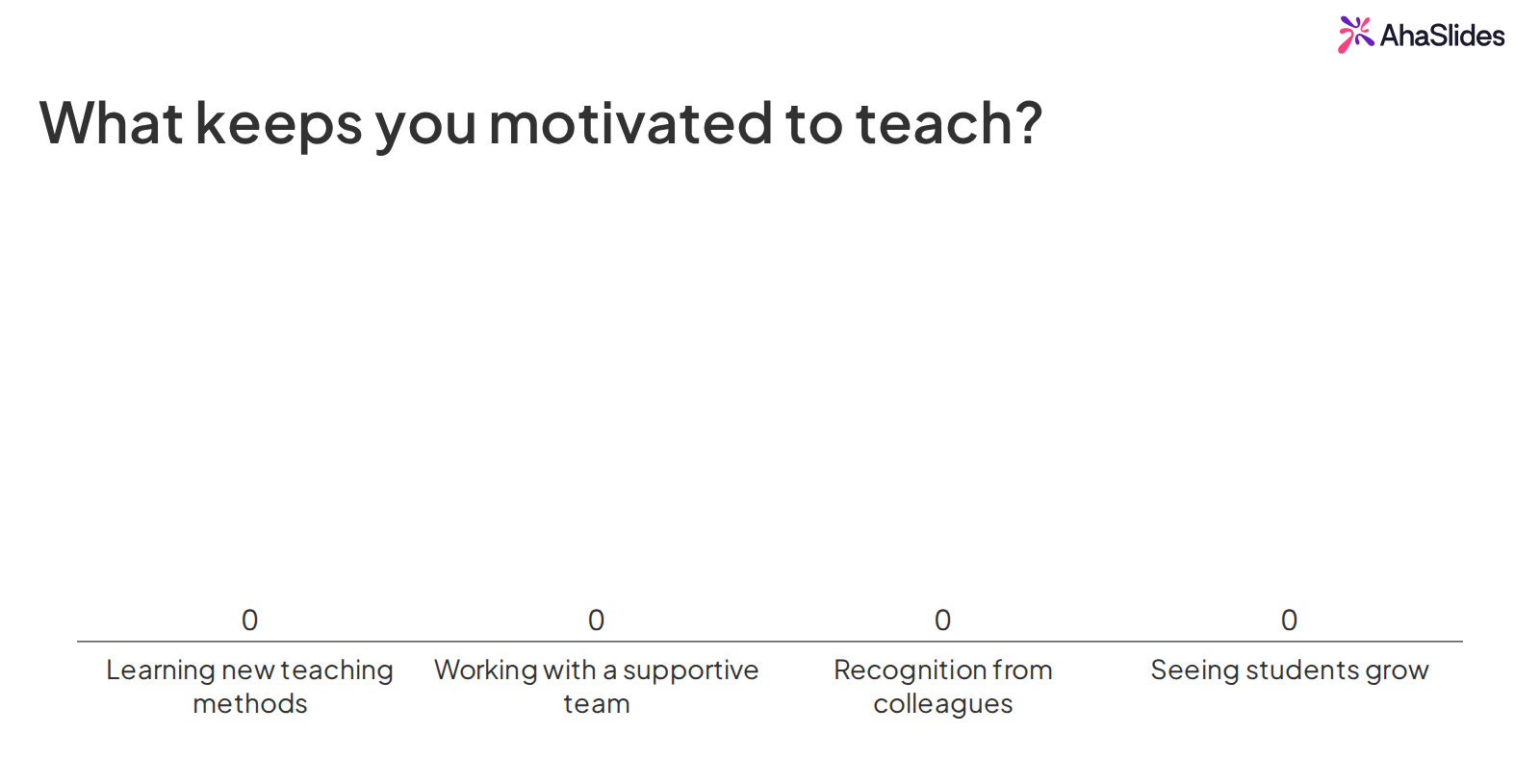
A quick way to see how recognised your staff actually feel is to ask them anonymously. With AhaSlides, you can run a short ψηφοφορία in a staff meeting, such as "What keeps you motivated to teach?", and see the results on screen straight away.
4. Keep learning and updating your practice
Teachers need to refresh their knowledge and skills regularly, from curriculum design and teaching methods to communication skills, classroom technology and giving feedback. Continuing to learn keeps teaching fresh and exciting, and it is what many motivated teachers do every day.
- Choose one new method to try each term, such as Gamification or a different way of giving feedback.
- Stay informed about social change and trends so lessons stay relevant to students' lives.
- Use quick, low-stakes checks such as live αινίγματα and short surveys to see what is working in class, then adjust.
5. Promote collaboration
Teachers who work together bring more innovation into the classroom. A collaborative team can brainstorm and tackle challenges such as student engagement, behaviour management and curriculum development more effectively than one person alone, because different viewpoints lead to creative solutions. Teachers who collaborate also tend to feel more supported and valued, which raises job satisfaction.
- Schedule regular time for teachers to plan and share resources together.
- Pair newer teachers with experienced mentors.
- Run short peer observations that focus on learning, not judgement.
- Χρήση quick icebreaker at the start of staff meetings to build trust.
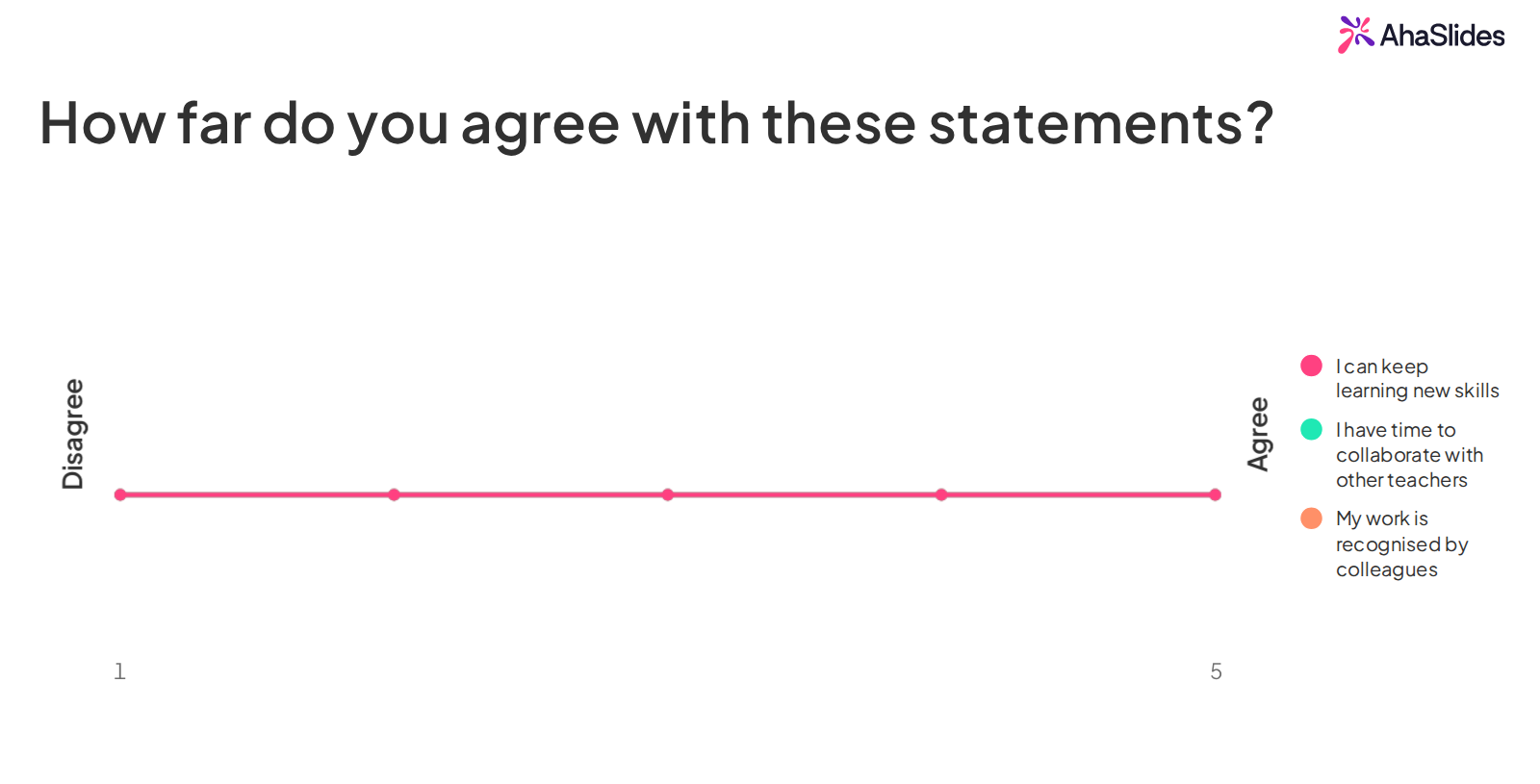
A rating scale is a simple way to check how supported a team feels. Ask staff how far they agree with statements about recognition, collaboration and chances to learn, and look at the average to decide where to focus first.
Βασικά καραβάνια
- Teacher motivation comes from purpose, respect, recognition, learning and collaboration, and a school can influence all five.
- Most teachers are satisfied with their jobs, but stress is common and few feel valued by society, so recognition matters.
- Ask your staff regularly with an anonymous poll or scale, then act on what they tell you.
Συχνές ερωτήσεις
Πώς ένας δάσκαλος έχει κίνητρα;
Teachers stay motivated when they know their efforts are appreciated and can see the difference they make. Reconnecting with your purpose, collecting thank-you notes, learning new methods and working with supportive colleagues all help. Few things sustain dedication like feeling respected in your work.
Ποιο είναι ένα παράδειγμα παρακίνησης στη διδασκαλία;
A good example is the satisfaction of seeing students develop day by day: higher grades on the next test, fewer missed lessons, or more questions asked in class. For many teachers, these small signs of progress are the most reliable source of motivation.
Τι παρακινεί τους εκπαιδευτικούς στην τριτοβάθμια εκπαίδευση;
Higher education differs from school, because the work centres on the subject and on research. For many lecturers and professors, the pursuit of knowledge, scholarly activity and the chance to guide students towards their own discoveries are strong motivators.
How can schools improve teacher motivation?
Schools can build recognition into routine practice, protect time for collaboration, fund professional learning and ask teachers for regular feedback. Short anonymous polls make it easy to find out what staff need.