
"The question game" is not one game but a family of them. In some you guess a secret by asking yes-or-no questions, in some you take turns asking each other personal questions, and in one you are not allowed to say anything that is not a question. All of them need nothing more than a group of people, which is why they turn up at parties, on long car journeys, in classrooms and in team meetings.
Below are nine ways to play, each with simple rules and example questions, plus tips for running a question game with a bigger group.
Жылдам фактілер
| сұрақ | жауап |
|---|---|
| Сізге қанша ойыншы қажет? | Two or more; most versions work best with 3 to 10 (the spy game needs at least 3) |
| Саған не қажет? | Nothing, although sticky notes, a timer or phones help for some versions |
| How long does a round take? | From 2 minutes (Name 5 Things) to about 45 minutes (the 36 questions) |
| Which version is best for strangers? | Icebreaker question games such as would you rather or this or that |
Why question games work
Question games are more than a way to pass the time. In a series of studies published in the Journal of Personality and Social Psychology, Huang and colleagues (2017) found that people who ask more questions, especially follow-up questions, are liked more by the people they talk to. In speed-dating conversations, people who asked more follow-up questions were more likely to have their partner agree to a second date. The researchers also found that people do not expect asking questions to make them more likeable, which is one reason a game that forces everyone to ask questions can be so useful.
1. The questions-only game
This is the most literal version of the question game: you may only speak in questions. It features in Tom Stoppard's 1966 play Rosencrantz and Guildenstern Are Dead, where the two title characters play it like a tennis match.
Қалай ойнауға:
- Two players face each other. The first asks any question, such as "Did you sleep well?"
- The other must reply straight away with another question, such as "Why do you ask?"
- A player commits a foul if they make a statement, hesitate, repeat a question that has already been asked, ask a rhetorical question or ask an unrelated one.
- Each foul gives your opponent a point. First to three points wins, then the winner takes on the next challenger.
2. 20 Сұрақтар
The classic guessing game. One player thinks of a person, place or thing, and everyone else has up to 20 yes-or-no questions to work out what it is.
Қалай ойнауға:
- The answerer picks a secret and says whether it is a person, place or thing.
- Players take turns asking questions that can be answered with "yes", "no" or "I don't know".
- If someone guesses correctly within 20 questions, they become the next answerer. If not, the answerer reveals the secret and goes again.
For example, if the secret is a giraffe, the questions might go: "Is it alive?" (yes), "Does it live in the wild?" (yes), "Is it bigger than a car?" (yes), "Does it live in Africa?" (yes), "Does it have a long neck?" (yes), "Is it a giraffe?" (yes). Six questions, and the player who guessed wins the round.
3. 21 Сұрақтар
Despite the similar name, 21 Questions is a getting-to-know-you game rather than a guessing game. Players take turns asking each other personal questions, and each player gets 21.
Қалай ойнауға:
- Decide the rules first: can players pass on a question, and are any topics off limits?
- Take turns asking and answering one question at a time.
- Ask a follow-up before moving on. It keeps the conversation going and, as the research above shows, makes you better company.
Questions to try:
- What is the best advice you have ever been given?
- What always makes you laugh, however many times you see it?
- How do you like to relax at the end of a long week?
- Describe a moment when you felt proud of yourself.
- What is your favourite comfort food?
- Which bad habit have you managed to break?
- If you could master one skill overnight, what would it be?
- What is the most spontaneous thing you have ever done?
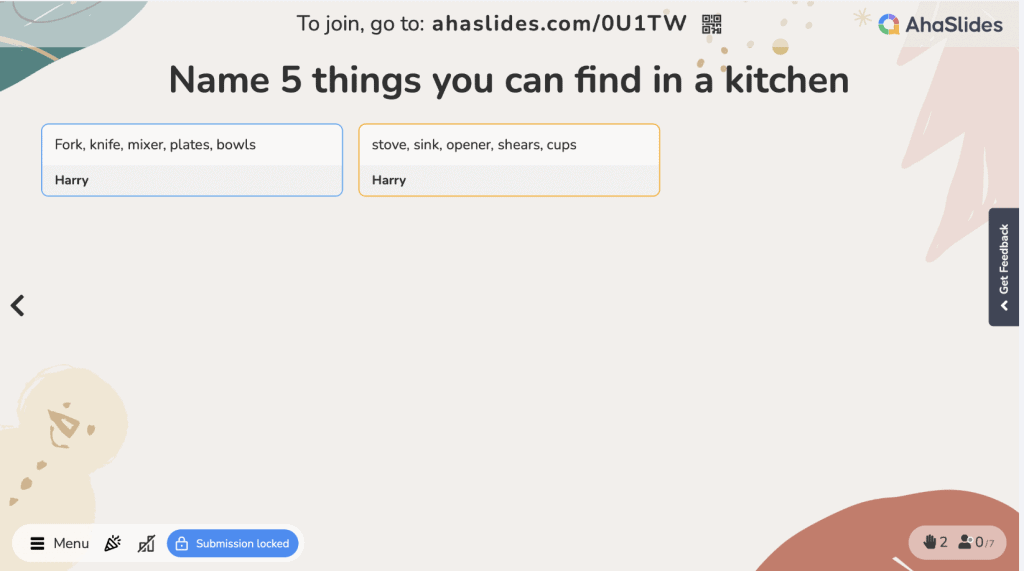
4. Name 5 Things
A fast-paced game where a player has a few seconds to name five things in a category. The categories are easy; the timer is what makes it hard.
Қалай ойнауға:
- One player reads a category and starts a timer (five to ten seconds is enough).
- The player in the hot seat names five things before time runs out.
- Score a point for each valid answer, then pass the hot seat on.
Categories to try:
- Асханада табуға болатын 5 нәрсе
- Аяғыңызға киюге болатын 5 нәрсе
- Қызыл түсті 5 зат
- Дөңгелек 5 зат
- Кітапханадан табуға болатын 5 нәрсе
- Ұша алатын 5 нәрсе
- 5 ойдан шығарылған кейіпкер
- 5 things that start with the letter S
5. The forehead game
Also known as "Who am I?", this is 20 Questions turned around: you are the one with the secret, but you do not know what it is.
Қалай ойнауға:
- Each player writes a famous person, animal or object on a sticky note and sticks it on someone else's forehead without showing them.
- On your turn, ask the group yes-or-no questions about the word on your own forehead.
- Keep asking while the answers are "yes"; a "no" passes the turn on. The first player to guess their word wins.
For example: "Am I a person?" (yes), "Am I alive?" (no), and the turn passes. Next turn: "Am I a scientist?" (yes), "Did I write about evolution?" (yes), "Am I Charles Darwin?" (yes).
6. The spy game
Inspired by the party game Spyfall, this version mixes questions with bluffing. Everyone except one player knows a secret location; the spy has to work out where they are without being caught.
Қалай ойнауға:
- Deal a card or send a message to each player with the same location (for example, "a hospital"). One player's card just says "spy".
- Players take turns asking each other questions about the location, such as "What are you wearing today?" or "How long have you been here?"
- Answers must be vague enough not to give the location away to the spy, but specific enough to prove you are not the spy.
- At any point a player can call a vote on who the spy is. The spy can also stop the game to guess the location.
Good question types: questions about routine ("What do you usually do here?"), about people ("Who else is here with you?") and scenarios ("What would you do if the lights went out?").
7. The newlywed shoe game
Popular at weddings and anniversaries. The couple sit back to back, each holding one of their own shoes and one of their partner's, and raise the shoe of whoever the answer describes. Our аяқ киім ойынының сұрақтары have plenty more.
Questions to ask the couple:
- Бірінші қадамды кім жасады?
- Жақсы аспаз кім?
- Who is more romantic?
- Who apologises first after an argument?
- Жақсы биші кім?
- Who is more organised?
- Who is more likely to plan a surprise?
- Who is more spontaneous?
8. Icebreaker question games
Short, light question games are the easiest way to warm up a group of people who do not know each other well. Four favourites:
Would you rather:
- Would you rather travel to the past or the future?
- Сізге көбірек уақыт немесе көбірек ақша қажет пе?
- Would you rather keep your first name or choose a new one?
Басқа идеялар: күлкілі сұрақтар қоюды қалайсыз.
Never have I ever:
- Мен ешқашан сүйек сындырған емеспін.
- Never have I ever searched my own name online.
- Never have I ever travelled on my own.
Басқа идеялар: Менде ешқашан сұрақ болған емес.
This or that:
- Ойнату тізімдері немесе подкасттар?
- Trainers or slippers?
- Ерте құс немесе түнгі үкі?
Басқа идеялар: осы немесе басқа сұрақтар.

Who is most likely to:
- Who is most likely to forget a friend's birthday?
- Кім миллионер болу ықтимал?
- Who is most likely to appear on a reality TV show?
- Who is most likely to walk past a celebrity without noticing?
- Кім көп үй жануарларына ие болуы мүмкін?
Басқа идеялар: сұрақтар қоюы ықтимал.
9. The 36 questions
The deepest question game on this list. Psychologist Arthur Aron and colleagues designed 36 questions, in three sets, to build closeness between two people. Greater Good in Action, from UC Berkeley's Greater Good Science Center, describes how to use them with friends, family or colleagues, not only as the "fall in love" exercise they became famous for.
Қалай ойнауға:
- Set aside about 45 minutes with one other person, face to face.
- Take turns answering the questions in Set I, swapping who goes first each time.
- After a third of your time, move on to Set II, then Set III. Each set is more personal than the last.
The first set opens with questions such as "Given the choice of anyone in the world, whom would you want as a dinner guest?" and "What would constitute a 'perfect' day for you?" Make sure both of you are comfortable sharing before you start.
How to play the question game with a big group
Most question games are designed for a small circle. With a class, a team meeting or a virtual call, a few changes stop the loudest people doing all the talking:
- Pick who goes next at random. A айналдыру дөңгелегі with everyone's names decides who answers the next question, so no one feels singled out.
- Let everyone answer at once. For Name 5 Things or 21 Questions, collect written answers on an open-ended slide and read out the best ones.
- Vote instead of shouting. Run would you rather, this or that and most likely to as a live сауалнама, so the whole room answers from their phones.
- Take questions anonymously. An анонимді сұрақ-жауап lets people send in questions without putting their name to them.
- Keep score for trivia. If your question game is a quiz, the викторина жасаушы scores answers and shows a leaderboard between rounds.

For more ways to get a group talking, see our мұз жарғыш сұрақтар және ойындармен танысу.
Жиі Қойылатын Сұрақтар
What is the difference between 20 Questions and 21 Questions?
20 Questions is a guessing game: players ask yes-or-no questions to identify a secret person, place or thing. 21 Questions is a conversation game: players take turns asking each other personal questions to get to know each other.
What is a good question game for work?
Keep it light and optional. This or that, would you rather and Name 5 Things work well in meetings because nobody has to share anything personal. Save the deeper formats, such as the 36 questions, for pairs who have chosen to take part.
How do you make a question game more fun?
Add a timer, keep score, and ask a follow-up question whenever an answer sounds interesting. Setting a few ground rules at the start, such as "you can always pass", also helps people relax and join in.