
Employee recognition examples range from a quick thank-you in a meeting to a day off work. What they have in common is that people can see what they did well and that someone noticed. This guide covers six types of recognition, seven examples you can copy this quarter, sample wording for a recognition message and a way to run recognition live with your team.
Why employee recognition matters
Recognition is not a nice extra. According to "Gallup", employees who do not feel adequately recognised are twice as likely to say they will quit in the next year, and only one in three US workers strongly agree they received recognition or praise for good work in the past seven days. "Gallup" also finds that the most effective recognition is honest, authentic and individualised to how each employee wants to be recognised.
Naujausi Gallup research published in September 2024 found that well-recognised employees were 45% less likely to have left after two years, and that only 22% of employees say they get the right amount of recognition for their work.
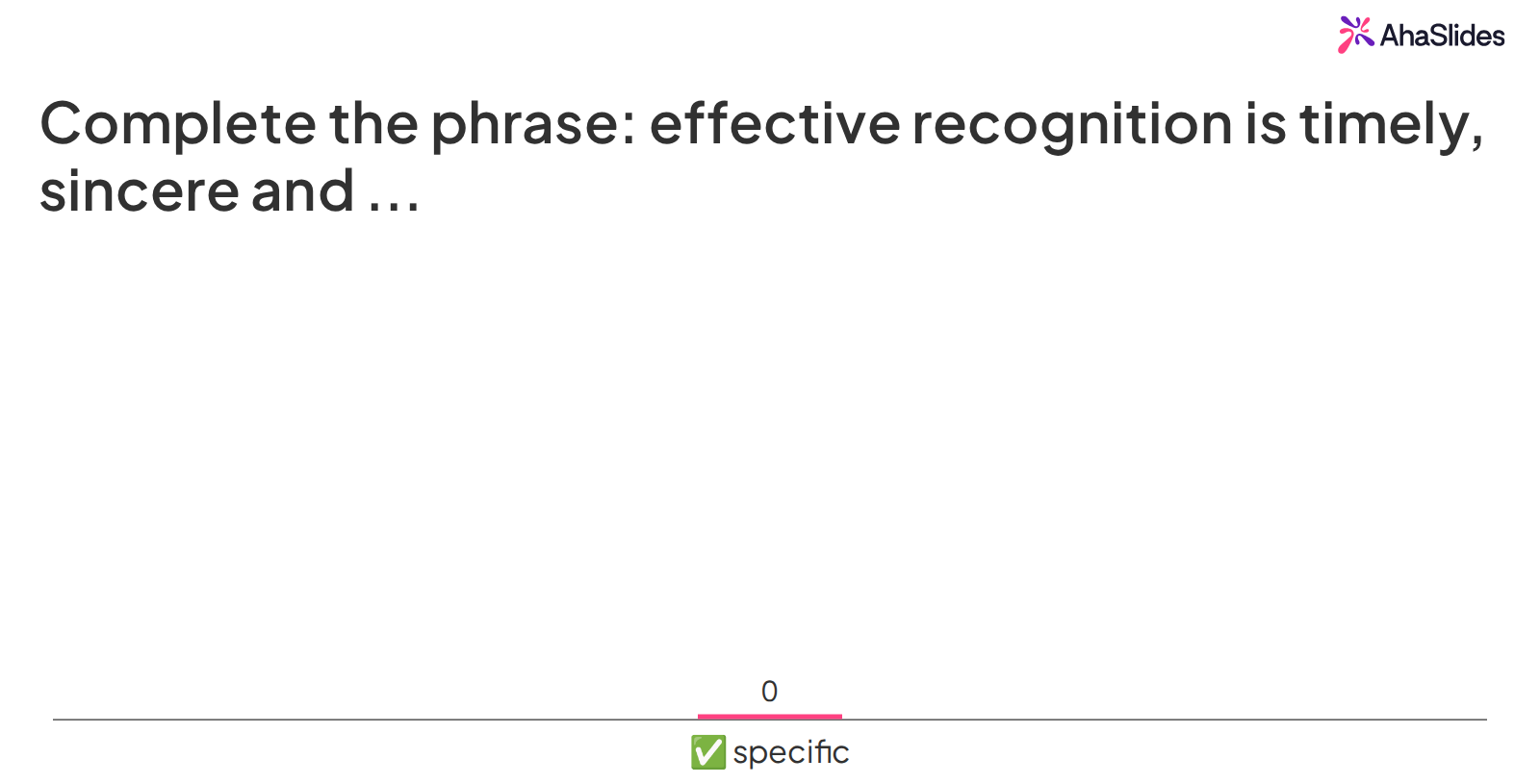
So the aim is not to hand out more rewards. It is to make recognition specific, sincere and easy to give. For related ideas, see our guides to komandos formavimo veikla bei „ledlaužio“ žaidimai.
Six types of employee recognition
Most programmes mix several of these. Different people prefer different types, so a mix tends to land better than one fixed approach.
- Verbal acknowledgement: praise in a one-to-one, a team meeting or a company call. It costs nothing and works best when you name the specific action.
- Written recognition: emails, handwritten notes or messages in a team chat. People can re-read them later.
- Tangible rewards: gift cards, merchandise, trophies or plaques that give a physical sign of thanks.
- Employee of the month programmes: a structured award for standout work, sometimes with perks such as a gift or an extra afternoon off.
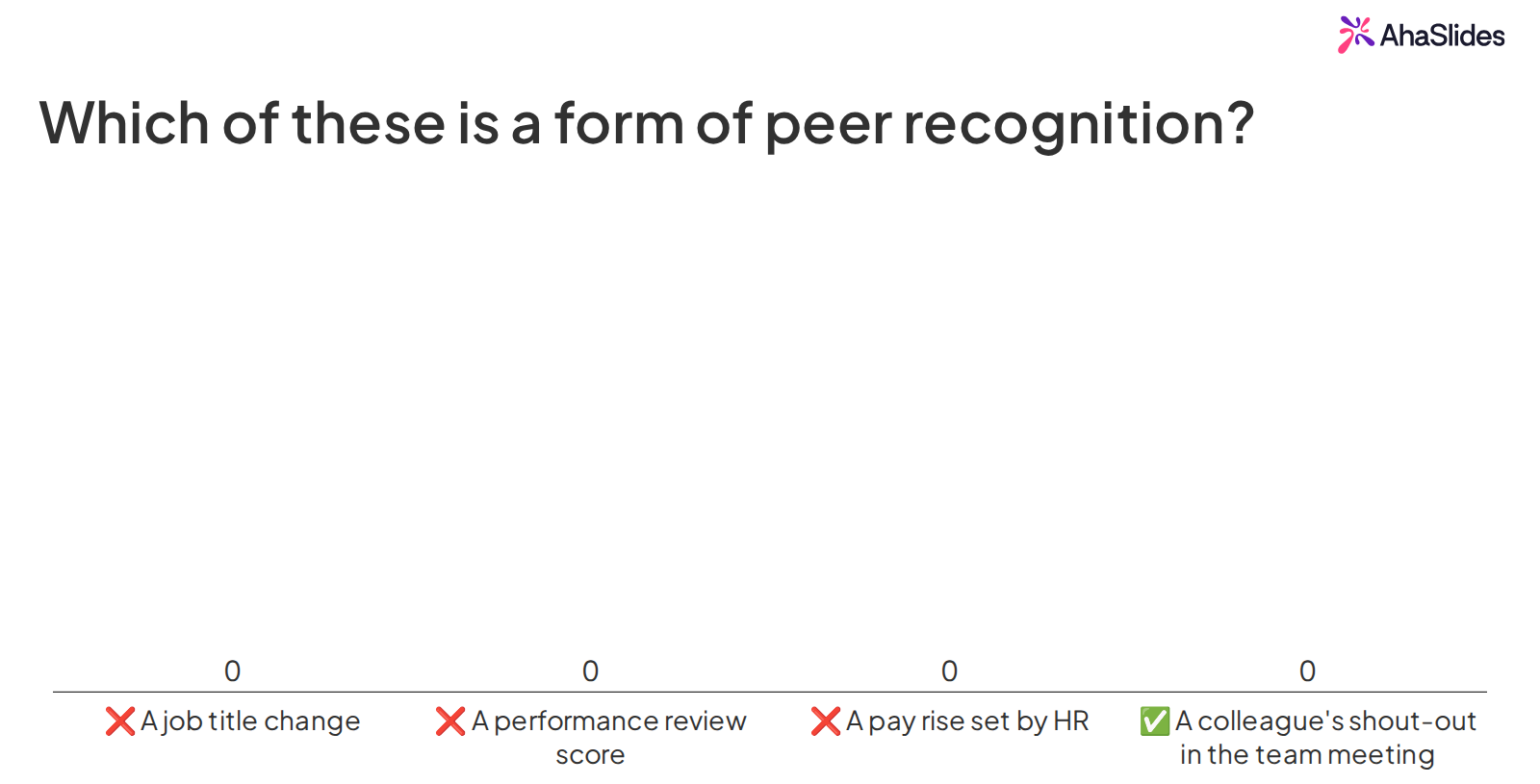
- Peer recognition: colleagues thank one another through shout-outs, thank-you cards or a shared channel.
- Longevity recognition: service awards that mark work anniversaries and years of commitment.
Seven employee recognition examples you can use
1. A specific thank you
The most common recognition is also the one many managers do badly. A good thank you says what the person did and what it changed.
Kaip tai padaryti: Name the action and its result: “Thanks for staying late on the client deck. Because of it we sent the proposal a day early.” Do it publicly when the person is comfortable with that, and in private when they are not.
Saugokitės: Vague praise such as “great job”. It is pleasant but easy to forget.
2. A recognition email from a leader
A short message from a senior leader, copied to the team, puts a person’s contribution on the record.
Kaip tai padaryti: Keep it to three or four sentences. Say what happened, who it helped and why it matters to the company’s goals. Send it the same week, not at the end of the quarter.
Saugokitės: Sending the same template to everyone. People spot a copy-and-paste message immediately.
Here is a short recognition message you can adapt:
Hi Priya, thank you for leading the onboarding rewrite. New starters now reach their first project two days sooner, and three managers have already told me how much easier it has made their first week. This is a great example of the clear, practical thinking we want more of.
3. A monthly wins bulletin
A short newsletter or channel post that lists the month’s wins gives credit to people whose work is rarely seen.
Kaip tai padaryti: Collect nominations from team members, add a line or two on each win and publish on the same day every month. Rotate who writes it so it does not become one person’s job.
Saugokitės: Only celebrating sales or headline projects. Include support, operations and behind-the-scenes work.
4. Employee of the quarter
A quarterly award is more meaningful than a monthly one because it covers a longer stretch of work and leaves room for people whose steady contribution never makes a single big month.
Kaip tai padaryti: Publish the criteria, ask peers to nominate and share the reasons for the choice. A small gift or a lunch with a leader is usually enough.
Saugokitės: A popularity contest. Tie the award to behaviours and results that everyone can see and understand.
5. Lankstus darbas
Control over when and where someone works can feel like recognition because it signals trust.
Kaip tai padaryti: Offer a one-off perk such as a Friday afternoon off or a week of flexible start times, or give top performers more say over their schedule.
Saugokitės: Making it depend on the role. Frontline staff can rarely work remotely, so offer shift swaps or choice of shifts instead.
6. A digital wall of fame
A shared page or channel where anyone can post thanks and achievements, visible to the whole company. It works for remote and hybrid teams where people do not see each other work.
Kaip tai padaryti: Create a dedicated channel or board, ask everyone to post one shout-out a week and have leaders add their own. A live žodžių debesis or open-ended slide in a team meeting is a quick way to collect shout-outs from the whole room.
Saugokitės: Letting it go quiet. Add a monthly reminder and highlight a few posts in the next all-hands.
7. An extra paid day off
A paid day off is a tangible reward that is simple to administer and easy to understand.
Kaip tai padaryti: Give it for a big milestone, such as shipping a major project, and let the person choose the day. Make it clear it is separate from normal leave.
Saugokitės: Making the recognised person catch up on the lost day. A day off should be a real day off.
Turn recognition into a live team moment
Recognition sticks when people feel part of it. A short quiz at a team meeting or all-hands can reinforce your recognition culture, remind people what good recognition looks like, and give everyone a way to take part.
- Greitai paleiskite tiesioginė viktorina on your recognition guidelines, such as the difference between specific and generic praise.
- Use a word cloud or open-ended slide so everyone can add a word of thanks for a colleague, then read the best ones aloud.
- Use team play and a leaderboard to add some friendly competition without pitting people against each other.
Tips for better employee recognition
- Būk specifiškas. State what the person did and what difference it made.
- Būkite laiku. Recognise work within a few days, while it is fresh.
- Padarykite tai asmeniška. Ask people how they like to be recognised: some love applause, others prefer a private note.
- Spread it around. Look beyond the loudest or most visible people in the team.
- Let peers do it too. Recognition from colleagues often means as much as recognition from managers.
Dažnai užduodami klausimai
What are some examples of employee recognition?
Common examples include a specific thank you, a recognition email from a leader, a monthly wins bulletin, an employee of the quarter award, flexible working, a digital wall of fame and an extra paid day off.
How do you write a good employee recognition message?
Follow four steps:
- Name the person.
- Say exactly what they did.
- Explain the result or impact.
- Connect it to a company value or goal, then say thank you.
Keep it short and use your own words so it sounds sincere.
How often should you recognise employees?
There is no single right number, but the "Gallup" statistic that only one in three US workers strongly agree they were recognised in the past week suggests that most workplaces can do more. Aim for something regular and low-effort rather than occasional and elaborate.
What is peer recognition?
Peer recognition is when colleagues, not managers, thank one another for good work. It works through shout-outs, thank-you notes or a shared channel, and it builds trust and collaboration across a team.
Svarbiausi paėmimai
- Recognition works best when it is specific, sincere and individualised.
- Mix several types: verbal, written, tangible and peer-to-peer.
- Make recognition easy to give, so it happens often.
- Use a short live quiz or word cloud to make recognition a shared team moment.