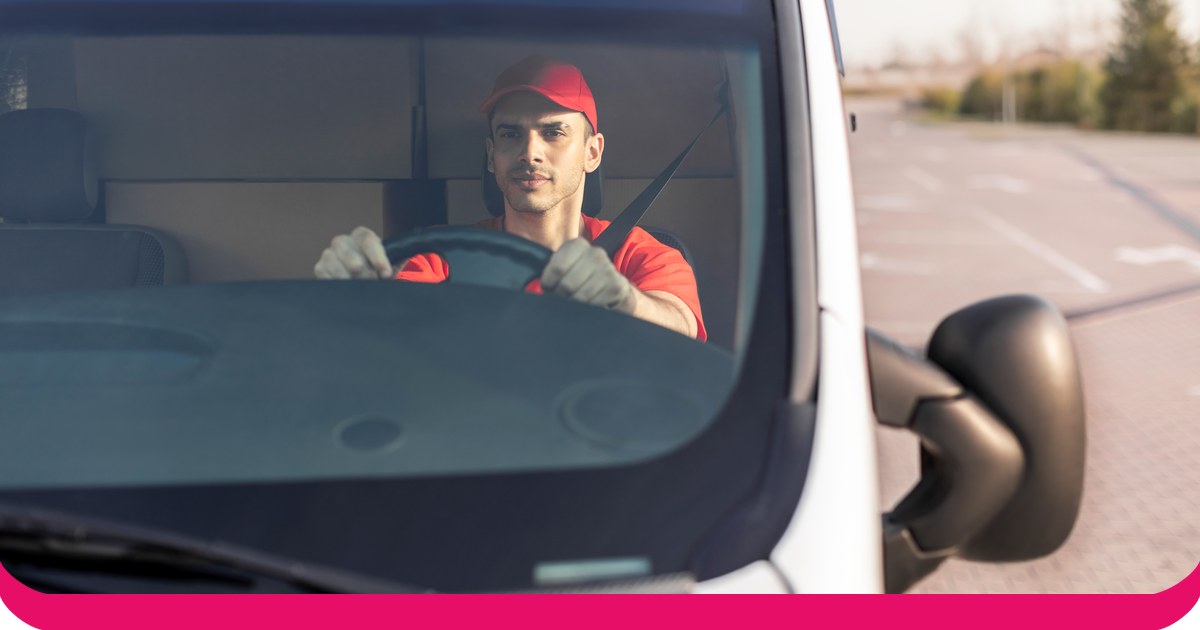
In 2024, 3,208 people were killed in crashes involving a distracted driver in the US, and an estimated 315,167 were injured (NHTSA, Distracted Driving in 2024). If driving is part of your job, or you train people who drive for work, these 15 tips give you habits to practise and a ready quiz to check them. They come in 3 sets of 5, with a one-line reason for each. These are tips, not legal advice or a replacement for your fleet's own driver training.
Why work drivers need their own list
Driving for work is a high-risk part of many jobs. The US National Institute for Occupational Safety and Health (NIOSH) reports that more than 21,000 workers died in a work-related motor vehicle crash from 2011 to 2022, 35% of all work-related deaths (NIOSH, Motor vehicle safety, read via the Internet Archive copy). It also says the type of company or job does not matter.
Work drivers have more pressure than most: a delivery window, a customer waiting, a phone that rings with the next job. Defensive driving means driving to expect other people's mistakes and leaving yourself time and space to react. Every tip below is a habit that buys you one or the other.
Kā izmantot šo sarakstu
Read one set at a time. Each tip is a habit, so the aim is to practise it until it needs no thought, not to memorise 15 rules. A supervisor can take a set to a toolbox talk, ask drivers which tip they already follow and which they skip, and agree one habit to change that week. A driver can use the same list as a self-check before a long shift. Where a tip depends on your vehicle or your fleet's rules, your own policy comes first.
Set 1: before you set off (tips 1 to 5)
- Plan the route. Know the roads, the stops and the parking before you move, so you are not working it out at the wheel.
- Check tyres, lights and mirrors. A 60-second walk round the vehicle finds the problem that would otherwise find you on the road.
- Adjust your seat and mirrors. Set them for you every time, because a shared vehicle is rarely left as you need it.
- Set the phone and navigation before you move. Put the destination in, pick the music or the podcast, and silence notifications. NHTSA counts adjusting the radio or climate controls as distraction too, not only phones.
- Atvēliet laiku. A late start is a common reason people speed, rush a junction or skip a check.
Our pick: tip 4. Phone, navigation and controls set before you move. NHTSA reports that 8% of fatal crashes in 2024 were reported as distraction-affected, and setting up before you move is one part of that risk a driver can remove before the engine is on.
Set 2: on the road (tips 6 to 10)
- Keep a gap. Leave more room in front than feels necessary, and more again when it is wet, so you can stop without braking hard.
- Scan ahead. Look well beyond the car in front, at junctions, brake lights and pedestrians, so a hazard is never a surprise.
- Manage your speed to the conditions. The limit is a ceiling. Slow down for rain, roadworks, narrow streets and poor visibility.
- Check your mirrors often. Know who is beside and behind you before you need to move, brake or turn.
- Be seen. Use your lights and indicators early, and do not assume another driver has seen you.
Our pick: tip 7, scan ahead. It buys time, and time is what every other tip on this list is trying to give you.
Set 3: when things go wrong (tips 11 to 15)
- Adjust for weather. In rain, fog, ice or glare, slow down and increase your gap before conditions force you to. For more cold-weather rules, see winter driving safety tips for employees.
- Stop when you are tired. Fatigue can slow reactions without warning. Pull over somewhere safe, rest, and tell your supervisor if the schedule left no room for it.
- Handle a tailgater by making room. Do not speed up or brake to teach them a lesson. Ease off, increase your own gap ahead and let them pass when it is safe.
- Report every near miss. A near miss is a crash that did not happen yet. Tell your supervisor the same day, so the cause gets fixed and not forgotten.
- Know what to do after a crash. Make the scene safe, call the emergency services if anyone is hurt, and report it to your employer. Follow your own fleet's procedure.
Our pick: tip 14. Reporting every near miss costs a few minutes, and it is the only way a fleet learns what went wrong before someone is hurt.
What the law says about phones
The phone rules in US federal law cover commercial motor vehicle drivers only. Under CFR 49 392.80, no driver shall engage in texting while driving, and under CFR 49 392.82, no driver shall use a hand-held mobile telephone while driving a commercial motor vehicle. Check your own country and state for other drivers.
Format: a 10-question toolbox quiz
A quiz turns the list into a habit check. Mix scenario questions ("A van is tailgating you on a wet road. What do you do?") with tip-matching ("Which tip stops a near miss being repeated?"). Ten questions run in about 10 minutes, which fits a toolbox talk. Three samples to start:
- Scenārijs. You are running 15 minutes late and the navigation is not set. What is the safest first step? Atbilde: Stop somewhere safe, set it, then move.
- Tip-matching. Which habit gives you the most time to react? Atbilde: Scanning well ahead.
- Scenārijs. You nearly hit a cyclist at a junction, but nothing happened. What do you do? Atbilde: Report it to your supervisor the same day.
Veidi, kā vadīt šo apmācību grupai
A talk works better when drivers answer as well as listen. Build each slide from this post's tips.
- Izvēlieties atbildi: put the scenario quiz on slides and turn on the leaderboard.
- Vārdu mākonis: "What distracts you most when you drive?" The biggest word is your first conversation.
- Vērtēšanas skala: "How often do you check your mirrors?" Rate 1 to 5, then ask the lowest scorers why.
- Atvērts, anonīms: "Describe a near miss from this month." People write what they would not say in front of the room.
Swap in your own routes, vehicles and near misses so the slides match what your drivers see.
Tips for running the session
Run it before a shift, with drivers who share the same routes, and keep it to one set at a time so there is room for discussion. Open with the 3,208 figure from NHTSA, then pick the set that fits your fleet's real near misses. Close with the 8% figure for fatal crashes, and ask each driver which distraction they will remove first. Track who took part, using kā izsekot darbinieku apmācību pabeigšanai, and pair this list with Darba drošības tēmas sarunām par instrumentu komplektu.
FAQ
What is defensive driving?
Driving to anticipate other people's mistakes and leave yourself time and space to react. It is a set of habits, such as scanning ahead and keeping a gap, rather than a single technique.
Is hands-free calling allowed for work drivers?
For commercial motor vehicle drivers, hand-held phone use while driving is banned under CFR 49 392.82, and texting under CFR 49 392.80. Check your own country and state for other drivers, and follow your employer's policy.
How much does distraction cost lives?
In 2024, NHTSA reports 3,208 people killed in crashes involving a distracted driver, and 8% of fatal crashes were distraction-affected (DOT HS 813 790). Distraction includes eating, talking to passengers and adjusting controls, as well as phones.
Do tips replace formal training?
No. They support a fleet's driver training and give supervisors something to practise between formal sessions.
What should I do after a near miss?
Report it to your supervisor the same day. A near miss shows a cause that could hurt someone next time, so reporting it is how it gets fixed.
Kur sākt
Pick one tip from each set, practise it for a week and ask your drivers which one made the most difference. Then run the quiz at your next toolbox talk.