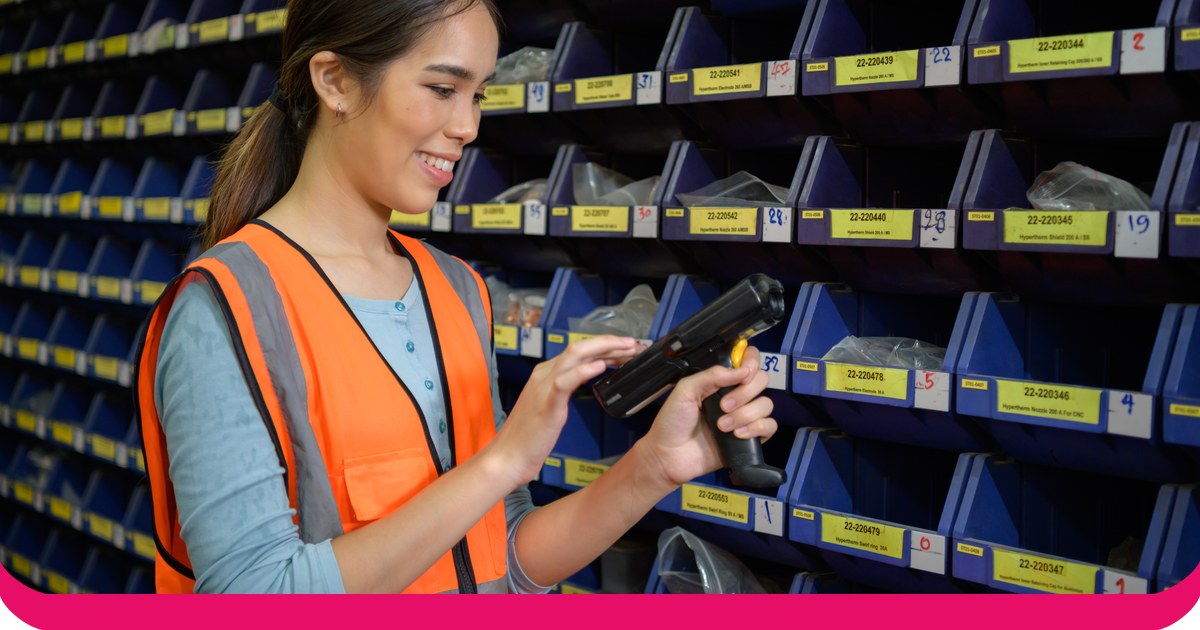
Dalam ASCM Insights article on inventory discrepancy inquiries, Britt Lowry (first published in APICS Magazine, August 2018) describes the usual pattern: a discrepancy found in a count typically ends in a correction, while real root-cause analysis happens less often, and she recommends doing it right after the discrepancy occurs. Cycle count root cause training closes that gap: it teaches people to find out why the count differs before they change the number.
Take a count that finds 12 units on the system and 9 on the shelf. If the counter posts a minus 3 adjustment and moves on, the report turns green and the cause stays hidden. Next month the same location is out again, because the real problem was a receiving scan that nobody looked at.
This guide shows logistics training managers and warehouse or dispatch supervisors how to build cycle count root cause training around one task: investigating a variance with traceable evidence before anyone adjusts a number. It covers a short diagnosis, practice with feedback, a worked case with a retry, a scored rubric and a transfer check. The case and rubric are illustrations, so ask an inventory control specialist to review them against your own procedures before anyone is scored.
fakta Pantas
| Soalan | Jawapan pendek |
|---|---|
| Apa yang anda latih? | Investigating a count variance with traceable evidence, then choosing a corrective action. |
| Apa yang didahulukan? | Checking procedures, system access and staffing, because training cannot fix those. |
| Bagaimana anda mempraktikkannya? | Realistic variance cases with feedback on each decision. |
| Bagaimana anda menjaringkannya? | A 0 to 2 rubric for task execution, reasoning and boundaries, with critical errors defined separately. |
| Bagaimana anda menyemak pemindahan? | A new, unseen case, then a supervised investigation on the floor. |
| Apa yang tidak boleh diperbaiki oleh latihan? | Missing scan discipline rules, no access to transaction history, and no time to investigate. |
1. Huraikan masalah prestasi
Start from the job. When a count differs from the system, a person has to do something before the adjustment: pull the transaction history for that item and location, check the last receipts, picks and moves, look for a mis-scan or a misplaced pallet, decide the most likely cause, and record the evidence that supports it. Only then should they adjust, and they should write down the cause beside the adjustment.
The opening example is a repeated variance on one pick face. Each adjustment is small, so each looks harmless, but together they hide a recurring scanning or receiving error. Do not assume the cause is theft. An unexplained variance may have a process cause that evidence can find, and treating every one as theft teaches people to stop looking.
2. Diagnosis jurang pembelajaran dan konteks
Compare the task with how your people are trained and tested today. A quiz that asks "What is a cycle count?" checks recall. It does not show whether someone can read a transaction history, form a hypothesis and rule out the alternatives. Investigating and judging which cause is most likely are higher-order demands than recalling, and they need practice with real cases. Our guide to memadankan aktiviti pembelajaran dengan taksonomi Bloom explains how to read the demand of a task.
Then check the causes that training will not fix:
- Prosedur. Is there a written rule for when a variance needs investigation and who approves an adjustment?
- Alat. Can the team see the transaction history for an item and location without asking IT?
- Kakitangan. Is there time in the shift to investigate, or are counters measured only on how many locations they close?
- Galakan. Does a "clean" report earn praise, so that adjusting without a note is the safe choice?
- Amalan. Has anyone rehearsed an investigation with feedback?
Only the last is a plain training gap. Name the others to the sponsors and agree an owner for each before you build content.
3. Reka bentuk persediaan dan amalan yang bertujuan
Tiga lapisan, setiap satu dengan tugasnya sendiri.
Persediaan: semak prasyarat. Give a short diagnostic on the terms and tools the task needs: what a cycle count is, what a reason code is, where the transaction history lives and which movements can create a variance (a receiving scan, a pick confirmation, a put-away to the wrong slot, a unit-of-measure mismatch). A recall check confirms that prerequisites are in place and nothing more. Do not report it as capability. Self-paced study suits this layer, because people arrive with different amounts of experience.
Practice: variance cases with feedback tied to decisions. Give the learner a variance and a small evidence pack, such as a transaction history, a receiving record and a location map. Ask which cause they think is most likely, which evidence supports it and what they would check next. Feedback should name the specific choice: "You adjusted before checking the last receipt" teaches more than "Try again". Our guide to mereka bentuk amalan interaktif dengan maklum balas yang berguna pergi lebih jauh.
Review and transfer: discuss one ambiguous case. Live input from a supervisor adds most where two causes both fit the evidence, for example a mis-scan at receiving against a put-away to the wrong slot. Asynchronous review is enough for clear checks against an agreed answer. Our guide to menghubungkan persediaan kendiri dengan bimbingan langsung menunjukkan cara untuk membahagikan kedua-duanya.
If your retail or store teams face a similar skill, our guides to moving loss-prevention training from policy reading to analysis dan analysing inventory and demand-forecasting models cover neighbouring tasks.
4. Satu kes yang telah diusahakan dengan maklum balas dan percubaan semula
Illustrative. An inventory control specialist should validate the case and the answer criteria before use.
Kes itu. A pick-face location for a case-packed item has shown a shortage on its last three cycle counts: minus 3, minus 2 and minus 3 units. Each time, the counter adjusted the stock down. This time you also have the evidence pack: three receipts in the past six weeks, one of which was scanned twice on the same day by different handheld devices, and no pick exceptions logged.
Tugas itu. Terangkan keputusan tersebut, sebutkan bukti yang anda gunakan dan nyatakan maklumat atau sokongan lanjut yang anda perlukan.
Percubaan pertama. "It is probably shrinkage, so I would adjust it again and flag the location for a security check." The reviewer asks which evidence points to theft, what the double scan on the receipt shows, and why the earlier two adjustments were not examined. The learner cannot answer the first, and had not read the receipt record.
Maklum balas dan cuba semula. The reviewer points to the duplicate receipt scan and the fact that the shortages follow receipts, then asks the learner to redo the response.
Percubaan yang lebih kuat. The learner states the most likely cause: a duplicate receiving scan that inflated the system quantity, so each count finds fewer units than the system expects. They cite the double scan and the pattern after receipts, and rule out picking because no exceptions were logged. They propose a corrective action: hold the adjustment until the receipt is checked against the delivery note, correct the receipt record, record the cause against the adjustment and ask the receiving lead to check how the duplicate was possible. They say what they still need: whether the second handheld was in use at the dock that day, and who owns the receiving procedure.
Mengapa setiap respons boleh dipertahankan atau tidak lengkap. Judge against the approved criteria, not the reviewer's taste. The first attempt jumps to a cause with no supporting evidence and keeps the pattern going, so it counts as a critical error. The second names a cause, cites evidence and escalates what it cannot fix. Add a variant in which the learner finds no cause and the evidence stays ambiguous, and ask the group when it is acceptable to adjust with a note that the cause is unknown.
5. Menilai keupayaan dan merancang pemindahan
Nilaikan setiap kriteria dari 0 hingga 2. Sesuaikan kriteria dengan pakar anda: rubrik ini merupakan titik permulaan yang dicadangkan, bukan standard kesediaan yang disahkan.
| kriteria | 0: tiada atau tidak disokong | 1: sebahagian, dengan peninggalan | 2: lengkap dan wajar |
|---|---|---|---|
| Pelaksanaan tugas | Adjusts without investigating. | Checks some records but not all relevant ones. | Investigates with traceable evidence and records the action and the evidence behind it. |
| Penaakulan | Menamakan sebab tanpa bukti. | Names a cause and one piece of evidence, but ignores alternatives. | Explains the constraints, rules out alternatives and states what is uncertain. |
| Sempadan | Bertindak di luar prosedur yang diluluskan. | Merujuk kepada prosedur secara tidak konsisten. | Uses approved procedures and asks for help when information or authority is lacking. |
Define critical errors separately, for example adjusting stock before the investigation, or accusing a colleague of theft without evidence. An overall score must never hide a critical failure. Check that two assessors give the same score to the same answer before you rely on the scores: if they do not, the anchors need rewriting. Our guide to menilai pertimbangan dan penyelesaian masalah dalam latihan merangkumi sauh dan penentukuran penilai dengan lebih mendalam.
A practice score tells you what a learner did in practice. To learn whether it carries over, give a new case after a short delay, then add a workplace follow-up: a supervised investigation of a real variance, scored against the same rubric. Two measures fit this design:
- Correct cause identification: the share of investigated variances where the cause, once confirmed, matches the one the learner recorded.
- Corrective action rate: the share of investigations that end in a process fix, not only an adjustment, with the denominator and the timing set before you start.
Compare a baseline with an unseen follow-up task, and look for concurrent changes, such as a new warehouse system, a seasonal peak or a change in count frequency, before you credit the training. Keep the claim modest. A better practice score is evidence about reasoning in a practice setting, not a promise of fewer variances.
Di mana penghantaran interaktif membantu
Interactive formats help where people should commit to an answer before they hear the group. In a live session, a facilitator can show the evidence pack, ask each person to choose the most likely cause and type a one-line reason, then show the results before discussion. That makes disagreement visible, which is where the best teaching happens. Self-paced delivery suits the preparation and the unseen follow-up. AhaSlides, platform penglibatan semua-dalam-satu untuk pasukan dan bilik darjah, menyokong pembelajaran interaktif dan penyampaian secara langsung dan mengikut rentak kendiri. Semak bagaimana anda akan mengalihkan kes ini antara kedua-duanya berbanding aliran kerja anda sendiri sebelum anda bergantung padanya.
Latihan apa yang tidak akan diperbaiki
- Procedures and authority. A sharp rubric cannot make an unclear adjustment rule clear.
- Alatan dan akses. If counters cannot see transaction history, no case will change that.
- Time and incentives. If speed alone is rewarded, people will keep adjusting without raising it.
- Had bukti. One practitioner article describes the usual pattern. It does not show that any training method works. Measure your own population.
Soalan lazim
What is cycle count root cause training?
Training that teaches inventory teams to investigate why a count differs from the system, using traceable evidence, and to choose a corrective action, instead of only adjusting the number.
When should a team adjust a variance?
After the investigation, with the cause or "cause unknown" recorded next to the adjustment, under your own approval rules.
How do you assess root cause analysis skill?
Use a scored rubric on a realistic case, with critical errors defined separately, then a new case and a supervised investigation on the floor. A recall quiz only confirms prerequisites.
Apa yang tidak boleh diperbaiki oleh latihan?
Missing procedures, no access to transaction history, no time in the shift and incentives that reward a clean report. Check these first and name an owner for each.
Siapakah yang patut menyemak kes dan rubrik tersebut?
An inventory control specialist who knows your system and procedures, before anyone is scored on them.
Di mana untuk bermula
Pick your most repeated variance, write one case with an evidence pack, two defensible responses and a clear critical error, and adapt the three-criterion rubric with an inventory control specialist. Run it with a small group, then score a new case and a supervised investigation before you scale it.
Untuk melihat bagaimana kes seperti ini boleh dijalankan secara langsung atau mengikut rentak kendiri, terokai AhaSlides.