تُظهر الأبحاث أن الفرق التي تستخدم أساليب العصف الذهني المنظمة توليد حلول إبداعية أكثر بنسبة تصل إلى 50% أفضل من الأساليب غير المنظمة. يجمع هذا الدليل عقودًا من أبحاث الابتكار والخبرة العملية في مورد عملي واحد سيساعد فريقك على تبادل الأفكار بفعالية.
جدول المحتويات
ما هو العصف الذهني؟
العصف الذهني هو عملية إبداعية منظمة لتوليد أفكار أو حلول متعددة لمشكلة محددة. وقد قدمه لأول مرة المدير التنفيذي للإعلانات أليكس أوزبورن عام 1948، ويشجع العصف الذهني على التفكير الحر، ويعلق الأحكام المسبقة أثناء توليد الأفكار، ويخلق بيئة يمكن أن تظهر فيها أفكار غير تقليدية.
طوّر أوزبورن أسلوب العصف الذهني أثناء قيادته لوكالة BBDO (باتن، بارتون، دورستين وأوزبورن)، إحدى أكبر وكالات الإعلان في أمريكا، خلال فترة كانت الشركة تعاني فيها من صعوبات. لاحظ أن اجتماعات العمل التقليدية تكبح الإبداع، حيث كان الموظفون يترددون في طرح أفكارهم خوفًا من النقد الفوري. أصبح حله ما نعرفه اليوم باسم العصف الذهني، والذي كان يُطلق عليه في الأصل "التفكير الإبداعي".
متى تستخدم العصف الذهني؟
يُعدّ العصف الذهني الأنسب لـ:
تطبيقات الأعمال:
- تطوير المنتجات والابتكار
- أفكار الحملات التسويقية
- ورش عمل حل المشكلات
- جلسات التخطيط الاستراتيجي
- مبادرات تحسين العمليات
- تحسين تجربة العملاء
البيئات التعليمية:
- التحضير المسبق لكتابة المقالات وبدء التعلم القائم على المشاريع (PBL)
- أنشطة التعلم التعاوني
- تمارين الكتابة الإبداعية
- مشاريع المعرض العلمي
- عروض جماعية
- تطوير خطة الدرس
المشاريع الشخصية:
- تخطيط لحدث
- المساعي الإبداعية (الفن، الكتابة، الموسيقى)
- قرارات التطوير الوظيفي
- تحديد الأهداف الشخصية
متى لا يُنصح باستخدام العصف الذهني؟
لا يُعدّ العصف الذهني الحل الأمثل دائماً. تجنّب العصف الذهني عندما:
- تتطلب القرارات خبرة فنية عميقة من مجال واحد
- القيود الزمنية شديدة للغاية (أقل من 15 دقيقة متاحة)
- للمسألة إجابة صحيحة واحدة معروفة
- سيكون التأمل الفردي أكثر إنتاجية
- ديناميكيات الفريق مختلة بشدة
العلم وراء العصف الذهني الفعال
إن فهم علم النفس والأبحاث الكامنة وراء العصف الذهني يساعدك على تجنب الأخطاء الشائعة وتنظيم جلسات أكثر فعالية.
ما تخبرنا به الأبحاث
عرقلة الإنتاج
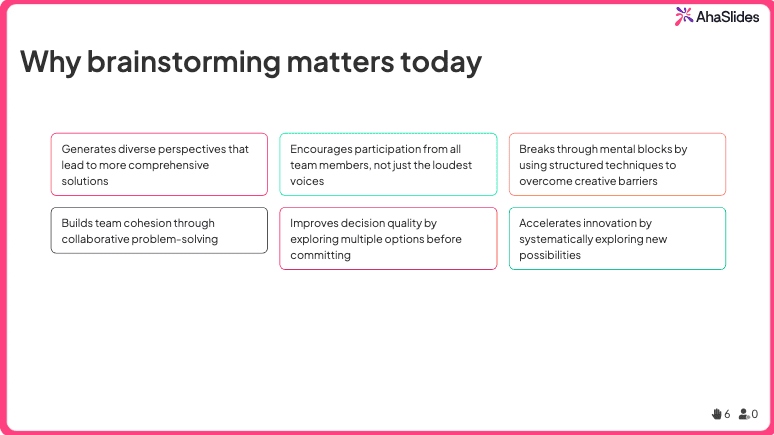
أبحاث حدد مايكل ديل وولفغانغ ستروب (1987) "عرقلة الإنتاج" كأحد التحديات الرئيسية في جلسات العصف الذهني الجماعية. فعندما يتحدث شخص ما، يضطر الآخرون للانتظار، مما قد يؤدي إلى نسيان أفكارهم أو فقدان الزخم. وقد أدى هذا البحث إلى تطوير تقنيات مثل الكتابة الذهنية، حيث يساهم الجميع في وقت واحد.
السلامة النفسية
تُظهر أبحاث إيمي إدموندسون في جامعة هارفارد أن السلامة النفسيةإن الاعتقاد بأنك لن تُعاقب أو تُهان لمجرد التعبير عن رأيك هو العامل الأهم في فعالية الفريق. فالفرق التي تتمتع بمستوى عالٍ من الأمان النفسي تُنتج أفكارًا أكثر إبداعًا وتُقدم على مخاطر محسوبة.
أظهرت دراسة أجرتها مجلة هارفارد بزنس ريفيو أن الفرق التي شاركت قصصًا محرجة قبل جلسات العصف الذهني أنتجت أفكارًا أكثر بنسبة 26%، شملت 15% فئات أكثر، مقارنةً بالمجموعات الضابطة. وقد خلقت هذه الصراحة جوًا من التحرر من الأحكام المسبقة، مما أدى إلى زيادة الإنتاج الإبداعي.
التنوع المعرفي
أبحاث أظهرت دراسة أجراها مركز الذكاء الجماعي التابع لمعهد ماساتشوستس للتكنولوجيا أن الفرق التي تتمتع بأنماط تفكير وخلفيات متنوعة تتفوق باستمرار على الفرق المتجانسة في حل المشكلات الإبداعي. ولا يقتصر الأمر على التنوع الديموغرافي فحسب، بل يشمل أيضاً التنوع المعرفي في كيفية تعامل أعضاء الفريق مع المشكلات.
تأثير التثبيت
تميل الأفكار الأولية في جلسات العصف الذهني إلى تثبيت الأفكار اللاحقة، مما يحد من النطاق الإبداعي. وتتصدى تقنيات مثل رسم الخرائط الذهنية وتقنية SCAMPER لهذا الأمر تحديداً من خلال إجبار المشاركين على استكشاف اتجاهات متعددة منذ البداية.
أخطاء شائعة في جلسات العصف الذهني
التفكير الجماعي
ميل الجماعات إلى السعي نحو الإجماع على حساب التقييم النقدي. يمكن مواجهة هذا الميل بتشجيع طرح وجهات نظر مخالفة والترحيب صراحةً بالآراء المخالفة.
التسكع الاجتماعي
عندما يساهم الأفراد بشكل أقل في المجموعات مقارنةً بما يقدمونه بمفردهم، يمكن معالجة ذلك من خلال المساءلة الفردية، كأن يُطلب من كل فرد تقديم أفكاره قبل مناقشة المجموعة.
مخاوف التقييم
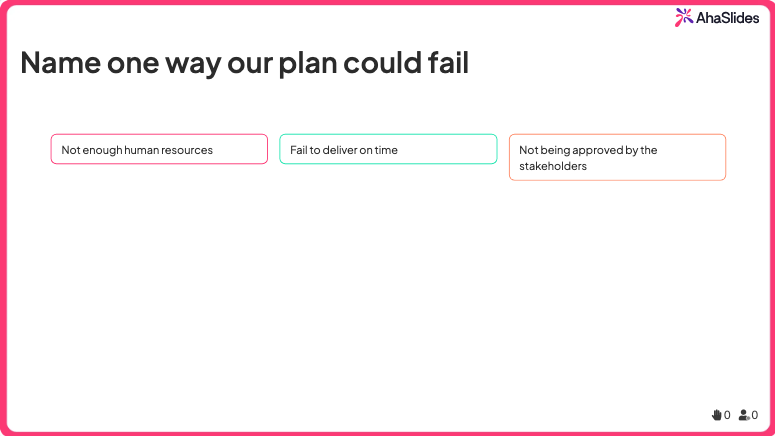
يدفع الخوف من التقييم السلبي الناس إلى فرض رقابة ذاتية على أفكارهم الإبداعية. وتحل أدوات النشر المجهولة مثل AhaSlides هذه المشكلة عن طريق إزالة الإسناد أثناء توليد الأفكار.
القواعد السبع الأساسية للعصف الذهني
تشكل هذه المبادئ الأساسية، التي تم تنقيحها من إطار عمل أليكس أوزبورن الأصلي وتم التحقق من صحتها من خلال عقود من الممارسة في IDEO و d.school والمنظمات الرائدة في جميع أنحاء العالم، أساسًا للعصف الذهني الفعال.
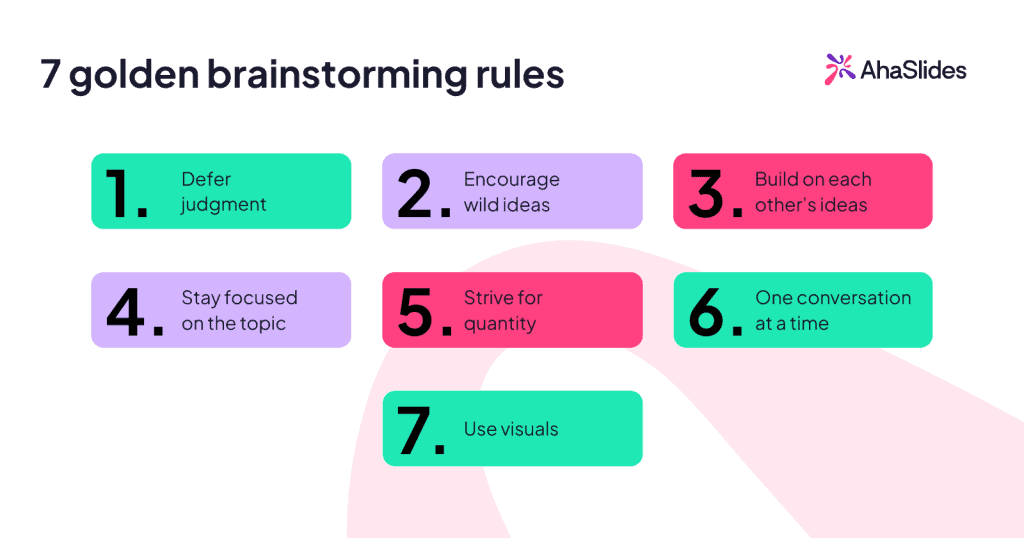
القاعدة 1: تأجيل الحكم
ماذا تعني: أرجئ جميع الانتقادات والتقييمات خلال مرحلة توليد الأفكار. لا ينبغي رفض أي فكرة أو انتقادها أو تقييمها إلا بعد انتهاء جلسة العصف الذهني.
لماذا يهم: إنّ الأحكام المسبقة تقتل الإبداع قبل أن يزدهر. فعندما يخشى المشاركون النقد، يمارسون الرقابة الذاتية ويحجبون الأفكار التي قد تكون رائدة. وغالبًا ما تبدو أفضل الابتكارات سخيفة في البداية.
كيفية التنفيذ:
- اذكر هذه القاعدة بوضوح في بداية الجلسة
- يرجى إعادة توجيه أي تعليقات تقييمية بلطف إلى مناقشة لاحقة
- قدّم نموذجًا لعدم إصدار الأحكام كميسّر
- ينبغي النظر في حظر عبارات مثل "لن ينجح ذلك لأن..." أو "لقد جربنا ذلك من قبل".
- استخدم "موقف السيارات" للأفكار التي تتطلب مناقشة فورية
القاعدة الثانية: شجع الأفكار الجريئة
ماذا تعني: الترحيب بنشاط بالأفكار غير التقليدية، أو التي تبدو غير عملية، أو "خارج الصندوق" دون الاهتمام الفوري بإمكانية تنفيذها.
لماذا يهم: غالباً ما تحمل الأفكار الجريئة بذور حلول رائدة. حتى الأفكار غير العملية قد تُلهم ابتكارات عملية عند صقلها. تشجيع التفكير الإبداعي يدفع المجموعة إلى تجاوز الحلول البديهية.
كيفية التنفيذ:
- دعوة صريحة للأفكار "المستحيلة" أو "المجنونة"
- احتفل بالاقتراحات الأكثر غرابة
- اطرح أسئلة تحفيزية مثل "ماذا لو لم يكن المال عائقاً؟" أو "ماذا سنفعل إذا استطعنا كسر أي قاعدة؟"
- خصص جزءًا من جلسة العصف الذهني لأفكار "غير متوقعة" تحديدًا
القاعدة الثالثة: البناء على أفكار بعضنا البعض
ماذا تعني: استمع إلى مساهمات الآخرين وقم بتوسيعها أو دمجها أو تعديلها لخلق إمكانيات جديدة.
لماذا يهم: التعاون يضاعف الإبداع. فكرة غير مكتملة لدى شخص ما تتحول إلى حلٍّ ثوري لدى آخر. البناء على الأفكار يخلق تآزراً حيث يتجاوز الكل مجموع أجزائه.
كيفية التنفيذ:
- اعرض جميع الأفكار بشكل واضح حتى يتمكن الجميع من الرجوع إليها
- اسأل بانتظام "كيف يمكننا البناء على هذا؟"
- استخدم "نعم، و..." بدلاً من "نعم، ولكن..."
- تشجيع المشاركين على الجمع بين الأفكار المتعددة
- يجب تقدير كل من المساهمين الأصليين وأولئك الذين بنوا على الأفكار.
القاعدة الرابعة: حافظ على تركيزك على الموضوع
ماذا تعني: تأكد من أن الأفكار تظل ذات صلة بالمشكلة أو التحدي المحدد الذي يتم تناوله، مع السماح في الوقت نفسه بالاستكشاف الإبداعي ضمن هذا النطاق.
لماذا يهم: التركيز يمنع إهدار الوقت ويضمن جلسات مثمرة. وبينما يُشجع الإبداع، فإن الحفاظ على الصلة بالموضوع يضمن أن الأفكار قادرة على معالجة التحدي المطروح فعلياً.
كيفية التنفيذ:
- اكتب المشكلة أو السؤال بشكل واضح حيث يمكن للجميع رؤيته
- إعادة التوجيه بلطف عندما تنحرف الأفكار بعيدًا عن الموضوع
- استخدم "موقف السيارات" للأفكار المثيرة للاهتمام ولكنها غير مباشرة
- أعد صياغة التحدي الأساسي بشكل دوري
- وازن بين التركيز والمرونة
القاعدة الخامسة: اسعَ إلى الكمية
ماذا تعني: قم بتوليد أكبر عدد ممكن من الأفكار دون القلق بشأن الجودة أو الجدوى خلال المرحلة الأولية.
لماذا يهم: تُظهر الأبحاث باستمرار أن الكمية تؤدي إلى الجودة. عادةً ما تكون الأفكار الأولى بديهية. أما الحلول الرائدة فتظهر عادةً بعد استنفاد التفكير التقليدي. توفر الخيارات المتعددة فرصًا أفضل لإيجاد حلول استثنائية.
كيفية التنفيذ:
- حدد أهدافًا كمية محددة (على سبيل المثال، "50 فكرة في 20 دقيقة").
- استخدم المؤقتات لخلق شعور بالإلحاح
- تشجيع توليد الأفكار السريعة
- ذكّر المشاركين بأن كل فكرة مهمة
- تتبع عدد الأفكار بشكل واضح لبناء الزخم
القاعدة السادسة: محادثة واحدة في كل مرة
ماذا تعني: حافظ على التركيز من خلال السماح لشخص واحد فقط بالتحدث في كل مرة، مما يضمن أن يتمكن الجميع من سماع كل فكرة والتفكير فيها.
لماذا يهم: تُحدث المحادثات الجانبية ضجيجًا يُطغى على الأفكار الجيدة. عندما يُشتت الناس انتباههم بين الاستماع والتحدث، فإنهم يُفوّتون فرصًا للبناء على مساهمات الآخرين.
كيفية التنفيذ:
- وضع بروتوكولات واضحة لتبادل الأدوار
- استخدم نظام التناوب الدوري أو نظام رفع اليد
- في الجلسات الافتراضية، استخدم الدردشة للملاحظات الجانبية والتواصل الشفهي للأفكار الرئيسية.
- اقتصر المحادثات الجانبية على فترات الاستراحة.
- قم بتوجيه الحديث بلطف عند ظهور عدة محادثات
القاعدة 7: استخدام الوسائل البصرية
ماذا تعني: استغل التواصل البصري والرسومات التخطيطية والمخططات والصور للتعبير عن الأفكار وتطويرها بشكل أكثر فعالية من الكلمات وحدها.
لماذا يهم: يُحفّز التفكير البصري أجزاءً مختلفة من الدماغ، مما يُؤدي إلى تكوين روابط وأفكار جديدة. تُوصل الصور البسيطة المفاهيم المعقدة بشكل أسرع من النصوص. حتى الرسومات البسيطة تتفوق على عدم وجود صور على الإطلاق.
كيفية التنفيذ:
- وفر أقلام التحديد، والملاحظات اللاصقة، وورقًا كبيرًا أو ألواحًا بيضاء.
- شجعوا الرسم، حتى لأولئك الذين "لا يستطيعون الرسم".
- استخدم الأطر المرئية (الخرائط الذهنية، المصفوفات، المخططات)
- عبّر عن أفكارك بالكلمات والصور
- استفد من الأدوات الرقمية مثل AhaSlides مولد سحب الكلمات الحية لتصور المواضيع الناشئة
كيفية الاستعداد لجلسة العصف الذهني
تبدأ جلسات العصف الذهني الناجحة قبل دخول المشاركين إلى الغرفة. فالتحضير الجيد يُحسّن بشكل كبير من جودة الجلسة ونتائجها.
الخطوة 1: تحديد المشكلة بوضوح
تعتمد جودة نتائج جلسات العصف الذهني بشكل كبير على مدى دقة تحديد المشكلة. لذا، استثمر وقتك في صياغة بيان واضح ومحدد للمشكلة.
أفضل الممارسات لتحديد المشكلة:
كن دقيقاً، لا غامضاً:
- بدلاً من: "كيف نزيد المبيعات؟"
- جرب: "كيف نزيد المبيعات عبر الإنترنت لجيل الألفية في المناطق الحضرية بنسبة 20% في الربع الثاني؟"
ركز على النتائج، وليس على الحلول:
- بدلاً من: "هل يجب علينا إنشاء تطبيق جوال؟"
- جرب: "كيف نجعل خدمتنا أكثر سهولة في الوصول إليها للعملاء أثناء تنقلهم؟"
استخدم أسئلة "كيف يمكننا؟" يفتح إطار التفكير التصميمي هذا آفاقاً جديدة مع الحفاظ على التركيز.
- "كيف يمكننا تقليل أوقات انتظار خدمة العملاء؟"
- "كيف يمكننا جعل التعلم أكثر جاذبية لطلاب الصف الخامس؟"
- "كيف يمكننا مساعدة الموظفين الجدد على الشعور بالانتماء إلى ثقافة الشركة؟"
ضع في اعتبارك قصص المستخدمين: تحديات الإطار من وجهة نظر المستخدم:
- "بصفتي [نوع المستخدم]، أريد [الهدف]، لأن [السبب]"
- "بصفتي أحد الوالدين المشغولين، أرغب في خيارات وجبات صحية سريعة، لأن وقتي محدود بعد العمل."
الخطوة الثانية: اختيار المشاركين المناسبين
الحجم الأمثل للمجموعة: 5-12 حصة
قلة العدد تحد من الآفاق؛ وكثرة العدد تخلق عوائق في الإنتاج وتحديات في التنسيق.
التنوع مهم:
- التنوع المعرفي: تضمين أنماط التفكير المختلفة وأساليب حل المشكلات
- تنوع المجالات: امزج بين خبراء الموضوع ووجهات النظر "الخارجية".
- التنوع الهرمي: يجب تضمين مختلف المستويات التنظيمية (مع إدارة ديناميكيات السلطة بعناية).
- التنوع الديموغرافي: الخلفيات المختلفة تُضفي رؤى مختلفة.
من يجب إدراجه:
- الأشخاص المتأثرون بشكل مباشر بالمشكلة
- خبراء في مجال التخصص يتمتعون بالمعرفة ذات الصلة
- مفكرون مبدعون يتحدون المسلّمات
- أصحاب المصلحة في التنفيذ الذين سيقومون بتنفيذ الحلول
- "غرباء" ذوو وجهات نظر جديدة
من يجب استبعاده (أو دعوته بشكل انتقائي):
- المتشككون المتطرفون الذين يرفضون الأفكار باستمرار
- أولئك الذين يملكون السلطة لإغلاق الأفكار قبل أوانها
- الأشخاص الذين لا علاقة لهم بالمشكلة والذين سيشتتون التركيز
الخطوة 3: اختيار البيئة المناسبة
البيئة المادية (حضورياً):
- مساحة مفتوحة واسعة مع أثاث متحرك
- مساحة جدارية واسعة لعرض الأفكار
- إضاءة جيدة ودرجة حرارة مريحة
- الحد الأدنى من عوامل التشتيت والمقاطعات
- إمكانية الوصول إلى المواد (ملاحظات لاصقة، أقلام تحديد، سبورات بيضاء)
بيئة افتراضية:
- منصة موثوقة لعقد مؤتمرات الفيديو
- السبورة البيضاء الرقمية أو أداة التعاون (Miro، Mural، AhaSlides)
- طريقة اتصال احتياطية
- الفحص التقني قبل الجلسة
- قواعد أرضية افتراضية واضحة
اعتبارات التوقيت:
- تجنب صباح يوم الاثنين الباكر أو عصر يوم الجمعة المتأخر.
- جدولة البرنامج بما يتناسب مع أوقات ذروة طاقة المشاركين
- امنح وقتًا كافيًا (عادةً من 60 إلى 90 دقيقة للمشاكل المعقدة)
- قم بتضمين فترات راحة للجلسات الأطول
الخطوة الرابعة: تحديد جدول الأعمال
يساهم وجود جدول أعمال واضح في الحفاظ على إنتاجية الجلسات وتركيزها.
نموذج لجدول أعمال جلسة عصف ذهني مدتها 90 دقيقة:
0:00-0:10 - الترحيب والإحماء
- تقديم التعريفات عند الحاجة
- مراجعة القواعد الأساسية
- نشاط سريع لكسر الجمود
0:10-0:20 - تحديد المشكلة
- اعرض التحدي بوضوح
- توفير السياق والخلفية
- أجب عن الأسئلة التوضيحية
- شارك أي بيانات أو قيود ذات صلة.
0:20-0:50 - التفكير التبايني (توليد الأفكار)
- استخدم أسلوب (أساليب) العصف الذهني المختار.
- شجع الكمية
- تعليق الحكم
- اجمع كل الأفكار
١٠:١٥ - ١٠:٣٠ - استراحة
- إعادة ضبط سريعة
- وقت المعالجة غير الرسمية
1:00-1:20 - التفكير التقاربي (التنقيح)
- قم بتنظيم الأفكار في مواضيع
- دمج المفاهيم المتشابهة
- التقييم الأولي وفقًا للمعايير
1:20-1:30 - الخطوات التالية
- تحديد أفضل الأفكار لمزيد من التطوير
- تحديد مسؤوليات المتابعة
- حدد أي جلسات إضافية مطلوبة
- شكراً للمشاركين
الخطوة الخامسة: تجهيز المواد والأدوات
المواد المادية:
- ملاحظات لاصقة (ألوان متعددة)
- أقلام وعلامات
- ورق كبير أو لوحات عرض
- السبورة
- نقاط أو ملصقات للتصويت
- عداد
- كاميرا لتوثيق النتائج
الأدوات الرقمية:
- AhaSlides للعصف الذهني التفاعلي، وسحب الكلمات، والتصويت
- السبورة البيضاء الرقمية (Miro، Mural، Conceptboard)
- برنامج رسم الخرائط الذهنية
- وثيقة لتدوين الأفكار
- إمكانية مشاركة الشاشة
الخطوة السادسة: إرسال العمل التحضيري (اختياري)
في حالة التحديات المعقدة، يُنصح بإرسال المشاركين إلى:
- معلومات أساسية عن المشكلة
- البيانات أو الأبحاث ذات الصلة
- أسئلة يجب مراعاتها مسبقاً
- يرجى تقديم 3-5 أفكار أولية
- جدول الأعمال والترتيبات اللوجستية
ملاحظة: وازن بين التحضير المسبق والعفوية. ففي بعض الأحيان، تأتي الأفكار الأكثر ابتكاراً من أقل قدر من التحضير.
أكثر من 20 تقنية مثبتة للعصف الذهني
تختلف التقنيات باختلاف المواقف وأحجام المجموعات والأهداف. أتقن هذه الأساليب وستمتلك أداة لكل سيناريو من سيناريوهات العصف الذهني.
التقنيات البصرية
تستفيد هذه الأساليب من التفكير البصري لإطلاق العنان للإبداع وتنظيم الأفكار المعقدة.
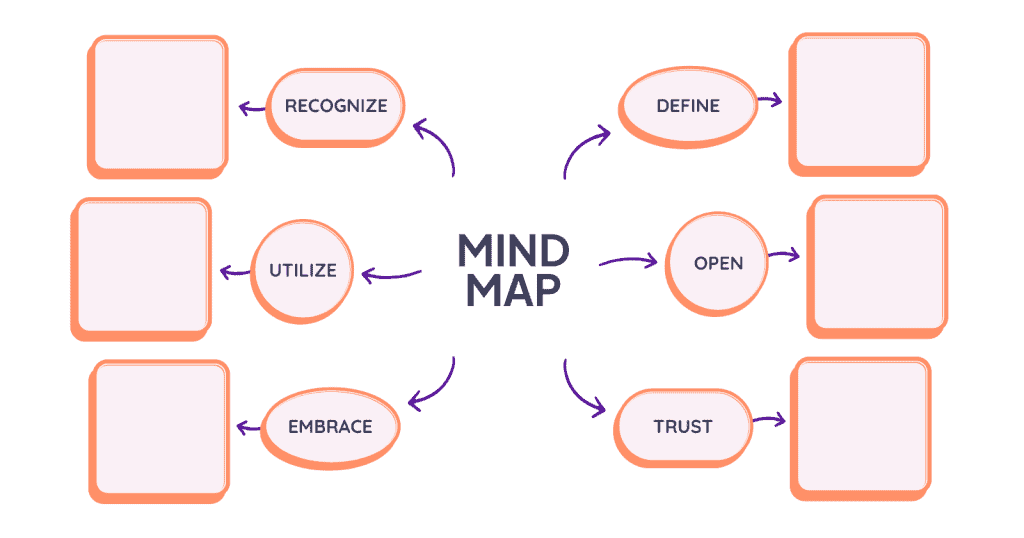
1. خريطة العقل
ما هو : تقنية بصرية تنظم الأفكار حول مفهوم مركزي، باستخدام الفروع لإظهار العلاقات والروابط.
متى يجب استخدام:
- استكشاف مواضيع معقدة ذات أبعاد متعددة
- تخطيط المشاريع أو المحتوى
- تنظيم المعلومات التي لها تسلسلات هرمية طبيعية
- العمل مع المفكرين البصريين
كيف يعمل:
- اكتب الموضوع الرئيسي في منتصف صفحة كبيرة
- ارسم فروعًا للموضوعات أو الفئات الرئيسية
- أضف فروعًا فرعية للأفكار ذات الصلة
- استمر في التفرع لاستكشاف التفاصيل
- استخدم الألوان والصور والرموز لتعزيز المعنى
- ارسم روابط بين الفروع المختلفة
المميزات:
- يعكس عمليات التفكير الطبيعية
- يظهر العلاقات بين الأفكار
- يشجع التفكير غير الخطي
- يسهل إضافة التفاصيل تدريجياً
العيوب:
- قد يصبح الأمر معقدًا ومرهقًا
- أقل فعالية في المسائل البسيطة والخطية
- يتطلب مساحة ومواد بصرية
على سبيل المثال: قد يتضمن مخطط ذهني لفريق التسويق الذي يقوم برسم خريطة ذهنية لإطلاق منتج ما فروعًا خاصة بالجمهور المستهدف والقنوات والرسائل والتوقيت والميزانية، مع توسع كل فرع ليشمل تكتيكات واعتبارات محددة.
2. القصة المصورة
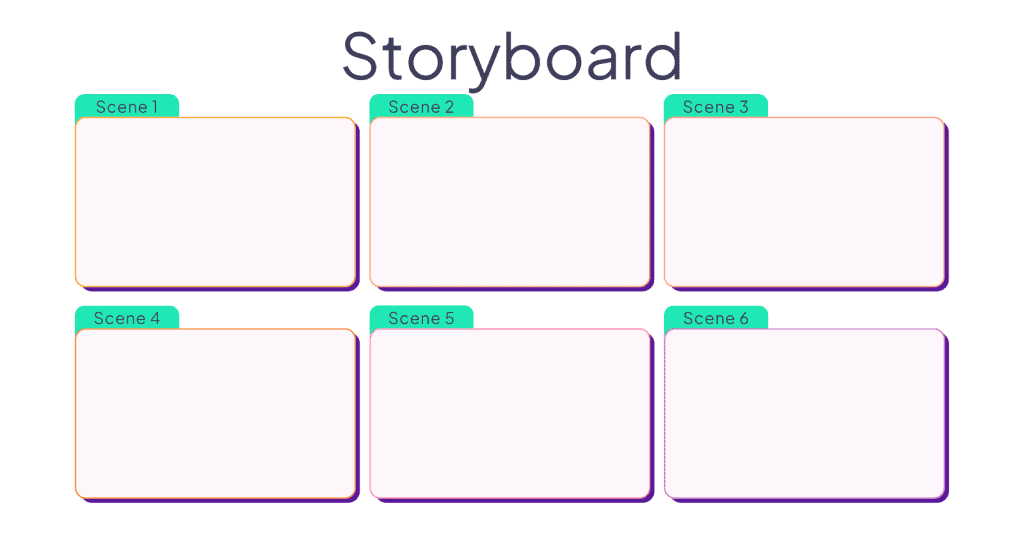
ما هو : سرد بصري متسلسل يرسم عملية أو تجربة أو رحلة باستخدام الرسومات التخطيطية أو الأوصاف.
متى يجب استخدام:
- تصميم تجارب المستخدم أو رحلات العملاء
- تخطيط الأحداث أو العمليات
- تطوير مواد التدريب
- إنشاء محتوى قائم على السرد
كيف يعمل:
- حدد نقطة البداية والحالة النهائية المرغوبة
- قسّم الرحلة إلى مراحل أو لحظات رئيسية
- قم بإنشاء إطار لكل مرحلة
- ارسم أو صف ما يحدث في كل إطار
- إظهار الروابط والانتقالات بين الإطارات
- أضف ملاحظات حول المشاعر، أو نقاط الضعف، أو الفرص
المميزات:
- يتصور العمليات والتجارب
- يحدد الثغرات ونقاط الضعف
- يُسهم في خلق فهم مشترك للتسلسلات
- مناسب للتجارب المادية والرقمية على حد سواء
العيوب:
- يستغرق إنشاء لوحات قصصية مفصلة وقتاً طويلاً
- يتطلب الأمر بعض الراحة في التعبير البصري
- قد يبالغ في التركيز على التقدم الخطي
على سبيل المثال: فريق الإعداد يرسم مخططًا للأسبوع الأول للموظف الجديد، مع إطارات توضح التحضير قبل الوصول، والوصول، والتعارف بين أعضاء الفريق، والتدريب الأولي، وتكليف المشروع الأول، وتسجيل الوصول في نهاية الأسبوع.
3. العصف الذهني بالرسومات التخطيطية
ما هو : توليد الأفكار البصرية السريعة حيث يقوم المشاركون برسم المفاهيم بسرعة حتى مع مهارات الرسم المحدودة.
متى يجب استخدام:
- تصميم وتطوير المنتج
- تصميم واجهة المستخدم
- تمارين العلامة التجارية المرئية
- أي مشروع يستفيد من الاستكشاف البصري
كيف يعمل:
- حدد حدًا زمنيًا (عادةً 5-10 دقائق)
- يقوم كل مشارك برسم أفكاره
- لا حاجة لأي مهارة فنية - فالرسومات البسيطة والأشكال الهندسية البسيطة تؤدي الغرض.
- تبادلوا الرسومات واستفيدوا منها.
- اجمع بين أقوى العناصر البصرية
المميزات:
- يتحرر من التفكير القائم على النصوص
- متاح للجميع (لا حاجة لمهارات فنية)
- يوصل الأفكار المعقدة بسرعة
- يحفز عمليات معرفية مختلفة
العيوب:
- يقاوم بعض الناس ذلك بسبب القلق من الرسم
- يمكن التركيز على الشكل على حساب الوظيفة
- قد يضر ذلك بالأشخاص ذوي الإعاقة البصرية
4. مجنون ثمانية
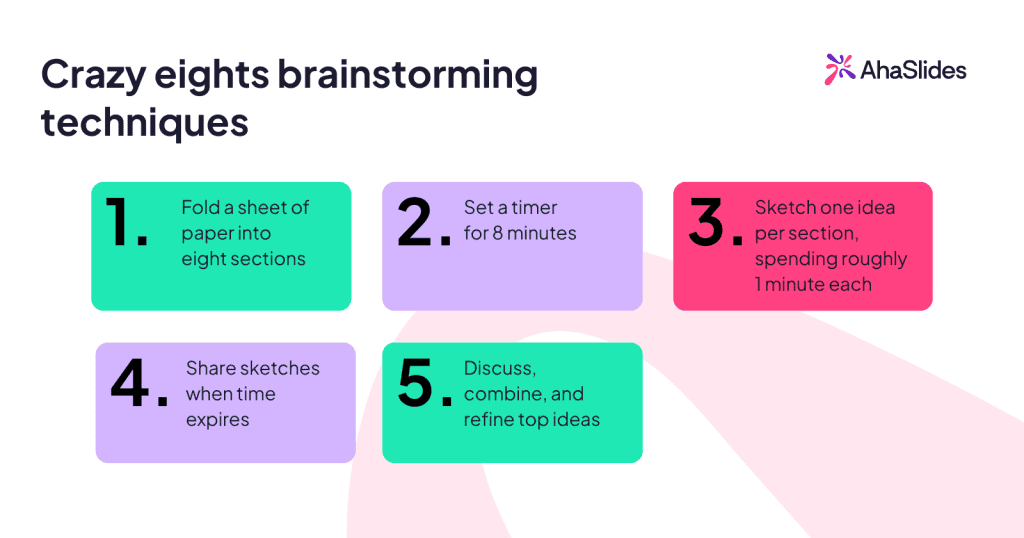
ما هو : تقنية رسم سريعة حيث يقوم المشاركون بتوليد ثماني أفكار مختلفة في ثماني دقائق، ويقضون دقيقة واحدة في كل رسم.
متى يجب استخدام:
- تجاوز الأفكار الأولية الواضحة
- التفكير في ظل قيود زمنية
- توليد تنوع بصري سريع
- جلسات فردية أو جماعية صغيرة
كيف يعمل:
- قم بطي ورقة إلى ثمانية أقسام
- ضبط مؤقت لمدة 8 دقائق
- ارسم فكرة واحدة لكل قسم، مع تخصيص دقيقة واحدة تقريبًا لكل قسم.
- شارك الرسومات التخطيطية عند انتهاء الوقت
- ناقش الأفكار الرئيسية، واجمعها، وحسّنها.
المميزات:
- يحفز التفكير السريع ويمنع الإفراط في التفكير.
- يُنتج حجمًا بسرعة
- مشاركة متساوية (يُقدّم كل شخص 8 أفكار)
- يكشف عن مناهج متنوعة
العيوب:
- قد تشعر بالاستعجال والتوتر
- قد تتأثر الجودة سلباً بسبب ضغط الوقت
- غير مناسب للمسائل المعقدة التي تتطلب تفكيراً عميقاً
تقنيات هادئة
تمنح هذه الأساليب الانطوائيين والمفكرين المتأنين مساحة للمساهمة بشكل هادف، مما يقلل من هيمنة الأصوات المنفتحة.
5. الكتابة الدماغية
ما هو : توليد الأفكار بشكل فردي وصامت، حيث يقوم المشاركون بكتابة أفكارهم قبل مشاركتها مع المجموعة.
متى يجب استخدام:
- مجموعات ذات شخصيات مهيمنة
- أعضاء الفريق الانطوائيون
- الحد من الضغط الاجتماعي والتفكير الجماعي
- ضمان المساهمة المتساوية
- العصف الذهني الافتراضي أو غير المتزامن
كيف يعمل:
- قم بتزويد كل مشارك بنسخة ورقية أو وثيقة رقمية
- اطرح المشكلة بوضوح
- حدد مدة زمنية (5-10 دقائق)
- يكتب المشاركون أفكارهم بصمت
- اجمع الأفكار وشاركها (بشكل مجهول إذا رغبت في ذلك)
- ناقشوا الأفكار وطوروها كمجموعة
المميزات:
- المشاركة المتساوية بغض النظر عن الشخصية
- يقلل من القلق الاجتماعي والحكم على الآخرين
- يمنع الأصوات المهيمنة من السيطرة
- يتيح ذلك وقتاً للتأمل العميق
- يعمل بشكل جيد عن بعد
العيوب:
- طاقة أقل من العصف الذهني اللفظي
- يفقد بعضًا من البناء التلقائي للأفكار
- قد يشعر بالانفصال أو العزلة
على سبيل المثال: فريق تطوير المنتج يستكشف أفكارًا جديدة للميزات. يقضي كل فرد 10 دقائق في سرد الميزات، ثم تُشارك جميع الأفكار بشكل مجهول عبر منصة AhaSlides. يصوّت الفريق على أفضل الأفكار، ثم يناقش تنفيذها.
6. 6-3-5 الكتابة الدماغية
ما هو : طريقة كتابة ذهنية منظمة حيث يقوم 6 أشخاص بكتابة 3 أفكار في 5 دقائق، ثم يمررون أوراقهم إلى الشخص التالي الذي يضيف إلى تلك الأفكار أو يعدلها.
متى يجب استخدام:
- البناء على أفكار بعضنا البعض بشكل منهجي
- توليد كميات كبيرة بسرعة (108 أفكار في 30 دقيقة)
- ضمان مساهمة الجميع على قدم المساواة
- الجمع بين التأمل الهادئ والتعاون
كيف يعمل:
- اجمع 6 مشاركين (يمكن تعديل العدد حسب الحاجة)
- يكتب كل شخص 3 أفكار في 5 دقائق
- مرر الأوراق إلى اليمين
- اقرأ الأفكار الموجودة وأضف 3 أفكار أخرى (بناءً على الأفكار الموجودة، أو تعديلها، أو إضافة أفكار جديدة).
- كرر 5 جولات أخرى (6 جولات إجمالاً)
- مراجعة ومناقشة جميع الأفكار
المميزات:
- يُنتج كمية كبيرة بشكل منهجي (6 أشخاص × 3 أفكار × 6 جولات = 108 أفكار)
- يبني على الأفكار تدريجياً
- المشاركة المتساوية مضمونة
- يجمع بين التفكير الفردي والجماعي
العيوب:
- قد يشعر المرء بالتقييد بسبب الهيكل الجامد.
- يتطلب حجم مجموعة محدد
- قد تصبح الأفكار متكررة في الجولات اللاحقة.
- تستغرق العملية بأكملها وقتاً طويلاً

7. أسلوب المجموعة الاسمية (NGT)
ما هو : أسلوب منظم يجمع بين توليد الأفكار الصامت، والمشاركة، والمناقشة، والتصويت الديمقراطي لتحديد أولويات الأفكار.
متى يجب استخدام:
- قرارات مهمة تتطلب الإجماع
- مجموعات تعاني من اختلالات في موازين القوى
- تحديد الأولويات من بين العديد من الخيارات
- ضمان المشاركة العادلة
- المواضيع المثيرة للجدل أو الحساسة
كيف يعمل:
- الجيل الصامت: يكتب المشاركون أفكارهم بشكل فردي (5-10 دقائق)
- المشاركة بالتناوب: يُشارك كل شخص بفكرة واحدة؛ ويُسجل الميسر جميع الأفكار دون مناقشة.
- توضيح: تناقش المجموعة أفكاراً للفهم (وليس للتقييم)
- الترتيب الفردي: يقوم كل شخص بترتيب الأفكار أو التصويت عليها بشكل خاص
- تحديد أولويات المجموعة: اجمع التصنيفات الفردية لتحديد الأولويات القصوى
- مناقشة: ناقش الأفكار ذات التصنيف الأعلى واتخذ القرارات
المميزات:
- يوازن بين المدخلات الفردية والجماعية
- يقلل من تأثير الشخصيات المهيمنة
- يخلق الدعم من خلال المشاركة
- عملية ديمقراطية وشفافة
- يُعدّ مناسبًا للمواضيع المثيرة للجدل
العيوب:
- يستغرق وقتاً أطول من مجرد العصف الذهني البسيط
- قد تبدو البنية الرسمية جامدة
- يمكن أن يقمع النقاش التلقائي
- قد يؤدي التصويت إلى تبسيط القضايا المعقدة بشكل مفرط
التقنيات التحليلية
توفر هذه الأساليب هيكلاً للتحليل المنهجي، مما يساعد الفرق على تقييم الأفكار من زوايا متعددة.
8. تحليل SWOT
ما هو : إطار عمل لتقييم نقاط القوة والضعف والفرص والتهديدات للأفكار أو الاستراتيجيات أو القرارات.
متى يجب استخدام:
- التخطيط الاستراتيجي واتخاذ القرار
- تقييم خيارات متعددة
- تقييم الجدوى قبل التنفيذ
- تعريف المخاطر
- تخطيط الأعمال
كيف يعمل:
- حدد الفكرة أو المشروع أو الاستراتيجية المراد تحليلها
- أنشئ أربعة أرباع: نقاط القوة، نقاط الضعف، الفرص، التهديدات
- تبادل الأفكار حول العناصر لكل ربع:
- نقاط القوة: العوامل والمزايا الإيجابية الداخلية
- نقاط الضعف: العوامل السلبية الداخلية والقيود
- الفرص: العوامل والإمكانيات الإيجابية الخارجية
- التهديدات: العوامل والمخاطر السلبية الخارجية
- ناقش ورتب أولويات العناصر في كل ربع
- تطوير الاستراتيجيات بناء على التحليل
المميزات:
- نظرة شاملة للوضع
- يأخذ في الاعتبار العوامل الداخلية والخارجية
- يحدد المخاطر في وقت مبكر
- يخلق تفاهمًا مشتركًا
- يدعم اتخاذ القرارات القائمة على البيانات
العيوب:
- قد يكون سطحياً إذا تم إنجازه على عجل
- قد يؤدي ذلك إلى تبسيط مفرط للمواقف المعقدة
- يتطلب تقييمًا نزيهًا
- لقطة ثابتة (لا تُظهر التطور)
9. قبعات التفكير الست
ما هو : تقنية ابتكرها إدوارد دي بونو تستكشف المشكلات من ستة منظورات متميزة، ممثلة بـ "قبعات" ملونة.
متى يجب استخدام:
- قرارات معقدة تتطلب تحليلاً دقيقاً
- الحد من الجدال والصراع
- ضمان مراعاة وجهات النظر المتعددة
- الخروج من أنماط التفكير المعتادة
القبعات الست:
- قبعة بيضاء: الحقائق والبيانات (معلومات موضوعية)
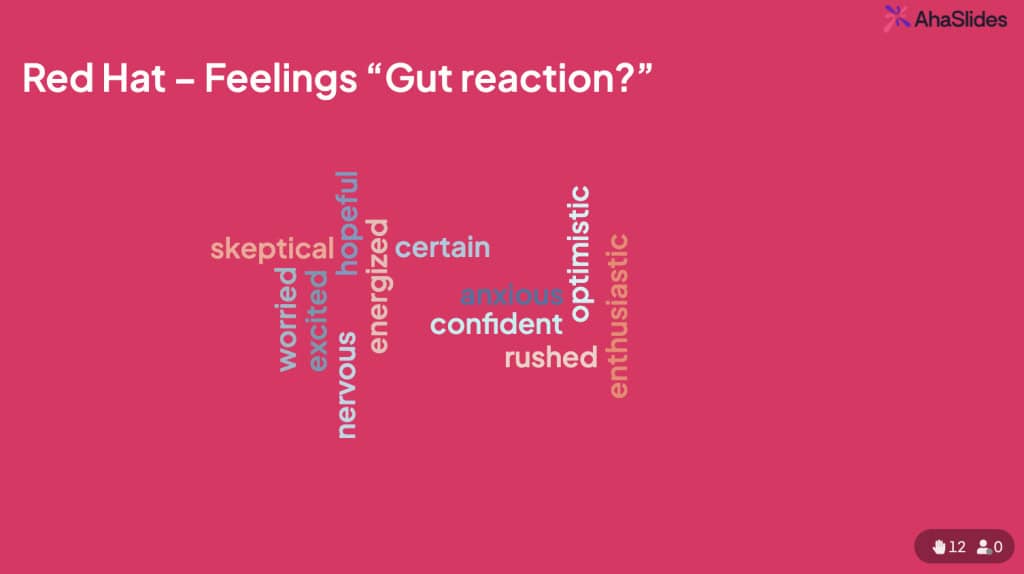
- قبعة حمراء: المشاعر والأحاسيس (الاستجابات الحدسية)
- قبعة سوداء: التفكير النقدي (المخاطر، المشاكل، لماذا قد لا ينجح الأمر)
- قبعة صفراء: التفاؤل والفوائد (لماذا سينجح، والمزايا)
- قبعة خضراء: الإبداع (أفكار جديدة، بدائل، إمكانيات)
- القبعة الزرقاء: التحكم في العملية (التيسير، التنظيم، الخطوات التالية)
كيف يعمل:
- قدّم ستة منظورات فكرية
- الجميع "يرتدون" نفس القبعة في وقت واحد
- استكشف المشكلة من هذا المنظور
- قم بتغيير القبعات بشكل منهجي (عادةً من 5 إلى 10 دقائق لكل قبعة)
- تُسهّل شركة بلو هات عملية تحديد التسلسل وتحدده
- تجميع الأفكار من جميع وجهات النظر
المميزات:
- يفصل بين أنواع مختلفة من التفكير
- يقلل من الجدال (يستكشف الجميع نفس المنظور معًا)
- يضمن إجراء تحليل شامل
- يضفي الشرعية على التفكير العاطفي والإبداعي
- يخلق ذلك فصلاً نفسياً عن الآراء الشخصية
العيوب:
- يتطلب التدريب والممارسة
- قد يبدو الأمر مصطنعاً في البداية
- تستغرق العملية بأكملها وقتاً طويلاً
- قد يؤدي ذلك إلى تبسيط مفرط للاستجابات العاطفية المعقدة
10. انفجار نجمي
ما هو : طريقة لتقييم الأفكار تقوم بتوليد أسئلة حول فكرة ما باستخدام إطار عمل "من، ماذا، متى، أين، لماذا، وكيف".
متى يجب استخدام:
- التدقيق في الأفكار بدقة قبل التنفيذ
- تحديد الثغرات والافتراضات
- التخطيط والإعداد
- الكشف عن التحديات المحتملة
كيف يعمل:
- ارسم نجمة سداسية الرؤوس مع وضع فكرتك في مركزها.
- قم بتسمية كل نقطة بما يلي: من، ماذا، متى، أين، لماذا، كيف
- قم بإنشاء أسئلة لكل نقطة:
- من الذى: من سيستفيد؟ من سينفذ؟ من قد يقاوم؟
- ماذا: ما هي الموارد المطلوبة؟ ما هي الخطوات؟ ما هي المشاكل المحتملة؟
- التاريخ: متى سيتم إطلاق هذا المشروع؟ متى سنرى النتائج؟
- أين: أين سيحدث هذا؟ وأين قد تنشأ التحديات؟
- لماذا: لماذا هذا مهم؟ ولماذا قد يفشل؟
- الطريقة: كيف سننفذ الخطة؟ وكيف سنقيس النجاح؟
- ناقش الإجابات وتداعياتها
- تحديد المجالات التي تتطلب مزيدًا من المعلومات أو التخطيط
المميزات:
- منهجي وشامل
- يكشف عن الافتراضات والثغرات
- يُنتج رؤى تطبيقية
- سهل الفهم والاستخدام
- ينطبق على أي فكرة أو مشروع
العيوب:
- تحليلي في المقام الأول (وليس توليد أفكار)
- قد يؤدي ذلك إلى طرح الكثير من الأسئلة
- قد يؤدي ذلك إلى شلل التحليل
- أقل إبداعاً من التقنيات الأخرى
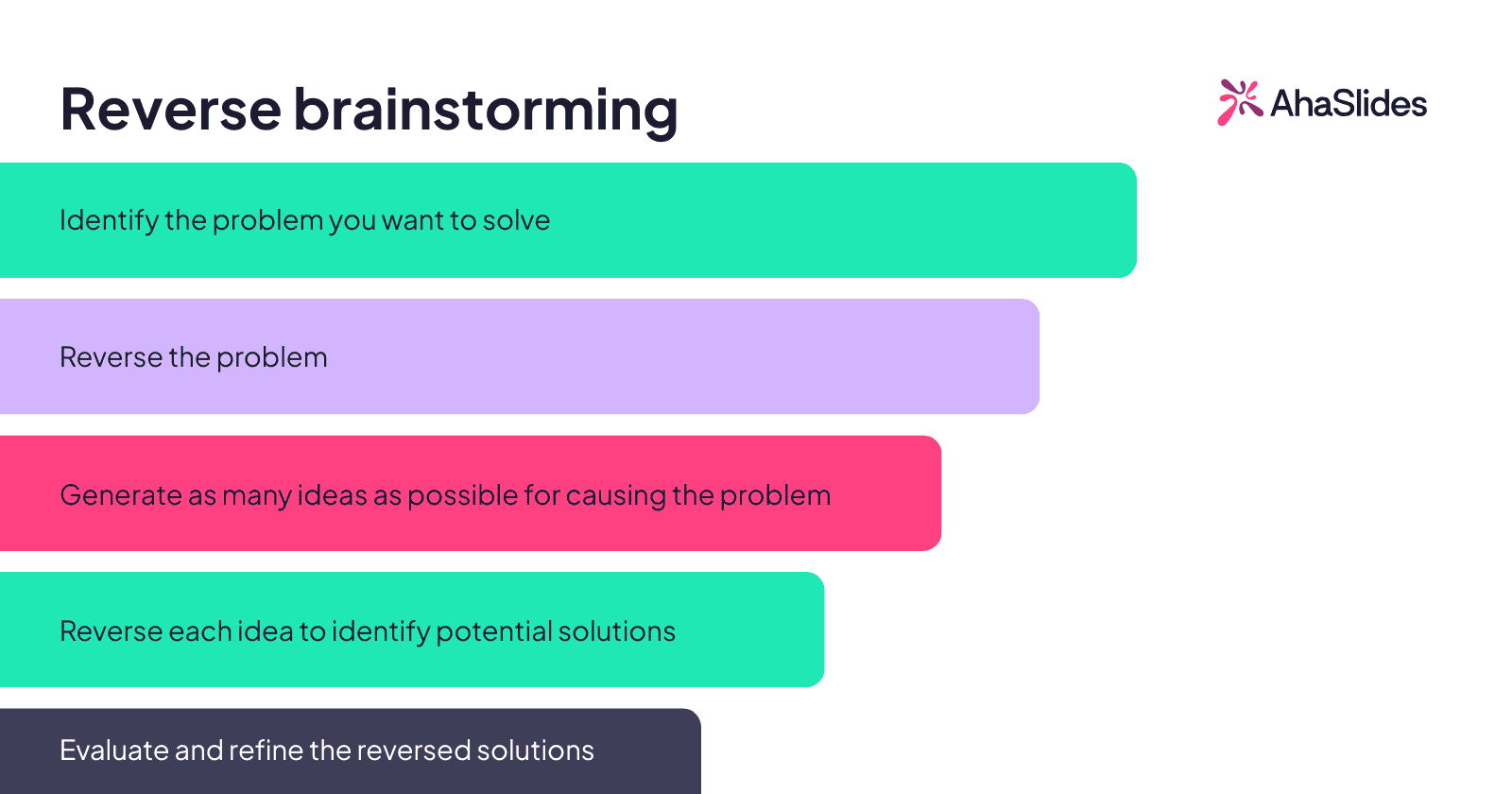
11. عكس العصف الذهني
ما هو : توليد أفكار حول كيفية التسبب في مشكلة أو تفاقمها، ثم عكس تلك الأفكار لإيجاد حلول.
متى يجب استخدام:
- عالق في مشكلة صعبة
- تجاوز التفكير التقليدي
- تحديد الأسباب الجذرية
- الافتراضات الصعبة
- جعل حل المشكلات ممتعًا وجذابًا
كيف يعمل:
- حدد بوضوح المشكلة التي تريد حلها
- اعكس الأمر: "كيف يمكننا أن نجعل هذه المشكلة أسوأ؟" أو "كيف يمكننا ضمان الفشل؟"
- ابتكر أكبر عدد ممكن من الأفكار حول أسباب المشكلة
- اعكس كل فكرة لتحديد الحلول المحتملة
- تقييم وتحسين الحلول المعكوسة
- وضع خطط تنفيذية للأفكار الواعدة
على سبيل المثال:
- المشكلة الأصلية: كيف نحسن رضا العملاء؟
- معكوس: كيف نجعل العملاء غاضبين ومحبطين؟
- أفكار معكوسة: تجاهل مكالماتهم، وكن وقحًا، وأرسل منتجات خاطئة، ولا تقدم أي معلومات
- الحلول: تحسين أوقات الاستجابة، وتدريب الموظفين على خدمة العملاء، وتطبيق مراقبة الجودة، وإنشاء أسئلة وأجوبة شاملة
المميزات:
- يجعل حل المشكلات ممتعاً ومنشطاً
- يكشف عن افتراضات خفية
- من الأسهل انتقادها من إنشائها (تستغل تلك الطاقة)
- يحدد الأسباب الجذرية
- يجذب المشاركين المتشككين
العيوب:
- طريق غير مباشر للحلول
- قد يؤدي ذلك إلى توليد أفكار "عكسية" غير واقعية
- يتطلب خطوة ترجمة (عكس الحل)
- قد يصبح الأمر سلبياً إذا لم تتم إدارته بشكل جيد
12. خمسة أسباب
ما هو : أسلوب تحليل الأسباب الجذرية الذي يسأل "لماذا" بشكل متكرر (عادة خمس مرات) للتعمق تحت الأعراض السطحية والعثور على المشكلات الكامنة.
متى يجب استخدام:
- تشخيص المشكلة وتحليل السبب الجذري
- فهم حالات الفشل أو المشكلات
- الانتقال من الأعراض إلى الأسباب
- مشاكل بسيطة ذات سلاسل سبب ونتيجة واضحة
كيف يعمل:
- حدد المشكلة بوضوح
- اسأل "لماذا يحدث هذا؟"
- إجابة مبنية على الحقائق
- اسأل "لماذا؟" عن تلك الإجابة
- استمر في طرح سؤال "لماذا؟" (عادةً 5 مرات، ولكن قد يكون أكثر أو أقل)
- عندما تصل إلى السبب الجذري (لا يمكنك أن تسأل لماذا مرة أخرى بشكل ذي معنى)، قم بتطوير حلول تستهدف ذلك السبب.
على سبيل المثال:
- المشكلة: لقد فاتنا الموعد النهائي لمشروعنا
- لماذا؟ لم يكن التقرير النهائي جاهزاً
- لماذا؟ لم تكن البيانات الرئيسية متاحة
- لماذا؟ لم يتم إرسال الاستبيان إلى العملاء
- لماذا؟ لم تكن لدينا قائمة عملاء محدثة
- لماذا؟ ليس لدينا آلية لحفظ بيانات العملاء
- السبب الجذري: غياب عملية إدارة بيانات العملاء
- حل: تطبيق نظام إدارة علاقات العملاء (CRM) مع بروتوكولات صيانة البيانات
المميزات:
- بسيط ويمكن الوصول إليه
- يتعمق في الأعراض الظاهرة
- يحدد الأسباب الجذرية القابلة للتنفيذ
- يصلح للعديد من أنواع المشاكل
- يشجع التفكير النقدي
العيوب:
- يبسط بشكل مفرط المشكلات المعقدة ذات الأسباب المتعددة
- يفترض وجود علاقات خطية بين السبب والنتيجة
- قد يؤدي تحيز المحقق إلى تحديد "أسباب جذرية" مسبقة.
- قد يغفل بعض العوامل النظامية أو الثقافية
تقنيات التعاون
تستفيد هذه الأساليب من ديناميكيات المجموعة وتعتمد على الذكاء الجماعي.
13. العصف الذهني بالتناوب
ما هو : نهج منظم حيث يتناوب المشاركون على مشاركة فكرة واحدة في كل مرة، مما يضمن مساهمة الجميع بالتساوي.
متى يجب استخدام:
- ضمان المشاركة المتكافئة
- مجموعات ذات شخصيات مهيمنة
- إعداد قوائم شاملة
- الاجتماعات الشخصية أو الافتراضية
كيف يعمل:
- اجلسوا في دائرة (حقيقية أو افتراضية)
- ضع قواعد أساسية (فكرة واحدة لكل دور، مرر الدور إذا لزم الأمر)
- ابدأ بشخص واحد يشارك فكرة
- تحركوا باتجاه عقارب الساعة، كل شخص يشارك بفكرة واحدة.
- استمر في الجولات حتى تنفد الأفكار
- اسمح بـ"التغاضي" عندما لا يكون لدى شخص ما أفكار جديدة.
- سجّل جميع الأفكار بشكل واضح
المميزات:
- يضمن أن يتحدث الجميع
- يمنع هيمنة الأصوات القليلة
- منظم ويمكن التنبؤ به
- سهل التسهيل
- يبني على الأفكار السابقة
العيوب:
- قد تشعر بالبطء أو التصلب
- الضغط للمساهمة بدورها
- قد يفقد المرء الاتصالات العفوية
- قد يقضي الناس أوقاتهم في التفكير بدلاً من الاستماع
14. سرعة التفكير
ما هو : توليد الأفكار بوتيرة سريعة وطاقة عالية مع حدود زمنية صارمة لمنع الإفراط في التفكير وزيادة الكمية إلى أقصى حد.
متى يجب استخدام:
- التغلب على شلل التحليل
- توليد كميات كبيرة بسرعة
- تنشيط المجموعة
- تجاوز الأفكار البديهية
كيف يعمل:
- حدد حدًا زمنيًا صارمًا (عادةً من 5 إلى 15 دقيقة)
- استهدف تحقيق هدف كمي محدد
- توليد الأفكار بأسرع ما يمكن
- لا نقاش أو تقييم أثناء عملية الإنتاج
- صوّر كل شيء، مهما كان صعباً.
- قم بمراجعة وتعديل ما بعد انتهاء المدة المحددة.
المميزات:
- طاقة عالية وجاذبية
- يمنع الإفراط في التفكير
- يُنتج حجمًا بسرعة
- يتغلب على الكمالية
- يخلق الزخم
العيوب:
- قد تتأثر الجودة
- يمكن أن تكون مرهقة
- قد يفضل أصحاب التفكير السريع على أصحاب التفكير العميق
- من الصعب استيعاب الأفكار بالسرعة الكافية
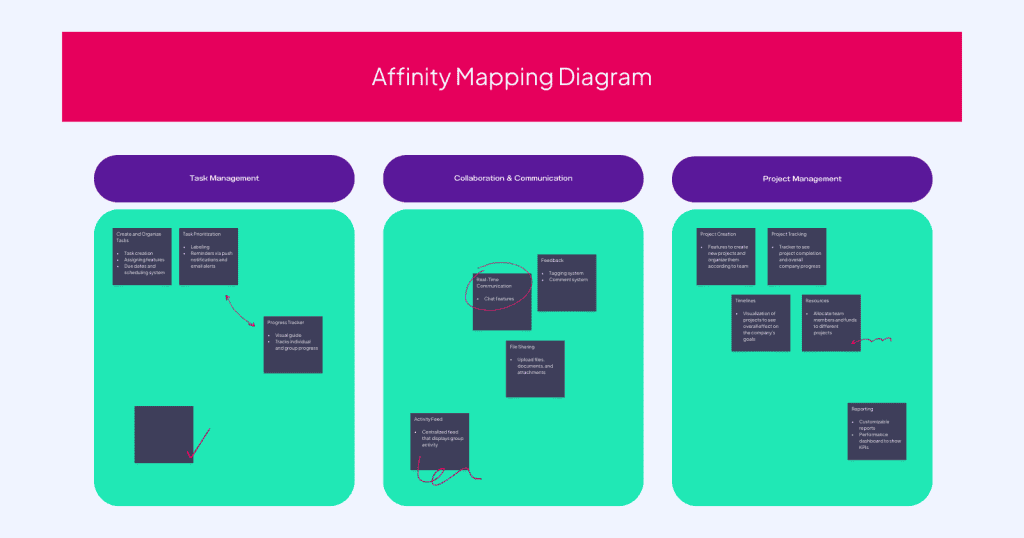
15. رسم خرائط التقارب
ما هو : تنظيم أعداد كبيرة من الأفكار في مجموعات مترابطة لتحديد الأنماط والمواضيع والأولويات.
متى يجب استخدام:
- بعد توليد العديد من الأفكار
- توليف المعلومات المعقدة
- تحديد المواضيع والأنماط
- بناء توافق في الآراء حول الفئات
كيف يعمل:
- توليد الأفكار (باستخدام أي أسلوب)
- اكتب كل فكرة على ورقة لاصقة منفصلة
- عرض جميع الأفكار بشكل واضح
- قم بتجميع الأفكار ذات الصلة معًا في صمت
- إنشاء تسميات الفئات لكل مجموعة
- مناقشة وتنقية التجمعات
- تحديد أولويات الفئات أو الأفكار داخل الفئات
المميزات:
- يُسهّل فهم مجموعات الأفكار الكبيرة
- يكشف عن الأنماط والمواضيع
- تعاوني وديمقراطي
- مرئي وملموس
- يبني فهماً مشتركاً
العيوب:
- ليست تقنية لتوليد الأفكار (للمنظمات فقط)
- قد يستغرق الأمر وقتًا طويلاً مع وجود العديد من الأفكار
- اختلاف في التصنيف
- قد تندرج بعض الأفكار ضمن فئات متعددة
أساليب قائمة على الأسئلة
تستخدم هذه المناهج الأسئلة بدلاً من الإجابات لفتح آفاق جديدة.
16. سلسلة من الأسئلة
ما هو : تقنية طورها أستاذ في معهد ماساتشوستس للتكنولوجيا هال جريجرسن حيث تقوم الفرق بتوليد أكبر عدد ممكن من الأسئلة في وقت قصير، بدلاً من الإجابات.
متى يجب استخدام:
- إعادة صياغة المشكلات
- الافتراضات الصعبة
- الحصول على فاشل
- رؤية المشاكل من زوايا جديدة
كيف يعمل:
- قدّم التحدي في دقيقتين (بشكل عام، وبأقل قدر من التفاصيل)
- اضبط المؤقت على 4 دقائق
- قم بتوليد أكبر عدد ممكن من الأسئلة (استهدف 15 سؤالاً أو أكثر).
- القواعد: الأسئلة فقط، بدون مقدمات، ممنوع الإجابة على الأسئلة
- مراجعة الأسئلة وتحديد أكثرها إثارة للجدل
- اختر أهم الأسئلة لاستكشافها بشكل أعمق
المميزات:
- يعيد صياغة المشاكل بسرعة
- أسهل من إيجاد الحلول
- يكشف عن الافتراضات
- يخلق وجهات نظر جديدة
- مُحفّز ومنشط
العيوب:
- لا يُولّد حلولاً مباشرة
- يتطلب الأمر متابعة للإجابة على الأسئلة
- قد تشعر بالإحباط لعدم وجود إجابات
- قد يؤدي ذلك إلى ظهور العديد من المسارات التي يجب اتباعها
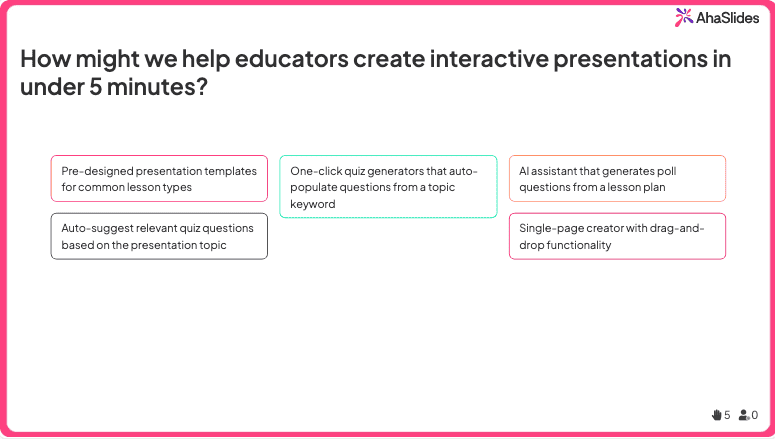
17. أسئلة "كيف يمكننا" (HMW)
ما هو : أسلوب التفكير التصميمي الذي يؤطر المشكلات كفرص باستخدام هيكل "كيف يمكننا ...".
متى يجب استخدام:
- تحديد تحديات التصميم
- إعادة صياغة المشاكل السلبية كفرص إيجابية
- جلسات التفكير الإبداعي الأولية
- صياغة بيانات المشكلة بشكل متفائل وقابل للتنفيذ
كيف يعمل:
- ابدأ بمشكلة أو فكرة
- أعد صياغة السؤال على النحو التالي: "كيف يمكننا..."
- اصنعه:
- متفائل (بافتراض وجود حلول)
- ساعات العمل (يسمح بحلول متعددة)
- للتنفيذ (يشير إلى اتجاه واضح)
- ليس واسع النطاق للغاية or ضيق جدا
- توليد عدة متغيرات ذات وزن جزيئي عالٍ
- اختر أكثر الطرق الواعدة لتبادل الأفكار حول الحلول
المميزات:
- يخلق إطارًا متفائلًا يركز على الفرص
- يفتح مسارات حلول متعددة
- يُستخدم على نطاق واسع في التفكير التصميمي
- سهلة التعلم والتطبيق
- يُغيّر طريقة التفكير من المشكلة إلى الإمكانية
العيوب:
- لا يُولّد حلولاً (بل يكتفي بصياغة الأسئلة).
- قد يبدو نمطياً
- خطر الأسئلة العامة أو الغامضة للغاية
- قد يؤدي ذلك إلى تبسيط مفرط للمشاكل المعقدة
التقنيات المتقدمة
18. المخادع
ما هو : قائمة مرجعية تعتمد على الاختصارات، تحفز التفكير الإبداعي من خلال تعديل الأفكار الموجودة بشكل منهجي.
أسئلة برنامج SCAMER:
- استبدل: ما الذي يمكن استبداله أو تبديله؟
- الجمع بين: ما الذي يمكن دمجه أو تكامله؟
- يتكيف: ما الذي يمكن تعديله للاستخدامات المختلفة؟
- تعديل/تكبير/تصغير: ما الذي يمكن تغييره في المقياس أو الخصائص؟
- استخدام آخر: كيف يمكن استخدام هذا بطريقة أخرى؟
- اِسْتَبْعَد: ما الذي يمكن حذفه أو تبسيطه؟
- عكس/إعادة ترتيب: ما الذي يمكن فعله بشكل عكسي أو بترتيب مختلف؟
متى يجب استخدام:
- تطوير المنتجات والابتكار
- تحسين الحلول الحالية
- عندما تواجه مشكلة ما
- تمارين إبداعية منهجية
كيف يعمل:
- اختر منتجًا أو عملية أو فكرة موجودة
- قم بتطبيق كل توجيه من توجيهات SCAPER بشكل منهجي
- ابتكر أفكارًا لكل فئة
- دمج التعديلات الواعدة
- تقييم الجدوى والأثر
المميزات:
- منهجي وشامل
- يصلح لأي فكرة أو منتج موجود
- سهل التذكر (اختصار)
- استكشاف القوى لاتجاهات متعددة
- مناسب لورش عمل الابتكار
العيوب:
- يبني على أفكار موجودة (وليس على مفاهيم جديدة تمامًا)
- قد يبدو الأمر آلياً
- يُنتج العديد من الأفكار المتوسطة
- يتطلب الأمر فكرة قوية قائمة للبدء
اختيار الأسلوب الصحيح
مع توفر أكثر من 20 تقنية، كيف تختار؟ ضع في اعتبارك ما يلي:
حجم المجموعة:
- المجموعات الصغيرة (2-5): موجات من الأسئلة، توليد أفكار سريع، SCAMER
- مجموعات متوسطة (6-12): الكتابة الذهنية، التناوب، القبعات الست للتفكير
- المجموعات الكبيرة (13+): رسم الخرائط التقاربية، تقنية المجموعة الاسمية
أهداف الجلسة:
- الكمية القصوى: توليد الأفكار السريع، والأفكار المجنونة، والتناوب الدوري
- استكشاف معمق: تحليل SWOT، قبعات التفكير الست، أسئلة لماذا الخمسة
- المشاركة المتساوية: الكتابة الذهنية، تقنية المجموعة الاسمية
- التفكير البصري: رسم الخرائط الذهنية، ورسم القصص المصورة، والعصف الذهني بالرسومات التخطيطية
- تشخيص المشكلة: خمسة أسئلة لماذا، العصف الذهني العكسي
فعاليات الفريق:
- الشخصيات المسيطرة: الكتابة الذهنية، تقنية المجموعة الاسمية
- فريق انطوائي: تقنيات هادئة
- الفريق المتشكك: العصف الذهني العكسي، قبعات التفكير الست
- نحتاج إلى وجهات نظر جديدة: انفجارات الأسئلة، سكامبر
عملية العصف الذهني خطوة بخطوة
اتبع هذا الإطار المجرب لإدارة جلسات العصف الذهني الفعالة من البداية إلى النهاية.
المرحلة الأولى: الإحماء (5-10 دقائق)
البدء ببرود يؤدي إلى صمت محرج وأفكار سطحية. حفّز إبداعك بنشاط سريع.
طرق فعالة لكسر الجمود:
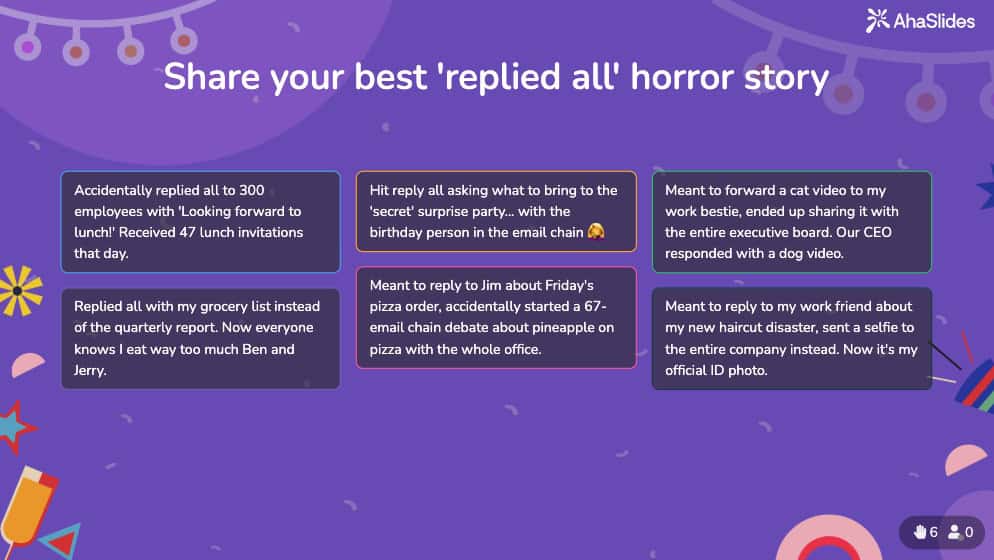
مشاركة القصص المحرجة
يمكنك أن تطلب من كل شخص مشاركة قصة محرجة تتعلق بعمله، مثل "شارك أفضل قصة رعب لديك تم الرد عليها من قبل الجميع". هذا يخلق جسورًا مشتركة بين المشاركين ويجعل الجميع يشعرون بالراحة مع بعضهم البعض في فترة زمنية أقصر.
جزيرة الصحراء
اسأل كل شخص عن ثلاثة أشياء يرغب في الحصول عليها إذا تقطعت به السبل على جزيرة مهجورة لمدة عام واحد.
حقيقتان وكذبة
يُدلي كل شخص بثلاث عبارات عن نفسه - اثنتان صحيحتان وواحدة خاطئة. يخمن الآخرون الكذبة.
اختبار سريع
قم بإجراء اختبار ممتع لمدة 5 دقائق باستخدام AhaSlides حول موضوع خفيف الظل.
المرحلة الثانية: تحديد المشكلة (5-15 دقيقة)
اعرض التحدي بوضوح:
- حدد المشكلة ببساطة وبشكل محدد
- تقديم سياق وخلفية مناسبة
- شارك القيود الرئيسية (الميزانية، الوقت، الموارد)
- اشرح لماذا يُعدّ حلّ هذه المشكلة أمراً بالغ الأهمية
- توضيح ما يبدو عليه النجاح
- أجب عن الأسئلة التوضيحية
المرحلة الثالثة: التفكير التبايني - توليد الأفكار (20-40 دقيقة)
هذه هي المرحلة الأساسية للعصف الذهني. استخدم تقنية واحدة أو أكثر من التقنيات المذكورة في القسم السابق.
المبادئ الأساسية:
- التزم بقواعد العصف الذهني السبعة بصرامة
- شجع الكمية على حساب الجودة
- سجّل كل فكرة بشكل واضح
- حافظ على الطاقة عالية
- منع التقييم أو النقد
- حدد حدودًا زمنية واضحة
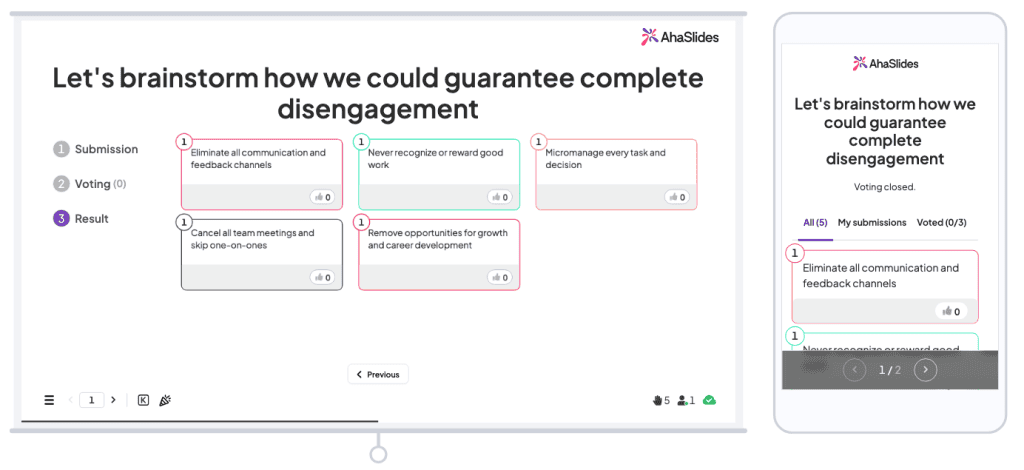
استخدام AhaSlides لتوليد الأفكار:
- أنشئ شريحة للعصف الذهني تتضمن بيان مشكلتك
- يقدم المشاركون أفكارهم من هواتفهم
- تظهر الأفكار مباشرة على الشاشة
- بإمكان الجميع الاطلاع على المجموعة الكاملة والتصويت على أفضل الأفكار للمرحلة التالية
المرحلة الرابعة: استراحة (5-10 دقائق)
لا تتجاهل الاستراحة! فهي تسمح للأفكار بالنمو، والطاقة بإعادة التجدد، والتحول الذهني من وضع التوليد إلى وضع التقييم.
المرحلة الخامسة: التفكير التقاربي - التنظيم والتحسين (15-30 دقيقة)
الخطوة الأولى: تنظيم الأفكار - تجميع الأفكار المتشابهة باستخدام رسم الخرائط التقاربية:
- قم بتصنيف الأفكار بصمت إلى مواضيع ذات صلة
- أنشئ تصنيفات الفئات
- ناقش المجموعات وقم بتحسينها
- التعرف على الأنماط
الخطوة الثانية: توضيح الأفكار
- مراجعة الأفكار غير الواضحة
- اطلب من مقدمي المقترحات أن يشرحوا ذلك.
- اجمع الأفكار المكررة أو المتشابهة جدًا
- استوعب النية، وليس الكلمات فقط.
الخطوة 3: التقييم الأولي - تطبيق الفلاتر السريعة:
- هل يعالج هذا المشكلة؟
- هل هذا ممكن (حتى وإن كان صعباً)؟
- هل هو جديد/مختلف بما يكفي لمتابعته؟
الخطوة الرابعة: التصويت على أفضل الأفكار - استخدم التصويت المتعدد لتضييق نطاق الخيارات:
- امنح كل شخص من 3 إلى 5 أصوات
- يمكن التصويت عدة مرات على فكرة واحدة إذا كانت مفضلة بشدة
- فرز الأصوات
- ناقش أفضل 5-10 أفكار
استخدام AhaSlides للتصويت:
- أضف أفضل الأفكار إلى شريحة الاستطلاع
- يصوت المشاركون من هواتفهم
- عرض النتائج مباشرة
- اطلع على أهم الأولويات فوراً
المرحلة السادسة: الخطوات التالية (5-10 دقائق)
لا تختم بدون بنود عمل واضحة:
تعيين الملكية:
- من سيتولى تطوير كل فكرة رئيسية بشكل أكبر؟
- متى سيقدمون تقريرهم؟
- ما هي الموارد التي يحتاجونها؟
تحديد موعد للمتابعة:
- حدد موعدًا للمناقشة القادمة
- حدد نوع التحليل المطلوب
- وضع جدول زمني لاتخاذ القرارات
وثق كل شيء:
- اجمع كل الأفكار
- حفظ الفئات والسمات
- سجل القرارات المتخذة
- شارك الملخص مع جميع المشاركين
شكراً للمشاركين
العصف الذهني في سياقات مختلفة
جلسات العصف الذهني للأعمال ومكان العمل
التطبيقات الشائعة:
- تطوير المنتجات وابتكار الميزات
- الحملات التسويقية واستراتيجيات المحتوى
- مبادرات تحسين العمليات
- التخطيط الاستراتيجي
- ورش عمل حل المشكلات
اعتبارات خاصة بالعمل:
- ديناميكيات القوة: قد يعيق كبار القادة التفكير الصادق
- ضغط العائد على الاستثمار: وازن بين الحرية الإبداعية والقيود التجارية
- الاحتياجات متعددة الوظائف: يشمل ذلك أقسامًا متنوعة
- التركيز على التنفيذ: اختتم بخطط عمل ملموسة
نماذج لأسئلة العصف الذهني للأعمال:
- "ما هي القنوات التي يجب أن نركز عليها لتحقيق أقصى نمو في الإيرادات؟"
- "كيف يمكننا تمييز منتجنا في سوق مزدحمة؟"
- "ما هي مواصفات العميل المثالي لخدمتنا الجديدة؟"
- "كيف يمكننا خفض تكلفة اكتساب العملاء بنسبة 30%؟"
- "ما هي الوظائف التي يجب أن نوظف لها لاحقاً ولماذا؟"

العصف الذهني التعليمي
التطبيقات الشائعة:
- تخطيط المقالات والمشاريع
- المهام الجماعية والعروض التقديمية
- تمارين الكتابة الإبداعية
- حل المشكلات في مجالات العلوم والتكنولوجيا والهندسة والرياضيات
- مناقشات الصف
اعتبارات خاصة بالتعليم:
- تطوير المهارة: استخدم العصف الذهني لتعليم التفكير النقدي
- أعمار متفاوتة: تكييف التقنيات مع مستويات النمو
- التقويم: فكّر في كيفية تقييم المشاركة بشكل عادل
- المشاركة: اجعلها ممتعة وتفاعلية
- الطلاب الهادئون: استخدم أساليب تضمن مساهمة الجميع
نماذج لأسئلة العصف الذهني التعليمي:
المرحلة الابتدائية (من الروضة إلى الصف الخامس):
- "ما هي أفضل طريقة للوصول إلى المدرسة ولماذا؟"
- "لو كان بإمكانك اختراع أي شيء، فماذا سيكون؟"
- "كيف يمكننا جعل فصلنا الدراسي أكثر متعة؟"
المدرسة المتوسطة:
- "كيف يمكننا تقليل النفايات في مقصفنا؟"
- "ما هي وجهات النظر المختلفة حول هذا الحدث التاريخي؟"
- "كيف يمكننا تصميم جدول دراسي أفضل؟"
المدرسة الثانوية:
- "ما هي أفضل طريقة لقياس نجاح دولة ما؟"
- "كيف ينبغي لنا معالجة تغير المناخ في مجتمعنا؟"
- "ما الدور الذي ينبغي أن تلعبه وسائل التواصل الاجتماعي في التعليم؟"
الكلية/الجامعة:
- "كيف يمكننا إعادة تصور التعليم العالي في القرن الحادي والعشرين؟"
- "ما هي أهم الأسئلة البحثية في مجالنا؟"
- "كيف يمكننا جعل البحث الأكاديمي أكثر سهولة في الوصول إليه؟"

العصف الذهني عن بعد والهجين
تحديات خاصة:
- العوائق التقنية ومشاكل الاتصال
- انخفاض التواصل غير اللفظي
- "إرهاق زووم" وقصر فترات الانتباه
- صعوبة في بناء الطاقة والزخم
- تنسيق المنطقة الزمنية
أفضل الممارسات:
إعداد التكنولوجيا:
- اختبر جميع الأدوات مسبقًا
- يجب توفير وسائل اتصال احتياطية
- استخدم السبورات البيضاء الرقمية (Miro، Mural)
- استخدم شرائح AhaSlides للمشاركة التفاعلية
- جلسات مسجلة لمن لا يستطيعون الحضور مباشرة
تعديلات التيسير:
- جلسات أقصر (45-60 دقيقة كحد أقصى)
- فترات راحة أكثر تكراراً (كل 20-30 دقيقة)
- تبادل الأدوار بشكل صريح
- استخدم الدردشة للتعبير عن أفكارك الجانبية
- تقنيات أكثر تنظيماً
استراتيجيات المشاركة:
- أبقِ الكاميرات قيد التشغيل كلما أمكن ذلك
- استخدم التفاعلات والرموز التعبيرية للحصول على ردود فعل سريعة
- الرافعة المالية استطلاعات الرأي وميزات التصويت
- غرف منفصلة للعمل الجماعي الصغير
- مكونات غير متزامنة للفرق العالمية
العصف الذهني الفردي
متى يُنصح بالتفكير بشكل فردي؟
- المشاريع والقرارات الشخصية
- التحضير المسبق قبل الجلسات الجماعية
- الكتابة والمشاريع الإبداعية
- عندما تحتاج إلى تركيز عميق
تقنيات العزف المنفرد الفعالة:
- خريطة ذهنية
- الكتابة الحرة
- المخادع
- خمسة أسباب
- سلسلة من الأسئلة
- جلسة عصف ذهني أثناء المشي
نصائح للعصف الذهني الفردي:
- تعيين حدود زمنية محددة
- تغيير البيئات لتغيير التفكير
- خذ فترات راحة ودع الأفكار تتطور.
- تحدث بصوت عالٍ مع نفسك
- لا تفرض رقابة ذاتية في البداية
- قم بمراجعة الجلسة وصقلها في جلسة منفصلة
حل المشكلات الشائعة في جلسات العصف الذهني
المشكلة: الأصوات المهيمنة
علامات:
- نفس الشخصين أو الثلاثة يساهمون بمعظم الأفكار
- بينما يلتزم آخرون الصمت أو ينأون بأنفسهم عن الموضوع.
- الأفكار لا تتطور إلا في اتجاه واحد
الحلول:
- استخدم نظام التناوب لضمان تكافؤ الفرص
- قم بتطبيق أسلوب الكتابة الذهنية أو أسلوب المجموعة الاسمية
- قم بتعيين قاعدة صريحة "ممنوع المقاطعة".
- استخدم أدوات الإرسال المجهولة مثل AhaSlides
- اطلب من الميسر أن يستدعي المشاركين الأكثر هدوءًا
- انقسموا إلى مجموعات أصغر
المشكلة: الصمت وضعف المشاركة
علامات:
- فترات صمت طويلة ومحرجة
- يبدو على الناس عدم الارتياح
- يتم تبادل القليل من الأفكار أو لا يتم تبادل أي أفكار على الإطلاق
- نقص الطاقة في الغرفة
الحلول:
- ابدأ بتمارين إحماء أكثر جاذبية
- استخدم العصف الذهني الخاص أولاً، ثم شارك الأفكار.
- اجعل عملية الإرسال مجهولة الهوية
- تقليل عدد المجموعات
- تأكد من فهم المشكلة جيداً
- شارك أفكارًا نموذجية لتجهيز المضخة
- استخدم أساليب أكثر تنظيماً
المشكلة: الحكم والنقد المبكر
علامات:
- يقول الناس "لن ينجح ذلك" أو "لقد جربنا ذلك"
- يتم رفض الأفكار فوراً
- ردود فعل دفاعية من أصحاب الأفكار
- تراجع الابتكار مع تقدم الجلسة
الحلول:
- أعد صياغة قاعدة "تأجيل الحكم".
- قم بإعادة توجيه التعليقات النقدية بلطف
- فكّر في حظر عبارات مثل "نعم، ولكن..."
- استخدم لغة غير حُكمية كعامل مُيسِّر
- استخدم تقنيات تفصل بين عملية التوليد والتقييم
- افصلوا الأشخاص عن الأفكار (مشاركة مجهولة المصدر)
المشكلة: الشعور بالجمود أو نفاد الأفكار
علامات:
- الأفكار تتباطأ حتى تكاد تنعدم
- تكرار المفاهيم المتشابهة
- يبدو على المشاركين الإرهاق الذهني
- فترات توقف طويلة دون أي مساهمات جديدة
الحلول:
- انتقل إلى أسلوب مختلف
- خذ قسطاً من الراحة وعد إلينا منتعشاً
- اطرح أسئلة تحفيزية:
- "ماذا سيفعل [المنافس/الخبير]؟"
- "ماذا لو كانت ميزانيتنا غير محدودة؟"
- "ما هي الفكرة الأكثر جنوناً التي يمكننا تجربتها؟"
- أعد النظر في بيان المشكلة (أعد صياغته)
- استخدم SCAMPER أو أي تقنية منهجية أخرى
- أضف وجهات نظر جديدة
المشكلة: مشاكل إدارة الوقت
علامات:
- تشغيلها بشكل ملحوظ على مدى فترة زمنية طويلة
- التسرع في المراحل المهمة
- عدم الوصول إلى مرحلة التحسين أو اتخاذ القرار
- المشاركون يتفقدون ساعاتهم أو هواتفهم
الحلول:
- حدد حدودًا زمنية واضحة مسبقًا
- استخدم مؤقتًا مرئيًا
- عيّن شخصًا مسؤولًا عن ضبط الوقت
- التزم بالجدول الزمني
- كن مستعدًا لتمديد ساعات العمل قليلاً إذا كان ذلك مثمرًا.
- حدد موعدًا لجلسة متابعة إذا لزم الأمر
- استخدم تقنيات أكثر فعالية من حيث الوقت
المشكلة: الصراع والخلافات
علامات:
- التوتر بين المشاركين
- لغة الجسد الدفاعية أو العدوانية
- الجدال حول الأفكار
- الهجمات الشخصية (حتى الخفية منها)
الحلول:
- توقف وأعد صياغة القواعد الأساسية
- ذكّر الجميع بأن جميع الأفكار صالحة في هذه المرحلة
- افصل الناس عن الأفكار
- استخدم القبعة الزرقاء (قبعات التفكير الست) لإعادة التركيز
- خذ قسطاً من الراحة لتبرد جسمك
- محادثة خاصة مع الأطراف المتنازعة
- التركيز على الأهداف والقيم المشتركة
المشكلة: مشاكل تقنية في الجلسات الافتراضية
علامات:
- مشاكل الاتصال
- مشاكل جودة الصوت/الفيديو
- مشاكل الوصول إلى الأدوات
- مغادرة المشاركين
الحلول:
- يجب توفير وسيلة اتصال احتياطية
- اختبر التكنولوجيا مسبقًا
- شارك تعليمات واضحة مسبقًا
- جلسة تسجيل لمن يواجهون مشاكل
- يتوفر خيار المشاركة دون اتصال بالإنترنت
- اجعل الجلسات أقصر
- استخدم أدوات بسيطة وموثوقة
- يجب توفير شخص للدعم الفني