
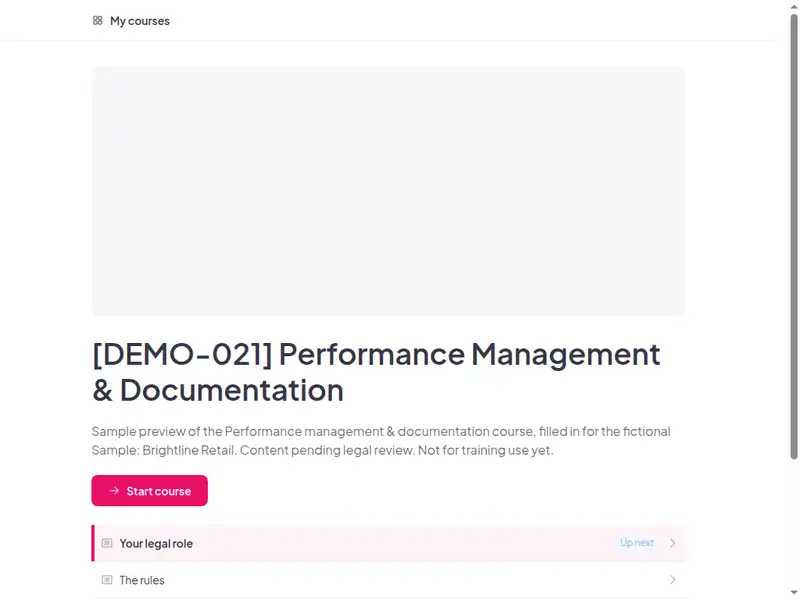
Lesson 1: Your legal role · 6 min
Explain how documentation (or its absence) decides discrimination and retaliation cases.
Learners sign in, so every finish and score is recorded. 9 fields to fill in with your details.
Minutes are an estimate.
Explain how documentation (or its absence) decides discrimination and retaliation cases.
Set clear, job-related expectations and give timely feedback.
Write factual, specific, consistent documentation (behaviour, impact, expectation).
Recognise when performance issues intersect with protected leave, accommodation or complaints, and involve HR.
Run a fair performance improvement plan and follow progressive discipline.
12 questions, 80% to pass. The result is saved to the learner's record.
Taken from the course itself.
Why does documentation written after an employee complains look risky?
Answer: It can look like the real reason was the complaint, not the performance. Timing matters. Notes written only after protected activity can support an argument that the stated reason is pretext.
Lesson 1: Your legal role
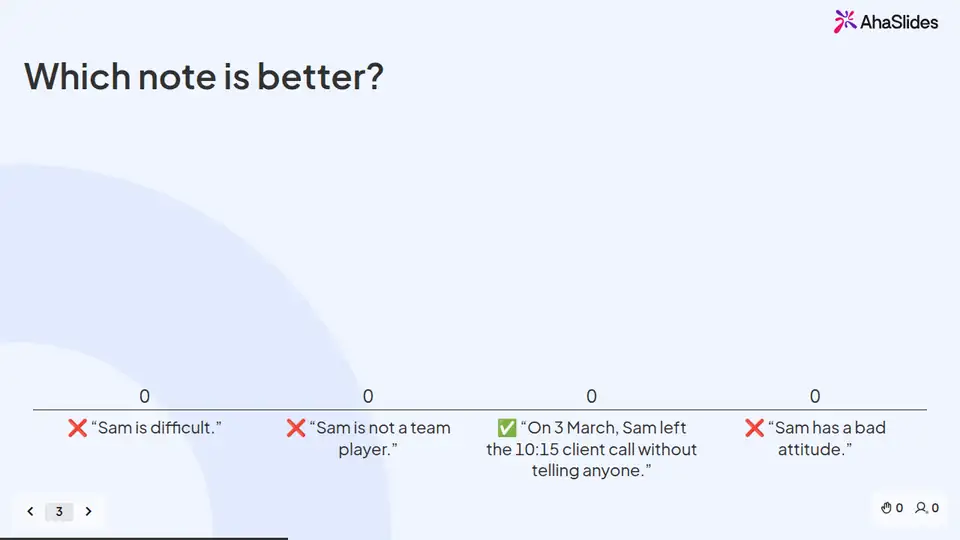
Which note is best?
Answer: “On March 3, Sam left the 10:15 client call without telling anyone. The client asked for a call back.”. A good note has the date, the behaviour and the impact. It does not judge character.
Lesson 2: The rules
Which is the best goal for a PIP?
Answer: Reply to customer emails within 4 working hours, checked weekly. A PIP goal should be specific and measurable, so both of you can tell whether it has been met.
Lesson 4: The conversation
Account manager missing targets says "it's my anxiety meds".
Best response: Pause discipline discussion of that issue, refer to HR for accommodation process, keep documenting job expectations.
Weaker response: That's not my problem.
Best practice; risk areas under Title VII, ADA, ADEA, FMLA (825.220), NLRA Section 7, and anti-retaliation provisions; at-will employment (state common law; Montana's Wrongful Discharge from Employment Act is the main exception).
Courses teams often run alongside this one.

HR Compliance Training for Managers

HR Compliance Training for Managers

HR Compliance Training for Managers
An article from the AhaSlides blog that uses this course.

Comments from trainers
No comments yet. Tell other trainers how the course went.
Your comment
Comments are public. We remove spam and personal details.