
He aquí una verdad frustrante sobre la capacitación corporativa: la mayoría de las sesiones fracasan incluso antes de comenzar. No porque el contenido sea malo, sino porque la planificación es apresurada, la impartición es unidireccional y los participantes se desconectan en quince minutos.
¿Te suena familiar?
La investigación muestra que El 70% de los empleados olvidan el contenido de la formación En 24 horas, cuando las sesiones están mal planificadas. Sin embargo, hay mucho en juego: el 68 % de los empleados considera la capacitación como la política más importante de la empresa, y el 94 % permanecería más tiempo en empresas que invierten en su aprendizaje y desarrollo.
¿La buena noticia? Con un plan de capacitación sólido y las estrategias de participación adecuadas, puedes transformar presentaciones aburridas en experiencias donde los participantes realmente quieran aprender.
Esta guía lo guiará a través del proceso completo de planificación de sesiones de capacitación utilizando el marco ADDIE, un modelo de diseño instruccional estándar de la industria utilizado por capacitadores profesionales en todo el mundo.
¿Qué hace que una sesión de entrenamiento sea efectiva?
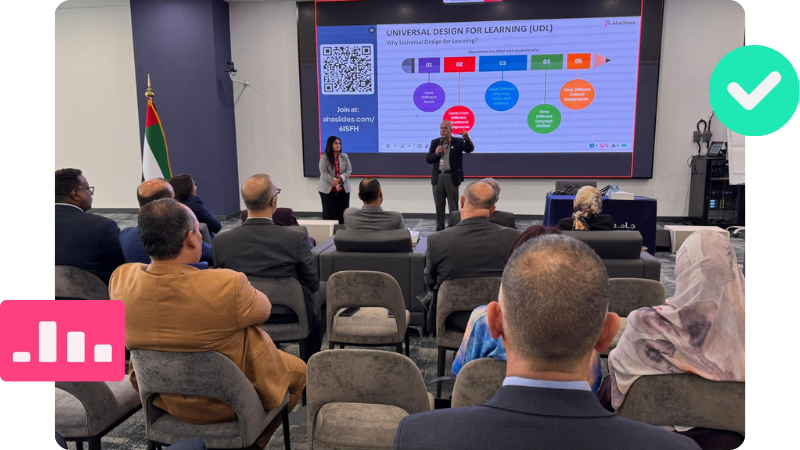
Una sesión de capacitación es cualquier reunión estructurada donde los empleados adquieren nuevas habilidades, conocimientos o capacidades que pueden aplicar inmediatamente a su trabajo. Sin embargo, existe una enorme diferencia entre la asistencia obligatoria y el aprendizaje significativo.
Tipos de sesiones de entrenamiento efectivas
Talleres: Desarrollo de habilidades prácticas donde los participantes practican nuevas técnicas.
- Ejemplo: Taller de comunicación de liderazgo con ejercicios de juego de roles
Seminarios: Discusiones centradas en temas con diálogo bidireccional
- Ejemplo: Seminario de gestión del cambio con resolución de problemas en grupo
Programas de incorporación: Orientación para nuevos empleados y capacitación específica para cada puesto
- Ejemplo: Capacitación en conocimiento de productos para equipos de ventas
Desarrollo profesional: Avance profesional y formación en habilidades blandas
- Ejemplo: Formación en gestión del tiempo y productividad
La ciencia de la retención
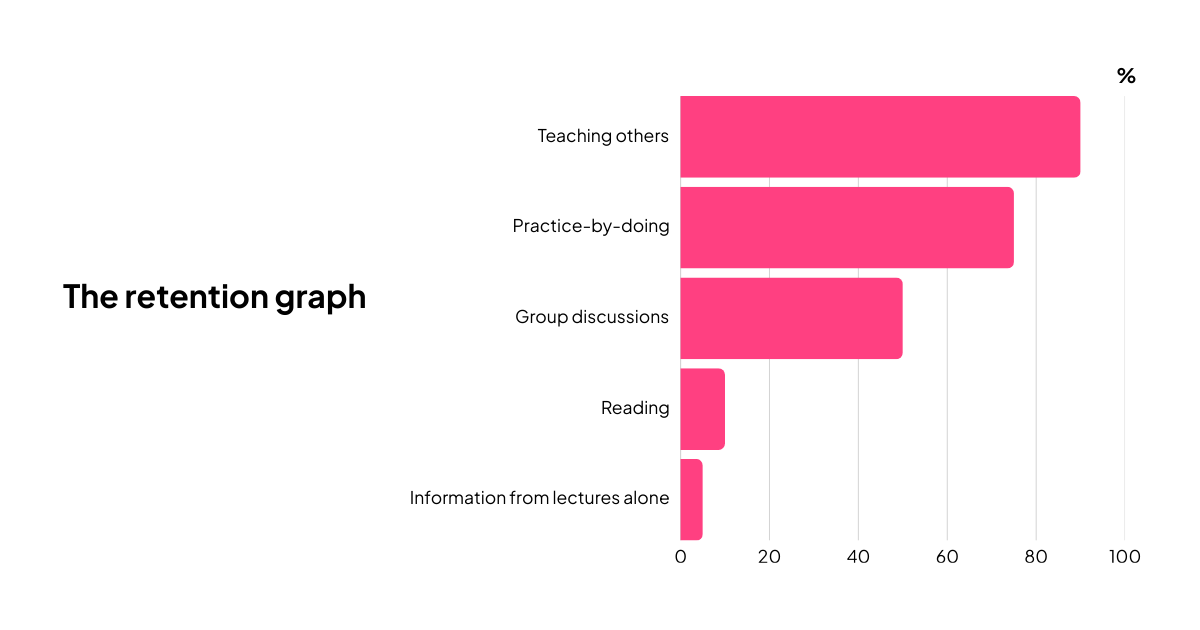
Según los Laboratorios Nacionales de Capacitación, los participantes conservan:
- 5% de información proveniente únicamente de conferencias
- 10% de la lectura
- 50% de discusiones grupales
- 75% de la práctica sobre la marcha
- 90% de enseñar a otros
Por eso, las sesiones de capacitación más efectivas incorporan múltiples modalidades de aprendizaje y priorizan la interacción entre los participantes sobre el monólogo del presentador. Elementos interactivos como encuestas en vivo, cuestionarios y sesiones de preguntas y respuestas no solo hacen que la capacitación sea más amena, sino que mejoran significativamente la retención y la aplicación de los conocimientos por parte de los participantes.
El marco ADDIE: su plan de planificación
Dedicar tiempo a planificar tu sesión de capacitación no solo es una buena práctica, sino que marca la diferencia entre la retención de conocimientos y el tiempo perdido. El modelo ADDIE ofrece un enfoque sistemático utilizado por diseñadores instruccionales de todo el mundo.
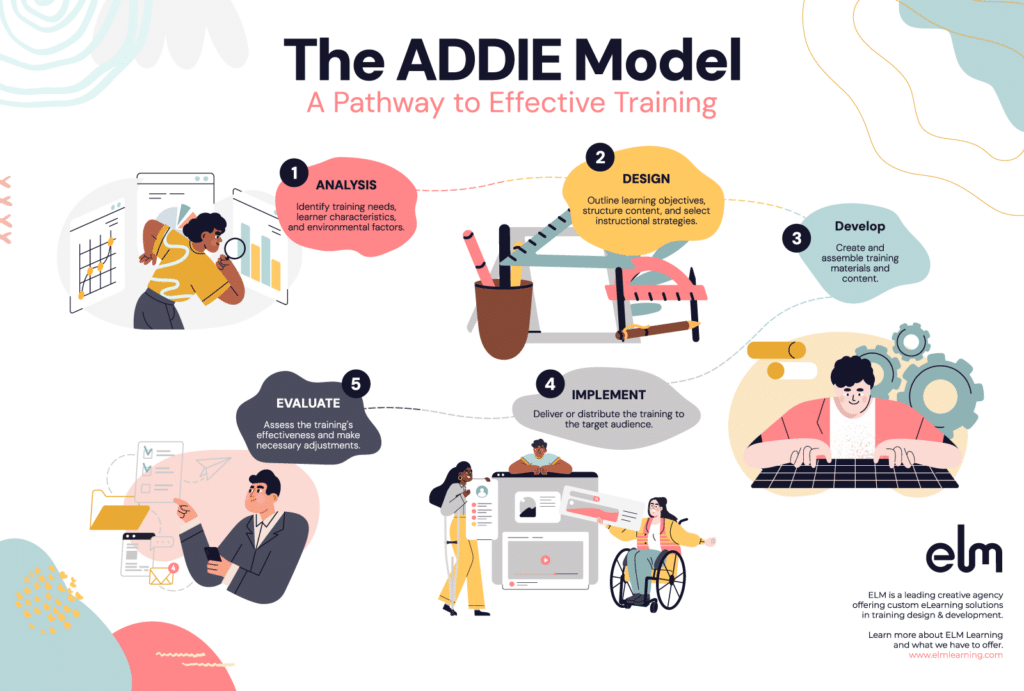
ADDIE significa:
A - Análisis: Identificar las necesidades de formación y las características de los alumnos
D - Diseño: Definir objetivos de aprendizaje y elegir métodos de impartición.
D - Desarrollo: Crear materiales y actividades de capacitación
I - Implementación: Impartir la sesión de formación
E - Evaluación: Medir la eficacia y recopilar comentarios
Por qué funciona ADDIE
- Enfoque sistemático: Nada se deja al azar
- Centrado en el alumno: Comienza con necesidades reales, no con suposiciones
- Mensurable: Los objetivos claros permiten una evaluación adecuada
- Iterativo: La evaluación informa sobre futuras mejoras
- Flexible: Se aplica a capacitaciones presenciales, virtuales e híbridas.
El resto de esta guía sigue el marco ADDIE, mostrándole exactamente cómo planificar cada fase y cómo la tecnología interactiva como AhaSlides lo apoya en cada paso.
Paso 1: Realizar una evaluación de necesidades (fase de análisis)
¿El mayor error que cometen los capacitadores? Suponer que saben lo que necesita su público. Según el Informe sobre el Estado de la Industria 2024 de la Asociación para el Desarrollo del Talento, El 37% de los programas de capacitación fracasan porque no abordan las brechas reales de habilidades.
Cómo identificar las necesidades reales de capacitación
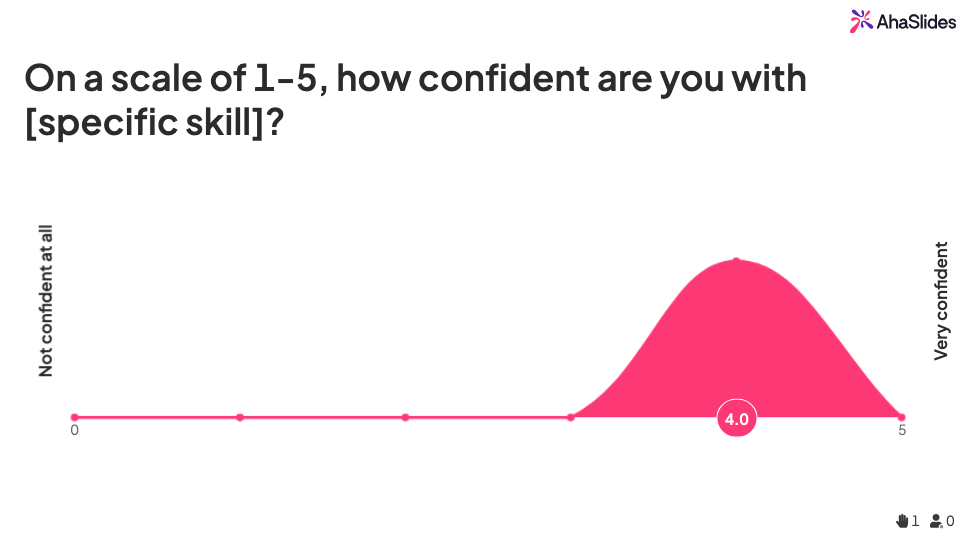
Encuestas previas a la capacitación: Envíe encuestas anónimas preguntando: "¿En una escala del 1 al 5, qué tan seguro se siente con [habilidad específica]?" y "¿Cuál es su mayor desafío al [realizar una tarea]?". Utilice la función de encuestas de AhaSlides para recopilar y analizar las respuestas.
Análisis de datos de rendimiento: Revise los datos existentes para detectar errores comunes, retrasos en la productividad, quejas de los clientes u observaciones del gerente.
Grupos focales y entrevistas: Hable directamente con los líderes del equipo y los participantes para comprender los desafíos diarios y las experiencias de capacitación previas.
Entiende a tu audiencia
Los adultos aportan experiencia, necesitan relevancia y buscan una aplicación práctica. Conozca su nivel actual de conocimientos, preferencias de aprendizaje, motivaciones y limitaciones. Su formación debe respetar esto, sin ser condescendiente ni superficial, solo contenido práctico que puedan usar de inmediato.
Paso 2: Redactar objetivos de aprendizaje claros (fase de diseño)
Los objetivos de formación imprecisos conducen a resultados imprecisos. Tus objetivos de aprendizaje deben ser específicos, medibles y alcanzables.
Todo objetivo de aprendizaje debe ser INTELIGENTE:
- Específico: ¿Exactamente qué podrán hacer los participantes?
- Mensurable: ¿Cómo sabrás que lo aprendieron?
- Realizable: ¿Es realista dado el tiempo y los recursos?
- Pertinente: ¿Tiene relación con su trabajo real?
- Limitados en el tiempo: ¿Para cuando deberían dominar esto?
Ejemplos de objetivos bien redactados
Mal objetivo: "Comprender la comunicación efectiva"
Buen objetivo: Al finalizar esta sesión, los participantes podrán brindar retroalimentación constructiva utilizando el modelo SBI (Situación-Comportamiento-Impacto) en escenarios de juego de roles.
Mal objetivo: "Aprenda sobre gestión de proyectos"
Buen objetivo: Los participantes podrán crear una línea de tiempo del proyecto utilizando diagramas de Gantt e identificar las dependencias de la ruta crítica para su proyecto actual al final de la semana 2.
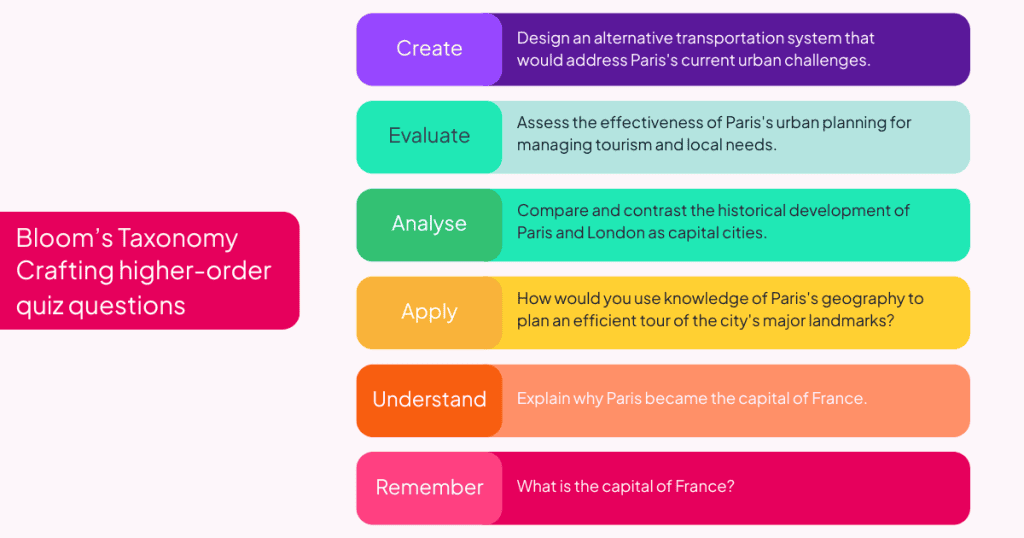
Taxonomía de Bloom para niveles objetivos
Objetivos de estructura en función de la complejidad cognitiva:
- Recuerde: Recordar hechos y conceptos básicos (definir, enumerar, identificar)
- Entender: Explicar ideas o conceptos (describir, explicar, resumir)
- Solicita: Utilizar información en situaciones nuevas (demostrar, resolver, aplicar)
- Analizar: Establecer conexiones entre ideas (comparar, examinar, distinguir)
- Evaluar: Justificar decisiones (evaluar, criticar, juzgar)
- Crear: Producir trabajos nuevos u originales (diseñar, construir, desarrollar)
Para la mayoría de las capacitaciones corporativas, apunte al nivel "Aplicar" o superior: los participantes deben poder hacer algo con lo que han aprendido, no solo recitar información.
Paso 3: Diseñar contenido y actividades atractivas (fase de desarrollo)
Ahora que sabes lo que los participantes necesitan aprender y tus objetivos están claros, es hora de diseñar cómo lo enseñarás.
Secuenciación y sincronización de contenido
Comience explicando por qué esto es importante para ellos antes de profundizar en el "cómo". Desarrolle progresivamente de lo simple a lo complejo. Use el Regla 10-20-70:10% apertura y contexto, 70% contenido central con actividades, 20% práctica y resumen.
Cambie de actividad cada 10-15 minutos para mantener la atención. Combine estas actividades a lo largo del ejercicio:
- Rompehielos (5-10 min): Encuestas rápidas o nubes de palabras para evaluar los puntos de partida.
- Pruebas de conocimientos (2-3 min): Cuestionarios para obtener retroalimentación instantánea sobre la comprensión.
- Discusiones en grupos pequeños (10-15 minutos): Estudios de casos o resolución de problemas en conjunto.
- Juegos de rol (15-20 min): Practique nuevas habilidades en entornos seguros.
- Reunión creativa: Nubes de palabras para recopilar ideas de todos simultáneamente.
- Preguntas y respuestas en vivo: Preguntas anónimas a lo largo del texto, no sólo al final.
Elementos interactivos que aumentan la retención
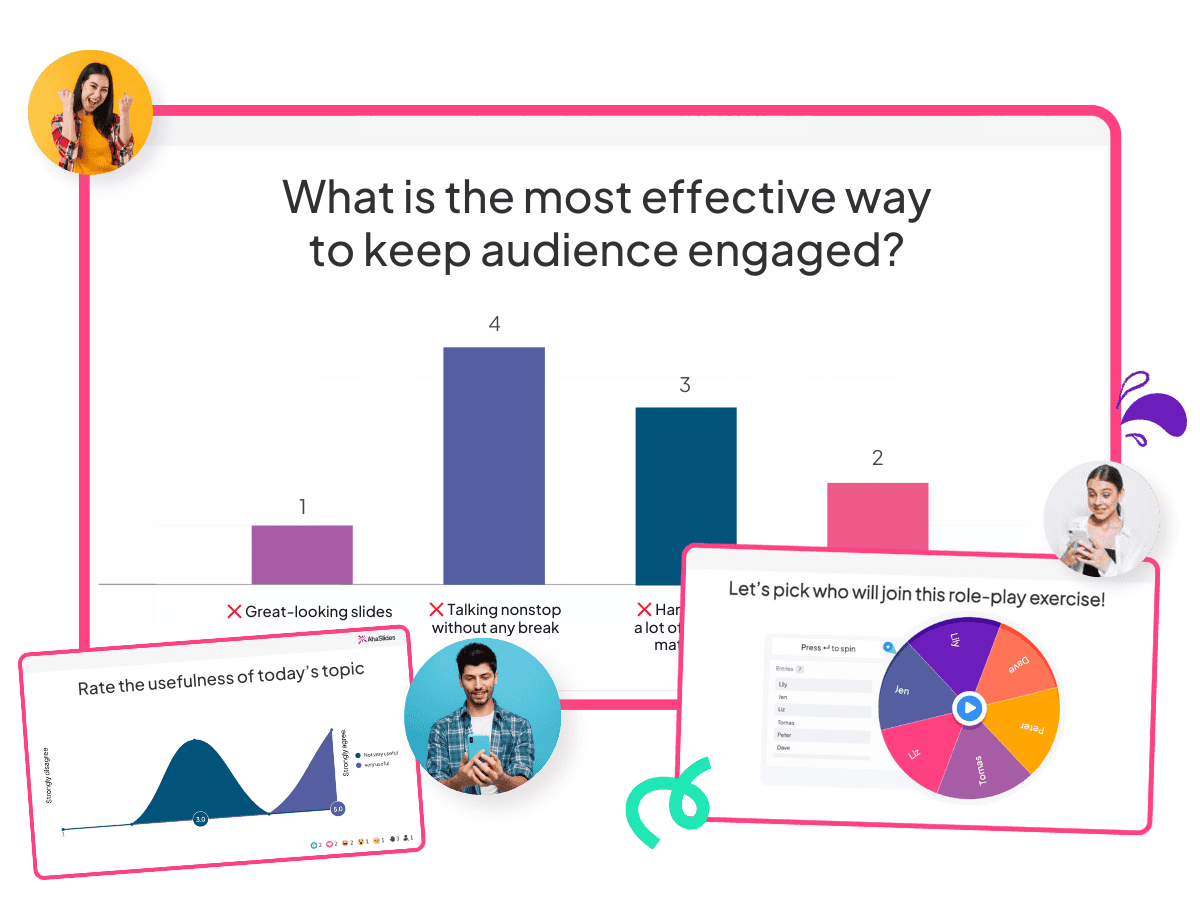
Las clases tradicionales logran una retención del 5%. Los elementos interactivos la elevan al 75%. Las encuestas en vivo evalúan la comprensión en tiempo real, los cuestionarios hacen que el aprendizaje sea como un juego y las nubes de palabras facilitan la lluvia de ideas colaborativa. La clave es una integración fluida: enriquece tu contenido sin interrumpir el flujo.
Paso 4: Desarrolle sus materiales de capacitación (fase de desarrollo)
Una vez planificada la estructura del contenido, cree los materiales reales que utilizarán los participantes.
Criterios de diseño
Diapositivas de la presentación: Mantenlas simples: una idea principal por diapositiva, texto mínimo (máximo 6 viñetas de 6 palabras cada una) y fuentes claras y legibles desde el fondo de la sala. Usa el Creador de Presentaciones con IA de AhaSlides para generar estructuras rápidamente e integrar encuestas, cuestionarios y diapositivas de preguntas y respuestas entre el contenido.
Guías para los participantes: Folletos con conceptos clave, espacio para notas, actividades y ayudas de trabajo que pueden consultar más adelante.
Para accesibilidad: Utilice colores de alto contraste, tamaños de fuente legibles (mínimo 24 puntos para diapositivas), subtítulos para los videos y ofrezca materiales en múltiples formatos.
Paso 5: Planificar estrategias de entrega interactiva (fase de implementación)
Incluso el mejor contenido fracasa si no se presenta de manera atractiva.
Estructura de la sesión
Apertura (10%): Bienvenida, revisión de objetivos, rompehielos, establecer expectativas.
Contenido principal (70%): Presente los conceptos en fragmentos, siga cada uno con actividades y utilice elementos interactivos para comprobar la comprensión.
Cierre (20%): Resumir las conclusiones, la planificación de acciones, las preguntas y respuestas finales y la encuesta de evaluación.
Técnicas de facilitación
Haga preguntas abiertas: "¿Cómo aplicarías esto en tu proyecto actual?". Espere de 5 a 7 segundos después de las preguntas. Normalice los "No sé" para generar seguridad psicológica. Haga que todo sea interactivo: use encuestas para votar, preguntas y respuestas para las dudas y lluvia de ideas para los obstáculos.
Capacitación virtual e híbrida
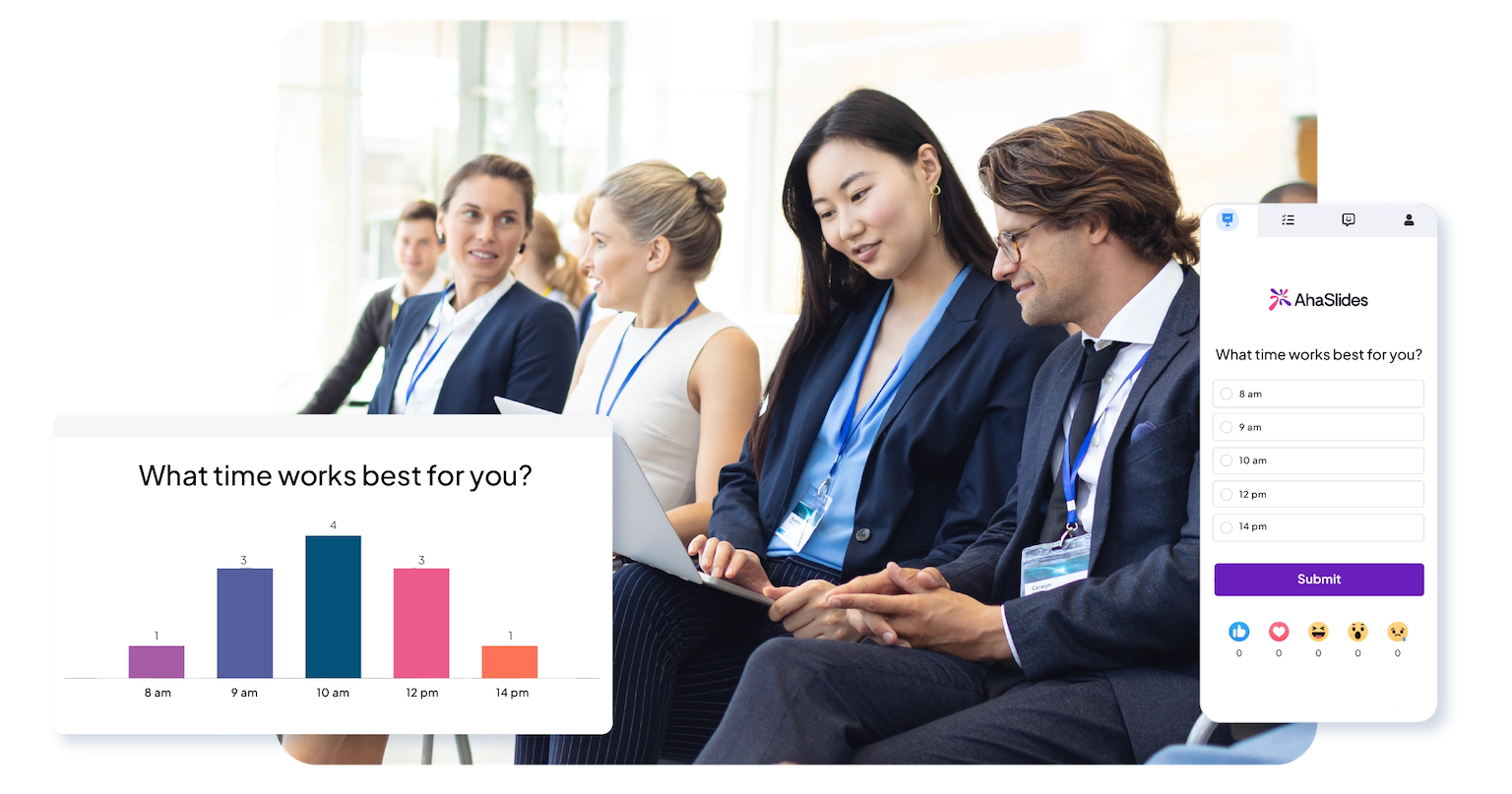
AhaSlides funciona en todos los formatos. En las sesiones virtuales, los participantes se unen desde sus dispositivos, independientemente de su ubicación. En las sesiones híbridas, tanto los participantes presenciales como los remotos interactúan por igual a través de sus teléfonos o portátiles; nadie se queda fuera.
Paso 6: Evaluar la eficacia de la capacitación (fase de evaluación)
Tu entrenamiento no estará completo hasta que hayas medido si funcionó. Utiliza los Cuatro Niveles de Evaluación de Kirkpatrick:
Nivel 1 - Reacción: ¿Les gustó a los participantes?
- Método: Encuesta de final de sesión con escalas de calificación
- Característica de AhaSlides: Diapositivas de calificación rápida (1 a 5 estrellas) y comentarios abiertos
- Preguntas clave: "¿Qué tan relevante fue esta capacitación?" "¿Qué cambiarías?"
Nivel 2 - Aprendizaje: ¿Aprendieron?
- Método: Pruebas previas y posteriores, cuestionarios, comprobaciones de conocimientos
- Característica de AhaSlides: Los resultados del cuestionario muestran el desempeño individual y grupal.
- Que medir: ¿Pueden demostrar las habilidades/conocimientos enseñados?
Nivel 3 - Comportamiento: ¿Lo están aplicando?
- Método: Encuestas de seguimiento 30-60 días después, observaciones del gerente
- Característica de AhaSlides: Enviar encuestas de seguimiento automatizadas
- Preguntas clave: ¿Has utilizado [habilidad] en tu trabajo? ¿Qué resultados has visto?
Nivel 4 - Resultados: ¿Tuvo un impacto en los resultados del negocio?
- Método: Seguimiento de métricas de rendimiento, KPI y resultados comerciales
- Línea de tiempo: 3-6 meses después del entrenamiento
- Que medir: Mejoras de productividad, reducción de errores, satisfacción del cliente
Usando datos para mejorar
La función Informes y análisis de AhaSlides le permite:
- Vea con qué preguntas tuvieron dificultades los participantes
- Identificar temas que necesitan más explicación
- Tasas de participación en el seguimiento
- Exportar datos para informes a las partes interesadas
Utilice esta información para perfeccionar su capacitación la próxima vez. Los mejores capacitadores mejoran continuamente basándose en los comentarios y resultados de los participantes.
Preguntas frecuentes
¿Cuánto tiempo se tarda en planificar una sesión de entrenamiento?
Para una sesión de 1 hora, dedique de 3 a 5 horas a la preparación: evaluación de necesidades (1 hora), diseño de contenido (1-2 horas), desarrollo de materiales (1-2 horas). El uso de plantillas y AhaSlides puede reducir significativamente el tiempo de preparación.
¿Qué debo comprobar antes de empezar?
técnica: Audio/video funcionando, AhaSlides cargado y probado, códigos de acceso funcionando. Materiales: Material listo para entregar y equipo disponible. Contenido: Agenda compartida, objetivos claros, actividades cronometradas. Medioambiente: Habitación cómoda, asientos apropiados.
¿Cuántas actividades debo incluir?
Cambiar de actividad cada 10-15 minutos. Para una sesión de 1 hora: rompehielos (5 min), tres bloques de contenido con actividades (15 min cada uno), cierre/preguntas y respuestas (10 min).
Fuentes y lecturas adicionales:
- Sociedad Estadounidense de Capacitación y Desarrollo (ATD). (2024).Informe sobre el estado de la industria"
- LinkedIn Learning. (2024). "Informe sobre aprendizaje en el trabajo"
- ClearCompany. (2023). "27 estadísticas sorprendentes sobre el desarrollo de los empleados que quizás no conocías"
- Laboratorios Nacionales de Capacitación. "Pirámide de Aprendizaje y Tasas de Retención"
- Kirkpatrick, DL y Kirkpatrick, JD (2006). "Evaluación de programas de capacitación"