



Controversial debate topics challenge assumptions, surface disagreement and make people defend a position instead of just holding one. That skill is in short supply. 2023 m. „Pew Research Center“ apklausa found that 65% of Americans always or often feel exhausted when they think about politics, and earlier Pew research found growing shares of both major parties describing people on the other side as more closed-minded and dishonest than other Americans. A structured, respectful debate pushes back against that fatigue: it gives disagreement a safe container instead of letting it turn into avoidance.
In the live sessions we run for classrooms and teams, the topics that produce the sharpest yet most respectful debates are the ones where both sides can argue from real evidence, so this list leans that way. Below are 62 controversial debate topics sorted into seven themes, from AI and climate to a set of lighthearted warm-ups, followed by tips for running a debate that stays civil.
Kas daro diskusijos temą prieštaringa?
Kontroversiška diskusijų tema – tai tema, kuri patikimai sukelia stiprias, priešingas nuomones tarp protingų žmonių. Geros nuomonės turi tris bendrus bruožus:
- Lengvo sutarimo nėra. Žmonės, turintys skirtingas vertybes ar gyvenimo patirtį, iš tiesų atsiduria skirtingose vietose.
- Tikri statymai. The topic touches policy, ethics, money or daily life in a way that matters beyond the room.
- Vieta įrodymams. Yra pakankamai realaus pasaulio duomenų ar precedentų, kad abi pusės galėtų ginčytis remdamosi ne tik vien savo nuomone.
That last trait is the one most lists ignore. Whether humans are causing climate change is a poor debate topic, because the scientific evidence points one way and one side has nothing solid to stand on. What governments should do about climate change is a good one, because reasonable people weigh cost, fairness and urgency differently.
Technologijų ir dirbtinio intelekto diskusijų temos
Technology moves faster than regulation, which makes it fertile ground for debate, and almost everyone in the room uses these tools every day. Our pick: Should students be allowed to use AI tools for homework?, because every generation in the room has a strong view on it.
AI and work5 temos
- Ar vyriausybės turėtų reguliuoti dirbtinio intelekto naudojimą?
- Is it ethical for employers to use AI to monitor staff?
- Should companies replace human workers with AI wherever it is cheaper or faster?
- Should AI-generated art and writing be protected by copyright?
- Should students be allowed to use AI tools for homework?
Social media and online life5 temos
- Ar socialiniai tinklai visuomenei daro daugiau žalos nei naudos?
- Do algorithms that spread misinformation threaten democracy?
- Should children under 16 be banned from social media?
- Should social media platforms be legally responsible for what their users post?
- Should people have the right to stay anonymous online?
Aplinkos ir klimato diskusijų temos
Climate and animal welfare topics divide rooms along both political and personal lines, which makes them good practice for arguing from evidence. Our pick: Is nuclear power the answer to climate change?, because even committed environmentalists split on it.
Klimato politika5 temos
- Is nuclear power the answer to climate change?
- Should rich countries pay poorer countries for climate damage?
- Should sales of new petrol and diesel cars be banned?
- Should frequent flyers pay extra tax?
- Do individual lifestyle changes matter compared with action by big companies?
Gyvūnai ir gamta3 temos
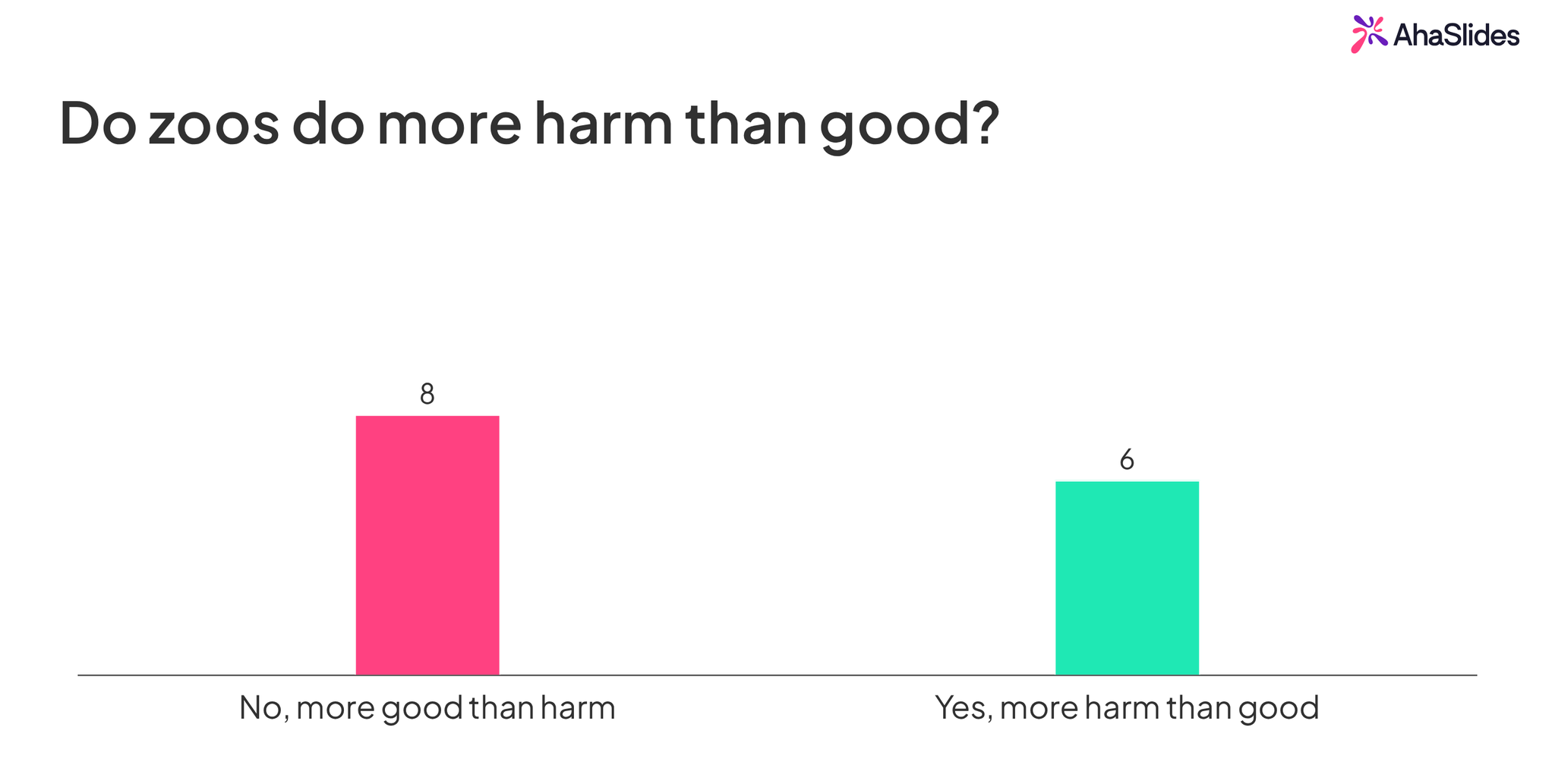
- Ar zoologijos sodai gyvūnų gerovei ir išsaugojimui daro daugiau žalos nei naudos?
- Is eating meat unethical?
- Should trophy hunting be banned?
Politikos ir valdymo diskusijų temos
These topics sit at the centre of most public policy arguments. Several are framed around US or UK debates, so adjust the wording to fit your country. Our pick: Ar balsavimo amžių reikėtų sumažinti iki 16 metų?, because in a classroom debate the people arguing are the ones it affects.
Rights and freedoms5 temos
- Should gun ownership laws be stricter?
- Should police use live facial recognition in public places?
- Ar neapykantos kalba turėtų būti saugoma pagal žodžio laisvės įstatymus?
- Ar balsavimo amžių reikėtų sumažinti iki 16 metų?
- Ar balsavimas turėtų būti privalomas?
Borders and drugs4 temos
- Should immigration policy be tightened or relaxed?
- Should undocumented immigrants be eligible for welfare benefits?
- Should recreational cannabis be legalised?
- Has the war on drugs failed?
Etikos ir bioetikos diskusijų temos
Bioethics topics force people to weigh individual rights against collective norms, and most have no clean answer. Our pick: Should organ donation be opt-out by default?, because it turns an abstract principle into a concrete policy choice.
Medicine and consent3 temos
- Should assisted dying be legal for terminally ill adults?
- Should vaccinations be mandatory for school-age children?
- Should organ donation be opt-out by default?
Science and the body4 temos
- Ar etiška naudoti gyvūnus moksliniuose tyrimuose?
- Ar turėtų būti leidžiama klonuoti žmones?
- Should gene editing of human embryos be allowed?
- Should parents be allowed to choose the sex of their baby?
Ekonomikos ir darbo diskusijų temos
Money, fairness and the workplace generate some of the most personal debates of all, since everyone in the room has a stake. Our pick: Should the four-day working week become standard?, since company trials now give both sides real results to argue from.
Pinigai ir mokesčiai5 temos
- Should university be free?
- Do credit cards do more harm than good?
- Should the government pay every citizen a universal basic income?
- Should billionaires be taxed at a higher rate?
- Ar sveikatos priežiūra turėtų būti laikoma visuotine žmogaus teise?
Work and the workplace5 temos
- Ar darbo saugumas yra didesnis motyvatorius nei pinigai?
- Is the gender pay gap mainly the result of discrimination?
- Should companies have to give staff advance notice of layoffs?
- Is it ethical to lay off staff while executives collect large bonuses?
- Should the four-day working week become standard?
Socialinių klausimų ir kultūros diskusijų temos
Culture topics rarely have a neutral audience, which is exactly what makes them useful for debate practice, as long as you set ground rules first (see the tips below). Our pick: Should school uniforms be scrapped?, a safe but surprisingly heated starter for younger debaters.
Schools and young people5 temos
- Ar mokyklos turėtų mokyti visapusiško lytinio švietimo?
- Are exams and grades an outdated way to assess students?
- Should school uniforms be scrapped?
- Should parents be legally responsible for their children's actions?
- Does peer pressure do young people more good or harm?
Society and media5 temos
- Ar būtini teigiami veiksmai siekiant išspręsti sisteminės nelygybės problemą?
- Ar smurtinis ir seksualinis turinys televizijoje turėtų būti griežčiau ribojamas?
- Should sex work be legalised and regulated?
- Should beauty pageants be scrapped?
- Ar dietines tabletes reikia uždrausti?
Lengvos diskusijų temos
Not every debate needs to carry policy weight. These work as a five-minute warm-up before you move into a heavier theme, and for more low-stakes prompts try our keistų klausimų užduotiMūsų pasirinkimas: Ar dešrainis yra sumuštinis?, which never fails to split a room.
Warm-up debates8 temos
- Is it better to have a small, close group of friends or a large circle of acquaintances?
- Ar reikėtų valytis dantis prieš pusryčius ar po jų?
- Mayonnaise or ketchup on chips?
- Is it acceptable to dip chips in a milkshake?
- Ar muilo gabaliukas geriau nei skystas muilas?
- Is it better to be an early riser or a night owl?
- Ar turėtumėte pasikloti lovą kiekvieną dieną?
- Ar dešrainis yra sumuštinis?
How to run a debate that stays respectful
A strong topic only works if the format keeps people arguing about ideas rather than each other. These habits help.
- Set ground rules first. Argue the idea, not the person; one speaker at a time; and a fixed time limit per speaker so no one dominates.
- Assign sides. Asking people to argue the side they disagree with builds critical thinking and takes the personal sting out of the debate.
- Vote before and after. Run the same quick poll at the start and the end. The shift in votes shows which side argued better, and it is more honest than a show of hands.
- Give quieter people a way in. Not everyone will speak up on a charged topic, so collect questions and arguments in writing as well as out loud.
Run a live debate with AhaSlides
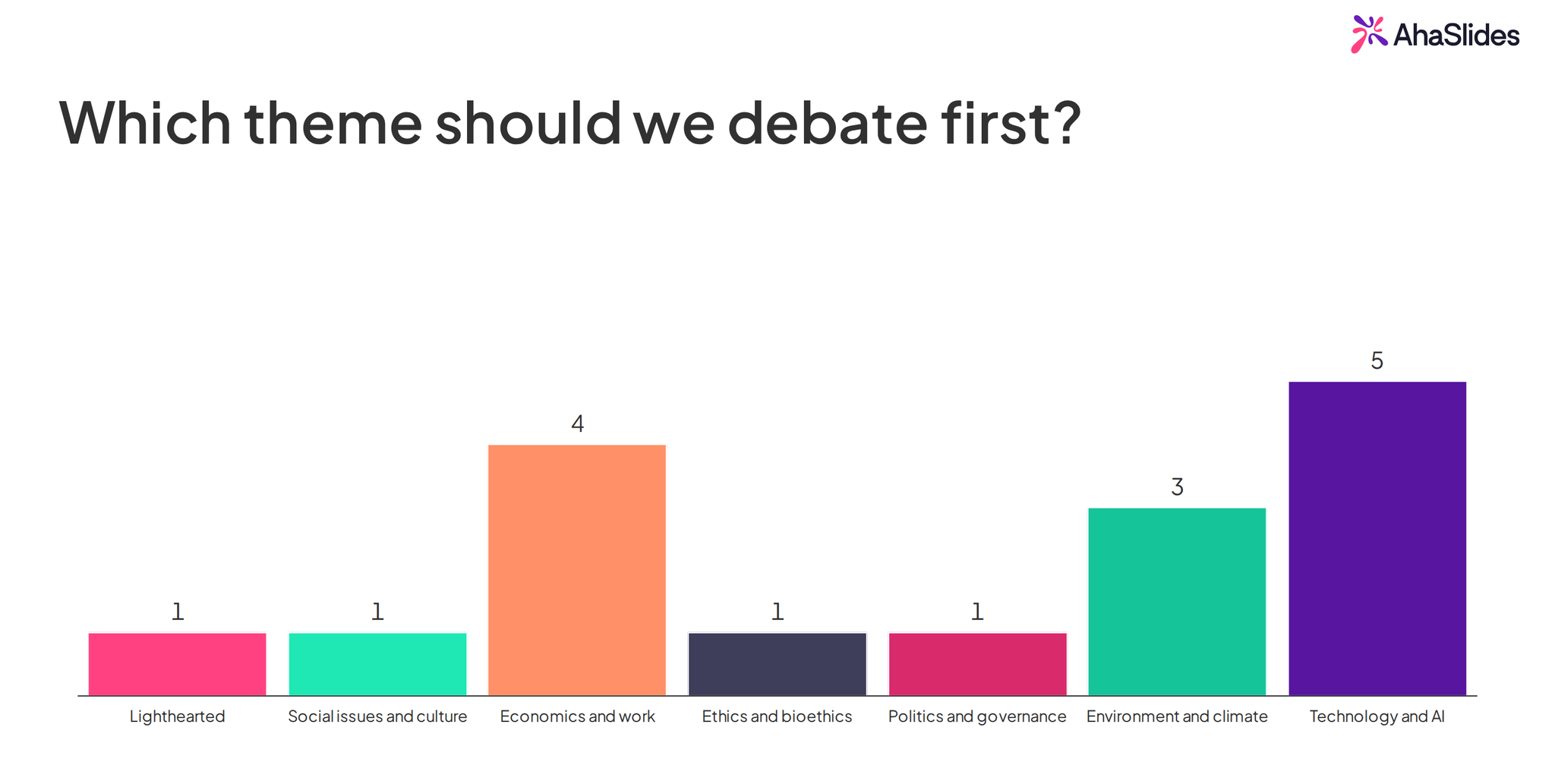
Reading a list out loud only gets you so far. With AhaSlides, everyone joins from their phone, so the whole room takes part rather than the loudest few. Start by letting the group choose which theme to debate with a live poll.
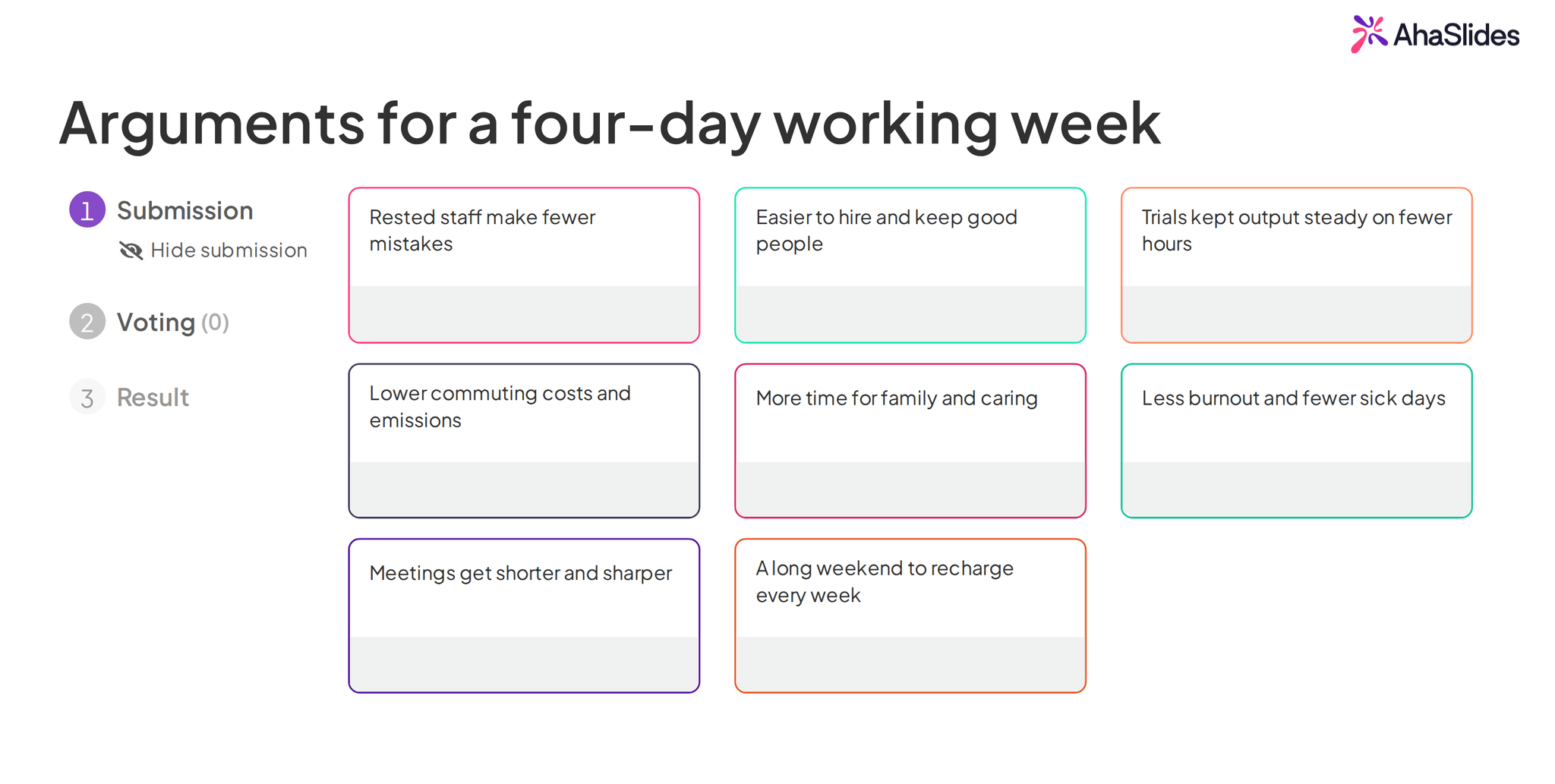
Next, collect arguments for each side on a brainstorm slide. Everyone submits their points, then votes for the strongest ones, which gives each team a ready-made case to open with.
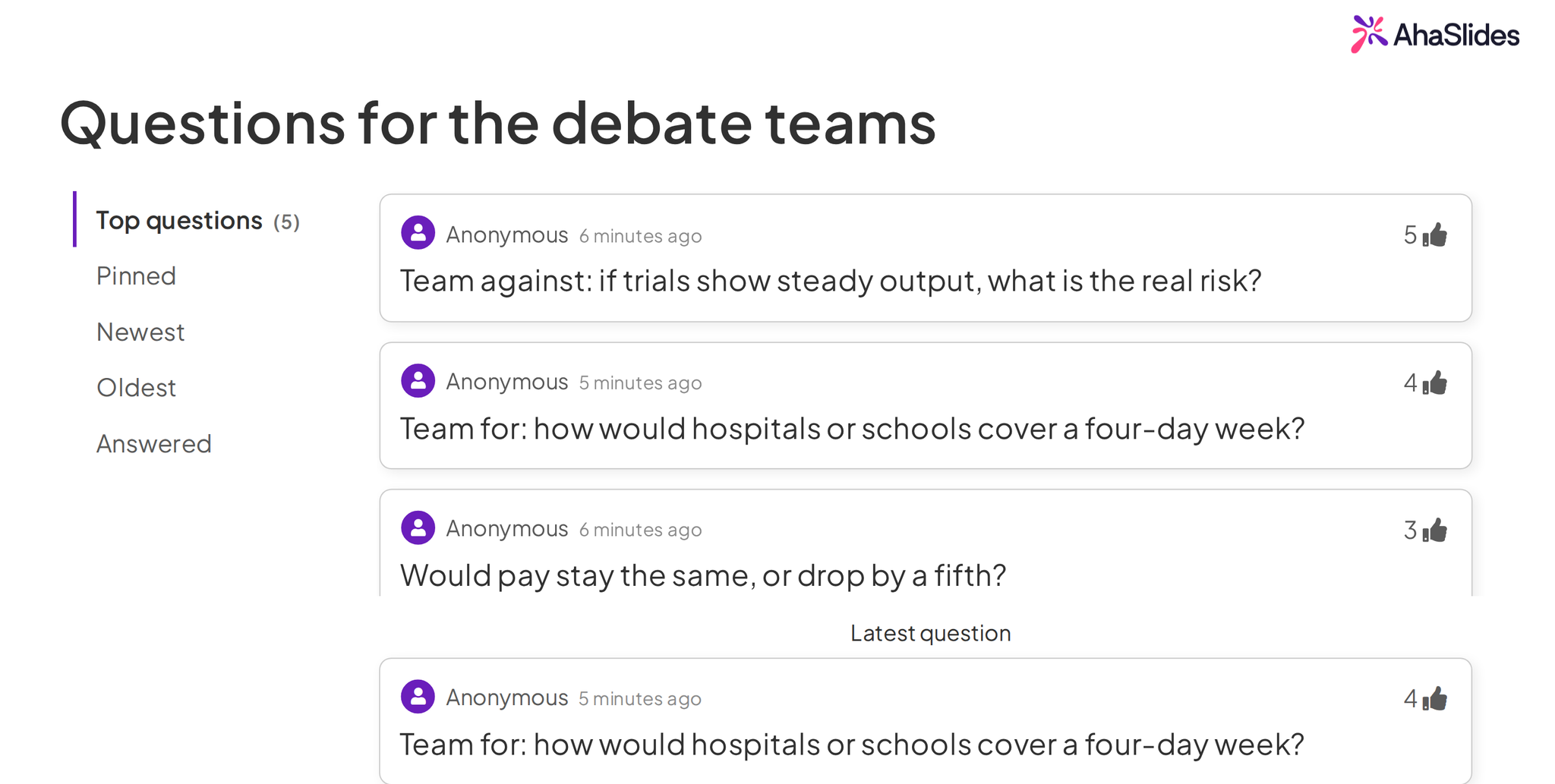
Finally, open an anonymous Q&A so the audience can put questions to each side without having to raise a hand. Upvotes push the most popular questions to the top. For quick activities to warm the room up before you start, see our „ledlaužio“ žaidimai.
Dažnai užduodami klausimai
Kokios temos yra geros diskusijoms?
A good debate topic has no easy consensus, touches something people actually care about, and leaves enough real evidence for both sides to argue from. Examples from this list: should the voting age be lowered to 16, is nuclear power the answer to climate change, and should the four-day working week become standard.
What are some controversial debate topics for students?
Topics that affect students directly tend to work best: should school uniforms be scrapped, are exams an outdated way to assess students, should students be allowed to use AI for homework, and should children under 16 be banned from social media.
How do you keep a controversial debate respectful?
Set ground rules before you start, assign sides rather than letting people pick, keep speaking time equal, and give quieter people a written way to contribute. Voting before and after the debate also keeps attention on the arguments instead of the people making them.