


.webp)
Google Slides ir vienkārša, pazīstama un bezmaksas. Miljoniem cilvēku to katru dienu izmanto visam, sākot no korporatīvām prezentācijām līdz lekcijām klasē. Bet uzreiz pēc izlaišanas, Google Slides ir statisks. Jūs veidojat attēlu sēriju ar tekstu, un jūsu auditorija to vēro pasīvi.
Šis ierobežojums mūsdienu prezentētājus nomāc. Mēs zinām, ka pasīva skatīšanās nedarbojas. Pētījums par aktīva mācīšanās konsekventi parāda, ka auditorija labāk atceras, ja prezentācijās ir iesaistīta divvirzienu mijiedarbība, nevis vienvirziena lekcija [1]. Pievienojot interaktīvie elementi piemēram, viktorīnas un aptaujas, ir praktisks veids, kā veidot šo mijiedarbību Google Slides. Tomēr Google Slides pati par sevi nepiedāvā vietējo veidu, kā reāllaikā apkopot auditorijas datus.
Risinājums ir pagarināt Google Slides ar īpašu rīku auditorijas mijiedarbībai. AhaSlides ir Google Workspace papildinājums, kas ļauj iegult aptaujas, viktorīnas, vārdu mākoņus un jautājumu un atbilžu sesijas tieši prezentācijā. Dalībnieki pievienojas, izmantojot vienkāršu kodu, un atbild no savām ierīcēm. Rezultāti tiek parādīti uzreiz, un jūs varat pielāgot savu prezentāciju, pamatojoties uz to, ko uzzinājāt no auditorijas.
Šajā rokasgrāmatā ir aprakstīts, kā pārveidot savu statisko Google Slides uz interaktīvs pieredze, kas piesaista jūsu auditoriju un sniedz noderīgus datus par viņu izpratni un vēlmēm.
Kā iestatīt interaktīvu Google Slides ar AhaSlides
1. darbība: instalējiet AhaSlides papildinājumu
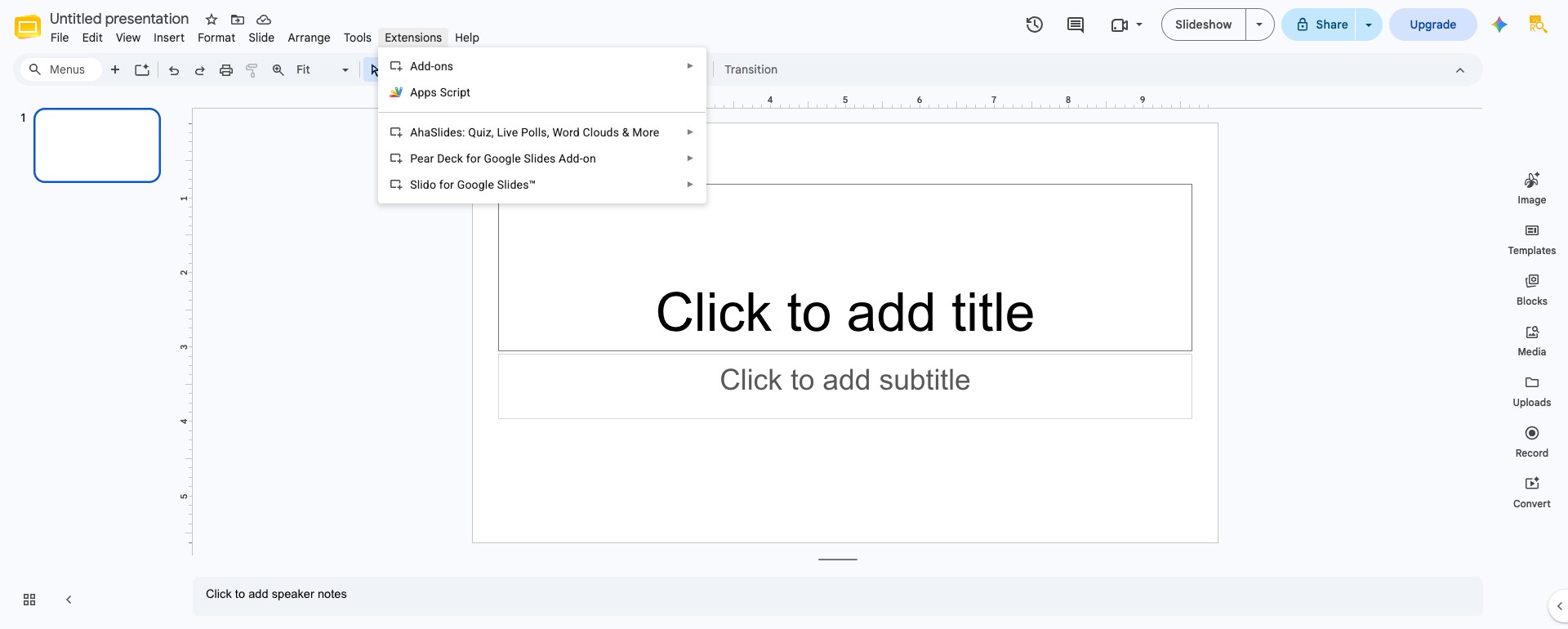
Atveriet savas Google Slides prezentācija. Noklikšķiniet uz Extensions izvēlni, pēc tam atlasiet Add-ons, Tad Get Add-onsMeklējiet AhaSlides un noklikšķiniet, lai instalētu. Jūs piešķirsiet pievienojumprogrammai atļauju piekļūt jūsu Google SlidesPēc instalēšanas AhaSlides parādās kā opcija jūsu paplašinājumu izvēlnē līdzās citiem papildinājumiem.
Instalēšana ir vienkārša un aizņem apmēram divas minūtes. Tas ir jādara tikai vienu reizi katrā Google kontā.
Labi zināt: Papildinājums nedarbojas, ja jūsu pārlūkprogramma ir pierakstījusies vairāk nekā vienā Google kontā vienlaikus, kas ir zināms ierobežojums. AhaSlides atzīmē savu palīdzības centruJa sānjoslā tiek rādīts ziņojums “Nevar piekļūt AhaSlides papildinājumam”, atveriet Google Slides inkognito režīma logā vai vispirms izrakstieties no papildu kontiem.
2. darbība. Interaktīvu elementu pievienošana slaidiem
Kad AhaSlides ir instalēts, atveriet izvēlni Paplašinājumi, atlasiet AhaSlides un pēc tam Atvērt sānu joslu. Piesakieties (vai izveidojiet bezmaksas kontu), un jūs varat pievienot interaktīvus slaidus tieši no sānu joslas. Galvenās opcijas ir:
Aptaujas. Apkopojiet viedokļus vai vēlmes bez pareizām vai nepareizām atbildēm. Attēlojiet rezultātus kā joslu diagrammas, sektoru diagrammas vai virtuļu diagrammas. Izmantojiet aptaujas, lai izprastu auditorijas viedokli: "Kā jūs parasti vadāt apmācības?" vai "Kura funkcija jums ir vissvarīgākā?" Rezultāti tiek parādīti uzreiz un var mainīt jūsu sarunas virzienu.
Izvēlieties atbildi (viktorīnas). Izveidojiet jautājumus, kas pārbauda auditorijas zināšanas, atzīmējot vienu atbildi kā pareizu. Iestatiet laika ierobežojumu un konfigurējiet atbilžu vērtēšanas veidu. AhaSlides reāllaikā parāda rezultātus kā joslu diagrammu, lai jūs uzreiz varētu redzēt, kuru atbildi telpa izvēlējās un vai tā izvēlējās pareizo.
Vārdu mākoņi. Apkopojiet īsas teksta atbildes, kas tiek attēlotas kā tiešraides, svērts vārdu mākonis, kas ir noderīgs iesildīšanās vingrinājumiem, pārdomu rosināšanai vai noskaņojuma novērtēšanai vienā vārdā.
Varat arī pievienot a Jautājumi un atbildes slaidu, lai auditorija varētu iesniegt un pozitīvi novērtēt jautājumus reāllaikā, izmantojot sānu joslas slaidu atlasītāju vai AhaSlides redaktoru. Katru interaktīvo elementu var pielāgot jūsu slaida dizainam un zīmolam, tostarp krāsām, fontiem un jautājumu laikam.

Labi zināt: sinhronizācija notiek tikai vienā virzienā. Slaida izveide vai rediģēšana, izmantojot AhaSlides sānu joslu, atjaunina jūsu Google Slides klājs, bet, ja vēlāk rediģējat šo slaidu tieši pašā AhaSlides (piemēram, AhaSlides tīmekļa redaktorā), šīs izmaiņas netiks sinhronizētas atpakaļ ar Google Slides. Saglabājiet savus labojumus sānjoslā, ja vēlaties, lai jūsu Google Slides fails, lai paliktu patiesības avots.
3. darbība. Pievienošanās koda prezentēšana un kopīgošana
Kad esat gatavs prezentēt, atveriet AhaSlides sānu joslu un izvēlieties “Prezentēt ar AhaSlides”, pēc tam “Prezentēt tagad” vai “Prezentēt no sākuma”. Tas importēs jūsu prezentāciju AhaSlides prezentētājā jaunā cilnē un ģenerēs pievienošanās kodu (piemēram, “ABCD123”), ko jūsu auditorija izmanto, lai piedalītos, vai nu ievadot kodu pievienošanās URL, vai skenējot jūsu parādīto QR kodu.
Dalībniekiem nekas nav jālejupielādē. Viņi pievienojas no savām tīmekļa pārlūkprogrammām vai tālruņiem un reaģē uz jūsu interaktīvajiem elementiem jūsu prezentācijas laikā. virtuālās prezentācijas, varat kopīgot kodu sapulces tērzēšanā vai ekrānā. Klātienes pasākumos parādiet to projektorā.
Viens ierobežojums, ap kuru ir vērts plānot: tā kā, prezentējot AhaSlides vadītājam, jūsu pastāvīgajam Google Slides Slaidi šajā sesijā tiek konvertēti uz statiskiem attēliem. Animācijas, iegultais audio un video, kā arī noklikšķināmas saites slaidos, kas nav AhaSlides slaidi, nedarbosies, kamēr prezentēsiet, izmantojot AhaSlides.
Interaktīvo materiālu labākā prakse Google Slides
Saglabājiet jautājumus skaidrus un kodolīgus. Cilvēki atbild no saviem tālruņiem vai ātrām pārlūkprogrammas sesijām. Mulsinošs jautājums tiek izlaists. Uz skaidru jautājumu tiek atbildēts. Viktorīnās norādiet acīmredzamas pareizās un nepareizās atbildes. Aptaujās izvairieties no ievadvalodas, kas ietekmē atbildes.
Nosakiet atbilstošus laika ierobežojumus. Vienkāršai aptaujai varētu būt nepieciešamas 30 sekundes. Domu rosinošam jautājumam varētu būt nepieciešamas divas minūtes. Dalībniekiem ir nepieciešams pietiekami daudz laika pārdomām, bet ne tik daudz, lai uzmanība zaudētos. Sāciet ar 60 sekundēm un pielāgojiet laiku atkarībā no atbilžu biežuma. Ja 90% cilvēku atbild nekavējoties, varat saīsināt laiku. Ja cilvēki acīmredzami joprojām domā, dodiet viņiem vairāk laika.
Reaģēt uz rezultātiem. Ne tikai parādiet atbildes un turpiniet. Sakiet kaut ko līdzīgu: "Interesanti. Lielākā daļa no jums teica C, bet ļaujiet man paskaidrot, kāpēc B ir pareizs" vai "Paskatieties uz šo sadalījumu. Mums šeit ir cilvēki divās nometnēs. Kas izraisa šīs atšķirīgās reakcijas?" Kad jūs iesaistāties rezultātu apstrādē, jūs parādāt, ka pievēršat uzmanību un ka auditorijas ieguldījums veido sarunu.
Pārdomāti izvietojiet interaktīvos elementus. Tests ik pēc piecām minūtēm šķiet kā nepārtraukta pārbaude. Tests ik pēc 15 minūtēm šķiet kā dabiska pārdomu apmaiņa. Centieties 30 minūšu prezentācijā iekļaut trīs līdz piecus interaktīvus mirkļus. Tas nodrošina ritmu, nepārspīlējot.
Pārbaudiet iepriekš. Pirms faktiskās prezentācijas pārskatiet to vienreiz kā prezentētājs un vienreiz kā dalībnieks (palūdziet kolēģim pievienoties ar kodu). Pārliecinieties, ka jautājumi ir skaidri, laiks der un tehnoloģija darbojas, kā paredzēts. Nekas netraucē iesaisti ātrāk kā tehniskas grūtības.
interaktīvs Google Slides dažādiem kontekstiem
Prezentācijas klasē. Skolotāji izmanto interaktīvo Google Slides lai pārbaudītu skolēnu izpratni, neliekot viņiem spriest. Ātra pārbaude stundas vidū parāda, kuri jēdzieni ir aktuāli un kuri ir jāpastiprina. Vārdu mākoņi Ļaujiet skolēniem pārdomāt mācīšanos: "Kāds viens vārds raksturo to, ko jūs šodien iemācījāties?" Anonimitāte (ja iespējota) padara dalību drošu arī skolēniem ar grūtībām.
Korporatīvā apmācība. Treneri izmanto viktorīnas un aptaujas, lai pārliecinātos, ka dalībnieki pievērš uzmanību un uztver materiālu. Rezultāti sniedz datus par apmācību efektivitāti. Ja kāda konkrēta koncepcija viktorīnās pastāvīgi saņem zemu vērtējumu, tas ir signāls, ka apmācību modulis ir jāpielāgo. Aptaujas arī palīdz treneriem izprast studentu vēlmes: kuras tēmas ir visatbilstošākās, kuras apmācību metodes ir vispiemērotākās, kuri laiki ir ideāli piemēroti turpmākajām sesijām.
Pārdošanas un investoru prezentācijas. Aptaujas sniedz informāciju par to, kas interesē potenciālos klientus: "Kāda ir jūsu galvenā prioritāte, izvērtējot tādus risinājumus kā mūsējais?" Jautājumu un atbilžu sesijas ļauj potenciālajiem klientiem virzīt sarunu uz viņu bažām. Viktorīnas par jūsu uzņēmuma iespējām palīdz potenciālajiem klientiem izprast jūsu vērtības piedāvājumu. Interaktivitāte signalizē par pārliecību un pozicionē jūs kā cilvēku, kurš atzinīgi vērtē dialogu, nevis vienpusēju piedāvājumu.
Virtuālās prezentācijas. Par Zoom, Teams vai līdzīgas interaktīvas platformas Google Slides ir izšķiroši svarīgi. Pasivitāte tiešsaistē ir vēl problemātiskāka nekā klātienē; cilvēki jau tā konkurē par uzmanību e-pastā, tērzēšanā un citos traucēkļos. Labi izvietota viktorīna vai aptauja atgriež uzmanību jūsu prezentācijai un rada pieredzes sajūtu, kas balstīta uz sadarbību, nevis ieraksta skatīšanos.
Ko jūs mācāties no interaktīvām aktivitātēm Google Slides

Papildus tiešajam iesaistes ieguvumam, interaktīvas prezentācijas sniedz ieskatu. Jūs redzat, ar kuriem jautājumiem cilvēkiem ir grūtības. Jūs redzat, kuras tēmas viņus visvairāk interesē. Jūs redzat, kur viņu izpratne atbilst jūsu cerībām un kur tā atšķiras.
Treneris, kurš vada vienu un to pašu prezentāciju vairākām grupām, var pamanīt, ka A grupa jautājumos par konkrētu tēmu parasti iegūst zemāku vērtējumu. Tas rosina dziļāku izpēti: kāpēc šai grupai šī koncepcija ir grūtāk apgūstama? Atbilde var novest pie korekcijām skaidrojumā vai arī tā var atklāt, ka šai grupai ir mazākas pamatzināšanas šajā jomā un tai ir nepieciešams vairāk konteksta.
Līdzīgi aptauju rezultāti jūs pārsteidz. Jūs, iespējams, pieņēmāt, ka ilgtspējība prioritāšu sarakstā ierindosies zemu, taču dati liecina, ka tā ir diezgan svarīga jūsu auditorijai. Tas maina to, kā jūs runājat par savu uzņēmumu turpmākajās prezentācijās.
Darba sākšana jau šodien
Ja jūs jau izmantojat Google Slides, jūs esat 10 minūšu attālumā no interaktīvām prezentācijām. Instalējiet AhaSlides pievienojumprogrammu, pievienojiet nākamajai prezentācijai vienu interaktīvu elementu un skatiet, kā reaģē jūsu auditorija. Sāciet ar kaut ko nenozīmīgu, piemēram, aptauju vai vārdu mākonisKad būsiet apguvis procesu, pievienojiet viktorīnas un jautājumu un atbilžu sesijas.
Atšķirība starp statisko un interaktīvo Google Slides ir atšķirība starp lekciju un sarunu. Jūsu auditorija atsauksies uzaicinājumam piedalīties. Jūsu uzdotie jautājumi atklās negaidītas atziņas. Un pati prezentācija kļūs saistošāka un neaizmirstamāka.
Lai nākamajai sesijai pievienotu tiešraides aptaujas, viktorīnas, vārdu mākoņus un jautājumu un atbilžu sadaļu, AhaSlides visu apstrādā no bezmaksas konta, izmantojot PowerPoint, Google Slidesvai savu redaktoru. Pilnu rokasgrāmatu, kurā aplūkotas metodes, rīki un idejas katram kontekstam, skatiet šeit: Kā padarīt prezentāciju interaktīvu: pilnīgs ceļvedis.
Avoti
[1] Freeman, S., et al. (2014). "Aktīva mācīšanās uzlabo studentu sniegumu zinātnē, inženierzinātnēs un matemātikā." Procesu Nacionālās Zinātņu akadēmijas, 111(23), 8410.–8415. lpp. 225 pētījumu metaanalīzē tika atklāts, ka aktīvi, interaktīvi mācību formāti ievērojami pārspēj pasīvās lekcijas gan noturības, gan nokārtošanas rādītāju ziņā.