

Nu există nicio dezbatere aici: dezbaterile studențești sunt una dintre cele mai bune modalități de a dezvolta gândirea critică, angajează eleviiși să pună învățarea în mâinile cursanților.
Nu sunt doar pentru elevii care au tendința de a certa, ci funcționează pentru aproape orice grupă de vârstă, materie sau mărime a clasei, motiv pentru care devin un pilon principal al programelor școlare.
Acest ghid acoperă ceea ce are nevoie un organizator: beneficiile, principalele formate, cei 6 pași pentru a derula unul, o grilă de notare imprimabilă, adaptări ESL, îndrumări Zoom și 30 de subiecte gata de utilizare.
De ce dezbaterile studențești merită mai mult timp în clasă
O dezbatere bine condusă face mai mult decât să umple o oră de curs. Ea poate modela atât aspectele personale, cât și cele profesionale ale vieții unui student:
Puterea persuasiunii. Elevii învață să construiască un argument convingător și măsurat pe baza dovezilor, mai degrabă decât pe baza volumului, o abilitate care se aplică mult dincolo de sala de clasă.
Virtutea toleranței. Dezbaterea dezvoltă abilitățile de ascultare și îi învață pe elevi să audă opinii diferite de ale lor. Chiar și pierderea îi învață că este în regulă să se răzgândească.
Funcționează online. Dezbaterile nu necesită echipament special, așa că sunt adaptate la sălile de clasă la distanță și hibride cu ajustări minore.
Este centrat pe student. O dezbatere le oferă elevilor controlul asupra a ceea ce spun și a modului în care răspund, în loc să-l poziționeze pe profesor ca singura sursă de informații.
Cercetarea susține această afirmație. Un studiu realizat pe elevii din Școlile Publice din Boston a constatat că participarea la dezbateri interșcolare privind politicile a crescut scorurile la testele de limba și literatura engleză cu 0.13 deviații standard, aproximativ 68% din creșterea academică anuală tipică pentru un elev de clasa a IX-a și a crescut numărul de înscrieri la facultate [1]. Un rezultat semnificativ pentru o activitate care nu costă nimic altceva decât timp petrecut în clasă.
Alegeți un format de dezbatere pe care clasa dvs. îl poate gestiona
Înainte de a desemna o singură echipă, alegeți un format. Acesta determină dimensiunea echipei, timpul de pregătire și cât de ordonată va fi sala. Iată cum se compară cele patru formate cele mai comune, adaptate la nevoile sălii de clasă:
| Format | Marimea echipei | Cel mai bun pentru | Abordarea Noastră |
|---|---|---|---|
| Stil Oxford | 2 echipe (2-3 pe fiecare parte) | Discuție cu întreaga clasă, participanți la dezbateri pentru prima dată | Două părți dezbat o moțiune. Publicul votează înainte și după pentru a decide cine a schimbat cele mai multe opinii. |
| Lincoln-Douglas | 1 vs. 1 | Studenți avansați, subiecte bazate pe valori | Un vorbitor pe fiecare parte, axat pe etică și filosofie, cu o scurtă perioadă de interogatoriu. |
| Parlamentar britanic | 4 echipe de câte 2 | Clase mai mari, cluburi de dezbateri competitive | Patru echipe, două care propun și două care se opun, susțin discursuri scurte care se bazează pe sau infirmă echipa din fața lor. |
| Forum public | 2 vs. 2 | Clase cu abilități mixte | Echipe de două persoane alternează discursuri constructive cu o perioadă de întrebări „încrucișate”, concepută pentru un public larg. |
Pentru o primă dezbatere în clasă, stilul Oxford este cel mai simplu: necesită cele mai puține explicații și obligă întreaga clasă să voteze, în loc să stea pe dinafară. Odată ce elevii se simt confortabil, forumurile parlamentare și publice britanice le oferă mai multor elevi rolul de vorbitori.
6 pași pentru organizarea unei dezbateri studențești
Pasul 1: introduceți subiectul
Primul pas este să le oferiți elevilor un subiect de dezbatere. Numărul de subiecte posibile este practic nelimitat și veți găsi 30 de subiecte deja create mai târziu în acest ghid.
Cel mai bun subiect împarte clasa cât mai aproape posibil de mijloc. Adunați opinii preliminare înainte de a împărți părțile cu ajutorul unui sondaj de imagini, al unui nor de cuvinte care prezintă modul în care elevii își descriu punctul de vedere, al unei scale de evaluare de la 1 la 5 sau al unor întrebări deschise. Un simplu sondaj de tip da/nu funcționează și el și oferă o imagine instantanee a cât de echilibrat este împărțită clasa.
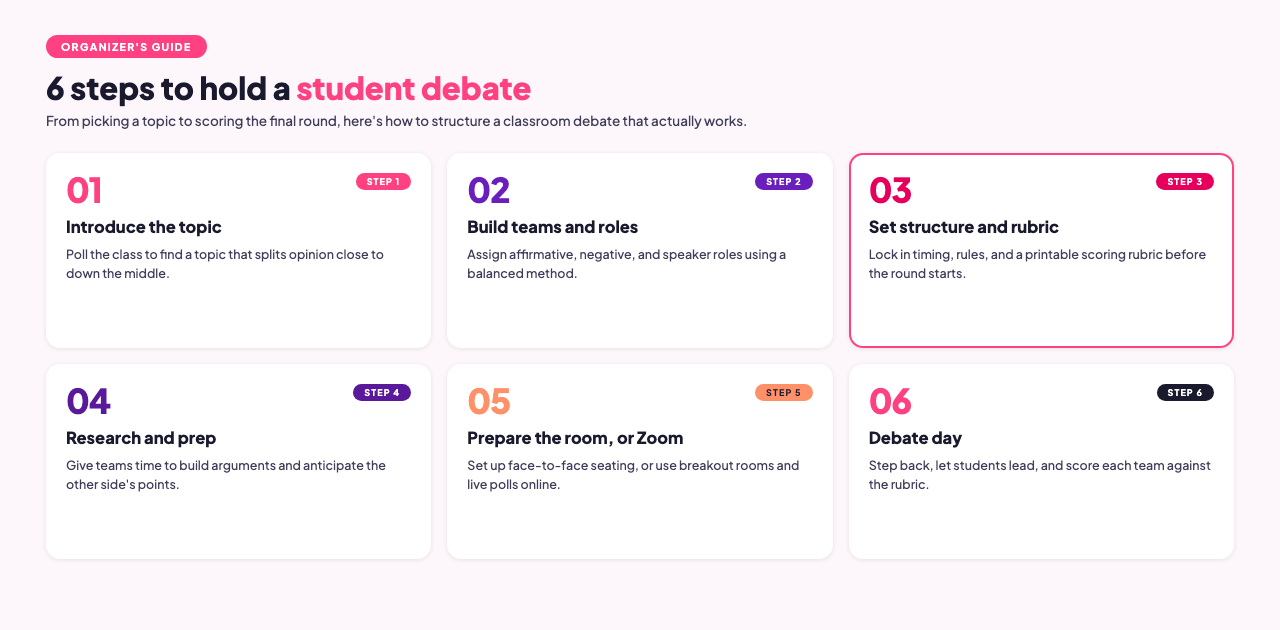
Pasul 2: construiți echipe echilibrate și atribuiți roluri
Cu un subiect ales, formați cele două părți: afirmativ (este de acord cu afirmația sau pledează pentru schimbarea status quo-ului) și negativ (nu este de acord sau susține menținerea lucrurilor așa cum sunt). Dacă clasa este mare sau mulți elevi ajung la mijloc, adăugați un teren de mijloc o echipă care împrumută puncte de la ambele părți și pledează pentru un compromis. Nu pedepsiți indecișii: a fi cu adevărat indeciși este un punct de plecare legitim, deși nu este o scutire de participare.
Modul în care îi repartizați pe elevi pe o parte contează la fel de mult ca subiectul. Trei metode funcționează bine:
Tragere la sorți aleatorie. Scoateți nume dintr-o pălărie sau folosiți un generator aleatoriu de echipe. Rapid și corect, deși ocazional îi poate aduce pe cei mai buni vorbitori în aceeași echipă.
Echilibrat din punct de vedere al abilităților. Distribuiți uniform difuzoarele mai puternice și mai silențioase pe ambele părți, pe baza a ceea ce știți deja despre clasă. Produce sunete mai apropiate, dar necesită mai mult timp de configurare.
Alegerea subiectului. Lăsați elevii să aleagă partea care corespunde opiniei lor reale. Cea mai mare susținere, dar poate produce echipe dezechilibrate, așa că limitați numărul de echipe și folosiți o aruncare cu moneda pentru depășire.
Pentru rolurile vorbitorilor, o structură împrumutată din dezbaterile parlamentare britanice atribuie 4 vorbitori per echipă, fiecare cu o sarcină specifică (deschidere, replică, a doua replică, încheiere). Pentru clase mai mari, împărțiți câte doi studenți per rol. Restul clasei servește drept... judecători, acordând punctaj fiecărei echipe în funcție de rubrica de la pasul 3.
Pasul 3: stabiliți structura, regulile și o grilă de notare
Trei lucruri trebuie să fie foarte clare înainte de începerea dezbaterii: structura, regulile și modul în care va fi punctată.
Structura. O dezbatere trebuie să fie liniară, astfel încât nimeni să nu preia cuvântul, lăsând suficient timp pentru ca elevii să-și prezinte punctele de vedere. O structură tipică, începând cu echipa afirmativă:
| Segment | Vorbitor | Timp |
|---|---|---|
| Declarație de deschidere | Primul vorbitor, din fiecare echipă | 5 minute |
| Pregătiți respingeri | Ambele echipe | 3 minute |
| Refutare | Al doilea vorbitor, din fiecare echipă | 3 minute |
| A doua respingere | Al treilea vorbitor, din fiecare echipă | 3 minute |
| Pregătiți închiderea | Ambele echipe | 5 minute |
| Declarație finală și declarație finală | Al 4-lea vorbitor, din fiecare echipă | 5 minute |
Testează structura, apoi bloch-o odată ce funcționează și fii atent la ceas ca nimeni să nu o calce pe ea.
Reguli. Reguli clare echilibrează condițiile de concurență între elevii vocali și cei tăcuți: respectați structura, rămâneți la subiect, nu înjurați, nu atacați la persoană.
Rubrica de notare. Scopul unei dezbateri în clasă nu este „să câștige”, ci competitivitatea naturală a elevilor beneficiază de obicei de un sistem de puncte. Juriul poate folosi o scală simplă de 5 puncte per criteriu, apoi poate însuma scorurile pentru fiecare echipă:
| Criterii | 1 (necesită lucrări) | 3 (solid) | 5 (excelent) |
|---|---|---|---|
| Claritatea argumentelor | Vag sau greu de urmărit | Clar, dar nu întotdeauna organizat | Clar, ordonat logic, ușor de urmărit |
| Utilizarea dovezilor | Puțin sau deloc sprijin | Unele afirmații susținute de fapte | Susținut în mod constant de dovezi credibile și specifice |
| Calitatea respingerii | Ignoră punctele de vedere ale celeilalte părți | Răspunde la unele puncte de vedere opuse | Abordează direct cele mai puternice puncte adverse |
| Livrare și prezentare | Se citește plat, greu de auzit | În mare parte încrezător, cu puțină ezitare | Ton sigur, ritm bun, contact vizual intens |
| Munca în echipă și gestionarea timpului | Echipa se contrazice sau depășește timpul necesar | În mare parte coordonat și punctual | Se bazează pe punctele de vedere ale celuilalt, folosește bine timpul |
Asta înseamnă 25 de puncte per echipă. Printează tabelul, înmânează câte o copie fiecărui judecător și roagă-i să calculeze totalul scorului la final. Jurizarea nu este niciodată un joc exclusiv de numere, așa că roagă-i pe judecători să noteze o justificare de un rând lângă fiecare scor.
Pentru o clasă de limba engleză ca limbă străină (ESL), ajustați rubrica pentru a recompensa dezvoltarea vocabularului și a structurii propozițiilor alături de conținut, în loc să penalizați accentul sau ezitarea. Mai multe despre acest subiect mai jos.
Pasul 4: acordați elevilor timp pentru a cerceta
Odată ce toată lumea înțelege subiectul și regulile, este timpul să ne pregătim. Stabiliți o limită de timp pentru cercetare, îndrumați elevii către câteva surse de încredere și verificați pentru a-i menține la subiect. Ar trebui să-și cerceteze propriile puncte de vedere și să anticipeze punctele celeilalte părți, astfel încât să aibă pregătite replicile, în loc să se blocheze atunci când sunt contestați.
Pasul 5: pregătește sala sau desfășoară-l pe Zoom
În timp ce echipele își finalizează argumentele, pregătiți spațiul. Aranjați mesele și scaunele față în față, în partea cealaltă a camerei, așa cum este pusă în scenă o dezbatere profesională, cu vorbitorii stând în fața zonei echipei lor.
Rulându-l virtual. O dezbatere se poate traduce pe Zoom sau pe orice platformă video cu câteva ajustări:
Săli de lucru pentru pregătirea echipei. Trimiteți fiecare echipă în propria cameră de lucru pentru cercetare și replici, apoi aduceți-i pe toți înapoi pentru dezbaterea propriu-zisă.
Un cronometru partajat, vizibil. Partajează-ți ecranul cu un cronometru pe ecran, astfel încât fiecare vorbitor să poată vedea timpul rămas fără să-l întrerupi.
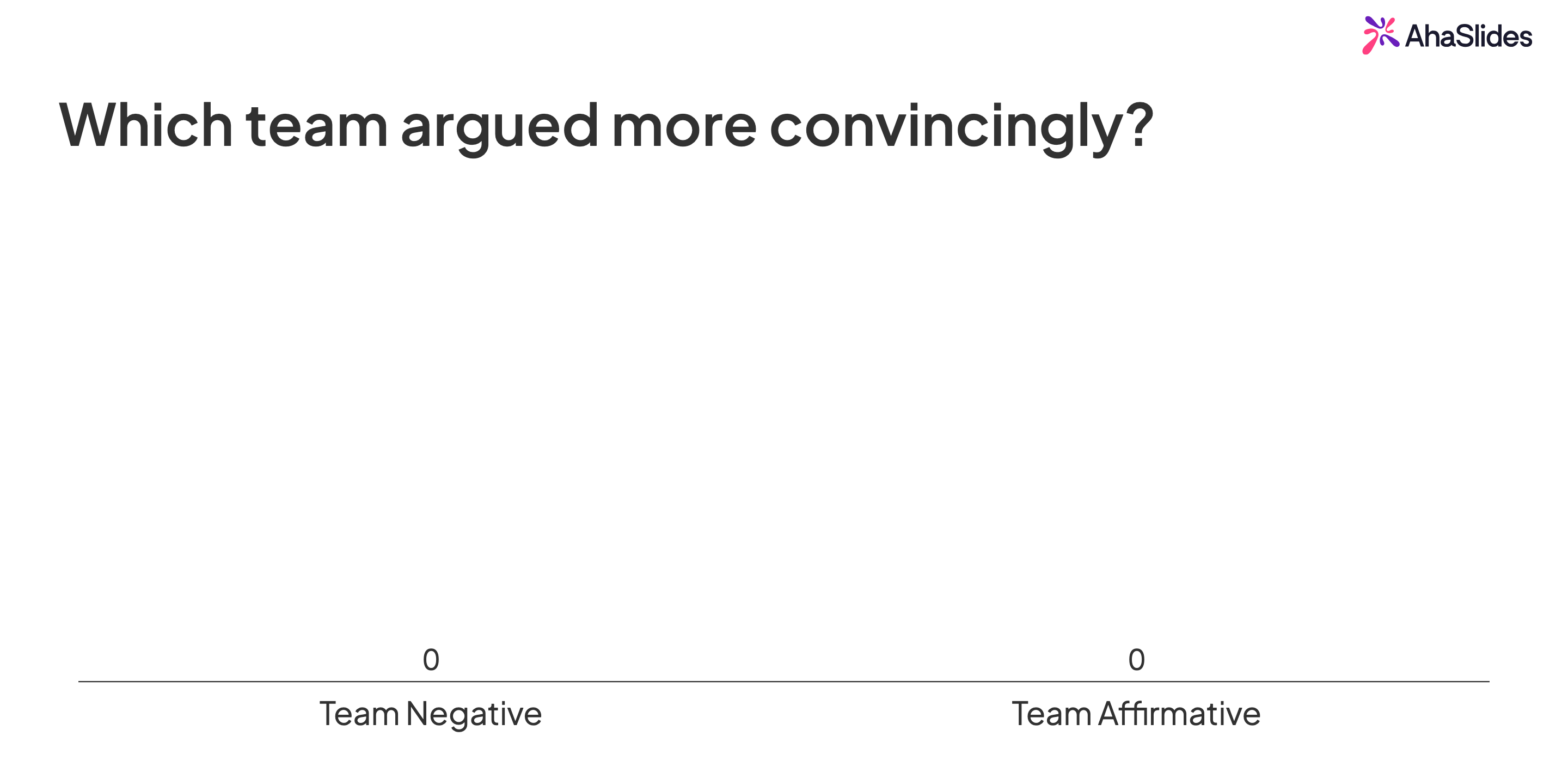
Votarea publicului virtual. Desfășoară un sondaj live, astfel încât clasa să voteze care echipă a argumentat mai convingător, înainte și după. Este echivalentul online al unui vot al publicului în stil Oxford și menține implicați elevii care nu vorbesc.
Identitatea echipei. Rugați fiecare echipă să aleagă culori pentru fundalurile Zoom sau să inventeze o mascotă de afișat pe ecran, un mic detaliu care face ca echipele care lucrează la distanță să se simtă ca niște echipe.
Pasul 6: ziua dezbaterii
Să înceapă. Acum este momentul ca elevii să strălucească, așa că interveniți cât mai puțin posibil, doar pentru a menține ordinea sau pentru a reaminti clasei structura și punctajul. Notați fiecare echipă în funcție de rubrică pe măsură ce dezbaterea se desfășoară, apoi numărați și calculați media scorurilor juraților pentru rezultatul final al fiecărei echipe. Păstrați analiza mai profundă pentru următoarea lecție, odată ce elevii au avut timp să se relaxeze.
Adaptarea dezbaterilor pentru clasele cu predare la limbajul străin (ESL) și multilingve
Dezbaterea este solicitantă într-o a doua limbă, așa că câteva ajustări o mențin productivă:
Timp suplimentar de pregătire. Acordați elevilor care vorbesc limba engleză ca limbă străină, sau întregii clase dacă majoritatea sunt multilingve, mai mult timp pentru cercetare și redactare decât ar avea nevoie un grup vorbitor nativ.
Începători de propoziții. Oferiți expresii predefinite pe care să vă bazați sub presiune: „Sunt de acord deoarece...”, „O dovadă este...”, „Aș dori să contest acest punct de vedere deoarece...”. Acestea susțin argumentul chiar și atunci când vocabularul este încă în curs de dezvoltare.
Vocabular pre-predat. Predați-le elevilor dinainte câteva cuvinte specifice subiectului de care vor avea nevoie și lăsați-i să păstreze o fișă cu glosar pe birou.
Criterii de jurizare ajustate. Acordați importanță punctajului conținutului și dezvoltării structurii propozițiilor, mai degrabă decât accentului sau fluenței. Tratați utilizarea limbii materne ca pe un punctaj de îndrumare în timpul cercetării, nu ca pe o penalizare în timpul dezbaterii.
Copie de rezervă scrisă. Lăsați elevii să aducă o scurtă schiță scrisă la care să se refere, ușurând astfel sarcina de a reține un argument în memoria de lucru într-o a doua limbă.

Câteva alte formate care merită încercate
Odată ce elementele de bază sunt stăpânite: dezbatere de rol îi pune pe elevi să argumenteze ca niște figuri fictive sau istorice; dezbatere improvizată nu necesită timp de pregătire; dezbatere la primărie elevii se prezintă cu fața către clasă și răspund direct la întrebările colegilor.
Mai multe idei: 13 jocuri de dezbatere online, 12 idei de implicare a elevilor, Şi flipped class abordare.
30 de subiecte de dezbatere în sala de clasă
Votează împreună cu elevii tăi cu care dintre acestea să candidezi.
Subiecte școlare
Ar trebui să creăm o sală de clasă hibridă, cu învățare atât la distanță, cât și în sala de clasă?
Ar trebui să interzicem uniformele în școală?
Ar trebui să interzicem temele?
Ar trebui să încercăm modelul de învățare răsturnat?
Ar trebui să învățăm mai mult afară?
Ar trebui să abolim examenele și testele în favoarea cursurilor universitare?
Ar trebui să meargă toată lumea la universitate?
Ar trebui ca taxele universitare să fie mai mici?
Ar trebui școlile să ofere un curs despre investiții?
Esportul ar trebui să facă parte din clasa de gimnastică?
Subiecte de mediu
Ar trebui să interzicem grădinile zoologice?
Ar trebui să fie legal să ții pisici exotice ca animale de companie?
Ar trebui să construim mai multe centrale nucleare?
Ar trebui să încercăm să încetinim rata natalității la nivel mondial?
Ar trebui să interzicem tot plasticul de unică folosință?
Ar trebui să transformăm peluzele private în alocări și habitate sălbatice?
Ar trebui să înființăm un guvern internațional pentru mediu?
Ar trebui să-i forțăm pe oameni să-și schimbe obiceiurile pentru a combate schimbările climatice?
Ar trebui să descurajăm fast fashion-ul?
Ar trebui să interzicem zborurile interne în țările mici, cu sisteme bune de tren și autobuz?
Subiecte de societate
Ar trebui toată lumea să fie vegetariană sau vegană?
Ar trebui să limităm timpul de joc al jocurilor video?
Ar trebui să limităm timpul petrecut pe rețelele de socializare?
Ar trebui să facem toate băile neutre în funcție de gen?
Ar trebui să prelungim perioada standard de concediu de maternitate?
Ar trebui să continuăm să dezvoltăm o inteligență artificială care să poată face toate sarcinile?
Ar trebui să avem un venit de bază universal?
Ar trebui închisorile să fie destinate pedepsei sau reabilitării?
Ar trebui să adoptăm un sistem de credit social?
Ar trebui să interzicem reclamele care utilizează datele noastre personale?
Un exemplu real din care să învățăm
Unul dintre cele mai bune exemple de dezbatere video între studenți provine din Inteligență: Dezbatere în liceu, o emisiune difuzată pe rețeaua coreeană de radiodifuziune Arirang. Aceasta acoperă aproape fiecare element al unei dezbateri elevi bine conduse pe care un profesor și-ar putea dori să o vadă în propria clasă.
Studenții din emisiune sunt profesioniști cu experiență, mulți dintre ei dezbătând elocvent în limba engleză ca a doua limbă, așa că gestionați-vă așteptările. Participarea reală a clasei este un început puternic în sine.
Întrebări frecvente
Câte tipuri de dezbateri studențești există?
Mai multe, inclusiv dezbateri în stil Oxford, Lincoln-Douglas, parlamentare britanice, forumuri publice și dezbateri improvizate, fiecare cu propriul format și reguli, așa cum s-a menționat mai sus.
De ce ar trebui elevii să dezbată?
Îi împinge să analizeze problemele din perspective multiple, să evalueze dovezile și să construiască argumente logice, iar cercetarea abilităților leagă-le de progrese măsurabile în ceea ce privește scorurile la teste și înscrierea la facultate.
Cum îi pot ajuta pe elevi să își cerceteze postul desemnat?
Îndrumați-i către surse de încredere, cum ar fi agenții de știri consacrate, reviste academice și date guvernamentale sau non-profit și învățați-i noțiuni de bază despre citarea și verificarea faptelor.
Ești gata să difuzezi una dintre acestea în direct? Încercați AhaSlides gratuit pentru a face un sondaj în clasa ta pe o temă, a organiza un vot live pentru echipa câștigătoare și a-i pune pe elevi în centrul lecției.