


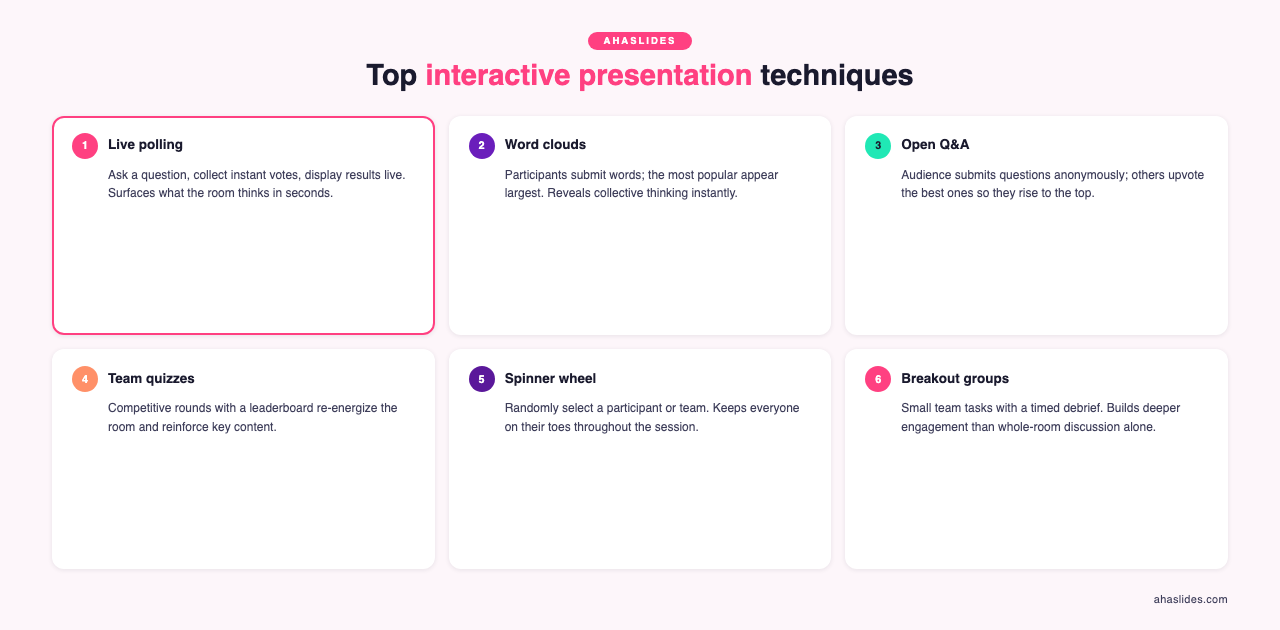
De bästa interaktiva presentationsteknikerna är prediktionsundersökningar i början, uppvärmning med ordmoln, quiz för att kontrollera förståelsen efter varje innehållsblock, live-omröstningar vid beslutspunkter, digital brainstorming och strukturerade frågestunder med uppröstning. Prediktionsomröstningar fungerar bäst i början eftersom de skapar ett kunskapsgap som hjärnan motiveras att täcka – kallad förtestningseffekten; ordmoln för att komma fram till grundläggande kunskaper under de första 60 sekunderna; quiz för att kontrollera förståelsen för att återställa uppmärksamheten efter 8–10 minuters innehållsblock, vilket utnyttjar testeffekten för bättre minnen; live-omröstningar när du behöver mäta självförtroende eller låta publiken väga in prioriteringar; digital brainstorming för samtidig skriftlig input som inkluderar introverta deltagare i lika hög grad; och strukturerade frågestunder med uppröstning för stora grupper där muntliga frågor exkluderar tystare deltagare. Forskning visar att publiken kopplas bort efter cirka 10 minuters kontinuerlig presentation – dessa tekniker skapar de återställningar som förhindrar det.
Enligt flera studier behåller publiken i interaktiva presentationer betydligt mer information och rapporterar högre nöjdhet än de i traditionella föreläsningsformat. aktivt lärandeÄndå består de flesta råden om "interaktiva presentationstekniker" av generiska tips som "ställ frågor" och "använd ögonkontakt".
Den verkliga frågan är inte om man ska göra presentationer interaktiva. Det handlar om vilka tekniker man ska använda, när man ska driftsätta dem och hur man genomför dem utan att störa innehållsflödet. Olika tekniker tjänar olika syften, fungerar med olika publikstorlekar och kräver olika nivåer av förberedelse.
Med mer än 7 års erfarenhet av att engagera miljontals presentatörer och deras publik världen över, kommer jag att presentera 10 beprövade interaktiva presentationstekniker utifrån deras funktion, från inledning till avslutning, med forskningsstöd, praktiska installationsdetaljer och ärlig vägledning om när var och en fungerar bäst.
Öppningstekniker: fånga uppmärksamhet och sätta förväntningar
De första två minuterna av varje presentation avgör om publiken lutar sig in eller ut. Forskning från Duarte visade att interaktion med publiken inom de första 120 sekunderna avsevärt ökar engagemanget under resten av sessionen. Dessa tekniker säkerställer att publiken är aktiv från början.
1. Förutsägelseundersökningar
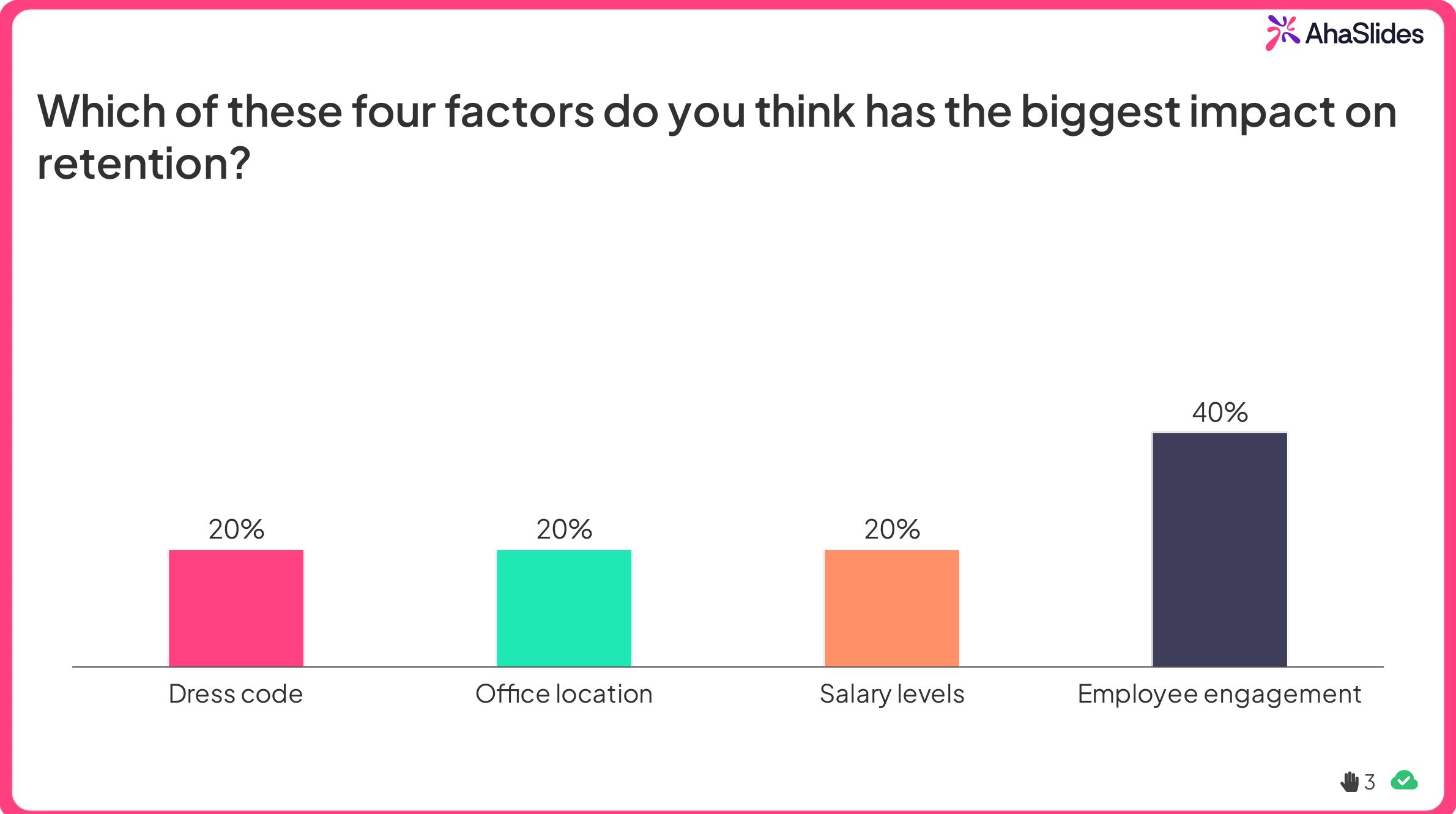
Innan du presenterar ny information, be din publik att förutspå resultaten eller svara på en fråga relaterad till ditt innehåll. "Hur stor andel av mötestiden tror du går till spillo på grund av dåligt engagemang?" eller "Vilken av dessa fyra faktorer tror du har störst inverkan på kundlojalitet?"
Varför fungerar det: Forskning om förtestningseffekten visar att det skapar en kunskapslucka som hjärnan är motiverad att täcka om man gör förutsägelser innan man lärt sig ny information. När det faktiska svaret skiljer sig från förutsägelsen skapar det en minnesvärd överraskning som förankrar informationen mer effektivt än att bara presentera den.
Setup: Skapa en bild med flervalsfrågor och en omröstning. Visa den före ditt första innehållsavsnitt. Låt publiken rösta (15–30 sekunder), visa fördelningen, avslöja sedan svaret och övergå till ditt innehåll. Verktyg som AhaSlides gör detta sömlöst med visning av omröstningar i realtid.
Fungerar bäst för: Alla publikstorlekar. Särskilt effektivt för datatunga presentationer, utbildningar och allt innehåll där verkligheten är kontraintuitiv.
2. Uppvärmning med ordmoln
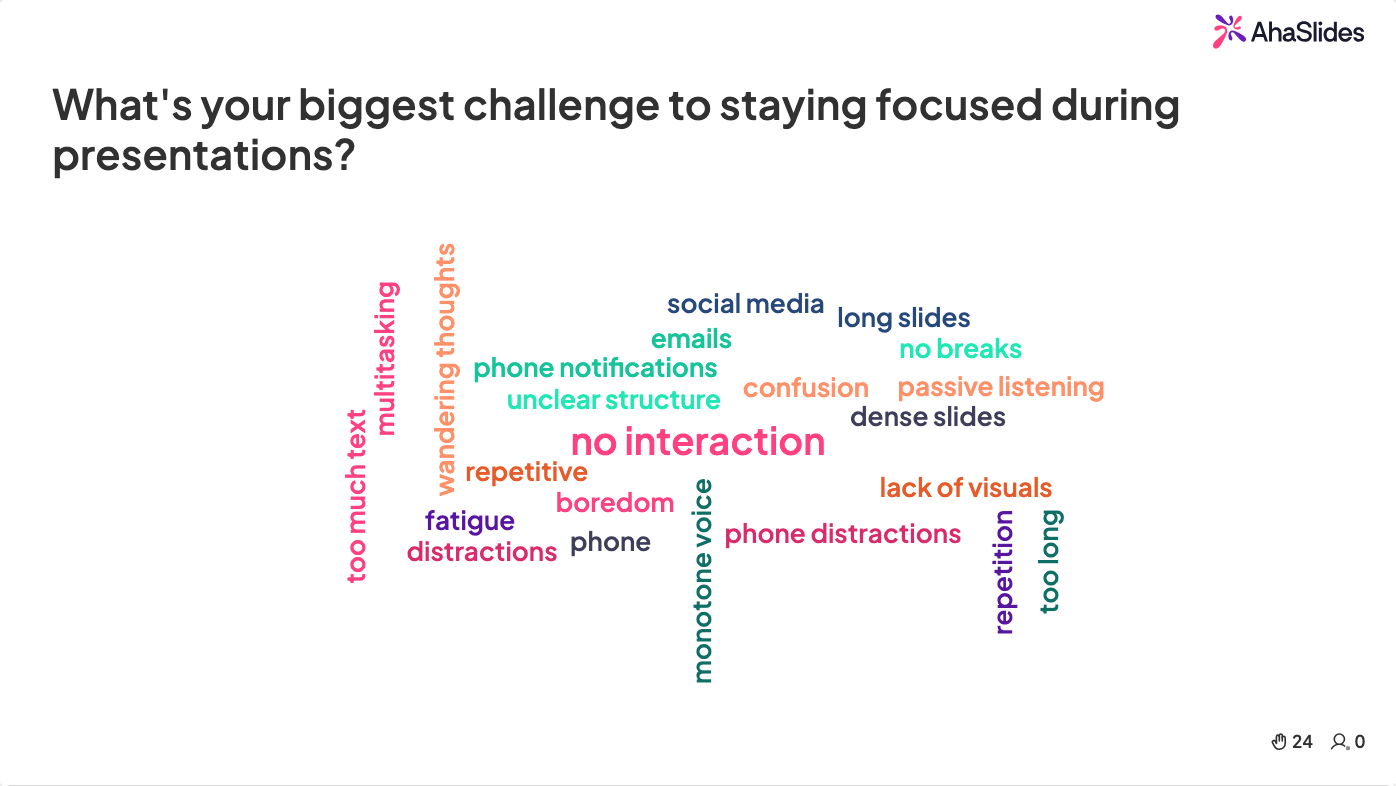
Börja med en enda fråga och be alla att svara med ett eller två ord. "Vilken är den största utmaningen du står inför med [ditt ämne]?" eller "Med ett ord, vad har fört dig hit idag?"
Varför fungerar det: Ordmoln åstadkommer tre saker samtidigt. De aktiverar publiken omedelbart (alla bidrar). De ger dig en realtidsdiagnos av vad rummet bryr sig om. Och själva det visuella blir en gemensam referenspunkt som du kan återkomma till under hela presentationen.
Setup: Visa en bild i form av ett ordmoln med din fråga. Ge publiken 45–60 sekunder på sig att skicka in svar från sina telefoner. Hänvisa till de mest framträdande orden när du övergår till ditt innehåll: ”Jag ser att många av er nämnde 'tid'. Det är precis det vi ska ta upp först.”
Fungerar bäst för: Grupper på 15 personer eller fler (ordmoln behöver volym för att vara visuellt intressanta). Bra för workshops, utbildningar och alla presentationer där du vill skräddarsy innehållet till rummet.
Kärninnehållstekniker: bibehåll uppmärksamhet och fördjupa förståelsen
Mitt i din presentation är där uppmärksamheten är som mest i fara. Forskning Kognitionsforskaren John Medina menar att publikens uppmärksamhet minskar kraftigt efter cirka 10 minuter och behöver en "återställning" för att återhämta sig. Dessa tekniker skapar dessa återställningar samtidigt som de fördjupar engagemanget med ditt innehåll.
3. Tänk-par-dela med digital inspelning
Ställ en fråga eller ett scenario. Ge publiken 60 sekunder att tänka individuellt, sedan 2–3 minuter att diskutera med en granne. Slutligen skickar paren in sin viktigaste slutsats eller svar via ett digitalt svarsverktyg.
Varför fungerar det: A peer-granskad studie Av Daniel Usera i Communication Education identifierades Think-Pair-Square-Share som en av fem universella publikengagemangstekniker som omvandlar passiva lyssnare till aktiva deltagare. Tekniken aktiverar flera kognitiva processer: individuell reflektion, social förhandling av mening och offentlig artikulering av idéer.
Setup: Förbered er fråga på en bild. Efter pardiskussionen, visa en öppen svarsbild där paren skriver sitt bästa svar. Detta samlar in insikter från varje par, inte bara de två eller tre som frivilligt anmäler sig muntligt. Gå igenom svaren och lyft fram olika perspektiv.
Fungerar bäst för: Grupper på 10–50 personer. Perfekt för workshops, utbildningar och allt innehåll som drar nytta av olika perspektiv. Mindre praktiskt för mycket stora målgrupper eller med strikta tidsbegränsningar.
4. Förståelsetestquiz
Efter att ha presenterat ett nyckelbegrepp eller avsnitt, pausa och testa förståelsen med två till fyra snabba frågor. Detta är inte ett test; det är ett kalibreringsverktyg som visar dig och publiken om budskapet nådde fram.
Varför fungerar det: Testeffekten är ett av de mest robusta fynden inom kognitiv psykologi. Quiz skapar också naturliga brytpunkter som återställer uppmärksamhetscykeln.
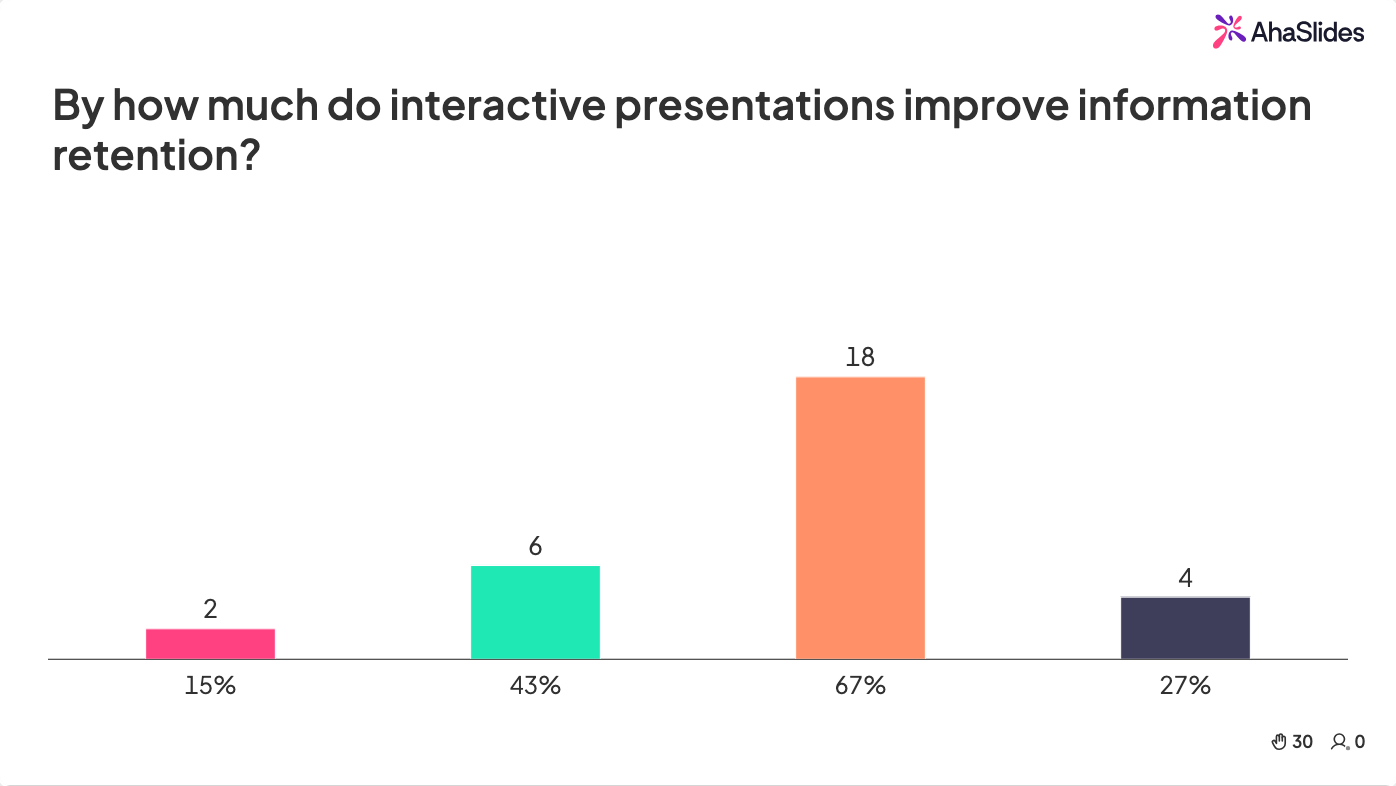
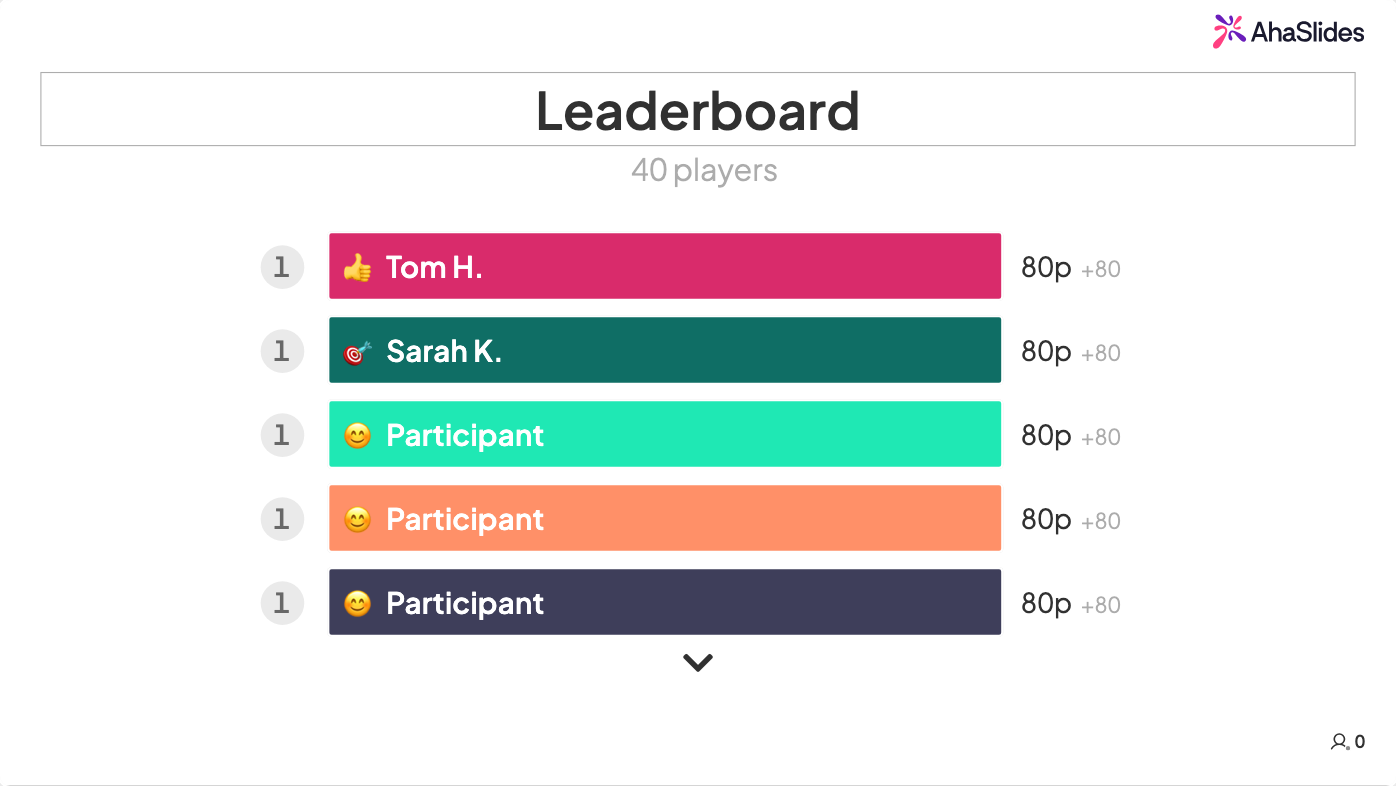
Setup: Bygg korta frågesporter (3–5 frågor) i slutet av varje huvudavsnitt. AhaSlides frågesportfunktion visar frågor med timer, visar korrekta svar och spårar poäng med en valfri topplista. Tävlingselementet ger energi utan att förringa inlärningssyftet.
Fungerar bäst för: Alla publikstorlekar. Viktigt för utbildningspresentationer. Även effektivt i teammöten där du behöver bekräfta att alla förstått en policyändring, processuppdatering eller strategisk förändring.
5. Live-omröstning för beslutspunkter
När du presenterar alternativ, strategier eller prioriteringar, låt publiken tycka till snarare än att bara berätta vad du tycker. "Med tanke på vad vi just har diskuterat, vilken av dessa tre metoder tror du har störst potential?" eller "Betygsätt din säkerhet i att genomföra detta på en skala från 1 till 5."
Varför fungerar det: Opinionsundersökningar skapar psykologiskt ägarskap. När människor offentligt (även anonymt) åtar sig en position bearbetar de den underliggande informationen mer noggrant. Det ger dig också ovärderlig data: om 60 % av deltagarna inte är säkra på genomförandet vet du att du bör lägga mer tid på praktiska detaljer snarare än mer teori.
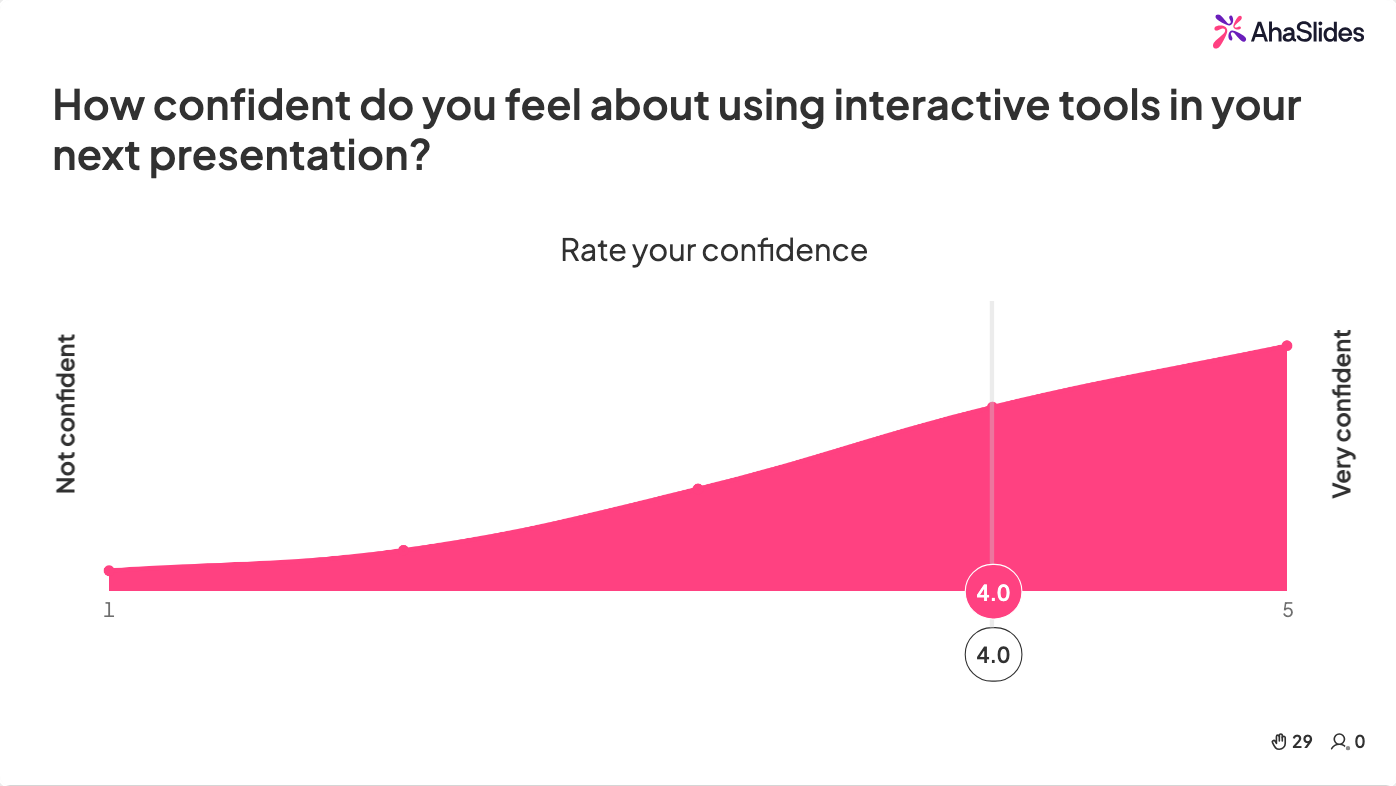
Setup: Infoga omröstningsbilder vid verkliga beslutspunkter i ditt innehåll. Använd flervalsfrågor för diskreta alternativ eller skala betyg för konfidens-/överensstämmelsesnivåer. Visa resultat och reagera på dem i realtid: "Intressant, de flesta av er lutade åt alternativ B. Låt mig visa er varför det faktiskt är det mest riskfyllda valet."
Fungerar bäst för: Alla publikstorlekar. Särskilt värdefullt vid strategiska presentationer, säljsamtal och utbildningar där du behöver mäta beredskapen.
6. Berättande med publikens engagemang
Istället för att berätta en komplett historia, involvera publiken vid viktiga vändpunkter. Presentera upplägget och utmaningen, pausa sedan och fråga: "Vad skulle du göra?" Samla in svar och avslöja sedan vad som faktiskt hände.
Varför fungerar det: Duartes forskning om presentationsstruktur betonar att de mest engagerande presentationerna kontrasterar "vad som är" med "vad som skulle kunna vara". När du bjuder in publiken till den kontrasten genom att be dem förutsäga eller svara innan du avslöjar resultatet, aktiverar du både nyfikenhet och emotionell engagemang.
Setup: Strukturera din berättelse med en tydlig pauspunkt. Använd en öppen svarsbild eller en flervalsfråga vid vändpunkten. Ge publiken 30–60 sekunder att svara, bekräfta kort deras svar och fortsätt sedan berättelsen. Avslöjandet känns kraftfullare eftersom publiken redan har förbundit sig att följa sin egen förutsägelse.
Fungerar bäst för: Alla publikstorlekar. Bra för ledarskapspresentationer, fallstudiediskussioner och allt innehåll där verkliga exempel driver budskapet.
Samarbetstekniker: generera idéer och bygga konsensus
Vissa presentationsmål går utöver informationsöverföring. När du behöver att publiken bidrar med idéer, löser problem tillsammans eller når enighet, skapar dessa tekniker förutsättningar för produktivt samarbete.
7. Digital brainstorming
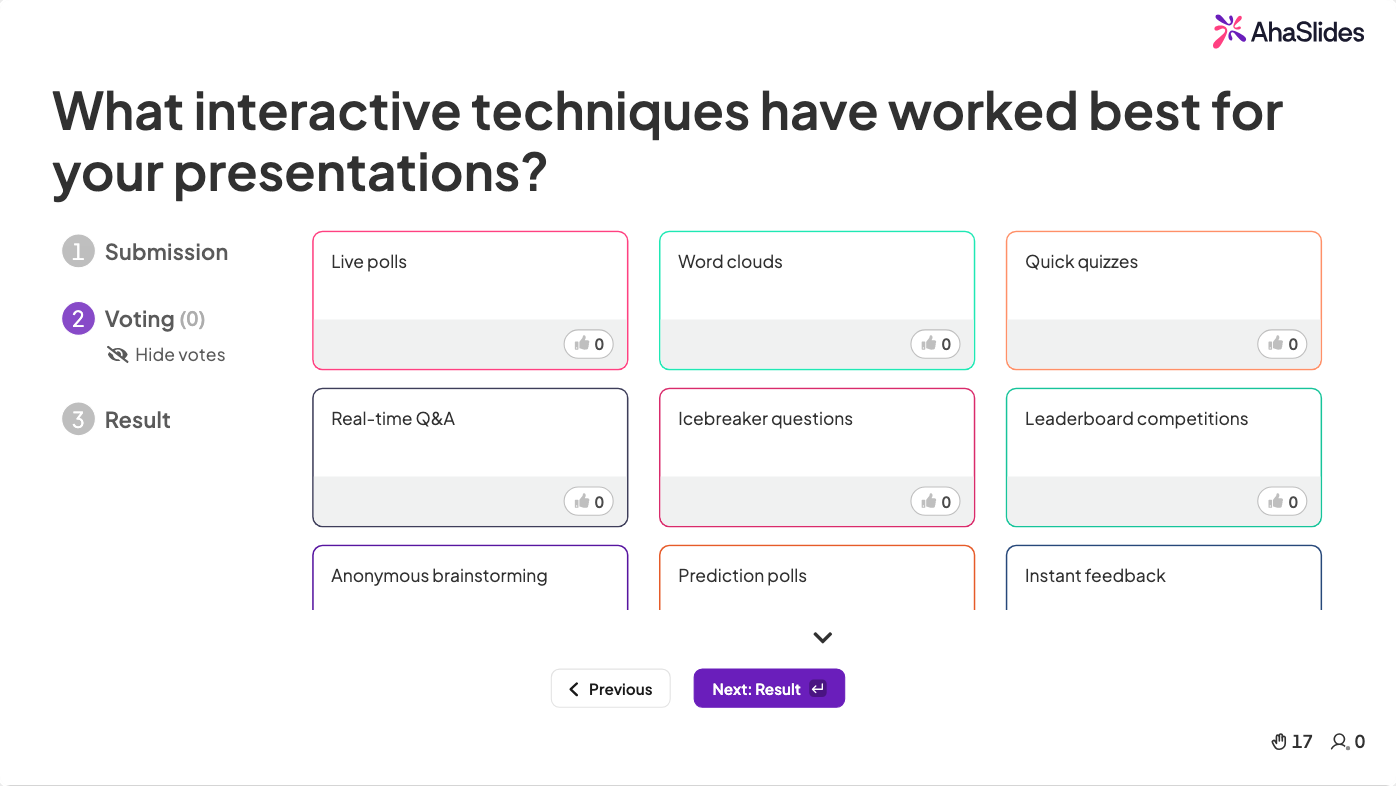
Presentera ett problem eller en fråga och låt alla skicka in idéer samtidigt via ett öppet svarsverktyg. Alla svar visas på skärmen i realtid, vilket skapar en gemensam idétavla.
Varför fungerar det: Forskning om gruppbrainstorming visar att samtidig skriftlig input producerar fler idéer, mer varierade idéer och mer jämlikt deltagande än verbal brainstorming i runda stycken. Introverta personer bidrar lika mycket eftersom alla skriver samtidigt.
Setup: Visa en öppen bild med din brainstorming-uppmaning. Ställ in en timer på 2–3 minuter. Se idéerna dyka upp på skärmen, gruppera och diskutera dem sedan. Du kan rösta på favoriter med hjälp av en uppföljningsomröstning om du behöver prioritera.
Fungerar bäst för: Grupper på 10–100 personer. Perfekt för workshops, strategisessioner och alla sammanhang där ni behöver gemensam input.
8. Strukturerade frågor och svar med uppröstning
Istället för att avsluta med "några frågor?" och hoppas på det bästa, öppna en digital frågekanal där publiken skickar in och röstar upp frågor under presentationen. Ta upp de vanligaste frågorna vid särskilda frågepauser.
Varför fungerar det: Traditionell frågestund har tre problem: bara de mest självsäkra personerna ställer frågor, frågor kommer i slutet när energin är som lägst, och det finns inget sätt att prioritera. Digital frågestund med uppröstning löser alla tre. Frågor kan skickas in anonymt (vilket uppmuntrar deltagande från blyga deltagare), de bästa frågorna hamnar högst upp genom publikröster, och du kan ta upp dem vid naturliga pauser snarare än bara i slutet.
Setup: Öppna din frågekanal i början av presentationen och säg till publiken: "Ni kan skicka in frågor när som helst med hjälp av den här länken. Jag kommer att ta upp de mest populära allt eftersom." AhaSlides frågefunktion hanterar detta med anonyma bidrag och live uppröstning.
Fungerar bäst för: Grupper på 20 personer eller fler. Viktigt för webbinarier, konferensföredrag och möten med alla. Mindre nödvändigt för små workshops där muntliga frågor och svar fungerar naturligt.
Avslutningstekniker: förstärka och inspirera till handling
Hur du avslutar avgör vad din publik kommer ihåg och gör härnäst. Dessa tekniker skapar en stark avslutning som förstärker viktiga budskap och driver till handling.
9. Reflektionsordmoln
Be publiken att sammanfatta sin viktigaste slutsats med ett eller två ord. Det resulterande ordmolnet ger en visuell sammanfattning av vad som resonerade mest, vilket ofta skiljer sig från vad du förväntade dig.
Setup: "Med ett eller två ord, vad är det viktigaste du tar med dig från idag?" Visa upp ordmolnet, uppmärksamma de mest framträdande teman och använd dem som en brygga till dina avslutande ord.
Fungerar bäst för: Alla publikstorlekar. Stark för utbildningar (visar vad som uppnåtts), konferenser (skapar en delbar visuell bild) och teammöten (avslöjar prioriteringar).
10. Engagemangsundersökningar
Avsluta med att fråga publiken vad de planerar att göra annorlunda. "Vilken av dessa strategier kommer du att implementera först?" eller "På en skala från 1 till 5, hur sannolikt är det att du kommer att tillämpa detta i ditt nästa möte?"
Varför fungerar det: Forskning om implementeringsintentioner visar att personer som specificerar när, var och hur de ska agera mot ett mål är betydligt mer benägna att fullfölja det. En avslutande enkät som ber om ett specifikt åtagande omvandlar passiv överenskommelse till aktiv avsikt.
Setup: Skapa en flervalsfråga med konkreta handlingsalternativ hämtade från ditt innehåll. Visa resultaten och avsluta med: "Bra - 45 % av er börjar med strategi två. Jag skulle gärna höra hur det går."
Fungerar bäst för: Utbildningstillfällen, workshops, ledarskapspresentationer, alla sammanhang där målet är beteendeförändring snarare än bara informationsöverföring.
Bygga flödet: där tekniker passar ihop

Ett vanligt misstag är att behandla interaktiva tekniker som fristående tillägg snarare än strukturella element. De mest effektiva interaktiva presentationerna följer en rytm.
Börja med aktivering (enkät eller ordmoln). Presentera innehållet i 8–10 minuter långa segment. Infoga en interaktionspunkt mellan varje segment (quiz, enkät eller tänk-par-dela). Använd samarbetstekniker (brainstorming, frågestund) när du behöver input från publiken. Avsluta med reflektion och engagemang.
Detta mönster skapar vad kognitiva forskare kallar "önskvärd svårighet", den produktiva utmaningen att aktivt bearbeta information snarare än att passivt ta emot den. Det är mer arbete för publiken, men det är just det arbetet som ger bättre minne, djupare förståelse och starkare engagemang.
Vanliga frågor och svar
Vilka är de mest effektiva interaktiva presentationsteknikerna?
De mest effektiva interaktiva presentationsteknikerna är prediktionsundersökningar (för att inleda med en kunskapslucka), quiz för att kontrollera förståelsen (för att återställa uppmärksamheten var 10:e minut), live-undersökningar vid beslutspunkter (för att ge publiken handlingsfrihet), digital brainstorming (för samtidig skriftlig input från hela rummet) och strukturerade frågesporter med uppröstning (för stora grupper). Forskning stöder båda: prediktionsundersökningar utnyttjar förtestningseffekten; quiz utnyttjar testningseffekten; samtidig digital brainstorming producerar mer varierade idéer än verbala round-robin-frågor.
Hur strukturerar man en interaktiv presentation?
Strukturera interaktiva presentationer i 8–10 minuter långa innehållsblock, vart och ett följt av en interaktionspunkt. Börja med en förutsägelseundersökning eller ett ordmoln (de första 2 minuterna), leverera innehållet i block, infoga ett quiz eller en omröstning mellan varje block, använd brainstorming eller frågestunder för samarbetsfaser och avsluta med en engagemangsundersökning eller ett ordmoln för reflektion. Detta speglar den naturliga uppmärksamhetscykeln och förhindrar det engagemangsfall som inträffar efter 10 oavbrutna minuter av passivt lyssnande.
Vad är skillnaden mellan en engagerande och en interaktiv presentation?
En engagerande presentation fångar uppmärksamheten genom berättande, starka bilder och framförande. En interaktiv presentation går längre genom att kräva att publiken bidrar – de svarar på omröstningar, skickar in frågor eller samarbetar kring idéer. Interaktivitet ger starkare intresse och tillfredsställelse eftersom den aktiverar snarare än bara fångar uppmärksamhet.
Hur många interaktiva element bör en 30-minuterspresentation ha?
En 30-minuterspresentation bör ha 2–3 interaktiva element: ett i början (enkät eller ordmoln), ett eller två mitt i sessionen (förståelsequiz eller live-enkät) och eventuellt ett i slutet (enkät eller reflektion). Mer än så och interaktionen känns performativ; mindre risk för passiv distansering.
Fungerar dessa tekniker för virtuella presentationer?
Ja, och de är utan tvekan viktigare virtuellt. Digitala verktyg som AhaSlides fungerar identiskt oavsett om din publik befinner sig i samma rum eller är distribuerad över olika tidszoner. Virtuella publiker behöver mer frekvent interaktion – var 10–12 minut snarare än var 15–20:e – eftersom distraktionerna i en avlägsen miljö är större än i verkligheten.
Vad händer om min publik inte är van vid interaktiva presentationer?
Börja med tekniker med låga hinder (anonyma omröstningar, ordmoln) innan du går vidare till metoder med högre deltagande (tänk-par-dela, brainstorming). De flesta målgrupper anpassar sig snabbt när de ser sina svar visas på skärmen och inser att deras input verkligen formar diskussionen.
För att lägga till liveomröstningar, frågesporter, ordmoln och frågor och svar till din nästa session, AhaSlides hanterar allt från ett gratis konto, i PowerPoint, Google Slides, eller en egen redigerare. För den fullständiga guiden som täcker tekniker, verktyg och idéer för alla sammanhang, se: Hur man gör en presentation interaktiv: den kompletta guiden.
För fler strategier och specifika aktivitetsidéer, se: 15 interaktiva presentationsidéer, 11 interaktiva presentationsspel, 15 interaktiva spel för träningspassoch 7 Zoom-presentationstips för att motverka trötthet.