


De flesta presentationsråd fokuserar på framförandet. Tala tydligt. Få ögonkontakt. Ha ingen stress. Allt det spelar roll, men det kommer i tredje hand. Innan framförandet finns det förberedelser. Innan förberedelser finns det något mer grundläggande: att veta vilken typ av presentation du bygger, vem den är till för och vad du faktiskt vill att de ska göra när den är över.
De tio tipsen i den här guiden täcker hela spektrumet, från de beslut du fattar innan du öppnar en bildsamling till de justeringar du gör i realtid när rummet börjar tappa fokus. Vissa kommer att kännas bekanta. Några kan förändra hur du hanterar presentationer helt och hållet.
De fungerar bäst tillsammans. Men om du letar efter någonstans att börja är tip one rätt ställe.
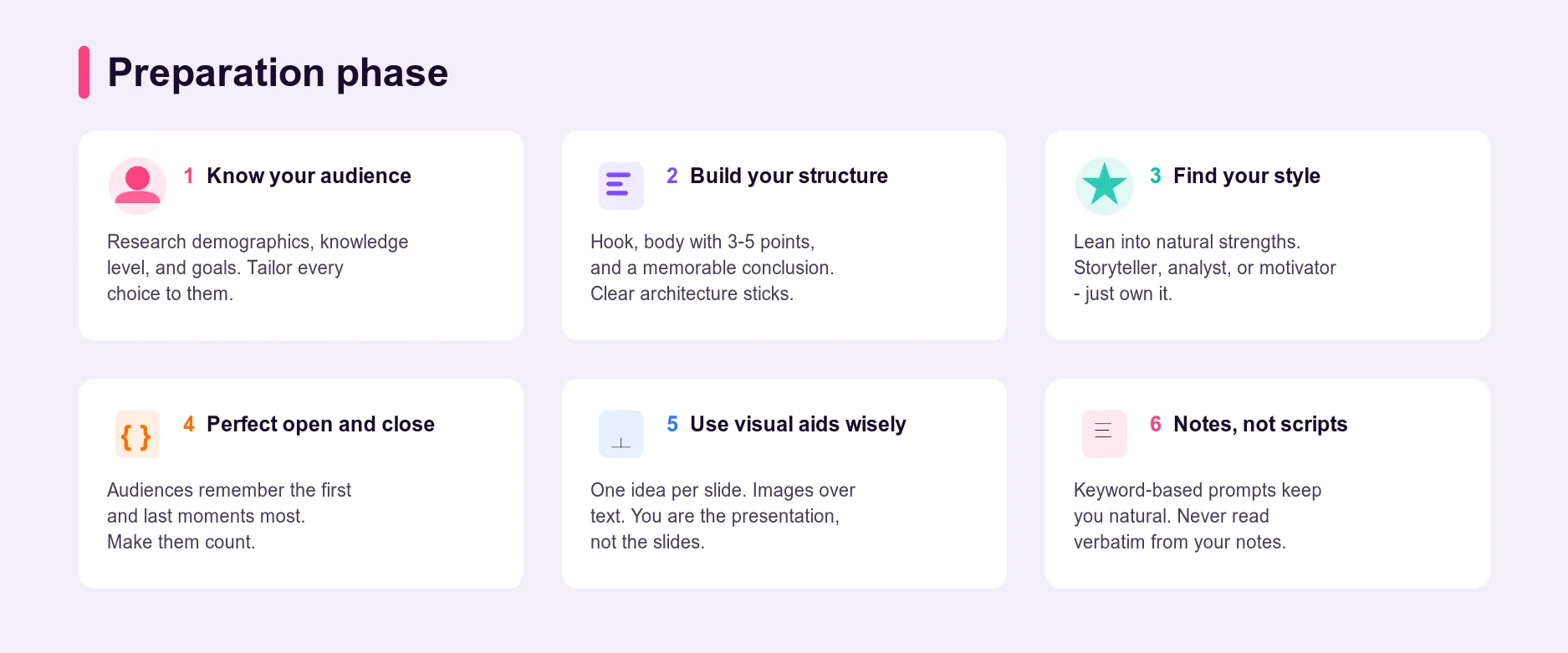
1. Känner till din målgrupp innan du vet ditt innehåll
Den enskilt vanligaste anledningen till att presentationer misslyckas är att de är byggda för fel rum. Innehållet är bra. Djupet är fel. Exemplen träffar inte rätt. Tonen känns fel. Allt detta kan spåras tillbaka till ett beslut som fattades före den första bilden: vem är detta egentligen för?
Innan du skriver något, besvara fyra frågor. Vad vet den här publiken redan om ämnet? Vilka problem har de som din presentation kan ta upp? Vilket språk och vilka referenser kommer att kännas bekanta snarare än främmande? Är de här för att de vill vara här eller för att de känner sig förpliktade?
Svaren formar varje efterföljande beslut. En presentation om dataanalys för chefer ser inte alls ut som samma presentation för data scientists. Samma ämne. Helt annorlunda innehåll, djup och ton. Design för personerna i rummet, inte för en tänkt genomsnittlig publik.
2. Bygg din struktur innan du skapar bilder
Att öppna en tom bunt och börja fylla bilder är hur presentationer känns mer sammanhängande än sammanhängande. Struktur är det beslut som gör allt annat enklare, och det måste ske innan någon bild finns.
En presentation som fungerar följer samma grundläggande logik oavsett ämne. Börja med att konstatera varför detta är viktigt för just din publik just nu. Ange ditt kärnbudskap tidigt snarare än att låta folk vänta till slutet för att förstå vad du argumenterar för. Utveckla tre till fem distinkta punkter i brödtexten, var och en stödd av bevis och kopplad tillbaka till kärnbudskapet. Avsluta med förstärkning och en specifik uppmaning till handling: ett beslut att fatta, ett beteende att förändra, ett nästa steg att ta.
Övergångar är lika viktiga som själva avsnitten. "Nu när vi har gått igenom X, låt oss titta på Y" håller publiken fokuserad. Utan dem känns avsnitten staplade snarare än sammankopplade.
3. Känn din stil och använd den
Vissa talare håller ett rum i schack med energi och tempo. Andra med precision och lugn. Ingetdera är bättre. Det som undergräver presentationer är inte fel stil: det är fel stil för personen som håller dem.
Se dig själv på video och lägg märke till vad som faktiskt fungerar snarare än vad du önskar skulle fungera. Är du en naturlig historieberättare? Använd det. Bygger du förtroende genom data och precision? Använd det. En introvert som utför extroversion läss omedelbart som oäkta. Att luta sig mot det du verkligen gör bra bygger mer trovärdighet än att försöka kopiera någon annans tillvägagångssätt.

4. Skriv din inledning och avslutning först
Folk kommer ihåg början och slutet av presentationer bättre än något i mitten. De flesta presentatörer skriver dem sist, vilket är bakvänt.
Din inledning har ungefär trettio sekunder på sig att fånga rummets uppmärksamhet innan folk börjar avgöra om de är uppmärksamma eller inte. Spendera inte dessa sekunder på att tacka arrangörerna eller förklara vad du ska säga. Börja med något som omedelbart fångar uppmärksamheten: en fråga, ett specifikt scenario, en kontraintuitiv observation. Inledningen ska få folk att luta sig inåt, inte att dra sig tillbaka.
Din avslutning bör ge publiken en tydlig sak: vad de ska göra härnäst. Inte en sammanfattning av vad du har gått igenom. Inte några "frågor?" utan tid att besvara dem. Ett specifikt, handlingsbart nästa steg som ger den förberedelse du just gjort någonstans att gå.
Skriv båda innan du skriver något annat. Allt i mitten finns för att sammankoppla dem.
5. Använd bilder som stöd, inte som presentationen
Bilder fulla av text ger inte stöd åt presentatören. De ersätter dem. När din publik kan läsa allt som är värt att veta på skärmen kommer de att göra det, och de kommer att sluta lyssna på dig i processen.
Varje bild bör förmedla en idé. Använd bilder som är specifika för din poäng snarare än generiska stockfoton som signalerar att du inte tänkte noga igenom det visuella. När du visar data, kommentera den: använd färg, pilar eller bildtexter för att rikta uppmärksamheten mot det viktiga fyndet snarare än att be publiken att hitta det själva.
Standarden att sträva efter: om någon läser dina bilder utan att höra dig presentera, ska de ha frågor, inte svar. Bilder som väcker frågor ger presentatören något att göra. Bilder som besvarar allt gör presentatören överflödig.
6. Förbered anteckningar, inte ett manus
Att memorera hela din presentation ökar snarare än minskar ångesten. När du reciterar istället för att tala känns det katastrofalt att glömma ett enda ord. Manus får varje avvikelse att kännas som ett misslyckande.
Nyckelordsanteckningar fungerar olika. Skriv ner kärnidén för varje avsnitt, all statistik du behöver citera korrekt och dina övergångsfraser. Håll dem tillräckligt korta för att du ska kunna skumma igenom dem med en snabb blick. Anteckningarna finns där om du inte läser, men du är inte beroende av dem. Du talar konversationsmässigt, anpassar dig till rummet och återhämtar dig naturligt från eventuella avvikelser eftersom du aldrig reciterade från första början.
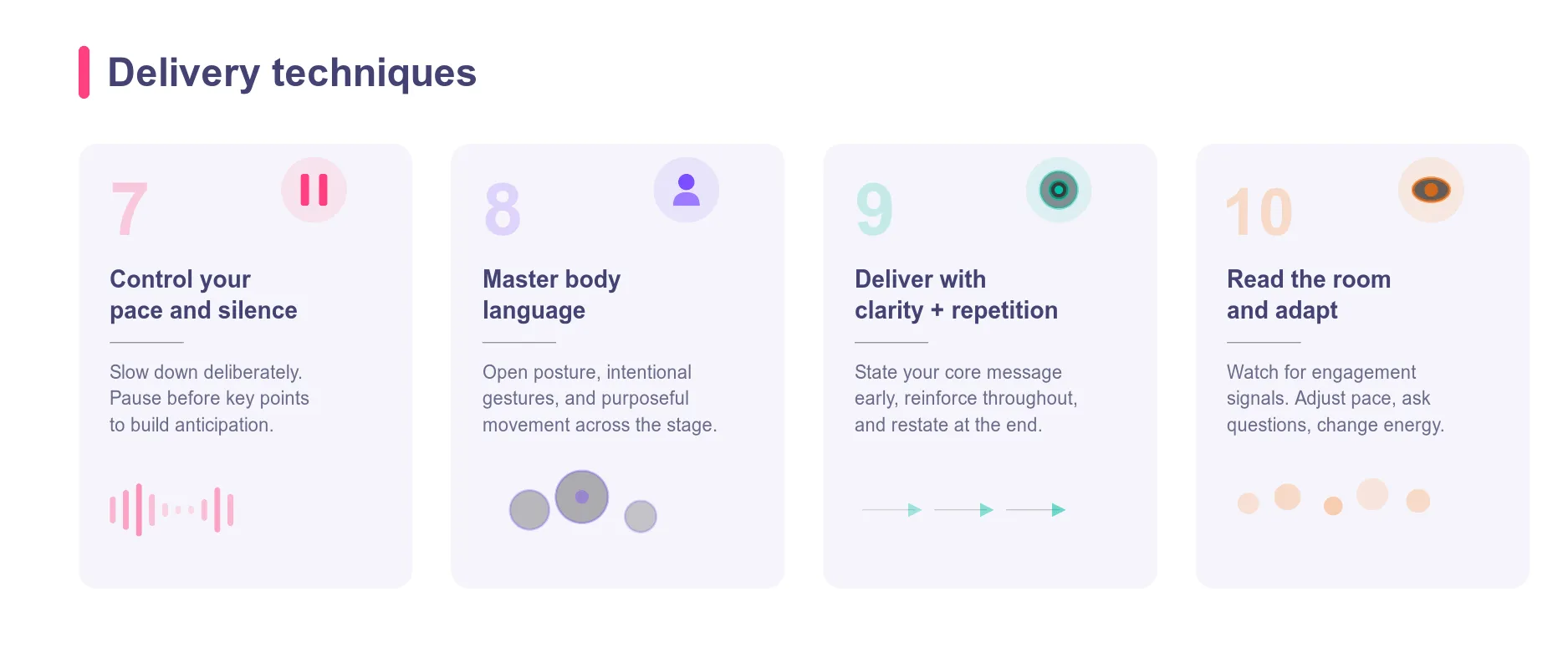
7. Sakta ner och använd tystnad medvetet
Nervösa talare rusar. Det är ett av de mest synliga tecknen på ångest och ett av de enklaste att korrigera, men bara om du är uppmärksam på det.
Sakta ner medvetet. Lämna utrymme mellan idéerna så att publiken kan absorbera vad du har sagt. Pausa före viktiga punkter för att bygga upp förväntan. Pausa efter dem för att låta dem landa. En tre sekunders paus känns som en evighet för dig och helt naturlig för alla som lyssnar. De talare som verkar mest självsäkra är ofta de som är mest bekväma med tystnad.
8. Låt din kropp stödja dina ord
Din hållning, dina gester och dina rörelser kommunicerar innan dina ord gör det. Öppen hållning, axlarna bakåt, armarna synliga, signalerar självförtroende. Korsade armar signalerar defensivitet. Händerna i fickorna signalerar distans. Konstant rörelse signalerar nervositet.
Gester bör vara avsiktliga och anpassade till rummet. En liten gest i ett stort utrymme försvinner. En stor gest i ett litet utrymme känns aggressiv. Rörelse bör ha ett syfte: att röra sig närmare publiken under en viktig punkt skapar kontakt. Att gå fram och tillbaka utan avsikt skapar buller.
Ögonkontakt är den mest direkta signalen om självförtroende som finns tillgänglig för en presentatör. Titta på olika delar av rummet istället för att fixera dig på en person eller titta ner. Korta, genuina kontakter tvärs över rummet skapar känslan av att du pratar med människor snarare än till dem.
9. Upprepa ditt kärnbudskap
Folk kommer inte ihåg det mesta av vad de hör i en presentation. De kommer ihåg huvudpoängen om den betonas tydligt och återkommer till den genomgående.
Ange ditt kärnbudskap i inledningen. Förstärk det genom exempel och bevis i brödtexten. Upprepa det i avslutningen med ett annat språk. Detta är inte redundans. Det är så det fungerar att hålla minnet vid liv. Upprepningen som känns mekanisk för den som framför det känns som tydlighet för den som tar emot det.
10. Läs av rummet och justera
De bästa presentatörerna är inte de som håller sig mest strikt till planen. Det är de som märker när något inte fungerar och ändrar det.
Var uppmärksam på signalerna. Att folk lutar sig fram och får ögonkontakt betyder att du har utrymme. Att folk lutar sig tillbaka, kollar telefoner eller blir tyst betyder att du tappar kontrollen. När det händer, anpassa dig. Ställ en fråga. Flytta dig närmare. Ändra takten. Berätta en historia. Dessa små förändringar återställer uppmärksamheten utan att störa presentationen.
När du tappar tråden eller snubblar över ett ord, pausa, ta ett andetag och fortsätt. Din publik kommer att glömma misstaget nästan omedelbart. Du kommer att minnas det i flera dagar. Asymmetrin är bra att känna till.

Hur man övar effektivt
De tio tipsen ovan fungerar bara om du faktiskt övar med dem. Att läsa igenom dina anteckningar och anta att det räknas är det vanligaste förberedelsemisstaget. Det återskapar inte upplevelsen av att tala, vilket innebär att första gången du gör det under press är inför din verkliga publik.
Öva högt, stående, i det tempo du faktiskt kommer att använda. Inte snabbare. Det är i klyftan mellan tyst repetition och liveframträdande som de flesta blir överraskade. Att tala högt aktiverar andra saker än att läsa, och det enda sättet att minska det klyftan är att öva på hur du ska framföra.
Spela in dig själv minst en gång. Titta på första svängen med ljudet avstängt för att bedöma ditt kroppsspråk, sedan med ljud för att fånga upp utfyllnadsord, problem med tempot och stunder där du tappar tråden. De flesta tycker att inspelningen är mindre smärtsam än de förväntade sig och mer användbar än någon annan form av feedback.
Gå igenom inledningen och slutet mer än något annat avsnitt. Det är dessa ögonblick som sätter tonen och lämnar ett bestående intryck. De ska kännas tillräckligt bekanta för att levereras utan kognitiv belastning, vilket frigör dig att faktiskt få kontakt med rummet snarare än att koncentrera dig på vad som kommer härnäst.
Ta tid. Vet exakt hur länge din presentation är så att du inte upptäcker mitt i sessionen att du har femton minuter material och fem minuter kvar. Att springa över är ett av de mest synliga sätten att undergräva trovärdigheten hos en publik som har någonstans att vara.
Öva under förhållanden som liknar den faktiska presentationen så nära som möjligt. Stående snarare än sittande. I ett rum snarare än vid ditt skrivbord. På den utrustning du faktiskt kommer att använda. Ju mer din övningsmiljö liknar den verkliga, desto mer påverkas din förberedelse.
Tar det vidare med AhaSlides
En sak som förberedelse och genomförande ensamt inte helt kan lösa är den envägsdynamik som kännetecknar de flesta presentationer. Man kan vara väl förberedd, tydlig och självsäker, och ändå bli distraherad av folk eftersom det inte finns något som ber dem att delta.
Interaktiva element ändrar på det. En omröstning mitt i en presentation ger din publik något att svara på snarare än att bara ta emot. Ett ordmoln visar vad som resonerar i realtid snarare än att du gissar. En anonym frågestund fångar upp de frågor folk har men inte ställer högt, vilket innebär att du får reda på vad din publik faktiskt tänker snarare än vad de är bekväma med att säga.
Dessa stunder ersätter inte förberedelser eller presentationer. Det är vad som händer när förberedelser och presentationer redan är stabila och du vill att publiken ska vara närvarande under hela presentationen. AhaSlides gör det enkelt att bygga dem: omröstningar, frågesporter, ordmoln och frågor och svar placeras inuti ditt presentationsflöde snarare än bredvid det, så övergången från innehåll till deltagande känns avsiktlig snarare än störande.
Inslagning upp
En presentation som fungerar är inte ett resultat av talang. Det är resultatet av att känna sin publik, bygga en struktur som tjänar dem, förbereda sig tillräckligt noggrant så att framförandet känns naturligt och vara tillräckligt närvarande för att justera när något inte träffar.
Inget av det är mystiskt. Allt är inlärbart.
Välj ett tips från den här guiden och tillämpa det i din nästa presentation. Lägg märke till vad som förändras. Lägg sedan till ett annat. Det är hela processen.