Skip to content
Claim this template

Free course template · Global

ECG rhythm recognition for nurses and first responders

A ready-made course, live deck and two surveys for telemetry. AhaSlides tracks progress, completion and scores for you. 40 minutes, 6 lessons. Last reviewed 21 October 2026; not legal advice.

Claim the templatePreview the courseDownload SCORM for your LMS

Free. No credit card. Edit everything.

Play a game from the course

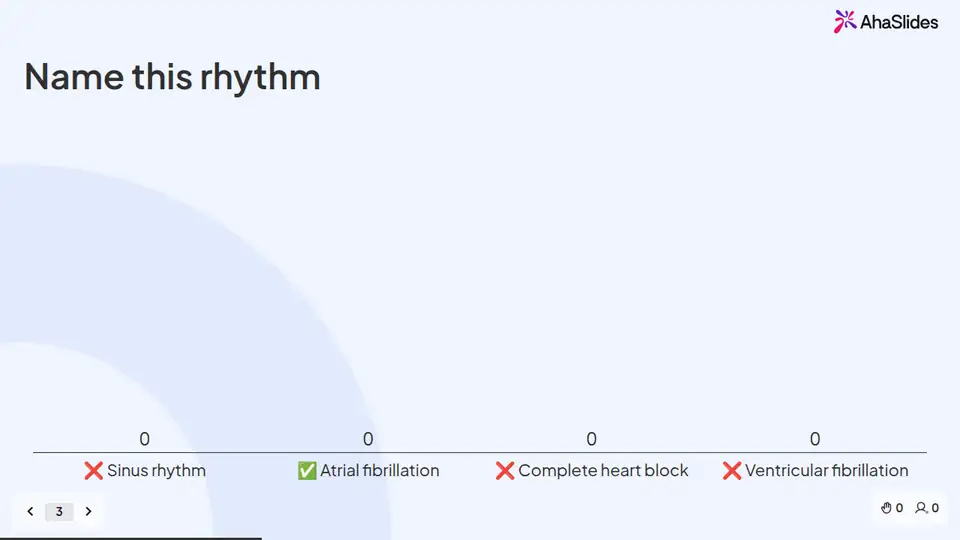
ECG rhythm recognition for nurses and first responders: try 3 questions

Three questions from this course. Pick an answer, then see why.

Play the game

Game not loading? Open it in a new tab (opens in a new tab)

Three pieces that work together

Learners prepare on their own, you answer questions live, and the surveys tell you what stuck. 13 fields to fill in with your own policy, contacts and locations; each one is highlighted inside the course.
Claim the template
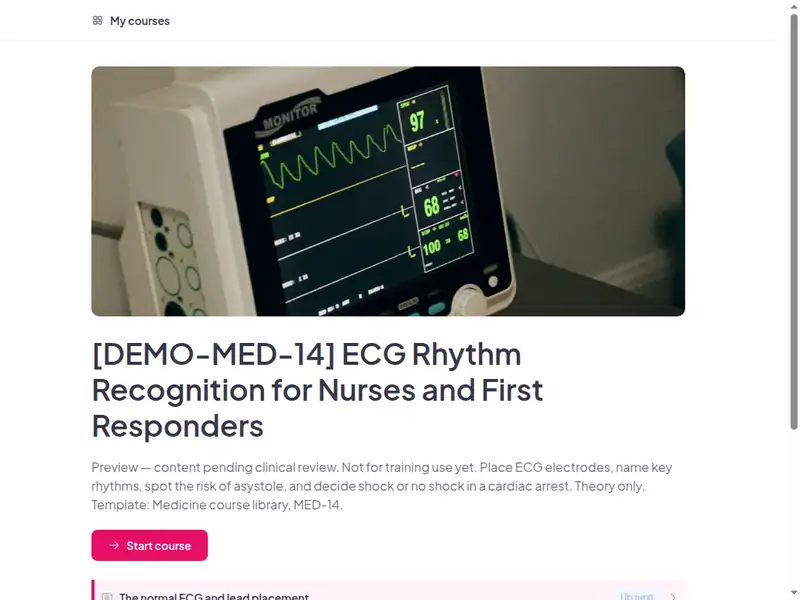
The ECG rhythm recognition for nurses and first responders course as a learner first sees it

Completion is tracked for you

Learners sign in to take the course, so every start, finish and score is recorded in AhaSlides. No spreadsheet to keep.

  • Who has finished

    See who has not started, who is in progress and who has completed the course.

  • Every score

    Each learner's answers to the quizzes and activities in the course.

  • What landed

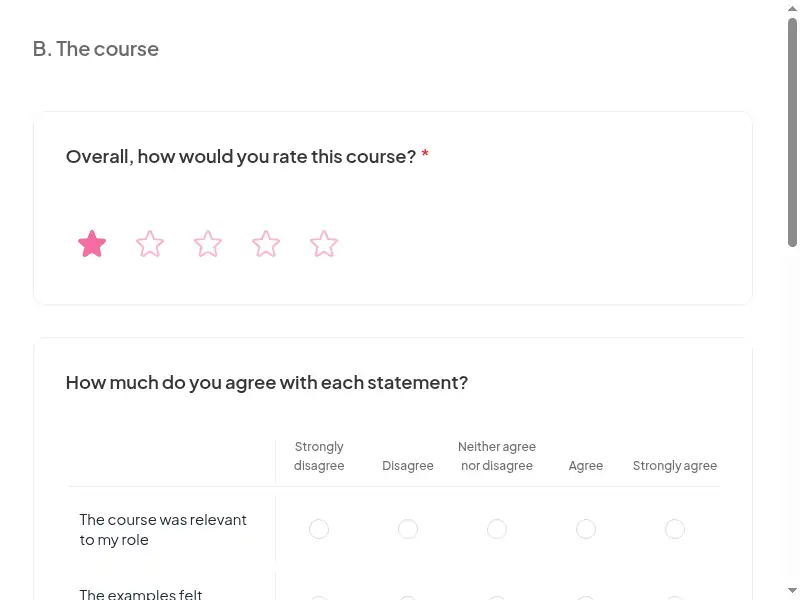
    Survey results show what people took away, and the 30-day check-in shows whether they use it.

Claim the template

6 lessons, about 40 minutes

What learners can do at the end of each lesson. Minutes are an estimate.

  • Lesson 1: The normal ECG and lead placement · 7 min

    Place the electrodes for a standard 12-lead ECG and describe what a normal recording shows.

  • Lesson 2: Bradycardias and heart block · 7 min

    Recognise a slow rhythm or heart block that needs escalation, including life-threatening features and risk of asystole.

  • Lesson 3: Tachycardias and atrial fibrillation · 7 min

    Sort a fast rhythm by narrow or broad QRS and regular or irregular, and recognise when atrial fibrillation is likely.

  • Lesson 4: Shockable rhythms and the defibrillator · 7 min

    Tell shockable from non-shockable cardiac arrest rhythms and use a defibrillator safely.

  • Lesson 5: Pacemakers and when to escalate · 6 min

    Care safely for a person with a pacemaker and know which signs to escalate.

  • Lesson 6: Final assessment · 6 min

    Final assessment, part 1 · Final assessment, part 2 · Completion

Claim the template

Common questions

Yes. The course, the live deck and both surveys are free. Claiming the template into your AhaSlides account is free too.

Yes. The course is self-paced and online, and the live deck lets you add a live session in the room or online.

At induction to a monitored area + annual update (organisation policy).

Telemetry, cardiac, recovery and emergency nurses, paramedics and other first responders.

Record completion in your own LMS or record system, so you can show who finished the course and when.

Yes, everything. Change the wording, swap scenarios for ones from your workplace, add your logo, or remove parts that don't apply.

Your own details, each highlighted inside the course:
  • The hands-on ECG recording and defibrillator or life support session learners must also complete
  • The ECG machines and cable colour coding in use
  • The approved source of educational rhythm strips
  • The medical emergency and cardiac arrest call numbers
  • The telemetry alarm and escalation policy, including who can start pacing, cardioversion and drug treatment
  • The defibrillators in use and who may use manual mode
  • Where AEDs are kept, including public areas
  • The pacemaker clinic and out-of-hours route
  • The clinical educator or resuscitation officer to contact
  • Where completion is recorded
  • The live companion session link
  • The self-paced course link
Then edit anything else you like: wording, scenarios, your logo.
Visit the help centre (opens in a new tab)