The best ESL warm-up activities for adults are short games that get every learner using English in the first five minutes, without putting anyone on the spot. A good warm-up takes under ten minutes, needs nothing from learners but a phone or a pen, and recycles words they already half know, so the first thing they say in class is a success.
Below are 12 warm-ups for adult English classes, in person or online, with ready-to-use word lists, picture ideas and speaking prompts. Three of them run on learners' phones with AhaSlides, és a lépcsőfokok lejjebb vannak.
Why do adult ESL classes need a warm-up?
Adult learners often arrive straight from work, still thinking in their first language. A warm-up gives their English a few minutes to switch on before the main task asks anything difficult of them.
It also lowers the stakes. Many adults worry about making mistakes in front of others, so the first activity should be one where a wrong answer costs nothing. A game on a phone helps here: learners answer privately, the screen shows the room's answers, and nobody has to speak first unless they want to.
What are good ESL warm-up activities for adults?
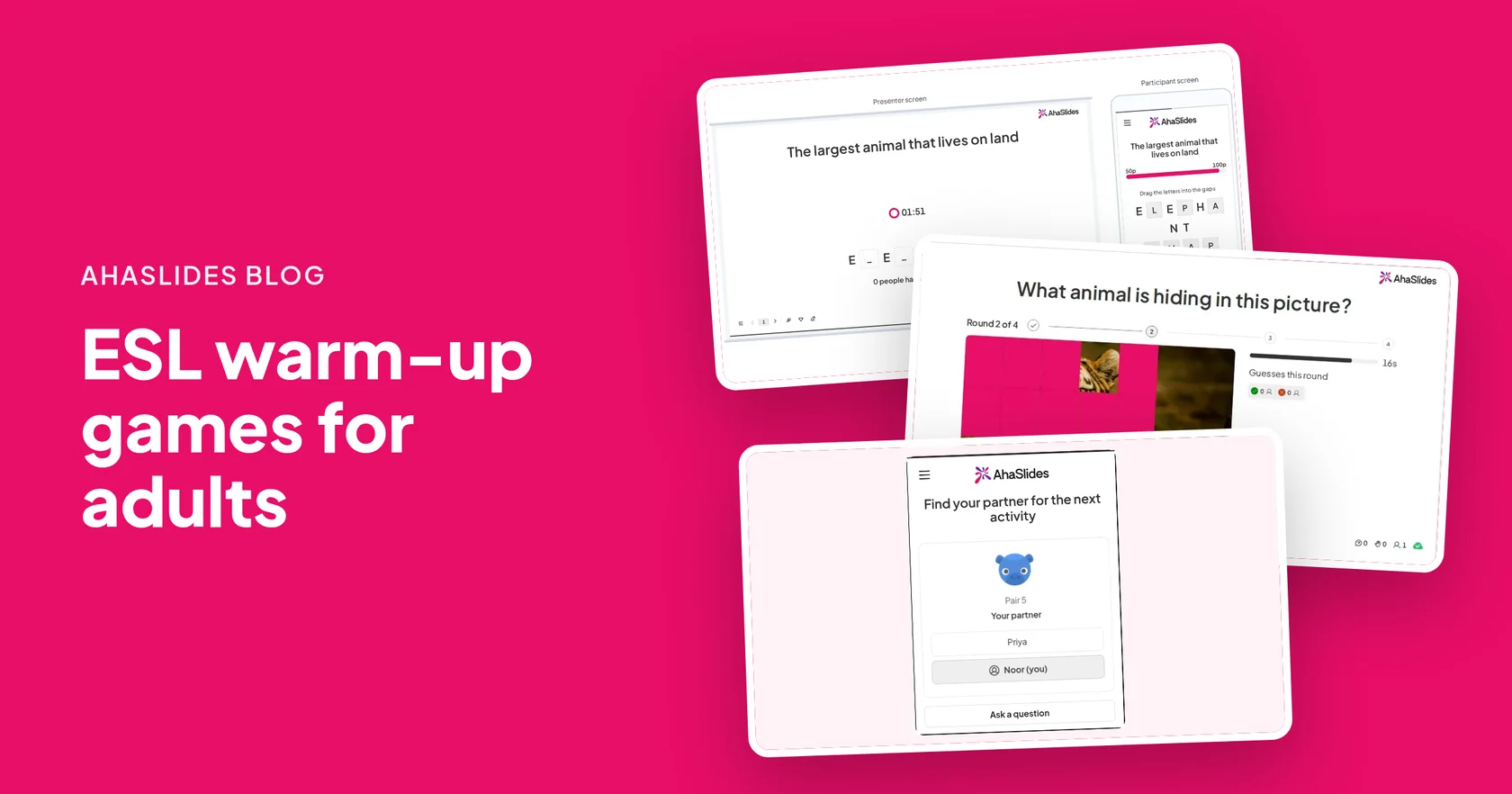
Pick one per lesson and rotate them across the week. The first three run on phones with AhaSlides; the rest need only a board or a slide.
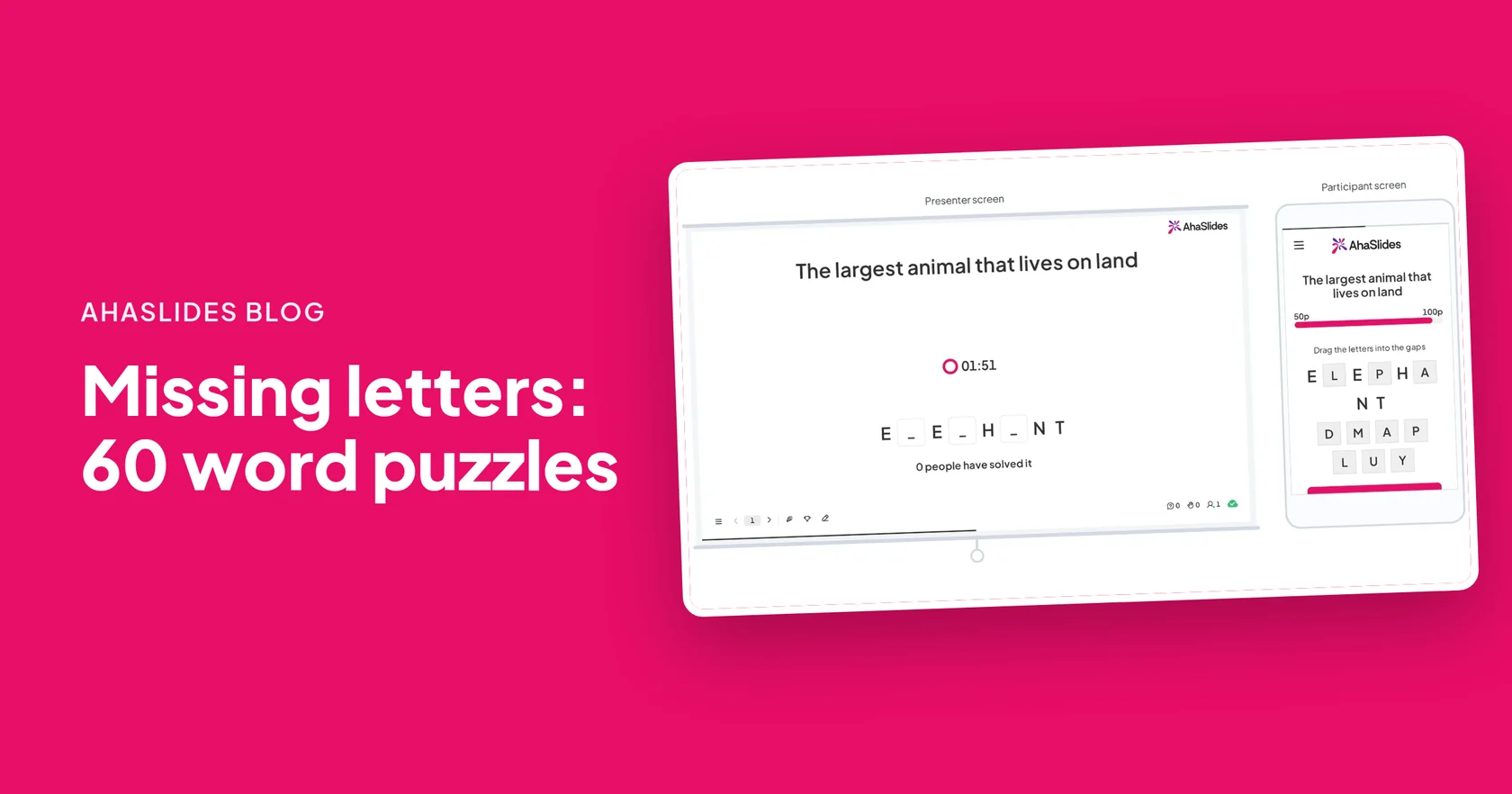
- Missing letters race. Show a clue and a word with gaps, such as "A place to stay when you travel: H _ T _ L". Learners drag letters into the gaps on their phones, and the fastest correct spellers top the leaderboard. It checks spelling and vocabulary in one go, and nobody has to type.
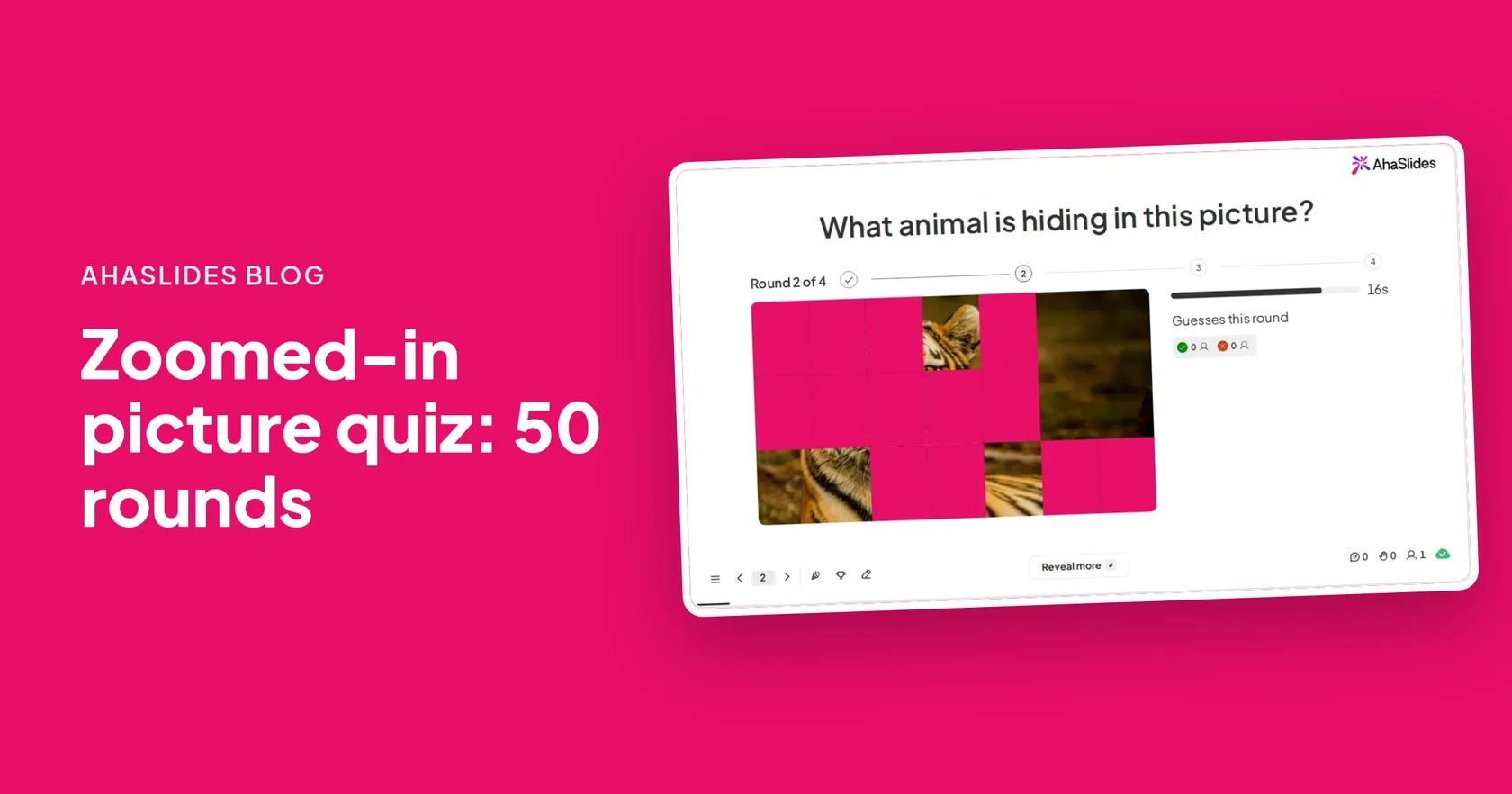
- Zoomed-in picture guess. Show a close-up of an everyday object and uncover it step by step until someone names it. Accept both British and American words, such as jumper and sweater, then ask "When did you last use one?" to turn the answer into a conversation.
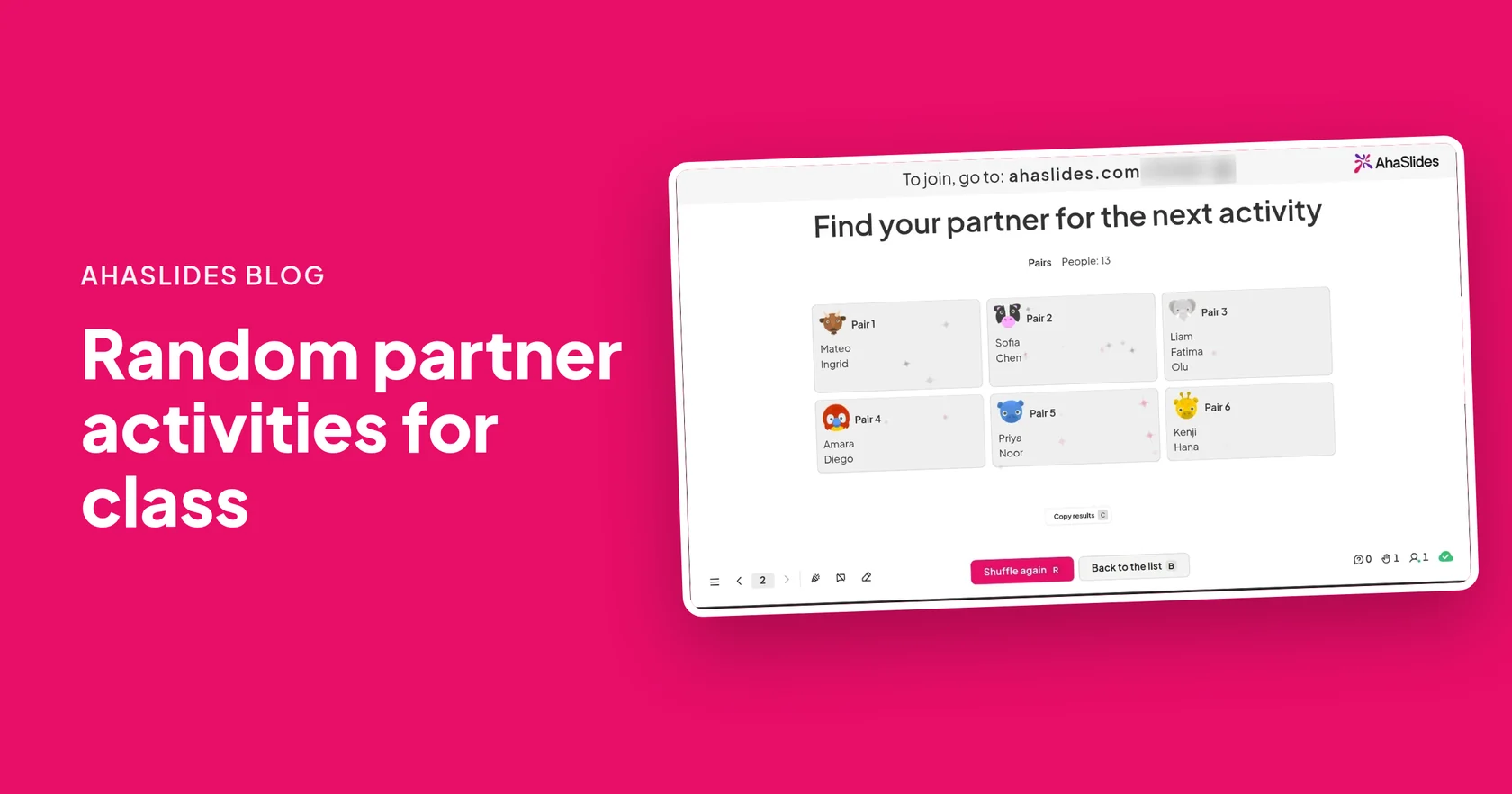
- Random partner chat. Pair the room at random and give each pair two minutes on one question, such as "What did you do last weekend?". Shuffle and repeat with a new question, so learners speak to three people, not just their neighbour.
- Find someone who. Give a list such as "Find someone who has been to Japan" or "who cooked last night". Learners walk round asking "Have you ever...?" and "Did you...?" questions. It practises question forms and gets people moving.
- Két igazság és egy hazugság. Each learner writes three sentences about themselves, one false. Partners ask follow-up questions to find the lie. It works at every level, from present simple to past perfect.
- Category race. Call a category, such as "things in a kitchen", and give pairs one minute to list as many as they can. The pair with the most correct, correctly spelt words wins. A quick way to recycle last week's vocabulary.
- Would you rather. Ask "Would you rather work from home or in an office?" Learners pick a side and give one reason. It practises giving opinions with because, and adults rarely run out of things to say.
- Odd one out. Show four words, such as bus, train, ticket, tram. Learners say which one does not belong and why. Several answers can be right, which is the point: the reasons are the speaking practice.
- My week in three words. Each learner gives three words about their week, and their partner asks one question about each. A low-pressure opener for a Monday evening class.
- Collocation sort. Write ten nouns, such as a mistake, homework, a decision, the shopping, and ask pairs to sort them under make and do. It targets the errors adults make most and takes five minutes.
- Hot seat. One learner sits with their back to the board. You write a word on it, and the class describes it without saying it until the learner guesses. Describing a word is excellent paraphrasing practice.
- Picture description in pairs. One partner describes a photo, the other draws it without looking. Comparing the drawing with the photo shows exactly which prepositions and nouns were missing.
| Bemelegítés | A legjobb | Time or set-up |
|---|---|---|
| Missing letters race | Spelling and new vocabulary | 5 minutes; one slide per word |
| Zoomed-in picture guess | Everyday nouns, British and American words | 5 minutes; one photo per slide |
| Random partner chat | Speaking with new people | 2 minutes a round; one question per round |
| Find someone who | Question forms | 10 minutes; a printed or projected list |
| Két igazság és hazugság | Past tenses and follow-up questions | 10 minutes; no set-up |
| Collocation sort | Make and do, common errors | 5 minutes; ten words on the board |
How do you run a missing letters warm-up?
Adj hozzá egyet Hiányzó betűk slide per word, write a short clue, and choose which letters to hide. On their phones, learners drag letter tiles into the gaps, so they spell the word without typing. An answer scores only when every gap is right, which makes it a precise spelling check.
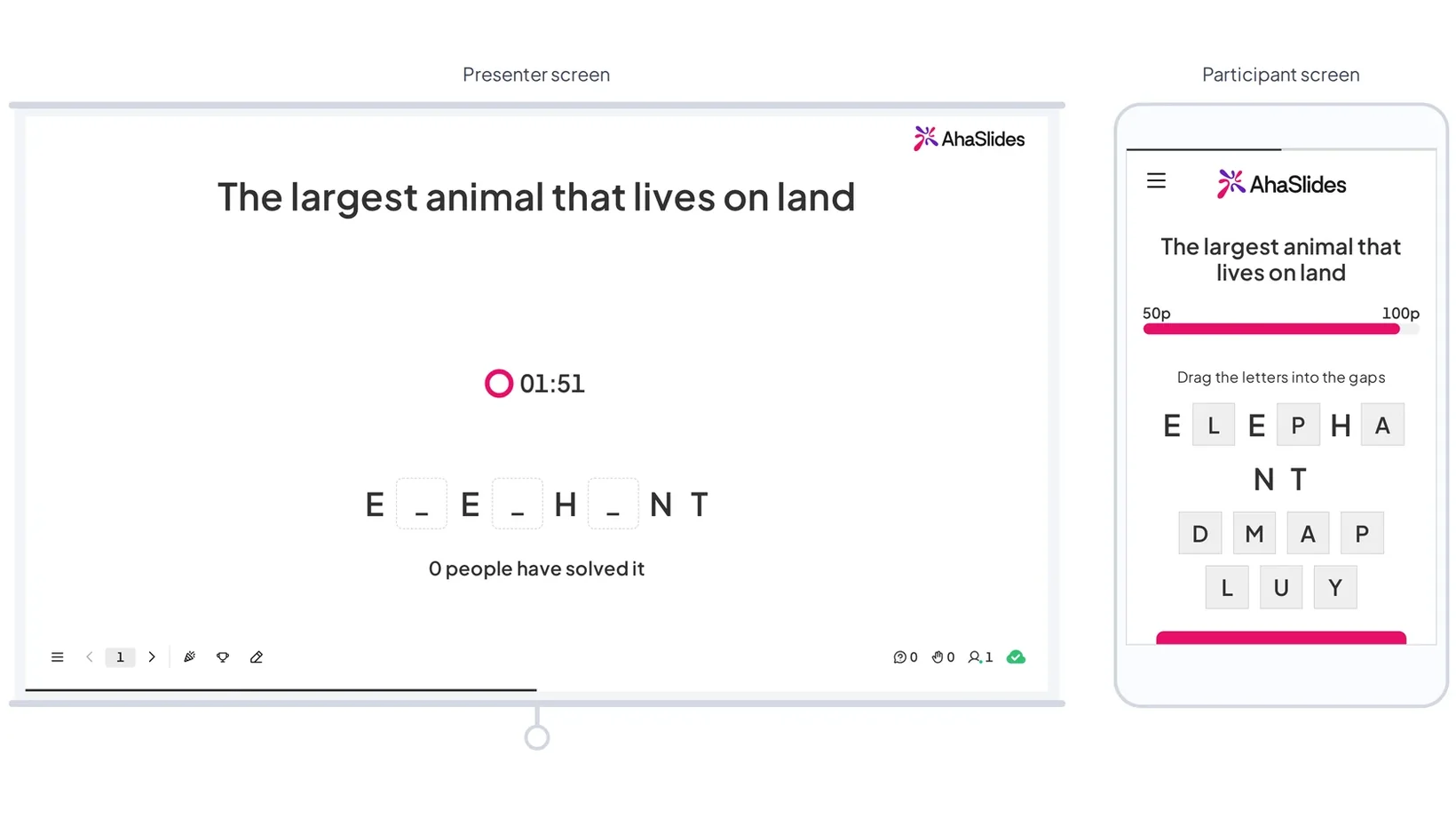
Hide the letters adult learners actually get wrong, such as silent letters and double consonants. Ten words make a good five-minute warm-up.
15 missing letters words for adult learners
- Something a shop gives you after you pay: REC _ _ PT Nyugta
- A person you work with: COLL _ _ GUE Kolléga
- A time to see the doctor or dentist: A _ POINTMENT Kinevezés
- A place where you eat a meal out: REST _ _ RANT Étterem - Restaurant
- The day after Tuesday: WE _ NESDAY Szerda
- A line of people waiting: Q _ _ _ E Sorban áll
- The second month of the year: FEB _ UARY február
- Needed; you must have it: NECE _ _ ARY Szükséges
- A plan of times for trains or meetings: SCHE _ ULE Ütemterv
- How hot or cold it is: TEMP _ RATURE Hőmérséklet
- Carrots, peas and onions are all one: VEG _ TABLE Növényi
- Soft and relaxing to sit on: COMF _ RTABLE Kényelmes
- A company or the work it does: BUS _ NESS üzleti
- The people who run a country: GOVER _ MENT Kormány
- Not the same: DIFF _ RENT Különböző
Need more? Our hiányzó betűk játék post has 60 puzzles with answers in three levels, and the hard level is built from words adults misspell every day.
How do you use a zoomed-in picture to get English learners talking?
Hozzáadása Találd ki a képet slide, upload a photo, and choose how it is revealed: Tiles, Pixelate, Zoom out or Spotlight. Each learner types one guess per round on their phone, and earlier right guesses score more.
For language learners, two settings matter most. You can add up to 10 accepted answers, so British and American words both count. Capital letters, accents and one small typo are forgiven, so a learner who spells it nearly right still gets the point.
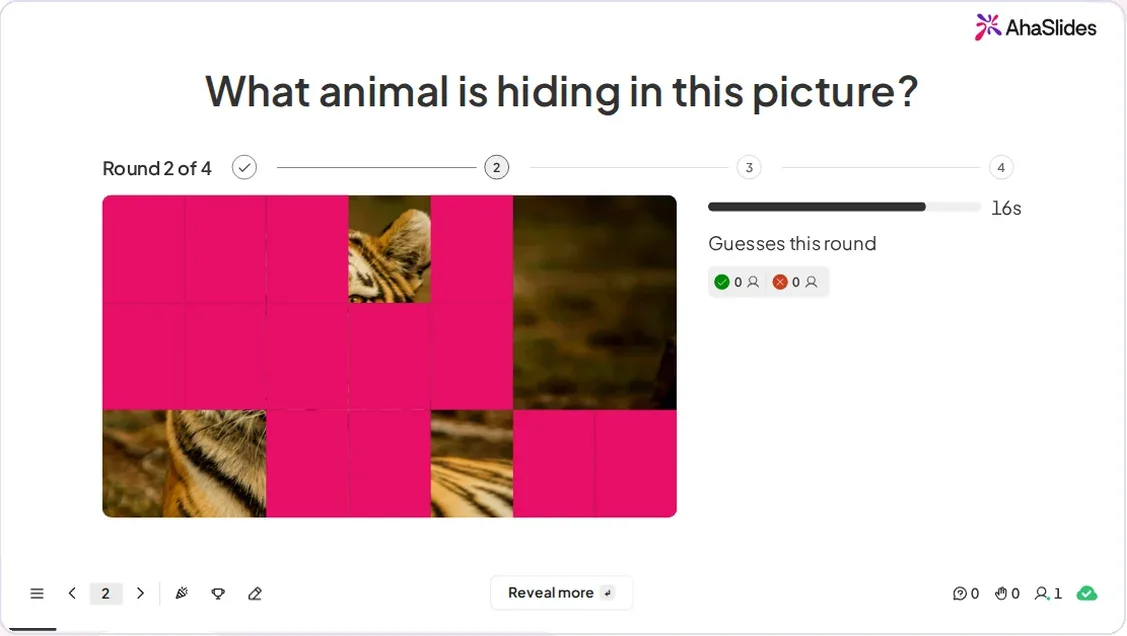
10 everyday objects to zoom in on, with answers to accept
- A zip: zip, zipper
- A jumper: jumper, sweater, pullover
- A tap: tap, faucet
- Egy fáklya: torch, flashlight
- A lift button: lift, elevator
- A packet of crisps: crisps, chips
- A rubbish bin: bin, rubbish bin, trash can
- A biscuit: biscuit, cookie
- A mobile phone: mobile, mobile phone, cell phone, phone
- A car park sign: car park, parking, parking lot
After each reveal, ask one follow-up question about the object, such as "Where do you keep yours?" The guess warms up vocabulary; the question gets learners speaking. For more picture ideas, see our nagyított kép kvíz with 50 rounds and answers.
How do you pair adult learners for a speaking warm-up?
Pair them at random. Adults tend to sit with the same people every week, often someone who shares their first language, and a random partner means more English and less switching back.
Aktivitáskövető Véletlenszerű párgenerátor, learners join on their phones, you click Shuffle, and each phone shows that learner's partner. Click Shuffle again for the next question. With an odd number, one pair gets three people, so nobody is left out.
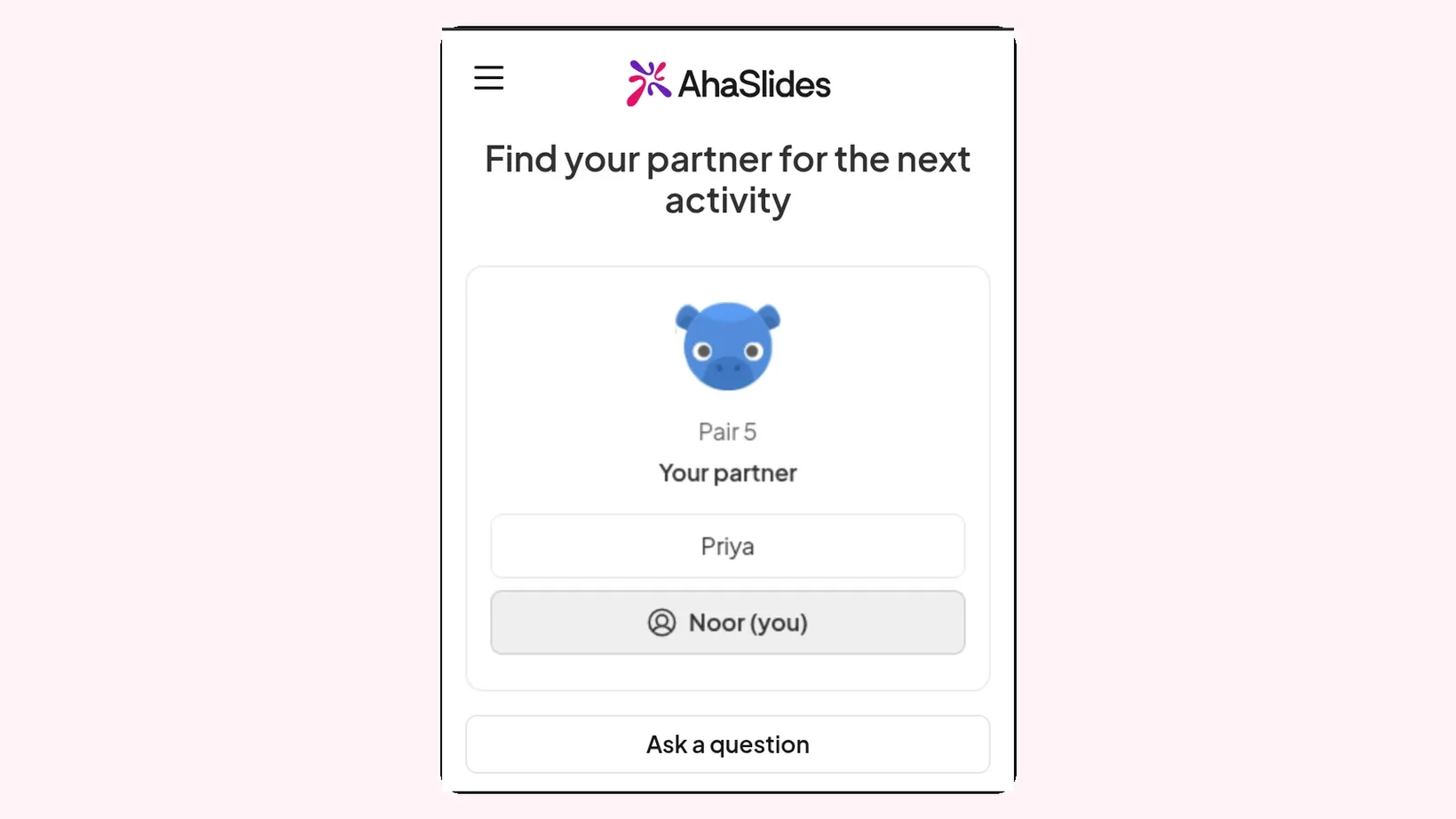
12 English speaking prompts for random partners
Give one prompt per round and two minutes per prompt. They are grouped from easier to harder.
- What did you have for breakfast today?
- What do you usually do on Sunday?
- Describe your street to me.
- What was the last film or series you watched? Would you recommend it?
- What is the best thing about your job, and the worst?
- Tell me about a place you visited and would like to go back to.
- What is something you have learnt to do in the last year?
- Which app could you not live without, and why?
- If you could change one thing about your town, what would it be?
- Describe a teacher or a boss who helped you.
- Is it better to rent or to buy a home? Why?
- What advice would you give someone moving to your country?
For more pairing ideas, from think-pair-share to quick partner contests, see our random partner activities post.
How do you run an ESL warm-up on phones with AhaSlides?
- Adja hozzá a diát. Iratkozzon fel a AhaSlides, open a presentation and add a Missing Letters, Guess the image or Random Pair Generator slide.
- Add your words, pictures or names. Type the clue and the word, upload the photo and its accepted answers, or leave the names list empty for learners who join.
- Nyomja meg a Jelenlét gombot. The access code and QR code appear on the big screen.
- Learners join on their phones. They open the link or scan the QR code and type a name. No app or account is needed.
- Play, then talk. Run the round, then spend a minute on the answers: the word people misspelt, the picture nobody named, or what each pair found out.
Which English speaking games work online?
All three phone games work in an online class too. Share your screen on the video call, and learners join on their phones with the access code while they watch your slides.
- Missing Letters and Guess the image play exactly as they do in a room, because every answer comes from the learner's own phone.
- Véletlenszerű párgenerátor tells each learner their partner. Click Copy results and paste the pairs into your notes, then set up breakout rooms in your video tool to match.
- Talk-based warm-ups, such as two truths and a lie or would you rather, need only the chat box and a clear prompt on screen.
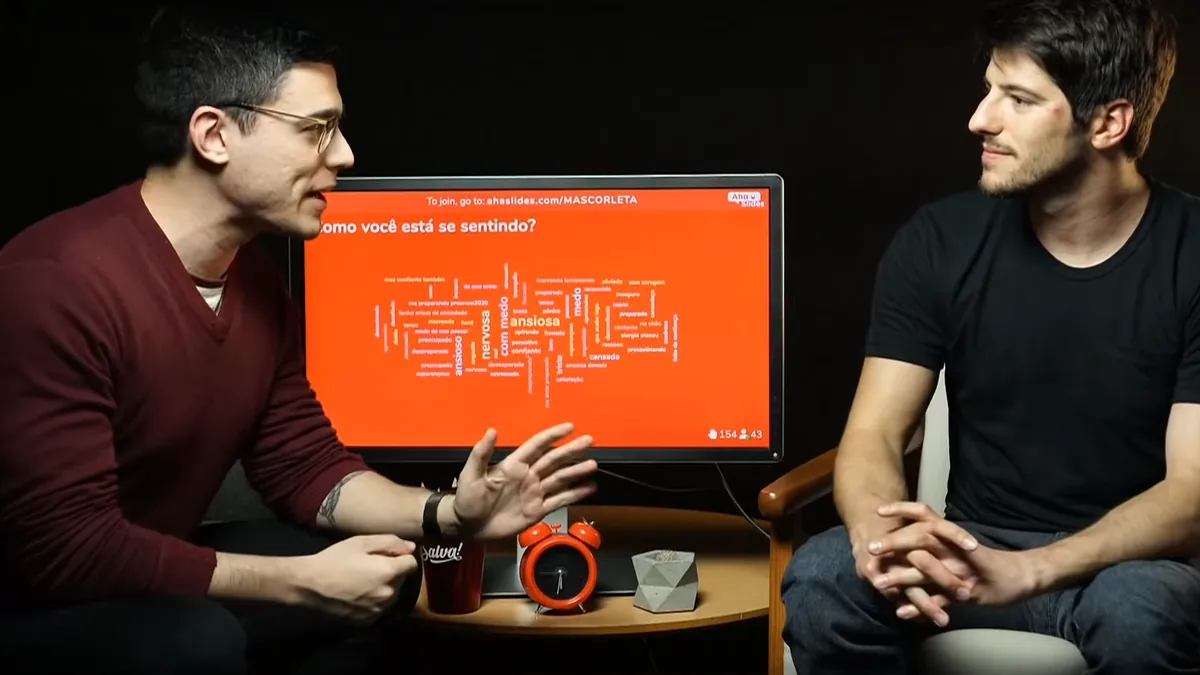
Looking for longer games for the main part of the lesson? See these ESL tantermi játékok minden korosztály számára, Ezeket szókincs osztálytermi játékok és ezek a conversation games.
Tips for warm-ups with adult learners
- Keep it under ten minutes. A warm-up that runs long eats into the lesson and loses its energy.
- Use last lesson's words. A warm-up is the cheapest revision you will ever do. Recycling words beats introducing new ones at this point.
- Let the score be light. A leaderboard adds fun, but say clearly that it is a warm-up, not a test.
- Correct after, not during. Note the errors you hear and go over two or three at the end, so nobody is stopped mid-sentence.
- Change partners every week. Random pairs mean every learner hears different accents and different ways of saying the same thing.
Free ESL warm-up templates to host
Pick a ready-made template below, swap in your own words, pictures and prompts, and host it in your next class.
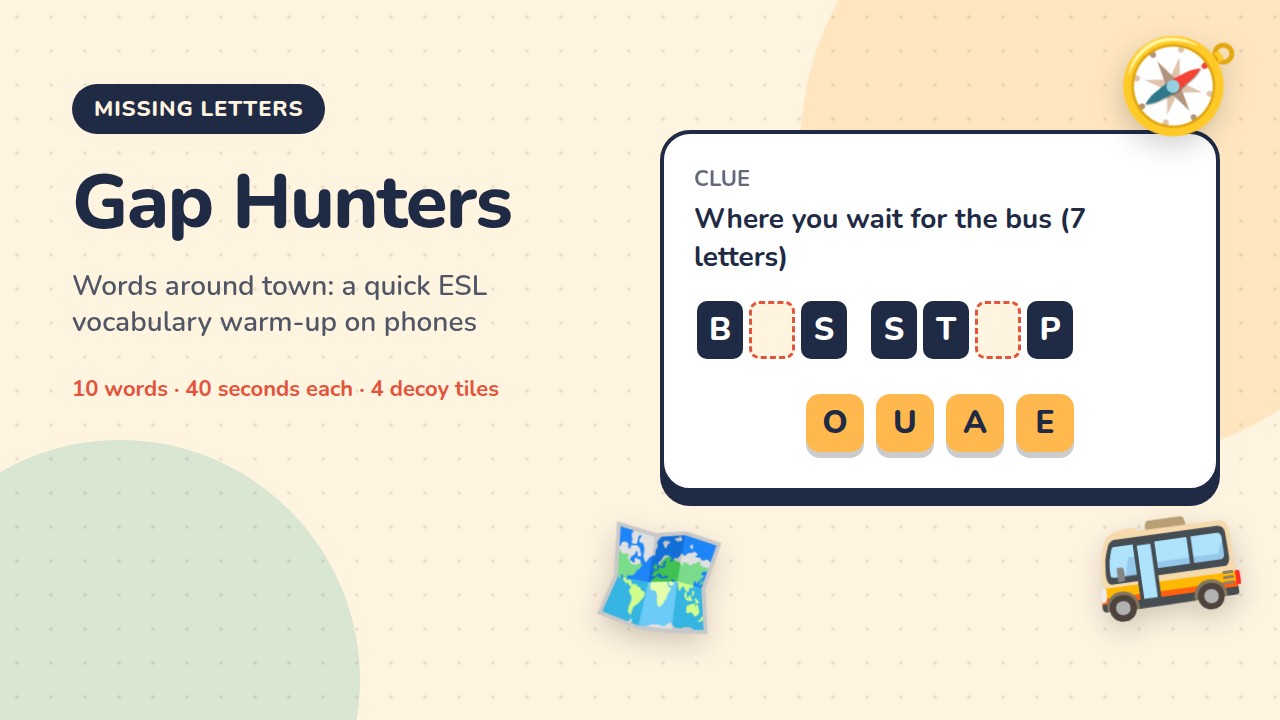
Gap Hunters: Words Around Town
Learners fill the missing letters in ten everyday town words against the timer.
Használja ezt a sablont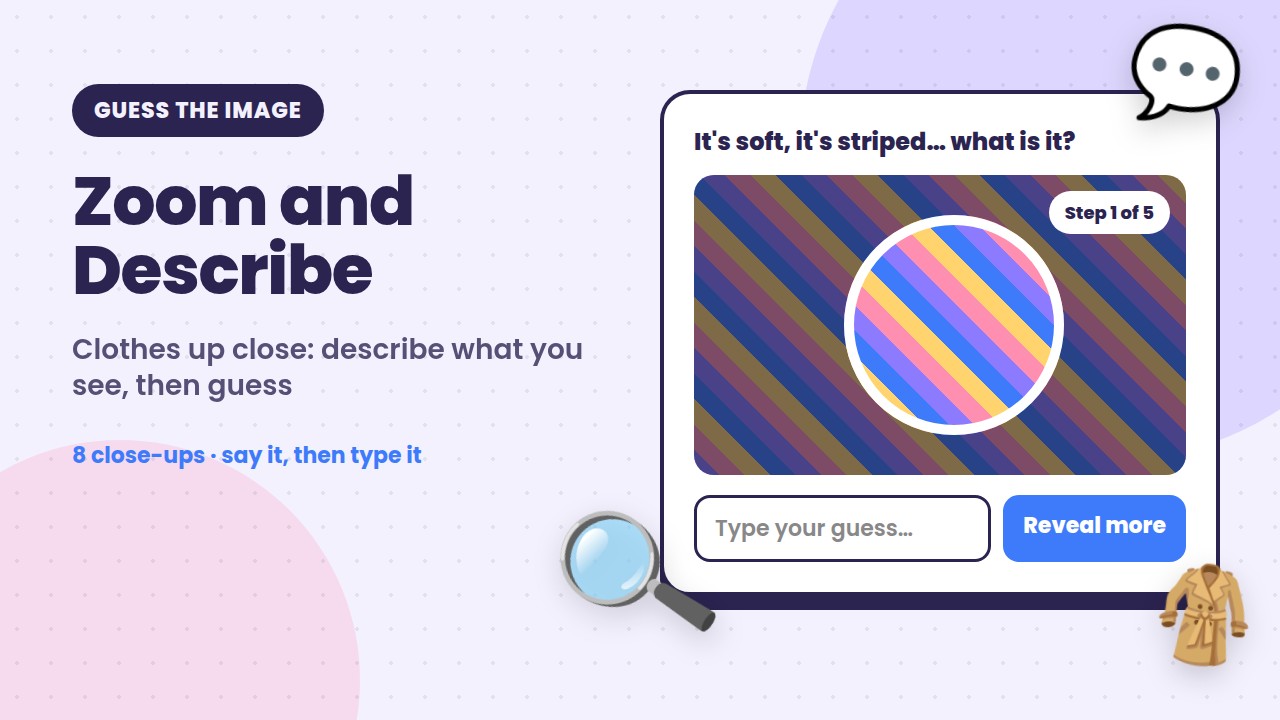
Zoom and Describe: Clothes Up Close
Learners describe a clothing close-up to a partner, then type what it is.
Használja ezt a sablont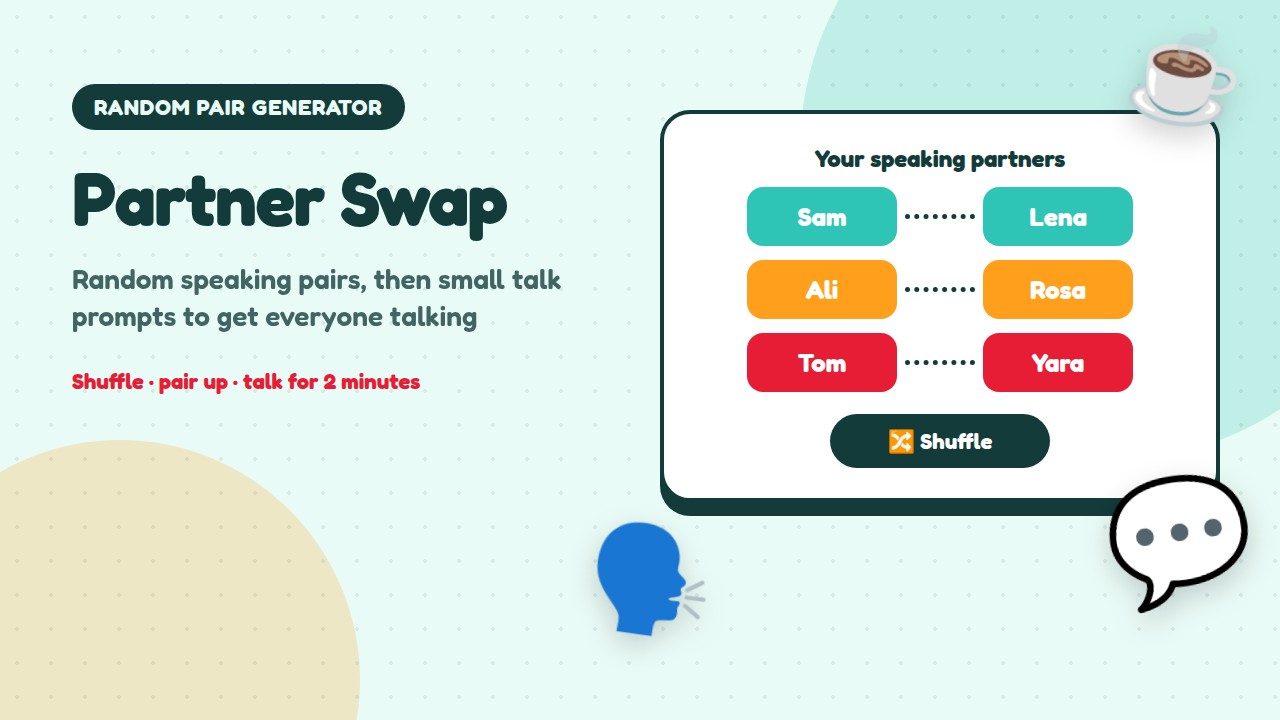
Partner Swap: Small Talk Warm-Up
Random speaking pairs, then small talk and would-you-rather prompts.
Használja ezt a sablontTo build your own word warm-up from scratch, open the Hiányzó betűk cimre.
Host your first ESL warm-up
Gyakran Ismételt Kérdések
What is a good warm-up activity for an adult ESL class?
A short game that gets everyone using English without pressure, such as a missing letters race, a zoomed-in picture guess or a two-minute chat with a random partner. Keep it under ten minutes and use words learners already know.
How long should an ESL warm-up be?
Five to ten minutes. Long enough for every learner to speak or answer at least once, short enough that the main lesson still has time.
What are good ESL games for adults?
Find someone who, two truths and a lie, would you rather, collocation sorts and hot seat all work well with adults, because they use real opinions and real lives rather than childish themes.
Can I run English speaking games online?
Yes. Share your screen on the video call and learners join the AhaSlides games on their phones with the access code. For pairs, copy the Random Pair Generator results and set up breakout rooms to match.
Do learners need an app or an account?
No. Learners open the link or scan the QR code on the screen and type a name. You need a free AhaSlides account to host.
Does Guess the image accept British and American words?
Yes. You can add up to 10 accepted answers per picture, such as jumper and sweater. Capital letters, accents and one small typo are forgiven too.