



Sebagian besar survei kepuasan kerja menjawab pertanyaan yang salah. Survei tersebut hanya memberi tahu Anda apakah karyawan bahagia, tetapi tidak memberi tahu Anda mengapa mereka tidak bahagia.
Kesenjangan antara kedua hal tersebut adalah awal mula masalah retensi, meningkatnya ketidakaktifan karyawan, dan akhirnya departemen SDM bersikap reaktif alih-alih berdasarkan informasi yang memadai. Kuesioner yang dirancang dengan baik menutup kesenjangan tersebut bukan dengan mengajukan lebih banyak pertanyaan, tetapi dengan mengajukan pertanyaan yang tepat, dalam format yang tepat, dengan rencana yang jelas tentang langkah selanjutnya.
Panduan ini memberi Anda 46 pertanyaan siap pakai yang dikelompokkan dalam tujuh kategori, ditambah kerangka kerja praktis untuk menjalankannya dengan cara yang menghasilkan jawaban jujur. Gunakan pertanyaan-pertanyaan ini dalam survei mandiri, sisipkan dalam tinjauan triwulanan, atau jalankan secara langsung selama pertemuan umum. Formatnya terserah Anda. Mendapatkan jawaban yang sebenarnya adalah intinya.
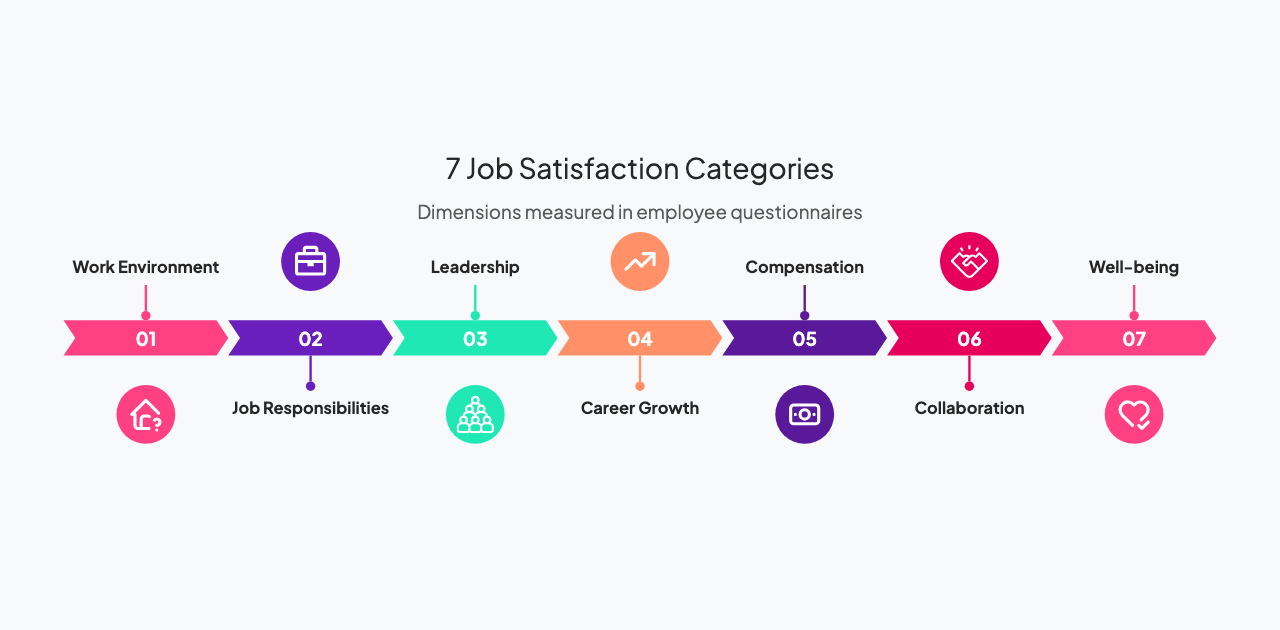
Apa itu kuesioner kepuasan kerja?
Kuesioner kepuasan kerja adalah serangkaian pertanyaan terstruktur yang mengukur seberapa puas karyawan dalam berbagai dimensi pekerjaan mereka: lingkungan kerja, tanggung jawab, manajer, kompensasi, pertumbuhan, hubungan, dan kesejahteraan.
Berbeda dengan survei keterlibatan umum, kuesioner kepuasan kerja dirancang untuk mengungkap hal-hal spesifik. Kuesioner ini tidak hanya memberi tahu Anda bahwa moral kerja rendah, tetapi juga faktor apa yang menjadi penyebabnya.
Format sama pentingnya dengan pertanyaan. Survei yang dikirim melalui tautan email mendapatkan tingkat respons internal rata-rata 20-30% [1] dan sering menghasilkan jawaban yang tidak jelas. Pertanyaan yang sama yang disajikan secara anonim selama pertemuan langsung, di mana hasilnya terlihat oleh semua orang secara real-time, cenderung menghasilkan umpan balik yang jauh lebih langsung, karena karyawan dapat melihat bahwa orang lain juga memiliki kekhawatiran yang sama.
Mengapa melakukan survei kepuasan kerja?
Bagi kebanyakan orang, pekerjaan bukan hanya sekadar sumber penghasilan. Menurut survei Pew Research Center tahun 2023, 39% pekerja yang bukan wiraswasta mengatakan bahwa pekerjaan mereka merupakan pusat identitas mereka, angka ini meningkat menjadi 53% di antara pemegang gelar pascasarjana [2]. Ketika pekerjaan terasa tidak bermakna atau tidak didukung, itu bukan hanya masalah produktivitas. Itu masalah pribadi.
Investasi tersebut memberikan manfaat dua arah. Karyawan yang merasa peran mereka bermakna dan didukung dengan baik cenderung akan bertahan, berkontribusi, dan merekomendasikan organisasi tersebut kepada orang lain. Karyawan yang merasa diabaikan seringkali diam-diam tidak termotivasi jauh sebelum mereka mengajukan surat pengunduran diri.
Kuesioner yang dirancang dengan baik memberi departemen SDM sesuatu yang tidak pernah bisa diberikan oleh skor keterlibatan umum: titik awal yang spesifik. Jalankan dengan baik dan tiga hal akan terjadi. Anda akan mengetahui apakah masalahnya adalah beban kerja, kompensasi, atau manajemen, karena hal-hal tersebut membutuhkan perbaikan yang sangat berbeda. Karyawan yang melihat umpan balik mereka dibahas secara terbuka lebih cenderung hadir untuk tindak lanjut. Dan menjalankan kembali pertanyaan yang sama enam bulan kemudian akan memberi tahu Anda apakah ada hal yang Anda lakukan benar-benar berhasil.
46 contoh pertanyaan berdasarkan kategori
Berikut adalah pertanyaan-pertanyaan yang disusun berdasarkan tema. Setiap bagian menyertakan catatan tentang format pertanyaan mana yang cenderung paling efektif.
Lingkungan kerja
Panduan format: Skala penilaian (1-5) sangat cocok digunakan di sini. Sebuah word cloud sebagai tindak lanjut memberikan tekstur kualitatif di samping skor. Penyajian ini secara anonim selama pertemuan seluruh karyawan memungkinkan mereka untuk menilai kondisi fisik tanpa khawatir akan diincar secara khusus.
- Lingkungan kerja saya, baik secara fisik maupun jarak jauh, memungkinkan saya untuk fokus dan melakukan pekerjaan terbaik saya.
- Peralatan dan perlengkapan yang tersedia bagi saya sudah memadai untuk pekerjaan yang diharapkan akan saya lakukan.
- Saya merasa aman secara fisik dan psikologis di tempat kerja saya.
- Secara keseluruhan, suasana kerja di sini justru memberi saya energi, bukan malah menguras tenaga.
Tanggung jawab pekerjaan
Panduan format: Jajak pendapat ya/tidak cocok untuk pertanyaan kejelasan (6 dan 12). Skala penilaian cocok untuk pertanyaan kepuasan. Sesi tanya jawab terbuka di akhir memungkinkan karyawan untuk menyampaikan hal-hal spesifik tanpa menyebutkan sumbernya.
- Peran saya memanfaatkan dengan baik keterampilan dan kekuatan saya.
- Saya memiliki pemahaman yang jelas tentang apa yang diharapkan dari saya dalam peran saya. (ya Tidak)
- Beban kerja yang diberikan kepada saya masih dapat dikelola dalam jam kerja normal.
- Tanggung jawab saya terasa bermakna, bukan sekadar kesibukan.
- Saya memiliki cukup variasi dalam pekerjaan saya untuk tetap termotivasi.
- Saya merasa memiliki tanggung jawab atas pekerjaan yang menjadi tanggung jawab saya.
- Beban kerja saya terdistribusi secara adil dibandingkan dengan anggota tim lainnya.
- Saya tahu bagaimana memprioritaskan ketika saya memiliki berbagai tuntutan yang bersaing terhadap waktu saya. (ya Tidak)
- Tugas-tugas harian saya terhubung secara jelas dengan tujuan tim atau organisasi yang lebih luas.
Pengawasan dan kepemimpinan
Panduan format: Kerahasiaan identitas sangat penting di bagian ini. Karyawan jarang memberikan penilaian jujur tentang manajer mereka dalam survei yang menyebutkan nama. Skala penilaian anonim dalam sesi langsung, di mana hasilnya muncul sebagai angka agregat dan bukan tanggapan individu, menghilangkan kekhawatiran akan konsekuensi karier.
- Manajer saya menetapkan ekspektasi yang jelas dan menepati komitmen yang diberikan.
- Saya menerima umpan balik dari manajer saya yang spesifik dan bermanfaat, bukan hanya bersifat evaluatif.
- Manajer saya memperlakukan saya dengan hormat tanpa memandang keadaan.
- Saya merasa nyaman menyampaikan kekhawatiran atau ketidaksepakatan dengan manajer saya.
- Kepemimpinan senior berkomunikasi secara jujur tentang arah yang dituju organisasi.
- Urutkan hal-hal berikut berdasarkan tingkat kepentingannya bagi Anda dalam diri seorang manajer: Komunikasi, Pengakuan, Umpan Balik, Otonomi, Dukungan. (peringkat)
Pertumbuhan dan pengembangan karier
Panduan format: Survei pilihan ganda sangat cocok untuk varian pertanyaan 20: "Jenis pengembangan apa yang paling bermanfaat bagi Anda?" dengan pilihan seperti pelatihan kepemimpinan, keterampilan teknis, sertifikasi, bimbingan, dan perpindahan posisi. Ini menghemat anggaran HR untuk program yang sebenarnya tidak diinginkan karyawan.
Contoh dunia nyata: Sebuah perusahaan teknologi dengan 200 karyawan menjalankan bagian ini selama tinjauan triwulanan menggunakan jajak pendapat anonim secara langsung. Hasilnya menunjukkan 68% responden menginginkan bimbingan (mentorship), sementara perusahaan tersebut sebagian besar berinvestasi dalam sertifikasi teknis. Departemen Pengembangan dan Pelatihan (L&D) mengalokasikan kembali sebagian anggaran pelatihan dalam kuartal yang sama.
- Jenis pengembangan apa yang paling menguntungkan Anda saat ini? (Pilihan ganda: Pelatihan kepemimpinan / Keterampilan teknis / Sertifikasi / Bimbingan / Perpindahan posisi)
- Saya memiliki akses ke kesempatan belajar dan pengembangan yang saya butuhkan untuk berkembang dalam karier saya.
- Manajer saya secara aktif mendukung tujuan pengembangan profesional saya.
- Saya melihat jalur yang realistis untuk kemajuan karier di dalam organisasi ini.
- Saya merasa tertantang oleh pekerjaan saya dengan cara yang membantu saya berkembang.

Kompensasi dan keuntungan
Panduan format: Di sinilah survei anonim menjadi sangat penting. Karyawan cenderung tidak memberikan jawaban jujur tentang kompensasi dalam survei yang mereka khawatirkan dapat dilacak. Sesi anonim langsung di mana hasilnya muncul di layar tanpa atribusi individu cenderung mengungkap kekhawatiran yang mungkin tidak akan dilaporkan. Sebuah word cloud untuk "Manfaat apa yang paling meningkatkan kepuasan Anda?" seringkali menghasilkan data yang lebih bermanfaat daripada daftar pilihan tetap apa pun.
- Saya merasa mendapatkan kompensasi yang adil untuk pekerjaan yang saya lakukan.
- Gaji saya kompetitif dibandingkan dengan posisi serupa di organisasi lain.
- Paket tunjangan yang ditawarkan organisasi ini memenuhi kebutuhan saya.
- Saya mengerti bagaimana keputusan penggajian dibuat di sini.
- Saya merasa total kompensasi yang saya terima mencerminkan nilai yang saya berikan.
- Manfaat apa yang paling meningkatkan kepuasan Anda? (awan kata)
Hubungan dan kolaborasi
Panduan format: Skala penilaian untuk pertanyaan 1-3. Pertanyaan frekuensi untuk 4 (Harian / Mingguan / Bulanan / Jarang / Tidak Pernah) menghasilkan data yang lebih akurat daripada pertanyaan ya/tidak. Tanya Jawab anonim memungkinkan karyawan untuk melaporkan masalah interpersonal tanpa menyebutkan nama.
- Saya percaya orang-orang yang paling dekat bekerja dengan saya akan menjalankan peran mereka dengan baik.
- Tim saya menangani perbedaan pendapat secara konstruktif, bukan dengan menghindarinya atau membiarkannya berlarut-larut.
- Saya merasa dihargai sebagai anggota tim, bukan hanya sekadar anggota yang berfungsi.
- Seberapa sering Anda berkolaborasi dengan kolega di luar tim Anda? (Harian / Mingguan / Bulanan / Jarang / Tidak Pernah)
- Ketika terjadi kesalahan, tim saya fokus pada memperbaiki masalah daripada menyalahkan pihak lain.
Kesejahteraan dan keseimbangan kehidupan kerja
Panduan format: Skala frekuensi sangat cocok di sini: Tidak Pernah / Jarang / Terkadang / Sering / Selalu. Pertanyaan 5 sebaiknya disajikan sebagai penggeser (slider) daripada skala tetap. Ini menghasilkan data yang lebih bernuansa tentang tingkat stres dan membantu menormalkan percakapan seputar kelelahan kerja (burnout). Karyawan seringkali enggan mengakui bahwa mereka sedang berjuang; melihat bahwa banyak kolega memiliki skor yang serupa cenderung membuka percakapan.
- Saya bisa melepaskan diri dari pekerjaan di luar jam kerja tanpa merasa dihukum.
- Seberapa sering beban kerja Anda mengharuskan Anda bekerja di luar jam kerja normal untuk menyelesaikan pekerjaan?
- Seberapa sering Anda merasa berenergi dan bukannya kelelahan di akhir hari kerja?
- Seberapa sering Anda merasa dihargai atas usaha yang Anda curahkan, bukan hanya hasil yang Anda berikan?
- Seberapa sering Anda merasa cemas atau stres tentang pekerjaan selama waktu pribadi?
- Seberapa sering organisasi Anda menunjukkan kepedulian yang tulus terhadap kesejahteraan karyawan di luar pernyataan kebijakan?
- Seberapa sering Anda merasa nyaman mengambil cuti tanpa khawatir tentang apa yang akan Anda temui saat kembali?
- Seberapa sering Anda merasa beban kerja pribadi Anda berkelanjutan dalam jangka panjang?
- Pada skala 1-10, bagaimana Anda menilai tingkat stres Anda saat ini terkait dengan pekerjaan? (slider)
- Seberapa sering Anda merasa bahwa jadwal kerja Anda memungkinkan Anda untuk menjaga kehidupan pribadi yang sehat?
Kepuasan secara keseluruhan
Ini adalah Skor Net Promoter Karyawan (eNPS). Skor ini menggunakan skala 0-10: responden yang mendapat skor 9-10 adalah promotor, 7-8 adalah pasif, dan 0-6 adalah pencela. eNPS Anda sama dengan persentase promotor dikurangi persentase pencela [3]. Skor di atas 0 dapat diterima; di atas 30 dianggap baik; di atas 50 dianggap kuat.
Panduan format: Jika skor rendah, segera tindak lanjuti: "Apa satu hal yang dapat kita ubah untuk meningkatkan skor Anda?" Presentasi eNPS secara langsung memberikan gambaran real-time kepada pimpinan tentang sentimen keseluruhan dan menciptakan konteks yang tepat untuk percakapan jujur tentang apa yang perlu diubah.
- Seberapa besar kemungkinan Anda merekomendasikan organisasi ini sebagai tempat kerja kepada teman atau kolega yang Anda hormati?
Cara menjalankan survei kepuasan kerja yang efektif
Pilih format Anda
Ada tiga pendekatan praktis:
Siaran langsung selama rapat. Ajukan 8-12 pertanyaan selama pertemuan triwulanan seluruh karyawan atau pertemuan umum. Gunakan mode anonim untuk topik sensitif. Diskusikan hasilnya dengan kelompok sebelum pertemuan berakhir. Ini paling efektif untuk membangun kepercayaan dan memungkinkan tindakan segera. Anda dapat mencoba AhaSlides, yaitu pembuat survei gratis yang memiliki kemampuan untuk mensurvei audiens secara langsung dalam sesi presentasi.
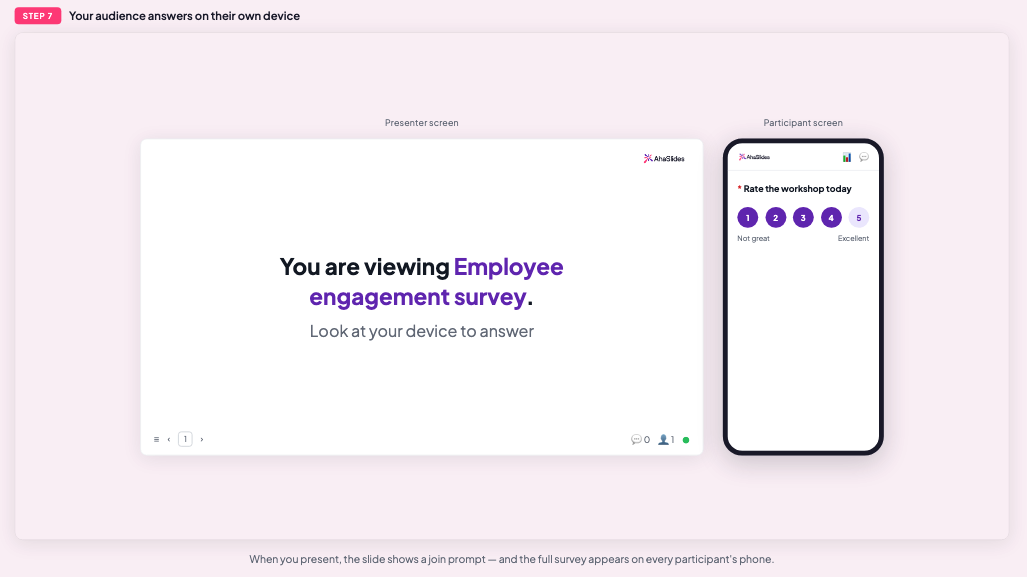
Tautan belajar mandiri. Bagikan tautan survei yang dapat diisi karyawan kapan saja. Sertakan semua 46 pertanyaan yang dikelompokkan berdasarkan kategori. Tetapkan tenggat waktu dua minggu. Metode ini paling efektif untuk pengumpulan data komprehensif ketika menjadwalkan sesi langsung tidak praktis.
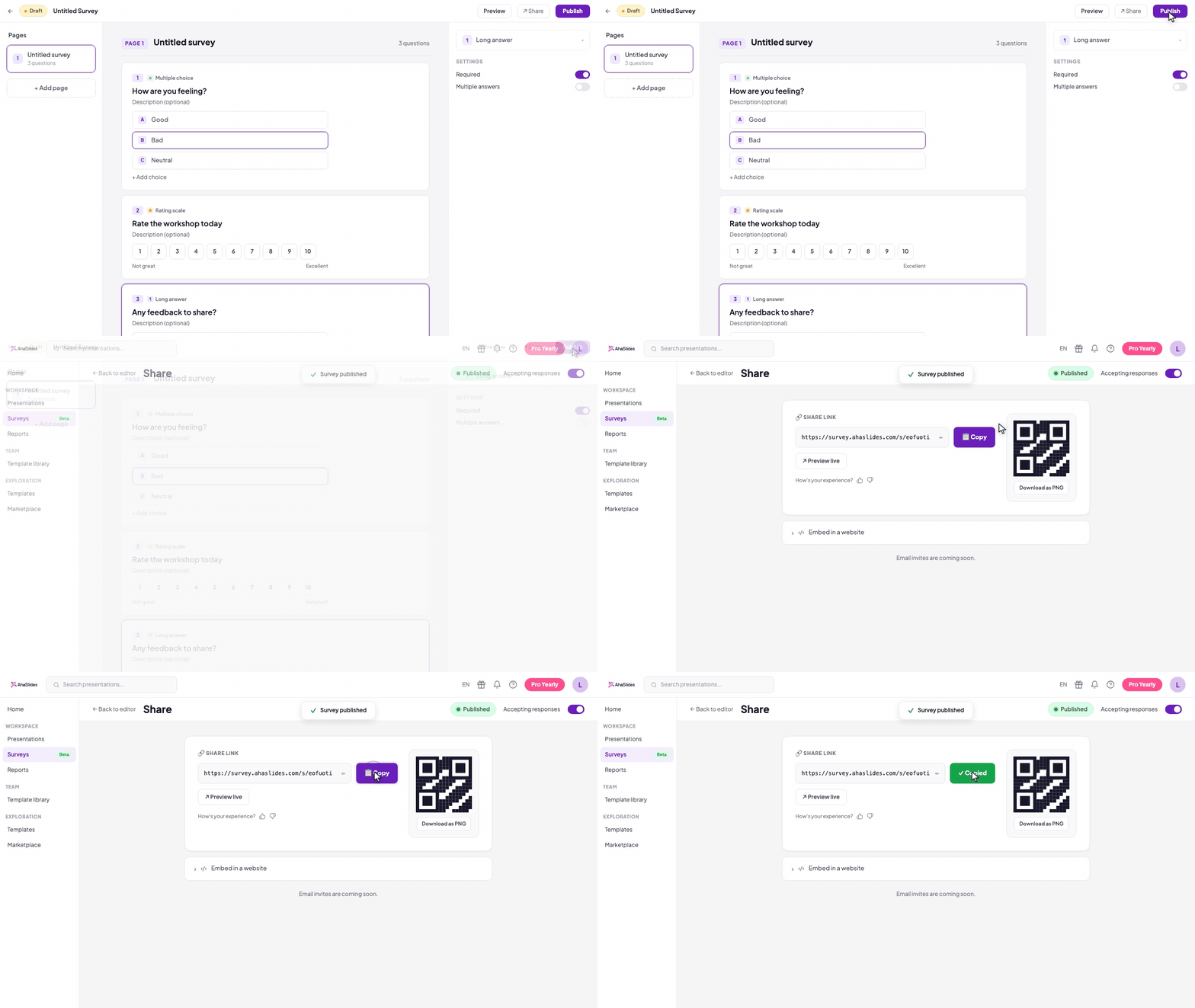
Hibrida (direkomendasikan). Kirimkan 5-7 pertanyaan penting sebagai jajak pendapat mandiri. Sajikan hasilnya dan tiga masalah utama pada pertemuan tim berikutnya. Gunakan sesi tanya jawab langsung untuk membahas isu-isu spesifik secara lebih mendalam. Ini menggabungkan partisipasi tinggi dengan diskusi yang bermakna.
Tetapkan konteks sebelum Anda memulai.
Karyawan lebih cenderung merespons dengan jujur jika Anda menjelaskan tiga hal di awal: mengapa Anda melakukan survei, bagaimana respons akan digunakan, dan apa arti "anonim" sebenarnya dalam sistem Anda. Pesan singkat dan mudah dipahami yang mencakup poin-poin ini sudah cukup. Tidak perlu kata pengantar perusahaan.
Bertindaklah berdasarkan hasil tersebut secara terbuka.
Faktor terpenting yang memprediksi apakah karyawan akan menyelesaikan survei di masa mendatang adalah apakah mereka melihat perubahan setelah survei terakhir. Mengumumkan langkah-langkah spesifik selanjutnya secara publik selama sesi tersebut membangun kepercayaan yang lebih besar daripada rencana aksi terperinci yang baru disampaikan enam minggu kemudian.
Struktur tindak lanjut yang sederhana: bagikan hasil lengkap dalam waktu 48 jam, identifikasi tiga prioritas utama, bentuk kelompok kerja dengan perwakilan karyawan, komunikasikan kemajuan setiap bulan, dan jalankan kembali survei dalam enam bulan untuk mengukur perubahan.
Menjalankan pertanyaan-pertanyaan ini dengan AhaSlides
Ada momen yang mengubah cara tim berpikir tentang survei. Anda sedang berada di tengah-tengah sesi kompensasi dalam rapat seluruh tim. Pertanyaannya adalah 'apakah Anda merasa mendapat kompensasi yang adil?' dan 60% dari peserta rapat baru saja memberi nilai 2 dari 5. Semua orang bisa melihatnya. Tidak ada yang perlu mengatakan sepatah kata pun, tetapi tiba-tiba, semua orang ingin berbicara.
Itulah yang dilakukan oleh survei kepuasan secara langsung, yang tidak akan pernah bisa dilakukan oleh tautan email di Senin pagi. Data tersebut bukanlah sesuatu yang diproses HR secara pribadi dan baru dipresentasikan tiga minggu kemudian. Data tersebut ada di ruangan, terlihat oleh semua orang, dan percakapan dimulai segera.
AhaSlides memungkinkan Anda membangun kuesioner lengkap sebagai sesi langsung: skala penilaian, jajak pendapat pilihan ganda, tanya jawab terbuka, dan awan kata, semuanya dalam satu tempat. Karyawan bergabung melalui telepon tanpa perlu login dan tanpa perlu mengunduh aplikasi. Mode anonim menjaga agar tanggapan individu tetap tidak terlihat, sehingga bagian kompensasi mendapatkan jawaban yang jujur, bukan jawaban yang aman. Dan karena hasilnya diperbarui secara real-time, Anda dapat beralih dari data ke diskusi tanpa mengganggu alur rapat.
Pertanyaannya sudah siap. Kerangkanya sudah ada. Bagian yang benar-benar mengubah segalanya adalah menjalankannya, dan melihat apa yang dikatakan tim Anda ketika mereka tahu jawabannya aman.
Mencoba AhaSlides Gratis dan jalankan sesi pertama Anda dalam waktu kurang dari sepuluh menit.
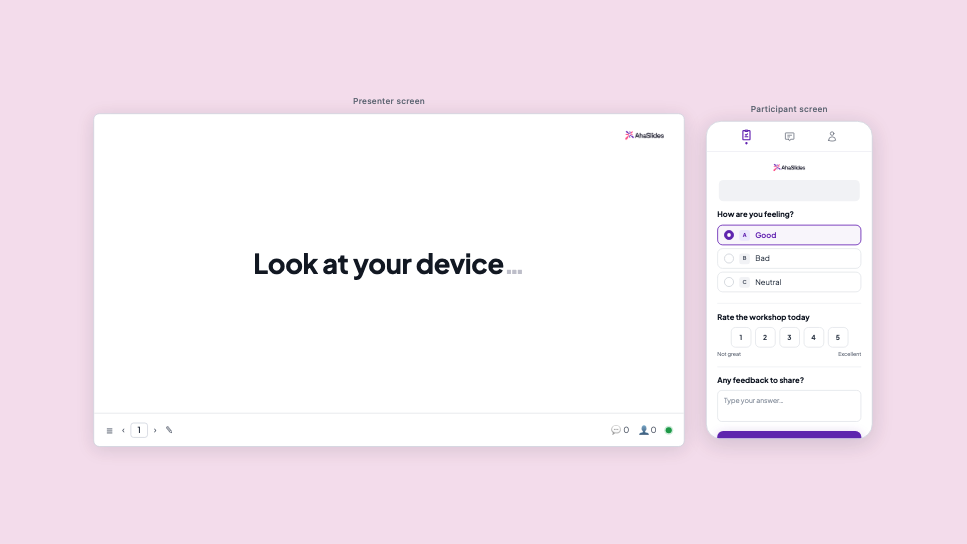
Untuk mempraktikkannya, AhaSlides pembuat survei gratis Memungkinkan Anda membuat, berbagi, dan menganalisis survei dalam hitungan menit — langsung dalam sesi atau dikirim sebagai tautan terpisah. Untuk proses pembuatan survei lengkap mulai dari penetapan tujuan hingga analisis, lihat: Cara membuat survei online: panduan lengkap.
sumber
[1] Heartcount. "Tingkat Respons Survei Karyawan: Tolok Ukur & Cara Meningkatkannya." https://heartcount.com/blog/survey-response-rate/. Menyebutkan tolok ukur survei karyawan internal sebesar 20-30%.
[2] Pew Research Center. (30 Maret 2023). "Bagaimana Orang Amerika Memandang Pekerjaan Mereka." https://www.pewresearch.org/social-trends/2023/03/30/how-americans-view-their-jobsSurvei dilakukan pada tanggal 6-12 Februari 2023.
[3] AIHR. "Employee Net Promoter Score (eNPS): Panduan Utama 2026." https://www.aihr.com/blog/employee-net-promoter-score-enps/Mencakup metodologi eNPS, kategori penilaian, dan tolok ukur.