Pētījumi liecina, ka komandas, kas izmanto strukturētas prāta vētras metodes, radīt līdz pat 50% vairāk radošu risinājumu nekā nestrukturētas pieejas. Šī rokasgrāmata apvieno gadu desmitiem ilgu inovāciju pētījumu un praktisko pieredzi vienā praktiski izmantojamā resursā, kas palīdzēs jūsu komandai efektīvi ģenerēt idejas.
Saturs
Kas ir prāta vētra?
Ideju ģenerēšana ir strukturēts radošs process vairāku ideju vai risinājumu ģenerēšanai konkrētai problēmai. Ideju ģenerēšanu pirmo reizi ieviesa reklāmas vadītājs Alekss Osborns 1948. gadā, un tā veicina brīvu domāšanu, attur no spriedumu izteikšanas ideju ģenerēšanas laikā un rada vidi, kurā var rasties netradicionālas idejas.
Osborns attīstīja prāta vētras metodi, vadot BBDO (Batten, Barton, Durstine & Osborn), vienu no lielākajām reklāmas aģentūrām Amerikā, laikā, kad uzņēmums cieta grūtības. Viņš pamanīja, ka tradicionālās biznesa sanāksmes apslāpē radošumu, darbiniekiem atturējoties no idejām, baidoties no tūlītējas kritikas. Viņa risinājums kļuva par to, ko mēs tagad pazīstam kā prāta vētru, ko sākotnēji sauca par "domāšanu".
Kad izmantot prāta vētru
Ideju vētra vislabāk darbojas šādos gadījumos:
Uzņēmējdarbības lietojumprogrammas:
- Produktu izstrāde un inovācijas
- Mārketinga kampaņas ideju ģenerēšana
- Problēmu risināšanas semināri
- Stratēģiskās plānošanas sesijas
- Procesu uzlabošanas iniciatīvas
- Klientu pieredzes uzlabošana
Izglītības iestādes:
- Eseju sagatavošana rakstīšanai un projektu mācību (PBL) uzsākšana
- Sadarbības mācību aktivitātes
- Radošās rakstīšanas vingrinājumi
- Zinātnes gadatirgu projekti
- Grupu prezentācijas
- Nodarbību plāna izstrāde
Personīgie projekti:
- Pasākumu plānošana
- Radošās aktivitātes (māksla, rakstīšana, mūzika)
- Karjeras attīstības lēmumi
- Personīgo mērķu izvirzīšana
Kad NEDRĪKST izmantot prāta vētru
Ideju vētra ne vienmēr ir risinājums. Izlaidiet ideju vētru, ja:
- Lēmumu pieņemšanai nepieciešamas padziļinātas tehniskās zināšanas no vienas jomas.
- Laika ierobežojumi ir pārāk stingri (< 15 minūtes pieejams)
- Uzdevumam ir viena zināma pareizā atbilde
- Individuāla refleksija būtu produktīvāka
- Komandas dinamika ir ļoti disfunkcionāla
Efektīvas prāta vētras zinātne
Izpratne par prāta vētras psiholoģiju un pētījumiem palīdz izvairīties no bieži pieļautām kļūdām un strukturēt efektīvākas sesijas.
Ko pētījumi mums stāsta
Ražošanas bloķēšana
Pētījumi Maikla Dīla un Volfganga Stroebes (1987) pētījumā "ražošanas bloķēšana" tika identificēta kā galvenais izaicinājums grupu prāta vētras procesā. Kad viens cilvēks runā, citiem ir jāgaida, kā rezultātā viņi aizmirst savas idejas vai zaudē impulsu. Šis pētījums noveda pie tādu metožu izstrādes kā prāta rakstīšana, kur visi piedalās vienlaicīgi.
Psiholoģiskā drošība
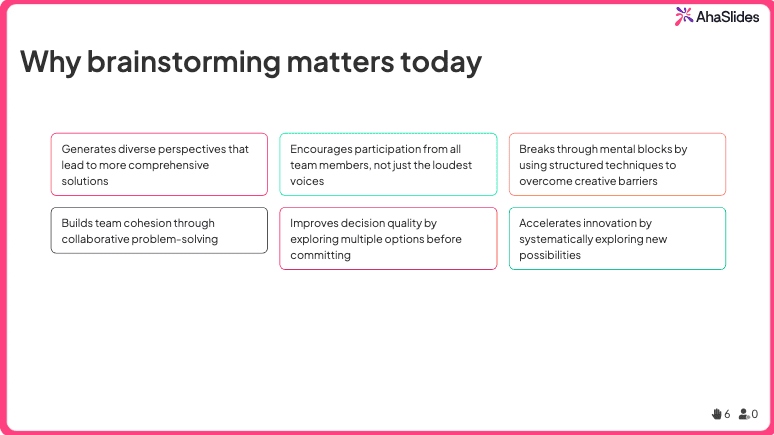
Eimijas Edmondsones pētījums Hārvardā liecina, ka psiholoģiskā drošība— pārliecība, ka netiksi sodīts vai pazemots par savu atklātību, — ir vissvarīgākais komandas efektivitātes faktors. Komandas ar augstu psiholoģisko drošību ģenerē radošākas idejas un uzņemas aprēķinātākus riskus.
Harvard Business Review pētījumā atklājās, ka komandas, kas pirms prāta vētras dalījās ar mulsinošiem stāstiem, ģenerēja par 26 % vairāk ideju, aptverot par 15 % vairāk kategoriju nekā kontroles grupas. Šī ievainojamība radīja atmosfēru, kurā tika atlikta spriestspēja, kas noveda pie lielāka radošā rezultāta.
Kognitīvā daudzveidība
Pētījumi no MIT Kolektīvā intelekta centra atklāja, ka komandas ar dažādiem domāšanas stiliem un pieredzi pastāvīgi pārspēj homogēnas grupas radošā problēmu risināšanā. Galvenais nav tikai demogrāfiskā daudzveidība, bet gan kognitīvā daudzveidība tajā, kā komandas locekļi pieiet problēmu risināšanai.
Noenkurošanās efekts
Prāta vētras sesiju sākotnējās idejas parasti nostiprina nākamās idejas, ierobežojot radošo loku. Tādas metodes kā prāta kartes un SCAMPER īpaši cīnās ar šo problēmu, piespiežot dalībniekus jau no paša sākuma izpētīt vairākus virzienus.
Biežāk sastopamās prāta vētras kļūdas
Grupu domāšana
Grupu tendence meklēt vienprātību uz kritiskas izvērtēšanas rēķina. Cīnieties ar to, atbalstot velna aizstāvjus un nepārprotami atzinīgi vērtējot atšķirīgus viedokļus.
Sociālā klabināšana
Kad grupās indivīdi sniedz mazāku ieguldījumu nekā katrs pats par sevi. Risiniet šo problēmu, uzņemoties individuālu atbildību, piemēram, liekot visiem iesniegt idejas pirms grupas diskusijas.
Novērtēšanas bažas
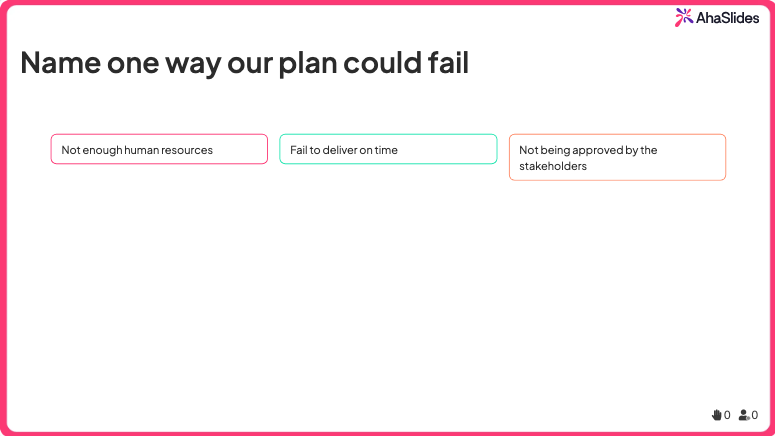
Bailes no negatīva vērtējuma liek cilvēkiem pašcenzēt radošas idejas. Anonīmi iesniegšanas rīki, piemēram, AhaSlides, to atrisina, ideju ģenerēšanas laikā noņemot atribūciju.
7 svarīgākie prāta vētras noteikumi
Šie pamatprincipi, kas pilnveidoti no Aleksa Osborna sākotnējā ietvara un apstiprināti ar gadu desmitiem ilgu praksi IDEO, d.school un vadošajās organizācijās visā pasaulē, veido efektīvas prāta vētras pamatu.
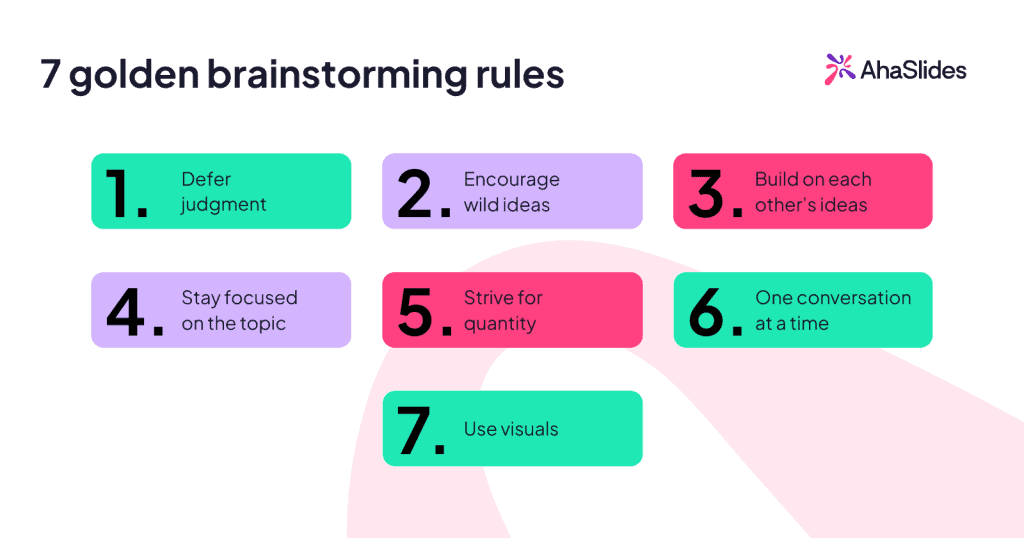
1. noteikums: Sprieduma atlikšana
Ko tas nozīmē: Ideju ģenerēšanas laikā atlieciet jebkādu kritiku un izvērtēšanu. Nevienu ideju nedrīkst noraidīt, kritizēt vai izvērtēt, kamēr nav beigusies prāta vētras sesija.
Kāpēc tas ir svarīgi: Spriedumi nogalina radošumu, pirms tas var uzplaukt. Kad dalībnieki baidās no kritikas, viņi veic pašcenzūru un attur potenciāli revolucionāras idejas. Vislabākās inovācijas sākumā bieži vien izklausās smieklīgas.
Kā ieviest:
- Skaidri norādiet šo noteikumu sesijas sākumā
- Uzmanīgi novirziet visus vērtējošos komentārus uz vēlāku apspriešanu
- Kā veicinātāja piemērs ir nekritizācija
- Apsveriet iespēju aizliegt tādas frāzes kā "Tas nedarbosies, jo..." vai "Mēs to jau mēģinājām".
- Idejām, kurām nepieciešama tūlītēja apspriešana, izmantojiet "autostāvvietu".
2. noteikums: Veiciniet savdabīgas idejas
Ko tas nozīmē: Aktīvi atzinīgi vērtējiet netradicionālas, šķietami nepraktiskas vai "nestandarta" idejas, nekavējoties neraizējoties par to īstenojamību.
Kāpēc tas ir svarīgi: Savvaļas idejas bieži vien slēpj sevī revolucionāru risinājumu aizmetņus. Pat nepraktiskas idejas, pilnveidotas, var iedvesmot praktiskus jauninājumus. Savvaļas domāšanas veicināšana mudina grupu pārspēt acīmredzamus risinājumus.
Kā ieviest:
- Skaidri aiciniet uz "neiespējamām" vai "trakām" idejām
- Svinēt visneparastākos ieteikumus
- Uzdodiet rosinošus jautājumus, piemēram, "Ko darīt, ja nauda nebūtu šķērslis?" vai "Ko mēs darītu, ja varētu pārkāpt jebkuru noteikumu?"
- Vienu savas prāta vētras sadaļu rezervējiet īpaši "neparedzamām idejām"
3. noteikums: balstieties uz viens otra idejām
Ko tas nozīmē: Ieklausieties citu cilvēku ieguldījumā un paplašiniet, apvienojiet vai modificējiet to, lai radītu jaunas iespējas.
Kāpēc tas ir svarīgi: Sadarbība vairo radošumu. Viena cilvēka nepilnīga doma kļūst par cita cilvēka revolucionāru risinājumu. Ideju pilnveidošana rada sinerģiju, kur kopums pārsniedz daļu summu.
Kā ieviest:
- Attēlojiet visas idejas redzamā vietā, lai ikviens varētu uz tām atsaukties
- Regulāri jautājiet: "Kā mēs varam to attīstīt?"
- Izmantojiet "Jā, un..." "Jā, bet..." vietā.
- Mudiniet dalībniekus apvienot vairākas idejas
- Piešķiriet atzinību gan sākotnējiem autoriem, gan tiem, kas attīsta idejas
4. noteikums: koncentrējieties uz tēmu
Ko tas nozīmē: Nodrošiniet, lai idejas joprojām atbilstu konkrētajai risināmajai problēmai vai izaicinājumam, vienlaikus ļaujot radoši izpētīt šīs robežas.
Kāpēc tas ir svarīgi: Fokuss novērš laika izšķiešanu un nodrošina produktīvas sesijas. Lai gan tiek veicināta radošums, atbilstības saglabāšana nodrošina, ka idejas faktiski var risināt konkrēto problēmu.
Kā ieviest:
- Uzrakstiet problēmu vai jautājumu labi redzamā vietā, kur to var redzēt visi.
- Uzmanīgi novirziet uzmanību, ja idejas pārāk novirzās no tēmas
- Izmantojiet "autostāvvietu" interesantām, bet blakus esošām idejām
- Periodiski atkārtojiet galveno izaicinājumu
- Līdzsvarojiet fokusu ar elastību
5. noteikums: Tiecieties pēc kvantitātes
Ko tas nozīmē: Sākotnējā posmā ģenerējiet pēc iespējas vairāk ideju, neuztraucoties par kvalitāti vai iespējamību.
Kāpēc tas ir svarīgi: Pētījumi konsekventi liecina, ka kvantitāte nodrošina kvalitāti. Pirmās idejas parasti ir acīmredzamas. Izrāviena risinājumi parasti rodas pēc tradicionālās domāšanas izsmelšanas. Vairāk iespēju sniedz lielākas iespējas atrast izcilus risinājumus.
Kā ieviest:
- Nosakiet konkrētus daudzuma mērķus (piemēram, "50 idejas 20 minūtēs")
- Izmantojiet taimerus, lai radītu steidzamību
- Veiciniet ātru ideju ģenerēšanu
- Atgādiniet dalībniekiem, ka katra ideja ir svarīga
- Redzami sekojiet līdzi ideju skaitam, lai palielinātu impulsu
6. noteikums: Viena saruna vienlaikus
Ko tas nozīmē: Saglabājiet koncentrēšanos, ļaujot vienlaikus runāt tikai vienam cilvēkam, nodrošinot, ka visi var dzirdēt un apsvērt katru ideju.
Kāpēc tas ir svarīgi: Blakus sarunas rada troksni, kas apslāpē labas idejas. Kad cilvēki vienlaikus klausās un runā, viņi palaiž garām iespējas balstīties uz citu cilvēku ieguldījumu.
Kā ieviest:
- Izveidojiet skaidrus kārtas pieņemšanas protokolus
- Izmantojiet apļveida spēles vai paceltu roku sistēmas
- Virtuālajās sesijās izmantojiet tērzēšanu piezīmēm un mutisku sarunu galveno ideju izteikšanai.
- Ierobežojiet blakus sarunas pārtraukumos
- Pāradresējiet uzmanīgi, kad rodas vairākas sarunas
7. noteikums: Izmantojiet vizuālos līdzekļus
Ko tas nozīmē: Izmantojiet vizuālo komunikāciju, skices, diagrammas un attēlus, lai efektīvāk izteiktu un attīstītu idejas nekā tikai ar vārdiem.
Kāpēc tas ir svarīgi: Vizuālā domāšana iesaista dažādas smadzeņu daļas, rosinot jaunas saiknes un idejas. Vienkārši vizuāli elementi nodod sarežģītus jēdzienus ātrāk nekā teksts. Pat nūjiņu cilvēciņi nepārspēj nevienu vizuālu elementu.
Kā ieviest:
- Nodrošiniet marķierus, līmlapiņas un lielu papīru vai tāfeles
- Veiciniet skicēšanu pat tiem, kas "neprot zīmēt"
- Izmantojiet vizuālos ietvarus (prāta kartes, matricas, diagrammas)
- Iemūžiniet idejas gan vārdos, gan attēlos
- Izmantojiet digitālos rīkus, piemēram, AhaSlides dzīvu vārdu mākoņu ģenerators vizualizēt jaunās tēmas
Kā sagatavoties prāta vētras sesijai
Veiksmīga prāta vētra sākas pirms dalībnieku ienākšanas telpā. Pareiza sagatavošanās ievērojami uzlabo sesijas kvalitāti un rezultātus.
1. darbība. Skaidri definējiet problēmu
Jūsu prāta vētras rezultātu kvalitāte ir ļoti atkarīga no tā, cik labi jūs formulējat problēmu. Veltiet laiku skaidra un konkrēta problēmas izklāsta izstrādē.
Labākā prakse problēmu formulēšanā:
Esiet konkrēts, nevis neskaidrs:
- Tā vietā, lai jautātu: "Kā palielināt pārdošanas apjomus?"
- Izmēģiniet: "Kā mēs 2. ceturksnī par 20 % palielināt tiešsaistes pārdošanas apjomus tūkstošgades paaudzei pilsētu teritorijās?"
Koncentrējieties uz rezultātiem, nevis risinājumiem:
- Tā vietā, lai jautātu: "Vai mums vajadzētu izveidot mobilo lietotni?"
- Mēģiniet: "Kā mēs varam padarīt mūsu pakalpojumu pieejamāku klientiem, kas atrodas ceļā?"
Izmantojiet jautājumus "Kā mēs varētu": Šis dizaina domāšanas ietvars paver iespējas, vienlaikus saglabājot fokusu.
- "Kā mēs varētu samazināt klientu apkalpošanas gaidīšanas laiku?"
- "Kā mēs varētu padarīt mācīšanos saistošāku 5. klases skolēniem?"
- "Kā mēs varētu palīdzēt jaunajiem darbiniekiem justies saistītiem ar uzņēmuma kultūru?"
Apsveriet lietotāju stāstus: Rāmja izaicinājumi no lietotāja perspektīvas:
- "Kā [lietotāja tips] es vēlos [mērķi], jo [iemesls]"
- "Kā aizņemts vecāks es vēlos ātras un veselīgas maltītes, jo man pēc darba ir ierobežots laiks."
2. solis: atlasiet pareizos dalībniekus
Optimālais grupas lielums: 5-12 cilvēki
Pārāk maz ierobežojumu ir perspektīvām; pārāk daudz ierobežojumu rada ražošanas bloķēšanu un koordinācijas problēmas.
Dažādībai ir nozīme:
- Kognitīvā daudzveidība: Iekļaujiet dažādus domāšanas stilus un problēmu risināšanas pieejas
- Domēnu daudzveidība: Apvienojiet attiecīgās jomas ekspertus ar "ārējiem" viedokļiem
- Hierarhiskā daudzveidība: Iekļaujiet dažādus organizācijas līmeņus (bet rūpīgi pārvaldiet varas dinamiku)
- Demogrāfiskā daudzveidība: Dažāda pieredze sniedz atšķirīgu ieskatu
Kas jāiekļauj:
- Cilvēki, kurus šī problēma skar tieši
- attiecīgās jomas eksperti ar atbilstošām zināšanām
- Radoši domātāji, kas apstrīd pieņēmumus
- Ieviešanas ieinteresētās personas, kas īstenos risinājumus
- "Ārpusnieki" ar svaigām perspektīvām
Kuru izslēgt (vai uzaicināt selektīvi):
- Ekstrēmi skeptiķi, kas pastāvīgi noraida idejas
- Tie, kuriem ir vara priekšlaicīgi apturēt idejas
- Cilvēki, kas ir blakus problēmai un kas traucēs koncentrēties
3. solis: izvēlieties pareizo vidi
Fiziskā vide (klātienē):
- Plaša atvērta telpa ar pārvietojamām mēbelēm
- Daudz vietas uz sienas ideju publicēšanai
- Labs apgaismojums un komfortabla temperatūra
- Minimāli traucēkļi un pārtraukumi
- Piekļuve materiāliem (līmlapiņas, marķieri, tāfeles)
Virtuālā vide:
- Uzticama videokonferenču platforma
- Digitālā tāfele vai sadarbības rīks (Miro, Mural, AhaSlides)
- Rezerves saziņas metode
- Tehniskā pārbaude pirms sesijas
- Skaidri virtuālie pamatnoteikumi
Laika apsvērumi:
- Izvairieties no agriem pirmdienas rītiem vai vēlām piektdienas pēcpusdienām
- Plānojiet grafiku atbilstoši dalībnieku maksimālās enerģijas laikiem
- Atvēliet pietiekami daudz laika (parasti 60–90 minūtes sarežģītu problēmu gadījumā)
- Ilgākām sesijām iekļaujiet pārtraukumus
4. darbība: iestatiet darba kārtību
Skaidra darba kārtība nodrošina sesiju produktivitāti un koncentrēšanos.
90 minūšu prāta vētras darba kārtības paraugs:
0:00–0:10 — Sveiciens un iesildīšanās
- Ievadi, ja nepieciešams
- Pārskatīt pamatnoteikumus
- Ātra ledlauža aktivitāte
0:10–0:20 — Problēmas formulēšana
- Skaidri izklāstiet izaicinājumu
- Sniedziet kontekstu un pamatinformāciju
- Atbildiet uz skaidrojošiem jautājumiem
- Kopīgojiet visus atbilstošos datus vai ierobežojumus
0:20–0:50 — Diverģentā domāšana (ideju ģenerēšana)
- Izmantojiet izvēlēto(-ās) prāta vētras metodi(-as)
- Veiciniet kvantitāti
- Apturēt spriedumu
- Apkopojiet visas idejas
0:50–1:00 — pārtraukums
- Īsa atiestatīšana
- Neformāls apstrādes laiks
1:00–1:20 — Konverģenta domāšana (pilnveidošana)
- Organizējiet idejas tēmās
- Apvienojiet līdzīgus jēdzienus
- Sākotnējais novērtējums atbilstoši kritērijiem
1:20–1:30 — Nākamie soļi
- Nosakiet galvenās idejas tālākai attīstībai
- Piešķirt turpmākās atbildības
- Ieplānojiet visas nepieciešamās papildu sesijas
- Paldies dalībniekiem
5. darbība: Materiālu un instrumentu sagatavošana
Fiziskie materiāli:
- Līmlapiņas (vairākas krāsas)
- Marķieri un pildspalvas
- Liels papīrs vai flipcharts
- Tāfele
- Punktiņi vai uzlīmes balsošanai
- Taimeris
- Kamera rezultātu dokumentēšanai
Digitālie rīki:
- AhaSlides interaktīvai prāta vētrai, vārdu mākoņiem un balsošanai
- Digitālā tāfele (Miro, Mural, Conceptboard)
- Domu kartēšanas programmatūra
- Dokuments ideju iemūžināšanai
- Ekrāna koplietošanas iespēja
6. solis: nosūtiet priekšdarbu (pēc izvēles)
Sarežģītu izaicinājumu gadījumā apsveriet iespēju nosūtīt dalībniekus:
- Problēmas pamatinformācija
- Attiecīgie dati vai pētījumi
- Jautājumi, kas jāapsver iepriekš
- Lūgums iesniegt 3–5 sākotnējās idejas
- Dienas kārtība un loģistika
Piezīme: Līdzsvarojiet sagatavošanās darbus ar spontanitāti. Dažreiz svaigākās idejas rodas minimālas sagatavošanās rezultātā.
20+ pārbaudītas prāta vētras metodes
Dažādas metodes ir piemērotas dažādām situācijām, grupu izmēriem un mērķiem. Apgūstiet šīs metodes, un jums būs rīks katram prāta vētras scenārijam.
Vizuālās tehnikas
Šīs metodes izmanto vizuālo domāšanu, lai atraisītu radošumu un organizētu sarežģītas idejas.
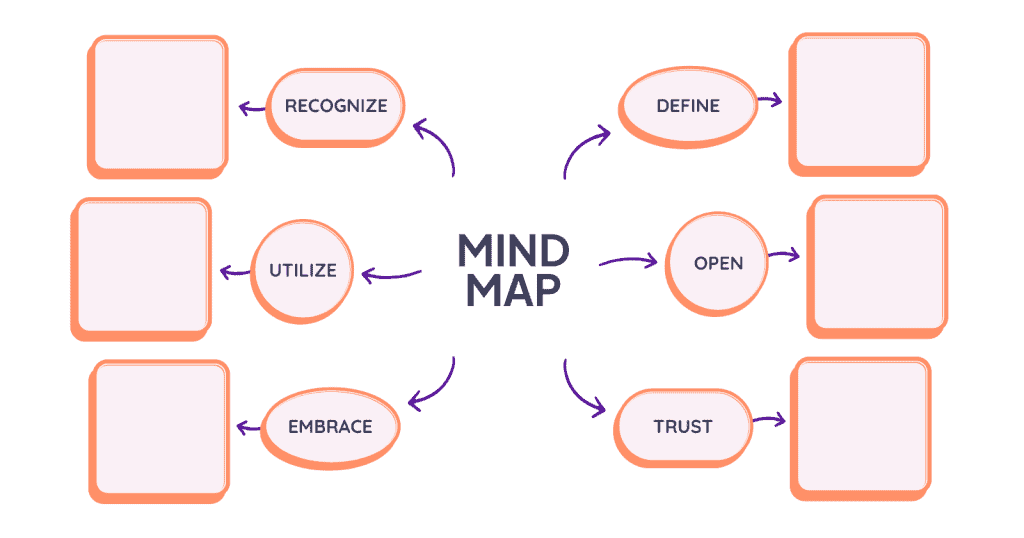
1. Domu kartēšana
Kas tas ir: Vizuāla tehnika, kas organizē idejas ap centrālo koncepciju, izmantojot zarus, lai parādītu attiecības un saiknes.
Kad lietot:
- Sarežģītu tēmu izpēte ar daudzdimensijām
- Projektu vai satura plānošana
- Informācijas organizēšana ar dabiskām hierarhijām
- Darbs ar vizuāli domājošiem cilvēkiem
Kā tas darbojas:
- Uzrakstiet centrālo tēmu lielas lapas vidū
- Zīmējiet zarus galvenajām tēmām vai kategorijām
- Pievienot apakšnozares saistītām idejām
- Turpiniet zaroties, lai izpētītu detaļas
- Izmantojiet krāsas, attēlus un simbolus, lai pastiprinātu nozīmi
- Izveidojiet savienojumus starp dažādām filiālēm
Pros:
- Atspoguļo dabiskos domāšanas procesus
- Parāda ideju savstarpējās attiecības
- Veicina nelineāru domāšanu
- Viegli pakāpeniski pievienot detaļas
Mīnusi:
- Var kļūt sarežģīts un milzīgs
- Mazāk efektīvs vienkāršām, lineārām problēmām
- Nepieciešama telpa un vizuālie materiāli
Piemērs: Mārketinga komanda, kas veido produkta laišanas klajā domu karti, var ietvert atzarus mērķauditorijām, kanāliem, ziņojumapmaiņai, laikam un budžetam, un katrs atzars paplašina savu darbību, pievēršoties konkrētām taktikām un apsvērumiem.
2. Storyboarding
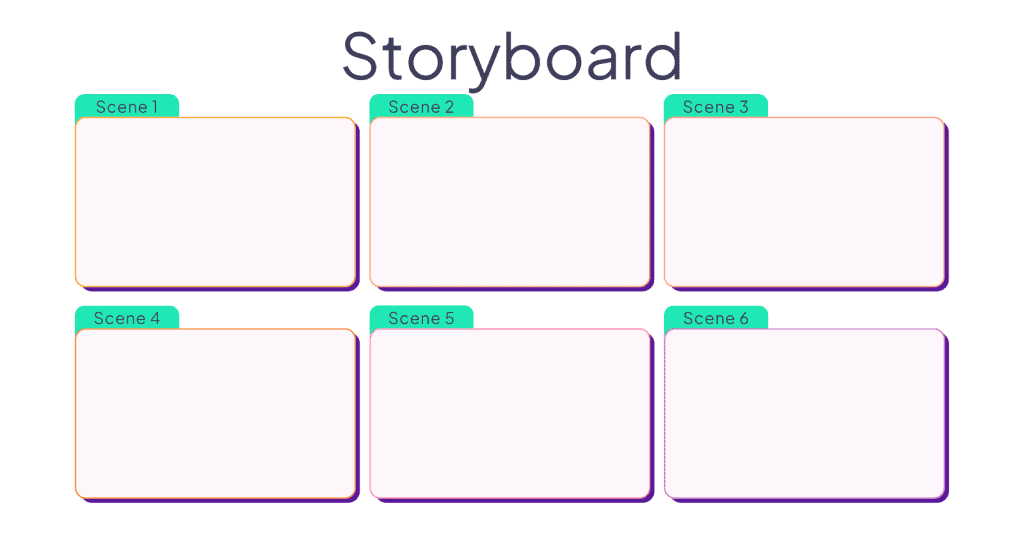
Kas tas ir: Secīgs vizuāls stāstījums, kas, izmantojot skices vai aprakstus, attēlo procesu, pieredzi vai ceļojumu.
Kad lietot:
- Lietotāja pieredzes vai klientu ceļojumu izstrāde
- Plānošanas pasākumi vai procesi
- Mācību materiālu izstrāde
- Naratīva satura veidošana
Kā tas darbojas:
- Nosakiet sākuma punktu un vēlamo beigu stāvokli
- Sadaliet ceļojumu galvenajos posmos vai brīžos
- Izveidojiet rāmi katram posmam
- Ieskicējiet vai aprakstiet, kas notiek katrā kadrā
- Rādīt savienojumus un pārejas starp kadriem
- Pievienojiet piezīmes par emocijām, sāpīgajiem punktiem vai iespējām
Pros:
- Vizualizē procesus un pieredzi
- Identificē nepilnības un sāpju punktus
- Veido kopīgu izpratni par secībām
- Darbojas gan fiziskā, gan digitālā vidē
Mīnusi:
- Laikietilpīgs detalizētu stāstu plānu izveidei
- Nepieciešama zināma komforta sajūta ar vizuālo izteiksmi
- Var pārāk uzsvērt lineāro progresiju
Piemērs: Iepazīšanās komandas scenārijs jauna darbinieka pirmajā nedēļā, ar kadriem, kuros redzama sagatavošanās pirms ierašanās, ierašanās, komandas iepazīstināšana, sākotnējā apmācība, pirmais projekta uzdevums un reģistrēšanās nedēļas nogalē.
3. Skicēšana
Kas tas ir: Ātra vizuālu ideju ģenerēšana, kurā dalībnieki ātri ieskicē koncepcijas pat ar ierobežotām zīmēšanas prasmēm.
Kad lietot:
- Produktu dizains un izstrāde
- Lietotāja saskarnes ideju ģenerēšana
- Vizuālā zīmola veidošanas vingrinājumi
- Jebkurš projekts, kas gūst labumu no vizuālas izpētes
Kā tas darbojas:
- Iestatiet laika ierobežojumu (parasti 5–10 minūtes)
- Katrs dalībnieks izklāsta savas idejas
- Nav nepieciešamas mākslinieciskas prasmes — der gan nūjiņu figūriņas, gan vienkāršas formas
- Dalieties ar viens otra skicēm un papildiniet tās
- Apvienojiet spēcīgākos vizuālos elementus
Pros:
- Atbrīvojas no uz tekstu balstītas domāšanas
- Pieejams ikvienam (nav nepieciešamas mākslinieciskās prasmes)
- Ātri nodod sarežģītas idejas
- Iesaista dažādus kognitīvos procesus
Mīnusi:
- Daži cilvēki pretojas zīmēšanas trauksmes dēļ
- Var uzsvērt formu, nevis funkciju
- Varētu radīt neizdevīgus apstākļus cilvēkiem ar redzes traucējumiem
4. Trakie astoņnieki
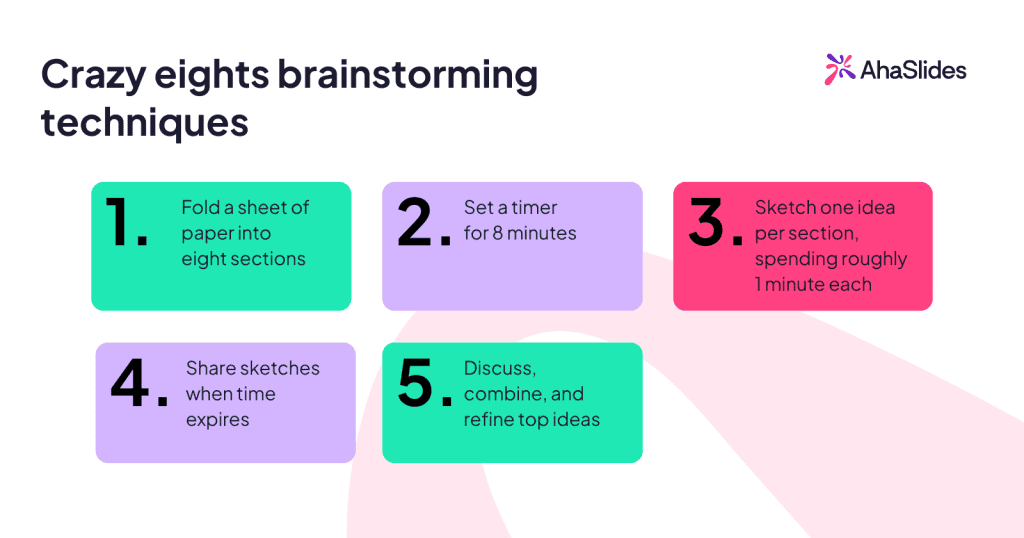
Kas tas ir: Ātra skicēšanas tehnika, kurā dalībnieki astoņās minūtēs ģenerē astoņas dažādas idejas, katrai skicei veltot vienu minūti.
Kad lietot:
- Sniedzoties tālāk par acīmredzamām sākotnējām idejām
- Laika ziņā ierobežota ideju ģenerēšana
- Ātra vizuālās daudzveidības radīšana
- Individuālas vai mazo grupu sesijas
Kā tas darbojas:
- Salociet papīra lapu astoņās daļās
- Iestatiet taimeri uz 8 minūtēm
- Katrā sadaļā ieskicējiet vienu ideju, katrai sadaļai veltot aptuveni 1 minūti.
- Kopīgot skices, kad laiks ir beidzies
- Apspriediet, apvienojiet un pilnveidojiet galvenās idejas
Pros:
- Veicina ātru domāšanu un novērš pārdomāšanu
- Ātri ģenerē apjomu
- Vienlīdzīga dalība (katrs rada 8 idejas)
- Atklāj dažādas pieejas
Mīnusi:
- Var justies sasteigts un stresa pilns
- Laika trūkuma dēļ var ciest kvalitāte
- Nav piemērots sarežģītu problēmu risināšanai, kurām nepieciešama dziļa pārdomāšana
Klusās metodes
Šīs pieejas dod introvertiem un apzināti domājošiem cilvēkiem iespēju sniegt jēgpilnu ieguldījumu, samazinot ekstravertu balsu dominējošo lomu.
5. Prāta rakstīšana
Kas tas ir: Klusa, individuāla ideju ģenerēšana, kurā dalībnieki pieraksta idejas pirms to dalīšanās ar grupu.
Kad lietot:
- Grupas ar dominējošām personībām
- Introverti komandas biedri
- Sociālā spiediena un grupu domāšanas mazināšana
- Vienlīdzīga ieguldījuma nodrošināšana
- Virtuāla vai asinhrona prāta vētra
Kā tas darbojas:
- Iedodiet katram dalībniekam papīra vai digitālu dokumentu
- Skaidri noformulējiet problēmu
- Iestatiet laika ierobežojumu (5–10 minūtes)
- Dalībnieki klusībā pieraksta idejas
- Apkopot un dalīties idejās (pēc vēlēšanās anonīmi)
- Apspriediet un attīstiet idejas grupā
Pros:
- Vienlīdzīga līdzdalība neatkarīgi no personības
- Mazina sociālo trauksmi un spriedumus
- Neļauj dominējošām balsīm pārņemt varu
- Dod laiku dziļākai pārdomām
- Labi darbojas attālināti
Mīnusi:
- Mazāk enerģijas nekā verbālā prāta vētra
- Zaudē zināmu spontānu ideju attīstību
- Var justies atrauts vai izolēts
Piemērs: Produktu komanda pēta jaunas funkciju idejas. Katrs dalībnieks 10 minūtes uzskaita funkcijas, pēc tam visas idejas tiek anonīmi kopīgotas, izmantojot AhaSlides. Komanda balso par labākajām koncepcijām un pēc tam apspriež ieviešanu.
6. 6-3-5 Prāta rakstīšana
Kas tas ir: Strukturēta prāta rakstīšanas metode, kurā 6 cilvēki 5 minūtēs uzraksta 3 idejas un pēc tam nodod savu darbu nākamajai personai, kura šīs idejas papildina vai maina.
Kad lietot:
- Sistemātiski balstoties uz viena otra idejām
- Ātra lielu apjomu ģenerēšana (108 idejas 30 minūtēs)
- Nodrošināt, lai visi sniegtu vienlīdzīgu ieguldījumu
- Apvienojot klusas pārdomas ar sadarbību
Kā tas darbojas:
- Apkopojiet 6 dalībniekus (var pielāgoties arī citam skaitam)
- Katrs cilvēks 5 minūtēs uzraksta 3 idejas
- Padodiet papīrus pa labi
- Izlasiet esošās idejas un pievienojiet vēl 3 (attīstot, modificējot vai pievienojot jaunas)
- Atkārtojiet vēl 5 kārtas (kopā 6)
- Pārskatiet un apspriediet visas idejas
Pros:
- Sistemātiski ģenerē lielu apjomu (6 cilvēki × 3 idejas × 6 kārtas = 108 idejas)
- Pakāpeniski balstās uz idejām
- Vienlīdzīga dalība garantēta
- Apvieno individuālo un grupas domāšanu
Mīnusi:
- Stingra konstrukcija var šķist ierobežojoša
- Nepieciešams noteikts grupas lielums
- Idejas var atkārtoties vēlākās kārtās
- Laikietilpīgs pilnam procesam

7. Nominālās grupas tehnika (NGT)
Kas tas ir: Strukturēta metode, kas apvieno klusu ideju ģenerēšanu, koplietošanu, apspriešanu un demokrātisku balsošanu, lai noteiktu ideju prioritātes.
Kad lietot:
- Svarīgi lēmumi, kuriem nepieciešama vienprātība
- Grupas ar varas nelīdzsvarotību
- Prioritāšu noteikšana no daudzām iespējām
- Godīgas dalības nodrošināšana
- Pretrunīgas vai sensitīvas tēmas
Kā tas darbojas:
- Klusā paaudze: Dalībnieki raksta idejas individuāli (5–10 minūtes)
- Apļveida dalīšana: Katra persona izsaka vienu ideju; vadītājs pieraksta visas idejas bez apspriešanas.
- Noskaidrošana: Grupa apspriež idejas izpratnei (nevis izvērtēšanai)
- Individuālais rangs: Katra persona privāti vērtē vai balso par idejām
- Grupas prioritāšu noteikšana: Apvienojiet atsevišķus vērtējumus, lai noteiktu galvenās prioritātes
- Diskusija: Apspriediet visaugstāk novērtētās idejas un pieņemiet lēmumus
Pros:
- Līdzsvaro individuālo un grupas ieguldījumu
- Samazina dominējošo personību ietekmi
- Veicina atbalstu, piedaloties
- Demokrātisks un caurspīdīgs process
- Labi piemērots pretrunīgām tēmām
Mīnusi:
- Laikietilpīgāks nekā vienkārša prāta vētra
- Formāla struktūra var šķist stingra
- Var apspiest spontānas diskusijas
- Balsošana var pārāk vienkāršot sarežģītus jautājumus
Analītiskās metodes
Šīs metodes nodrošina struktūru sistemātiskai analīzei, palīdzot komandām izvērtēt idejas no vairākiem skatupunktiem.
8. SVID analīze
Kas tas ir: Sistēma, kas novērtē ideju, stratēģiju vai lēmumu stiprās puses, vājās puses, iespējas un draudus.
Kad lietot:
- Stratēģiskā plānošana un lēmumu pieņemšana
- Vairāku iespēju izvērtēšana
- Iespējamības novērtēšana pirms ieviešanas
- Riska identificēšana
- Biznesa plānošana
Kā tas darbojas:
- Definējiet analizējamo ideju, projektu vai stratēģiju
- Izveidojiet četrus kvadrantus: stiprās puses, vājās puses, iespējas, draudi
- Ideju ģenerēšana katram kvadrantam:
- Stiprās puses: Iekšējie pozitīvie faktori un priekšrocības
- Vājās puses: Iekšējie negatīvie faktori un ierobežojumi
- Iespējas: Ārējie pozitīvie faktori un iespējas
- Draudi: Ārējie negatīvie faktori un riski
- Apspriediet un prioritizējiet katra kvadranta vienumus
- Izstrādāt stratēģijas, pamatojoties uz analīzi
Pros:
- Visaptverošs situācijas pārskats
- Ņem vērā gan iekšējos, gan ārējos faktorus
- Agrīni identificē riskus
- Veido kopīgu izpratni
- Atbalsta uz datiem balstītus lēmumus
Mīnusi:
- Var būt virspusējs, ja steidzas
- Var pārāk vienkāršot sarežģītas situācijas
- Nepieciešams godīgs novērtējums
- Statisks momentuzņēmums (nerāda evolūciju)
9. Sešas domāšanas cepures
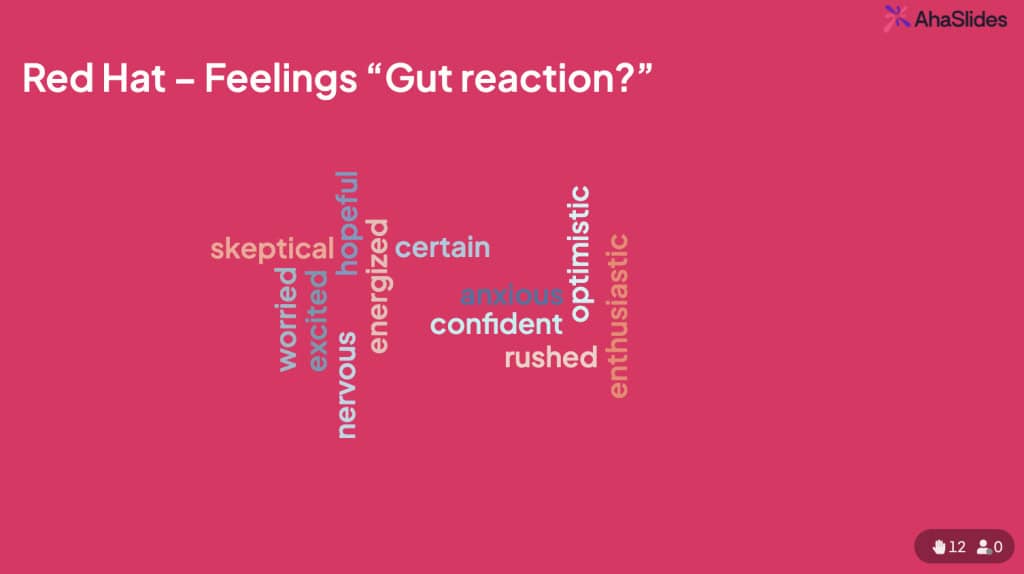
Kas tas ir: Edvarda de Bono tehnika, kas pēta problēmas no sešām atšķirīgām perspektīvām, kuras attēlo krāsainas "cepures".
Kad lietot:
- Sarežģīti lēmumi, kas prasa rūpīgu analīzi
- Strīdu un konfliktu mazināšana
- Nodrošināt, ka tiek ņemtas vērā vairākas perspektīvas
- Atbrīvošanās no ierastajiem domāšanas modeļiem
Sešas cepures:
- Baltā cepure: Fakti un dati (objektīva informācija)
- Sarkana cepure: Emocijas un sajūtas (intuitīvas reakcijas)
- Melna cepure: Kritiskā domāšana (riski, problēmas, kāpēc kaut kas varētu neizdoties)
- Dzeltenā cepure: Optimisms un ieguvumi (kāpēc tas darbosies, priekšrocības)
- Zaļā cepure: Radošums (jaunas idejas, alternatīvas, iespējas)
- Zilā cepure: Procesa kontrole (veicināšana, organizēšana, nākamie soļi)
Kā tas darbojas:
- Iepazīstiniet ar sešām domāšanas perspektīvām
- Visi vienlaikus "nēsā" vienu un to pašu cepuri
- Izpētiet problēmu no šī viedokļa
- Mainīt cepures sistemātiski (parasti 5–10 minūtes katrai cepurei)
- Zilā cepure atvieglo un nosaka secību
- Sintezējiet ieskatus no visām perspektīvām
Pros:
- Atšķir dažādus domāšanas veidus
- Samazina strīdus (visi kopā pēta vienu un to pašu perspektīvu)
- Nodrošina visaptverošu analīzi
- Leģitimizē emocionālo un radošo domāšanu
- Rada psiholoģisku atdalīšanos no personīgajiem uzskatiem
Mīnusi:
- Nepieciešama apmācība un prakse
- Sākumā var šķist mākslīgi
- Laikietilpīgs pilnam procesam
- Var pārāk vienkāršot sarežģītas emocionālas reakcijas
10. Zvaigžņu uzliesmojums
Kas tas ir: Idejas izvērtēšanas metode, kas ģenerē jautājumus par ideju, izmantojot "kas, ko, kad, kur, kāpēc un kā" ietvaru.
Kad lietot:
- Rūpīga ideju pārbaude pirms to īstenošanas
- Trūkumu un pieņēmumu noteikšana
- Plānošana un sagatavošana
- Potenciālo izaicinājumu atklāšana
Kā tas darbojas:
- Uzzīmējiet sešstaru zvaigzni ar savu ideju centrā.
- Apzīmējiet katru punktu ar: Kas, Ko, Kad, Kur, Kāpēc, Kā
- Katram punktam ģenerējiet jautājumus:
- Kas: Kas gūs labumu? Kas īstenos? Kas varētu pretoties?
- Ko: Kādi resursi ir nepieciešami? Kādi ir soļi? Kas varētu noiet greizi?
- Kad: Kad tam vajadzētu sākties? Kad mēs redzēsim rezultātus?
- kur: Kur tas notiks? Kur varētu rasties izaicinājumi?
- Kāpēc: Kāpēc tas ir svarīgi? Kāpēc tas varētu neizdoties?
- Kā: Kā mēs to īstenosim? Kā mēs mērīsim panākumus?
- Apspriediet atbildes un sekas
- Nosakiet jomas, kurām nepieciešama papildu informācija vai plānošana
Pros:
- Sistemātiska un rūpīga
- Atklāj pieņēmumus un nepilnības
- Ģenerē ieviešanas ieskatus
- Viegli saprotams un lietojams
- Piemērojams jebkurai idejai vai projektam
Mīnusi:
- Galvenokārt analītisks (nevis ideju ģenerēšana)
- Var radīt pārāk daudz jautājumu
- Var izraisīt analīzes paralīzi
- Mazāk radošs nekā citas metodes
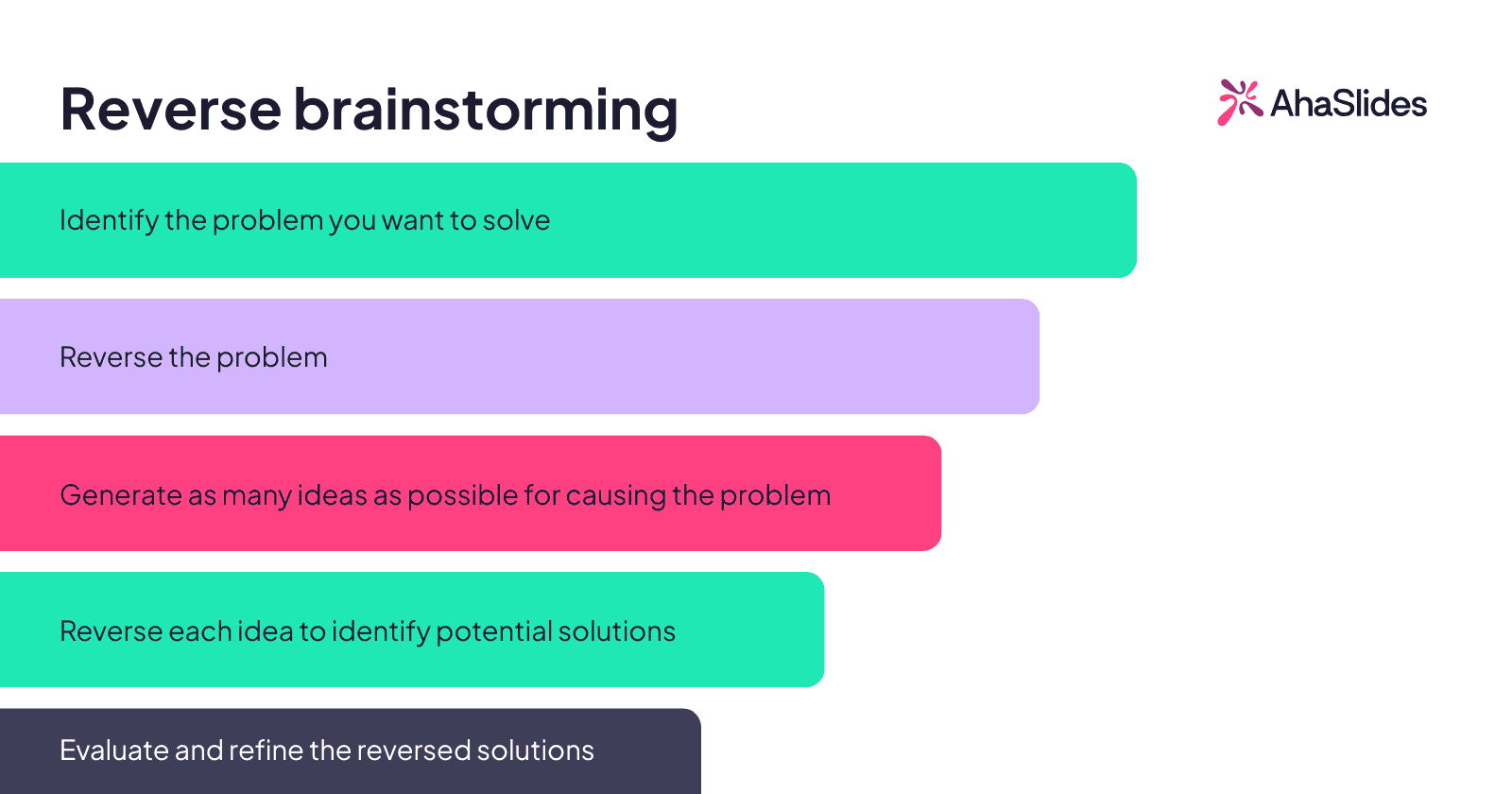
11. Apgrieztā prāta vētra
Kas tas ir: Ideju ģenerēšana par to, kā izraisīt vai saasināt problēmu, un pēc tam šo ideju mainīšana, lai atrastu risinājumus.
Kad lietot:
- Iestrēdzis pie sarežģītas problēmas
- Pārkāpjot tradicionālo domāšanu
- Pamatcēloņu identificēšana
- Apstrīdīgi pieņēmumi
- Padarīt problēmu risināšanu jautru un saistošu
Kā tas darbojas:
- Skaidri norādiet problēmu, kuru vēlaties atrisināt
- Apgrieziet to otrādi: "Kā mēs varam šo problēmu pasliktināt?" vai "Kā mēs varam garantēt neveiksmi?"
- Ģenerējiet pēc iespējas vairāk ideju problēmas rašanās novēršanai
- Apgrieziet katru ideju otrādi, lai noteiktu iespējamos risinājumus
- Novērtējiet un pilnveidojiet apgrieztos risinājumus
- Izstrādāt daudzsološu ideju īstenošanas plānus
Piemērs:
- Sākotnējā problēma: Kā mēs uzlabojam klientu apmierinātību?
- Apgriezts: Kā mēs varam sadusmot un padarīt klientus neapmierinātus?
- Apgrieztas idejas: Ignorējiet viņu zvanus, esiet rupji, nosūtiet nepareizas preces, nesniedziet nekādu informāciju.
- Risinājumi: Uzlabojiet atbildes laikus, apmāciet darbiniekus klientu apkalpošanā, ieviesiet kvalitātes kontroli, izveidojiet visaptverošus bieži uzdotos jautājumus
Pros:
- Padara problēmu risināšanu jautru un enerģisku
- Atklāj slēptus pieņēmumus
- Vieglāk kritizēt nekā radīt (izmanto šo enerģiju)
- Identificē pamatcēloņus
- Iesaista skeptiskus dalībniekus
Mīnusi:
- Netiešs ceļš uz risinājumiem
- Var radīt nereālistiskas "apgrieztas" idejas
- Nepieciešama tulkošanas darbība (apgrieztā secībā risinājumam)
- Var kļūt negatīvs, ja netiek labi pārvaldīts
12. Pieci kāpēc
Kas tas ir: Cēloņu analīzes metode, kas atkārtoti (parasti piecas reizes) uzdod jautājumu "kāpēc", lai iedziļinātos simptomu virspusējos punktos un atrastu pamatā esošās problēmas.
Kad lietot:
- Problēmas diagnostika un pamatcēloņu analīze
- Neveiksmju vai problēmu izpratne
- Virzoties tālāk par simptomiem, nonākam pie cēloņiem
- Vienkāršas problēmas ar skaidrām cēloņsakarību ķēdēm
Kā tas darbojas:
- Skaidri norādiet problēmu
- Pajautājiet: "Kāpēc tas notiek?"
- Atbilde, kas balstīta uz faktiem
- Pajautājiet "Kāpēc?" par šo atbildi
- Turpiniet jautāt "Kāpēc?" (parasti 5 reizes, bet var būt arī vairāk vai mazāk)
- Kad esat sasniedzis pamatcēloni (nav iespējams jēgpilni jautāt, kāpēc vēlreiz), izstrādājiet risinājumus, kas vērsti uz šo cēloni.
Piemērs:
- Problēma: Mēs nokavējām projekta termiņu
- Kāpēc? Galīgais ziņojums nebija gatavs
- Kāpēc? Galvenie dati nebija pieejami
- Kāpēc? Aptauja netika nosūtīta klientiem
- Kāpēc? Mums nebija atjaunināta klientu saraksta
- Kāpēc? Mums nav klientu datu uzturēšanas procesa
- Galvenais cēlonis: Klientu datu pārvaldības procesa trūkums
- Risinājums: Ieviest CRM sistēmu ar datu uzturēšanas protokoliem
Pros:
- Vienkāršs un pieejams
- Rok zem virsmas simptomiem
- Identificē rīcības pamatcēloņus
- Darbojas daudzu veidu problēmu gadījumā
- Veicina kritisko domāšanu
Mīnusi:
- Pārāk vienkāršo sarežģītas problēmas ar vairākiem cēloņiem
- Pieņem lineāras cēloņu un seku attiecības
- Izmeklētāja neobjektivitāte var novest pie iepriekš noteiktiem "pamatcēloņiem"
- Var nepamanīt sistēmiskus vai kultūras faktorus
Sadarbības metodes
Šīs metodes izmanto grupas dinamiku un balstās uz kolektīvo intelektu.
13. Apļveida prāta vētra
Kas tas ir: Strukturēta pieeja, kurā dalībnieki pēc kārtas dalās ar vienu ideju, nodrošinot, ka visi sniedz vienlīdzīgu ieguldījumu.
Kad lietot:
- Vienlīdzīgas līdzdalības nodrošināšana
- Grupas ar dominējošām personībām
- Visaptverošu sarakstu ģenerēšana
- Klātienes vai virtuālas tikšanās
Kā tas darbojas:
- Sēdiet aplī (fiziski vai virtuāli)
- Nosakiet pamatnoteikumus (viena ideja katrā gājienā, pasūtiet, ja nepieciešams).
- Sāciet ar vienu cilvēku, kurš dalās idejā
- Virzieties pulksteņrādītāja virzienā, katram dalībniekam daloties vienā idejā.
- Turpiniet apļus, līdz idejas ir izsmeltas
- Dodiet "pielaides", ja kādam nav jaunu ideju
- Redzami fiksējiet visas idejas
Pros:
- Garantē, ka visi runās
- Novērš dažu balsu dominēšanu
- Strukturēts un paredzams
- Viegli atvieglot
- Balstās uz iepriekšējām idejām
Mīnusi:
- Var justies lēni vai stīvi
- Spiediens savukārt dot savu ieguldījumu
- Var zaudēt spontānus savienojumus
- Cilvēki var pavadīt kārtu domāšanā, nevis klausīšanās
14. Ātra ideju ģenerēšana
Kas tas ir: Ātra, enerģiska ideju ģenerēšana ar stingriem laika ierobežojumiem, lai novērstu pārdomāšanu un palielinātu kvantitāti.
Kad lietot:
- Pārvarēt analīzes paralīzi
- Ātra lielu apjomu ģenerēšana
- Grupas aktivizēšana
- Stiepot pāri acīmredzamām idejām
Kā tas darbojas:
- Nosakiet agresīvu laika ierobežojumu (parasti 5–15 minūtes)
- Tiecieties pēc konkrēta daudzuma mērķa
- Ģenerējiet idejas pēc iespējas ātrāk
- Ražošanas laikā nav diskusiju vai izvērtēšanas
- Iemūžiniet visu, lai cik skarbi tas arī nebūtu
- Pārskatīt un precizēt pēc laika beigām
Pros:
- Enerģisks un saistošs
- Novērš pārdomāšanu
- Ātri ģenerē apjomu
- Pārvar perfekcionismu
- Rada impulsu
Mīnusi:
- Kvalitāte var ciest
- Var būt stresaini
- Var dot priekšroku ātrajiem domātājiem, nevis dziļajiem domātājiem
- Grūti pietiekami ātri uztvert idejas
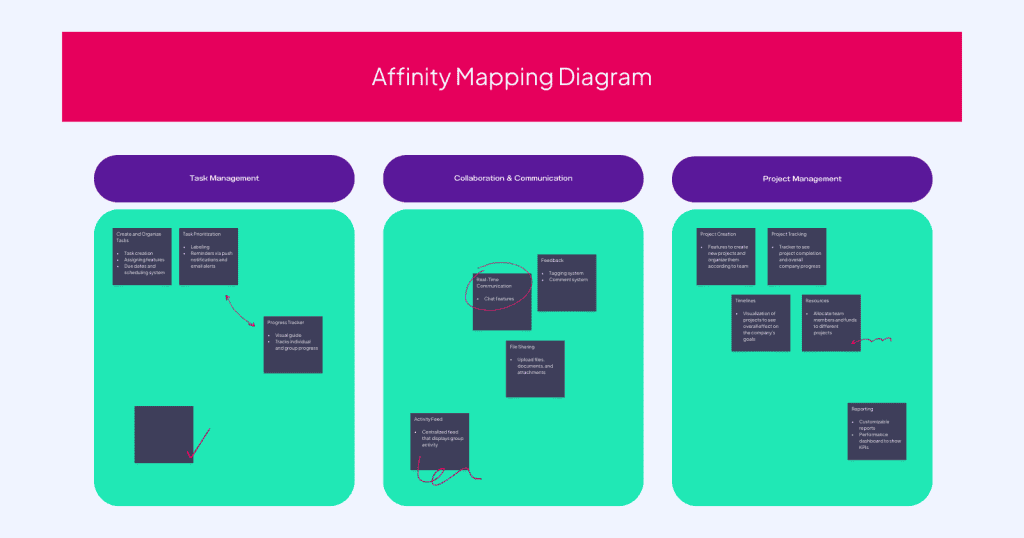
15. Afinitātes kartēšana
Kas tas ir: Liela skaita ideju organizēšana saistītās grupās, lai identificētu modeļus, tēmas un prioritātes.
Kad lietot:
- Pēc daudzu ideju ģenerēšanas
- Sarežģītas informācijas sintezēšana
- Tēmu un modeļu identificēšana
- Vienprātības veidošana par kategorijām
Kā tas darbojas:
- Ģenerēt idejas (izmantojot jebkuru tehniku)
- Pierakstiet katru ideju uz atsevišķas līmlapiņas
- Rādīt visas idejas redzami
- Klusi grupējiet saistītas idejas kopā
- Izveidojiet kategoriju etiķetes katrai grupai
- Apspriest un precizēt grupas
- Prioritizējiet kategorijas vai idejas kategoriju ietvaros
Pros:
- Izprot lielus ideju kopumus
- Atklāj modeļus un tēmas
- Sadarbīga un demokrātiska
- Vizuāls un taustāms
- Veido kopīgu izpratni
Mīnusi:
- Nav ideju ģenerēšanas tehnika (tikai organizācijai)
- Var būt laikietilpīgi ar daudzām idejām
- Domstarpības par kategorizāciju
- Dažas idejas var atbilst vairākām kategorijām
Uz jautājumiem balstītas metodes
Šīs pieejas izmanto jautājumus, nevis atbildes, lai atklātu jaunas perspektīvas.
16. Jautājumu uzliesmojumi
Kas tas ir: MIT profesora izstrādāta metode Hals Grēgersens kur komandas īsā laikā ģenerē pēc iespējas vairāk jautājumu, nevis atbilžu.
Kad lietot:
- Pārformulēšanas problēmas
- Apstrīdīgi pieņēmumi
- Atbrīvošanās
- Problēmu redzēšana no jauniem leņķiem
Kā tas darbojas:
- Izklāstiet izaicinājumu 2 minūtēs (augsta līmeņa, minimālas detaļas)
- Iestatiet taimeri uz 4 minūtēm
- Ģenerējiet pēc iespējas vairāk jautājumu (mērķis ir 15+)
- Noteikumi: Tikai jautājumi, bez ievada, bez atbilžu jautājumiem
- Pārskatiet jautājumus un identificējiet provokatīvākos
- Atlasiet svarīgākos jautājumus, lai tos sīkāk izpētītu
Pros:
- Ātri pārformulē problēmas
- Vieglāk nekā ģenerēt risinājumus
- Atklāj pieņēmumus
- Rada svaigas perspektīvas
- Aizraujošs un enerģisks
Mīnusi:
- Neģenerē risinājumus tieši
- Nepieciešama turpmāka atbilde uz jautājumiem
- Var justies nomākts bez atbildēm
- Var radīt pārāk daudz virzienu, kuros turpināt
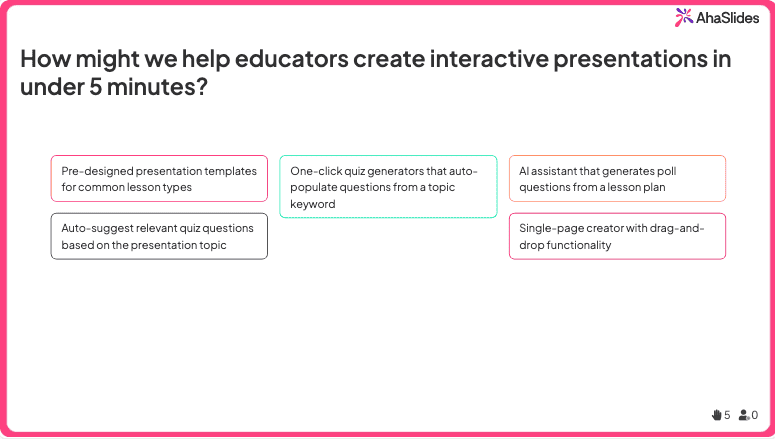
17. Kā mēs varētu (HMW) uzdot jautājumus
Kas tas ir: Dizaina domāšanas metode, kas problēmas formulē kā iespējas, izmantojot struktūru "Kā mēs varētu...".
Kad lietot:
- Dizaina izaicinājumu definēšana
- Negatīvo problēmu pārformulēšana par pozitīvām iespējām
- Ideju ģenerēšanas sesiju sākumposmā
- Optimisku, praktiski īstenojamu problēmu aprakstu veidošana
Kā tas darbojas:
- Sāciet ar problēmu vai atziņu
- Pārformulējiet jautājumu kā "Kā mēs varētu..."
- Pagatavojiet to:
- Optimistisks (pieņemot, ka risinājumi pastāv)
- atvērts (ļauj vairākus risinājumus)
- Darbojas (liecina par skaidru virzienu)
- Ne pārāk plašs or par šauru
- Ģenerējiet vairākas HMW variācijas
- Izvēlieties daudzsološākos HMW risinājumus ideju ģenerēšanai
Pros:
- Rada optimistisku, uz iespējām vērstu ietvaru
- Atver vairākus risinājumu ceļus
- Plaši izmantots dizaina domāšanā
- Viegli apgūt un pielietot
- Maina domāšanas veidu no problēmas uz iespēju
Mīnusi:
- Neģenerē risinājumus (tikai strukturē jautājumus)
- Var šķist formuliska
- Risks, ka jautājumi būs pārāk plaši vai neskaidri
- Var pārāk vienkāršot sarežģītas problēmas
Uzlabotas metodes
18. KRĀDĪTĀJS
Kas tas ir: Uz akronīmiem balstīts kontrolsaraksts, kas veicina radošu domāšanu, sistemātiski modificējot esošās idejas.
SCAMPER uzvednes:
- Aizstājējs: Ko var aizstāt vai apmainīt?
- Apvienot: Ko var apvienot vai integrēt?
- Pielāgot: Ko var pielāgot dažādiem lietošanas veidiem?
- Modificēt/Palielināt/Samazināt: Ko var mainīt mērogā vai atribūtos?
- Izmantot citam mērķim: Kā vēl to varētu izmantot?
- Likvidēt: Ko var noņemt vai vienkāršot?
- Apgriezt/Pārkārtot: Ko var darīt apgrieztā secībā vai citā secībā?
Kad lietot:
- Produktu izstrāde un inovācijas
- Esošo risinājumu uzlabošana
- Kad esat iestrēdzis pie problēmas
- Sistemātiski radošuma vingrinājumi
Kā tas darbojas:
- Atlasiet esošu produktu, procesu vai ideju
- Sistemātiski piemērojiet katru SCAMPER uzdevumu
- Ģenerējiet idejas katrai kategorijai
- Apvienojiet daudzsološas modifikācijas
- Izvērtēt iespējamību un ietekmi
Pros:
- Sistemātiska un visaptveroša
- Der jebkurai esošai idejai vai produktam
- Viegli atcerēties (akronīms)
- Piespiež izpētīt vairākus virzienus
- Piemērots inovāciju semināriem
Mīnusi:
- Balstās uz esošajām idejām (nevis patiesi jaunām koncepcijām)
- Var justies mehāniski
- Rada daudzas viduvējas idejas
- Lai sāktu, nepieciešama spēcīga, jau esoša ideja
Pareizās tehnikas izvēle
Kā izvēlēties, ņemot vērā vairāk nekā 20 pieejamās metodes? Apsveriet:
Grupas lielums:
- Mazās grupas (2–5): Jautājumu uzliesmojumi, ātra ideju ģenerēšana, SCAMPER
- Vidējas grupas (6–12): Prāta rakstīšana, apļveida analīze, sešas domāšanas cepures
- Lielas grupas (13+): Afinitātes kartēšana, nominālās grupas tehnika
Sesijas mērķi:
- Maksimālais daudzums: Ātra ideju ģenerēšana, trakie astoņnieki, apļa sistēma
- Padziļināta izpēte: SWOT analīze, sešas domāšanas cepures, pieci kāpēc
- Vienlīdzīga līdzdalība: Prāta rakstīšana, nominālās grupas tehnika
- Vizuālā domāšana: Prāta kartes, stāstu plānošana, skicēšanas vētra
- Problēmas diagnoze: Pieci Kāpēc, apgrieztā prāta vētra
Komandas dinamika:
- Dominējošās personības: Prāta rakstīšana, nominālās grupas tehnika
- Introvertā komanda: Klusas metodes
- Skeptiķu komanda: Apgrieztā prāta vētra, sešas domāšanas cepures
- Nepieciešamas jaunas perspektīvas: Jautājumu uzliesmojumi, SCAMPER
Soli pa solim prāta vētras process
Ievērojiet šo pārbaudīto sistēmu, lai no sākuma līdz beigām vadītu efektīvas prāta vētras sesijas.
1. fāze: iesildīšanās (5–10 minūtes)
Aukstā sākuma sajūta noved pie neveikla klusuma un virspusējām idejām. Iesildiet radošos muskuļus ar ātru aktivitāti.
Efektīvi ledlauži:
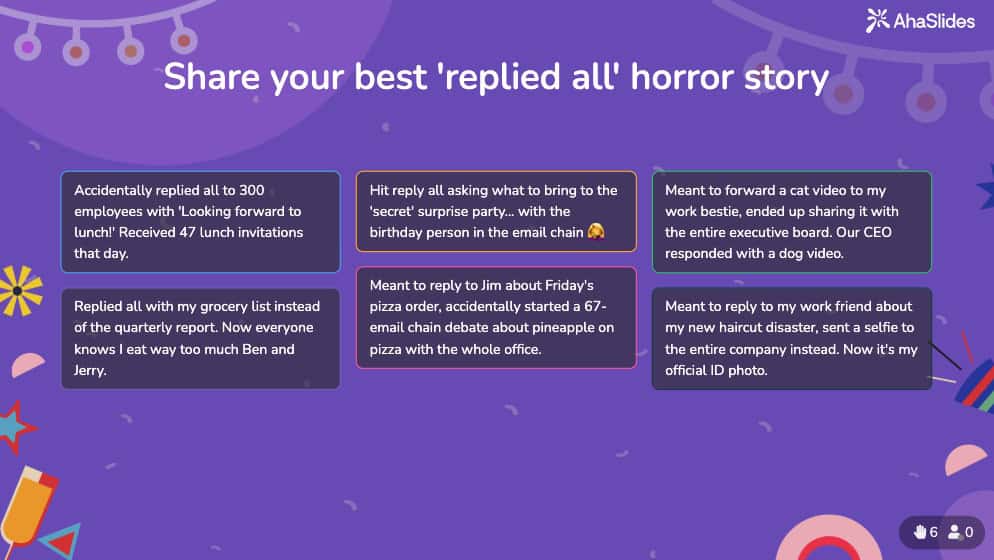
Apkaunojoša stāsta kopīgošana
Varat lūgt katram dalībniekam pastāstīt kādu apkaunojošu stāstu, kas saistīts ar viņa darbu, piemēram, "Padalieties ar savu labāko šausmu stāstu, kurā atbildēju visiem". Tas rada kopīgas saiknes starp dalībniekiem un ļauj visiem īsākā laika posmā justies ērti vienam ar otru.
Tuksneša sala
Pajautājiet visiem, kādas 3 lietas viņi vēlētos, ja uz gadu paliktu uz neapdzīvotas salas.
Divas patiesības un meli
Katrs cilvēks dalās ar trim apgalvojumiem par sevi — diviem patiesiem un vienam nepatiesam. Pārējie min melus.
Ātra viktorīna
Izmantojot AhaSlides, veiciet 5 minūšu jautru viktorīnu par vieglu tēmu.
2. fāze: Problēmas formulēšana (5–15 minūtes)
Skaidri noformulējiet izaicinājumu:
- Vienkārši un konkrēti norādiet problēmu
- Sniedziet atbilstošu kontekstu un pamatinformāciju
- Kopīgojiet galvenos ierobežojumus (budžetu, laiku, resursus)
- Paskaidrojiet, kāpēc šī risinājuma nozīme ir svarīga
- Paskaidrojiet, kā izskatās panākumi
- Atbildiet uz skaidrojošiem jautājumiem
3. fāze: Diverģentā domāšana — ideju ģenerēšana (20–40 minūtes)
Šī ir galvenā prāta vētras fāze. Izmantojiet vienu vai vairākas metodes no iepriekšējās sadaļas.
Galvenie principi:
- Stingri ievērojiet 7 prāta vētras noteikumus
- Veiciniet apjomu, nevis kvalitāti
- Redzami fiksējiet katru ideju
- Uzturēt augstu enerģijas līmeni
- Novērst vērtēšanu vai kritiku
- Nosakiet skaidrus laika ierobežojumus
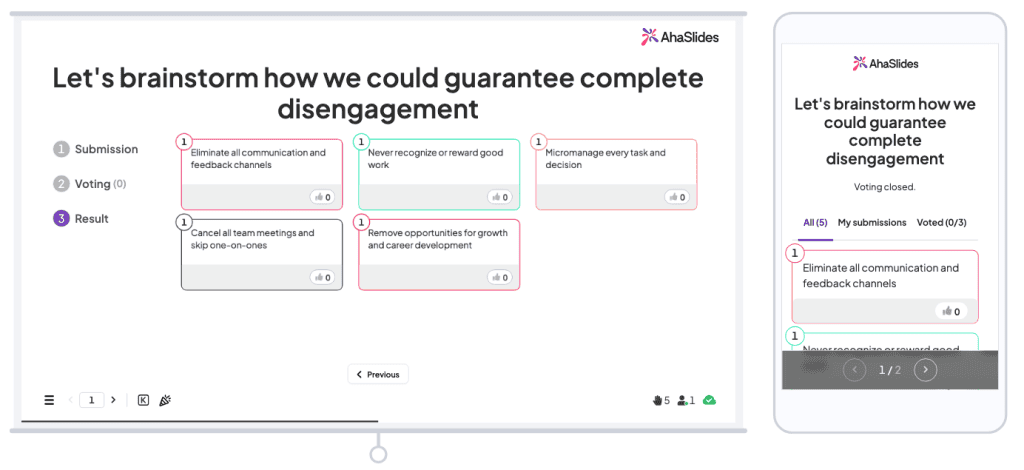
AhaSlides izmantošana ideju ģenerēšanai:
- Izveidojiet prāta vētras slaidu ar savu problēmas aprakstu.
- Dalībnieki iesniedz idejas no saviem tālruņiem
- Idejas tiek rādītas tiešraidē ekrānā
- Ikviens var apskatīt pilnu kolekciju un balsot par labākajām idejām nākamajai fāzei
4. fāze: Pārtraukums (5–10 minūtes)
Neizlaidiet pārtraukumu! Tas ļauj idejām attīstīties, atiestatīt enerģiju un pārslēgties no ģenerēšanas uz izvērtēšanas režīmu.
5. fāze: Konverģentā domāšana — organizēšana un pilnveidošana (15–30 minūtes)
1. darbība. Ideju organizēšana - Grupējiet līdzīgas idejas, izmantojot afinitātes kartēšanu:
- Klusi kārtojiet idejas saistītās tēmās
- Kategoriju etiķešu izveide
- Apspriest grupas un precizēt
- Identificējiet modeļus
2. solis: ideju precizēšana
- Pārskatiet neskaidras idejas
- Lūdziet pretendentiem paskaidrojumus
- Apvienojiet dublētas vai ļoti līdzīgas idejas
- Notveriet nolūku, ne tikai vārdus
3. solis: Sākotnējā novērtēšana - Lietot ātros filtrus:
- Vai tas risina problēmu?
- Vai tas ir iespējams (pat ja tas ir sarežģīti)?
- Vai tas ir pietiekami jauns/atšķirīgs, lai to īstenotu?
4. solis: balsošana par labākajām idejām -Izmantojiet vairāku balsojumu funkciju, lai sašaurinātu iespējas:
- Dodiet katram cilvēkam 3–5 balsis
- Var balsot vairākas reizes par vienu ideju, ja tā ir ļoti vēlama
- Balsu skaits
- Apspriediet 5–10 svarīgākās idejas
Izmantojot AhaSlides balsošanai:
- Pievienot aptaujas slaidam labākās idejas
- Dalībnieki balso no saviem tālruņiem
- Rezultāti tiek rādīti tiešraidē
- Uzreiz skatiet galvenās prioritātes
6. fāze: Nākamie soļi (5–10 minūtes)
Nepārtrauciet darbu bez skaidriem rīcības punktiem:
Piešķirt īpašumtiesības:
- Kurš tālāk attīstīs katru galveno ideju?
- Kad viņi ziņos par savu atbildi?
- Kādi resursi viņiem ir nepieciešami?
Plānot turpmāko rīcību:
- Nosakiet nākamās diskusijas datumu
- Nosakiet, kāda analīze ir nepieciešama
- Izveidojiet lēmumu pieņemšanas laika grafiku
Visu dokumentē:
- Apkopojiet visas idejas
- Saglabāt kategorijas un tēmas
- Rekordiski pieņemtie lēmumi
- Kopīgot kopsavilkumu ar visiem dalībniekiem
Paldies dalībniekiem
Ideju ģenerēšana dažādiem kontekstiem
Ideju vētra uzņēmējdarbībā un darba vietā
Izplatītas lietojumprogrammas:
- Produkta izstrāde un funkciju ideju ģenerēšana
- Mārketinga kampaņas un satura stratēģijas
- Procesu uzlabošanas iniciatīvas
- Stratēģiskā plānošana
- Problēmu risināšanas semināri
Uzņēmējdarbībai specifiski apsvērumi:
- Jaudas dinamika: Augstākā līmeņa vadītāji var kavēt godīgu ideju veidošanos
- ROI spiediens: Līdzsvarojiet radošo brīvību ar biznesa ierobežojumiem
- Starpfunkcionālās vajadzības: Iekļaujiet dažādas nodaļas
- Īstenošanas uzmanības centrā: Noslēdziet ar konkrētiem rīcības plāniem
Biznesa ideju vētras jautājumu paraugi:
- "Uz kādiem kanāliem mums vajadzētu koncentrēties, lai maksimāli palielinātu ieņēmumu pieaugumu?"
- "Kā mēs varētu diferencēt savu produktu pārpildītā tirgū?"
- "Kāda ir ideālā klienta persona mūsu jaunajam pakalpojumam?"
- "Kā mēs varam samazināt klientu piesaistes izmaksas par 30%?"
- "Kuriem amatiem mums vajadzētu pieņemt darbā nākamos darbiniekus un kāpēc?"

Izglītojoša prāta vētra
Izplatītas lietojumprogrammas:
- Eseja un projekta plānošana
- Grupu uzdevumi un prezentācijas
- Radošās rakstīšanas vingrinājumi
- STEM problēmu risināšana
- Diskusijas klasē
Ar izglītību saistīti apsvērumi:
- Prasmju attīstība: Izmantojiet prāta vētru, lai mācītu kritisko domāšanu
- Dažādi vecumi: Pielāgojiet metodes attīstības līmeņiem
- Novērtējums: Apsveriet, kā godīgi novērtēt dalību
- Iesaistīšanās: Padariet to jautru un interaktīvu
- Klusie studenti: Izmantojiet metodes, kas nodrošina, ka ikviens piedalās
Izglītojošu prāta vētras jautājumu paraugi:
Sākumskolas izglītība (K-5):
- "Kā vislabāk nokļūt skolā un kāpēc?"
- "Ja jūs varētu izgudrot jebko, kas tas būtu?"
- "Kā mēs varam padarīt mūsu klasi jautrāku?"
Vidusskola:
- "Kā mēs varam samazināt atkritumus mūsu kafejnīcā?"
- "Kādi ir dažādi viedokļi par šo vēsturisko notikumu?"
- "Kā mēs varētu izstrādāt labāku skolas grafiku?"
Vidusskola:
- "Kā vislabāk izmērīt valsts panākumus?"
- "Kā mums vajadzētu risināt klimata pārmaiņu problēmu mūsu kopienā?"
- "Kādai lomai izglītībā vajadzētu būt sociālajiem medijiem?"
Koledža/universitāte:
- "Kā mēs varētu no jauna iztēloties augstāko izglītību 21. gadsimtam?"
- "Kādi pētniecības jautājumi mūsu nozarē ir vissvarīgākie?"
- "Kā mēs varam padarīt akadēmiskos pētījumus pieejamākus?"

Attālināta un hibrīdveida ideju ģenerēšana
Īpaši izaicinājumi:
- Tehnoloģiju šķēršļi un savienojamības problēmas
- Samazināta neverbālā komunikācija
- "Nogurums no tālummaiņas" un īsāks uzmanības noturības laiks
- Grūtības veidot enerģiju un impulsu
- Laika joslu saskaņošana
Labākā pieredze:
Tehnoloģiju iestatīšana:
- Pārbaudiet visus rīkus iepriekš
- Ir rezerves saziņas metodes
- Izmantojiet digitālās tāfeles (Miro, Mural)
- Izmantojiet AhaSlides interaktīvai līdzdalībai
- Ierakstiet sesijas tiem, kas nevar piedalīties tiešraidē
Pielāgojumi atvieglojumiem:
- Īsākas sesijas (ne vairāk kā 45–60 minūtes)
- Biežāki pārtraukumi (ik pēc 20–30 minūtēm)
- Skaidra kārtas uzņemšana
- Izmantojiet tērzēšanu blakus pārdomām
- Strukturētākas metodes
Iesaistīšanās stratēģijas:
- Kad vien iespējams, turiet kameras ieslēgtas
- Izmantojiet reakcijas un emocijzīmes, lai sniegtu ātru atgriezenisko saiti
- Sviras aptaujas un balsošanas funkcijas
- Atpūtas telpas mazo grupu darbam
- Asinhronie komponenti globālām komandām
Solo prāta vētra
Kad prātot solo:
- Personīgie projekti un lēmumi
- Sagatavošanās darbi pirms grupu nodarbībām
- Rakstīšana un radošie projekti
- Kad nepieciešama dziļa koncentrēšanās
Efektīvas solo tehnikas:
- Domu kartēšana
- Brīva rakstīšana
- SKAMPERIS
- Pieci kāpēc
- Jautājumu uzliesmojumi
- Iešanas prāta vētra
Individuālas prāta vētras padomi:
- Nosakiet konkrētus laika ierobežojumus
- Mainiet vidi, lai mainītu domāšanu
- Ieturiet pārtraukumus un ļaujiet idejām attīstīties
- Runājiet skaļi ar sevi
- Sākotnēji necenzējiet sevi
- Pārskatīt un precizēt atsevišķā sesijā
Biežāk sastopamo prāta vētras problēmu novēršana
Problēma: Dominējošās balsis
Pazīmes:
- Visvairāk ideju sniedz tie paši 2–3 cilvēki
- Citi klusē vai ir atturīgi
- Idejas attīstās tikai vienā virzienā
Risinājumi:
- Izmantojiet apļveida shēmu, lai nodrošinātu vienādus apgriezienus
- Ieviest prāta rakstīšanas vai nominālās grupas tehniku
- Iestatiet skaidru noteikumu "nepārtraukt"
- Izmantojiet anonīmus iesniegšanas rīkus, piemēram, AhaSlides
- Lieciet moderatoram sazināties ar klusākiem dalībniekiem
- Sadalieties mazākās grupās
Problēma: klusums un zema līdzdalība
Pazīmes:
- Garas neveiklas pauzes
- Cilvēki izskatās neērti
- Tiek kopīgotas maz vai vispār netiek kopīgotas idejas
- Enerģijas trūkums telpā
Risinājumi:
- Sāciet ar saistošāku iesildīšanos
- Vispirms izmantojiet privātu ideju ģenerēšanu un pēc tam kopīgojiet
- Padarīt iesniegumu anonīmu
- Samaziniet grupas lielumu
- Pārbaudiet, vai problēma ir labi saprotama
- Dalieties ar piemēriem sūkņa uzpildīšanai
- Izmantojiet strukturētākas metodes
Problēma: priekšlaicīga sprieduma izteikšana un kritika
Pazīmes:
- Cilvēki saka: "Tas nedarbosies" vai "Mēs to mēģinājām"
- Idejas tiek nekavējoties noraidītas
- Ideju paudēju aizstāvības atbildes
- Inovācijas samazinās sesijas gaitā
Risinājumi:
- Pārformulējiet noteikumu par sprieduma atlikšanu
- Uzmanīgi novirziet kritiskus komentārus
- Apsveriet iespēju aizliegt tādas frāzes kā "Jā, bet...".
- Kā veicinātājs rādiet nekritizējošu valodu
- Izmantojiet metodes, kas atdala ģenerēšanu no novērtēšanas
- Atdalīt cilvēkus no idejām (anonīms iesniegums)
Problēma: Iestrēgšana vai ideju izsīkšana
Pazīmes:
- Idejas lēnām izplatās līdz pilienam
- Līdzīgu jēdzienu atkārtošana
- Dalībnieki izskatās garīgi noguruši
- Ilgas pauzes bez jauniem ieguldījumiem
Risinājumi:
- Pārslēgties uz citu tehniku
- Paņemiet pārtraukumu un atgriezieties atpūtušies
- Uzdodiet rosinošus jautājumus:
- "Ko darītu [konkurents/eksperts]?"
- "Ko darītu, ja mums būtu neierobežots budžets?"
- "Kāda ir trakākā ideja, ko mēs varētu izmēģināt?"
- Pārskatiet problēmas izklāstu (pārformulējiet to)
- Izmantojiet SCAMPER vai citu sistemātisku metodi
- Ienesiet svaigas perspektīvas
Problēma: Laika pārvaldības problēmas
Pazīmes:
- Ievērojami darbojas laika gaitā
- Svarīgu fāžu steiga
- Nesasniedzot precizēšanas vai lēmuma pieņemšanas posmu
- Dalībnieki pārbauda pulksteņus vai tālruņus
Risinājumi:
- Iepriekš nosakiet skaidrus laika ierobežojumus
- Izmantot redzamo taimeri
- Piešķirt laika skaitītāju
- Pieturieties pie darba kārtības
- Esiet gatavi nedaudz paplašināties, ja tas ir produktīvi
- Ja nepieciešams, ieplānojiet papildu sesiju
- Izmantojiet laika ziņā efektīvākas metodes
Problēma: Konflikts un domstarpības
Pazīmes:
- Saspīlējums starp dalībniekiem
- Aizsardzības vai agresīva ķermeņa valoda
- Strīdi par idejām
- Personīgi uzbrukumi (pat smalki)
Risinājumi:
- Pauze un pamatnoteikumu atkārtota izklāstīšana
- Atgādiniet visiem, ka šajā fāzē visas idejas ir derīgas
- Atdaliet cilvēkus no idejām
- Izmantojiet Zilo cepuri (Sešas domāšanas cepures), lai pārorientētos
- Ieturiet pārtraukumu, lai atvēsinātos
- Privāta saruna ar konfliktējošām pusēm
- Koncentrējieties uz kopīgiem mērķiem un vērtībām
Problēma: virtuālās sesijas tehniskas problēmas
Pazīmes:
- Savienojuma problēmas
- Audio/video kvalitātes problēmas
- Problēmas ar piekļuvi instrumentiem
- Dalībnieku aiziešana
Risinājumi:
- Ir rezerves saziņas metode
- Pārbaudiet tehnoloģiju iepriekš
- Iepriekš kopīgojiet skaidrus norādījumus
- Ierakstīt sesiju tiem, kam ir problēmas
- Ir iespēja piedalīties bezsaistē
- Saglabājiet sesijas īsākas
- Izmantojiet vienkāršus, uzticamus rīkus
- Nodrošiniet, lai tehniskā atbalsta persona būtu pieejama