

Здесь нет места спорам: студенческие дебаты — один из лучших способов развития критического мышления. привлекать студентови передать процесс обучения в руки самих учащихся.
Они подходят не только для любителей споров, и работают практически для любой возрастной группы, предмета или размера класса, поэтому они становятся неотъемлемой частью школьных программ.
В этом руководстве описано все, что нужно организатору: преимущества, основные форматы, 6 шагов для проведения мероприятия, распечатываемая оценочная таблица, адаптации для изучающих английский как второй язык, рекомендации по использованию Zoom и 30 готовых тем.
Почему студенческим дебатам следует уделять больше времени на занятиях в классе.
Грамотно организованные дебаты не просто заполняют время урока. Они могут повлиять как на личную, так и на профессиональную жизнь студента:
Сила убеждения. Учащиеся учатся строить убедительные, взвешенные аргументы, опираясь на доказательства, а не на их количество, — навык, который пригодится им и за пределами учебного класса.
Добродетель терпимости. Дебаты развивают навыки слушания и учат студентов воспринимать мнения, отличающиеся от их собственных. Даже проигрыш учит их тому, что менять свое мнение — это нормально.
Это работает в режиме онлайн. Для проведения дебатов не требуется специальное оборудование, поэтому они легко адаптируются для дистанционного и гибридного обучения с небольшими изменениями.
Это ориентировано на студентов. В ходе дебатов студенты сами контролируют то, что они говорят и как отвечают, вместо того чтобы рассматривать преподавателя как единственный источник информации.
Исследования это подтверждают. Исследование учащихся государственных школ Бостона показало, что участие в межшкольных политических дебатах повысило результаты тестов по английскому языку и литературе на 0.13 стандартных отклонений, что составляет примерно 68% от типичного годового академического роста девятиклассника, и увеличило количество поступающих в колледж [1]. Значимая отдача от деятельности, которая ничего не стоит, кроме времени, проведенного в классе.
Выберите формат дебатов, который подходит вашему классу.
Прежде чем назначать команду, выберите формат. Он определяет размер команды, время на подготовку и то, насколько организованной будет атмосфера в классе. Вот сравнение четырех наиболее распространенных форматов, наиболее подходящих для использования в классе:
| Формат | Размер команды | Лучше всего | Как заказать? |
|---|---|---|---|
| Оксфордский стиль | 2 команды (по 2-3 игрока с каждой стороны) | Обсуждение в классе, участники, впервые принимающие участие в дебатах. | Две стороны обсуждают предложенное решение. Зрители голосуют до и после обсуждения, чтобы определить, чья позиция изменила больше всего мнений. |
| Линкольн-Дуглас | 1 vs. 1 | Студенты продвинутого уровня, темы, основанные на ценностях. | С каждой стороны выступал один докладчик, обсуждение касалось этики и философии, с коротким периодом перекрестного допроса. |
| Британский парламентский | 4 команды по 2 человека | Большие классы, клубы дебатов на соревновательном уровне | Четыре команды, две предлагающие и две противостоящие, произносят короткие речи, в которых развивают или опровергают идеи предыдущей команды. |
| Публичный форум | 2 vs. 2 | Классы с разным уровнем подготовки | Команды из двух человек поочередно выступают с конструктивными речами и отвечают на вопросы широкой аудитории. |
Для первых дебатов в классе проще всего подходит оксфордский стиль: он требует наименьшего количества объяснений и предполагает голосование всего класса, а не молчание. Когда студенты освоятся, британский парламентский и публичный форумы предоставляют им больше возможностей для выступления.
6 шагов для проведения студенческой дискуссии
Шаг 1: Представьте тему
Первый шаг — дать студентам тему для спора. Список возможных тем практически неограничен, и 30 готовых вариантов вы найдете далее в этом руководстве.
Лучшая тема для обсуждения — это та, которая максимально разделит класс пополам. Перед распределением мнений соберите предварительные данные, используя опрос с картинками, облако слов, описывающее точку зрения учеников, шкалу оценок от 1 до 5 или открытые вопросы. Простой опрос «да/нет» тоже подойдет и позволит мгновенно оценить, насколько равномерно разделился класс.
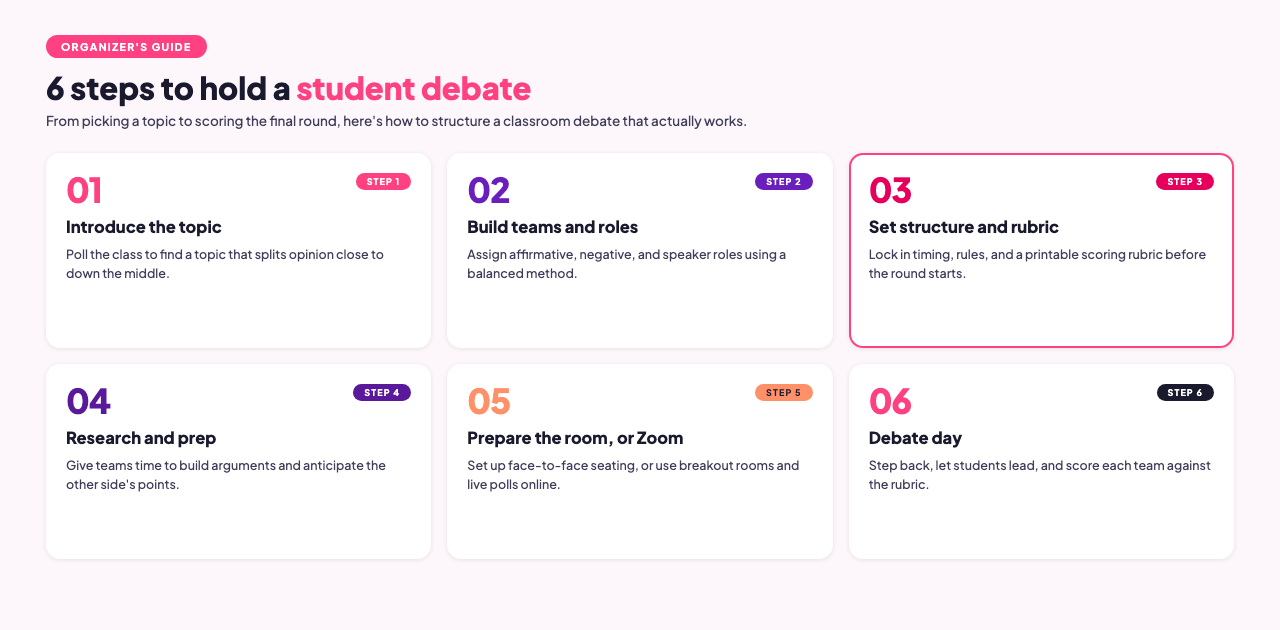
Шаг 2: сформировать сбалансированные команды и распределить роли.
Выбрав тему, сформируйте две стороны: утвердительный (соглашается с утверждением или выступает за изменение существующего положения вещей) и отрицательный (не согласен или выступает за сохранение существующего положения вещей). Если ваш класс большой или многие ученики занимают среднюю позицию, добавьте середина Команда, которая заимствует аргументы у обеих сторон и выступает за компромисс. Не наказывайте тех, кто колеблется: истинная нерешительность — это законная отправная точка, хотя она и не исключает участия.
Способ распределения студентов по сторонам имеет такое же значение, как и тема. Хорошо работают три метода:
Случайный розыгрыш. Можно выбрать имена из шляпы или использовать генератор случайных команд. Быстро и честно, хотя иногда ваши самые сильные спикеры могут оказаться в одной команде.
Сбалансированный по уровню мастерства. Распределите более мощные и более тихие динамики равномерно по обеим сторонам, исходя из того, что вы уже знаете об этом занятии. Это позволит добиться более близких результатов, но потребует больше времени на подготовку.
Выбор темы. Пусть студенты выберут сторону, соответствующую их реальному мнению. Это обеспечит наибольшую заинтересованность, но может привести к формированию несбалансированных команд, поэтому ограничьте количество участников в команде и используйте подбрасывание монеты, если их окажется больше.
Для распределения ролей ораторов используется структура, заимствованная из британских парламентских дебатов: в каждую команду назначается 4 оратора, каждый со своей конкретной задачей (вступление, опровержение, второе опровержение, заключение). В больших группах по два студента распределяются по парам на каждую роль. Остальные студенты в группе выполняют функции ораторов. Судьи, оценивая каждую команду по критериям из шага 3.
Шаг 3: определить структуру, правила и критерии оценки.
Перед началом дебатов необходимо четко определить три вещи: структуру, правила и систему оценки.
Структура. Дискуссия должна быть структурированной, чтобы никто не перебивал друг друга, и чтобы у студентов было достаточно времени для того, чтобы изложить свою точку зрения. Типичная структура, начиная с команды, выступающей за утверждение:
| Segment | Спикер | Дата |
|---|---|---|
| Вступительная речь | Первый спикер, каждая команда | 5 минут |
| Подготовьте опровержения | Обе команды | 3 минут |
| опровержение | 2-й спикер, каждая команда | 3 минут |
| Второе опровержение | 3-й спикер, каждая команда | 3 минут |
| Подготовка к закрытию | Обе команды | 5 минут |
| Окончательное опровержение и заключительное заявление | 4-й спикер, каждая команда | 5 минут |
Проверьте конструкцию, затем закрепите её, когда она заработает, и следите за временем, чтобы никто не прибежал.
Правила. Четкие правила уравнивают шансы как активных, так и тихих учеников: придерживайтесь структуры, оставайтесь в рамках темы, не используйте нецензурную лексику, не допускайте личных нападок.
Критерии оценки. Цель классных дебатов не в том, чтобы «победить», но естественная конкурентоспособность учеников обычно выигрывает от системы баллов. Судьи могут использовать простую 5-балльную шкалу для каждого критерия, а затем суммировать баллы каждой команды:
| Критерии | 1 (требует доработки) | 3 (твердое) | 5 (отлично) |
|---|---|---|---|
| Ясность аргументации | Неясно или трудно для понимания | Понятно, но не всегда организовано. | Четкий, логично структурированный, легко воспринимаемый. |
| Использование доказательств | Практически полное отсутствие поддержки | Некоторые утверждения подкреплены фактами. | Последовательно подкреплено достоверными и конкретными доказательствами. |
| Качество опровержения | Игнорирует доводы противоположной стороны. | Отвечает на некоторые противоположные точки зрения. | Непосредственно отвечает на самые сильные противоположные точки зрения. |
| Доставка и презентация | Читается монотонно, плохо расслышать. | В основном уверен в себе, но есть некоторая нерешительность. | Уверенный тон, хороший темп, непрерывный зрительный контакт. |
| Работа в команде и управление временем | Команда противоречит сама себе или затягивает процесс. | В основном скоординировано и выполнено в срок. | Развивают идеи друг друга, эффективно используют время. |
Это 25 баллов с каждой команды. Распечатайте таблицу, раздайте по экземпляру каждому судье и попросите их подсчитать итоги в конце. Судейство никогда не сводится к чисто числовым показателям, поэтому попросите судей написать краткое обоснование в одну строку рядом с каждым баллом.
В классе английского как второго языка следует скорректировать критерии оценки таким образом, чтобы поощрять расширение словарного запаса и улучшение структуры предложений наряду с содержанием материала, а не наказывать за акцент или невнятность. Подробнее об этом ниже.
Шаг 4: дайте студентам время на проведение исследования.
Как только все поймут тему и правила, пора готовиться. Установите лимит времени на исследование, укажите студентам несколько надежных источников и следите за тем, чтобы они оставались в рамках темы. Они должны самостоятельно изучать свои аргументы и предвидеть позицию противоположной стороны, чтобы у них были готовы контраргументы, а не они не могли растеряться, когда им будут оспорены их доводы.
Шаг 5: подготовьте помещение или проведите мероприятие в Zoom.
Пока команды дорабатывают свои аргументы, подготовьте пространство. Расставьте столы и стулья лицом друг к другу через всю комнату, как это делается на профессиональных дебатах, когда выступающие стоят перед своей командой.
Проведение в виртуальном режиме. Дискуссию можно легко перенести в Zoom или любую другую видеоплатформу, внеся несколько корректировок:
Комнаты для работы в группах в целях подготовки команд. Отправьте каждую команду в отдельную комнату для проведения исследований и опровержений, а затем соберите всех обратно для самих дебатов.
Общий, видимый таймер. Поделитесь своим экраном с помощью экранного секундомера, чтобы каждый выступающий мог видеть оставшееся время, не отвлекаясь на вас.
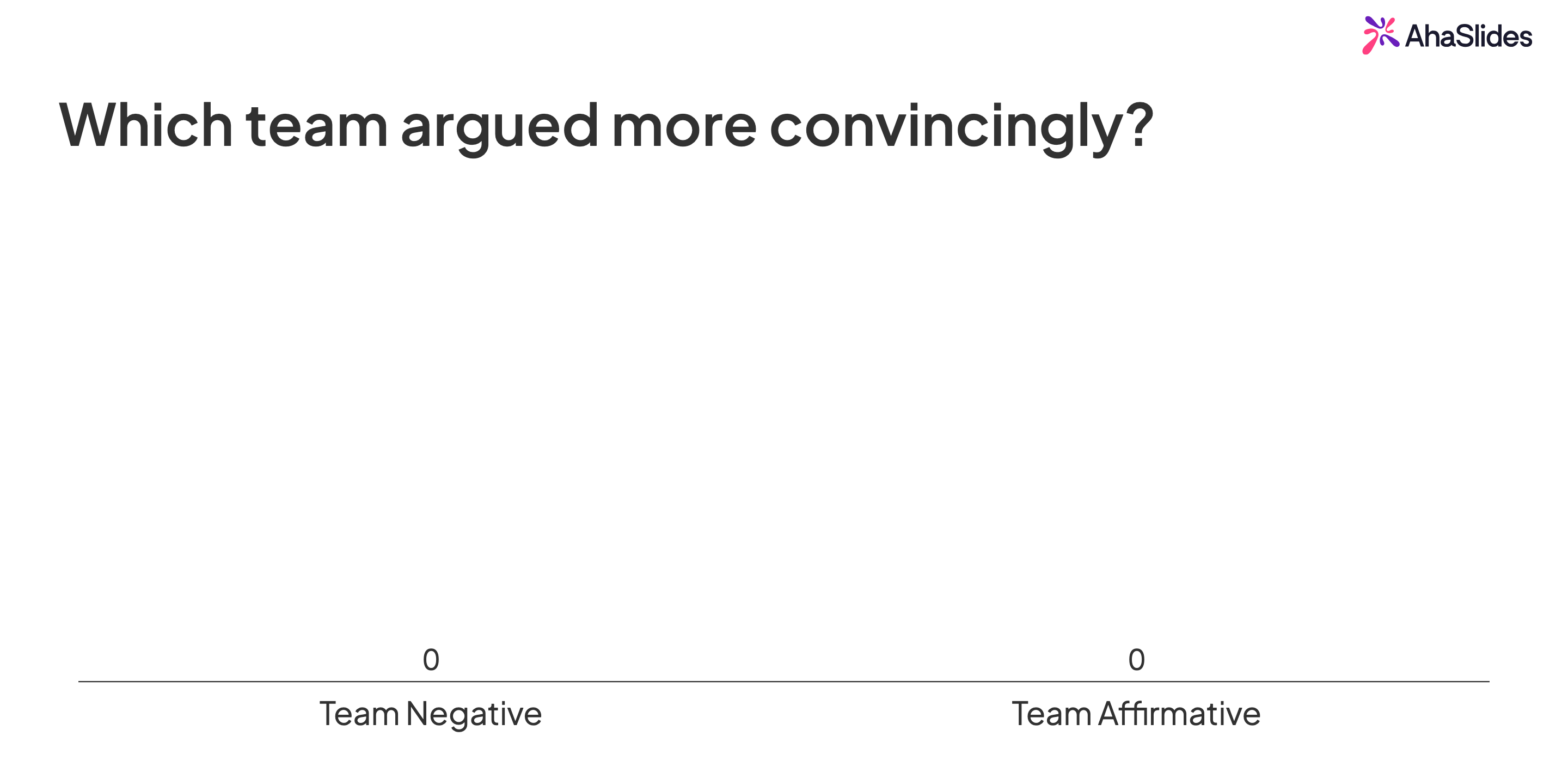
Виртуальное голосование аудитории. Проведите онлайн-опрос, чтобы класс проголосовал за то, какая команда аргументировала свою позицию убедительнее, до и после выступления. Это онлайн-аналог голосования аудитории в стиле Оксфордского университета, который поможет заинтересовать студентов, не умеющих говорить.
Идентичность команды. Пусть каждая команда выберет цвета для фона в Zoom или придумает талисман для отображения на экране — небольшая деталь, которая поможет удаленным командам почувствовать себя единым целым.
Шаг 6: день дебатов
Начнём. Сейчас настало время для учеников проявить себя, поэтому вмешивайтесь как можно реже, лишь для поддержания порядка или напоминания классу о структуре и системе оценивания. Оценивайте каждую команду по критериям по ходу дебатов, затем суммируйте и усредняйте оценки судей, чтобы получить окончательный результат для каждой команды. Более глубокий анализ оставьте на следующий урок, когда у учеников будет время отдохнуть.
Адаптация дискуссий для преподавания английского как второго языка и в многоязычных классах.
Дебаты на втором языке — дело непростое, поэтому для поддержания их продуктивности достаточно внести несколько корректировок:
Дополнительное время на подготовку. Учащимся, изучающим английский как второй язык, или всему классу, если большинство из них владеет несколькими языками, следует предоставить больше времени на исследования и написание черновиков, чем потребовалось бы группе носителей языка.
Начало предложения. Предоставьте готовые фразы, на которые можно опереться в стрессовых ситуациях: «Я согласен, потому что...», «Одно из доказательств — это...», «Я хотел бы оспорить этот тезис, потому что...». Эти фразы помогут в аргументации, даже когда словарный запас еще только формируется.
Предварительно изученная лексика. Заранее обучите учащихся нескольким ключевым словам, которые им понадобятся по данной теме, и позвольте им держать на своих столах карточку со словарем терминов.
Скорректированные критерии оценки. При оценке следует отдавать предпочтение содержанию и развитию структуры предложений, а не акценту или беглости речи. Использование родного языка следует рассматривать как преимущество во время подготовки, а не как фактор, снижающий оценку во время дебатов.
Резервная копия в письменном виде. Предложите студентам принести с собой краткий письменный план, чтобы они могли к нему обращаться, это облегчит задачу удержания аргумента в рабочей памяти на втором языке.

Ещё несколько форматов, которые стоит попробовать.
Как только будут освоены основы: ролевая дискуссия предлагает студентам аргументировать свою точку зрения, представляя вымышленную или историческую личность; импровизированные дебаты Не требует предварительной подготовки; дебаты в ратуше Предполагает, что студенты должны повернуться лицом к классу и отвечать на вопросы одноклассников напрямую.
Еще идеи: 13 онлайн-дебатов, 12 идей взаимодействия со студентами, и перевернутый класс подхода.
30 тем для обсуждения в классе
Проведите голосование среди своих учеников, чтобы определить, какой из этих вариантов лучше выбрать.
Школьные темы
Стоит ли создавать гибридную модель обучения, сочетающую дистанционное и очное обучение?
Следует ли запретить школьную форму?
Запретить домашнее задание?
Стоит ли нам попробовать перевернутую модель обучения в классе?
Следует ли нам больше учиться на улице?
Следует ли отменить экзамены и контрольные работы в пользу курсовых работ?
Все должны поступать в университет?
Следует ли снизить плату за обучение в университете?
Должны ли школы предлагать курс по инвестированию?
Должен ли киберспорт быть частью уроки физкультуры?
Темы, касающиеся окружающей среды
Следует ли запретить зоопарки?
Должно ли быть законным содержать экзотических кошек в качестве домашних животных?
Стоит ли строить больше атомных электростанций?
Стоит ли нам пытаться снизить рождаемость во всем мире?
Следует ли запретить весь одноразовый пластик?
Стоит ли превращать частные газоны в наделы и места обитания диких животных?
Стоит ли нам создать международное правительство по защите окружающей среды?
Следует ли заставлять людей менять свои привычки для борьбы с изменением климата?
Следует ли нам препятствовать развитию быстрой моды?
Должны ли мы запретить внутренние рейсы в небольших странах с хорошими системами поездов и автобусов?
Темы общества
Должны ли все быть вегетарианцами или веганами?
Следует ли ограничивать время игры в видеоигры?
Следует ли ограничивать время, проводимое в социальных сетях?
Должны ли мы сделать все ванные комнаты нейтральными с гендерной точки зрения?
Стоит ли увеличивать стандартный период декретного отпуска?
Стоит ли нам продолжать разработку ИИ, способного выполнять все задачи?
Должен ли у нас быть универсальный базовый доход?
Должны ли тюрьмы использоваться для наказания или для реабилитации?
Следует ли нам принять систему социального кредита?
Следует ли запрещать рекламу, использующую наши персональные данные?
Реальный пример, из которого можно поучиться.
Один из лучших примеров студенческих дебатов на видео можно найти в следующем: Интеллект: Школьные дебатыЭто передача на корейском телеканале Arirang. Она охватывает практически все аспекты хорошо организованных студенческих дебатов, которые преподаватель мог бы мечтать увидеть в своем классе.
Участники шоу — опытные профессионалы, многие из них красноречиво ведут дебаты на английском языке, который для них как второй, поэтому не стоит завышать свои ожидания. Искреннее участие вашего класса — это уже само по себе хороший старт.
Часто задаваемые вопросы
Сколько существует типов студенческих дебатов?
Существует несколько форматов дебатов, включая оксфордский, Линкольн-Дугласовский, британский парламентский, публичный форум и импровизированные дебаты, каждый со своим форматом и правилами, как указано выше.
Почему студенты должны дискутировать?
Это побуждает их анализировать проблемы с разных точек зрения, оценивать доказательства и строить логические аргументы; исследования в этой области приводят к измеримым улучшениям в результатах тестов и поступлении в колледж.
Как я могу помочь студентам провести исследование по назначенной им должности?
Направляйте их к надежным источникам, таким как авторитетные новостные агентства, научные журналы, а также правительственные или некоммерческие данные, и обучайте основам цитирования и проверки фактов.
Готовы запустить одно из этих мероприятий вживую? Попытка AhaSlides бесплатно Проведите опрос среди учеников по определенной теме, организуйте голосование в режиме реального времени за команду-победителя и поставьте учеников в центр урока.