



PowerPoint can show a Q&A slide, but it can't collect questions on its own. For a live PowerPoint Q&A, add a Q&A slide with the free AhaSlides add-in: people scan a QR code, type questions on their phones (anonymously if you allow it) and upvote the ones they want answered, all inside your deck.
That's the short version. Below you'll find the PowerPoint-only way first, where it stops working with a live audience, and then the live way, step by step.
Why a Q&A slide often gets silence
You finish the talk, put up "Any questions?" and wait. Two people ask something, usually the most confident ones, and everyone else packs up. The questions were there. People just didn't want to raise a hand in front of colleagues, or they thought of their question 10 minutes ago and let it go.
The best question in a session often comes from the person who hates to raise their hand. A Q&A that lets people type, ask anonymously and vote gives that question somewhere to go.
The PowerPoint-only way: make a Q&A slide
If you only need a slide that invites questions, PowerPoint does this well.
- Añade la diapositiva. En la Inicio pestaña, clic nueva diapositiva y elige el Sólo titulo or Encabezado de sección diseño.
- Write a real prompt. Instead of "Any questions?", try something people can answer, such as "What would you like me to explain again?" or "What's one thing you'd change about this plan?".
- Dale espacio Keep the slide clean: the prompt, your name and a way to reach you after the session.
- Collect written questions (optional). With a Microsoft 365 work or school account, you can add a Microsoft Forms form to a slide: in the desktop app, open recuadro, luego Forms, and create or pick a form. In PowerPoint for the web, the Forms add-in is under Inicio, luego Add-ins. People open the form link to send a question. You can also share a Forms link in the Teams chat.
On a Mac, the steps are the same: Inicio , nueva diapositiva, then choose a layout. The Forms option depends on your Microsoft 365 account and PowerPoint version, so check the recuadro Tabulador primero.
Dónde se detiene para el público en vivo
A PowerPoint slide can ask for questions, but it can't do the next part:
- No questions from phones on screen. People can't send a question that appears on your slide as they type it.
- No hay votación. You can't see which questions most people want answered, so you guess.
- No easy anonymity. Hands, microphones and chat messages all come with a name attached.
- No moderation. A Forms list or chat thread shows everything, off-topic messages included, and lives outside your deck.
Esa es la brecha AhaSlides add-in fills.
The live way: a Q&A slide with the AhaSlides complemento
AhaSlides is an all-in-one engagement platform for teams and classrooms. For a Q&A, that means a question box on everyone's phone: people ask without a name, vote for the best questions and the list builds on your slide.
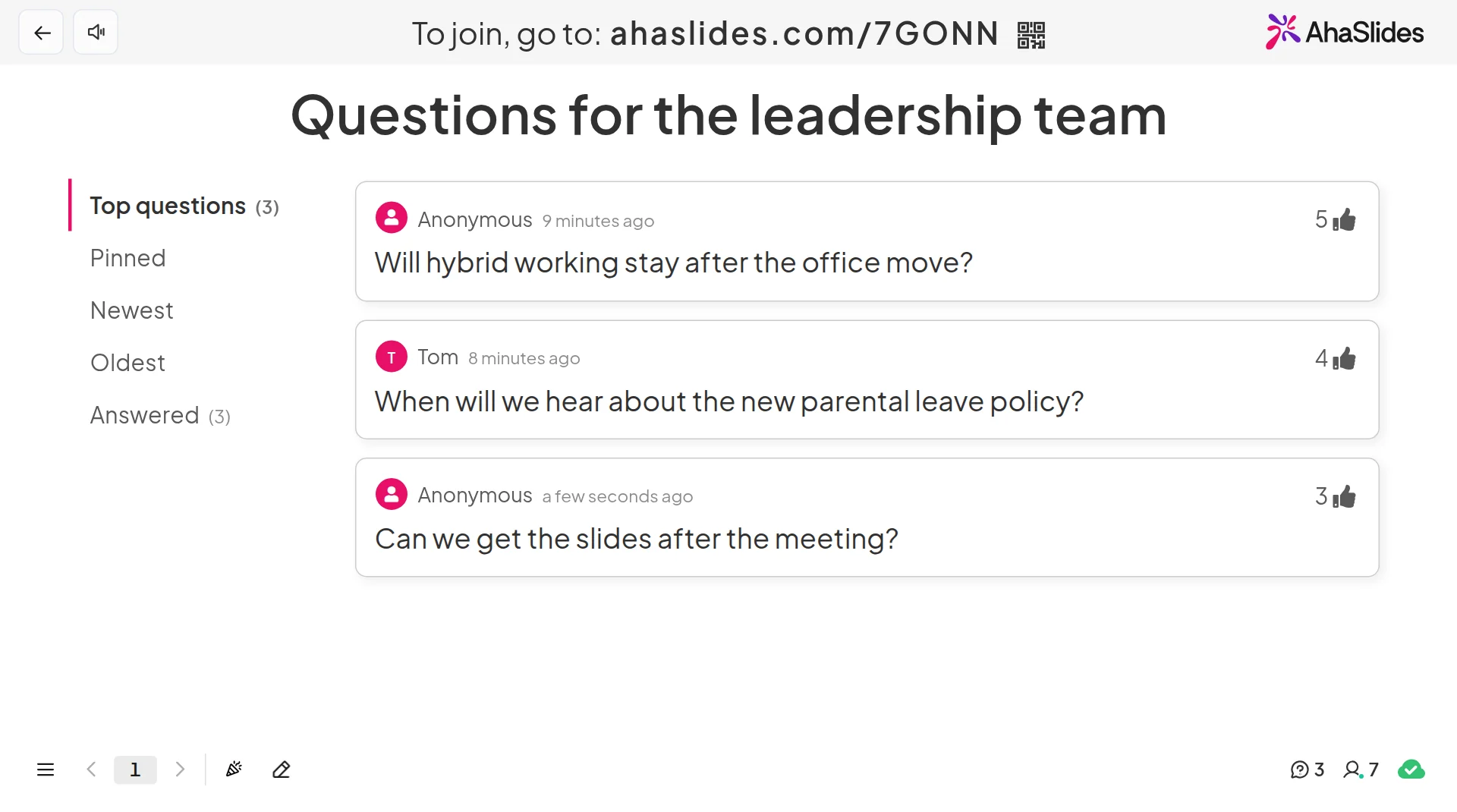
Dos maneras rápidas de empezar:
- Sube tu mazo. Sube tu archivo de PowerPoint a AhaSlides y dejar que la IA añada encuestas y preguntas de cuestionario a través de ella, de modo que se convierta en una sesión interactiva sin tener que empezar de nuevo (Creador de PowerPoint con IA).
- O bien, siga presentando en PowerPoint. Añade el gratis AhaSlides complemento and put a Q&A slide where you want questions. It takes three steps, below.
Step 1: Make the Q&A slide and choose its settings
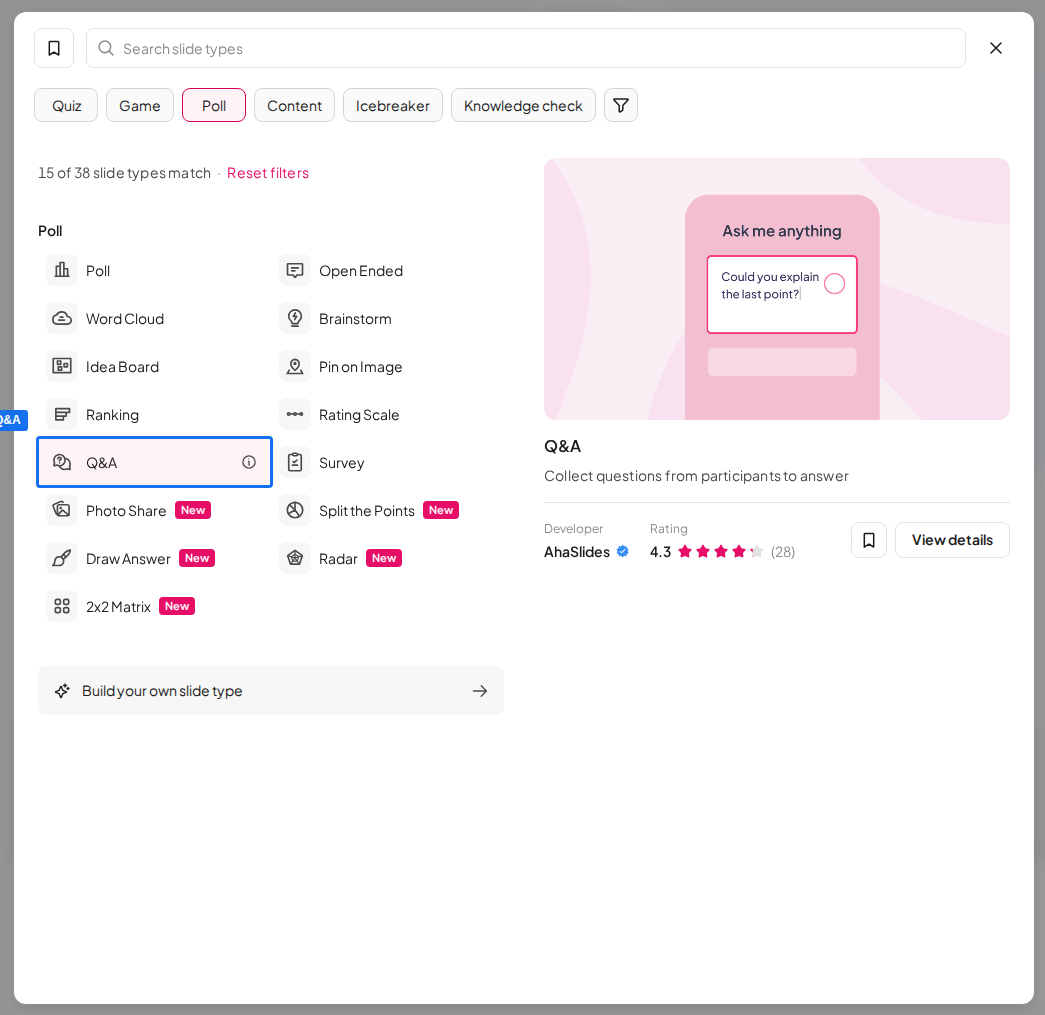
Registrarse en AhaSlides, open a presentation, click Nueva diapositiva y recoger Q&A. Type a heading that invites questions, for example "What would you like to ask the leadership team?".
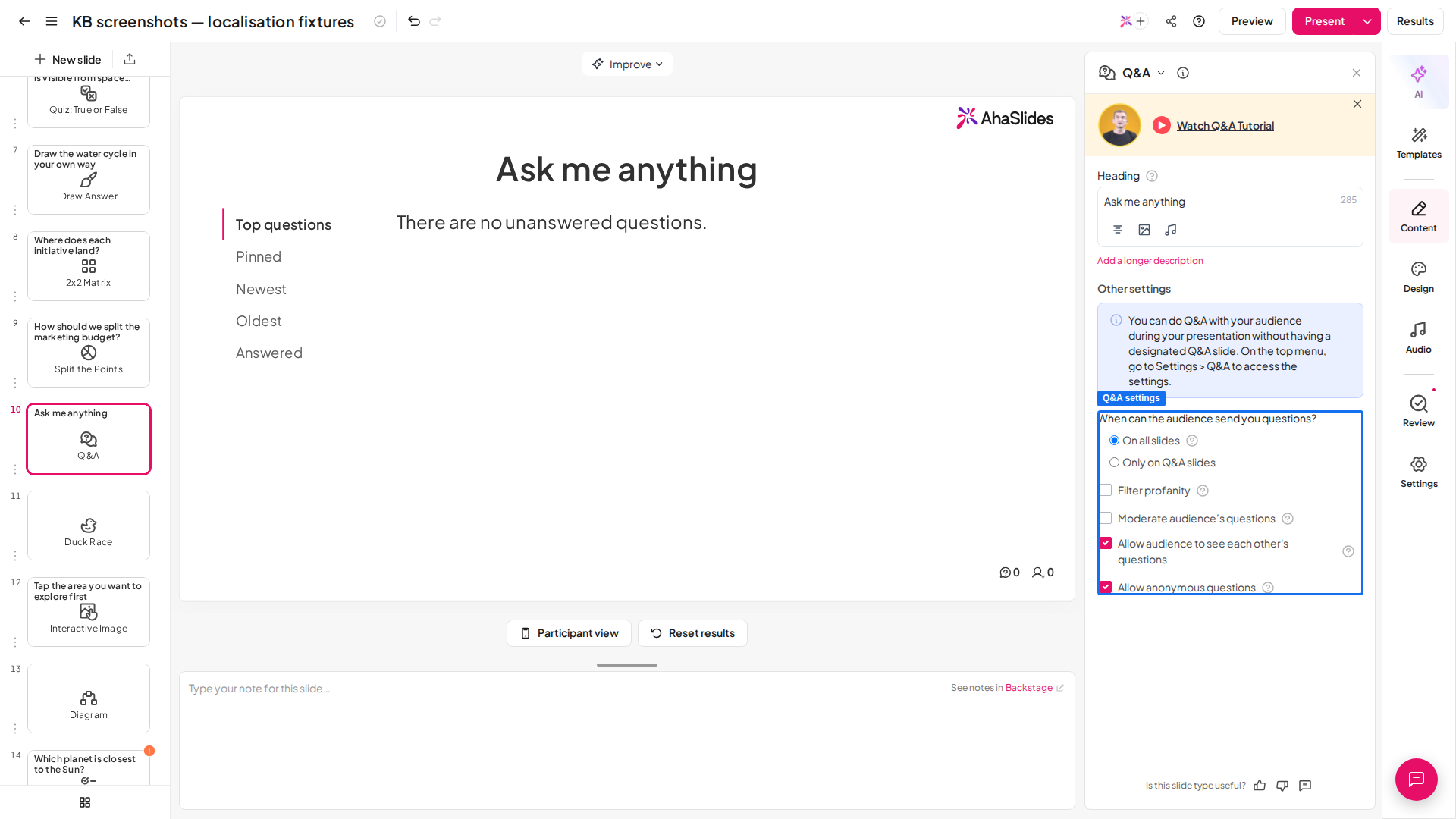
Then choose how it works. In the slide's Contenido panel, under the Q&A settings, choose how the Q&A should work:
- Allow anonymous questions. The name field becomes optional, so people can ask without saying who they are.
- Allow audience to see each other's questions. Everyone sees the list on their phone and can upvote.
- Moderate audience's questions. Each question waits as Pending until you approve it. Moderation isn't on every plan.
- Filter profanity. Blocks questions with offensive language before they show.
To take questions throughout the talk, not only on the Q&A slide, open Configuración, busca When can the audience send you questions? y recoger On all slides. This option isn't on every plan either.
Step 2: Add the slide to PowerPoint
En PowerPoint, en el Inicio pestaña, clic Add-ins, luego Más complementos. Buscar AhaSlides y hacer clic en Agregar En PowerPoint para la web, el mismo botón está en el recuadro tab. On older Mac builds, look for recuadro, luego Obtener complementos.
Inicia sesión, haz clic Seleccionar presentación next to your deck, tick the Q&A slide and click Agregar diapositivas. On the web you add one slide at a time with Agregar diapositiva. Stretch the add-in window to fill the PowerPoint slide.
Step 3: Present and answer
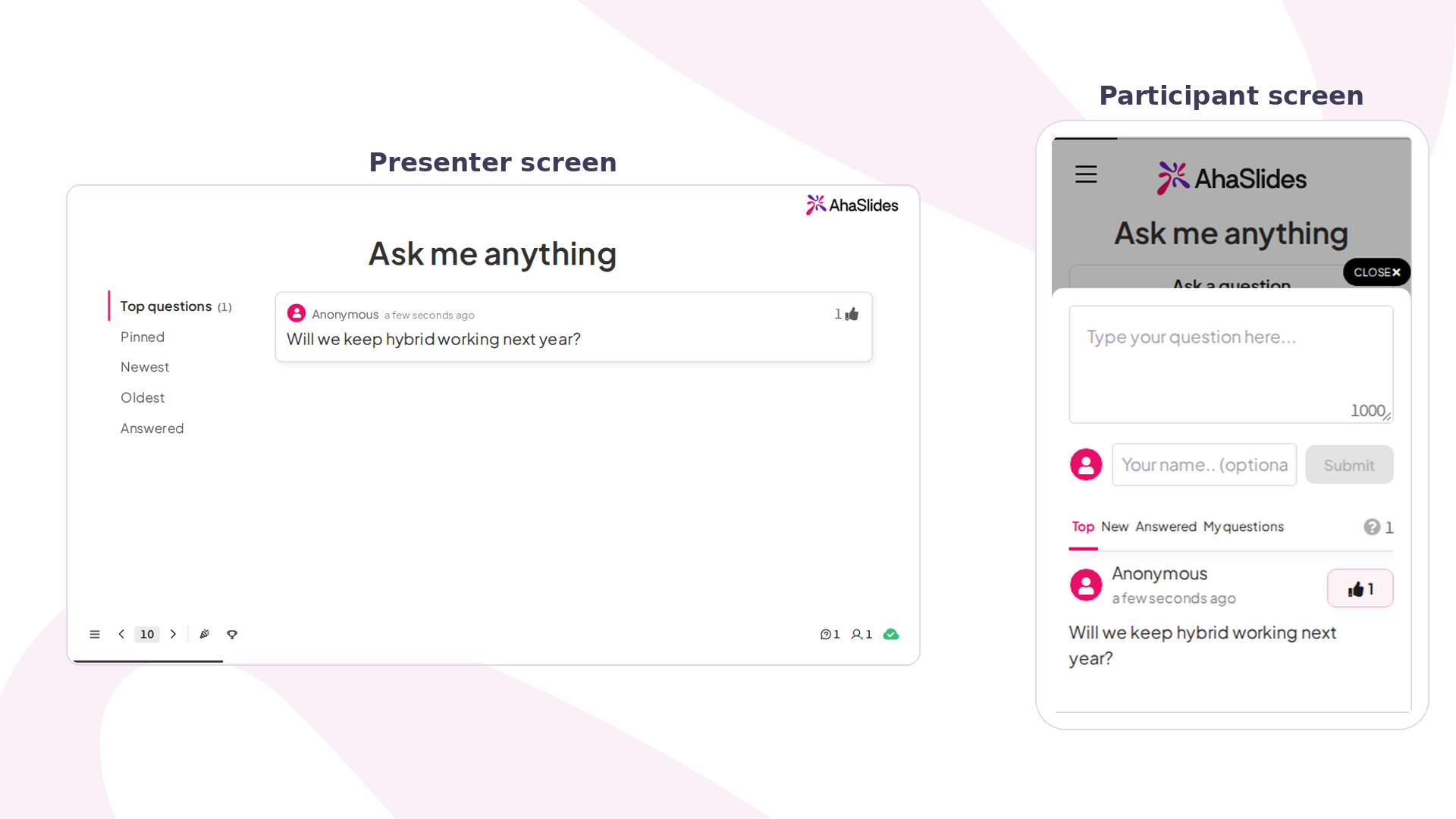
Start your slideshow. When you reach the Q&A slide, press Q to show the join QR code and link. People scan it, tap Pregúntanos and type. Each question can be up to 1,000 characters long.
Questions sort by arriba by default, so the most upvoted ones sit first. Click a question and choose Respuesta to move it to the Answered list, or Pin one to keep it at the top. If a colleague is moderating, they can approve questions from their own device through the Control Remoto link in Backstage.
Comience con una plantilla
The Town Hall Live template includes a Q&A slide for questions to the leadership team. Copy it, change the questions and add the slides to your deck with the add-in.
6 ideas for a live Q&A in PowerPoint
- All-hands and town halls. Turn on anonymous questions and moderation, and let a colleague approve questions while the leader answers the top-voted ones.
- Sesiones de entrenamiento. Put the Q&A on all slides so learners ask the moment something isn't clear, then clear the queue at each break.
- Lectures and classes. Students who'd never put a hand up will type a question. Keep it anonymous, then answer the top three before you move on.
- Seminarios web Upvotes show you which questions most people care about, so a 10-minute Q&A covers what matters.
- Project kick-offs. Ask "What worries you about this plan?" and leave the slide up while the team adds and votes.
- Before the talk. Open the Q&A slide while people arrive and ask what they hope to learn. Use the top questions to steer your talk.
For more ways to involve people, read our guide to audience response systems for PowerPointo comparar el Las mejores aplicaciones de preguntas y respuestas para presentaciones.
Preguntas Frecuentes
How do you create a Q&A in PowerPoint?
Add a slide with a clear prompt (Home, New Slide), then add a live Q&A slide with an add-in. PowerPoint on its own can show a "questions" slide but can't collect questions; the AhaSlides add-in lets people send and upvote questions from their phones while you present.
Can you give an example of a Q&A slide in PowerPoint?
Yes: a heading with a specific prompt, which works better than "Any questions?". For example: "What would you like me to explain again?", "What's one risk we haven't covered?" or "What would you like to ask the leadership team?". Add how people can reach you after the session.
¿Cómo Mentimeter work with PowerPoint?
Through its own add-in. Mentimeter's PowerPoint add-in lets you sign in and show a Mentimeter presentation inside your deck (Mentimeter help centre, checked November 2026). AhaSlides works the same way with its own add-in, and its Q&A slide includes anonymous questions and upvotes.
Haz que este mazo sea interactivo.
Las encuestas, los cuestionarios y las preguntas y respuestas convierten una charla en algo en lo que la gente participa. Nuestra guía sobre Cómo crear una presentación interactiva de PowerPoint Te guía paso a paso, y la presentación inicial te proporciona las diapositivas listas para añadir.
Want more ways to bring people in? See how to add a QR code to PowerPoint so people join from their phones, try the Slido complemento para PowerPoint, or find out more about anonymous Q&A on AhaSlides.
Take questions from everyone, not only the confident few
Add a live Q&A to your next PowerPoint deck. People ask from their phones, anonymously if you like, and vote on what you answer first.