



200 válaszod van vissza a kérdőívre, az adatok tisztának tűnnek, és még mindig nem tudod megválaszolni a kiinduló kérdést. A legtöbb esetben a formátum volt rossz eleve, nem maguk a kérdések. A megfelelő kérdőívtípus kiválasztása a kutatásban az a döntés, amely meghatározza, hogy az adataid használhatók-e, mielőtt egyetlen kérdést is felírnál.
Ez az útmutató a kutatásban használt öt fő kérdőívtípust ismerteti, hogy mikor melyik működik a legjobban, és egy gyakorlati keretet a köztük való választáshoz.
Mi számít kérdőívnek?
A kérdőív írásbeli kérdések összessége, amelyek segítségével adatokat gyűjtenek a válaszadóktól. A kifejezést gyakran felcserélhetően használják a „felmérés” kifejezéssel, bár technikailag a kérdőív maga az eszköz (a kérdések listája), míg a felmérés az adatgyűjtés tágabb folyamata.
A kérdőívek kitölthetők papíron, online vagy szóban interjú formájában. Az online kérdőívek a szervezeti kutatások domináns formátumává váltak: olcsóbbak, nagyobb mintákat érnek el, és olyan logikai elágazást tesznek lehetővé, amelyet a papír nem tud támogatni [1]. A kompromisszum az alacsonyabb válaszadási arány, amit érdemes figyelembe venni a minta méretének tervezésekor.
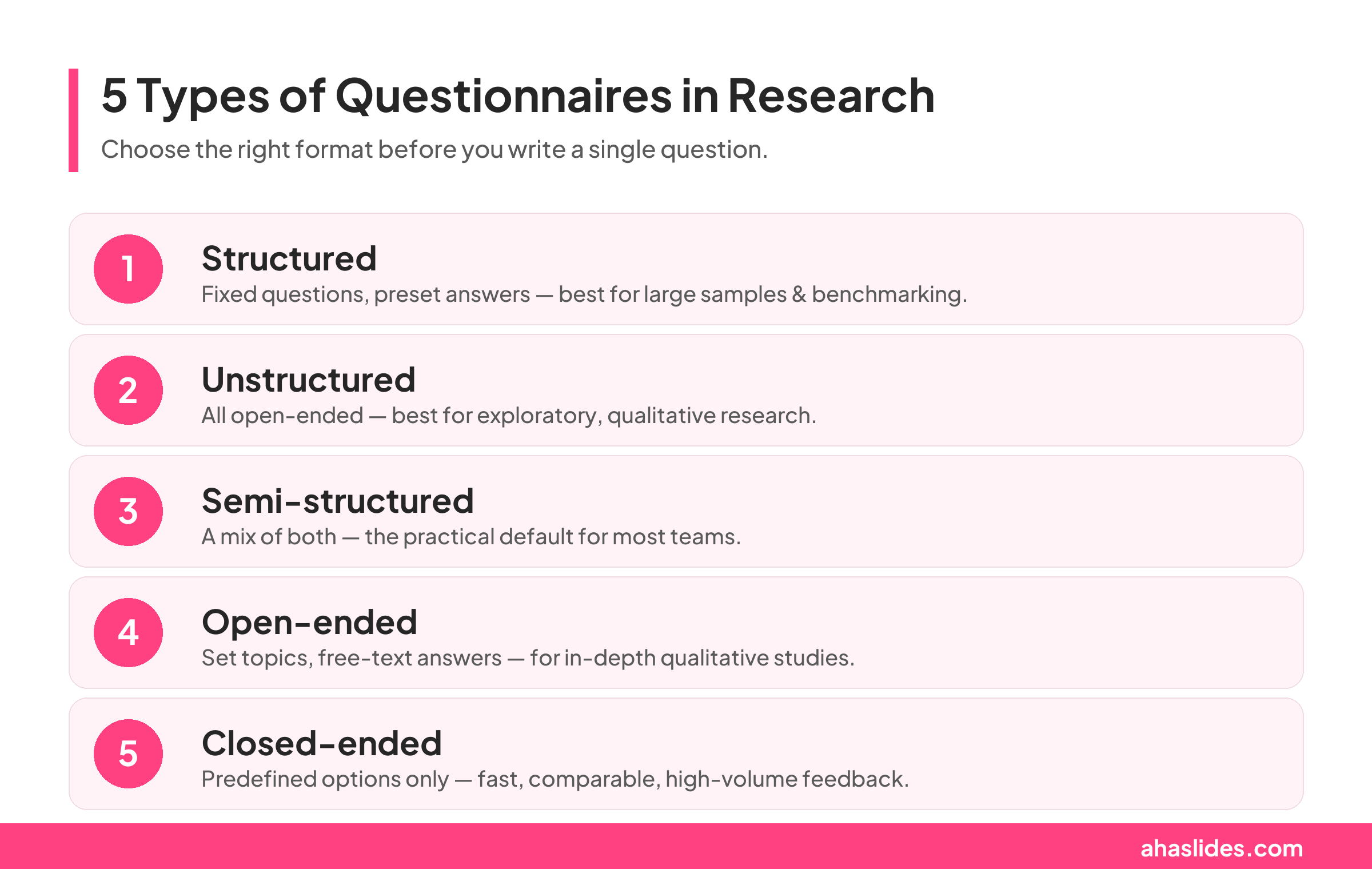
A 5 típus
1. Strukturált kérdőívek
A strukturált kérdőív fix kérdéseket használ előre meghatározott válaszlehetőségekkel. A válaszadók feleletválasztós válaszok közül választhatnak, minősítési skálák, Likert mérlegek, vagy igen/nem lehetőségek közül választhat. Nincsenek szabad szöveges válaszok.
A legjobb: Nagy minták, benchmarking, időbeli változások követése, csoportok összehasonlítása.
Mivel minden válaszadó ugyanazokat a kérdéseket ugyanabban a formátumban válaszolja meg, a válaszok könnyen összesíthetők és statisztikailag elemezhetők. Ez teszi a strukturált kérdőíveket az alapértelmezett választássá a munkavállalói elkötelezettséget mérő felmérésekhez, a képzés utáni értékelésekhez és más hasonló eszközökhöz. ügyfél-elégedettség nyomon követése.
Vigyázz: A strukturált formátumok gyakran nem mutatják meg a számok mögött rejlő „miértet”. Ha a csapatod 40%-a gyenge kommunikációt értékel, a kérdőív azt jelzi, hogy probléma van. Nem árulja el, hogy mi okozza.
Példa használati esetre: Egy HR-csapat negyedévente 10 strukturált, 5 pontos skálán értékelt kérdéssel végzi az elköteleződés felmérését. Négy negyedéven keresztül követik nyomon az egyes részlegek pontszámait, hogy azonosítsák a trendeket, és megjelöljék azokat a csapatokat, amelyekre figyelmet kell fordítani az éves értékelési ciklus előtt.
2. Strukturálatlan kérdőívek
A strukturálatlan kérdőív teljes mértékben nyitott kérdésekre épül. Nincsenek előre meghatározott válaszlehetőségek: a válaszadók szabadon írják, gépelik vagy kimondják válaszaikat.
A legjobb: Feltáró kutatás, az árnyalatok megértése, a nyelv megragadása és a váratlan keretezés.
A strukturálatlan kérdőívek gyakoriak a kvalitatív kutatásokban, a termékfelfedezés korai szakaszában, és minden olyan helyzetben, ahol valóban nem tudjuk, hogy milyenek lesznek a fontos válaszok. Hajlamosak váratlan témákat és őszinte leírásokat felszínre hozni, amelyeket a strukturált formátumok kiszűrnének.
Vigyázz: Az elemzés lényegesen több időt vesz igénybe. Nem lehet pivot táblát futtatni 300 írott bekezdésen. Ez a formátum nem praktikus nagy minták esetén kvalitatív kódolóeszközök vagy jelentős elemzői idő nélkül.
Példa használati esetre: Egy tanulási és fejlesztő csapat egy újat tervez vezetői programA tanterv megírása előtt egy strukturálatlan kérdőívet küldenek 20 vezetőnek, amelyben az elmúlt évben tapasztalt legnehezebb vezetői kihívásokról kérdezik őket. A válaszok olyan módon alakítják a program fókuszterületeit, ahogyan azt egy pipálható kérdőív soha nem tudná.
3. Félig strukturált kérdőívek
A félig strukturált kérdőívek mindkét formátumot ötvözik. Egy sor strukturált alapkérdés összehasonlítható adatokat biztosít az összes válaszadóra vonatkozóan. Kevesebb nyitott kérdés lehetővé teszi a válaszadók számára, hogy bővebben kifejtsék a számukra fontos dolgokat.
A legjobb: Olyan helyzetek, ahol kvantitatív alapadatokra és kvalitatív mélységre is szükség van, ami gyakori a szervezeti kutatásokban, a programértékelésekben és a csapatok retrospektív elemzéseiben.
Ez a leggyakoribb formátum professzionális környezetben, mivel egyensúlyt teremt a szigorúság és a rugalmasság között. A strukturált rész olyan adatokat generál, amelyekről jelentést készíthet; a nyitott rész pedig olyan elemzéseket generál, amelyek alapján cselekedhet.
Vigyázz: A hosszabb kérdőívek magasabb lemorzsolódási arányt eredményeznek. Átlagosan a 12-nél több kérdést tartalmazó vagy 5 percnél tovább kitölthető kérdőívek kitöltési aránya 17%-kal csökken [2]. A nyitott kérdések legyenek fókuszáltak, és legfeljebb kettőre vagy háromra korlátozzák őket.
Példa használati esetre: Egy tréner egy kétnapos workshopot tart, amelyet egy félig strukturált értékelés követ. Az első hét kérdés értékelő skálákat használ az elégedettség, a relevancia és a magabiztosság mérésére. Az utolsó kettő a következő kérdéseket kérdezi: „Mi volt a leghasznosabb dolog, amit elhozott?” és „Mi tette volna hatékonyabbá ezt a képzést az Ön számára?”. Az értékelések egy jelentésbe kerülnek; az írásos válaszok alakítják a következő iterációt.
4. Nyílt végű kérdőívek
Nyílt végű kérdőívek hasonlóak a strukturálatlanokhoz, de a kifejezést konkrétabban olyan kérdőívek leírására használják, amelyek rendelkeznek valamilyen struktúrával (meghatározott témák, kérdéssorrend), miközben minden kérdésre szabad szöveges válaszokat igényelnek. A teljesen strukturálatlan kérdőívektől való különbség apró: általában egyértelmű kutatási tervük van, és maguk a kérdések gondosan megtervezettek, csak a válaszok nem kötöttek.
A legjobb: Mélyreható kvalitatív tanulmányok, igényfelmérések és kutatások, amelyekben a válaszadó saját nyelvezete és megfogalmazása is részét képezi a tanulmányozott anyagnak.
A nyílt végű kérdőívek standardnak számítanak az akadémiai társadalomkutatásban és a szervezeti igényfelmérésben. Gyakoriak a 360 fokos visszajelzési eszközökben is, ahol az írásos kommentárok gazdagsága gyakran fontosabb, mint egy numerikus pontszám.
Vigyázz: A válaszadási torzítás itt nagyobb, mint a strukturált formátumokban. Azok az emberek, akik pozitívan (vagy negatívan) gondolkodnak egy témáról, nagyobb valószínűséggel írnak hosszasan. Legyen óvatos, amikor a hosszú válaszokat érvényesebbnek tekinti a rövideknél.
5. Zártvégű kérdőívek
Zárt kérdőívek minden választ előre meghatározott lehetőségekre kell korlátozni: igen/nem, feleletválasztós, értékelő skálák vagy rangsorolt listák. Ez lényegében egy strukturált kérdőív kérdésformátumának megfelelője, és ez a megkülönböztetés akkor hasznos, amikor a kutatók szembe akarják állítani a „zárt végű” és a nyitott végű válaszokat egy vegyes eszközön belül.
A legjobb: Gyors visszajelzésgyűjtés, nagy mennyiségű adat, és minden olyan mérés, amelynek következetesnek és összehasonlíthatónak kell lennie a válaszadók vagy az időszakok között.
A Net Promoter Score (NPS), amelyet Fred Reichheld vezetett be egy 2003-as Harvard Business Review cikkben [3], egy klasszikus, zárt végű mérőszám: egy kérdés, egy 11 fokú skála, tiszta numerikus kimenet. Egyszerűségének köszönhetően az iparágakban standard ügyfél-hűségmérővé vált.
Vigyázz: A zárt kérdések a válaszadókat a te kategóriáidba kényszerítik. Ha egyik válaszlehetőség sem illik teljesen a valóságukhoz, akkor vagy kihagyják a kérdést, vagy a legkevésbé rossz választ választják, és mindkét eredmény rontja az adatok minőségét. Adjon meg egy „egyéb” választ, ahol szükséges.
Hogyan válasszuk ki
A megfelelő típus három dologtól függ: a kutatási céltól, a minta méretétől és attól, hogy mit fogsz kezdeni az eredményekkel.
| Kutatási cél | Ajánlott típus |
|---|---|
| Változások nyomon követése az idő múlásával, vagy csoportok összehasonlítása | Strukturált vagy zárt végű |
| A mutatók mögött álló okok megértése | Félig strukturált |
| Fedezz fel egy új témát előzetes hipotézisek nélkül | Strukturálatlan vagy nyitott végű |
| Gyűjtse össze az alapvonalakat és a mélységet egyetlen műszerben | Félig strukturált |
| Nagy volumenű, gyors átfutási idejű visszajelzések futtatása | Zárt végű |
Egy hasznos ökölszabály: ha már ismered a mérni kívánt dimenziókat, használj strukturált vagy zárt végű formátumokat. Ha még mindig nem tudod, hogy mik is a dimenziók, használj nyílt végű vagy strukturálatlan formátumokat. Ha mindkettőre szükséged van, használj félig strukturált formátumokat.
A legtöbb szervezeti kontextusban, például képzési értékelések, elkötelezettségi felmérések és bevezető visszajelzések esetén, a félig strukturált módszer a gyakorlati alapértelmezett megoldás. Ez olyan adatokat hoz létre, amelyekről jelentést készíthet felfelé, és olyan elemzéseket, amelyek alapján cselekedhet.
A kézbesítés módja is számít

A kérdőív formátuma befolyásolja a válaszokat. Néhány fontos tudnivaló:
- Az online kérdőívek kitöltése nagyjából tízszer olcsóbb, mint a papíralapú változatoké, és kevesebb hiányzó értékkel rendelkeznek [1].
- A papíralapú felmérések gyakran magasabb nyers válaszadási arányt eredményeznek, részben azért, mert a válaszadók anonimabbnak érzékelik azokat [1].
- A rövid kérdőívek formátumtól függetlenül jobban teljesítenek, mint a hosszúak, és a kitöltési arány meredeken csökken, ha egy felmérés meghaladja a 12 kérdést vagy az 5 percet [2]
A legtöbb csapat számára az online megoldás a legértelmesebb. A költség- és sebességbeli előnyök jelentősek, és a modern felmérési eszközök támogatják a logikai elágazást (kihagyási logika, feltételes nyomon követés), amit a papíralapú felmérések nem tudnak reprodukálni.
Kérdőívek futtatása az AhaSlides segítségével
Amikor egy kérdőív egy élő munkamenet része, például egy képzés, workshop vagy egy csapat retrospektívje, a logisztika másképp működik, mint egy aszinkron e-mailes felmérés esetében.
Az AhaSlides egy többfunkciós eszköz közönségkapcsolati platform amely lehetővé teszi kérdőívtípusok (szavazások, értékelő skálák, nyitott végű kérdések és szófelhők) közvetlen beágyazását egy élő foglalkozásba. Az eredmények a résztvevők válaszai során megjelennek a képernyőn, így a foglalkozás utáni kérdőív egy közbenső beszélgetéssé alakul. A trénerek láthatják, hogyan oszlik meg a magabiztosság a csoportban a workshop közepén, és a nap vége előtt módosíthatják a második felét.
Az aszinkron módon küldött esemény utáni értékelésekhez az AhaSlides támogatja azokat az űrlapokat is, amelyeket a válaszadók a munkamenet után saját tempójukban töltenek ki.
Gyakori hibák elkerülése érdekében
Még jó szándékúak is kérdőívtervek oldalra fordulni. Ez a négy hiba, amelyek a szervezeti kutatásokban leggyakrabban előfordulnak, és hogyan lehet elkerülni őket.
Rossz típus használata a célhoz képest
A leggyakoribb hiba a strukturált kérdőív alapértelmezés szerinti használata, egyszerűen azért, mert „professzionálisabbnak” tűnik, vagy könnyebben elemezhető. A strukturált kérdőív alapértelmezés szerinti használata, mert professzionálisabbnak tűnik, olyan, mint vonalzóval mérni a hőmérsékletet: pontos műszer, rossz munka. Ha valóban nem tudod, mi okozza az elköteleződési pontszámok csökkenését, vagy miért nem sikerül egy képzési program, egy zárt végű értékelő skála nem fog választ adni. Csak megerősíti, hogy a probléma létezik. A formátumot igazítsd ahhoz a kérdéshez, amelyre valójában megpróbálsz válaszolni. Ha a cél diagnosztikus vagy feltáró jellegű, adj hozzá nyitott végű kérdéseket, még akkor is, ha azok elemzése tovább tart.
Vezető kérdések feltevése
Egy rávezető kérdés egy adott válasz felé tereli a válaszadókat. A „Mennyire volt elégedett a kiváló moderációval?” egy klasszikus példa, mivel a „kiváló” szó a kérdés megválaszolása előtt jelzi a várható választ. A rávezető kérdések felfújják a pozitív válaszokat, és megbízhatatlan adatokat eredményeznek. Ellenőrizzünk minden kérdést a túlzásba vitt nyelvhasználat szempontjából, és teszteljük egy kis kísérleti csoporttal a teljes bevezetés előtt. Ha a bírálók következetesen ugyanúgy válaszolnak a kérdésre, függetlenül a tényleges tapasztalataiktól, akkor valószínűleg rávezető kérdésről van szó.
Túl hosszú kérdőívek
A válaszok hossza az egyik legmegbízhatóbb előrejelzője a kitöltési aránynak. A kutatók néha „csak arra az esetre” adnak hozzá kérdéseket, ha később hasznosak lesznek, ami fokozatosan egy 6 kérdéses impulzuskérdőívet egy 20 kérdéses maratonná változtat. Minden kérdésnek ki kell vívnia a helyét azáltal, hogy közvetlenül kapcsolódik egy olyan döntéshez, amelyet az adatok alapján fogsz meghozni. Ha nem tudod megmondani, hogy mit fogsz másképp csinálni egy kérdésre adott válaszok alapján, akkor hagyd ki. A legtöbb munkahelyi környezetben törekedj 10 kérdésnél kevesebbre és 4 percnél rövidebb kitöltési időre.
A válaszskála konzisztenciájának elhanyagolása
Amikor egy kérdőív különböző skálaformátumokat kever, például az egyik részhez 5 pontos skálát, egy másikhoz 10 pontos skálát, egy harmadikhoz pedig 3 válaszlehetőséget, a válaszadóknak minden kérdésnél mentálisan újra kell kalibrálniuk magukat. Ez növeli a kognitív terhelést, és következetlenségeket okoz a skálák értelmezésében. Válasszon ki egy skálaformátumot a strukturált kérdéseihez, és használja azt végig. Ha szervezete külső adatokhoz (például iparági elköteleződési normákhoz) viszonyítja az értékelést, használjon a referenciaértékkel kompatibilis skálát, ahelyett, hogy a nulláról tervezné meg a kérdőívet. Címkézze fel egyértelműen a skála minden pontját. Az ellentétes végeken található „Egyetértek” és „Nem értek egyet” válaszok a középső pontokat értelmezés szempontjából nyitva hagyják; az egyes opciók címkézése megszünteti ezt a kétértelműséget, és tisztább adatokat eredményez.
Források
[1] Sinclair, M., O'Toole, J., Malawaraarachchi, M. és Leder, K. (2012). „A válaszadási arányok és a költséghatékonyság összehasonlítása egy közösségi alapú felmérés esetében: postai, internetes és telefonos módok általános vagy személyre szabott toborzási megközelítésekkel.” BMC Orvosi Kutatási Módszertan, 12 (1). PMC
[2] Clootrack. „Útmutató a felmérések válaszadási arányaihoz 2025-ben: Mi a jó, mi az alacsony, és hogyan lehet gyorsan javítani.” https://www.clootrack.com/cx-guide/survey-response-rate-guide-cx-insights
[3] Reichheld, F. (2003. december). „Az egyetlen szám, aminek növekednie kell.” Harvard Business Review. Researchgate