
There are many types of presentations, and the one you need depends on what you want the audience to do afterwards: buy, approve, understand or decide. This guide explains the most common types, from business, product and marketing presentations to timed talks and webinars, gives tips for each, and covers three well-known slide rules.
Types of presentations at a glance
| Typ | Huvudsyfte | Bäst för | Typisk längd |
|---|---|---|---|
| Affärspresentation | Report, plan or decide | Internal teams, managers, stakeholders | 15 till 30 minuter |
| Produktpresentation | Show what a product does and why it matters | Customers, investors, internal launches | 10 till 20 minuter |
| Marknadsföring presentation | Explain the plan to reach and win an audience | Board, leadership, clients | 15 till 30 minuter |
| Datapresentation | Turn numbers into a decision | Analysts, managers, boards | 10 till 20 minuter |
| Timed presentation (5 or 10 minutes) | Make one idea stick, briefly | Classes, meetings, pitch events | 5 till 10 minuter |
| Webinar | Teach or sell to a remote audience | Training, lead generation, learning | 30 till 60 minuter |
The lengths are common rules of thumb, not fixed standards: always follow the time you are given.
Affärspresentation
Business presentations cover strategy updates, performance reports, project plans and launches. The goal is usually a decision or agreement, so state what you need at the start and finish with a clear next step. The subtypes below are the ones you will meet most.
Produktpresentation
A product presentation introduces a new or improved product to customers, investors or your own team. It either builds interest in the product or explains the idea to the people who will back it.
- Demonstrate it live. Showing a feature working is more convincing than describing it.
- Present with energy. You are introducing something new, so lead with the problem it solves and why it matters now.
- Ge bort något att ta med. End with an offer, a next step or a short quiz that people remember.
Läs vår guide to product presentations för verkliga exempel.
Marknadsföring presentation
A marketing presentation explains how, when and where you will reach your audience, usually to leaders who approve the plan and the budget.
- Match the style to the audience. A plan for a children’s brand can look playful, while a plan for a finance audience should look measured.
- Show real data. Back every claim with a figure, such as past campaign results or market size, and name where it comes from.
Vår guide to creating a marketing presentation går djupare.
Datapresentation
A data presentation turns figures into insight so people can act on them. Bar charts, line graphs and histograms are the usual tools.
- Explain what the numbers mean. Do not assume everyone reads a chart the way you do. Say what changed, why it matters and what to do about it.
- One chart, one idea. Putting several chart types on a slide overloads people. Walk through one at a time.
Se 10 metoder för datapresentation for formats and examples.
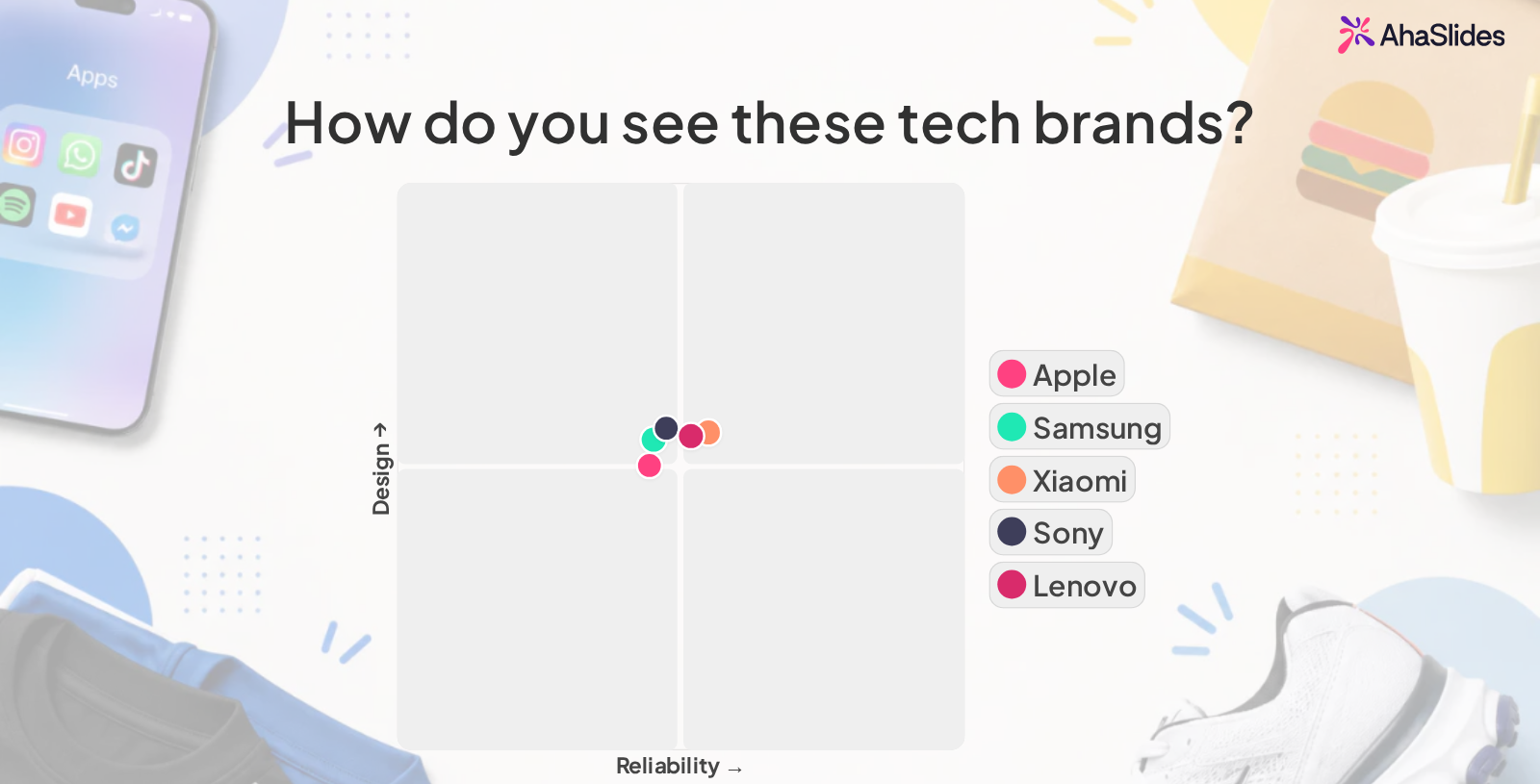
Timed presentations
Many talks come with a hard limit. A short slot forces you to choose what matters. TED, which is known for short talks, asks speakers to keep them to 18 minutes or less. Its curator Chris Anderson has said that this is long enough to unpack an idea and say something that matters, but hard to hold people’s concentration beyond, as he told CBS News. The two most common limits in work and school are five and ten minutes.
5-minuters presentation
A five-minute talk is hard because you must be brief and still informative.
- Plan the timing. Divide the time into blocks, for example one minute for the introduction and most of the rest for the main points.
- Mindre är mer. Pick the two or three points that matter and drop the rest.
- Practise with a timer. Find the parts that run long, then cut or rephrase them.
Läs vår guide till giving a five-minute presentation.
10-minuters presentation
Ten minutes is enough to introduce a topic, a perspective or a study without wearing people out.
- Know the structure. A typical split is an introduction of one slide, a body of about three slides and a conclusion of one slide, built around no more than three ideas.
- Start with a bang. Open with a provocative statement, a “what if” or a hard question.
- Gör det interaktivt. A poll, word cloud or quick Q&A in the middle resets attention.
Need a subject? Browse 10-minuters presentationsämnen.
Webinar presentation
A webinar is an online event where a speaker presents to a remote audience and interacts with them. It suits training, product education and lead generation, because anyone can join from anywhere.
- Test the equipment first. Check audio, camera, screen sharing and links, and have a backup plan for technical problems.
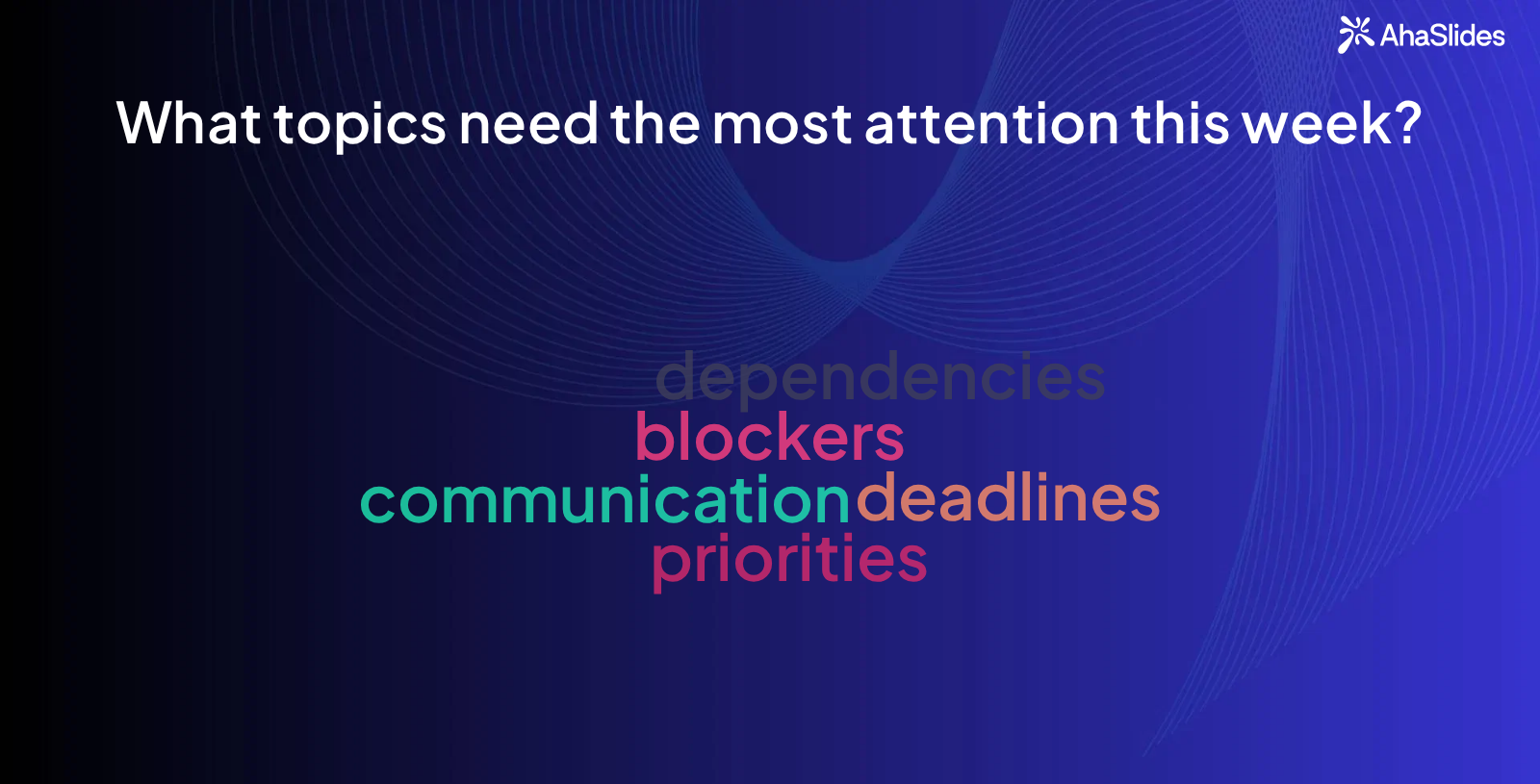
- Plan the engagement. Remote audiences drift. Open with an icebreaker, use quizzes, word clouds and open questions during the session, and close with a poll or Q&A.
Three presentation rules to follow
Rules of thumb will not rescue a weak idea, but they keep slides readable and talks short.
Regeln 10/20/30
Guy Kawasaki, a venture capitalist and former Apple evangelist, proposed that a presentation should have ten slides, last no more than twenty minutes and use no font smaller than thirty points, as he explains on hans hemsida. His reasoning is that people cannot absorb more than about ten concepts in one meeting, and a large font forces you to know your material and keep only the key points.
Se the 10/20/30 rule in detail.
Regeln 5/5/5
The 5/5/5 rule is a text guideline: no more than five words per line, no more than five lines per slide and no more than five text-heavy slides in a row. It helps when you cannot tell how much text is too much. To shorten a line, use an abbreviation your audience knows or swap a sentence for a chart, then say the detail aloud. More in what is the 5/5/5 rule.
7x7-regeln
The 7x7 rule is a looser version: no more than seven lines per slide and no more than seven words per line. It keeps slides clean and makes you put the detail in your talk. See the 7x7 rule for more. If you are choosing between the three, a simple test is whether the back row can read the slide in a few seconds.
Choose the right type of presentation
Ask three questions: what should the audience do afterwards, how much time do you have, and will they be in the room or online? A decision needs a business or data presentation, a launch needs a product presentation, and a short slot needs the discipline of a timed one. For ready-to-use outlines, see our enkla presentationsexempel.
Whatever the type, interaction keeps people with you. You can registrera dig för AhaSlides gratis and add polls, quizzes and word clouds to any of these formats, or start from a ready-made template in the mallbibliotek.
Viktiga takeaways
- Pick the type by the outcome you want: decision, interest, understanding or action.
- Product, marketing and data presentations each need different evidence: a demo, a plan and a clear chart.
- Short talks need fewer points, not smaller text.
- Webinars need planned interaction because remote audiences drift.
- Use the 10/20/30, 5/5/5 and 7x7 rules as guides, not laws.
Vanliga frågor och svar
What are the main types of presentations?
The most common are business, product, marketing and data presentations, timed talks such as five and ten-minute presentations, and webinars.
Varför är presentationsstilar viktiga?
The right style fits your message to your audience, which makes it easier to follow and more persuasive.
What is the most important thing in a presentation?
A clear message. The audience should know what the talk is about and what to do afterwards.
Vilka är de fyra nyckelelementen i en kraftfull presentation?
Content, structure, delivery and visual aids.