Most teenagers already play games. In a Kaji selidik Pusat Penyelidikan 2024 Pew, 85 per cent of US teens aged 13 to 17 said they play video games, and 72 per cent of those who play said one reason is to spend time with other people. So the goal is not to pull teens away from games. It is to give them games that put them in the same room, talking, laughing and thinking together.
This guide covers nine, split into word and card games, a quiz, a drama game and two active games. For each one you get the number of players and age range the publisher lists, how it works, and one tip for running it well. Pick two or three for an evening rather than trying them all.
How to choose a game for teens
- Count the group first. Codenames and Taboo need teams. Scattergories works best with a handful of players. Tag and a quiz scale up easily.
- Think about energy. Mix a quiet word game with something active so nobody sits still too long.
- Keep the rules short. If you need more than a minute to explain it, teens will check their phones.
- Biar orang ramai memilih untuk tidak ikut campur. A "pass" option keeps shy players in the room.
Word and card games
1. Epal kepada Epal
Pemain: 4 or more (retail listings say 4 to 8 or 4 to 10, depending on the edition). Zaman: 12+, per the Apples to Apples Wikipedia page and retail listings.
Each round, the judge flips a green card with an adjective, and everyone else plays the red noun card from their hand that fits best. The judge picks the winner, so the funniest answer often beats the most accurate one. There is no board, so it travels easily.
Petua: the judge role rotates every round, so remind players to pick what they find funniest, not what they think the judge will like best.
2. Nama kod
Pemain: 2 to 8 or more, in two teams. Zaman: 10+, according to Edisi Permainan Czech.
A spymaster gives a one-word clue that links several of the words laid out on the table, and their team has to guess which ones. It rewards clever clue-giving and careful listening. There are also picture and duet versions if the group prefers them.
Petua: agree before you start whether proper nouns are allowed, to avoid arguments mid-game.
3. Scattergories
Pemain: 2 6. Zaman: 12+ (see the Scattergories Wikipedia page).
Roll a letter and write an answer for each category on your list, such as "something you find in a kitchen". You score only if no one else wrote the same answer, so the best answers are the unusual ones. Each round is timed at about three minutes, and a game is usually three rounds.
Petua: with a larger group, play in two teams so everyone still gets to write.
4. Taboo
Pemain: 4 atau lebih. Zaman: 13+, according to Hasbro's instructions.
Players give clues so their team can guess a word, without using the "taboo" words printed on the card. A sand timer keeps it fast. It is a good game for building communication skills because you have to describe things in a new way under pressure.
Petua: have someone on the opposing team hold the card and listen for slips, so the clue-giver cannot sneak a taboo word past anyone.
5. Tangkap Frasa
Pemain: 4 or more, in two teams. Zaman: 12+, as listed on Hasbro's instructions.
A handheld device shows a word. Describe it to your team without saying it, and pass the device on when they guess correctly. When the timer ends, the team holding it loses the round. It moves quickly and needs no setup.
Petua: the buzzer is unpredictable, so the game is more about speed than strategy. That keeps rounds short and light.
A quiz that teens can play on their phones
6. Kuiz trivia secara langsung
Pemain: as many as you like. Zaman: any, depending on the questions.
Pick topics teens care about, such as music, films, gaming and sport, and run it as a team or individual quiz. In AhaSlides, you set up Pilih jawapan questions, and players join on their phones by scanning a QR code or entering a join code. A Leaderboard slide after each round keeps the competition going.
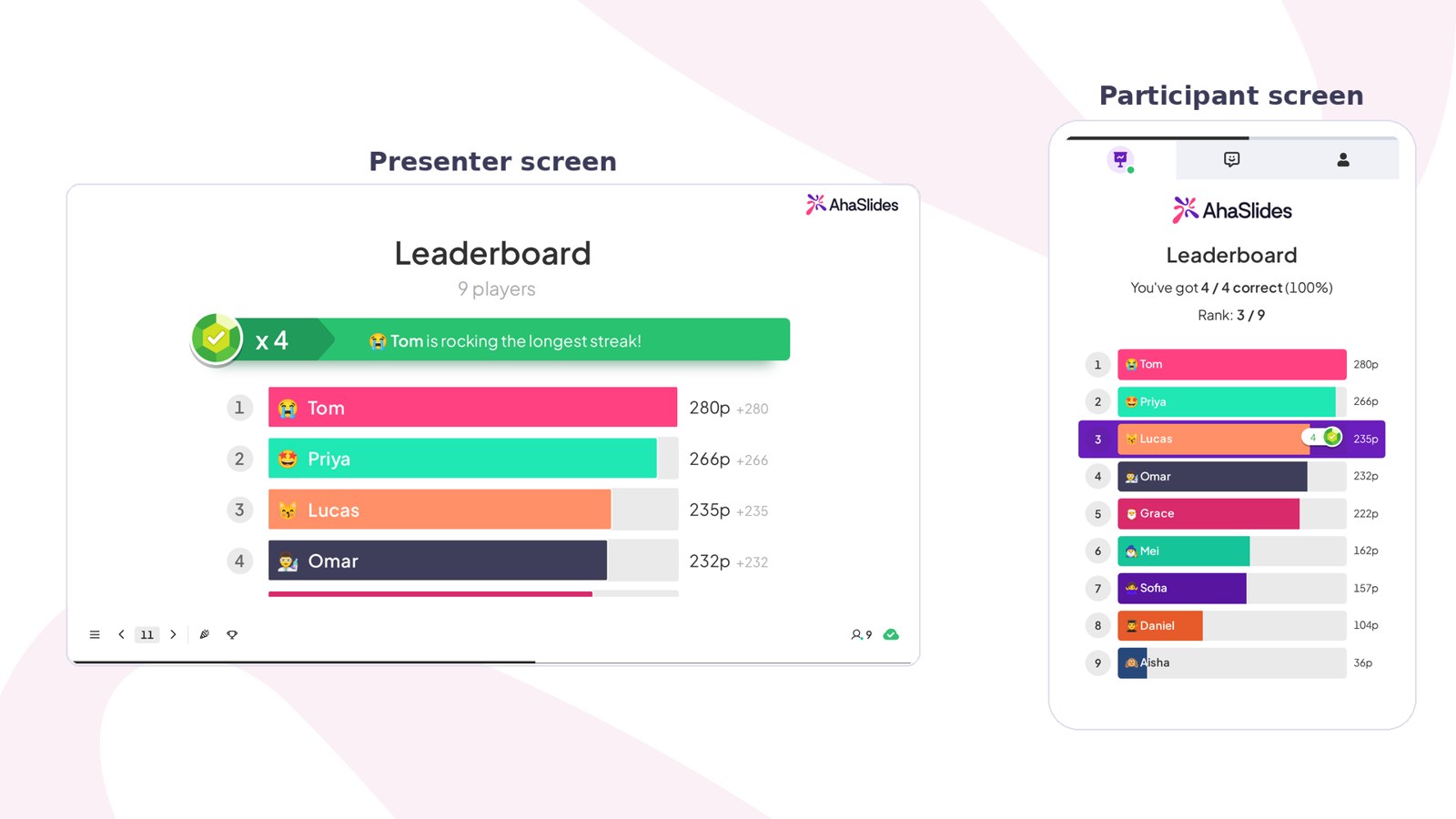
Petua: the free plan allows 50 participants and 5 quiz questions per presentation, which is enough for a short round. For a longer quiz, see AhaSlides harga. If you need questions, our soalan trivia untuk remaja are ready to use.
Drama game
7. Murder mystery
Pemain: usually 6 to 12, depending on the kit. Zaman: usually 13+.
A "murder" has happened and each player takes on a character with secret information. Players question each other, share clues and try to work out who did it. Kits range from a short half-hour game to a full evening. It is a good choice for Halloween or any party where teens enjoy role-play. Read more about the genre on Wikipedia.
Petua: give shy players characters with a lot of clues, so they have plenty to say without having to improvise.
Permainan aktif
8 hari
Pemain: 4 atau lebih. Zaman: mana-mana.
One player is "it" and chases the others. Whoever is tagged becomes the new "it". It works at camp, picnics and school events, and can be adapted with freeze tag (tagged players freeze until a teammate touches them).
Petua: agree the boundaries and a safe zone before you start, and keep it to grass or an open space rather than a hard floor.
9. Larian berhalangan
Pemain: one or more, solo or in teams. Zaman: mana-mana.
Set a start and finish line, and add things to crawl under, climb over, hop between and carry. Time each run or race teams against each other. It burns energy and teams up easily, and you can build it from household items.
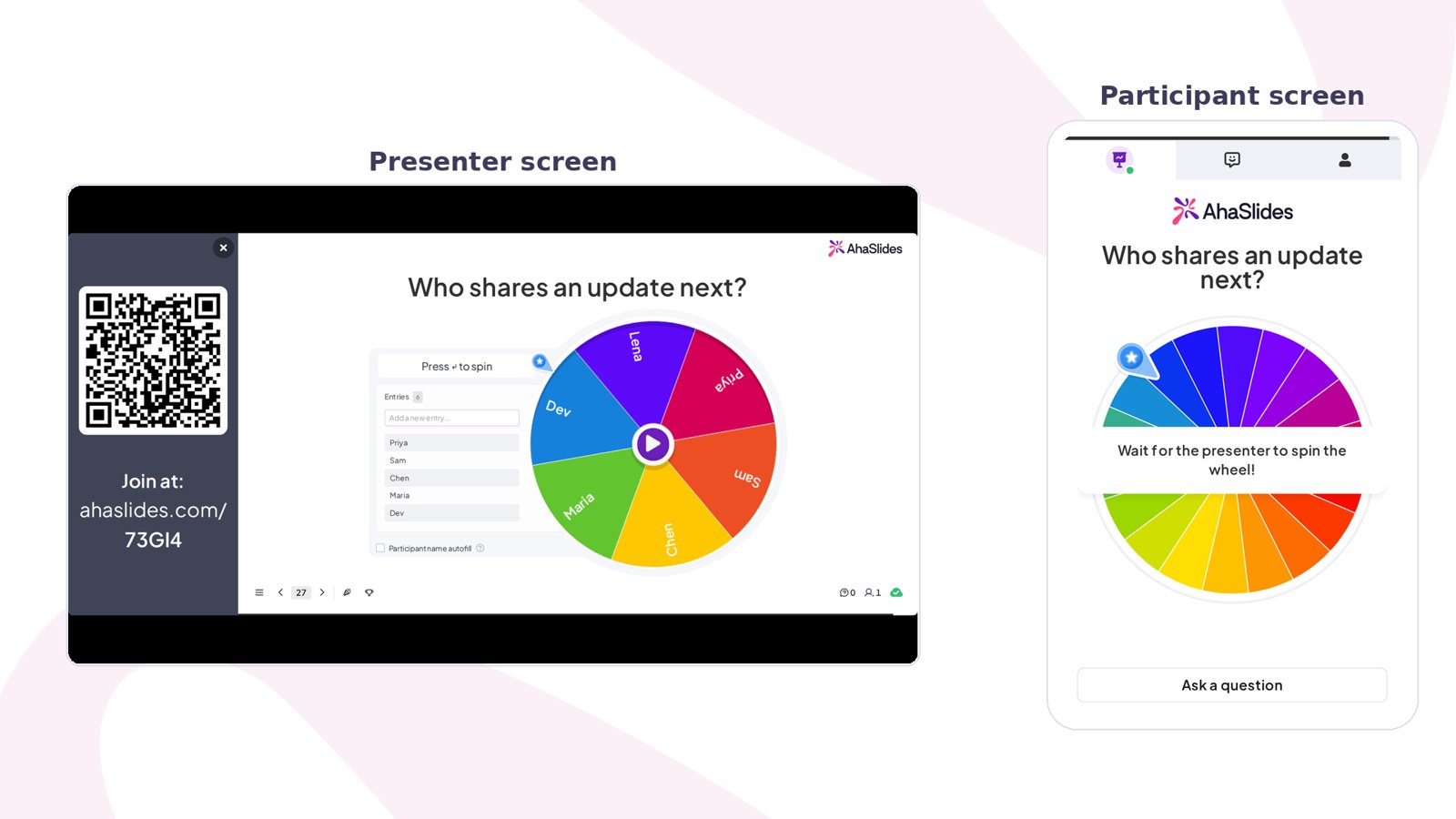
Petua: menggunakan AhaSlides Roda Pemintal to decide which player goes next or which obstacle comes first, so nobody feels picked on.
Which games for which event
- Majlis hari jadi: Apples to Apples, Scattergories and a live quiz.
- Sleepover or family night: Codenames, Taboo and Catch Phrase.
- Halloween: murder mystery and a themed quiz.
- School or youth event: tag, an obstacle course and a trivia quiz.
Untuk lebih banyak idea, lihat panduan kami untuk aktiviti pesta untuk remaja dan permainan kumpulan remaja.
Soalan lazim
What are good games for teenagers?
Word games such as Codenames and Taboo, live trivia, and active games such as tag all work well. Choose based on the group size and the energy in the room.
What games can teens play at a party?
Apples to Apples, Scattergories and a quiz suit a party at home, while tag and an obstacle course suit a garden or a youth event.
Are video games bad for teens?
Most teens play them, and many play to be with friends. Mixing in face-to-face games gives them a different kind of time together.