

אין כאן ויכוח: דיונים בין סטודנטים הם אחת הדרכים הטובות ביותר לבנות חשיבה ביקורתית, לעסוק בתלמידים, ולשים את הלמידה בידי הלומדים.
הם לא מיועדים רק לאנשים שאוהבים ויכוחים, והם עובדים כמעט עם כל קבוצת גיל, מקצוע או גודל כיתה, ולכן הם הופכים לעמוד תווך בתוכניות הלימודים בבתי הספר.
מדריך זה מכסה את מה שמארגן צריך: היתרונות, הפורמטים העיקריים, 6 השלבים להפעלת מארגן, רובריקת ניקוד להדפסה, התאמות ל-ESL, הנחיות לזום ו-30 נושאים מוכנים לשימוש.
מדוע דיוני תלמידים ראויים ליותר זמן בכיתה
דיון שמנוהל היטב עושה יותר מאשר רק למלא שעת לימוד. הוא יכול לעצב הן את החלקים האישיים והן את החלקים המקצועיים בחייו של תלמיד:
כוח השכנוע. תלמידים לומדים לבנות טיעון משכנע ושקול מתוך ראיות ולא מתוך כמות, מיומנות שנושאת הרבה מעבר לכיתה.
סגולת הסובלנות. דיון בונה כישורי הקשבה ומלמד תלמידים לשמוע דעות שונות משלהם. אפילו הפסד מלמד אותם שזה בסדר לשנות את דעתם.
זה עובד באינטרנט. דיונים אינם דורשים ציוד מיוחד, ולכן הם מתורגמים לכיתות מרוחקות והיברידיות עם התאמות קלות.
זה ממוקד התלמיד. דיון מעניק לתלמידים שליטה על מה שהם אומרים וכיצד הם מגיבים, במקום למצב את המורה כמקור המידע היחיד.
המחקר תומך בכך. מחקר שנערך בקרב תלמידי בתי ספר ציבוריים בבוסטון מצא כי השתתפות בוויכוח מדיניות בין-בית ספרי העלתה את ציוני מבחני השפה האנגלית ב-0.13 סטיית תקן, כ-68% מהצמיחה האקדמית השנתית הטיפוסית לתלמיד כיתה ט', והגדילה את מספר הנרשמים למכללה [1]. תשואה משמעותית לפעילות שעולה רק זמן לימודים בכיתה.
בחרו פורמט דיון שהכיתה שלכם יכולה להתמודד איתו
לפני שאתם מקצים צוות אחד, בחרו פורמט. הוא קובע את גודל הצוות, זמן ההכנה וכמה מסודר יהיה החדר. כך משתווים ארבעת הפורמטים הנפוצים ביותר המתאימים לכיתה:
| פוּרמָט | גודל הצוות | הכי טוב בשביל | איך זה עובד |
|---|---|---|---|
| בסגנון אוקספורד | 2 קבוצות (2-3 מכל צד) | דיון כיתתי, משתתפים בפעם הראשונה בדיון | שני צדדים מתווכחים על הצעה. הקהל מצביע לפני ואחרי כדי להחליט מי שינה הכי הרבה דעות. |
| לינקולן-דאגלס | 1 לעומת 1 | סטודנטים מתקדמים, נושאים מבוססי ערכים | דובר אחד מכל צד, המתמקד באתיקה ופילוסופיה, עם פרק זמן קצר לחקירה נגדית. |
| הפרלמנט הבריטי | 4 קבוצות של 2 | כיתות גדולות יותר, מועדוני דיבייט תחרותיים | ארבע קבוצות, שתיים מציעות ושתיים מתנגדות, נושאות נאומים קצרים המבססים או סותרים את הקבוצה שלפניהם. |
| פורום ציבורי | 2 לעומת 2 | כיתות מעורבות | צוותים של שני אנשים מתחלפים בנאומים בונים ובשעון שאלות "צולב", שנבנה עבור קהל רחב. |
לעימות ראשון בכיתה, סגנון אוקספורד הוא הקל ביותר: הוא דורש את ההסבר המינימלי ומשאיר את כל הכיתה מצביעה במקום לשבת בחוץ. ברגע שהתלמידים מרגישים בנוח, הפרלמנט הבריטי והפורום הציבורי נותנים ליותר מהם תפקיד דיבור.
6 שלבים לניהול דיון סטודנטים
שלב 1: הצגת הנושא
הצעד הראשון הוא לתת לתלמידים נושא לוויכוח. מאגר הנושאים האפשריים הוא כמעט בלתי מוגבל, ותמצאו 30 נושאים מוכנים מראש בהמשך מדריך זה.
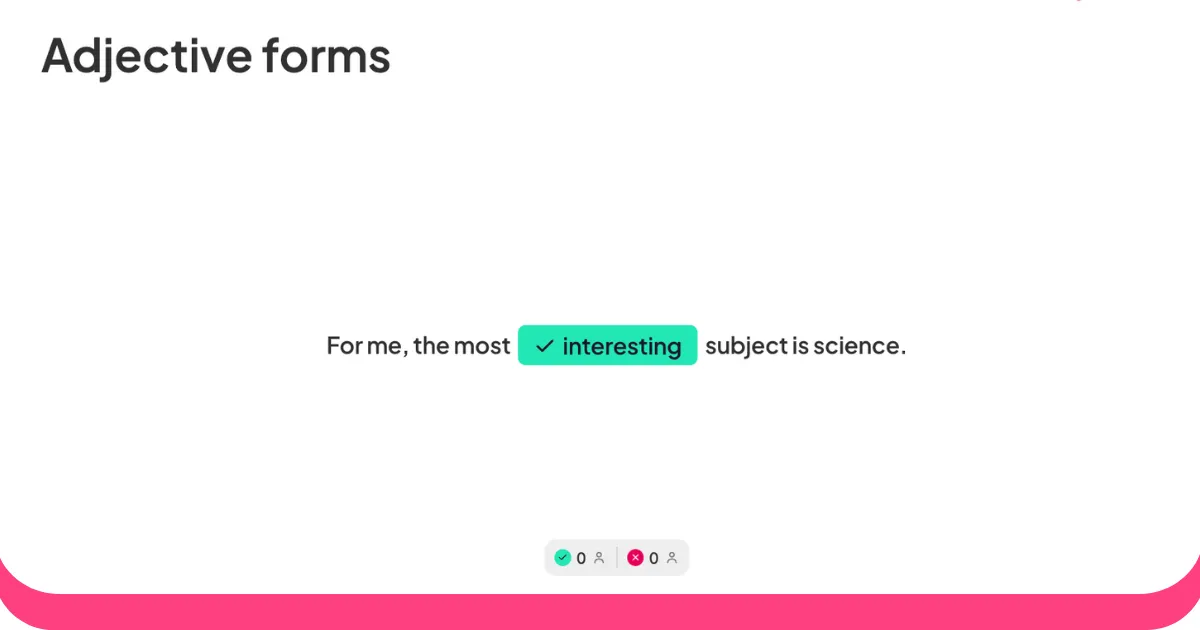
הנושא הטוב ביותר מפצל את הכיתה קרוב ככל האפשר לאמצע. אספו דעות ראשוניות לפני הקצאת צדדים באמצעות סקר תמונות, ענן מילים של איך התלמידים מתארים את דעתם, סולם דירוג מ-1 עד 5, או שאלות פתוחות. סקר כן/לא פשוט עובד גם כן, ונותן תמונה מיידית על כמה שווה הכיתה מחולקת.
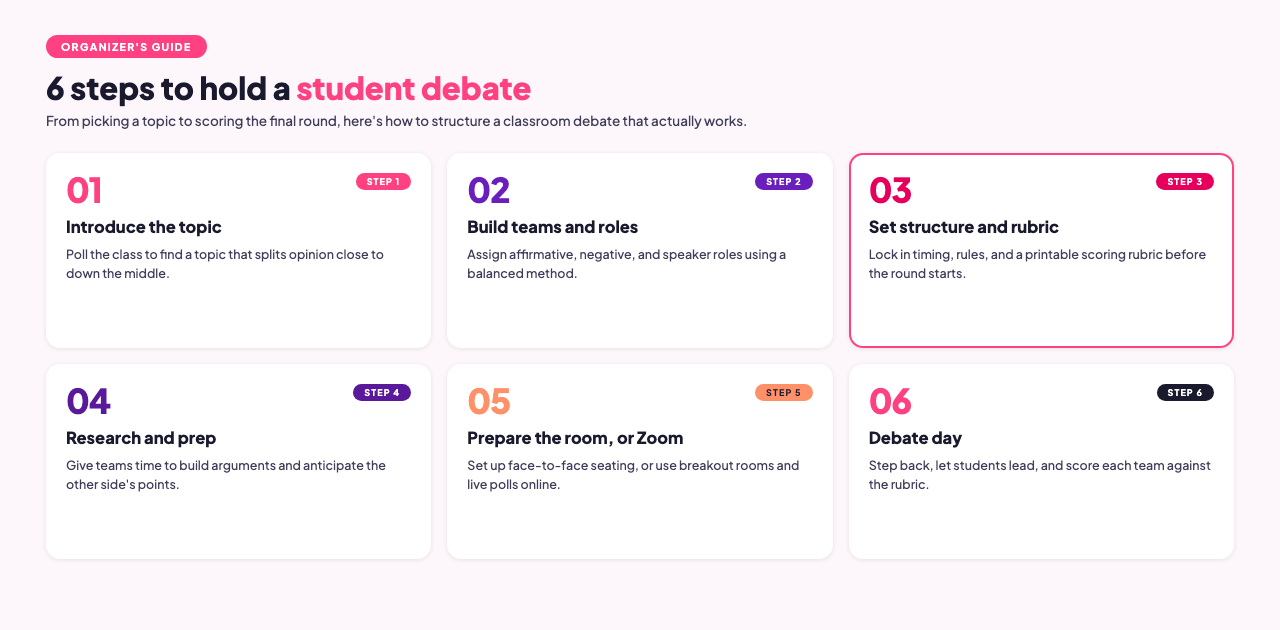
שלב 2: בניית צוותים מאוזנים וחלוקת תפקידים
לאחר בחירת נושא, צרו את שני הצדדים: ה- חִיוּבִי (מסכים עם ההצהרה, או טוען לשינוי הסטטוס קוו) ו- שלילי (לא מסכים, או טוען להשאיר את הדברים כפי שהם). אם הכיתה שלכם גדולה או שתלמידים רבים נופלים באמצע, הוסיפו קרקע אמצעית קבוצה שלוקחת נקודות משני הצדדים וטוענת לפשרה. אל תענישו את אלו שסותרים את הגבול: חוסר החלטיות אמיתי הוא נקודת התחלה לגיטימית, אם כי זה לא ויתור על השתתפות.
האופן שבו משיתים תלמידים לקבוצות משנה לא פחות מהנושא. שלוש שיטות עובדות היטב:
הגרלה אקראית. שלפו שמות מהכובע או השתמשו במחולל קבוצות אקראי. מהיר והוגן, אם כי מדי פעם זה יכול להביא את הדוברים החזקים ביותר שלכם לאותה קבוצה.
מאוזן מבחינת מיומנויות. פזרו רמקולים חזקים ושקטים יותר באופן שווה על פני שני הצדדים בהתבסס על מה שכבר ידעתם על הכיתה. יוצר סיבובים קרובים יותר אך דורש זמן התקנה רב יותר.
בחירת נושא. תנו לתלמידים לבחור את הצד התואם את דעתם האמיתית. התמיכה הגבוהה ביותר, אך יכולה ליצור קבוצות לא אחידות, לכן יש להגביל את גודל הקבוצה ולהשתמש בהטלת מטבע לעודף.
עבור תפקידי דוברים, מבנה שנלקח מדיונים בפרלמנט הבריטי מקצה 4 דוברים לכל צוות, שלכל אחד תפקיד ספציפי (פתיחה, הפרכה, הפרכה שנייה, סיום). עבור כיתות גדולות יותר, יש לחלק שני תלמידים לכל תפקיד בזוגות. שאר הכיתה משמשת כ... שופטים, תוך ניקוד של כל קבוצה בהתאם לרובריקה משלב 3.
שלב 3: קבעו את המבנה, הכללים ורובריקה לניקוד
שלושה דברים צריכים להיות ברורים לחלוטין לפני תחילת הדיון: המבנה, הכללים וכיצד יינתן הניקוד.
מִבְנֶה. דיון צריך להיות ליניארי, כך שאף אחד לא ידבר מעל אף אחד אחר, עם מספיק זמן לתלמידים להעלות את טענותיהם בפועל. מבנה טיפוסי, החל מהצוות החיובי:
| מגזר | רַמקוֹל | זְמַן |
|---|---|---|
| משפט פתיחה | דובר ראשון, כל צוות | דקות 5 |
| הכן הפרכות | שתי הקבוצות | דקות 3 |
| הַכחָשָׁה | דובר שני, מכל צוות | דקות 3 |
| ההפרכה השנייה | דובר שלישי, מכל צוות | דקות 3 |
| הכנת סגירה | שתי הקבוצות | דקות 5 |
| הצהרה סופית והצהרת סיום | דובר רביעי, מכל צוות | דקות 5 |
בדקו את המבנה, לאחר מכן נעל אותו ברגע שהוא פועל, ופקחו עין על השעון כדי שאף אחד לא יידרוס.
חוקים. כללים ברורים יוצרים איזון בין תלמידים קולניים לשקטים: היצמדו למבנה, הישארו ממוקדים בנושא, בלי קללות, בלי התקפות אישיות.
רובריקת ניקוד. המטרה של ויכוח כיתתי אינה "לנצח", אלא התחרותיות הטבעית של התלמידים בדרך כלל נהנית ממערכת נקודות. שופטים יכולים להשתמש בסולם פשוט של 5 נקודות לכל קריטריון, ואז לסכם את הציונים עבור כל קבוצה:
| קריטריונים | 1 (צריך עבודה) | 3 (רציף) | 5 (מצוין) |
|---|---|---|---|
| בהירות הטיעון | מעורפל או קשה לעקוב אחריו | ברור אך לא תמיד מאורגן | ברור, מסודר בצורה הגיונית, קל לעקוב אחריו |
| שימוש בראיות | תמיכה מועטה או ללא תמיכה כלל | חלק מהטענות המגובות בעובדות | מגובה באופן עקבי בראיות אמינות וספציפיות |
| איכות ההפרכה | מתעלם מנקודות הצד השני | מגיב לכמה נקודות מנוגדות | מתייחס ישירות לנקודות המנוגדות החזקות ביותר |
| משלוח והצגה | קורא בצורה שטוחה, קשה לשמוע | בעיקר בטוח בעצמו, קצת היסוס | טון בטוח, קצב טוב, קשר עין חזק |
| עבודת צוות וניהול זמן | הצוות סותר את עצמו או ממשיך לרוץ לאורך זמן | בעיקר מתואם ובזמן | בונה על הנקודות של כל אחד, מנצל את הזמן בצורה טובה |
זה 25 נקודות לכל קבוצה. הדפיסו את הטבלה, תנו עותק לכל שופט, ובקשו מהם לסכם את גיליון הניקוד בסוף. שיפוט הוא אף פעם לא משחק מספרים בלבד, לכן בקשו מהשופטים לרשום נימוק בן שורה אחת ליד כל ציון.
עבור כיתת ESL, התאימו את הרובריקה כך שתתגמל גידול באוצר המילים ובמבנה המשפט לצד התוכן, במקום להעניש מבטא או היסוס. עוד על כך בהמשך.
שלב 4: תנו לתלמידים זמן לחקור
לאחר שכולם מבינים את הנושא והכללים, הגיע הזמן להתכונן. קבעו מגבלת זמן למחקר, הפנו את התלמידים לכמה מקורות אמינים, ובדקו אותם כדי להישאר ממוקדים בנושא. עליהם לחקור את הנקודות שלהם ולצפות את הצד השני, כך שיהיו להם תשובות מוכנות במקום לקפוא כשמתמודדים איתן.
שלב 5: הכינו את החדר, או הפעילו אותו בזום
בזמן שהצוותים מסיימים את טיעוניהם, הקימו את המקום. סדרו שולחנות וכיסאות כך שיעמדו זה מול זה בצד השני של החדר, כפי שמבוצע דיון מקצועי, כאשר הדוברים עומדים בקדמת אזור הצוות שלהם.
מפעילים את זה באופן וירטואלי. דיון מתורגם לזום או לכל פלטפורמת וידאו אחרת עם כמה התאמות:
חדרי מנוחה להכנת צוות. שלחו כל צוות לחדר נפרד משלו למחקר והפרכות, ואז החזירו את כולם לדיון עצמו.
טיימר משותף וגלוי. שתפו את המסך שלכם עם שעון עצר על המסך כדי שכל דובר יוכל לראות את הזמן שנותר מבלי שתפריעו.
הצבעה וירטואלית של הקהל. ערכו סקר חי כדי שהכיתה תצביע איזו קבוצה תטען בצורה משכנעת יותר, לפני ואחרי. זוהי המקבילה המקוונת להצבעת קהל בסגנון אוקספורד, ושומרת על מעורבות התלמידים שאינם דוברי לשון.
זהות צוות. בקשו מכל צוות לבחור צבעים לרקעים בזום שלו, או להמציא קמע שיוצג על המסך, נגיעה קטנה שגורמת לצוותים מרוחקים להרגיש כמו צוותים.
שלב 6: יום הדיון
שיהתחילו. זה הזמן של התלמידים לזרוח, אז התערבו כמה שפחות, רק כדי לשמור על הסדר או להזכיר לכיתה את המבנה והניקוד. תנו ניקוד לכל קבוצה לפי הרובריקה ככל שהדיון מתפתח, לאחר מכן ספרו וחשבו את ממוצע ציוני השופטים עבור התוצאה הסופית של כל קבוצה. שמרו את הניתוח המעמיק יותר לשיעור הבא, לאחר שהתלמידים הספיקו להירגע.
התאמת דיונים לכיתות ESL ולכיתות רב-לשוניות
דיון תובעני בשפה שנייה, לכן כמה התאמות ישמרו עליו פרודוקטיבי:
זמן הכנה נוסף. תנו לתלמידי ESL, או לכל הכיתה אם רובם רב-לשוניים, יותר זמן למחקר ולניסוח מאשר קבוצה דוברת שפת אם.
פתיחות משפטים. ספקו ביטויים מוכנים מראש שניתן להישען עליהם תחת לחץ: "אני מסכים כי...", "ראיה אחת היא...", "הייתי רוצה לערער על הנקודה הזו כי...". אלה תומכים בטיעון גם כאשר אוצר המילים עדיין מתפתח.
אוצר מילים שנלמד מראש. למדו מראש את קומץ המילים הספציפיות לנושא שהתלמידים יצטרכו, ותנו להם לשמור כרטיס מילון מונחים על שולחנם.
קריטריוני שיפוט מותאמים. התייחסו לתוכן ולמבנה משפטים מתפתח במקום למבטא או לשטף. התייחסו לשימוש בשפת האם כנקודת הדרכה במהלך המחקר, ולא כעונש ניקוד במהלך הדיון.
גיבוי בכתב. יש לאפשר לתלמידים להביא מתווה קצר בכתב כדי לעיין בו, ובכך להקל על העומס הכרוני של אחסון טיעון בזיכרון עבודה בשפה שנייה.

עוד כמה פורמטים שכדאי לנסות
ברגע שהיסודות יושמו: דיון משחק תפקידים מאפשר לתלמידים לטעון כדמות בדיונית או היסטורית; ויכוח מאולתר לא נותן זמן הכנה; דיון בעירייה מאפשר לתלמידים לעמוד מול הכיתה ולענות ישירות על שאלות עמיתיהם.
רעיונות נוספים: 13 משחקי דיבייט מקוונים, 12 רעיונות למעורבות סטודנטים, וה כיתה הפוכה גִישָׁה.
30 נושאי דיון בכיתה
ערכו הצביעו עם התלמידים שלכם על איזה מבין אלה להשתמש.
נושאי בית ספר
האם עלינו ליצור כיתה היברידית עם למידה מרחוק וגם למידה בכיתה?
האם עלינו לאסור מדים בבית הספר?
האם עלינו לאסור שיעורי בית?
האם עלינו לנסות את מודל הכיתה של לימוד?
האם עלינו לעשות יותר למידה בחוץ?
האם עלינו לבטל מבחנים ומבחנים לטובת לימודי קורסים?
האם כולם צריכים ללמוד באוניברסיטה?
האם דמי האוניברסיטה צריכים להיות נמוכים יותר?
האם בתי ספר צריכים להציע קורס על השקעות?
האם על הספורט להיות חלק משיעורי כושר?
נושאי סביבה
האם עלינו לאסור גני חיות?
האם זה צריך להיות חוקי להחזיק חתולים אקזוטיים כחיות מחמד?
האם עלינו לבנות תחנות כוח גרעיניות נוספות?
האם עלינו לנסות להאט את הילודה ברחבי העולם?
האם עלינו לאסור את כל סוגי הפלסטיק החד-פעמי?
האם עלינו להפוך מדשאות פרטיות למקצות ובתי גידול לחיות בר?
האם עלינו להקים ממשלה בינלאומית למען הסביבה?
האם עלינו לאלץ אנשים לשנות את הרגליהם כדי להילחם בשינויי האקלים?
האם עלינו להרתיע את עולם האופנה המהירה?
האם עלינו לאסור טיסות פנים במדינות קטנות עם מערכות רכבת ואוטובוסים טובות?
נושאי חברה
האם כולם צריכים להיות צמחונים או טבעונים?
האם עלינו להגביל את זמן משחקי הווידיאו?
האם עלינו להגביל את הזמן המושקע ברשתות החברתיות?
האם עלינו להפוך את כל חדרי הרחצה לנטרלים מגדרית?
האם עלינו להאריך את תקופת חופשת הלידה הרגילה?
האם עלינו להמשיך לפתח בינה מלאכותית שיכולה לבצע את כל העבודות?
האם יש לנו הכנסה בסיסית אוניברסלית?
האם בתי כלא צריכים להיות למטרות ענישה או שיקום?
האם עלינו לאמץ מערכת אשראי חברתית?
האם עלינו לאסור פרסומות המשתמשות במידע האישי שלנו?
דוגמה אמיתית ללמוד ממנה
אחת הדוגמאות הטובות ביותר לוויכוח סטודנטים בוידאו מגיעה מ... מודיעין: ויכוח בתיכון, תוכנית ברשת השידור הקוריאנית Arirang. היא מכסה כמעט כל אלמנט של דיון תלמידים שמנוהל היטב שמורה יכול לקוות לראות בכיתתו.
התלמידים בתוכנית הם מקצוענים ותיקים, רבים מהם מתווכחים ברהיטות באנגלית כשפה שנייה, אז תנהלו את הציפיות שלכם. השתתפות אמיתית של הכיתה שלכם היא התחלה חזקה בפני עצמה.
שאלות נפוצות
כמה סוגים של דיון סטודנטיאלי קיימים?
כמה, כולל דיון בסגנון אוקספורד, לינקולן-דאגלס, פרלמנטרי בריטי, פורום ציבורי ודיון מאולתר, לכל אחד פורמט וכללים משלו, כפי שפורסם לעיל.
למה תלמידים צריכים להתווכח?
זה דוחף אותם לנתח סוגיות מנקודות מבט מרובות, להעריך ראיות ולבנות טיעונים לוגיים, קישורים בין מחקר מיומנויות לשיפורים מדידים בציוני מבחנים ורישום למכללה.
כיצד אוכל לעזור לתלמידים לחקור את התפקיד שהוקצה להם?
כוונו אותם למקורות אמינים כמו כלי תקשורת מבוססים, כתבי עת אקדמיים ונתונים ממשלתיים או ללא מטרות רווח, ולמדו ציטוט בסיסי ובדיקת עובדות.
מוכנים להריץ אחד כזה בלייב? נסה את AhaSlides בחינם לערוך סקר בכיתה בנושא, לערוך הצבעה חיה על הקבוצה המנצחת ולהציב את התלמידים במרכז השיעור.