



Ya conoces esa sensación. Terminas una presentación, te marchas e inmediatamente revives el momento en que empezaste a apresurarte con la diapositiva cuatro. O los tres minutos en los que te quedaste mirando la pantalla en lugar de la sala. O la introducción que tardó dos minutos en llegar a alguna parte porque pasaste los primeros noventa segundos agradeciendo a la gente y explicando lo que ibas a decir.
La mayoría de los errores en las presentaciones no son misteriosos. Son predecibles, repetibles y solucionables. El problema es que cuesta detectarlos en uno mismo, sobre todo cuando uno está demasiado ocupado presentando como para darse cuenta de lo que falla.
Esta guía abarca los siete errores más comunes al hablar en público, sus causas y la solución específica para cada uno. No se trata de consejos genéricos sobre practicar más, sino de técnicas prácticas que puedes aplicar antes de tu próxima presentación.
Por qué persisten los errores incluso en oradores experimentados.
La incómoda verdad sobre los errores al hablar en público es que la repetición por sí sola no los corrige. Puedes dar cien presentaciones y seguir apresurándote cuando estés nervioso, seguir recurriendo a muletillas cuando pierdas el hilo, seguir leyendo tus diapositivas cuando la sala se quede en silencio.
La clave para corregir errores es la atención deliberada. Observar lo que sucede, comprender el porqué y realizar un cambio específico. En eso se basa esta guía.
1. Hablar demasiado rápido
La mayoría de la gente no se da cuenta de que va con prisas. Cuando estás nervioso, tu reloj biológico se acelera y lo que para ti es un ritmo normal, resulta ser mucho más rápido de lo que tu público puede seguir cómodamente. Para cuando hayan asimilado tu último punto, ya habrás adelantado dos diapositivas.
Antes de tu presentación, marca tu guion con pausas al final de cada punto importante. Una pausa de dos segundos puede parecerte incómodamente larga, pero para tu público es perfectamente natural. Practica al 75 % de tu ritmo habitual. Grábate y escucha la grabación. Si tiendes a hablar con prisa, incluye pausas deliberadas después de datos clave o afirmaciones importantes. La pausa indica que vale la pena reflexionar sobre lo que acabas de decir.
2. No hacer contacto visual
Mirar tus notas, tus diapositivas o el espacio intermedio por encima de las cabezas del público transmite una señal que probablemente no pretendes: que no te diriges directamente a ellos. El público se desconecta de los oradores que no los miran. La confianza disminuye. La sala se vuelve pasiva.
Deja de pensar en el contacto visual como una mirada fija y empieza a verlo como una serie de conexiones breves y genuinas. Elige a una persona, expresa una idea completa mientras la miras, y luego pasa a otra. De tres a cinco segundos por persona es suficiente. En salas grandes, divide el espacio en secciones y rota entre ellas. La solución práctica para los oradores que recurren a sus notas es conocer bien el material, de modo que no las necesiten como muleta. Las notas del orador sirven para recordar la estructura, no para leerlas en voz alta.
3. Usar palabras de relleno
Eh, eh, como, ya sabes, entonces. Las muletillas aparecen cuando la boca sigue moviéndose mientras el cerebro procesa la información. Suelen ser invisibles para quien habla e inmediatamente perceptibles para el público. Si se usan en exceso, la credibilidad se erosiona silenciosamente, no por lo que se dice, sino por lo que se usa para rellenar los huecos.
El primer paso es la autoconciencia. La mayoría de las personas no se dan cuenta de la frecuencia con la que usan muletillas hasta que escuchan una grabación de sí mismas. Una vez que conozcas tus patrones, la solución es incómoda pero sencilla: reemplaza las muletillas con silencio. Cuando sientas la necesidad de decir "eh", mejor no digas nada. Un breve silencio suena más seguro que una muletilla y le da a tu audiencia un momento para asimilar lo que acabas de decir. Practica esto en conversaciones informales, no solo en presentaciones. El hábito se consolida fuera del foco de atención.
4. Mal lenguaje corporal
Tu cuerpo se comunica constantemente mientras presentas, tanto si le prestas atención como si no. Una postura rígida indica ansiedad. El movimiento constante indica nerviosismo. Los brazos cruzados indican actitud defensiva. Ninguna de estas es la impresión que quieres dar, pero ocurren automáticamente cuando te centras en tu presentación e ignoras todo lo demás.
Empieza por tus pies. Colócalos separados a la anchura de los hombros y resiste la tentación de moverte, caminar de un lado a otro o balancearte. El movimiento debe ser deliberado, para transitar entre secciones o interactuar con otra parte de la sala, no un tic nervioso. Mantén los brazos relajados a los lados cuando no estés gesticulando. Cuando gesticules, que sean intencionados y del tamaño adecuado para la sala. Los gestos pequeños en espacios grandes pasan desapercibidos. Los gestos grandes en espacios pequeños resultan agresivos.
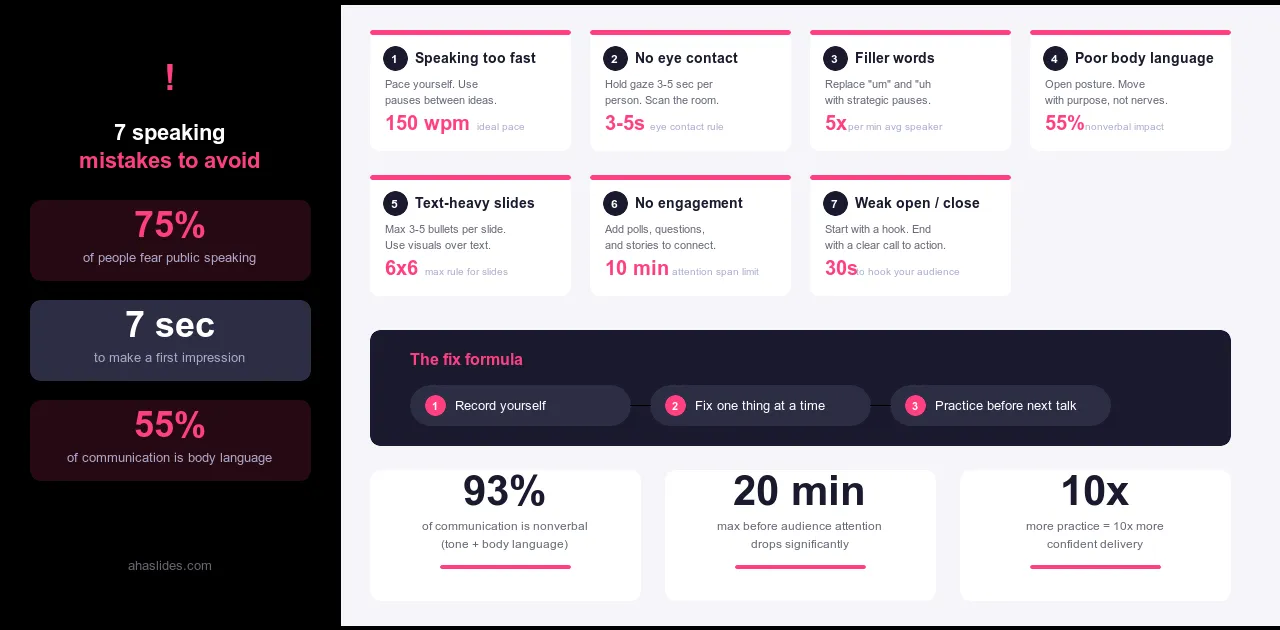
5. Sobrecargar las diapositivas con texto.
Las diapositivas con mucho texto plantean una disyuntiva imposible para la audiencia: leer la diapositiva o escucharte. La mayoría leerá. Esto significa que, en el momento en que coloques un muro de texto en la pantalla, perderás el protagonismo de tus propias diapositivas.
Aplica la regla 7x7: no más de siete puntos por diapositiva, no más de siete palabras por punto. Mejor aún, apunta más bajo. Una idea por diapositiva con una sola imagen impactante es más efectiva que ocho puntos y una foto genérica. Incluye los detalles en tus notas del orador, donde corresponde. Tus diapositivas deben motivar a tu audiencia a escucharte, no reemplazarte. Si tus diapositivas pueden funcionar por sí solas sin que las presentes, están abarcando demasiado.
6. Ignorar la participación de la audiencia.
Hablarle a la gente durante cuarenta y cinco minutos y esperar que se mantengan atentos es demasiado optimista. La atención se dispersa. Aparecen los teléfonos. El formato de escucha pasiva, al que recurren la mayoría de las presentaciones, es también el que menos probabilidades tiene de generar retención, acción o cualquier resultado significativo más allá de un aplauso cortés al final.
Fomenta la participación antes de la presentación, no como algo secundario. Identifica dos o tres momentos clave en tu sesión donde una pregunta, una encuesta o un debate reforzarían el contenido en lugar de interrumpirlo. Pide que levanten la mano. Formula una pregunta genuina y espera la respuesta en lugar de darla tú mismo de inmediato.
Herramientas como AhaSlides hacen que esto sea práctico en lugar de una aspiración. Las encuestas en vivo, las nubes de palabras y las funciones de preguntas y respuestas se pueden integrar directamente en el flujo de la presentación para que la participación se sienta como parte de la sesión en lugar de una interrupción. El público recuerda con qué interactuó. Olvida lo que simplemente presenció.
7. Apertura o cierre débil
La apertura es el momento en que el público decide si presta atención. El cierre es lo que se llevan consigo al salir de la sala. Ambas son desproporcionadamente importantes en relación con el tiempo que consumen, y son precisamente en ambos puntos débiles de la mayoría de las presentaciones.
Para las introducciones: sáltate el preámbulo. No agradezcas a los organizadores, no te presentes extensamente ni expliques el tema antes de abordarlo. Comienza con algo que capte la atención de inmediato: un escenario concreto, una observación sorprendente o una pregunta que invite a la reflexión. Tienes unos treinta segundos. ¡Aprovéchalos!
Para el cierre: escribe tu última frase antes de escribir cualquier otra cosa. Los cierres flojos ocurren porque los oradores se quedan sin ideas e improvisan el final. Ten claro cómo vas a terminar antes de empezar. Finaliza con una llamada a la acción específica, una pregunta que invite a la reflexión o una sola frase que resuma lo que más quieres que tu público recuerde. Y luego, detente. El impulso de seguir hablando después de haber terminado es lo que convierte las presentaciones impactantes en olvidables.

Cómo identificar tus propios errores
Lo más difícil de corregir errores en una presentación es que la mayoría pasan desapercibidos en el momento. No te das cuenta de tus propias muletillas cuando estás concentrado en el contenido. No te percatas de que te apresuras cuando la adrenalina hace que todo parezca normal. No puedes ver tu propio lenguaje corporal mientras hablas.
Tres cosas ayudan.
Grábate mientras presentas y luego mírate. No se trata de ser demasiado duro contigo mismo, sino de ver qué sucede realmente. Los hábitos que no sabías que tenías se hacen evidentes en la grabación. La mayoría de las personas son más críticas al verse a sí mismas que su audiencia en persona, lo que significa que la grabación casi siempre es más útil que perjudicial.
Pregúntale a alguien que te diga la verdad. Un colega de confianza, un entrenador o cualquier persona que te dé una opinión honesta en lugar de palabras vacías. Decir "Estuvo genial" no te dice nada. Decir "Mirabas la pantalla cada vez que pasabas a una diapositiva nueva" te indica algo que puedes corregir.
Concéntrate en una cosa a la vez. Si intentas corregir tu ritmo, tu contacto visual, tus muletillas y tu lenguaje corporal simultáneamente, no lograrás nada. Elige el problema más importante, céntrate en él durante tus próximas dos o tres presentaciones y pasa al siguiente cuando ya no tengas que pensar en él.
Terminando
Todos los errores de esta lista tienen algo en común: se pueden corregir. No con consejos vagos para practicar más, sino con cambios específicos y deliberados, aplicados uno a uno.
Fíjate en algo que haya salido mal después de tu próxima presentación. Anótalo antes de que se te olvide. Aplica una solución. Observa qué cambia.
Ese es todo el proceso. Con el tiempo, la lista de cosas por corregir se acorta. La lista de cosas que funcionan se alarga. Y en algún momento, dejas de repasar los errores mientras vuelves a tu escritorio y empiezas a pensar en qué quieres hacer diferente la próxima vez.
Es entonces cuando empieza a sentirse como un progreso.