
Nehezen döntünk, ezért nézzük meg a legjobbat döntéshozatali példák, tippeket és stratégiákat, amelyek segítségével betekintést nyerhetsz a különböző helyzetekben történő döntések meghozatalába.
Döntéshozatali példákkal találkozunk a mindennapi életben, a rutintól, hogy mi a mai öltözet, mit ehetek vacsorára, a fontosabb eseményekig, mint például, hogy jobban indulnék-e el a high-tech iparágban, vagy melyik marketingterv a hatékonyabb, stb.
A döntéshozatalban folyamat, az emberek különböző alternatívákat kívánnak fontolóra venni annak érdekében, hogy a legkevesebb erőforrás-felhasználással, azaz sikerrel érjék el a legjobb eredményeket. Tehát mi magyarázza az üzleti vagy a személyes sikert? Megfelelő döntéshozatal nélkül fenntartható-e egy virágzó cég?
Tartalomjegyzék
Ebből a cikkből megtudhatja:
- Áttekintés
- Mi az a döntéshozatali folyamat?
- Mi a döntéshozatal 3 típusa?
- Miért fontos a döntéshozatal és annak előnyei?
- Melyek a legjobb döntési példák?
- Tedd szórakoztatóbbá a döntéshozatali folyamatot az AhaSlides segítségével
- Záró gondolatok
- Gyakran ismételt kérdések
Tippek az AhaSlides-szel
- Vezetési stílus példák
- Átalakító vezetési példa
- Kreatív problémamegoldó példák
- Ügyfélszolgálati képzés az alkalmazottak számára

Eszközt keres csapata bevonására?
Gyűjtsd össze csapattagjaidat egy szórakoztató kvíz segítségével az AhaSlides-en. Regisztráljon, és töltse ki az ingyenes kvízt az AhaSlides sablonkönyvtárából!
🚀 Szerezz ingyenes kvízt☁️
Áttekintés
| Mikor kell dönteni a pszichológia szerint? | Reggel 8 és 1 óra között |
| Hol történik a döntéshozatal az emberi agyban? | A prefrontális kéregben (PFC) és a hippocampusban. |
Mi az a döntéshozatali folyamat?
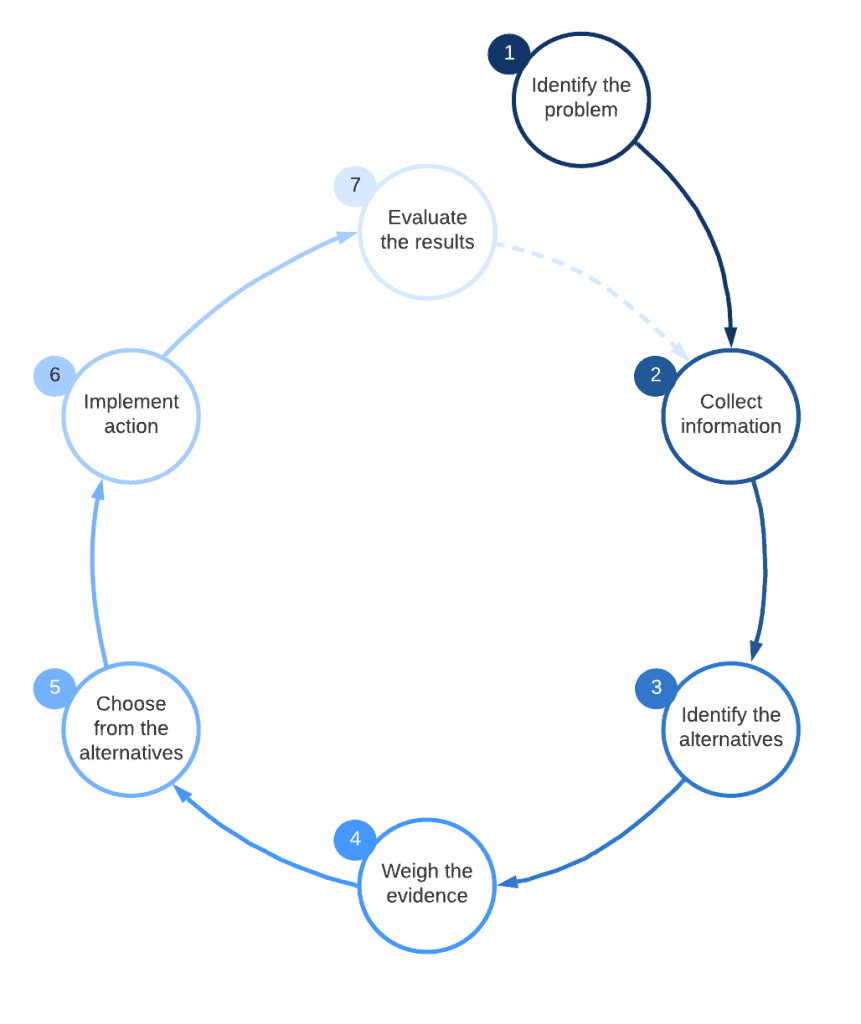
A döntéshozatali folyamat egy szisztematikus megközelítés a döntések meghozatalára és a cselekvési módok kiválasztására kritériumok és elérhető információk alapján. Ez magában foglalja a probléma vagy lehetőség azonosítását, a releváns információk összegyűjtését, a különböző lehetőségek mérlegelését, a lehetőségek egy meghatározott szempontrendszer alapján történő értékelését, és az értékelés alapján a legjobb lehetőség kiválasztását.
A döntéshozatali folyamat általában a következő lépésekből áll:
- Határozza meg a problémát vagy a lehetőséget: Azonosítsa azt a problémát vagy helyzetet, amely döntést igényel.
- Információgyűjtés: Gyűjtse össze a problémával vagy lehetőséggel kapcsolatos releváns adatokat és információkat.
- Azonosítsa a lehetőségeket: Hozzon létre egy listát a lehetséges megoldásokról vagy cselekvési lehetőségekről.
- Értékelje a lehetőségeket: Elemezze az egyes lehetőségek előnyeit és hátrányait, figyelembe véve a lehetséges kockázatokat és előnyöket.
- Válassza ki a legjobb lehetőséget: Válassza ki azt a lehetőséget, amely a legjobban megfelel a kritériumoknak, és megoldja a problémát, vagy kihasználja a lehetőséget.
- Hajtsa végre a határozatot: Készítsen cselekvési tervet, és hajtsa végre a kiválasztott lehetőséget.
- Értékelje az eredményt: Értékelje a döntés hatékonyságát, és azonosítsa a javítandó területeket.
Mi a döntéshozatal 3 típusa?
Az adott helyzetben szükséges döntéshozatal típusának megértése segíthet az egyéneknek vagy szervezeteknek az erőforrások, az idő és az erőfeszítés hatékonyabb elosztásában a lehető legjobb döntés meghozatalához. Itt vannak vannak a döntéshozatal típusai a menedzsment szempontjából:
- Operatív döntéshozatal: Az ilyen típusú döntéshozatal egy jól ismert, ismétlődő helyzetre reagál, amelynek napról napra megjósolható kimenetele van. Ezeket a döntéseket általában gyorsan és minimális erőfeszítéssel hozzák meg. A rendszeres kellékrendelés/személyzeti rotáció létrehozása számos döntéshozatali példa közé tartozik.
- Taktikai döntéshozatal: Ez a fajta döntéshozatal egy ismerős helyzetre reagál, de egy kicsit több elemzést és értékelést igényel. A taktikai döntéseket gyakran középszintű menedzserek hozzák meg, akiknek egyensúlyban kell lenniük az egymásnak ellentmondó célok és célkitűzések között. A számos döntéshozatali példa között szerepel annak eldöntése, hogy melyik marketingkampányt indítsuk el egy új termékhez.
- Stratégiai döntéshozatal: Az ilyen típusú döntéshozatal egy egyedi, összetett helyzetre reagálva történik, amely jelentős hatással van a szervezet jövőjére. A stratégiai döntéseket gyakran felső szintű vezetők hozzák meg, és a különböző lehetőségek alapos elemzését és értékelését igénylik. A számos döntéshozatali példa közé tartozik annak eldöntése, hogy bővíti-e a vállalat termékcsaládját, vagy új piacra lép.

Miért fontos a döntéshozatal és annak előnyei?
A döntéshozatal azért fontos, mert segít az egyéneknek és szervezeteknek tájékozott és bölcs döntéseket hozni, amelyek jobb eredményekhez és jobb teljesítményhez vezethetnek. A következő pontok alapján nincs ok a döntéshozatali folyamat figyelmen kívül hagyására.
- A célok elérése: A jó döntéshozatal segíti az egyéneket és a szervezeteket céljaik elérésében. A megalapozott és bölcs döntések meghozatalával előrelépést tehetnek céljaik felé.
- Problémamegoldás: A döntéshozatal segít a problémák megoldásában azáltal, hogy azonosítja és elemzi a problémákat, és megtalálja a legjobb megoldásokat a megoldásukra.
- Hatékonyság: A jó döntéshozatal segíthet csökkenteni egy adott cél eléréséhez szükséges időt, erőfeszítést és erőforrásokat. Segítheti az egyéneket és a szervezeteket abban, hogy hatékonyabbak és termelékenyebbek legyenek.
- Javított eredmények: A jó döntések pozitív eredményekhez vezethetnek, mint például a bevétel növekedése, a vevői elégedettség, az alkalmazottak elkötelezettsége és a jövedelmezőség.
- Kockázat kezelés: A hatékony döntések meghozatala segít a kockázatok kezelésében azáltal, hogy azonosítja a lehetséges problémákat, és készenléti terveket készít azok hatásának minimalizálása érdekében.
- Személyes növekedés: A döntéshozatal segíthet az egyéneknek a kritikai gondolkodás és a problémamegoldó készségek fejlesztésében, amelyek elengedhetetlenek a személyes növekedéshez és fejlődéshez.
Melyek a legjobb döntéshozatali példák?
A központosított döntéshozatal legjobb döntéshozatali példái
Központosított döntéshozatal olyan döntéshozatali folyamatra utal, amelyben egyetlen egyén vagy egyének csoportja rendelkezik felhatalmazással és felelősséggel, hogy döntéseket hozzon egy szervezet vagy csoport nevében, gyakran a legtapasztaltabb emberek által. A meghozott döntések kötelező érvényűek, és azokat a szervezet minden tagjának be kell tartania. Itt van néhány központosított döntéshozatali példák amire hivatkozhatsz:
- Katonai szervezetek: A katonai szervezetekben a döntéseket gyakran egy központi parancsnoki struktúra hozza meg. A parancsnokok által kiadott parancsokat a szervezet minden tagjának be kell tartania.
- Vállalati szervezetek: A vállalati szervezetekben a felső vezetés felelős a legfontosabb döntések meghozataláért, amelyek befolyásolják a vállalat irányát és működését. A legjobb döntéshozatali példák a fúziókkal és felvásárlásokkal, a termékfejlesztéssel és a piacbővítéssel kapcsolatos döntések, amelyeket általában a felsővezetők hozzák meg.
- Kormányzati szervezetek: A kormányzati szervezetekben a politikával és a jogalkotással kapcsolatos döntéseket választott tisztségviselők és kinevezett bürokraták hozzák meg. Ezek a határozatok kötelező erejűek, és azokat a kormány minden tagjának és a nyilvánosságnak be kell tartania.
- Oktatási intézmények: Az oktatási intézményekben a tantervvel, a kurzuskínálattal és a tanulmányi színvonallal kapcsolatos döntéseket központi adminisztráció hozza meg. Az oktatóknak be kell tartaniuk ezeket a döntéseket az akkreditáció fenntartása és a hallgatói igények kielégítése érdekében.
- Non-profit szervezetek: A nonprofit szervezeteknél sok jó döntéshozatali példát láthatunk, például az adománygyűjtéssel, programfejlesztéssel, önkéntes menedzsmenttel kapcsolatos döntéseket gyakran egy központi igazgatóság hozza meg. Ezeket a döntéseket az alkalmazottaknak és az önkénteseknek be kell tartaniuk a szervezet küldetésének teljesítése érdekében.

A decentralizált döntéshozatal legjobb döntéshozatali példái
Decentralizált döntéshozatal olyan döntéshozatali folyamatra utal, ahol a hatalom és a felelősség több egyén vagy csoport között oszlik meg egy szervezeten vagy csoporton belül. Minden csoport vagy egyén bizonyos szintű autonómiával rendelkezik a saját szakterületén belüli döntéshozatalban. A meghozott döntések általában a helyi csapatra épülnek, és a döntéshozatali folyamatban nagyobb a rugalmasság és a kreativitás lehetősége.
Sok kiváló van decentralizált döntéshozatal példák az alábbiak szerint:
- Holacracy: A holakrácia kiemelkedő döntéshozatali példa, mivel az önszerveződést és a decentralizált döntéshozatalt hangsúlyozó vezetési filozófiát követi. A hagyományos irányítási hierarchiákat felváltja az önkormányzati körök rendszere, ahol minden körnek joga van döntést hozni saját szakterületén.
- Agilis módszertan: Az agilis módszertan a projektmenedzsment olyan megközelítése, amely az együttműködést és a decentralizált döntéshozatalt hangsúlyozza. A csapattagok felhatalmazást kapnak arra, hogy szakterületükön alapuló döntéseket hozzanak, és arra ösztönzik őket, hogy közösen dolgozzanak egy közös cél elérése érdekében.
- Iskolai irányítás: Döntéshozatali példákként az oktatásban az iskolai menedzsment jó megoldás. Hangsúlyozza a döntéshozatal decentralizált megközelítését, ahol az iskolák nagyobb autonómiát kapnak a tantervvel, a költségvetéssel és a személyzettel kapcsolatos döntések meghozatalában.
- szövetkezetek: A szövetkezetek a tagjaik tulajdonában lévő és általuk ellenőrzött szervezetek, amelyek demokratikus folyamaton keresztül hoznak döntéseket. Minden tag egyformán beleszól a döntéshozatali folyamatba, a döntéseket a tagok igényei és prioritásai alapján hozzák meg.
- Nyílt forráskódú szoftverfejlesztés: A nyílt forráskódú szoftverfejlesztés azt jelenti, hogy a kódot szabadon hozzáférhetővé teszik a nyilvánosság számára, fejlesztéséhez bárki hozzájárulhat. A szoftver irányával és fejlesztésével kapcsolatos döntések olyan együttműködési folyamaton keresztül születnek, amelyben a közreműködők nagy közössége vesz részt.

Tippek a döntéshozatali folyamathoz az AhaSlides segítségével
AhaSlides egy online eszköz, amely szórakoztatóbbá és vonzóbbá teheti a döntéshozatalt. Íme néhány módszer, amellyel az AhaSlides javíthatja a döntéshozatali folyamatot:
- Interaktív szavazás: Az AhaSlides lehetővé teszi a létrehozást interaktív szavazás ahol a résztvevők szavazhatnak a különböző lehetőségekre okostelefonjaik vagy más eszközeik segítségével. Ez vonzóbbá teszi a döntéshozatali folyamatot, és minden érintett részvételét ösztönzi.
- Valós idejű visszajelzés: Az AhaSlides valós idejű visszajelzést ad a szavazás eredményeiről. Így láthatja az eredményeket, és a kapott visszajelzések alapján dönthet.
- Szemléltetőeszközök-grafikai segédanyagok: Az AhaSlides vizuális segédeszközöket, például diagramokat és grafikonokat biztosít a szavazás eredményeinek értelmezéséhez. Ez megkönnyíti a visszajelzések megértését és a megalapozott döntések meghozatalát.
- Együttműködés: Az AhaSlides lehetővé teszi a résztvevők közötti együttműködést, ami javíthatja a döntéshozatali folyamatot. A résztvevők megoszthatják egymással ötleteiket, megvitathatják a lehetőségeket, és együtt dolgozhatnak a legjobb megoldás kidolgozásán élőben szó felhő funkciót.
- Spinner kerék: Ha olyan vidám döntéshozatalról van szó, mint a véletlenszerű döntések meghozatala, testreszabhatja az opciókat és forgasd meg a kereket hogy elfogultság nélkül felfedje az eredményt.

Záró gondolatok
Összességében számos tényező befolyásolja a döntéshozatalt. Több gyakorlásra van szükség a helyes döntés meghozatalához. A döntéshozatali példákból való tanulás mellett az embereknek más vezetői készségeikben is fejleszteniük kell magukat, hogy jobb döntéseket hozhassanak, különösen nehézségek esetén.
ref: BBC
Gyakran ismételt kérdések
Mik a döntési példák a diákok számára?
A hallgatók tanulmányi útjuk során gyakran találkoznak különféle döntéshozatali helyzetekkel. Íme néhány példa azokra a döntéshozatali forgatókönyvekre, amelyekkel a hallgatók találkozhatnak, ideértve a kurzusválasztást, az időgazdálkodást, a tanulási technikákat, a tanórán kívüli tevékenységeket, a szakmai gyakorlatot és az állásajánlatokat, hogy megnézzék, érdemes-e külföldön tanulniuk, kutatási vagy szakdolgozati témákon dolgozniuk -érettségi tervek.
Melyek a felelősségteljes döntéshozatali példák?
A felelősségteljes döntéshozatal magában foglalja az etikai, erkölcsi és hosszú távú következmények mérlegelését a döntések meghozatalakor, például a környezettudatosság, az etikai dilemmák, a társak nyomása és a szerhasználat, a tudományos feddhetetlenség, az online viselkedés és az internetes zaklatás, a pénzügyi felelősség, az egészség és a jólét. , társadalmi felelősségvállalás és civil szerepvállalás, konfliktusok megoldása és felelős technológiahasználat.