
Here's a frustrating truth about corporate training: most sessions fail before they even begin. Not because the content is bad, but because the planning is rushed, the delivery is one-directional, and participants disengage within fifteen minutes.
Sound familiar?
Research shows that 70% of employees forget training content within 24 hours when sessions are poorly planned. Yet the stakes couldn't be higher—68% of employees consider training the most important company policy, and 94% would stay longer at companies that invest in their learning and development.
The good news? With a solid training session plan and the right engagement strategies, you can transform sleepy presentations into experiences where participants actually want to learn.
This guide walks you through the complete training session planning process using the ADDIE framework, an industry-standard instructional design model used by professional trainers worldwide.
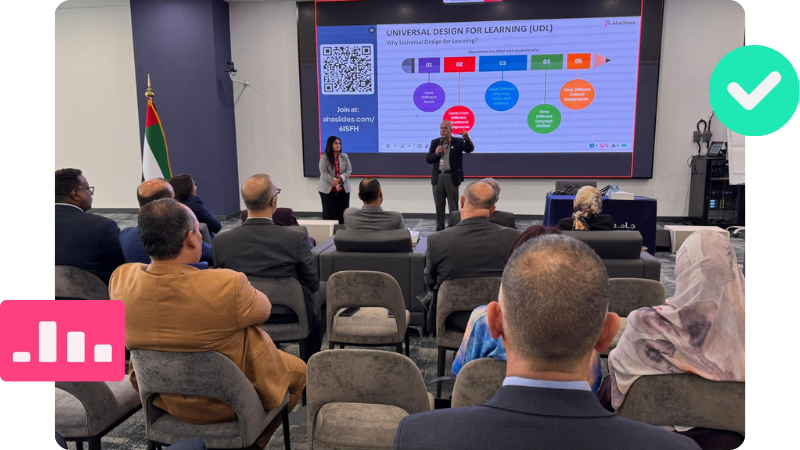
What Makes an Effective Training Session?
A training session is any structured gathering where employees gain new skills, knowledge, or capabilities they can immediately apply to their work. But there's a massive difference between mandatory attendance and meaningful learning.
Types of Effective Training Sessions
Workshops: Hands-on skill-building where participants practice new techniques
- Example: Leadership communication workshop with role-play exercises
Seminars: Topic-focused discussions with two-way dialogue
- Example: Change management seminar with group problem-solving
Onboarding programmes: New hire orientation and role-specific training
- Example: Product knowledge training for sales teams
Professional development: Career advancement and soft skills training
- Example: Time management and productivity training
The Science of Retention
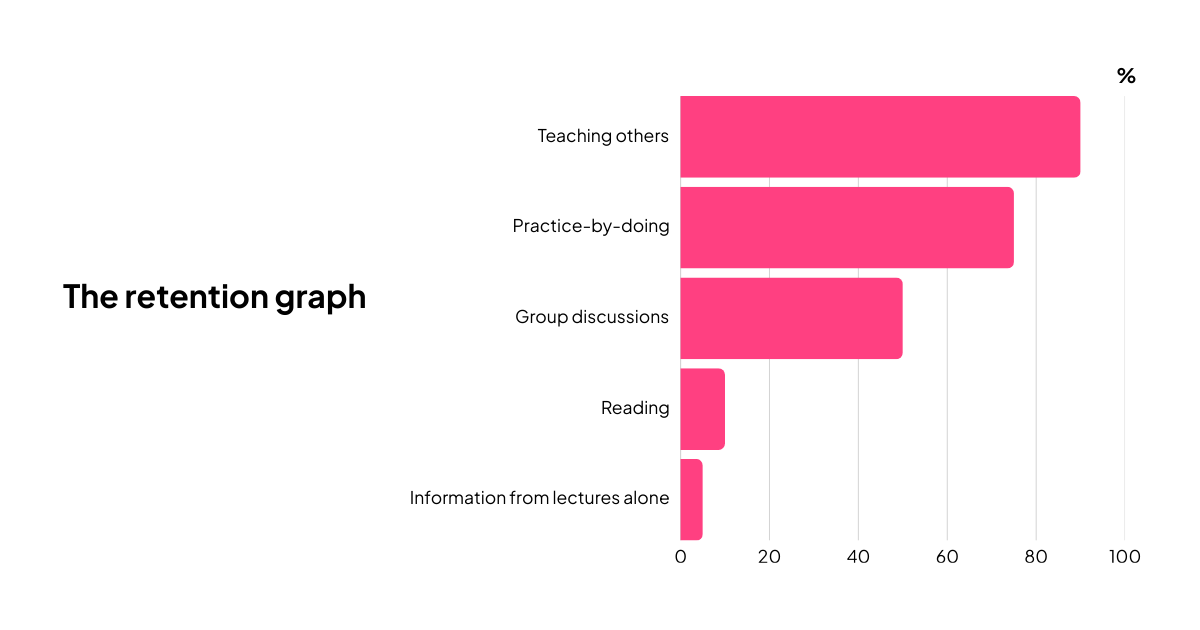
According to the National Training Laboratories, participants retain:
- 5% of information from lectures alone
- 10% from reading
- 50% from group discussions
- 75% from practice-by-doing
- 90% from teaching others
This is why the most effective training sessions incorporate multiple learning modalities and emphasise participant interaction over presenter monologue. Interactive elements like live polls, quizzes, and Q&A sessions don't just make training more enjoyable, they fundamentally improve how much participants retain and apply.
The ADDIE Framework: Your Planning Blueprint
Taking time to plan your training session isn't just good practice, it's the difference between knowledge that sticks and time wasted. The ADDIE model provides a systematic approach used by instructional designers worldwide.
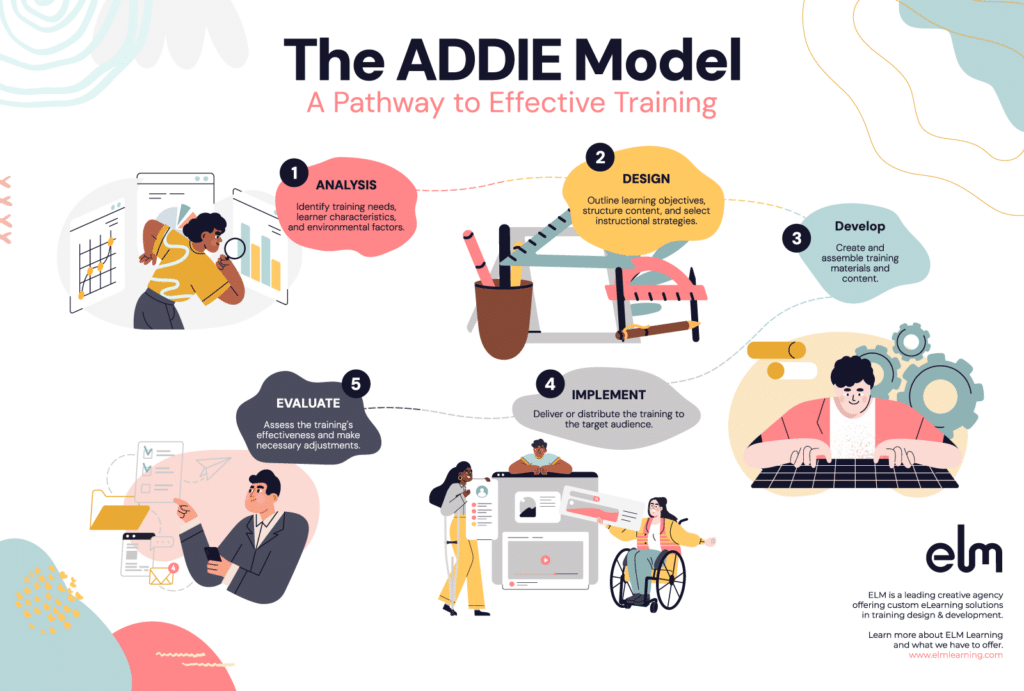
ADDIE stands for:
A - Analysis: Identify training needs and learner characteristics
D - Design: Define learning objectives and choose delivery methods
D - Development: Create training materials and activities
I - Implementation: Deliver the training session
E - Evaluation: Measure effectiveness and gather feedback
Why ADDIE Works
- Systematic approach: Nothing is left to chance
- Learner-centred: Starts with actual needs, not assumptions
- Measurable: Clear objectives enable proper evaluation
- Iterative: Evaluation informs future improvements
- Flexible: Applies to in-person, virtual, and hybrid training
The rest of this guide follows the ADDIE framework, showing you exactly how to plan each phase—and how interactive technology like AhaSlides supports you at every step.
Step 1: Conduct a Needs Assessment (Analysis Phase)
The biggest mistake trainers make? Assuming they know what their audience needs. According to the Association for Talent Development's 2024 State of the Industry Report, 37% of training programmes fail because they don't address actual skill gaps.
How to Identify Real Training Needs
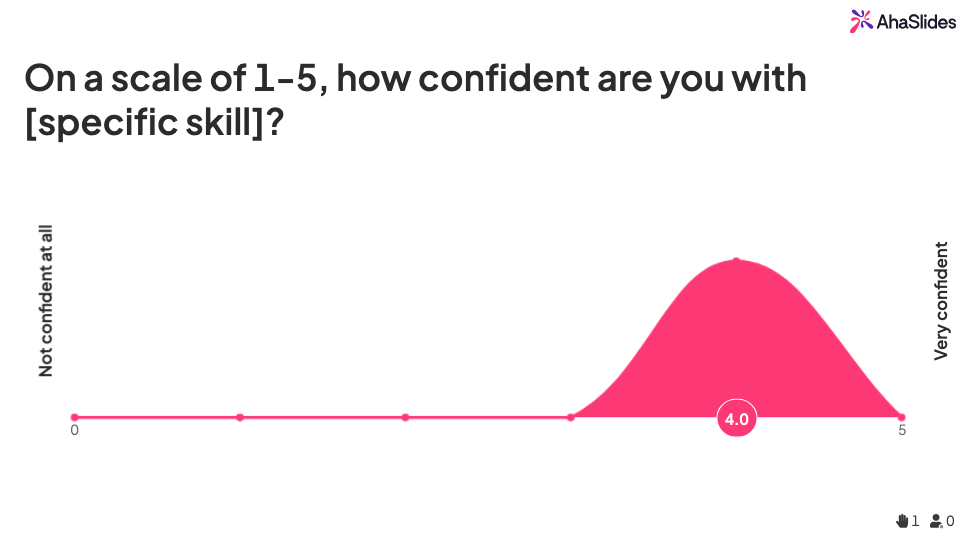
Pre-training surveys: Send anonymous surveys asking "On a scale of 1-5, how confident are you with [specific skill]?" and "What's your biggest challenge when [performing task]?" Use AhaSlides' survey feature to collect and analyse responses.
Performance data analysis: Review existing data for common errors, productivity lags, customer complaints, or manager observations.
Focus groups and interviews: Speak directly with team leaders and participants to understand day-to-day challenges and previous training experiences.
Understanding Your Audience
Adults bring experience, need relevance, and want practical application. Know their current knowledge level, learning preferences, motivations, and constraints. Your training must respect this, no patronising, no fluff, just actionable content they can use immediately.
Step 2: Write Clear Learning Objectives (Design Phase)
Vague training goals lead to vague results. Your learning objectives must be specific, measurable, and achievable.
Every learning objective should be SMART:
- Specific: Exactly what will participants be able to do?
- Measurable: How will you know they learned it?
- Achievable: Is it realistic given the time and resources?
- Relevant: Does it connect to their actual work?
- Time-bound: By when should they master this?
Examples of Well-Written Objectives
Bad objective: "Understand effective communication"
Good objective: "By the end of this session, participants will be able to deliver constructive feedback using the SBI (Situation-Behaviour-Impact) model in role-play scenarios."
Bad objective: "Learn about project management"
Good objective: "Participants will be able to create a project timeline using Gantt charts and identify critical path dependencies for their current project by the end of week 2."
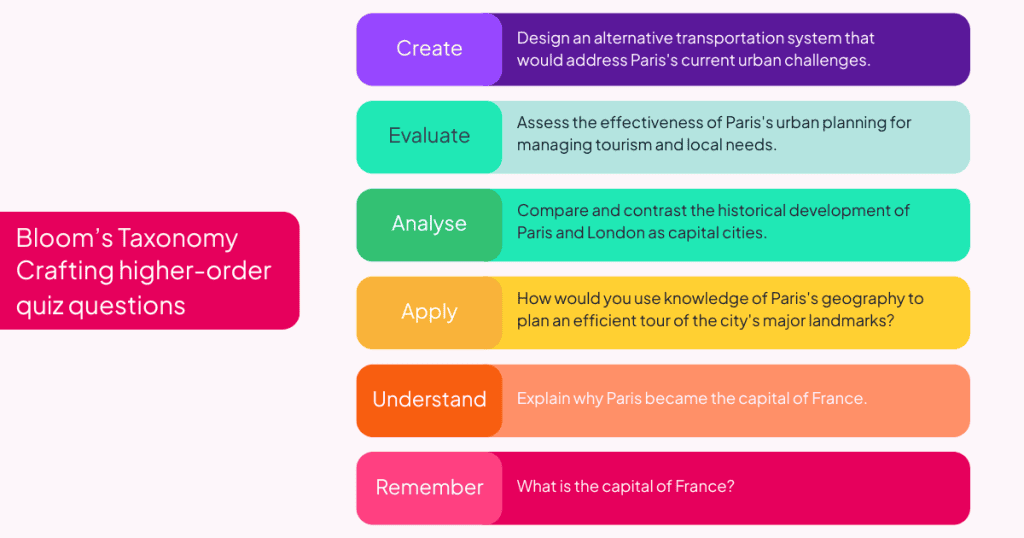
Bloom's Taxonomy for Objective Levels
Structure objectives based on cognitive complexity:
- Remember: Recall facts and basic concepts (define, list, identify)
- Understand: Explain ideas or concepts (describe, explain, summarise)
- Apply: Use information in new situations (demonstrate, solve, apply)
- Analyse: Draw connections among ideas (compare, examine, distinguish)
- Evaluate: Justify decisions (assess, critique, judge)
- Create: Produce new or original work (design, construct, develop)
For most corporate training, aim for "Apply" level or higher—participants should be able to do something with what they've learned, not just recite information.
Step 3: Design Engaging Content and Activities (Development Phase)
Now that you know what participants need to learn and your objectives are clear, it's time to design how you'll teach it.
Content Sequencing and Timing
Start with why this matters to them before diving into "how." Build progressively from simple to complex. Use the 10-20-70 rule: 10% opening and context-setting, 70% core content with activities, 20% practice and wrap-up.
Change activity every 10-15 minutes to maintain attention. Mix these throughout:
- Icebreakers (5-10 min): Quick polls or word clouds to gauge starting points.
- Knowledge checks (2-3 min): Quizzes for instant comprehension feedback.
- Small group discussions (10-15 min): Case studies or problem-solving together.
- Role-plays (15-20 min): Practice new skills in safe environments.
- Brainstorming: Word clouds to collect ideas from everyone simultaneously.
- Live Q&A: Anonymous questions throughout, not just at the end.
Interactive Elements That Boost Retention
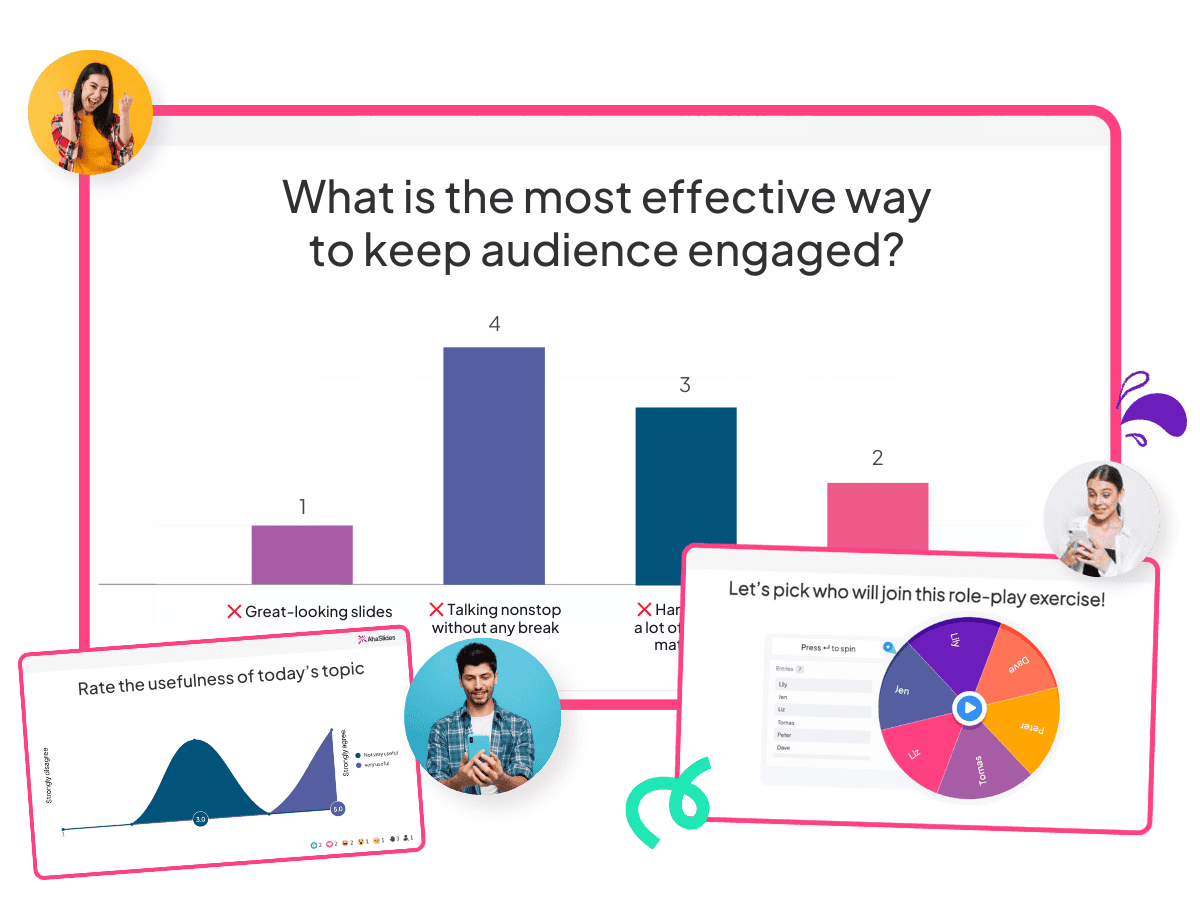
Traditional lectures result in 5% retention. Interactive elements boost this to 75%. Live polls gauge understanding in real-time, quizzes make learning game-like, and word clouds enable collaborative brainstorming. The key is seamless integration—enhance your content without interrupting flow.
Step 4: Develop Your Training Materials (Development Phase)
With your content structure planned, create the actual materials participants will use.
Design Principles
Presentation slides: Keep them simple, one main idea per slide, minimal text (6 bullet points max, 6 words each), clear fonts readable from the back of the room. Use AhaSlides' AI Presentation Maker to generate structures quickly, then integrate polls, quizzes, and Q&A slides between content.
Participant guides: Handouts with key concepts, space for notes, activities, and job aids they can reference later.
For accessibility: Use high-contrast colours, readable font sizes (minimum 24pt for slides), captions for videos, and offer materials in multiple formats.
Step 5: Plan Interactive Delivery Strategies (Implementation Phase)
Even the best content falls flat without engaging delivery.
Session Structure
Opening (10%): Welcome, review objectives, icebreaker, set expectations.
Core content (70%): Present concepts in chunks, follow each with activities, use interactive elements to check understanding.
Closing (20%): Summarise takeaways, action planning, final Q&A, evaluation survey.
Facilitation Techniques
Ask open-ended questions: "How would you apply this in your current project?" Use 5-7 second wait time after questions. Normalise "I don't know" to create psychological safety. Make everything interactive—use polls for voting, Q&A for questions, brainstorming for obstacles.
Virtual and Hybrid Training
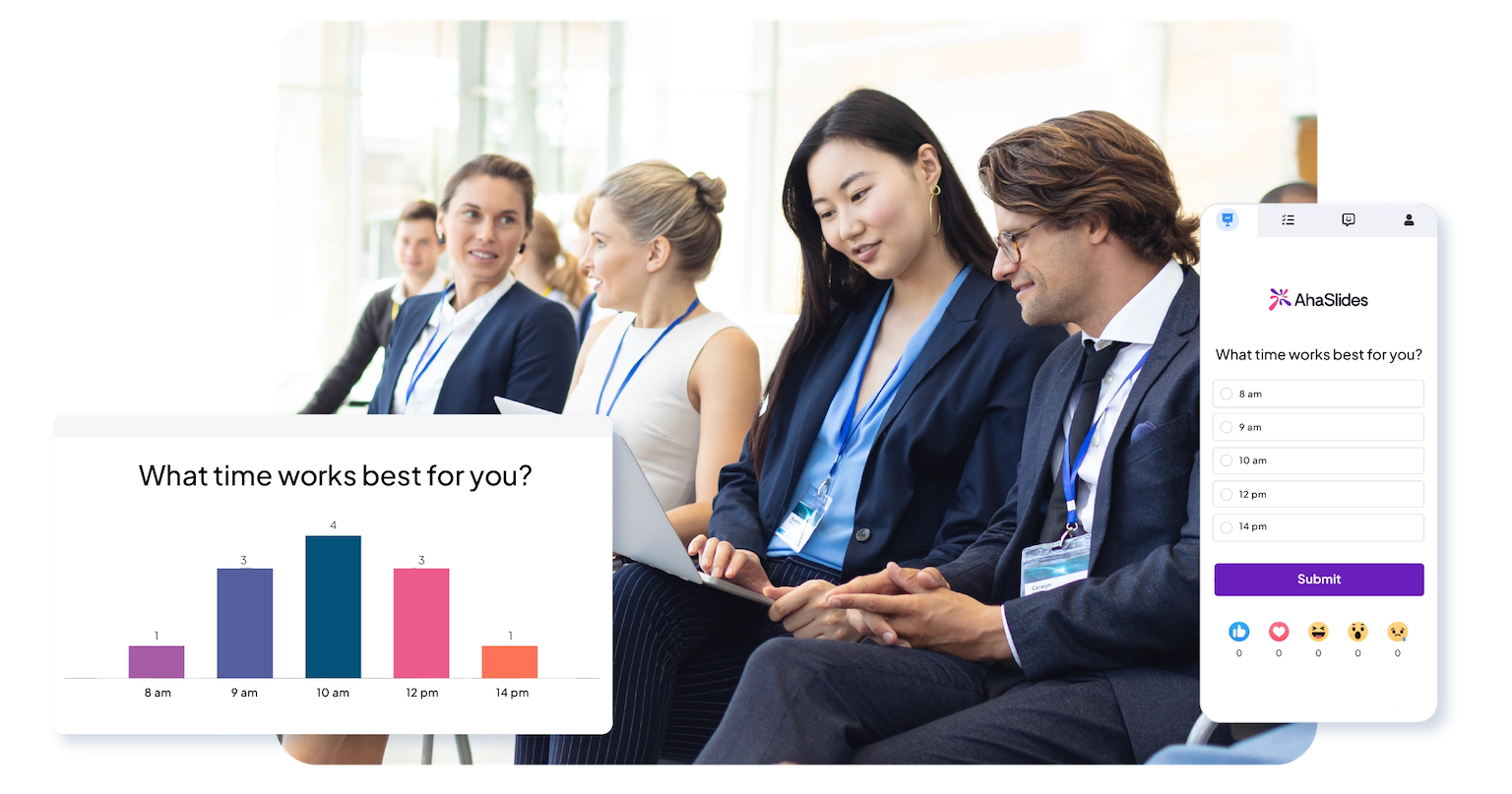
AhaSlides works across all formats. For virtual sessions, participants join from devices regardless of location. For hybrid sessions, both in-room and remote participants engage equally through their phones or laptops—no one is left out.
Step 6: Evaluate Training Effectiveness (Evaluation Phase)
Your training isn't complete until you've measured whether it worked. Use Kirkpatrick's Four Levels of Evaluation:
Level 1 - Reaction: Did participants like it?
- Method: End-of-session survey with rating scales
- AhaSlides feature: Quick rating slides (1-5 stars) and open-ended feedback
- Key questions: "How relevant was this training?" "What would you change?"
Level 2 - Learning: Did they learn?
- Method: Pre- and post-tests, quizzes, knowledge checks
- AhaSlides feature: Quiz results show individual and group performance
- What to measure: Can they demonstrate the skills/knowledge taught?
Level 3 - Behaviour: Are they applying it?
- Method: Follow-up surveys 30-60 days later, manager observations
- AhaSlides feature: Send automated follow-up surveys
- Key questions: "Have you used [skill] in your work?" "What results did you see?"
Level 4 - Results: Did it impact business outcomes?
- Method: Track performance metrics, KPIs, business results
- Timeline: 3-6 months post-training
- What to measure: Productivity improvements, error reduction, customer satisfaction
Using Data to Improve
AhaSlides' Reports & Analytics feature lets you:
- See which questions participants struggled with
- Identify topics that need more explanation
- Track participation rates
- Export data for stakeholder reporting
Use these insights to refine your training for next time. The best trainers continuously improve based on participant feedback and results.
Frequently Asked Questions
How long does it take to plan a training session?
For a 1-hour session, spend 3-5 hours on preparation: needs assessment (1 hour), content design (1-2 hours), materials development (1-2 hours). Using templates and AhaSlides can significantly reduce prep time.
What should I check before starting?
Technical: Audio/video working, AhaSlides loaded and tested, access codes working. Materials: Handouts ready, equipment available. Content: Agenda shared, objectives clear, activities timed. Environment: Room comfortable, seating appropriate.
How many activities should I include?
Change activity every 10-15 minutes. For a 1-hour session: icebreaker (5 min), three content blocks with activities (15 min each), closing/Q&A (10 min).
Sources and further reading:
- American Society for Training and Development (ATD). (2024). "State of the Industry Report"
- LinkedIn Learning. (2024). "Workplace Learning Report"
- ClearCompany. (2023). "27 Surprising Employee Development Statistics You Haven’t Heard Of"
- National Training Laboratories. "Learning Pyramid and Retention Rates"
- Kirkpatrick, D. L., & Kirkpatrick, J. D. (2006). "Evaluating Training Programs"