

Choosing the right topic is half the battle. Research from the University of Wolverhampton found that topic familiarity directly correlates with presenter confidence and audience engagement - meaning the easier and more natural the topic feels to you, the better your delivery will be.
We've curated 150+ easy presentation topics organized by audience and setting, plus a practical framework for picking the one that'll land best. Whether you're a student prepping for class, a trainer designing a workshop, or a professional presenting at your next team meeting, you'll find something here that fits.
How to choose the right presentation topic
Before scrolling through the lists, run your idea through these four filters. They'll save you hours of second-guessing.
Match it to your audience. A room of marketing professionals cares about different things than a classroom of high schoolers. Consider what your audience already knows, what problems they face, and what would genuinely surprise or help them.
Pick something you can speak to without notes. The best presentations come from lived experience. If you've done it, studied it, or care deeply about it, your natural enthusiasm becomes a presentation superpower. Research from Wharton professor Jonah Berger shows that emotional arousal - including excitement and passion - significantly increases audience attention and information retention.
Keep the scope narrow. "Climate change" is a semester-long course. "Three changes my campus made to reduce waste by 40%" is a ten-minute presentation. Narrow beats broad every time.
Think about interaction potential. The strongest presentations invite participation. Can your topic support a live poll? A quick quiz? A word cloud moment where everyone contributes? Topics that allow two-way conversation consistently outperform one-way lectures, according to research from Harvard's Initiative on Technology and Education.
Easy presentation topics for students
Middle and high school
- How social media changed the way we communicate
- The science behind your favorite sport
- Why sleep matters more than you think
- How to spot misinformation online
- The psychology of your favorite color
- What your music taste says about you
- How video games develop real skills
- The history behind a food you eat every day
- Three things school doesn't teach you about money
- How animals communicate without words
More quick ideas: Hidden history of your hometown, how memes spread like viruses, the real cost of fast fashion, why some songs get stuck in your head, optical illusions and how they trick your brain, what astronauts eat in space, how languages die and why it matters, the evolution of smartphones in 15 years, why do we dream, the world's strangest sports.
College and university
College audiences are ready for more nuance. These topics balance accessibility with intellectual depth.
- How AI is reshaping the job market you're entering
- The psychology of procrastination (and what actually helps)
- Why diverse teams outperform homogeneous ones
- Digital minimalism: reclaiming focus in a distracted world
- The economics of streaming platforms
- Imposter syndrome: why high achievers doubt themselves
- How architecture shapes human behavior
- The science of persuasion (and how brands use it on you)
- Why some startups fail and what founders wish they knew
- The hidden cost of "free" apps and services
More quick ideas: Mental health on campus and what works, the future of remote work, cryptocurrency explained without the jargon, how bias shapes the news you read, the science of habit formation, microplastics in everything, the gig economy pros and cons, ethical dilemmas in genetic engineering, what makes a TED talk memorable, cultural intelligence in a globalized world.
Easy presentation topics for professionals
These topics suit team meetings, lunch-and-learns, workshops, and professional development sessions. They're designed to spark discussion and drive actionable outcomes.
Workplace and career development
- How to give feedback that people actually hear
- The meeting that should have been an email
- Building psychological safety in your team
- Three communication frameworks that changed how I lead
- Why your best ideas come in the shower (and how to capture them)
- How to present data without putting people to sleep
- The power of saying no at work
- Remote work lessons we should keep
- What cross-functional collaboration actually requires
- How to recover from a failed presentation
More quick ideas: Time management myths debunked, how to run a productive brainstorm, dealing with difficult stakeholders, the art of the 5-minute standup, why employee engagement surveys miss the point, turning customer complaints into product improvements, presentation skills for introverts, the cost of context switching, building your personal brand internally, managing up without being political.
Training and L&D
If you facilitate training sessions, these topics help you model engagement while delivering content.
- Why 70% of training content is forgotten within 24 hours
- Microlearning: why shorter sessions stick better
- How to make compliance training not terrible
- Gamification in learning: hype vs. evidence
- Designing training for different learning styles
Easy topics for 5-minute presentations
Short presentations need focused topics with a clear single takeaway. These work well for lightning talks, class assignments, or icebreaker sessions.
Science and technology: How GPS actually works, why planes don't fly in a straight line, the Dunning-Kruger effect in three minutes, how noise-canceling headphones work, what happens to your brain when you multitask.
Culture and society: Why some countries drive on the left, the origin story of your favorite emoji, how tipping culture varies worldwide, the most translated book that isn't the Bible, why we shake hands (and why some cultures don't).
Personal development: The two-minute rule for beating procrastination, how journaling rewires your brain, the power of a 20-second hug (oxytocin science), one book that changed my perspective, three lessons from my biggest failure.
Fun and unexpected: The surprisingly complex economics of a pizza delivery, how one typo caused a $225 million loss, why we can't tickle ourselves, the psychology behind "guilty pleasure" shows, how elevators changed the shape of cities.
How to turn any topic into an engaging presentation
Picking the right topic is step one. Making it interactive is what separates a good presentation from one people actually remember.
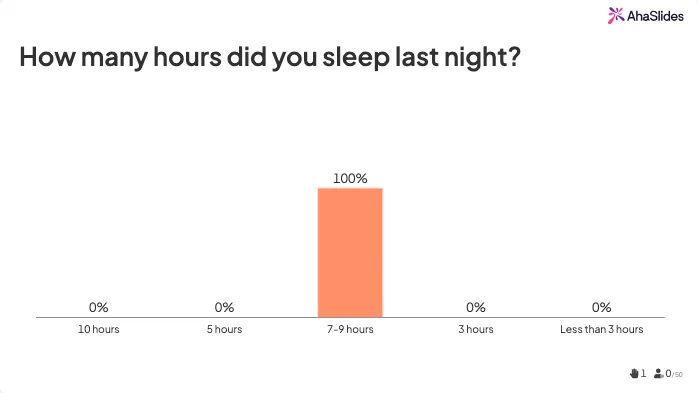
Open with a question, not a title slide. Instead of "Today I'll talk about sleep science," try launching a live poll: "How many hours of sleep did you get last night?" When your audience sees their own data on screen, they're immediately invested.
Build in checkpoints. Every 10-15 minutes, pause for a quick interaction. A one-question quiz, a word cloud, or a simple "thumbs up/thumbs down" poll keeps attention from drifting. Research from the National Training Laboratories suggests that retention jumps from 5% (lecture) to 75% when learners practice or teach back what they've learned.
Close with collective insight. End with an open-ended question that lets the audience share their takeaway. When people articulate what they've learned in their own words, they're far more likely to remember it.
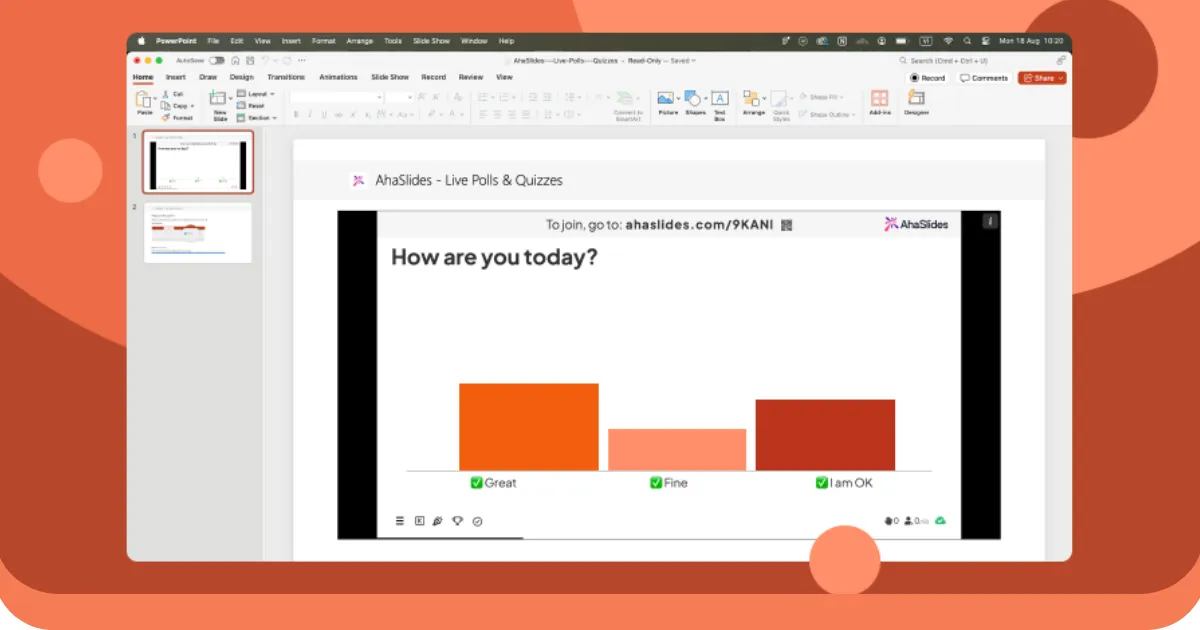
Tools like AhaSlides make this easy to execute. You can embed live polls, quizzes, and word clouds directly into your presentation - whether you're building from scratch or working within PowerPoint or Google Slides. Your audience joins from their phones, and responses appear on screen in real time.
Frequently asked questions
What is the easiest topic to present on?
Topics you have personal experience with are always easiest. If you can speak about something without reading from notes, you'll present with more confidence and authenticity. Common easy picks include hobbies, life lessons, how-to guides, and opinion-based topics where you have a clear stance.
What are good 5-minute presentation topics?
Choose something with a single clear takeaway. "How the two-minute rule beats procrastination" or "Why we can't tickle ourselves" both work because they promise and deliver one idea. Avoid topics that require extensive background context - if you need three minutes of setup, you've only got two minutes of substance.
How do I make a boring topic interesting?
Start with something your audience doesn't expect. If you're presenting on quarterly budgets, open with "This slide deck could save us $50,000." If it's a compliance topic, try a live quiz to test what people think they know versus what the regulations actually say. Surprise and participation transform even dry material into something people pay attention to.
How do I choose a topic when I have no idea what to present?
Think about three things: what did you learn recently that surprised you, what do people always ask you about, and what frustrates you that you wish more people understood? Any of these angles will give you both a topic and natural energy to present it well.
.webp)