


'Most likely to' questions are a fast, low-pressure way to warm up a room. Each one asks the group to nominate a colleague, "Who is most likely to remember everyone's birthdays?", and the answers spark laughter, mild surprise and a quick sense of who is who. For onboarding, workshops and all-hands meetings, they do real work: they build the psychological safety that Google's Project Aristotle found was the single biggest predictor of high-performing teams.
Below are 120+ workplace-appropriate questions across eight categories, plus a simple way to run the whole thing as a live poll so every vote is counted and shown on screen in seconds.
How to run a 'most likely to' session
A good session takes five to ten minutes and needs almost no setup.
- Frame it with a purpose. A sentence is enough: "This helps us learn how we each work." That removes the eye-roll and sets a professional tone.
- Collect votes digitally. Asking people to shout names is slow and leaves quieter voices out. A live poll lets everyone vote at once from their phones, shows results instantly and can stay anonymous where a question is more personal.
- Invite a one-line story. When a name comes up, a quick "go on then, why you?" adds warmth without derailing the pace.
- Keep it moving. Six to ten questions is plenty for one sitting. Stop while people still want more.
Run it as a live poll with AhaSlides
The activity is, in effect, a series of quick votes: a question, a group of voters, and results you read together. AhaSlides' live polls are built for exactly that.
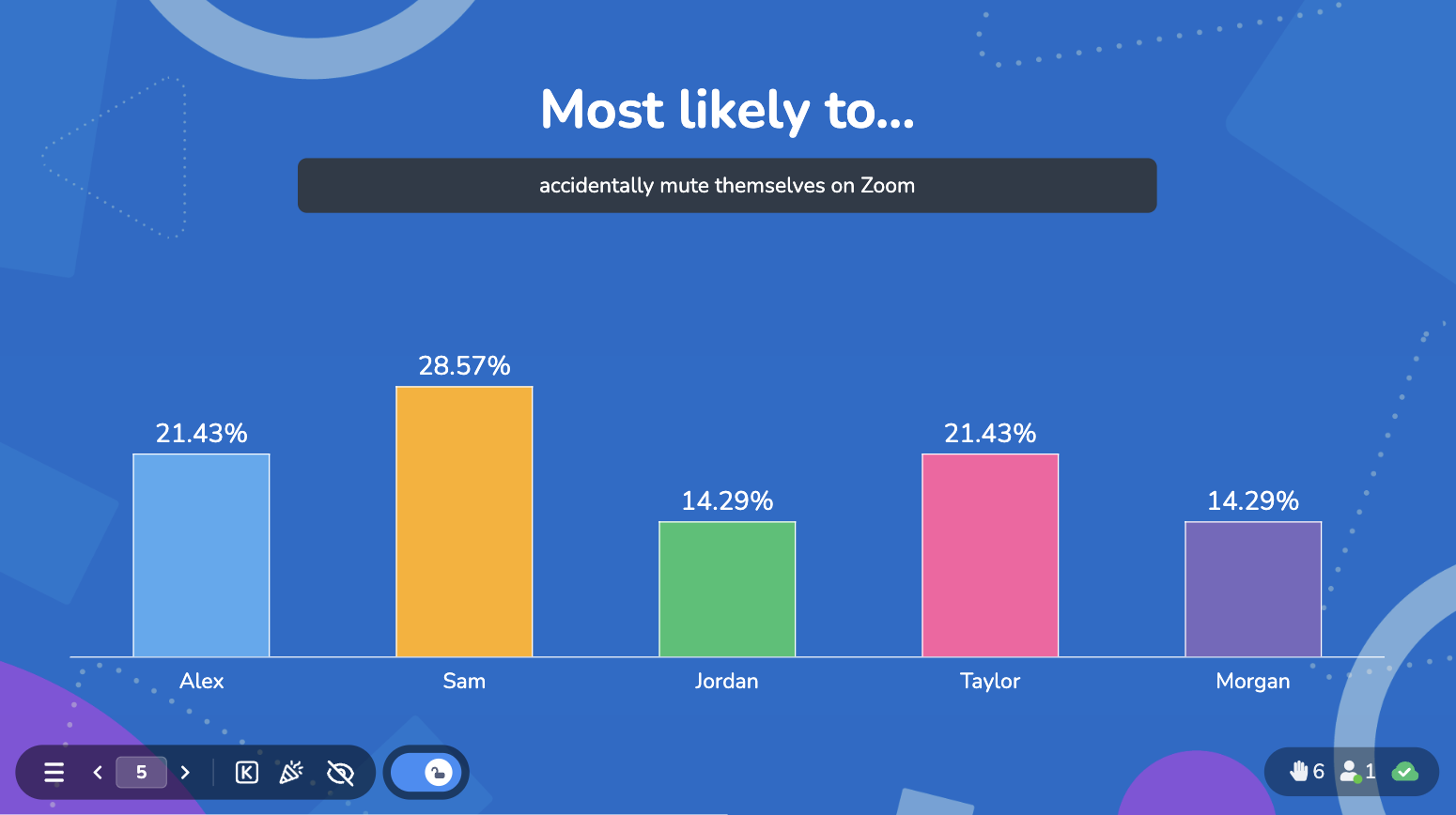
Set up your 'most likely to' questions as a run of polls, share a join code or QR, and watch votes arrive in real time on the big screen. Because you can make any question anonymous, the wellbeing and personal ones stay safe to answer honestly. When the session ends, the results are gathered in one view, so you can spot patterns, "our whole team picked the same person to lead in a crisis", and export them to revisit later.
If you would rather gather open-ended nominations than pick from a list, a word cloud lets everyone type a name and shows the most-chosen largest. Either way it levels the field for remote and hybrid teams: someone dialling in from home votes on exactly the same footing as the people in the room. For a recurring team, a quick follow-up poll a month later, "which working styles have you noticed most?", turns a one-off icebreaker into an ongoing read on how the team is gelling.
120+ 'most likely to' questions
Icebreakers for new teams and onboarding
- Who is most likely to have an interesting hidden talent?
- Who is most likely to know the answer to a random trivia question?
- Who is most likely to remember everyone's birthdays?
- Who is most likely to suggest a team coffee run?
- Who is most likely to organise a team social event?
- Who is most likely to have visited the most countries?
- Who is most likely to speak multiple languages?
- Who is most likely to have the longest commute to work?
- Who is most likely to be first in the office each morning?
- Who is most likely to bring homemade treats for the team?
- Who is most likely to have an unusual hobby?
- Who is most likely to win a board game night?
- Who is most likely to know the lyrics to every 80s song?
- Who is most likely to survive longest on a desert island?
- Who is most likely to become famous one day?
Team dynamics and working styles
- Who is most likely to volunteer for a challenging project?
- Who is most likely to spot a small error in a document?
- Who is most likely to stay late to help a colleague?
- Who is most likely to come up with a creative solution?
- Who is most likely to ask the difficult question everyone is thinking?
- Who is most likely to keep the team organised?
- Who is most likely to research thoroughly before deciding?
- Who is most likely to push for innovation?
- Who is most likely to keep everyone on schedule in meetings?
- Who is most likely to remember action items from last week?
- Who is most likely to mediate a disagreement?
- Who is most likely to prototype something without being asked?
- Who is most likely to challenge the status quo?
- Who is most likely to create a detailed project plan?
- Who is most likely to spot opportunities others miss?
Leadership and professional growth
- Who is most likely to become a CEO one day?
- Who is most likely to start their own business?
- Who is most likely to mentor junior team members?
- Who is most likely to lead a major organisational change?
- Who is most likely to win an industry award?
- Who is most likely to speak at a conference?
- Who is most likely to write a book about their expertise?
- Who is most likely to take on a stretch assignment?
- Who is most likely to become the go-to expert in their field?
- Who is most likely to change careers completely?
- Who is most likely to inspire others to reach their goals?
- Who is most likely to build the strongest professional network?
- Who is most likely to champion diversity and inclusion?
- Who is most likely to launch an internal innovation project?
- Who is most likely to negotiate the best deal?
Communication and collaboration
- Who is most likely to send the most thoughtful email?
- Who is most likely to share a useful article with the team?
- Who is most likely to give constructive feedback?
- Who is most likely to lighten the mood during stressful times?
- Who is most likely to remember what everyone said in a meeting?
- Who is most likely to facilitate a productive brainstorm?
- Who is most likely to bridge gaps between departments?
- Who is most likely to write clear documentation?
- Who is most likely to check in on a struggling colleague?
- Who is most likely to celebrate team wins?
- Who is most likely to have the best presentation skills?
- Who is most likely to turn a conflict into a productive conversation?
- Who is most likely to make everyone feel included?
- Who is most likely to translate complex ideas into simple terms?
- Who is most likely to bring energy to a tired meeting?
Problem-solving and innovation
- Who is most likely to solve a technical crisis?
- Who is most likely to think of a solution no one else considered?
- Who is most likely to turn a constraint into an opportunity?
- Who is most likely to prototype an idea over the weekend?
- Who is most likely to debug the most difficult problem?
- Who is most likely to spot the root cause of an issue?
- Who is most likely to suggest a completely different approach?
- Who is most likely to build something useful from scratch?
- Who is most likely to find a workaround when systems fail?
- Who is most likely to question assumptions everyone else accepts?
- Who is most likely to research a decision properly?
- Who is most likely to connect seemingly unrelated ideas?
- Who is most likely to simplify an overcomplicated process?
- Who is most likely to test several options before committing?
- Who is most likely to create a proof of concept overnight?
Work-life balance and wellbeing
- Who is most likely to take a proper lunch break away from their desk?
- Who is most likely to encourage the team to prioritise wellbeing?
- Who is most likely to go for a walk during the workday?
- Who is most likely to have the best work-life boundaries?
- Who is most likely to disconnect completely on holiday?
- Who is most likely to suggest a team wellness activity?
- Who is most likely to decline a meeting that could be an email?
- Who is most likely to remind others to take breaks?
- Who is most likely to leave work exactly on time?
- Who is most likely to stay calm during a crisis?
- Who is most likely to share stress management tips?
- Who is most likely to suggest flexible working arrangements?
- Who is most likely to prioritise sleep over late-night work?
- Who is most likely to celebrate the small wins?
- Who is most likely to check in on team morale?
Remote and hybrid work
- Who is most likely to have the best video background?
- Who is most likely to be perfectly punctual for virtual meetings?
- Who is most likely to have technical difficulties on a call?
- Who is most likely to forget to unmute themselves?
- Who is most likely to stay on camera all day?
- Who is most likely to send the most GIFs in team chat?
- Who is most likely to work from a different country?
- Who is most likely to have the best home office setup?
- Who is most likely to join a call while walking outside?
- Who is most likely to have a pet appear on camera?
- Who is most likely to message outside working hours?
- Who is most likely to create the best virtual team event?
- Who is most likely to have the fastest internet connection?
- Who is most likely to use the most productivity apps?
- Who is most likely to hold the remote team culture together?
Light-hearted (and workplace-appropriate)
- Who is most likely to win the office fantasy football league?
- Who is most likely to know where the best coffee is?
- Who is most likely to plan the best team outing?
- Who is most likely to win at table tennis during lunch?
- Who is most likely to organise a sweepstake?
- Who is most likely to remember everyone's coffee order?
- Who is most likely to have the tidiest desk?
- Who is most likely to guess the number of jellybeans in a jar?
- Who is most likely to win a chilli cook-off?
- Who is most likely to know all the office gossip (but never spread it)?
- Who is most likely to bring the best snacks to share?
- Who is most likely to decorate their workspace for every holiday?
- Who is most likely to make the best focus playlist?
- Who is most likely to win a company talent show?
- Who is most likely to organise a surprise celebration?
Get more from the activity
The questions are the easy bit. The value comes from what you do next.
- Debrief for a few minutes. Ask "what surprised you?" and "did any pattern show up?". This turns a laugh into a genuine insight about how the team sees itself.
- Connect it to goals. If the group keeps nominating the same person to solve a crisis, that is useful information for how you assign the next hard project.
- Follow up. Referencing a result weeks later ("as our poll predicted") shows the exercise meant something and was not just filler.
Frequently asked questions
Are 'most likely to' questions appropriate for work?
Yes, when the questions stay positive and professional. Avoid anything that could embarrass or single someone out negatively. Every question in this list is framed around strengths, quirks and harmless fun.
How many questions should I use in one session?
Six to ten for a warm-up, up to fifteen if the activity is the main event. More than that and the energy dips, so save the rest for next time.
How do I include remote colleagues fairly?
Collect votes through a live poll rather than a show of hands. Everyone answers on their own device, so a colleague at home has exactly the same voice as the people in the room.
Can I make the answers anonymous?
Yes. With AhaSlides you can switch any question to anonymous, which is worth doing for the more personal wellbeing questions so people answer honestly.
Small activity, real impact
A 'most likely to' round looks trivial, but done well it builds trust, surfaces working styles and gives a team a shared laugh to build on. Choose questions that fit your group, run them as a live poll so every voice counts, debrief briefly, and link what you learn back to how the team works.
Build your questions and collect the votes in one place with AhaSlides live polls, free to start and live in minutes.