


Innovative teaching methods aren't just fancy buzzwords. They're essential tools for creating classrooms where students actually want to learn.
What are innovative teaching methods?
They are student-centred strategies that encourage learners to take part and interact with classmates and with you during lessons.
Unlike traditional teaching, which focuses on how much knowledge you pass on, they focus on what students truly take away.
Why teachers need to be innovative
With screens on every desk, it is easy for students to zone out, and dry teaching no longer cuts it.
The research backs this up. In the 2025 Voices of Gen Z study by Gallup and the Walton Family Foundation, which surveyed nearly 3,800 young people, school engagement reached its highest level in three years. Even so, only 43% of middle and high school students said their lessons are interesting, and just 37% saw a connection between their coursework and the real world. And when students do feel engaged, most say it's because a teacher made the work exciting and easy to understand.
How you teach still makes the biggest difference. Here are 15 ways to make it count.
15 innovative teaching methods
1. Interactive lessons
One-way lessons are exhausting for you and your students, so create an environment where students feel encouraged to speak up.
🌟 Interactive lesson examples
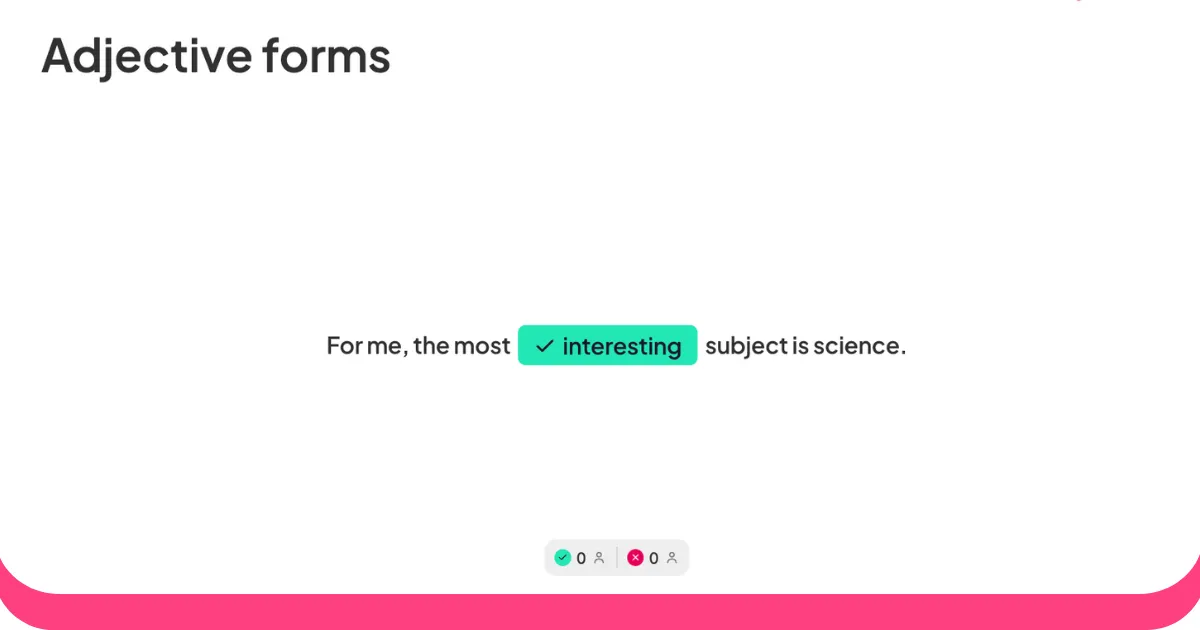
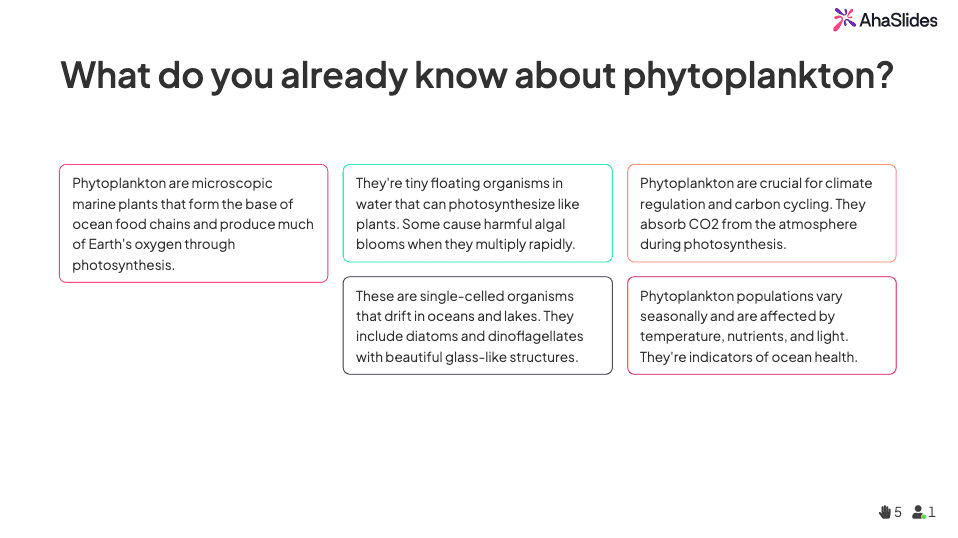
Instead of relying on the same three students who always raise their hands, you can engage your whole class through live quizzes, polls, word clouds, Q&A sessions, and collaborative brainstorming activities.
Practical tip: We looked at 12,865 teachers, lecturers, and trainers who built slides in AhaSlides between late June and late September 2026. Quizzes led the way (62% built one), followed by opinion formats like polls and word clouds (56%). The word cloud alone was used by one in three, which makes it a good low-stakes warm-up to start with.
2. Using virtual reality technology
Imagine students exploring the surface of Mars, walking through ancient Rome, or observing cells from the inside. VR turns abstract concepts into memorable experiences.
Yes, VR equipment represents a significant investment, and research on how much it improves learning is still mixed. So start small. Many VR field trips run on smartphones with low-cost cardboard viewers, which lets you pilot one unit and see how your students respond before buying a class set of headsets.
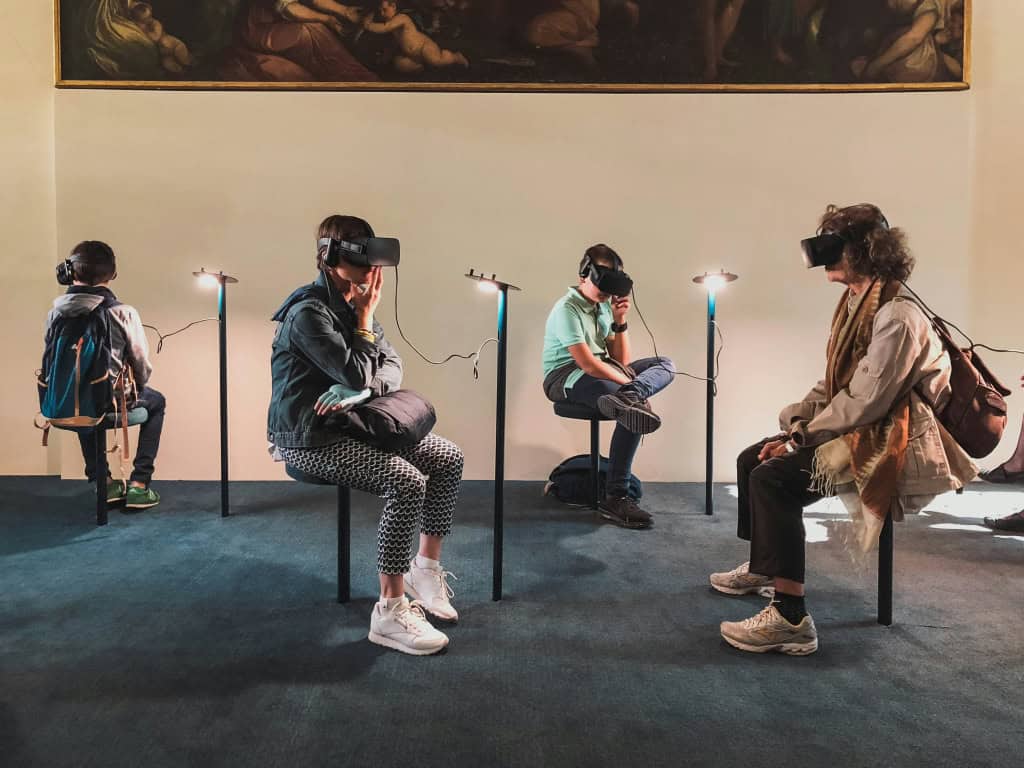
🌟 Teaching with virtual reality technology
Watch this VR session by Tablet Academy.
3. Using AI in education
AI isn't here to replace teachers; it can take work off your plate. In a Gallup and Walton Family Foundation survey of 2,232 US public school teachers, 60% used AI tools for work during the 2024-25 school year. Teachers who used them at least weekly estimated they saved 5.9 hours a week, or about six weeks over a school year.
Where AI helps most in the classroom:
- Lesson prep: drafting lesson plans, worksheets, and versions of the same text at different reading levels
- Quizzes and checks for understanding: generating a question bank on a topic that you then review and edit. Tools like AhaSlides can turn a short prompt into a draft interactive quiz you can run live
- Feedback: drafting comments on student work so you can spend your time on the pieces that need a personal touch
- Accessibility: text-to-speech, translation, and simplified summaries for students who need extra support
Set ground rules for students: Generative AI gives students a homework helper that can also do the homework for them. Be explicit about when AI is allowed, ask students to show their process (drafts, prompts, and reflections), and move more of the thinking-heavy work into class, where you can see it happen.
Word of caution: AI tools still get facts wrong, so review everything before it reaches students and keep your personal connection with them.
4. Blended learning
Blended learning combines face-to-face instruction with digital learning. Students might work through online practice at their own pace, then join you for a small-group discussion, or you might use digital tools in person to gather real-time feedback.
Implementation idea: Try a station rotation. Split the class into three groups that rotate every 15 to 20 minutes between a teacher-led station, an online practice station, and a collaborative project station. You get focused small-group time with every student in a single lesson.
5. 3D printing
3D printing puts abstract concepts into students' hands, from anatomical models to historical artefacts and engineering prototypes.
Designing their own models also builds spatial reasoning and problem-solving.
Budget-friendly approach: If your school doesn't have a 3D printer, many local libraries, makerspaces, and university facilities offer public access. Online services can also print and ship designs affordably. Start with downloading free educational models before investing in your own equipment.
6. Use the design-thinking process
This solution-based strategy sparks creativity and collaboration. It has five stages, but the process is non-linear, so you can adapt it to your lessons.
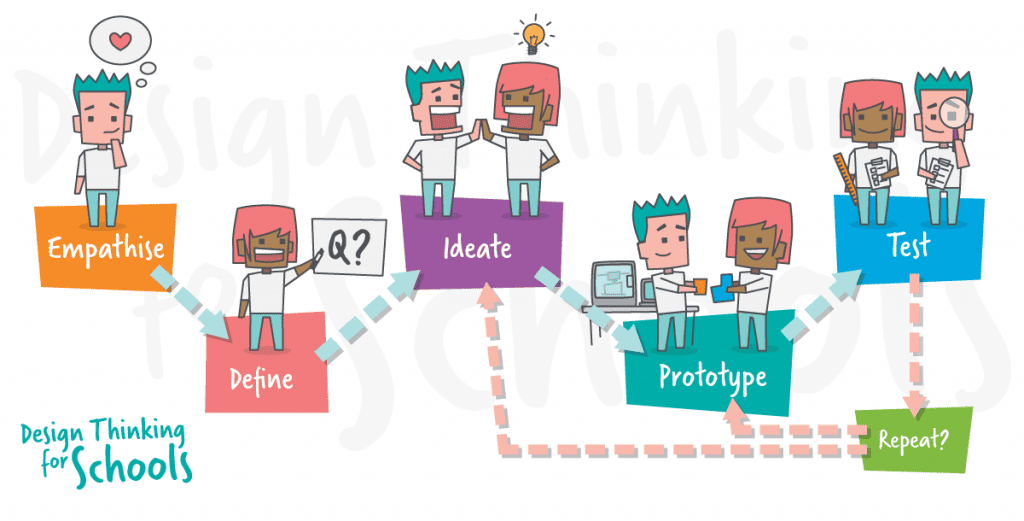
The five stages are:
- Empathise - Develop empathy, and find out the needs for the solutions.
- Define - Define issues and the potential of addressing them.
- Ideate - Think and generate new, creative ideas.
- Prototype - Make a draft or sample of the solutions to explore the ideas further.
- Test - Test the solutions, evaluate and gather feedback.
🌟 Design-thinking process example
Want to see how it goes in a real class? Here's how K-8 students at Design 39 Campus work with this framework.
7. Project-based learning
Project-based learning (PBL) has students tackle real-world problems and learn new content and skills along the way, with you as facilitator rather than information-deliverer.
The project is the learning experience, not an assessment tacked on at the end.
Compelling project ideas include:
- Filming a documentary about a local social issue
- Planning and executing a school event or fundraiser
- Managing a social media campaign for a community organisation
- Creating visual analyses of social problems with proposed solutions
- Developing sustainability plans for local businesses
Success tip: Ensure projects have authentic audiences beyond just you. When students present to community members, local professionals, or younger students, the stakes feel real and motivation skyrockets.
8. Inquiry-based learning
Inquiry-based learning begins with questions, not answers: you pose a problem or scenario and students investigate it alone or together, which teaches them how to learn, not just what to learn.
The process typically involves students:
- Encountering a problem or question
- Formulating hypotheses or predictions
- Designing investigations or research approaches
- Gathering and analysing information
- Drawing conclusions and reflecting on findings
- Communicating results to others
🌟 Inquiry-based learning examples
- Science investigation: Instead of telling students how plants grow, ask "What do plants need to survive?" Let students design experiments testing variables like light, water, and soil quality.
- Historical inquiry: Rather than lecturing about a historical event, pose a question like "Why did the Berlin Wall fall?" Students research multiple perspectives, primary sources, and historical contexts to build their understanding.
- Math exploration: Present a real-world problem: "How can we redesign our school playground to maximise play areas within budget?" Students apply mathematical concepts while investigating practical solutions.
- Community issues: Have students investigate pollution sources in your community or evaluate the effectiveness of an existing school policy, then propose solutions.
Scaffolding tip: Start with structured inquiry where you provide the question and method, then gradually release responsibility until students generate their own questions and design investigations independently.
9. Jigsaw and peer teaching
Like a jigsaw puzzle, students piece together a complete picture of the topic:
- Divide your class into small groups
- Assign each group a different subtopic or aspect of the main subject
- Have groups research and become "experts" on their assigned piece
- Each group presents their findings to the class
- Together, the presentations form comprehensive understanding of the entire topic
- Optionally, facilitate peer feedback sessions where groups evaluate each other's work
Subject-specific examples:
- Language arts: Assign groups different literary elements (characterization, setting, themes, symbolism) from the same novel
- History: Have groups research different aspects of a historical event (causes, key figures, major battles, consequences, legacy)
- Science: Students investigate different body systems, then teach classmates how they interconnect
Why it works: Teaching content to peers requires deeper understanding than studying it, and students are accountable to their classmates.
Peer teaching goes further: individual students lead part of a lesson on an area they choose, which builds ownership, confidence and presentation skills.
🌟 Peer teaching example
Watch a maths lesson taught by a student at Dulwich High School of Visual Arts and Design.
10. Gamification
Gamification applies points, levels, leaderboards and badges to everyday lessons, giving students clear goals, instant feedback and a reason to try one more time.
It has research behind it, too. A 2019 meta-analysis in Educational Psychology Review found that gamified learning had small to medium positive effects on students' learning, motivation, and behaviour.
🌟 Gamification examples
- Live quiz battles: Run a review quiz where students answer on their own devices and a leaderboard updates after every question. Playing in teams keeps quieter students from feeling singled out.
- Classroom XP: Award points for completing tasks, helping classmates, or beating a previous personal score, and let students "level up" to unlock perks like choosing the next group activity.
- Escape rooms: Turn a unit review into a series of locked puzzles that students have to solve together to break out.
Keep it healthy: Reward effort and improvement, not just speed, so the same fast students don't win every round.
11. Flipped classroom
The flipped classroom model moves content delivery home and uses class time for application and practice. Students can pause and rewatch at their own pace, and you are free for the moments they need you most.
Before class, students watch videos or read materials; in class they solve problems, discuss and collaborate.
Implementation strategy: Create short, focused video lessons (5-10 minutes maximum). Use class time for hands-on work where your expertise adds real value.
12. Retrieval practice
Retrieval practice is one of the best-supported findings in learning science: pulling information out of memory strengthens it far more than reading it again. In a classic 2006 study, psychologists Henry Roediger and Jeffrey Karpicke found that students who took practice tests remembered much more a week later than students who spent the same time restudying.
🌟 Retrieval practice examples
- Brain dumps: Give students two minutes at the start of class to write down everything they remember from the last lesson.
- Spaced quizzes: Mix in a few questions from last week and last month, not just today's lesson.
- Exit tickets: End class with one or two quick questions and use the answers to plan tomorrow's lesson.
Pro tip: Run these as anonymous live polls or quizzes so everyone answers, not just the confident few, and you can see at a glance what the class has forgotten.
13. Adaptive teaching with learning analytics
Adaptive teaching uses learning analytics on performance and engagement to personalise instruction, showing which students need support, which are ready for more, and what the whole class struggles with.
🌟 Adaptive teaching with learning analytics examples
Learning management system (LMS) data: Platforms like Google Classroom, Canvas, or Moodle track student engagement metrics, such as when students access materials, how long they spend reading, and which resources they revisit. Teachers can reach out to students showing disengagement patterns before they fall behind.
Adaptive learning platforms: Use tools like Khan Academy or IXL that automatically adjust question difficulty based on student responses. Teachers receive detailed reports showing which concepts each student has mastered and where they're struggling.
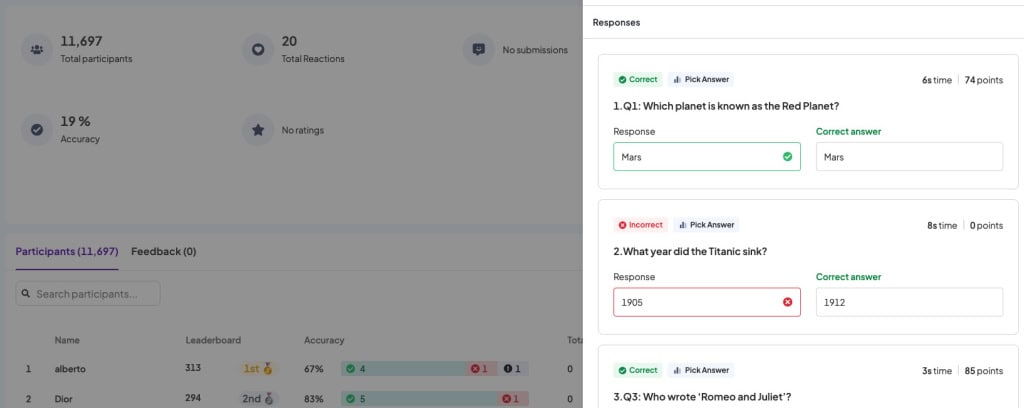
Real-time formative assessment: During lessons, use platforms like AhaSlides or Kahoot to run quick checks for understanding. Analytics instantly show which students got questions right or wrong, allowing you to re-teach concepts on the spot or form targeted small groups.
14. Crossover teaching
Remember how exciting a class trip to a museum or exhibition felt?
Crossover teaching links classroom learning with a place outside: explore a concept in school, then visit somewhere it works in a real setting.
Follow the trip with discussion or group work in class.
🌟 Virtual crossover teaching example
When a trip isn't possible, try this virtual Museum of Modern Art tour with Mrs. Gauthier from Southfield School Art.
15. Personalised learning
What works brilliantly for some students flops for others, because they arrive with different prior knowledge, interests, confidence and pace.
Personalised learning tailors instruction to individual interests, needs and strengths. It takes more planning time upfront.
One thing personalisation isn't: matching lessons to "visual" or "auditory" learning styles. A major review of the research found no solid evidence that teaching to a student's preferred style improves learning. Tailor instruction to what students already know and what they need next instead.
Start small: Begin with choice boards where students select from several options for assignments or projects. Or use formative assessment data to create flexible groupings, sometimes working with struggling students while others tackle extensions, other times grouping by interest rather than ability. Gradually incorporate more personalisation as you grow comfortable. If you want to package a full self-paced unit rather than single lessons, AhaSlides' online course creator lets students work through personalised content at their own speed.
Frequently asked questions
How do I choose which innovative method to try first?
Start with what suits your teaching style and resources: interactive lessons or a flipped classroom if you like technology, project-based learning or the jigsaw technique if you prefer hands-on work. One new method is enough to start.
What if my students resist these new methods?
Start gradually, explain why you are trying a new approach, and be patient. Many students prefer traditional methods simply because they are familiar, and resistance typically fades once they experience success.
Don't these methods take too much class time?
Initially, yes, because new methods need adjustment time. But teaching is about students learning content, not covering it, and these methods often give deeper, more lasting understanding even if you cover less. They also become more efficient with practice.