The US Centers for Disease Control and Prevention (CDC) estimates that 48 million people get sick from a foodborne illness each year, 128,000 are hospitalised and 3,000 die (CDC: Food Safety Facts and Stats). Many of those cases start with a habit in a kitchen: a temperature, a missed handwash, a board that was not cleaned.
This quiz has 40 questions with answers in 4 rounds of 10: temperatures, hygiene, cross-contamination and allergens. Each round has two sets of 5 and an Our pick. Every answer is traced to the FDA Food Code 2026, published on 30 September 2026, or to the FDA allergens page. It is written for kitchen managers, food handlers and trainers running a refresher.
Two notes before you start. The figures are US limits from the FDA's model Food Code. Most US states adopt an older edition, and your local health department rules govern, so check them. Outside the US, use your own authority's limits and treat this quiz as a format. Where a food has a time with its temperature, the answer gives both.
Round 1: Temperatures and cooking (10 questions)
Temperatures are the numbers every food worker should know without looking. Time/temperature control for safety (TCS) food is food that needs temperature control to stay safe, such as meat, dairy and cooked rice.
Set 1: Holding and thawing (5 questions)
What is the maximum temperature for cold holding TCS food? Answer: 41°F (5°C) or less. Food Code 3-501.16
What is the minimum temperature for hot holding TCS food? Answer: 135°F (57°C) or above. Food Code 3-501.16
Shell eggs that have not been treated to destroy Salmonella must be kept in a fridge with the air at what temperature? Answer: 45°F (7°C) or less. Food Code 3-501.16
Name two ways to thaw TCS food that the Food Code allows. Answer: Any two of: in the fridge at 41°F (5°C) or less; completely submerged under running water; as part of the cooking process; or in a microwave, followed by cooking straight away. A bowl left on the counter is not on the list. Food Code 3-501.13
Food thawed under running water must be completely submerged. At what water temperature or lower? Answer: 70°F (21°C) or below. Food Code 3-501.13
Set 2: Cooking temperatures (5 questions)
Our pick. What is the minimum cooking temperature for poultry? Answer: 165°F (74°C). This is the number every kitchen should know by heart. Poultry has the highest cooking temperature of the common raw animal foods because of its higher expected bacterial load. Food Code 3-401.11
What temperature does stuffing that contains meat, fish or poultry need to reach? Answer: 165°F (74°C), the same as poultry. The same applies to stuffed meat, fish and pasta. Food Code 3-401.11
What does ground beef need, and for how long? Answer: 155°F (68°C) for 17 seconds. Grinding moves bacteria from the surface through the meat, so it needs more than a steak. Food Code 3-401.11
What does a whole cut of beef or pork, or fish, need, and for how long? Answer: 145°F (63°C) for 15 seconds. Food Code 3-401.11
An egg is cracked to order and served at once. What does it need? Answer: 145°F (63°C) for 15 seconds. Eggs that are not served at once need 155°F (68°C) for 17 seconds, like ground meat. Food Code 3-401.11
Round 2: Hygiene and illness (10 questions)
Hands are a major route between a worker and the food. These questions cover how to wash, when to wash and when a worker must not handle food at all.
Set 1: Washing hands (5 questions)
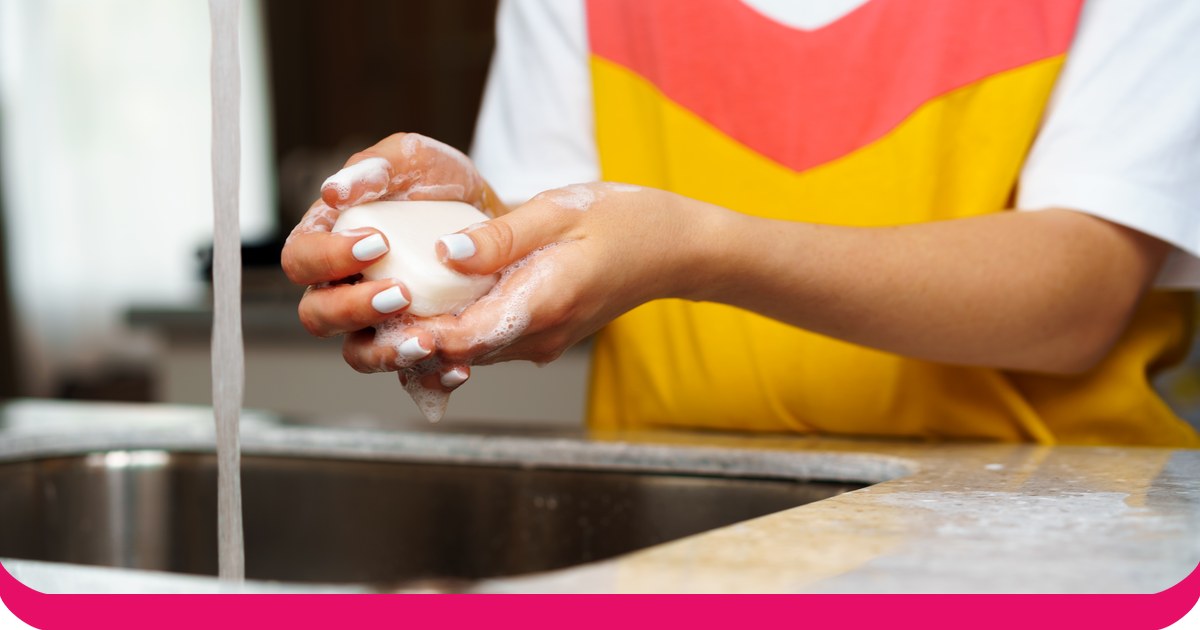
How long must the whole handwashing procedure take? Answer: At least 20 seconds to clean hands, including rubbing them together vigorously for 10 to 15 seconds with soap. Rinse and dry afterwards. Food Code 2-301.12
Which sink can a food worker wash their hands in? Answer: Only a handwashing sink (or an approved automatic handwashing facility), never a food preparation sink, a warewashing sink or a service sink. Food Code 2-301.15
Our pick. A cook finishes handling raw chicken and moves to slicing salad. Must they wash their hands first? Answer: Yes. Hands must be washed when switching between raw food and ready-to-eat food. Wiping on an apron or changing gloves alone is not enough, which is why we picked it: the wrong answers are common habits. Food Code 2-301.14
Name three other moments when a food worker must wash their hands. Answer: Any three of: before food preparation, after using the toilet, after coughing, sneezing or using a tissue, after eating or drinking, after handling soiled equipment, after touching bare body parts, and before putting on gloves. Food Code 2-301.14
How can a worker turn off a tap or open a toilet door without re-contaminating clean hands? Answer: Use a disposable paper towel or a similar clean barrier. Food Code 2-301.12
Set 2: Illness and gloves (5 questions)
Name three symptoms a food worker must report to the person in charge. Answer: Any three of: vomiting, diarrhoea, jaundice, sore throat with fever, or an open or draining wound with pus on the hands, wrists or arms (unless it is covered as the Food Code requires). Food Code 2-201.11
A food worker has vomiting or diarrhoea. Does the person in charge restrict or exclude them? Answer: Exclude. Restricted workers can do jobs that avoid exposed food, but a worker with vomiting or diarrhoea is kept out of the premises. Food Code 2-201.12
Name three diagnosed illnesses a food worker must report. Answer: Any three of: norovirus, hepatitis A, Shigella, Shiga toxin-producing E. coli, typhoid fever, and non-typhoidal Salmonella. Food Code 2-201.11
May a food worker touch ready-to-eat food, such as a sandwich, with bare hands? Answer: No, with a few exceptions. They must use suitable utensils such as deli tissue, spatulas, tongs, single-use gloves or dispensing equipment. Food Code 3-301.11
Must a worker wash their hands before putting on gloves? Answer: Yes. Hands are washed before gloves go on for a task with food, so the gloves do not carry dirt from the hands onto the food. Food Code 2-301.14
Round 3: Cross-contamination and storage (10 questions)
Cross-contamination is when bacteria move from one food, surface or tool to another. Keeping foods apart, cleaning in the right order and marking dates helps stop it.
Set 1: Keeping foods apart (5 questions)
Our pick. Rank these from the top shelf to the bottom shelf of a fridge: ready-to-eat food, whole cuts of beef and pork, ground meat, poultry. Answer: Ready-to-eat food on top, then whole cuts of beef and pork, then ground meat, with poultry on the bottom. Raw food that needs a higher cooking temperature is stored below food that needs a lower one, and all raw animal food is kept below ready-to-eat food. We picked it because the order is easy to learn and a mistake drips onto the food below. Food Code Annex 5 and 3-302.11
A board has just been used for raw chicken. The next job is cutting a ready-to-eat salad. What must happen first? Answer: Clean and sanitise the board. Surfaces and utensils must be cleaned each time there is a change from raw food to ready-to-eat food. Food Code 4-602.11
Should unwashed vegetables be stored next to ready-to-eat food? Answer: No. Fruit and vegetables before washing are kept separate from ready-to-eat food. Food Code 3-302.11
Why should food in the fridge be covered or wrapped? Answer: To protect it from cross-contamination, such as drips and splashes from the food stored above. Food Code 3-302.11
A container holds flour decanted from its sack. What must it show? Answer: The common name of the food, unless it is readily and unmistakably recognisable, such as dry pasta. Food Code 3-302.12
Set 2: Dates and cooling (5 questions)
How long can ready-to-eat TCS food prepared in your kitchen be kept in the fridge at 41°F (5°C) or less? Answer: A maximum of 7 days, counting the day it was made as Day 1. If it is held for more than 24 hours, it must be marked with the date or day it must be used by. Food Code 3-501.17
A tub of ready-to-eat food from a supplier is opened. Which day is Day 1? Answer: The day you open it. The date you mark cannot go beyond the manufacturer's use-by date if that date is based on food safety. Food Code 3-501.17
A cook mixes a fresh batch into an older one. Which date mark applies to the mix? Answer: The earliest date, from the oldest ingredient or portion. Food Code 3-501.17
How fast must cooked TCS food be cooled? Answer: From 135°F (57°C) to 70°F (21°C) within 2 hours, then to 41°F (5°C) or less within a total of 6 hours. Food Code 3-501.14
Cooked shrimp is ready to serve. Can it go back into the container that held it raw? Answer: No. Cooked food goes into a clean container, because the raw product still contaminates it. The FDA gives this exact example in its guidance for inspectors. Food Code Annex 5
Round 4: Allergens and cleaning (10 questions)
An allergic guest cannot see a mistake in the kitchen, and a sanitiser that was never applied leaves no sign either. These questions cover the US allergen list, cross-contact, and cleaning and sanitising.
Set 1: Allergens (5 questions)
How many major food allergens are there in the US? Answer: Nine. FDA: Food Allergies
Name the nine major food allergens. Answer: Milk, eggs, fish, crustacean shellfish, tree nuts, peanuts, wheat, soybeans and sesame. FDA: Food Allergies
Which allergen was added most recently, and by what law? Answer: Sesame, under the FASTER Act, signed on 23 April 2021 and effective on 1 January 2023. FDA: Food Allergies
Our pick. What is cross-contact, and how is it different from cross-contamination? Answer: Cross-contact is when a major food allergen is unintentionally introduced into a food that does not contain it as an ingredient. Cross-contamination is the spread of germs. Staff often treat them as one thing, but cooking does not make an allergen-contaminated food safe for the person who is allergic. Food Code Annex 3
A cook cuts raw fish, then needs the same board for raw chicken. What must happen between the two jobs? Answer: Clean the board first. Surfaces and utensils must be cleaned before each use with a different type of raw animal food. The Food Code's own notes name raw fish as an example of a major allergen food whose equipment must be cleaned and sanitised. Food Code 4-602.11
Set 2: Cleaning and sanitising (5 questions)
In what order are food contact surfaces cleaned and sanitised? Answer: Clean first, then sanitise. Sanitising works on a clean surface, so it does not replace cleaning. Food Code 4-703.11
How long must a utensil sit in hot water to be sanitised by immersion in a manual operation? Answer: At least 30 seconds. Food Code 4-703.11
A dishwasher sanitises with hot water. What utensil surface temperature must it reach? Answer: 160°F (71°C), measured with an irreversible registering temperature indicator. Food Code 4-703.11
What contact time does a chemical sanitiser need? Answer: The time on the EPA-registered label. The Food Code sets at least 10 seconds for a chlorine solution as specified, and at least 30 seconds for other chemical solutions. Food Code 4-703.11
Equipment used non-stop with TCS food must be cleaned at least how often? Answer: Every four hours. Food Code 4-602.11
Ways to host a food safety quiz with AhaSlides
A food safety refresher works best when each person answers for themselves, not when one person reads the rules aloud. Build the slides from the questions above.
- Pick Answer: put a question on a slide, give four answers as choices, and turn on the team leaderboard. Temperature questions work best with number choices, such as 135°F, 145°F, 155°F and 165°F.
- Word Cloud: "What is the riskiest moment in your shift?" The biggest word shows which round to run first.
- Rating Scale: "How confident are you about allergens?" Rate 1 to 5, then spend time with the lowest scores.
- Open Ended, anonymous: one question for the manager, such as "Which of today's questions would you want explained again?"
Swap in your own menu, equipment and local rules, so the slides match what your team sees on shift. For more ideas see food trivia questions and answers, how to train kitchen staff in food safety and a lighter guess the food quiz for the end of a session. Starting from a course? The Food safety awareness for food workers template is ready to use.
Tips for running the quiz
Run one round per pre-shift briefing, so the quiz takes about 10 minutes and nobody sits through 40 questions at once. Open with the CDC figure of 48 million illnesses a year, and close with the 3,000 deaths, so the reason for the numbers is clear. Note which questions the team misses, and repeat them in the next session. A missed question is a habit to practise, not a person to blame. Check your own state or local rules for any figure that differs from the Food Code.
Frequently asked questions
What are good food safety quiz questions?
Questions on temperatures, hand washing, cross-contamination and allergens. The 40 above cover all four, and each answer cites the FDA Food Code 2026 or the FDA allergens page.
What temperature should cold food be kept at?
41°F (5°C) or below, under the FDA Food Code. Hot food is held at 135°F (57°C) or above.
What is the safe cooking temperature for chicken?
165°F (74°C), under the FDA Food Code. Stuffing that contains meat, fish or poultry needs the same temperature.
How many major food allergens are there?
Nine in the US, since sesame was added under the FASTER Act, effective on 1 January 2023. The others are milk, eggs, fish, crustacean shellfish, tree nuts, peanuts, wheat and soybeans.
How long should you wash your hands?
At least 20 seconds to clean hands, under the FDA Food Code, including 10 to 15 seconds of rubbing with soap. Rinse and dry afterwards.
Where to start
Pick Round 1 for your next briefing and note which temperatures people hesitate on. Those are the ones to repeat in the next session, until everyone knows them without looking.