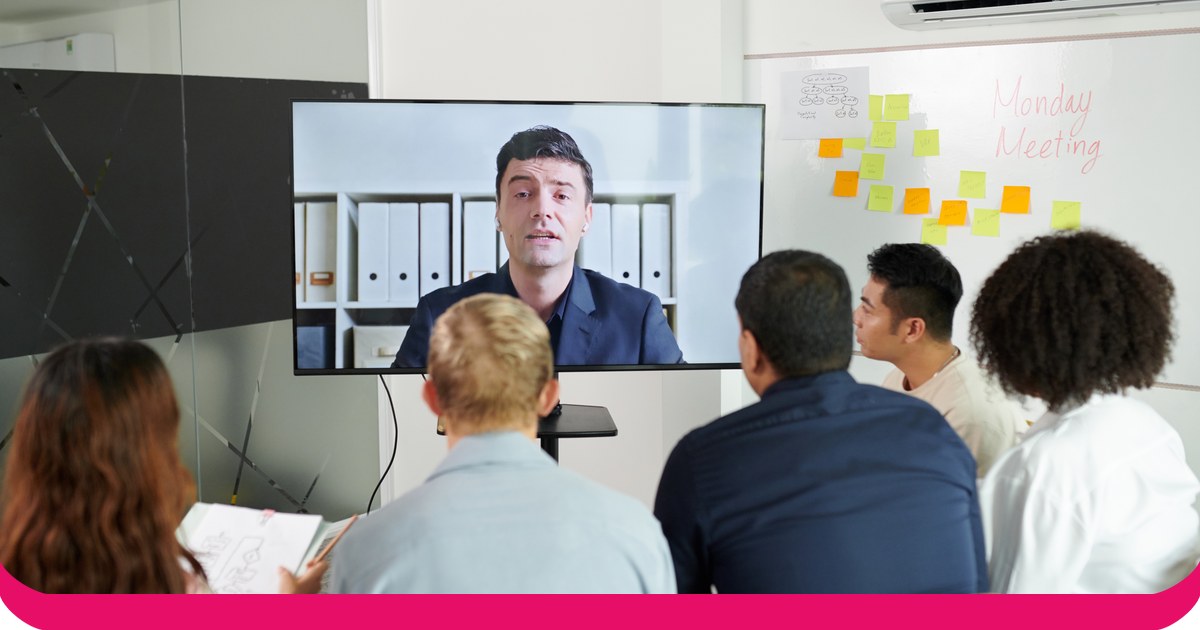
A group presentation lets a team combine its strengths, divide the work and give the audience more than one voice. It can also go wrong fast: uneven speaking time, clumsy handovers and slides that nobody owns. This guide covers what makes a group presentation good, then five real team presentations from universities and business competitions that you can watch and learn from.
What makes a good group presentation?
Whether you are presenting to a class, a client or a competition panel, the same seven habits separate strong team presentations from weak ones:
- A clear structure. Use a logical flow with an introduction, a body and a conclusion. A short roadmap at the start tells the audience where you are heading.
- Visual aids that help. Slides, charts and short videos support the talk when they carry one idea each. Avoid dense text, and share a QR code or link if the audience needs your resources.
- Clear speaking. Speak at an even pace, make eye contact and avoid reading the slides aloud.
- Balanced participation. Every member speaks, and handovers sound like a conversation rather than a relay.
- Relevant content. Research the topic, and pitch it at the level of the people in the room.
- Time management. Plan the timing, rehearse it and name one person as timekeeper.
- A strong ending. Summarise the main points and finish on the message you want remembered.
For more on pacing and delivery, see our guides to time management in presentations and body language during a presentation.
How to prepare a group presentation in 6 steps
- Define the objective. Agree in one sentence what the audience should know or do afterwards.
- Assign roles. Decide who researches, who builds the slides, who presents each section, who keeps time and who handles questions.
- Outline together. Plan an introduction, three to five key points and a conclusion, with evidence for each point.
- Design the slides as one set. Use one template and limit text, so the deck looks like the work of one team.
- Rehearse as a group. Run the full talk, including the handovers, and give each other feedback.
- Prepare for questions. Guess the three hardest questions and agree who answers which.
5 group presentation examples to watch
The five videos below are public recordings from universities and business competitions. We chose them because the occasion, the team and the result are documented. We have kept the notes short: use the prompts under each one as a checklist while you watch, then compare what you see with the seven habits above.
1. Delivering a successful team presentation (Stanford Graduate School of Business)
This Stanford Graduate School of Business video is aimed at teams preparing to present together, which makes it a good starting point before you watch the competition entries.
Watch for: how the advice on roles, preparation and rehearsal could be applied to your own team.
2. AthleteTrax at the 2012 GW Business Plan Competition
AthleteTrax, a software idea for coaches and student-athletes, won three prizes at the 2012 George Washington University business plan competition, including second place overall, according to GW Today. The team’s presentation is published by the university.
Watch for: the order in which the team moves from the problem to the solution, the business model and the next steps, and how they answer questions.
3. Team Bumble, 2017 National Business Plan Competition
Team Bumble from Bakersfield High School took first place in the National Business Plan competition run by Virtual Enterprise International in New York in 2017, as Bakersfield Now reported. You can watch the winning presentation online.
Watch for: how smoothly the speakers hand over, whether each claim is backed by a figure and how the team’s body language changes as they speak.
4. Yonsei University, 2019 final round of the HSBC/HKU Asia Pacific Business Case Competition
This final-round presentation was published by the ACRC HKU channel. Case competitions end with questions from judges, so it shows how a team handles pressure live.
Watch for: how the team recovers from any small slip, and how they answer the judges’ questions.
5. First place at the Macy’s Case Competition, Kelley School of Business
This first-place presentation comes from the Kelley School of Business at Indiana University, as titled on its video channel. Teams in case competitions have to turn a complex brief into a short, persuasive recommendation.
Watch for: how the speakers use the stage, and whether each recommendation is supported by data.
Make your group presentation interactive
The best group presentations feel like a conversation. A live word cloud, poll or Q&A slide gives the audience a role and gives your team a break from talking. In the AhaSlides template library, the Teamwork and collaboration in group projects template starts with exactly that: a word cloud asking what qualities the audience values in a good team member. Responses appear on screen as people send them from their phones.
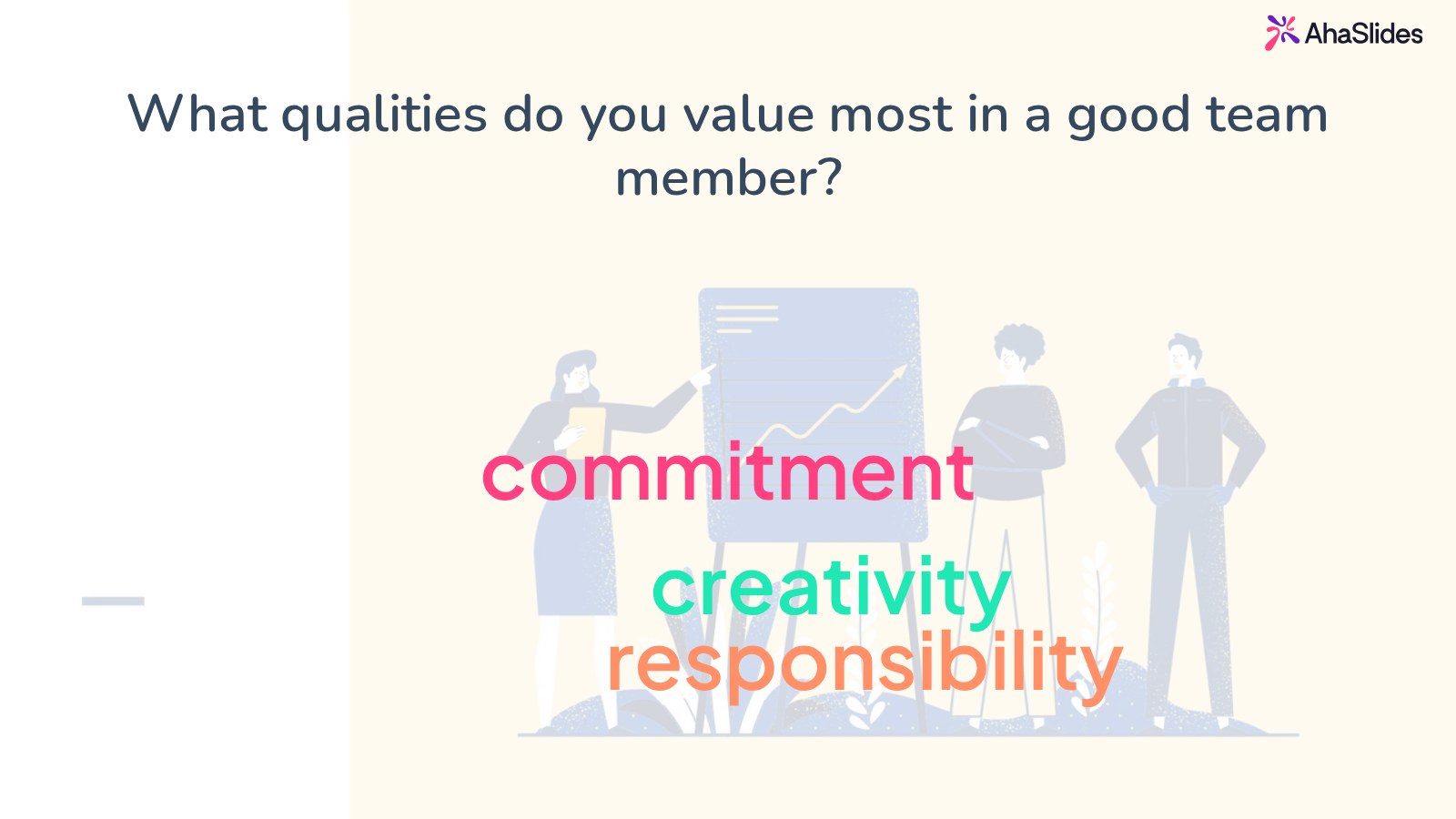
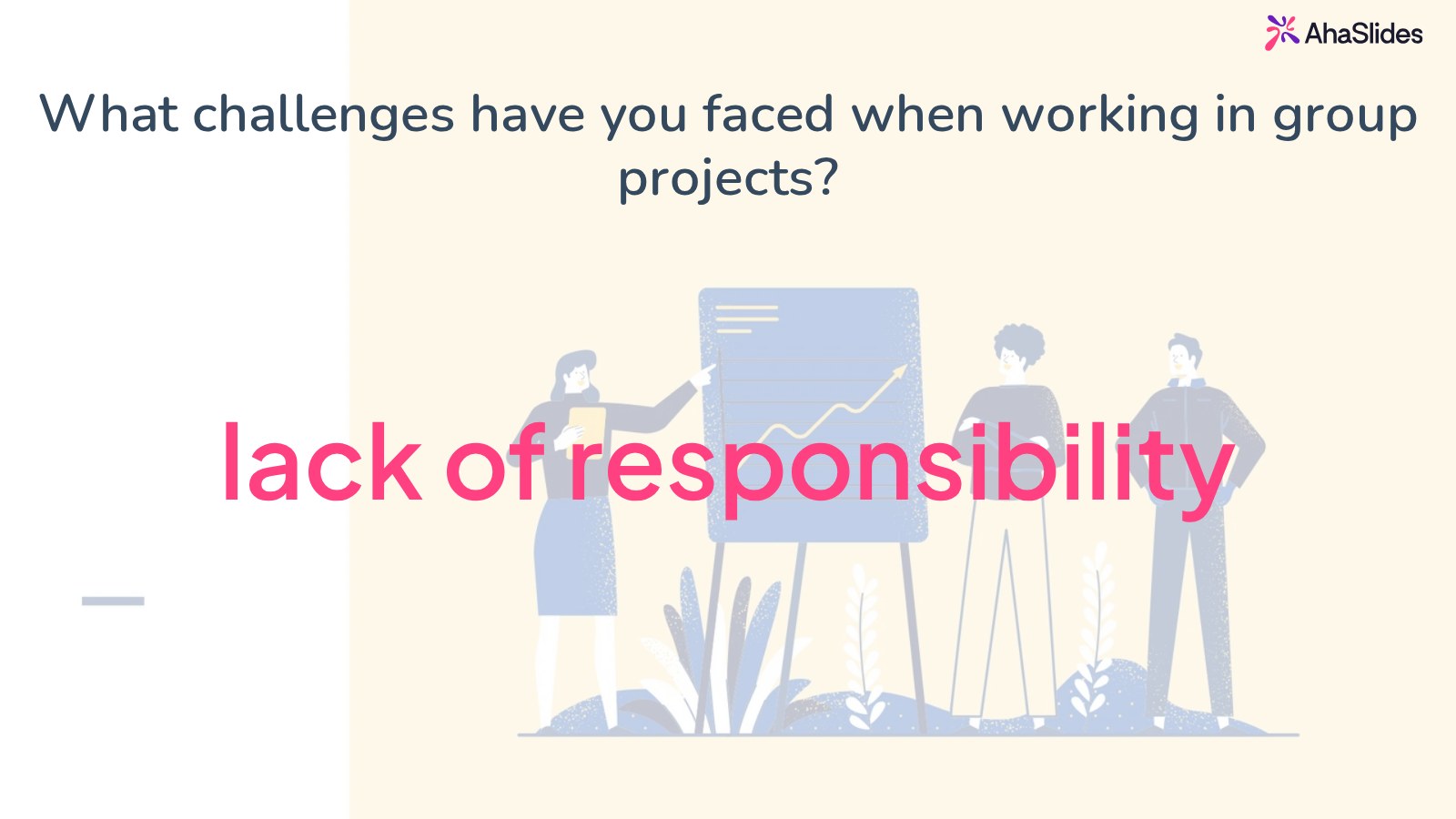
Free teamwork template
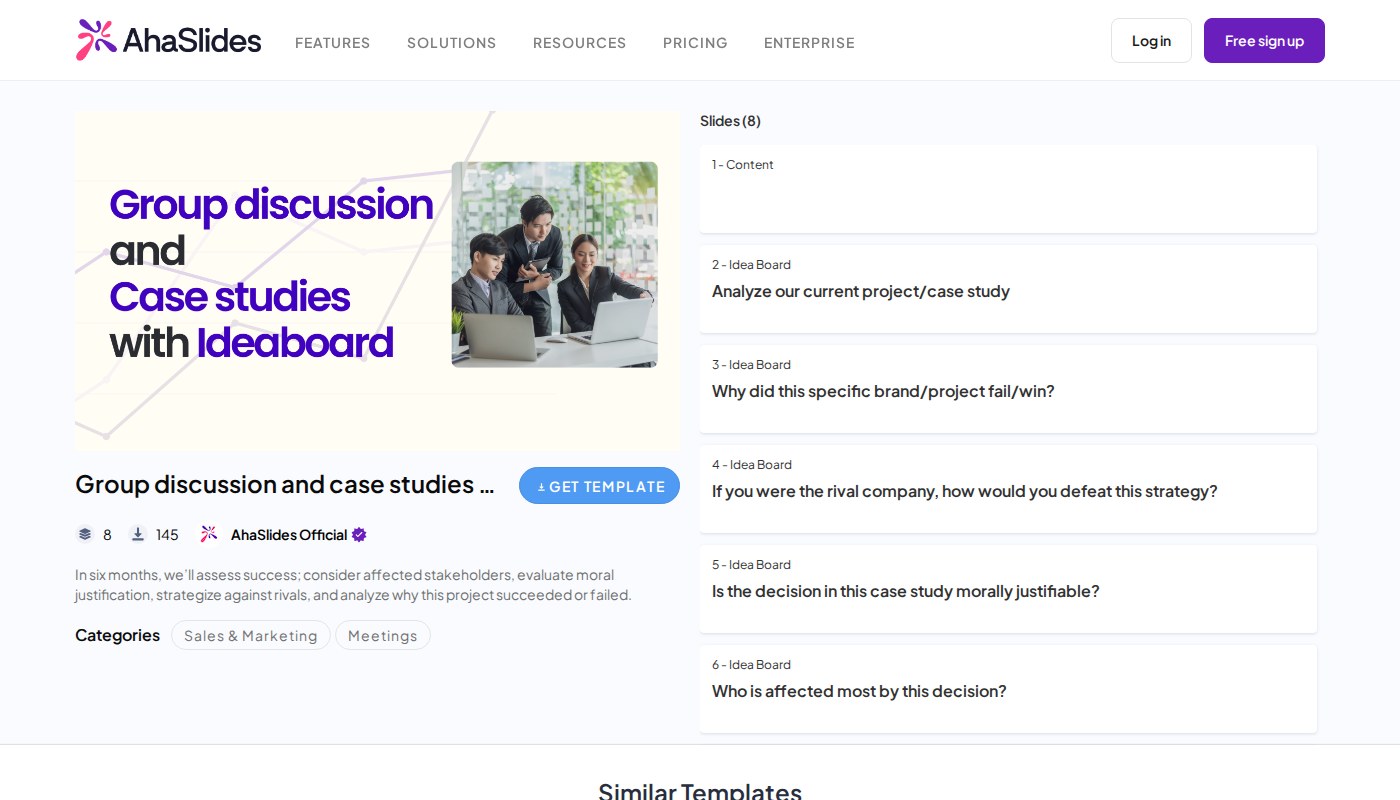
If your group is working through a case study, the Group discussion and case studies with Ideaboard template lets everyone add ideas to a shared board, such as a strengths, weaknesses, opportunities and threats grid, before you present your analysis.
At the end of your talk, finish with a Q&A slide so people can send questions anonymously and your team can decide who answers. For more ideas, read our guides to interactive presentation techniques and making a presentation interactive. You can sign up for AhaSlides for free and try any of these templates.
Key takeaways
- Agree roles, structure and timing before anyone designs a slide.
- Rehearse the handovers, not only your own section.
- Keep slides light and consistent so the deck looks like one team’s work.
- Involve the audience with a live poll, word cloud or Q&A.
- Watch real team presentations with a checklist, then copy the habits that work.
Frequently asked questions
What is a group presentation?
A group presentation is given by two or more people to an audience. Group presentations are common in schools, universities, businesses and competitions.
How do you make a group presentation?
Define the objective, assign roles for research, slides and delivery, outline an introduction, three to five key points and a conclusion, add evidence and light visuals, rehearse together and finish with a strong summary.
How do you divide a group presentation fairly?
Give each member a section of similar length and a clear role, then rehearse with a timer so that speaking time is balanced and handovers are smooth.
How long should a group presentation be?
Follow the time you are given, and divide it by the number of speakers. Leave a few minutes at the end for questions.